
Cheryl Oestreicher; Gabrielle Davis
Interviewee: Cheryl Oestreicher; Gabrielle Davis
Interviewer: Doug Exton
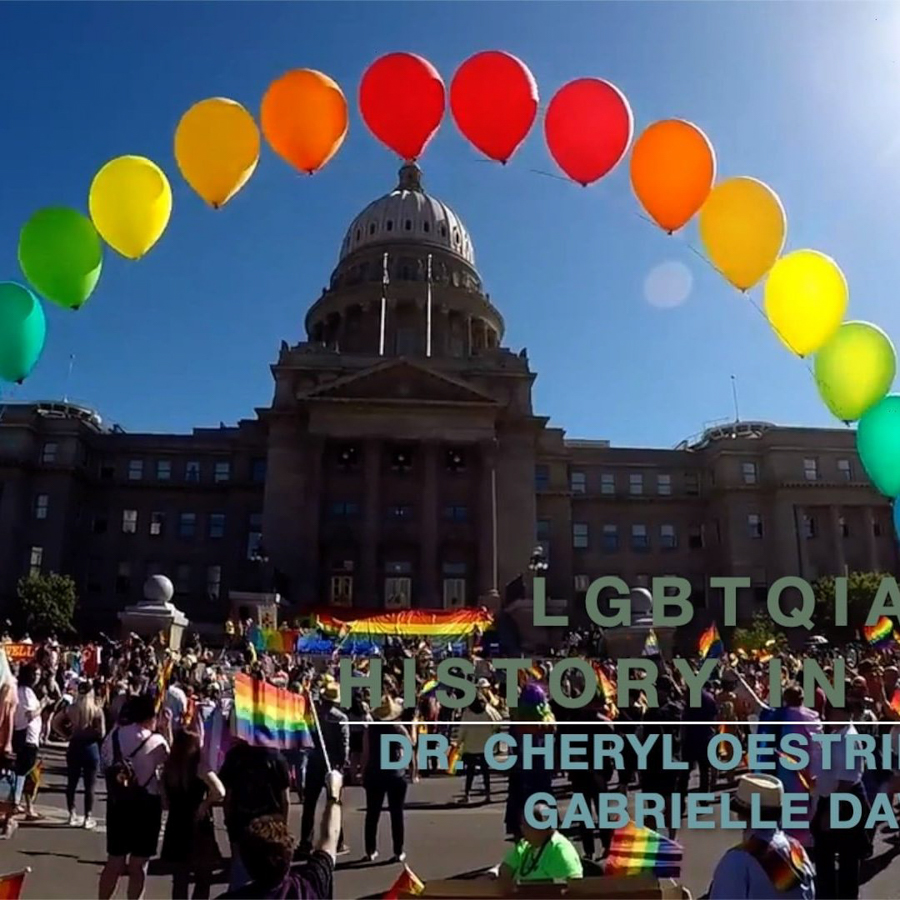
Description: From the 1955 "Boys of Boise" scandal to the recent Supreme Court decision affirming LGBTQ rights under the 1964 Civil Rights Act, Idaho’s LGBTQIA+ community has faced a long struggle for equality. Cheryl and Gabrielle will discuss key historical events and current issues shaping the community today. Bio: Cheryl Oestreicher is the Head of Special Collections and Archives/Associate Professor at Boise State University. She curates and preserves archival collections documenting Boise State University, Boise, and Southwest Idaho, covering topics such as politics, the environment, Basque culture, gender, and more. She holds a PhD in Modern History and Literature from Drew University and an MLIS from Dominican University. Gabrielle Davis is a respiratory therapist and currently serves as a COPD Educator and Nicotine Cessation Coordinator for St. Luke’s in Boise. She holds master’s degrees in public health and counseling. Beyond healthcare, Gabrielle is an adjunct professor at Boise State University and facilitates a local LGBTQIA+ youth group. She is passionate about advocating for Black Queer and Trans Lives, promoting allyship, and raising awareness about nicotine addiction. Gabrielle lives in Boise with her wife and dog, enjoying travel whenever possible.
Date: 2020-06-24
Topics:
The visual topic map is hidden for screen reader users. Please use the "Filter by Topic" dropdown menu or search box to find specific content in the transcript.
Doug Exton: All righty. So it is 6:00. So thank you to everyone for attending tonight's connected conversation here with me. I have Gabrielle Davis and Doctor Cheryl Oestreicher is here with me right away. Oestreicher, I always try every time I fail. All right. But yeah if you guys have any questions throughout, this is the community feature. It's located at the bottom of your guys's screen.
And then. Yeah, if you guys want to take it away, floor is all yours.
Cheryl Oestreicher: Sure. So I'm Cheryl, I'm head of special collections and archives at Boise State University in the library. And I'm here kind of to talk about some of the things we have documented in our collections and the history, people, organizations, activities that give an overview for the past 30 ish 40 years.
Gabrielle Davis: My name is Gabrielle. I'm sorry I said I was. Your mouth opened again. We want to say something. No.
Cheryl Oestreicher: I'm good. Okay.
Gabrielle Davis: Oh.
Doug Exton: Do.
Gabrielle Davis: My name is is Gabrielle Davis. Most people call me Gabby. I am a respiratory therapist. It's my full time job here. I also run utilities for diversity, which is a local. The oldest and longest running LGBT youth group. In Idaho, and in Boise, it's an it meets from once a week for two hours for kids 12 to 20.
It's not meeting right now. Not from, Idaho. I've been here four long years. So when this topic came up, the three of us were just talking about this too, as well. Cheryl and I have talked a lot of previous. It's interesting because the history I know about in Idaho, compared to the history I know about from the States I've lived in, which I've been Michigan, Illinois is are different.
And so more of my Idaho history is what I've learned for from queer elders and the youth that's been living here, all of their lives.
I'm also married. I like long walks on a beach. I came to Idaho because I often find it difficult there, but, I can't Idaho, because my wife took a job here, so that's why I'm here.
Doug Exton: And also, I guess I should do a little background about myself, since after all these conversations, I've yet to talk about myself. I'm also from DC, and I've also lived here for four years, just like Gabrielle. So we have kind of similar backgrounds with learning the history and people that have been here, rather than experiencing some of it firsthand.
Cheryl Oestreicher: And I should add to that too, because I've lived here for eight years, and so I've lived in several other states in various regions of the country, and I've learned it just from working with our collections. People, questions people ask, being involved in different areas and just wanting to know what it's all about. So, one of the things that I do is work to document the history of Boise, the region area, Boise State University, and more or less Idaho as well.
And within that, it's we really try to find collections that are representative and, and have different perspectives, views and all kinds of things. So for our LGBTQ collections, we have a lot of newspapers and collections from people, organizations about early, Boise gay pride parades and Pride Fest. We have, excuse me, activists who are in there, politicians, places like the community center, organizations like your family, friends and neighbors and all kinds of things.
And I, I must give credit to my predecessor, Alan Verna, who started all of these collecting, collecting these groups of records because he made great strides. And I've tried to continue that to make sure that anyone who's interested can be informed about, our history and, of course, anything. Not at the moment, unfortunately, but in under normal circumstances, anyone can come in and look at our collections.
And, you know, what we do to is try to I use them in coursework and present it to students so that people who haven't lived here for a long time or are unfamiliar, can do that. So we have also some information about organizations and student groups at Boise State throughout history. And we just kind of goes on and on and on.
And I think, you know, I've just learned so much and I'm still learning. Anytime I look at a collection, a paper report, talk to somebody, I learn more. And that's one of the things that I like. We have, and we have a lot from like the late 80s into the 90s and then some past that too. But when the groups were really becoming active and, you know, and it it dates back further than that.
But, you know, I, I always kind of go back to when the first Boise Pride parade in 1989 and Pride Fest in 1990, and how all of that started making everything more visible and engaging people. We have a lot of information about proposition one, which was the anti-gay legislation that, the Idaho Citizens Alliance. Was that right? Idaho Citizens Alliance, presented in, I believe it started in 94.
It went on for a couple of years. And how both sides, you know, reacted why they did it. Who did it, who is involved, how it was stopped and and so forth, as well as just, you know, things like the ElmAwards and it just kind of goes on and on and on. And there's a lot of rich history that reflects.
Just, what goes on in Boise and what Boise is trying to be, as a city, as a community and, and everything. One of our really great collections is of oral histories that a former faculty, Riley Caldwell O'Keefe, did in a class. She had her students interview someone in Idaho. It could be anyone in Idaho. About their experiences, as part of the LGBTQ community.
And, you know, there's good things. There's things talking about the founding of the balcony and the great people that they met. But there's not great things about the harassment and, anti-gay sentiments that they experience and, and all kinds of things and, you know, being, left out of their families because of, of who they were and all kinds of things.
And so it's, you know, it's the kind of history that has some really great triumphs from, but also some really awful tragedies. And, you know, that's, it's but it definitely reflects, you know, there's a lot that a lot of progress that has been made. There's of course still more to do. But there, you know, when working with students, especially in a few years ago when, gay marriage was finally legalized, I would bring some of these things out to talk about.
Here's how we got to where we are today. It's not about this didn't just happen. You know, there's a lot of history that goes into it and a lot of work from so many people that helped contribute to, to, to these triumphs. And, yeah, that's kind of a nutshell version.
Gabrielle Davis: And I can kind of piggyback on some of the things that Cheryl said. Yeah. And complete transparency. I had no idea about this project Cheryl was doing until Cheryl and I had a conversation. And it's true that not only do I've taught a class at Boise State, but I live in a Boise State campus, too, so I've never heard of it until Cheryl and I met.
And I think the importance of the project, Cheryl is mentioning it for me as a queer person, as a reminder that history can repeat itself. Or, and it is just like, you know, when we think about American history and the things that are happening with race right now, these are things that have happened already that are been happening or are continuing to happening, although most of America has forgotten it happened.
So and that aspect, I think that the, the oral histories and, you know, what Boise State has done by collecting all these, papers and artifacts. I don't know if Cheryl, if you missed to some of the artifacts of that they are they've collected from different marches and all the work has been done is is more important, I think, for well-meaning, cisgender, heterosexual people for coming here as a queer person.
It was more important for me to go talk to these people because they are still alive. And in Boise. It's also important for me to use the privilege I have to include them when we're talking about them or talking about work they've participated in. And work that needs to be done and work that's happening right now.
So, you know, the people that when we talk about, you know, queer history and Idaho, it's important to know that a lot of those main players and activists and advocates that did a lot of this work are still alive, living right here in Idaho. A youth group I work for or, volunteer with was ran by the same person since 1994.
I've got I hope I got that right. You know, I'm gonna go with 1999, because if I get this date wrong, eight years is, it's 1999, and the the youth group was initially called Family Friends and neighbors like Cheryl mentioned. And it it started as a youth group. It started with youth wanting to help with what was going on with proposition one.
And then once that was over, didn't have anywhere to go that have anything else to do. And so that's how the youth group came from. Kids wanted to, youth want to be together and make change, and that was turned into something else. But, you know, making the youth group living with within a project, the TCC has followed TCC in all their physical models.
It has provided safe, a safe space for queer and trans people across Idaho. We've had people drive from Oregon. We, we've had parents. We're going to kids from hours away just for two hours, and then they go back to whatever rule city they came from in Idaho. So I think it's important that we know this history. I think it's important that, cisgender, heterosexual people use this information to do some work themselves instead of relying on queer people to do emotional labor fit in for free.
And I also think, I think it's a good thing for youth to have when we start doing it, because these are what we're talking about now will be, projects in school for people. Some of my mentees has their projects about LGBT history in Idaho. So I think it's good that we have that. But we also still have active members, both older and younger, still out doing this work, still pushing towards these things and this history that we're talking about.
Again, it's happening. And currently, prime examples, what's happening with the, law that was passed to ban trans women from playing sports? So it's important to know where some of those things came from, the damage that was done and will be, will be done again. So there's that.
Cheryl Oestreicher: Well, yeah. And even to add to that, because you know, what we think of as current right now is history in the future. You know, so history never ends. It just you just keep adding to it. And you know, that's that's part of it too. Anyone who participates is part of history and is making it happen. Any you know, anything that anyone does for any of it, it's part of history.
And, you know, one of the questions I get as an archivist over the years is, oh, but I'm not famous. No one is going to be interested in what I did. And that is so not true. It's the people on the ground and out there and working tirelessly. And that's what we have in some of our collections. And I see there's a couple of questions.
Can I go ahead and answer?
Doug Exton: Oh, go for it.
Cheryl Oestreicher: Okay. To my knowledge, and if anyone can correct me if I'm wrong, but I believe the first gay bar in Boise was the balcony. And I don't know what year it was founded, but I'd be happy to figure that out and and get back to you. And then, yes, there was, newspaper put out by the community center that has gone through several names, and I think it was at first is called the Community Center or the community paper.
I would have to double check, but it started back probably in late 80s, early 90s, I believe. And so and we have I don't know that we have all of them, but we have a lot of them. And it is really interesting to look back at those to see here's what the issues that they were dealing with at that time has changed, what hasn't changed.
And, and to look at all that, it's but, you know, I always think of archives as preservers of the past, present and future. Because, you know, what we do never ends. And it's always important to make sure that we can keep those records for future generations.
Doug Exton: And then I actually have a question, so Idaho, at least I would argue, is a pretty isolated state geographically. I mean, the population is dispersed over a wide area, and Boise is considered by some to be one of the most isolated cities geographically as well. So how much do you think Idaho's isolation as a state played into the LGBTQ history, played out in Boise and across the state?
Cheryl Oestreicher: I think a lot, and I think that that extends to just about any topic you can possibly imagine. And I've lived in, I've lived in major cities, I've lived in suburbs, I've lived in, you know, smaller cities and a wide variety of places. And it really there is somewhat of a disconnect. And it's both that sometimes people don't pay attention to Idaho and is, you know, Idaho is often forgotten in the narratives of of any history except for maybe, you know, random moments.
And I think that makes it harder for Idahoans to find those resources and find out that history. And, you know, except for the Boise area, everyone is so spread out. So there's there's that with these oral histories, the student, some of the students interviewed, people that lived in other towns. And so comparing their experiences to people in Boise is really interesting because it's very different.
And yeah, I think it plays into that. But now as we become more connected through internet, social media, etc., there's a lot more opportunities to overcome that.
Gabrielle Davis: To I think that, being an isolated city, plays into, I think lack of funding for resources, plays a big part into it because, again, the states I lived in weren't rule of the cities I lived in and weren't rural in a state, but we had a lot of funding that came from state and local government.
Idaho is not a very inclusive state to provide that funding. I think the other news that comes along with Idaho, again, this is as an outsider because, to be honest, I didn't find out Idaho was a state until I had to move around. My whole state is Idaho when I was moving here. I think that, you know, are a lot of things you hear about the first thing you hear about Idaho, if you if you Google it, depending on where you Google from, because that matters as you hear about the Aryan Nation.
So, you know, just knowing that there's type of hate groups, it doesn't matter what type is another reason to not to feel safe to, live authentically. So I think there are a lot of queer people, looking for each other, and it proves it to see how many people I have at the youth group from different rural areas of Idaho, or people that get to come to events like pride and the prom and all these other things that pay for hotel rooms to do that, that will likely do it in their own city.
If there was an ability to if there was a physical space that safety could be guaranteed, they will participate.
Cheryl Oestreicher: And I'm sorry, as I'm looking at the chat, I see that I have been corrected. And so Gwen, thank you. And please thank Dean for me that Chucky's Tavern opened in 75 and was the first gay bar in Boise. And I have heard about Emeralds and I don't know when that one opened and I know it closed several years ago.
And I don't know about the Wizard. That's a new one for me, so I have to go look that up. But yeah, thank you. Because, you know, this is this is part of it is that, you know, none of us know everything about it, and it's, you know, we're always learning, to answer Tracy's question about, where to go to read more about LGBTQ history in Idaho.
That's one of the things that's kind of unfortunate is I don't think there is a lot of scholarship that really does that. There's the book Voice of Boise, which is about the so called homosexuality scandal in 1955, where, gay men were interviewed, arrested, persecuted for having relations with other men. And this was back in the context of when people believed homosexuality was a mental illness.
And, you know, it was all men to it and everything. And that book came out in the 60s, and there Boise did get some notoriety from that, incident in the 50s, and it had made some national news, but it was also reflective of what was going on in a lot of cities at the time. And I, yeah, because it was an underground culture and lifestyle.
You know, people.
Gabrielle Davis: And that's very, very common in a lot of states, I think a lot longer in Idaho because of the history of the state. Also, even now has a lot of, you know, people living authentically again, because physical safety and, you know, the ability to, have access to basic needs, are higher priority than to live authentically. Another, if you want resources about history specifically or just things about the LGBT community, the community center has, books that a bookstore, a library, and they have all the books are either about queer people or written by queer people.
And not only that, there is one of the, he got here. I'm gonna say, elder. He's got to hate that. But there is a person that has been doing this work in Idaho since the 80s who is there every Saturday between 10 and 12, if you ever have want to have a conversation. So any of my questions about history, that was the person I went to to learn things and to find resources.
His name is Javier Smith. He's a he's a wealth of knowledge about Idaho history.
Cheryl Oestreicher: Yeah. And I think it I to accentuate one of the things you said it is it's talking to people too, because, you know, you can only learn so much from books, but it's learning from directly from people or from records or whatever way that you actually get the fuller experience. And potentially.
Gabrielle Davis: Yeah, there are people willing to have these conversations not only people, but from history. And there are people currently out doing this work, trying to help people learn. There are there are folks for that. There are people that can be compensated because oftentimes queer people are asked to talk about their experiences for free or to help educate, people on how not to be homophobic or transphobic for free.
And the expectation is that since it's bad we should want to do it for free. When emotional labor is something, it's just like money. You can spend it if you doubt it. So there are people in the community doing this work. Yeah. I'm not a person who's starstruck like I've, you know, met famous people and I don't have a reaction, but the people I've met here that have been here to meet somebody who was a, activist and to have coffee with them and just have a conversation.
And I was new when I first start happened. I just reached out like, hey, okay, let's chat. And they were happy about it. To be acknowledged and to be able to share their story and to have somebody listen, listen, to understand versus listening to respond is a big deal and can have a positive impact on you and the person you're talking to.
Doug Exton: And, Gabrielle, do you actually want to talk to me more about the community center, such like where it is, and then also what services are available at the community center?
Gabrielle Davis: Well, right now, no services because it down COVID, but the community center is is at 1088 Orchard is in Boise. And it hosts a lot of different groups. Predominantly queer, pertaining to queer people or queer well-being. They have a resource center. So a lot of people come in to find resources for counseling. We only have a select few, counselors.
We put up counselors, our mental health conditions. And those, counselor have been, suggested by people who have used them versus the counselor suggestion themselves. Like I'm affirming. So that's one place we have a food pantry. They just expanded it. So if people who are in need can go there and get food. So we have, for the youth group meets there.
Or a number of different groups can meet there, but it's open to the community, for different events. The website has a public calendar, so you can use it that way. The community center is all ran on donations. We don't get any funding at all from the government, so we stay open month by month to month with donations, for them from the community.
The library is a big thing. All the books have been donated. Sometimes they're giveaways and we get double, double copies. They'll give away some of the books there. And it's, volunteer ran the is, there's no pay. Employees. Everything is is based on volunteers. And they have a mic, they have an inclusive church that's ran outside, ran at MCC.
Metropolitan Community Church. I believe somebody can correct me in the comments if you like. Because I've always called the MCC and they're a very inclusive group too. So they have services on Sundays and on holidays. They, you know, provide meals for the community. Yeah. It's very hard to sum up the community center because it changes as the community needs it to change.
Doug Exton: So I think that's definitely a great resource that Boise has. And it's just nice to hear that there's so many different services available there. We have another question that just came in. So it's geared towards Cheryl, given Idaho's, recent stance towards various issues, have you had any pushback with your oral history project or collecting any materials for like, minority groups or other, groups similar that have been marginalized?
Cheryl Oestreicher: Not exactly like, no. I think, you know, it's not everyone knows what we have, so they don't know to push back on it. However, the the oral histories have been publicly available online for. I was going to look this up for years, maybe. And the and everyone who participated knew they were going to be online, you know, the signed agreements and everything.
But unfortunately, some of those people experienced harassment because of that. So we had to redact the names of some of the people. And because you know, our goal is not to encourage any of that. Our goal is to help people learn and educate and there are some unfortunate experiences, and I, I can't speak to all the details, but I know other things have happened across campus as well.
And and of course in the community too. And that but it's no one has come out and said you can't collect anything like that. And we, you know, we we do try to this is what archives in general tried to do in a lot of places is collect the voices of underrepresented groups because for so many centuries, really, it was about dead white men, as we affectionately call people.
And, you know, women and blacks, LGBTQ, Latino, Asian, a name, any group and, you know, Jewish or along religion, race, ethnicity, anything. And, you know, all these marginalized groups, it's it's very important to recognize their voices and preserve it because everyone is part of the conversation and needs to be involved in that and deserves to have their history documented permanently, forever.
You know, we have, a large collection about our Japanese internment camp at Minidoka. And, you know, we use that and talk about the racism that occurred because of that. And, you know, so it goes on and on. And all of these are so interconnected because really, it's all about human rights. And that's, that's that. But yeah, I.
Gabrielle Davis: That's that intersectionality piece that we, we, we tend as humans leave out the, the conversation. You know, when we talked about like all of the clubs and the balcony history, the balcony and how monumental it was only because we had the balcony have the balcony and all those things. You know what? That isn't the that's the opinion of the majority.
But when you are somebody with intersecting identities. So for me, I'm obviously a Black person. Can't take that off at night, can't hide it. And I'm a queer person. So I could go to the balcony and feel affirmed in my queer identity. But my experience racism because, again, intersecting, marginalized identities, you know, that that's how it how it is.
Or, similar things happen with, you know, another example I could use is being a black queer person and going to a Black church here, which is, you know, it's only a couple. I could be affirmed in my blackness, but will I be shut out for being a queer? So we have all these things, just like you said, are are interconnected based on human rights and and judgment and ignorance, willful, willful ignorance specifically that that come into play when we talk about these different, groups of people who and.
Cheryl Oestreicher: Yeah, to add to that, to, you know, the history, it does repeat itself. And that's something that we want to, you know, the more people learn or educated are aware of that history, the less likely we hope is, you know, it is repeated.
Gabrielle Davis: And that's a good I mean, that that thought is good. We know that the work involved and it can't only be white queer people. We know that, you know, the work involved can't only be with, with black people or any marginalized group that it takes the the work off of everyone to help. And we do that by, you know, participate in allyship.
Doug Exton: And then are there any Idaho, women whose experiences have been recorded and documented that are predominant within the history of Idaho?
Cheryl Oestreicher: Some of the oral histories that I mentioned, there are some women that are in there. And, you know, that's one thing that I you know, when you look at the collections we have at Boise State, it's predominantly white, and I've never done the percentages. I've been kind of interested in this of like male, female and all the different kinds of things that we could analyze in that as, but I, you know, definitely have been trying to bring more female voices into our collections.
And, you know, one collection that we have that I think, is, you know, one of the more recent LGBTQ collections we've acquired, although we've had it for a while, is, Nicole LeFavour. So the first openly gay Idaho legislator and, you know, and she's not done working either. So we'll get more and, you know, some of that.
And so it's, you know, it's also interesting because part of it is what work she did before that led into how she did her work with environmental activism, LGBTQ issues and all kinds of things. And so and then you, you know, you take her and others and you place them within the context. We have a few other female politicians.
So what did they do in previous generations and how did it change? You know, so it's it's always good to look at that. But, you know, there's just a lot of voices that are still missing that, you know, we do what we can and we try, but, you know, it kind of never ends.
Doug Exton: And then do the other universities also have our cancer collections with a focus on the LGBTQ communities, or is it mainly focused within Boise as the capital?
Cheryl Oestreicher: That's a good question. And I actually don't know the answer. I think I'd be happy to find out. But I, I am not sure. One thing that archives do is we try to put at least information about our collections on websites and everything, so there's ways you could possibly look it. I also, I'm not quite sure what the Idaho State Archives might have and other places, you know, and this is one of the things that archives do too, is that there's a lot of hidden history in other collections.
And so we have some that are absolutely your family, friends and neighbors. Nicole Community Center, all of these that are clearly about LGBTQ issues. But then you have other collections that might have some of that in there. But unless we highlighted and make it well known, you know, it's hard it's sometimes hard to find that. And, you know, we have.
A lot of politicians papers. And so depending on what years those covered, there might be some things about legislation in there. And you know, so and that's one of the things that we're trying to do too, is uncover those, those things that are hidden so that we can bring them. And then actually, you know, make them more usable and accessible.
But it also takes a lot of work.
Gabrielle Davis: I'm happy that's your job, Cheryl and not mine.
Cheryl Oestreicher: Oh, yeah. I'm of bit of.
Gabrielle Davis: Fun for me.
Cheryl Oestreicher: I know it is. It takes a lot, but it's it's a lot of fun. And, you know, for me, it's because I. Oh, one of my favorite things about being an archivist is that I learn something every day. You know, whether I'm looking at a new collection, someone asks a question, whatever it might be, and, and that is just invaluable to me.
Doug Exton: And then another thing for the participants who are curious, we have an attendee that recommended the Layton County Historical Society. They might have an oral history collection or just checking in with their local county historical societies. They might have more specific records or histories for whatever county you're interested in.
Cheryl Oestreicher: I if I can add to that, I know, University of Idaho has a bunch of Latah county oral histories that has amazing search capabilities and across all kinds of topics. It's a really fantastic collection. I use it as a model, you know.
Doug Exton: And then one thing that I'm personally really curious in, so that's a little selfish question, but what would you say would be like the hot the hallmark moment in LGBTQ history within Boise for both of you? Since history is experienced, depending on the person,
Gabrielle Davis: Hallmark usually denotes something good.
Doug Exton: Or call out moments. I should say that.
Gabrielle Davis: I would say. The anti-trans athlete bill that was just passed. A lot of people, queer folks were pretty upset, specifically trans folks, because there's a lot of discrimination within the LGBT community against, trans folks. It was pretty disheartening. But my initial reaction was not shock. It was not shock. And I think that, I had some anger and my anger was yes, we know that Bill was created to intentionally harm trans people.
It's very clear why the bill was made. However, nobody looked at the other impacts, which is interesting because both Idaho government, US government seem to be pro economics versus people. Right? You know, and as we see in the recent weeks, the things that has come from passing that bill. So, you know, the money that comes into Idaho for sports is astronomical.
And so while there, you know, there's things from from the government about, you know, Boise State participating in diversity, inclusion things and initiatives. The state should be paying it, blah, blah, blah, blah. But big organizations like the NCAA has rules involving inclusion and equity. If they are not allowing athletes to come here or to have, to play here, whatever comes of this.
Yes, the schools are losing out on money and athletes are losing out on opportunities, but so are the small businesses that benefit from all these people coming in there and and people coming in from within Idaho coming to these games. I ISU and Boise State, all these things. So we're losing out economically as well. Furthermore, it what bothers me is that the likelihood that the people that voted read the actual bill is slim, that read through all the things because the trans athlete bill will likely harm more cisgender girls than trans girls.
And that's because kids can be catty. So one of the things in the bill stated that, if somebody was accused of being transported, another word that didn't go there because the language was also pretty, pretty, a kill somebody of being trans or they were found to be trans. They had to have a physical exam. Now, if, let's say Doug and I are both young ladies and we play basketball together and we are in 10th grade, I was a horrible child.
Kids are cool. So what happened if I, accused of being a trans girl? Does Doug now have to get a physical exam to look at their genitalia to determine that? And I might know that Doug isn't a trans girl, but because I'm petty, because I'm a child, that might be the case. So it's likely to hurt more cisgender girls than trans girls attempting to play sports.
So I think it was really sad to know that nobody read. You know, that's the first thing I'm like, so nobody's reading bills in the entirety. And for Idaho to be a such a say, it focused on, economics and ability for, Idahoans to make money and prosper financially, the amount of money they're losing just from sports now.
And now, people with state funded travel from California. Idaho is banned. They won't pay. So, you know, I know Idaho doesn't like California as it seems to be the thing. Because first thing they asked, migrating from, you know, so yes, less Californians will be coming. Well, you know, we'll be coming here for work, which again, we're at Idaho is likely benefiting from that work.
So it's no travel. They've banned state travel from California to come here. So it's interesting what other states do that too. So we're losing economically in order to to to hurt the few trans people that want to play sports.
Cheryl Oestreicher: Yeah, I, I know I think that that's the thing is that there's from what I know about our history going back, it's that there's so many moments, good and bad, but they all build on each other and relate to each other that it's hard to pick one single. It's just one, you know, because it's, you know what? Pride first started as was sort of this, you know, small gathering where it was.
It it was sort of public but not quite public. And it was groups, a group of people, kind of they have been getting before the festival kind of started. They had been getting together and meeting and stuff before that anyway. And then, you know, made it more public and which was great. And then that led into the, you know, things like proposition one, because suddenly, you know, if you keep it hidden, then, you know, no one cares quite as much sometimes because it's not visible.
But then suddenly everything was more visible. So then all this legislation started happening, and it wasn't just in Idaho like proposition one that was happening, you know, across the country in, several states. And, you know, that was defeated. And then it led into we're going to work towards this and then, you know, so it's like always forward and then a little bit back, you know, hopefully keeping moving.
But it's all so related. It's hard to take as a historian. It's hard to take just one part. And and think about that. But I think yeah, with that bill, I just, you know, with things like, game, you know, gay marriage being legalized and then and the recent Supreme Court decision with including, rights for the LGBTQ community and the 1964 Civil Rights Act, you know, and then how is that going to fit in?
How is that going to affect it? You know, going forward? And so it's all, yeah, but I think, you know, we just keep working.
Doug Exton: Yeah. And I, I fully agree with that as well. It it's it is hard to isolate one moment, especially with a lot of recent legislation that has been passed well on a state level, but also the federal level. Do you mind talking more about the Boise boys? Because I've actually never heard of that.
Cheryl Oestreicher: So I'm sure it was, So it was basically, there are a lot of factors in this, and there were, and this was going on across the country, too, in the 50s. And depending on the perspective you look at it, you know, some people say that they were going after like, this gay billionaire to try to get, you know, you can't be part of this elite club.
As you know, we're in everything. But others have also argued it was part of Cold War politics because part of the Cold War and was presenting. If you think of the 1950s, it's the white picket fence, the two cars living in the suburbs, you know, the nuclear family. And that was and part of that was I mean, part of it was just a lot of people were like that.
But part of it was, this is what the US wanted to present to the world as we are this amazing and perfect kind of place. And so anything that didn't fit within that ideal was considered, you know, bad, wrong, you know, thinking of you know, all those, Hollywood people that were accused of communism and excommunicated from, the industry.
And, and so, you know, this was one of those things, but it was also, again, when homosexuality was considered a mental illness and thought it was bad, people were accused of having relations with underage boys. And so and it was all about men, you know, so the women weren't part of this, at least that I know of.
And people were interviewed, some people were arrested, some got prison sentences. If you go to the old pen, they have some information to about some of those prisoners. But, you know, it was it was conduct like lewd behavior and, and those kinds of things. And it was it made national news at the time and lasted a couple of years.
By the time they did that, they interviewed, I guess, close to 1500 people. And, you know, and things that I read, too, it's like it's kind of murky about how it really got started and how it really ended. And it was, you know, and, it, it was kind of, you know, and I do think that while there were people who, you know, wanted to put a stop to this, you know, untoward behavior, it was also an embarrassment for Boise.
You know, people don't really. And that's when that's where some of the hidden, the history gets hidden too. Is that people don't want to talk about it because they're embarrassed or ashamed. And some of it is that, you know, or that it was just too traumatic to, you know, there's there's all those different things. So it's kind of this, just weird.
Event. And it was pretty isolated, like, okay, I don't know if any, you know, it lasted these couple of years in the 50s and then I don't know if anything else like that happened after or not. And it's still pops up in history books and stuff here and there too. And if I can answer the question about, Boise, Boise mentions any people by name.
I actually don't know if any of those people went on to write anything. I'm. I'm not positive. It's. I'd have to look that that's a really interesting question. And I can't say I all I can say is that there, to my knowledge, there are no not a lot of records about it. You know, mostly what what occurred in the Idaho was published in the Idaho Statesman.
And, you know, I'm sure that there's some legal documents out there, but there's not a lot else about it. So it's still kind of a unclear all the all the different facets of it. But, you know. Yeah.
Doug Exton: And, where do both of you see, living in Idaho ten years from now and like, being queer, what do you see? Life like?
Gabrielle Davis: You know, well, let me just say, I'll preface this by my intention is not to be in Idaho in ten years, living because of safety. Because the safety factor now and, you know, the wait period between I do I am thankful for a generation Z right now because they are doing work the most worked in for inclusion and equity.
Right now. It's not people my age. It's not people before me. It's not boomers at all. But the the young folks is doing this work right now. I think they have, the passion and the collective power to make change. So I think at some point, hopefully in my, and my lifetime that, Boise will will be a safer place to live as a queer person.
For me, I think that a lot of queer people do feel safe here. And I don't want that to be taken lightly. But for me to be a queer person and have another marginalized identity, I don't feel it's a safe place, to live. But eventually, I think, you know, they say Boise is one of the, something about, most people are moving here.
I can't remember the.
Doug Exton: Most livable city.
Gabrielle Davis: Most livable city. And I wonder who the people were they? Polen. I bet it was cisgender, straight white people. That they polled for that livable. You know, the cost of living is low, but you you don't have some of the services like transit and things like that that you need to, to get around. But until it's one of the most inclusive cities or equitable cities to live in, I don't think it would be the safest place for queer people to be.
Unless you have money. Money is a there's always a guiding principle when it comes to safety.
Cheryl Oestreicher: Yeah. What I hope for, because I of course wish I could make that kind of prediction, is that as the different generations grow up, they don't notice all of the differences in the same way, and that it, it's, I don't know how to I, I'm, I'm not sure exactly how to explain it, but, you know, it's like, so, you know, there will be a generation who will never know that gay marriage was outlawed.
And so there's different kinds of things as more as and like with the youth, I think that because, you know, a lot of reactions to it is fear and it's fear of the unknown and not understanding and not being aware of whatever it might be. And so I think as it's more in the is it as it's just discussed more and everything and that hopefully some of that can be overcome, you know, it will always be, it will never completely go away.
Because that's just not, unfortunately, how the world works. But I think it'll be interesting. And I think, too, that if Boise's population continues to grow at the rate that it is, which is, you know, I don't know if it's slowed down now since, COVID, but, you know, bigger cities have more of those resources. And so if Boise continues to grow, hopefully those kinds of resources and communities, groups support and everything, but also grow is I guess that's kind of what I hope for.
Gabrielle Davis: I think it's also important that, you know, in ten years we have the generations, you know, just speak of, about they have lived through so many different types of trauma right now and they're fired up. You know, it's a lot of people that are just fired up because they just realize that racism never left right now since the, you know, the recent murders.
But these people have been traumatized their entire life. They went through all these school shootings recently. Of course, there were more before that, but the school shootings were H1N1, COVID, marriage, you know, the same gender marriage being passed, like all these things and seeing all these things play out in so many parts of history that they're alive.
During my generation, it wasn't like that. Where do things. Absolutely. But so they live in traumatized their life is they've lived through so many different types of trauma. They're all they're ready. They're ready. Like, what is the next thing? Let's go. So I feel energized from them. You know, even in Idaho, we have lots of queer community organizer.
They aren't just organizing for the queer community. Nisha Newton has done so much for the queer community, and they just recently graduated college with the undergraduate. So these are young folks that's doing this work, doing this work free, you know, unfortunately free there are already and they're getting other young folks to to join, you know, so I think the, you know, young people, are helping the generations before that and will make the generations after them even better than before.
Doug Exton: And kind of, building off of that, do you think the, marketing standpoint that Boise has, as the, the best place to live in the most livable city in Idaho comes from the aspects of, like, white flight happening now to Idaho, since Idaho is a predominantly, white state by demographics, I well.
Cheryl Oestreicher: I have no evidence exactly of this, but, you know, the whole California thing, you know, a lot of the people are leaving the liberal California or, you know, this is a generalization. Anyone can prove me wrong because they want to be in a more conservative place. So that's, you know, where some of not all of them, of course, where some of that has happened because it's, you know, California is in a lot of ways more progressive and has led the way on uncertain things.
And, and if, you know, they don't agree with that, that they want to move somewhere else. And so they're there is some of that, I think, you know, some of it is people wanting to escape, or leave bigger cities and bigger places and more crowds and that kind of thing. You know, there's so many factors, I think, that go into it.
I came here for the job. So it's, you know, that was that was my motivation. But I think that's a real I, it's so hard to pinpoint. And you have to look back so far and I will say as a, you know, a little bit of a side note, the whole Idaho Iowa thing too. I have actually found something from the 1940s where someone mixed up Idaho and Iowa.
So, like, there's, you know, this whole suddenly people are learning that Idaho exists and are like, oh, there's mountains, there's trees, there's all this other stuff. It looks like a great. And getting consistently, you know, one of the most bikeable cities is one of this and this and this and great place for young people and this and that and, you know, I don't know, I take all of it with a grain of salt to, but, you know, growth is good and bad and it's a lot of growing pains.
And I think only time will tell how it'll turn out.
Gabrielle Davis: My, my short answer to that question about white flight is yes. I do think if I was a white person looking to be around more like minded white people, Idaho is the place to be. I don't think that's a good or bad thing for that person to want that whatever floats your boat is great. I think that a lot of focus has always been placed on, being diverse and in a place where if 93% white, 1.1% Latinx, 0.9% black, 1.7% indigenous, it's very difficult to focus on diversity and race because we would have to force people to move here for it to be a diverse place because of that, because diversity cannot be
forced. The things that can be forced and can be intentional are equity, inclusion adjustments. So I think, you know, if that continues to happen here at a faster pace, is this happening really slow? Then we move about 18 steps back and then we kind of move forward and then it kind of goes back eventually. It might not just be a place for white flight.
Somebody else mentioned that people come here for the jobs, dream. You. Absolutely right. I think, again, I don't know about Idaho. And so my wife was recruited to work at Boise State. I had no, I, I Googled Idaho and again, it matters where you Google Idaho from, because the first thing that came up for me was nation.
So location. Nothing came up for me. It said the city of trees, no, not land. Also, I was there and I'm like, well, that wasn't accurate, but I know it's not here now, but you know, it depends on where you researching from, because Aryan Nation Coeur d'Alene was the first thing that came up. When I Google Coeur d'Alene when I got here.
It's so beautiful pictures. Yes I had to, I had to go to like the third or fourth page on Google to learn about the Aryan Nation and Alina, Idaho has the most hate groups in America still. So you know these are the white flag. Yes. I, I don't think that I think some people come here just for conservative because it's a conservative state.
But most conservative states usually come with a large predominance, of white people. And then someone, asked, can someone speak to creating supportive environments for the queer community and other minority groups, academic whites? Yeah. So.
There are things at Boise State. So the Gender Equity Center is a very that's really one of the only groups I tend to work with at Boise State, because they've been consistent, inclusive, to create something at Boise State is very, because it's not a lot of things there. They do have a, multicultural student services center and a diversity center.
I think they might all be in one. So don't don't quote me on that. I always get confused. So there are groups there. There's Black Student Union there. There are different things there. And what is not there. You can create certain groups now where the group has support or there's something different. There are a small group that Boise State students have put put together financial support, something different.
And I think that will look even more different because, the legislature passed and, anti affirmative action bill. Again, this is one of those bills where I think nobody decided to do the reading involved in it. A lot of people think anti affirmative action has something to do with black people getting jobs in the white people.
Realistically, anti-feminist action has historically helped more cisgender white women than any other group of people, in Idaho. So with this anti-feminist action bill, that's basically kind of saying you can show no preference, just a special groups and state institutions, which would be something like Boise State, a special group could be veterans, but I'm sure they won't be touched.
So the bill again was to, hurt marginalized groups. So I think with it, even though the intention was to hurt marginalized groups, this hurt other groups that wasn't intended to hurt. So I think support like that will from the school, like it won't be a school organization. I think it'll be a little bit more difficult now than it was before, because that bill goes into effect July 1st, where students will be able to get together and do things without saying it's a Boise State specific group, so if you know somebody is interested, TCC is willing to help and provide space, if necessary.
Cheryl Oestreicher: I will say to with the Gender Equity Center, it was only 4 or 5 years ago that it was known as the Women's Center. So it started as that. And then they changed to, because it wasn't just about women anymore from when it first started that they wanted to do that. And I know we're running out of time, but I do want to answer jump to the other question, if I can, about.
Yeah, because I think it's such an interesting one about the voice of Boise atmosphere and the politicians. And I really want to go off this call and start researching that, because I don't know the answer. And I think that's really interesting. You know, in so in the 50s, it was well, it would have been right after that Frank church was elected senator and he was a Democrat.
Cecil Andrus was our last Democratic governor. And his office ended in 95, his second two terms. And so it's oh, it was so much back then. It was less about partizanship. I mean, there was always some of that, but it was it was a different it was a different world. And and now I want to go interview all those politicians to find out how that would have affected them.
And because I don't know the answer, and I think it's a really good question, because that then feeds into it wasn't just about at that time, but, you know, going forward and what politicians interfere influenced other politicians and into different ways and yeah, please come research that because I want to know.
Doug Exton: And I think that's another important to know to pull away is history is still happening. And there's always more to learn from history as well as context doesn't matter. So while Boise might have been small in the timeframe, but because it is small, events like that can have a larger impact on Boise history specifically, whereas on a national scale, it might not really have as much of an impact.
Cheryl Oestreicher: Yeah. And I think it yeah, the context and I think that's really key because, you know, Boise, Boise, those kinds of things were happening all across the country. So Boise is still part of the narrative. So you can look at it just what happened in Boise and how people reacted and what happened. But it is important to look at the national and other places, you know, was it happening in Portland or was it happening in other towns, Salt Lake City, you know, Seattle, other places around here.
What did it look like in the northwest? What did it look like in the West? What did it look like nationally? Because that helped feed the conversation and understanding. To get the comprehensive view.
Doug Exton: And we are unfortunately out of time. But I did want to say thank you to everyone that attended, but also both of you for taking time to, join us tonight and help with this conversation.
Cheryl Oestreicher: Yes. Thank you very much. Happy to be here. And thank you to everyone who came.
Gabrielle Davis: Yeah, yeah. Thanks for having us.
Doug Exton: Okay. I'm. Night, everyone.
Cheryl Oestreicher: All right. Bye.