
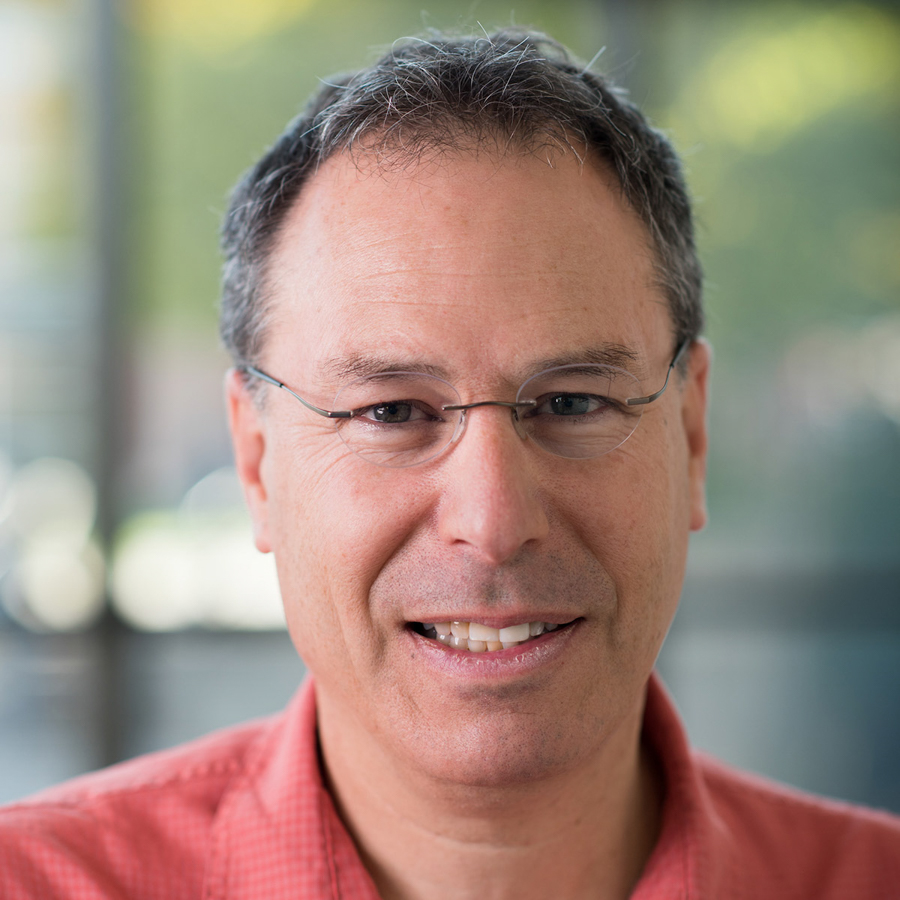
Scott Slovic
Description: Scott Slovic discussed a unique program at U of I in which he is a part of. Semester in the Wild is a program which has taken students from across the world into the Frank to learn about the environment and understand how the wilderness exists and functions. Dr. Scott Slovic is an English professor at the University of Idaho. Dr. Slovic teaches courses in interdisciplinary environmental humanities, American and comparative literature, environmental writing, and nonfiction writing. He has been an IHC board member since 2014.
Date: 2020-06-13
Topics:
The visual topic map is hidden for screen reader users. Please use the "Filter by Topic" dropdown menu or search box to find specific content in the transcript.
Dr. Scott Slovic: Thanks very much, Gary. And, thanks for creating this opportunity for me to bring all of you into the Frank Church Wilderness. We were expecting to be located in McCall, for this Camp Humanities right on the edge of of the Frank. And so, some of us decided it might be a nice idea to give you a dose of what it's like to actually experience this, wonderful wilderness area.
That's such an important part of the state of Idaho. I hadn't known much of the history that Larry was presenting to us earlier, so I certainly could have listened to him for at least another half hour explaining you know, some of the, political nuances and, and our realities associated with the creation of the Frank Church wilderness.
But what I would like to do is try to share some slides with you and, and give you a dose of the experience of this place. And Larry mentioned how important it is to have champions, in order to pass various kinds of legislation, including legislation to protect the natural environment. And essentially what I'm going to be sharing with you as efficiently as possible is an academic program designed to create the next generation of champions for places like the Frank Church Wilderness.
So here, I what I'd like to tell you about is the semester in the wild program, which was created in 2013 by the University of Idaho. Takes place right in the center of the Frank Church River of No Return Wilderness at the Taylor Wilderness Research Station, which is located on something that we tend to simply call Big Creek.
But it's actually the Big Creek River, located 7.5 miles west of the confluence between Big Creek and the Middle Fork of the salmon River. So this opening slide shows me, working with a group of students in the first year of the semester in the wild program with the Taylor Ranch or a Taylor Wilderness Research station down below us.
As you can imagine, for someone like me who works in the field of the environmental humanities. This is essentially the pinnacle of my long career, teaching, environmental topics from a humanistic perspective to actually sit in a location like this with a very inspired and focused group of students, trying to marshal their energy and, and, idealism and, guide them toward, productive careers and, lives as engaged citizens.
So this is an in holding in the wilderness area, the Frank Church River of No Return wilderness has a number of these places that are actually owned by other, institutions, located inside of the wilderness. And Larry probably could have shed some light on how the legislation from 1980 came to preserve these in holdings. I think this has a lot to do with, building a general constituency for the Frank Church wilderness, the fact that certain organizations were able to continue to use this parts of this land and, and other private individuals come in to hunt and fish and and otherwise enjoy and experience the Frank Church, even though it is a protected area
with severe limitations on motorized vehicles and other kinds of activities, in the wilderness. So let me, run through some slides to explain a little bit more about semester in the wild. So here this slide shows where exactly the Taylor Wilderness Research Station is located. I've been I've created this blue dot, to show you which part of Idaho this is.
Although I didn't draw the boundaries of of the wilderness area itself and the contiguous wilderness area such as the Selway Bitterroot. So again, the idea is to train the next generation of environmental writers, scholars, managers, outfitters and activists, and by activists, I would include the idea of, creating champions for various kinds of social and environmental causes who have this opportunity to, spend several months studying in the wilderness and thinking deeply about the meaning of their academic work and what their lives will be like when they leave the backcountry and return to the country.
So the the the heart of the Frank Church, River of No Return wilderness is one of the hardest to reach unpopulated parts of the contiguous lower 48 states. This is from a Washington Post article in February 2018, where they used various kinds of measurements to determine the the, extremely remote parts of the lower 48. And this is the map included in that article.
And you see the number one in Idaho as the number one most remote location, in the country, with limited population. So the students who participate in semester in the wild, I decided not to go study abroad in, Paris or Tokyo, but rather to study, inside the U.S. in an extremely rare and special place. This is what it looks like, to be in the heart of the French church wilderness.
It's a beautiful and very rugged landscape. Not easy to get around in. Especially because you're not allowed to bring motorized vehicles other than the planes that fly in and out to special landing strips. It's a wilderness area, not a national park. Hiking in the French church, unless you're on one of the unusual trails, means jumping over logs and making your way, weaving your way through burnt over landscapes where fires are typically allowed to burn rather than suppressed, or when they occur.
And there are regular fires in the Frank Church wilderness. The students in semester in the wild engage with a very demanding and inter woven curriculum. It's a full course load for one semester, in the fall. Including, natural science or general ecology. A strong dose of humanities, environmental writing and American environmental history. I typically teach the environmental writing class and then also, social science course in the form of a wilderness policy and management class.
And then they study outdoor leadership and wilderness survival. And here you have Gary Thompson from Moss, the McCall Outdoor Science School, instructing the students on how to pack a backpack for, wilderness experience and what to take and what kinds of things not to include so as not to have an overly heavy backpack. There's a, strong element of interdisciplinary team teaching.
When I go into the wilderness to teach, often I bring with me colleagues, who come from rather different disciplinary perspectives in order to, bounce our perspectives off of each other so that in this one slide, one image, you see my graduate student Melanie Thongs, who's an ornithologist and a writer who also has a PhD in physics, talking about birds and literature.
The man sitting there in in the hat is Jim Kingery, retired ethnobotanist and rangeland ecologist from the College of Natural Resources at at the University of Idaho. And I'm often fascinated by participating in my colleagues presentations on subjects that are outside of my area of expertise. So I participate completely in there, segments of the classes.
And they also join in when I'm teaching writing. And so you see, Jim Kingery here teaching about, native plants, to the students. There's a practical component, such as, having this students create Leave No Trace skits, how to behave properly in the wilderness, and in fact, that this one student is giving it a skit on how to go to go to the bathroom properly in the wilderness and not, leave traces.
And then, Gary Thompson here is teaching the students how to read a topographical map, a vital aspect of surviving, in a wilderness area. It's a physically demanding program where, in addition to the academic component, the students often engage in backpacking trips through this very rugged landscape where they climb mountains. As you see the students there on top of the top of one of the peaks in the wilderness.
When the students are not in their classes, often they're busy running up the mountains on their own. And this is with a group of students after dinner one evening where they decided to climb up to a nearby ridge in order to view the sunset. And there you see our Japanese student who came from Tokyo, Japan, to engage in the semester in the wild program.
You see her walking down the mountain with her headlamp, on this remote, wilderness place. They involve they're involved in various other, social activities in the wilderness, playing soccer on the airstrip, roasting marshmallows on around the campfire. They learn how to eat edible plants in the wilderness. Here. They're actually foraging on the airstrip for planting.
A kind of green vegetable that is edible. One of the first students in semester in the wild created an organic garden in the shape of a U and an I, which you can see the arrow pointing to in the middle of the, research station on the lower left. And it now produces tremendous amounts of vegetables that the students and researchers are able to enjoy.
The students cook together. And that's an important part of their bonding experience in the wilderness. Professors, groceries and mail, travel in via bush plane. And on the right you can see the plane as it comes in over Big Creek, just about to land at the research station. It's it's one of the most fantastic experiences I've had in the wilderness, actually, to fly in over this rugged country, and be hovering above the river in this way.
Also, international scholars, have often come in with me here. You see a scholar from India and a scholar from Brazil smelling, ponderosa pine tree. And, sometimes when I can't find someone to watch my dog, I bring her with me and have to hoist her into the bush plane. Which is a bit of a challenge.
Students live together in cabins or in wall tents. This is what the wall tents look like. Their canvas walls on wooden platforms. The water that comes from Pioneer Creek into the research station is so clean, it doesn't have to be filtered or treated. This is my colleague Phil Brick, director of environmental studies at Whitman College, who came in with me and helped to launch an entire pipeline of Whitman students who participated in this program.
And Phil was just drinking directly from the creek, something you can't do in many places in the lower 48 or anywhere else in the world. We often encounter wildlife when we're at the Taylor Wilderness Research Station here. One of our students, R.D. Rosales, who is a wonderful fisherman, is showing the other students a cutthroat trout.
All of this is catch and release, except for the invasive fish species like whitefish that are found in the river. This is a picture taken of a wolf howling just outside of the research station, a few months before I first visited the station in 2013. The research station became part of the University of Idaho. In 1970, when Maurice Hornocker, a predator biologist who was doing research on mountain lions near Taylor in the late 1960s, saw that the station at the, the homestead was available for purchase and encouraged the university to, to purchase it to, much of the teaching involves classes overlapping with each other.
So here we see a conservation social science class and environmental writing class. Conducting a debate, a student debate, responding to Wallace Stegner 1960 Wilderness letter and William Cronon's, well known article, The Trouble with Wallace about what we should do when we encounter human structures in wilderness areas, should we preserve them in this case, the students are standing adjacent to, native pit dwellings that they should show.
Bannock people had created, many years ago. The the pit dwellings are still evident. And the question is whether they should be preserved, as evidence of human activity in the wilderness or should somehow be erased because they're marring the natural features of the wilderness and and some. And working between Stegner and Cronon, we were able to get the students to engage with these issues.
And ideas. Many of the students are science students, and I teach writing. A lot of them are a little bit fearful of writing, so I try to make them comfortable with themselves as writers. And we do a lot of reading as well as the students own work. They do 10 or 11 essays in the semester of their own, but we often spend time simply reading aloud to each other, and so that they can listen to interesting language coming out of their own, my, mouths and and, immersing themselves in this language.
In this case, the students and I were reading Bruce Chatwin's book, In Patagonia together. Often the students will read things with me, such as Kathleen Dean Morris book River Walking, and then we'll go out and walk through the river and look around very closely, or will read John Muir's well-known essay A Windstorm in the Sierra, which is about climbing a tree in the middle of a storm.
And then I used to have the students climb up in the tree until I was told that climbing is no longer allowed because of liability issues. So now we skip stones as a way of having them feel physically connected to the place. Public speaking is a strong component. In this program, as is writing the goal is to help these students, transform their lives and, and think about their own power, their ability to survive in a remote location like this, to gain confidence, through this experience and also confidence in their ideas and their ability to express these ideas, to go out and become leaders, to become champions like those that Larry the
rail coach mentioned earlier. They are often alone when they're in this program. Plenty of opportunities for reflection and meditation. And yet the students tend to bond closely together with their own internal community and with the professors who fly in every other week. On these bush planes here you can see the Bush plane landing as we're conducting class, on the airstrip.
And we, strongly urge the students to develop a sense of civic engagement, even though they're in the middle of the wilderness, away from, the country society. Much of the material we study, is about becoming socially involved and caring about issues and then finding a way to take a stand and use our voices in order to be positively engaged citizens when we all return to the country.
In the image on the left, you see the students during one of our backpacking trips actually listening to wolves howl on nearby hillsides, which I thought was especially powerful because we were talking about, social engagement. And many people refer to, activists as people howling in the wilderness when people are, when other citizens are not listening to them.
Here we were listening to actual wolves howl and reflecting on what it means to to be involved and to make a difference in society. And then, every morning when I'm out there, I tend to walk out to the end of the airstrip and watch the sunrise over the mountains, near our airstrip classroom, which people jokingly call Stump Henge.
It looks a little bit like Stonehenge made out of tree stumps. So that's the end of my presentation, and I'd be happy if we have a minute or two to answer any questions.
Speaker 2: Questions? I, see, Jan. Jan is wonderful. Just really inspiring. And so important. How's it funded?
Dr. Scott Slovic: It's funded, I think, to a large extent by student tuition. And we've been floated by the College of Natural Resources. Up to now. Actually, I need to say that that the the Taylor Wilderness Research Station is essentially being shut down at the moment. It belongs to the Or. It's supervised by the College of Natural Resources.
But they did not have funding due to the tremendous budget pinch that we're in right now to continue to pay the managers. So they're people, a few people. A skeleton crew is out there right now. This program has actually been suspended for the fall. I had been planning to teach it in this coming semester, but won't be able to because there there's simply not enough money.
And we've, sometimes had as few as four students participate in the program, and a maximum of 14. But, without a steady number of, you know, numerous students, it's been difficult to make it work financially. When I tell people about this program as I travel around the world or as I publish articles about it, many of my colleagues say, well, couldn't you do a program for supporters of the humanities in the wild or veterinarians in the wild, or parents of college students in the wild?
People really want to come out and spend time in this unique location, but it's been a bit of a hard sell for undergraduates, even for people who are majoring in natural resources and, and, wildlife management and things like that. So at the moment, it's been a bit of a struggle to fund it, to be honest.
And, I'm a little concerned about the future of the program. I see Max's hand.
Unknown Speaker: Thanks, Scott. What an introduction to, You must have a blast out there, that's for sure. I'm envious. So thinking about the struggles of keeping this going, you mentioned the guy from Whitman. Are you do you attracts then undergraduates? I don't, I'm unaware of anybody from Boise State getting involved in this. I mean, that might be a solution, right?
Partnering with other local Intermountain institutions. Are you in conversation?
Dr. Scott Slovic: I think that's a great suggestion, Mac, and we could do this more formally. I should have said that that throughout the history of this program, roughly half of the students each year have come from other universities. We have had Boise State students. I don't know how they heard of the program, but but we've had a handful participate.
There's been a regular pipeline of 1 or 2 Whitman students a year. The university of Wisconsin, usually sends us two students a year. And, we've had Washington State University students, students from the University of North Carolina and, you know, a handful of other universities around the country. And these students who came from Keio University, one of the premier private universities in Japan, I mean, she joined the program.
But, yeah, so far we just not we've had a little bit of trouble, getting a, a sustainable pool of students. So I think this is a good opportunity, since we're having a hiatus this year to reflect on how we might improve our partnerships with other other universities, such as Boise State. But, you know, I hope that we are able to make this a sustainable program.
Unknown Speaker: Someone else had a question. I didn't really have a question. I was just like, wow. I mean, what a wonderful program. And I'm sorry to see that it's struggling right now. And let's cross our fingers that things can turn around.
Dr. Scott Slovic: Thank you. You know, I was giving a lecture a couple of years ago on the occasion of the 50th anniversary of, anniversary of Muir College, University of California, San Diego. The colleges are named after famous individuals like Thurgood Marshall and, John Muir. And, when I gave a talk in which I, I told people a little bit about the semester in the wild program, and a woman came up to me afterwards and said she was the great niece of John Muir, the famous conservationist, who was the co-founder of the Sierra Club, who famously dropped out of the University of Wisconsin to study in what he called the University of the wilderness.
And he never went back to school. He just became a writer and, and an adventurer. And she said, you know, first of all, she said, I have a son who's in high school, and I think he would love to be in a semester in the wild program. And if this program had existed when John Muir was alive, he might not have dropped out of college.
He he might have attended this program himself. And he showed us all how to climb trees. Muir climbed a tree in the middle of a, major storm and and famously thrashed around at the top of the tree. I don't when I used to have my students climb trees, we did it down in the valley, not up on the mountain ridges, and not in the middle of a storm.
Nonetheless, we were told that was too dangerous. I always thought it was amusing that the, risk management people at the university felt it was dangerous to climb a few feet off the ground into a tree and not to spend three months out in the, wilderness with mountain lions, bears and rattlesnakes. So, in any case, I followed their, their, commands, and, and we throw stones into the river rather than climbing trees.