
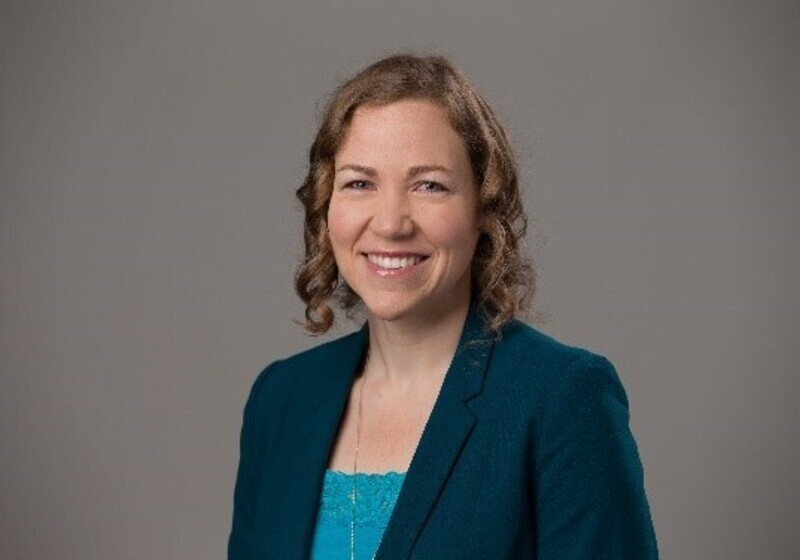
Dr. Rebecca Schwartz
Interviewee: Dr. Rebecca Schwartz
Interviewer: Johanna Bringhurst
Description: Johanna and Dr. Rebecca Schwartz talk about a little-known area of World War II history in Idaho that significantly impacted Idaho families. Note: The Long Afterlife of Nikkei Wartime Incarceration by Karen Inouye is the correct title of a book referenced in this episode.
Date: 2023-12-07
Topics:
The visual topic map is hidden for screen reader users. Please use the "Filter by Topic" dropdown menu or search box to find specific content in the transcript.
Johanna Bringhurst: Hello, everyone, and welcome to Context. This program is brought to you by the Idaho Humanities Council with funding from the National Endowment for the Humanities. The views expressed here today do not necessarily represent those of the IHC or the NEH. My name is Johanna Bringhurst. And joining us today is Doctor Rebecca Schwartz. Doctor Schwartz has served as a full time professional in academia since 2008, and is currently the dean of Academic Pathways for Columbia Gorge Community College.
This month, she's taking on a new role as vice president of instruction at Blue Mountain Community College. A graduate of the University of Idaho who, with degrees in philosophy and international studies, she later earned her Ph.D. in educational leadership and policy from the University of Utah. Her academic work centers on history of education, particularly as it relates to the 20th century in the Pacific Northwest.
Doctor Schwartz has a particular interest in history as it relates to student success. Born in a rural area of northern Idaho characterized by lack of diversity. Working internationally was a transformational experience for her since her return from Japan. She has worked at five higher education institutions. Rebecca, thank you for joining us today to talk about a little known area of World War Two history in Idaho.
Dr. Rebecca Schwartz: Thank you so much for having me. I'm excited to be here.
Johanna Bringhurst: So in 1940, a Boise construction company called the Morrison-Knudsen Corporation won a contract to build military airbase facilities on Wake Island in the South Pacific. This was a substantial construction contract under the National Defense Program in 1941. Hundreds of workers from southern Idaho sailed from San Francisco to join nearly a thousand other workers on Wake Island. Morrison-Knudsen was a major employer here at that time.
How big of a deal was this defense contract for Idaho?
Dr. Rebecca Schwartz: It was a major deal. As you said, we had hundreds of workers. at one point, there was over a thousand. There's 1100 people from Idaho on that island. And we're talking about a period in Idaho history where the the population of Boise was 30,000 people. So a thousand people from the treasure Valley on a tiny island in the Pacific was huge.
Everyone knew somebody that was going there. Everyone knew a family with a son or a husband or a cousin that was there. So it was, a large, economic boon for the area because everyone had these jobs. But it was also sort of exciting. We're all going to go do this work abroad and make this money and come back, and it's going to be, you know, so good for Idaho.
Johanna Bringhurst: Most people, I think, are familiar with the attack on Pearl Harbor that day of infamy, December 8th, 1941. But Wake Island was also attacked the same day. Can you describe what happened?
Dr. Rebecca Schwartz: Sure. So I think you're right. We all know the Pearl Harbor attack. It's the day that will live in infamy and Wake Island wasn't really an attack. It was the Battle of Wake Island. The US Naval Institute refers to it as the massacre of Wake Island. So Pearl Harbor had much higher, casualty rates. It had 2500 people died. But it's a it's an attack that lasted just over an hour.
An hour and 15 minutes. Japan did this bombing raid of Hawaii. And we had this mass casualty event. Wake Island went on for weeks. It was this again, this tiny island. There were no indigenous people there. It was rocks. There isn't even really like a lot of fresh water or resources on this island. It had a little bit of water and it had birds, and that was pretty much the entirety of it was there, but it had some strategic, purposes, which is why they were building this military base.
And some people talk about how it was the next day after Pearl Harbor, because Wake Island's on the other side of the International Dateline. It was as you said just literally hours later that they first did a bombing campaign, and then they did, naval assault on the island. And what was kind of fascinating, as we said, there was over 1100 contractors on the island,
these are not military personnel. These are these are people working for Morrison-Knudsen. And there was a couple people for, like, an airline who were there, not military. There was only about 500 military personnel, but they. When when you're all in a foxhole, suddenly you're all military personnel. And when the Japanese tried to invade, they all picked up arms and defended it, it was referred to as the Alamo of the Pacific because you had the Japanese, naval, fleet, which, remember, just, you know, a couple decades earlier, they defeated Russia.
The Japanese Navy was one of the most powerful military organizations in the world. And they were attacking this tiny island with, you know, 1600 people on it. And still that tiny island was able to hold out for, two weeks. And so they were eventually captured, though, and, and that sort of.
Where we come to the massacre of Wake Island.
Johanna Bringhurst: Did the people on Wake Island know about the attack on Pearl Harbor? Were they aware of the broader context of what was happening?
Dr. Rebecca Schwartz: Not in the immediacy. So they knew that there had been an attack. and again, it went on for, the attack on Wake Island went on for several weeks. So they had communication. They were asking for help. They were asking for aid. And the attack was not a constant bombardment. It was waves. So they had bombers come in and bomb.
Then they had the Navy, Navy try and do again ground, invasions. And they had two of those try and happen. And in between those waves of attacks, the American forces were calling for help calling for aid, getting back and forth, having this communication with, the US government and their allies. And so they, they everyone sort of knew what was happening, but no one quite knew what to do.
So the U.S. was trying to send, reinforcements. They tried to send both provisions and reinforcements and sort of the best laid plans type scenario. They tried at least twice to send provisions. One, they sent a ship out and then called it back, because they saw that Japan was sending another wave and they thought this one ship would just be going to slaughter.
And so they sent another, a bigger, like an armada, a whole force, to go in and get supplies and reinforcements to, Wake Island. And they hit some rough weather. one of the supply ships was slower than anticipated, and it was supposed to arrive December 22nd, which was about two weeks after the start, and it was delayed.
And on December 23rd is when Japanese were able to take Wake Island. And so then there was no reason to continue with the reinforcements, and they again returned.
Johanna Bringhurst: So it sounds like the attack on Wake Island was probably more impactful to people in Idaho than what had happened in Pearl Harbor. Can you describe what it was like for people in Idaho learning about the news of Wake Island?
Dr. Rebecca Schwartz: It absolutely was more impactful, as, I mean, Pearl Harbor was a devastating event in American history, obviously. but it was it was a naval base in which people from around the country were there. And so I think the entire country felt that attack, sort of, you know, we all felt like we were attacked because the country was attacked in that spot.
and it was a surprise. It was fast. And it was, again, a very, very high casualty rate. And so the again, we were all impacted. Wake Island, you know, two thirds of the people on it were from Idaho. everyone knew someone there. And again, they could communicate. So the drama of this attack and sort of the the danger of it, the, the whole, experience was being relayed to people.
It was on the news every night. So people in Idaho were hearing their loved ones, their families, their friends who were in danger. They were hearing, you know, they're trying to send reinforcements there. And they it was there was a little bit of propaganda in there, too, that, you know, these strong Americans are holding out against the forces of the Japanese.
And like at one point, one of the one of the leaders on Wake Island said, if you could send some supplies, that would be great. And he was like, we really need these supplies. But it got back to people that they reported. It was saying if they would send us more Japs, we're ready for them because they were having these kind of discussions and, and promotional things.
So the people at Idaho were waiting for news constantly of, of their family members, exactly what was going on. The same with people, you know, in Pearl Harbor waiting to hear if their loved ones, were there. But it was it was an overwhelming sort of political and social and cultural shift in Idaho. Idaho is is a state that was built on mining and forestry, which are were always sort of, areas that were unique, like it, it had people who worked, alone.
It was really a good, place for sort of like isolationist movements because you could do all these things. And so they it wasn't the most, metropolitan state to begin with. And now we're being attacked by these people and it really started a political discussion and, and sort of this growing, feeling toward the Japanese that, that really start to permeate the state at the time, more than other states, as we'll see, and in subsequent actions of the state, that the anti-Japanese sentiment that evolved from this was extreme.
Johanna Bringhurst: Why did the Japanese attack Wake Island? I think you said it mostly was sand and birds. It's why.
Dr. Rebecca Schwartz: So it had the one distinction of it, and that was it was a series of rocks and sand that were between Hawaii and Japan. And so, remember, this is the 1940s. Planes needed a place to refuel. They couldn't make it that distance. And so they had sort of, a review, of the strategic importance. And the US had actually sort of annexed Wake Island 50 years previously in the late 1890s.
And by the 19 aughts, Japan had recognized this is an island that belongs to the U.S. everyone knew it was sort of this U.S. territory, but nobody cared because there was nothing there. And it had a history of sort of like. At one point, in I think the 1920s, Japanese ship was injured in a storm and needed repairs.
It just went to Wake Island and stayed there and recovered. They went there and hunted birds when they needed food. Other countries just kind of stopped at Wake Island because it was a series of rocks. It was a place to do repairs. It was a place to get fresh water, and it was uninhabited. So it was, you know, it was fine to be there.
but when it became obvious that Japanese expansion was happening, the U.S. didn't want them to take Wake Island, because that would give them a foothold that put them closer to Hawaii, put them closer to the US mainland, and if they needed a place to refuel their planes or dock, their own navy, it was a strategically important place.
so it was actually ranked as the third priority in the Pacific. It was after Pearl Harbor, then midway, then Wake Island was the most important strategic locations in the Pacific to the US.
Johanna Bringhurst: How did the battle resolve itself? What happened in the end?
Dr. Rebecca Schwartz: So the end took years to come about, even though it was only a two week battle. So the Japanese did invade. They did capture the island, and they captured, the 1600 people who were there. I always find it interesting that there at that point was a fairly low, death toll. And it was almost even between Japanese soldiers and Americans who had died, which I always find that very fascinating, because you have this giant military fighting, you know, a couple of people with guns, a couple of Idahoans in a trench were able to hold out.
So it's it is a really, a story of sort of the resilience of us. But, at the end of the day, they were captured. Of the 1600, most of them were shipped to P.O.W. camps elsewhere in the Pacific. Only about 360 stayed on the island, and they stayed to not mince words, they stayed as slave labor primarily.
they the Geneva Convention wasn't honored by Japan. It didn't really even exist at this point. and they kept the people to do the work that they were already doing. They wanted them to build, an airfield, but instead of building it for the US, they wanted to build it for Japan. They also wanted to reinforce Wake Island.
They ended up bringing gun turrets and all sorts of reinforcements to, to stave off any American invasions of the island that might come later. And so this again just pile of rocks became this major stronghold. And and they kept these 360 people there for to build those turrets, build the airlines, build all the parts to it.
Johanna Bringhurst: So it was the workers who were kept on Wake Island. Did they spend their major of the war there? What happened to them?
Dr. Rebecca Schwartz: So not all of them spent the remainder of the war. several spent the remainder of their lives there, however. So, several of them died within this the next couple of months. The conditions were not good. they talk about how it's, again, an idea where they didn't the Japanese didn't know what they were going to do with Wake Island until they decided to build this.
So for several days after they had successfully invaded, they had 1600 prisoners of war, and they thought they were going to, to kill them all. That was the original thought that we're going to execute all 1600 of these people. And it wasn't until sort of the thought of, hey, these are skilled laborers who are doing this work.
We could use them instead. Plus, there was no pressure from the US. Don't kill all of our people. Obviously. and so even just during that decision time that, that 2 or 3 days, this is December, it's kind of cold, it's rainy and they're on a pile of rocks and they're all outside. They talk about how they had to kneel in the gravel in the rain, day and night, while they waited to know what was going to happen to them.
And at the end they said, you know, through the grace of the Emperor, we are going to give you your lives. And, no one knows if this is real. But reportedly, one of the men shouted, well, thank the bastard for us. Like so they were even after all of that there, in theory, had good spirits, but they they stayed on the island.
360 of them stayed on the island of the 1600. The others were sort of being shipped out to all these other P.O.W. camps, none of which had, particularly lovely facilities or experiences. But the 360 were just slave labor. They were worked day and night, primarily. there was a little bit of class difference because, like, in all things, there were the people who knew how to work the equipment.
There were the laborers, there were there are these, men who who could work with their hands. But then there were the managers, the people who were a little bit higher up in Morrison-Knudsen, who could talk a little better, could have a little bit of better connections and were politically protected a little bit more. And even on Wake Island, they had slightly different experiences.
So you saw the laborers again working day and night, literally worked to death sometimes. And slightly better treatment of office or slightly better treatment of managers. but long term, in 1943, they moved the majority, I think it was, 260, prisoners off again. They moved them to other camps and they left 96, 97, prisoners on to continue the work.
Then there was one more volunteer. A doctor said, I'm going to stay behind to and take care of, see to the medical needs of these men. and none of them survived. It was a, They long story short, they are they are buried in a mass grave on Wake Island. in 1943, when it became obvious that Wake Island was no longer serving the strategic needs of Japan, they decided to abandon it.
They lined up the men along the shore. They blindfolded them. They, tied them up, and they sort of unceremoniously shot them and buried them. it gets but oh, wait, it gets worse. because a day or so later, one of the Japanese soldiers said, hey, I think I saw somebody running away. And so they unburied all of them to count how many were there.
And sure enough, one person was missing. And so they then did a search and once again, that one, this sort of nameless person, they think was in hiding on the island for about two weeks until he was found and beheaded and tossed into a grave. And to add sort of insult to injury, Japan, when they were asked like, what happened to these people on Wake Island, their first report was they were killed in a bombing raid by US fighters that us kept bombing us, and it was so hard and we tried to protect them, you know, we put them all into, an air raid shelter, and it just took a direct hit and
they were all wiped out, and it was oh, so sad. And it wasn't until later that it was discovered that they had all been just unceremoniously executed.
Johanna Bringhurst: Oh, man.
Dr. Rebecca Schwartz: Sorry, I should I should have put a warning on that's that story. It's.
Johanna Bringhurst: Yeah, that is, it's just heartbreaking to think about the families that were waiting for years to hear news.
Dr. Rebecca Schwartz: Well, it it's it's heartbreaking to think about the men on the island for me. So you talk about families. Some of them were families. So one of the workers on it, Wilcox kept a diary. And Wilcox had been a soldier in World War One. And so even though he was no longer a soldier, he was, Morrison-Knudsen contractor.
he he cared a lot about sort of the military aspects of what was going on. And he wanted there to be a record of the conditions they were experiencing. And it was very important to him that there also be a record of those who died. And literally every passage he put it every day, its here's who passed away.
And one of the most heartbreaking records from his diary for me is when he says, this person died. He survived only five days after the death of his son because his son was also on the island with him. And so it's remember it because they're they're not soldiers, they're workers. And it's really common for families to be in the same business.
So you had people who were related, you had family members on the island. and in that particular family, that family lost their father, their son, and then their other son died just a few years later. in, in a crop dusting accident, of all things. And so it was it was just nothing but tragedy for that family moving forward.
Johanna Bringhurst: well, thank you for sharing, stories about specific families also. That is not something I had thought about before. what happened to the workers that were sent off the island that were put in P.O.W. camps?
Dr. Rebecca Schwartz: So the P.O.W. camps are never, good in any conflict. They they aren't generally considered, vacation. I would say that the Japanese P.O.W. camps were exceptionally brutal, and these were no exceptions, but these people were not treated differently than other American P.O.W.s. And for the most part, they made it home. So, they did eventually have, I think, about a thousand works and clinics and, people come home.
Johanna Bringhurst: Why were the workers killed? Why were they treated so poorly in camps? How did the Japanese military view these men who were workers, not military?
Dr. Rebecca Schwartz: So I think it's really clear again, they had planned to kill them at the very beginning. They weren't planning on taking prisoners. They weren't planning on, on keeping these men alive. Because that was sort of the Japanese view of war. It was conquer. It was not. It was. It was. I can't I can't use strong enough language in a podcast to talk about how it was, not capturing the people,
it was capturing land. It was, you know, the supremacy of the Japanese people was about so, so these other people weren't really people. They were less than. The Japanese emperor was designed by God. These were his rules. And these people, again, they were just less than human. And so killing them was not like killing a real person.
they talked about in, in some P.O.W. camps, they, when they were doing some very dark work, they referred to them as logs, and they would talk about how many logs did you cut down today? You know, this. And they were those are how many people did you kill? So it really wasn't to them, you know, it wasn't murder.
It was clean up. We want this island and it has all these things on it that we don't need. So we're going to get rid of it and clean it up. But then they realized, hey, we can use them. And it was it was tools, not people. These were tools to be used, used and discarded when they no longer had value.
Johanna Bringhurst: And I know I that is this is, more emotional and heavy than I was expecting. I am wondering if the families back in Idaho, did they have any word during the war about who was alive, where they were, what was happening? I mean, did anyone escape to kind of report what happened.
Dr. Rebecca Schwartz: While there was ongoing conversations happening between Japan and the US government and there were sort of letters sometimes there was sort of responses, there was someone who escaped not once the island was, occupied, but in I think it was December 20th. So it was after the the battle had started. There was like one working plane left and someone was able to escape and give word.
but generally no one really escaped that. The closest there was was, you know, there was a few attempts to escape. They were caught. They were beaten, that that person who wrote the 98, that that's how we know there was 98 at the end, he wrote a message. the 98 rock you might be familiar with.
But he wrote that in the two weeks that he escaped. But again, you are an island, and it is an island far from anything. And so it was really hard to escape, like you couldn't really escape on your own. You have to have a way to get off the island, which was rare. and so escape. Escape wasn't really.
They talked about it. Some of the diaries talk about how there's constant rumors of escape. There's constant rumors of rescue. There's, you know, always all this talk. But even they even the diaries talk about how those whispers got monotonous because it was so it was so hopeless.
Johanna Bringhurst: So, by and large, most Americans and the families in Idaho had no idea if their family member who worked for Morrison-Knudsen was alive or perish or even where they were.
Dr. Rebecca Schwartz: They probably knew that they were alive. They, because the majority of them did survive. Forget, of the I think it was at the height that we don't know the exact numbers ever, because it was such a big operation. There were constantly boats coming in and out, taking people on, taking people off. But total we think there were about, 1215, 1218 civilians at the time of the attack.
there were about 1100 at the end of the attack, and there was about, 180 who died in the course of the two years. So 180 of 1200, you had good odds that your family members survived, but the Japanese weren't keeping good records. It was, again, those diaries and the other prisoners who were keeping those kind of records.
and it's hard to say this. I can't you can't put yourself in the mind of, of the people then. But as I commented before, the people who are higher up the managers, the officers were treated a little better. They also wrote letters and in their diaries that their treatment was better, that, you know, the Japanese weren't terrible to them, that they, you know, they all went fishing together and, you know, they had drinks together sometimes all these things.
And they were part of the communication that was going out because, you know, the Japanese obviously read everything that was going out. They control that narrative very strongly. And so there's some thought that maybe they were purposefully, they being the Americans who were not talking in such extreme terms that maybe they were doing so purposely so that their messaging could get out.
And so, yeah, so it some people did know, like so-and-so passed away because they were able to tell those. But again, Japan was really clear on not telling the numbers of people who had passed away. They would sometimes save the numbers until there was another bombing raid and then say, oh, 22 people died in this bombing raid. It was 22 people over the previous time like that, because in the same way, America had the propaganda going about how brave these would be.
Japan had the propaganda of how, you know, they were so strong and the stupid Americans killing their own people.
Johanna Bringhurst: Right. So it sounds like it was about a thousand who returned home after the war. And I imagine that was a process over time of, men returning back home. I wish, I wish we could see those reunions. That must've been really special.
Dr. Rebecca Schwartz: Well, and it's it wasn't really that long a process because, remember, it wasn't like there was a lot of flights or a lot of options. So there would be a lot of people on this boat and they would all arrive in, you know, Seattle at the same time, and then they'd all be on the train together at the same time.
And that train would arrive in this location. And, and people knew where those trains were coming and they would be met in Idaho with, with cheers and welcome and congratulations. And thanks.
Johanna Bringhurst: Yeah. Wonderful to think about that. Did any of the workers share stories or write memoirs after they came home? Was it talked about?
Dr. Rebecca Schwartz: In general, World War Two was not talked about in the way we think of it today, because it one we're just things happened so fast. You know, we we have memories that come out the day people retire the that they've been working on. But this was, this was a trauma to the world, you know, that we all went through this major war.
And I don't think it was people's first instinct to write, memoir, especially for publication, about what happened. So those things, it it was it definitely came later. for example, for like, Japanese Americans, they talk about how it wasn't until the next generation came along and said what happened, that they started capturing the stories and, and releasing them.
So, it, it there was a couple of things in the 1950s, some articles and short stories type things. in the 70s, you had sort of you had sort of this explosion of World War Two memoirs, because, again, the next generation is writing them. But, for this particular one, the only one I'm really aware of is Mace.
Frank Mace wrote his memoir in 1990. So that's.
Johanna Bringhurst: for for some of.
Dr. Rebecca Schwartz: Our listeners, 1990s, a long time ago, for me, it's, it seems like not that long, but that that is, you know, 45 years after the event, he wrote his memoir. Oh, it's terrifying to think that that was almost 35 years ago now, but who? That that was a long time after Wake Island that he actually had that come out.
but they did have, like I said, the those diaries and, and things like that. So, there was material available. We had records that people kept, but I, I don't think they were. They weren't inclined that generation, not just these Wake Island, but that generation was not one to.
Unload their trauma in the form of a memoir like that. Yeah. And so I think a lot of these stories, they were if family members asked if if people asked, and some of them became sort of legends or myths or they said that someone calling out the Emperor when they're all sitting there in the rain, we don't know who that was.
We don't know if it really happened, but somebody said this and and this. So even even like the 98, we think it was 98. That's what's written on the stone. We know that the Japanese knew exactly how many people were there because they could count them and find that one was missing, but we're not entirely sure that that number is 100% accurate.
and it's things we don't know if it was two weeks or if maybe the Japanese were saying different things. So it's it's really hard to have perfectly accurate information, especially when it was just such. I mean, it was a horror. It was just the the worst conditions you could possibly imagine for years that these men were going through.
And so how would you even relate? The worst thing you can imagine on paper is it makes sense that they wouldn't want to relive it. And even if they were inclined, how how could you how could you articulate something of of that magnitude?
Johanna Bringhurst: Absolutely. After the war, when everything was done, where any of the Japanese leaders who are on Wake Island and executed the 98, were any of them held accountable?
Dr. Rebecca Schwartz: Yes, to some extent. so. The treatment of Japanese military leadership after the war is always it's always a little bit fuzzy compared to the German leadership. I personally just think because we had fatigue at that point, the war had been going on a long time, and I think we all wanted to be done. So the trials and, and the work of, of that side was a little bit more.
So it was a little quicker then like the Nuremberg trials, for example. but the two leaders, which would have been Sakaibara, and and one more and Tachibana, they were both sentenced to death for the, the massacre that was that happened. they were also they were captured and sent to death. However, only one one was given life imprisonment.
In 1947, his sentence was commuted to life imprisonment. but the other one was hanged in 1947. And the one who was hanged, was the one, Sakaibara, who, he beheaded the prisoner the the last of the 98 and ordered their their massacre to begin with. And he he was put to death.
Johanna Bringhurst: What about leaders in the P.O.W. camps? You described pretty horrific conditions. There. Were any of those, Japanese military leaders held accountable after the war?
Dr. Rebecca Schwartz: I mean, I, I don't want to say that none of them were, but not in the way that German leaders were. You had a lot of of really high military leaders in Japan who maintained power after the war. They some of them became, like members of the Japanese Ministry of Japanese Diet and even to this day, you can still see sort of the, the, lingering shadows of some of these ideals.
But there were several there were several put to death. There were several who were imprisoned. there were several who again went on trial, but just not in sort of the televised ways of the Nuremberg trials.
Johanna Bringhurst: But you we hinted earlier that the events on Wake Island really impacted how Idahoans felt about the war and felt about the Japanese in particular. Can you explain how those events on Waiheke Island impacted how Idahoans and Americans treated Japanese on our shores during the war?
Dr. Rebecca Schwartz: we might need a whole nother podcast for that one, because that that is a really that's a big question. It's a really big item. And it's it's also to to me, it's the question because we we I say we Idaho was so unique in the war. and it's a really interesting because, because we weren't a, a coastal state, obviously.
And we always think the coastal states had the highest population of Japanese, so they were most impacted. but a lot of firsts and onlys in regards to internment and Japanese American treatment during the war happened in Idaho. And it happened because of these events. So the sort of the the reason for that. So there's lots of things like I think there was only two occasions where people leaving, internment were before, before they had to go to the concentration camps.
the Japanese, camps, they could leave the area. And there's only really two examples of people being stopped and imprisoned while they were traveling. And those are both in Idaho. there was only two examples of students being detained when they went to college, and only one of them was, in the in the winter. One is in in September it was much later, but one was in March and it was in Idaho.
we had the governor saying that, you know, Japanese are rats and we should put them on their island and sink it into the ocean. And you were saying that in, in public spaces.
Johanna Bringhurst: We should say to that there was just in case you're listening to. No, there it there was a Japanese incarceration camp in Idaho. admitted dock near the Twin Falls area. We have recorded some of, some Context episodes about Minidoka, so I'll refer our listeners to learn more about that here. but so Idahoans were encountering Japanese Americans during the war.
Dr. Rebecca Schwartz: They were. And that's really why this interesting dichotomy happened. So you had the governor, who's obviously under a lot of pressure while Wake Island battle is happening. You he's under a lot of pressure while all these Idahoans are prisoners of war. Get our boys home. What are you doing to get our boys? how are you interacting. But they were mostly from, like, the the Treasure Valley.
They were from the Boise area. They were from the, the Metropolitan, the the areas of the states. And so you had Morrison-Knudsen, very wealthy big people in the state putting pressure on the governor. You know, we hate Japanese people. That needs to be the message. Get our boys home. That's what we're doing. You go a little bit more south towards the Twin Falls, towards Minidoka,
and this is now more agriculture area. And Japanese at the time were sort of the migrant farm workers of the age. A lot of the Japanese had come to America to work as farm workers. And so the sugar beet plantations in the south of Idaho depended on Japanese workers for their crops. And so you had this other political force of this agriculture movement saying, no, we're not going to say this about Japanese.
Hey, governor, see all these people admittedly, you have to let them out because we need them to pull some beets for us. We have to have these workers or we're all going to go fallow. No one's going to be able to pick these and as we're even as you're gearing up for war, we need provisions. We need this done.
And the people who do it. You have in a camp. And so you went from December of, of, Pearl Harbor to 1841 and Wake Island again. We're going to, they're rats, we're going to sink them into the ocean, we hate all of them. You have, Japanese students being arrested in March and April. You had people during the relocation process being detained.
you had people with giant signs saying like, no Japs allowed. You had all this anti-Japanese rhetoric. And by the time the fall rolled around, they had been relocated to Minidoka, and they were being let out of Minidoka to go work in the sugar beet fields because and they some of the agriculture people, some of the farmers expressed their gratitude to their Japanese compatriots for coming and doing that work under really difficult circumstances is those Japanese Americans stepped up and put their labor towards this workforce.
And so you have this really, really strange relationship to Japanese people in Idaho happening during this war.
Johanna Bringhurst: It's also one of the bizarre twists of this really difficult part of our history, that it was only Japanese-Americans in certain coastal parts of the West Coast that were incarcerated, while Japanese-Americans who were, like you said, living on in interior states, were not incarcerated. So I think that may have added some confusion and challenge to the situation.
Dr. Rebecca Schwartz: Absolutely. I wrote my dissertation about these six Japanese students who were at the University of Washington, and then they went to the University of Idaho. And Idaho did not treat them well. They kicked them out. But then they went 11 miles over the border to the, Washington state. And they hadn't gone there originally because nobody knew what those borders of relocation would be.
They thought it might be the entire state of Washington. And so that's why they didn't go to WSU to begin with. And when Idaho kick them out, they just they had nowhere to go. So they went through that 11 miles over the border and continued their education at Washington State. And Washington State was fine, but U-Dub was not because it was within the zone.
Right. And and it was literally, you know, dozens and dozens of different areas. It wasn't, you know, one order making zones. It was they had maps, and it was from this street to this street on this state, and then over expanding it from the street to the it was a it was really hard to track and figure out in the moment.
And it wasn't till later when the, the borders were really defined that we could say, oh, it was this area. No, people didn't know day to day if they were in a relocation zone or not. So it was, it was definitely a time of confusion.
Johanna Bringhurst: Because so many people in Idaho are not familiar with this history. not just Wake Island, but also Japanese incarceration. And could you speak a little bit about why this story matters so much, why it's important, and why it's an important part of Idaho's history?
Dr. Rebecca Schwartz: I think it's a really important of Idaho's history, because there's sort of a historical residence that happens that we see the long shadow. There's there's a great, great book called The Long Shadow of Decay, in America. And so it talks about how this event happened. And then, you know, the whole history of Idaho. This was only a few years, but it rings through, through history.
I know my grandfather would rage about Japanese, and I never understood it. He he had very choice words for the Japanese people. And then it seemed like on a dime sometimes would turn around and talk about Mr. Furukawa, his neighbor, who was his friend and fought in the European campaign for the U.S. and how the U.S. didn't treat Mr..
Furukawa well after the war and how unfair that was. And that's such a you think dialectic that we don't we don't try to dismantle. We don't try to discuss. We don't we don't have these sort of minute conversations. And I think it's especially important for Idaho, where I said, I have trouble imagining someone in America not knowing about Pearl Harbor.
I don't think most people know about Wake Island and if you I say this to any Idahoans listening, if your family's from Idaho, look back. See if you have an uncle or a cousin. They might have been there if somebody knew. Oh yeah, everybody knew each other. So everyone would have a story of, you know, Bill Wilcox went there and he had this experience and he never spoke about it again.
But after he died, we found his papers. And it was all this, that and and those stories exist in the household in Idaho. They exist in families in Idaho, but they've never been discussed. And I think that that's really a shame, because you see this sort of. Ongoing issue, I would say Idaho still has something of a reputation about not being the most diverse state, not being the most welcoming state.
And sort of the reasoning isn't discussed. And if it's not discussed, how do we ever overcome? Like, how do we change? How do we how do we know where we're going if we don't know where we are coming from?
Johanna Bringhurst: I think sometimes people don't know how to really understand or come to understand complicated history. And that is so the story of Idaho. Why do we need to wrestle with this? Why do we need to know, the good, the bad, the ugly about our past?
Dr. Rebecca Schwartz: Yeah, well, it's also it is the ugly. There's not a happy ending to the Wake Island story, even with most of them coming home. The stories that come from Wake Island do not have happy endings. They have stories of survival. But they're more stories of loss. Pearl Harbor, the movie Pearl Harbor is longer than the actual, bombing campaign was.
It's you talk about things being complex. You had the two weeks of actual invasion, which was bombing campaign, then ground invasion, then bombing, then you had two years of ... and US bombing campaigns and flyovers and negotiations and all of this back and forth. And it is complicated. It's really complex. There's there's the mix of, again, the the monetary value of Morrison-
Knudsen and how big a player it was in Idaho. and the work they were doing, how that was again, it was an economic boom for Idaho, and it became this tragedy. And. Again, we were trying to have this really positive war effort happening. But the Morrison-Knudsen people weren't soldiers. So while they were, they were drawing a salary like military person as well.
So you had a lot of families that were going through even more economic hardships during the war because. So you had the horror of, I don't know where my loved one is. I don't know what's happening to them. I don't know what the conditions there in, and I don't know if I can feed my children tomorrow. I don't know what we will do to survive this war.
I don't know if I'll ever see my husband again. And it's it's again. It's it's really not a happy story. And people like happy endings. They like stories of of, you know, we all we all were okay in the theater. We all had this great moment. People survived. And that is the happiest we can say.
Johanna Bringhurst: Rebecca, I want to thank you for joining me today and helping us learn more about this really important part of Idaho history, but also help us understand the value of wrestling with the ugly sides of our history. Thank you so much for the energy you've put into researching and writing about this.
Dr. Rebecca Schwartz: Thank you so much for having me. It's like I said, it really revitalizes my love of this topic to be able to tell people about it and and remember all these little minute parts that I can't always write about. But they make such good stories sometimes. So I'm really delighted to be able to tell people more about it.
Johanna Bringhurst: Thank you. Thank you so much.
Dr. Rebecca Schwartz: Thank you.