
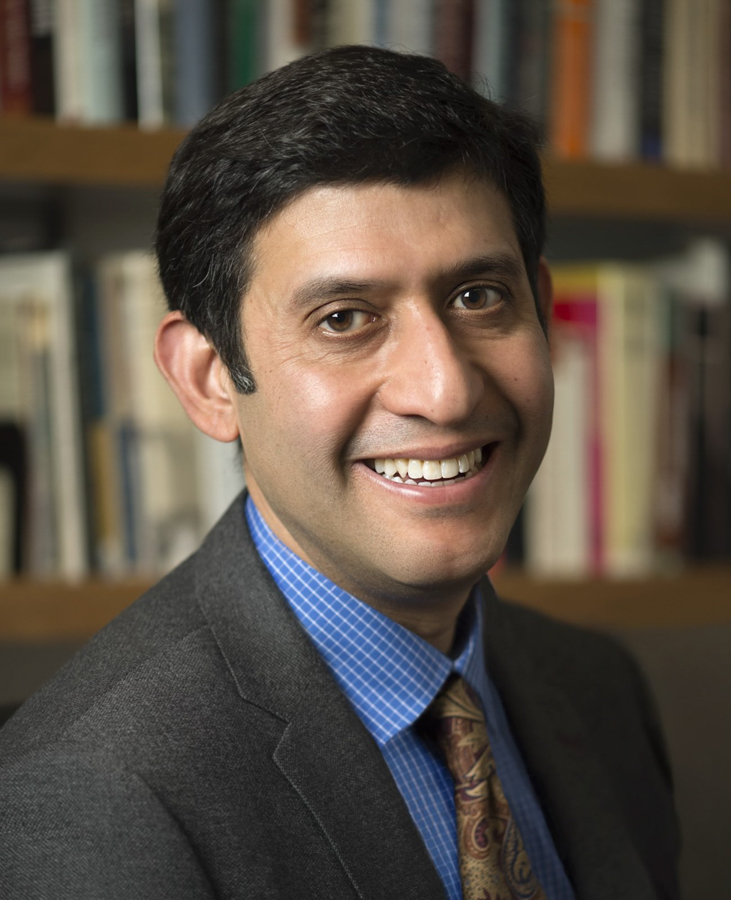
Dr. Johann Neem
Interviewee: Dr. Johann Neem
Interviewer: Johanna Bringhurst
Description: Dr. Johann Neem from Western Washington University joins Johanna in this episode to talk about the history of American public schools and the wrestle they are facing today about how to teach our nation’s history.
Date: 2023-10-11
Topics:
The visual topic map is hidden for screen reader users. Please use the "Filter by Topic" dropdown menu or search box to find specific content in the transcript.
Johanna Bringhurst: Hello everyone, and welcome to context. This program is brought to you by the Idaho Humanities Council with funding from the National Endowment for the Humanities. The views expressed here today do not necessarily represent those of the IHC or the NEH. My name is Johanna Bringhurst and joining us today is Johann Neem. Doctor Neem is an historian of the early American republic.
He is editor of the Journal of the Early Republic. He is an active contributor to The Conversation on Higher Education Reform. His new book, What's the Point of College? Seeks to answer that very question for our reform minded era. His other recent book, Democracy's Schools: The Rise of Public Education in America, examines the origins and purposes of American public education between the American Revolution and the Civil War.
Doctor Neem received his B.A. in history from Brown University. He went on to complete his PhD at the University of Virginia. Doctor Neem is professor of history at Western Washington University. Thank you so much for joining me today. Doctor Neem, to talk about the history of public schools. As you know, students here in Idaho are back in school and there is so much debate about school funding, curriculum, school choice, teacher qualifications and more.
You have written extensively in recent years that Americans need to remember the purpose of our public schools. What is it that you think we have forgotten?
Dr. Johann Neem: Yeah. Thanks, Johanna, for having me on today. It's really nice to be here, and it's really an honor. so in my book, Democracy's Schools, I wrote that book because I thought we're losing sight of why we have public schools in the first place. And I wanted to go back to the American Revolution and the founding and think about why is it that education, which had always been a private good, a parental responsibility, had been transformed by the Civil War to something that was public, publicly overseen by citizens and legislators, supported by taxation, and free for all people.
And so that was the question I was asking, like, why do we do that? Why did the why do the American founders want this? why did so many citizens support it? And the answer is, of course, complicated. But one of the main reasons was that we live in a democracy and we need educated citizens. And we need it to provide access to the kind of education that had once been preserved for the elite, access to the arts and science, and to subjects like history and science, to ordinary people.
So they could be good citizens so they could understand what's going on in the world around them, so they could choose their leaders wisely and watch over them. So that was the primary reason citizenship. But the other thing was that by the 1830s, America was becoming increasingly diverse. There was a lot of immigration, there was a lot of movement, and there was a real sense that we needed some common institutions where we would learn to live together and be Americans together.
And so another reason we wanted public schools was to bring people together and make them see each other as fellow Americans. And so for people like Horace Mann, one of the leaders of the school reform movement of the 1830s, this idea that diverse people would come together in common institutions and learn to be Americans together, rather than every person having their own kind of, education was really important.
Johanna Bringhurst: So how were Americans schooled in the early Republic? What was education like then?
Dr. Johann Neem: Yeah, it's different. you know, I think there's some transitions that happen. You know, I think we're talking about a period in my book. I talk about a period of several decades. So if we start at the time of the revolution, most there were no big public institutions. most people, if they were educated in the colonial period, would have been educated by their parents if they were apprentices, sometimes by their masters.
if they went to school, there might have been a, they might have gone to like, a tutor. or if they were rich, they would have had a private tutor. Ministers often provided education. Education was really kind of sporadic and unsystematic. After the revolution, you start to see the beginnings of what we see as the common schools.
And these are often the schools we imagine, you know, the little building in the corner lot, unadorned, unromantic. Yet we sort of feel some romance about them. they were they were, you know, one way to look at them is that they were kind of these rough buildings that were cold and hard, where students of various mixed ages would come, and they would often bring their own textbooks.
So the teacher had to, like, teach different texts to different students at different levels, all in the same room. And that's one way to look at them. The other way I look at them is this was the beginnings of a shared civic commitment to educating people in common, and to recognizing that parents are not just responsible for the education of their own children, but as citizens were responsible for the education of all children.
And so these little, these little schools that you might imagine, someone donated a plot of land or there's a little public land and the schoolhouse was built, actually refracted some of the best kind of public mindedness of Americans. By the Civil War, you start to see something that's begin to look more familiar to us, where you see the beginnings of schools that are graded by age.
So there's the beginning of like, we take first grade, second grade, third grade for granted. That kind of system starts to come along. You start to have teachers who have been educated in normal schools. So a kind of professionalization of the teaching force rather than college students, male or female or people who just had a common school education kind of teaching for a while for a little extra money.
So you start to see the emergence of what we see as the public school systems. But that's not where it began. It began with these little small wooden buildings, people from all ages. They were rowdy places. you know, you have 16 year old boys who don't want to be there learning their alphabet. Often the girls are much ahead.
And in literacy, and there's a lot of tension. And, you know, it's it's kind of it's both amazing that they existed. And they're also very from our perspective, looking back, they just seem very kind of, chaotic. But they but they weren't people had access to an education. They didn't have the power. It wasn't like, you know, it's not like they didn't matter.
They did some good work.
Johanna Bringhurst: So were girls able to go to school? Were all immigrants or black Americans? What was it like for different types of people?
Dr. Johann Neem: Yeah. well, one of the important pieces of information is that boys and girls had equal access to what becomes a public school. And. And by the time of the Civil War, you actually find as you start to develop high schools, public high schools that just sort of emerge in the decades before the Civil War and really take off after girls are often more advanced.
And you have a lot of commentary about why are boys not learning? And part of it is boys had other options. So literacy and numeracy didn't matter as much. Like today, we say everyone needs to be really kind of literate and numerate, but but boys could learn the basics and then go off and earn an income. so so boys and girls had equal access, but racially there was a lot of difference.
obviously in the South, black children had very little access to formal schooling. one of the amazing things is that, after after Nat Turner's slave rebellion, a lot of states, prohibited teaching enslaved people to read. But in enslaved communities, there was always there were always some kind of secret school that there was always a, you know, they always there was always some people who learned how to read.
And that was seen as a source of power and information. And so but it was a great risk, to learn to read and write. once it was prohibited in the North, the story much more complicated. the big story is you have largely segregated schools. but it's really kind of kind of a patchwork. Some cities had some cities and districts had equal access for black and white kids, but in general, often black children were either placed in black only schools or were denied access to the common schools.
Some districts would refund tax money to black families so they could pay for their own education. Because they weren't given access to the public schools, others would not. and a lot of Black Americans struggled and and sought integrated schools starting in the starting 1820s and 30s then, and really pushed in states like New York and Massachusetts to achieve racial equality and education.
Now, it didn't happen. and there was and you start to see the beginnings of a gap to access from the very beginning. Unfortunately.
Johanna Bringhurst: So how did public schools evolve and change in the 19th century, when reformers like Horace Mann came on the scene?
Dr. Johann Neem: Oh, yeah. Okay, that's a good question. So Horace Mann and all come on. The scene around the 1830s. And by that point, you've already started to see enrollment in the common schools go up. And a lot of that was done at the local level. So states might pass a law saying, you know, districts need to be formed. The districts were kind of neighborhood sized.
They were smaller than the big unified districts we have today. obviously people didn't have cards either. and so a lot of the work of developing the capacity to educate happen at the local level. Parents would get together, elect a local school board. That school board would try to find somebody to provide space for a school, or maybe it would build a school.
They'd be authorized to tax. If they tax, the state would provide a matching tax often. And so a lot of this work, the states provided the incentive and the push, but the actual development went on at the local level. And by the 1830s, you have reformers like Horace Mann come in and they want to create more, systemic approach to public education.
And one way to think about it is that's when you start to see the development, public education systems overseen by superintendents with teachers who are salaried and have professional training. You see a real intensification school terms get longer. the quality of the curriculum gets better, and you start to see something more like what we understand as, as education, something that's more uniform and more, accessible and also more professional.
And that was a big change. They wanted they wanted to improve the quality of the schools, and they wanted to make every child have equal access to those. And so one of the shifts was towards tax support, so that in the early common schools you have a certain term that was tax supported and parents might pay a little extra for longer terms.
They wanted to try to provide every student with equal access and parents wanted this to these were very popular. You know, there was a lot of contestation over who should control the schools. Should we have appointed superintendents, should we have local school boards more empowered? The kind of local politics we still have today about tension between professional educators versus local citizens, who's really in charge of the schools, but access to the schools and and using tax money to support the schools was very popular because parents realized they were getting something from the community that if they didn't support these schools, their child would lose.
And so part of part of why public schools expanded is because parents realized that they were stakeholders in this common system, because their child benefited, and in benefiting their child and caring about their child, they also invested in other people's children. And so that's why I think the school system really took off. And that's why I think it's so important that we have these common institutions, because that's a way that say, my care for my child translates into a commitment for other people's children, because I'm sharing these institutions with other people in my community.
And so the quality of those institutions matter, not just because I'm a good citizen who cares about other people, but also because my children are going to attend those schools. And so I'm invested in them, right?
Johanna Bringhurst: In, in another big shift in education came during the civil rights movement in the 20th century. What were reformers seeking during those shifts?
Dr. Johann Neem: Oh, yeah. I mean, of course they were seeking to actually make good on this promise of equality, right? That in terms of race, and, you know, one of the things that we all know is that after the Civil War, there was this moment where multiracial democracy started to take hold, particularly in the states of the South. Black Americans were among the, loudest and most vocal advocates of public education.
And public education becomes part of the state constitutions of a lot of post-Civil War southern states. It becomes an obligation of the state to provide an equal education. And there was this hope that this equal education would really be education, where blacks and whites would go to school together and have equal access to the same resources and because we educate citizens, we have educated citizens, and we have equal access to the education.
You need to be a good citizen. That, of course, fell apart in the response to reconstruction and the violence that took reconstruction down and led to Jim Crow and and, and so we had in the South and the North schools that were racially segregated and very unequal and access to resources. And so the civil rights movement was in part of an effort to right those historical wrongs.
And that is still an aspiration. one of, you know, and I think for in many ways, for several decades, we started to see schools become more integrated. But in the last 20 years or so, schools have actually become more racially segregated than they were 20 years ago. So the progress we are making has been reversed.
Johanna Bringhurst: In recent years, with the adoption of the Common Core and new trends in education, even our language around education has begun to change. How are the goals of public education changing now? What are you seeing?
Dr. Johann Neem: Yeah, well, I feel I mean, that's one of the reasons I wrote this book is I felt we're losing sight. why? We have public schools. And for a host of reasons, including the fact that every parent cares about their child. Economic concerns become have become our dominant concern, that we're educating people to have jobs. And and even when you talk about K-12 and then higher education, it's all about jobs.
And I'm not saying we shouldn't care about jobs. And I want my children to be gainfully employed. but unfortunately, what happened was we lost sight of these other important goals, the civic goals of educating citizens, the intellectual goals of developing young minds, the goal of socialization, of bringing diverse people together and common institutions. And we tended to just focus on job related skills.
I mean, that's what the Common Core really was. Now, part of that backstory, if I could just add one thing, is that, is that there was an effort to create state, national standards around the subject, around subjects in the 1990s. It was bipartisan, and it kind of fell apart. It became victim to the culture wars and in history, in English and even in math.
Right. And and so the Common Core kind of emerges in the failure of this other effort to create really robust subject area standards. And those standards which were really touted by the first Bush administration, where the idea was every child deserves a really good liberal education. They deserve literature, they deserve history, they deserve chemistry. And when we couldn't agree with what should be literature and history, it became very hard to have those standards.
And so part of the shift to this kind of job related skills was, it seemed that was the only thing we could agree on anymore. and so but it's a real loss, right? We had such bigger aspirations for why we were educating Americans and to reduce it to this one thing. Job preparation seems to really reduce the kind of richness of what an education should be.
Could be.
Johanna Bringhurst: I appreciate you bringing up, culture wars and the divisions that we are creating for ourselves. Becoming more tribalistic today we hear so much debate over teaching our own nation's history to our own students. What are the different sides seeing and what is that to be really about?
Dr. Johann Neem: Yeah, I mean, I think our culture wars have shifted since the 1990s. I think in the 1990s we were confronting how do we tell a story of America that truly encompasses the diversity of experiences racial, economic, gender, immigrants? religions, all of that. And how do we put together an American story in the wake of the 1960s and the emergence of new kinds of people into the history profession, and new kinds of, histories being written?
I think in many ways we kind of worked our way through that, and we have a story that that is much richer and more diverse. I think today where, you know, I feel I can't help but feel that we're in a worse position in the sense that our divisions are much greater and that our culture wars have become much more tribal.
and there is a sense that if you don't agree with my understanding of American history, you're not just wrong. but you're unworthy and you don't belong. And I find that really sad and really dangerous. and I also don't think it represents what most Americans, Democrats and Republicans think about American history. So we've lost the kind of shared understanding that I think is a little more nuanced than we hear in the headlines.
Johanna Bringhurst: I read an article where you described those sides as post Americanism, and then Trump's tribalism. What do you mean by post-American ism?
Dr. Johann Neem: Yeah. So one of the ways I think about it is, you know, I'm I'm an immigrant from India. And one of the things I think about a lot is when I came to the United States and the reason I could come to the United States was because after this, as part of the civil rights movement, America reformed its immigration laws to open up the country to people like me and my family.
And when I went to school, there was this sense that, okay, you're an immigrant, but you belong to all of American history and all of American history belongs to you. And so we're going to tell this story that more diverse than we would have told in 1950. So you're going to see a lot more types of people and a lot more conflict than you would have seen before.
But you also can imagine yourself as an American fighting in the American Revolution. You could imagine yourself as an American, participating in all the kind of common American stories that nobody said, you know, because you're an immigrant, because you have a different skin color or a different religion or a different this or a different that. You don't belong to this story.
I think now there are two trends that I've seen. One on the far right is this narrowing kind of tribal understanding of America, where that kind of where people like me are less welcome. But on the left, I see what you call post Americanism, which would I mean, there's there's a tendency to see the American story as so corrupt that there's no way to salvage American history.
American history is founded on racism. It is sexist. It is. It is committed to the displacement of indigenous land. And that's the real story. And if that's the only story or the real story, it's not a story we can all share. So that's one aspect of post Americanism and this idea that American history in America, therefore, is so corrupt that we just have to kind of transcend that whole history.
And then the other piece is we're so pluralistic that that story can't belong to all people. So we all have our own American histories, but there isn't a shared culture that schools are supposed to cultivate in this shared story. Nations tell stories about themselves. How do we be a nation without a common story?
Johanna Bringhurst: I also like the comparison you make between the competing historical narratives and an old House. How can you explain that for our listeners?
Dr. Johann Neem: Yeah, so I think about I think about American history, and I use the kind of image of an old house. And there's a question, do you see racism and our wrongs, which I think most Americans recognize as deeply embedded parts of American history. They're real wrongs. They still exist. They've existed historically. I don't think that's a partisan issue, but I think Americans agree on that.
where we disagree, I think, is where it fits into the structure of our society. And I think what you find is that a lot of people on the left, a lot of educators, a lot of historians, my colleagues see racism as a as a weight bearing beam in this House. It is fundamental to America. It came on the first votes in 1619, and it's been here ever since.
And you cannot have America without racism. Washington is primarily a slaveholder, not a general of a revolution. And in the name of liberty and equality, right. And and interestingly enough, so do white nationalists, right. They see race as a weight bearing beam. and so there's this common understanding that America is a country grounded in racism. I think most Americans see racism and other things that divide us more like a wall.
We have a house built on a good foundation, and good. But there are these walls and these walls. You can you can remodel the house without tearing down the entire structure. But if you think racism is a weight bearing beam, you can't remodel without losing the structure. And so that's why I think we're at this really divisive moment in American history and how we teach it, because there's a lot of Americans who think you have to effectively tear down the structure and and for me, this is an old house, right?
I as I say, you know, the wires are exposed. We're at a moment where we're seeing a lot of parts of the house need repair, need remodeling, need, but I still think, I still hope that we can do both. We can see this house needs fixing, but we can still find a way to live in it. But I worry that an increasing number of Americans on the left and the right don't see that.
Johanna Bringhurst: I just love that visual of house. Maybe a very historic home in need of in need of repair. And you're right that we all agree on both sides on this. load bearing beam rooted in racism. And what do we do about it? I'm wondering if you can help us understand to why does this matter so much?
Why is it such a big part of our national conversation right now? What are the stakes.
Dr. Johann Neem: The stakes of teaching American history and how we talk about it? I mean. Just to start a nation is a story, right? And it's a collective story. And so the story we tell about ourselves determines who we are. And so that's a starting point. We can't we can't live without a common history and be a nation, be a people.
We have to find a way to tell a story. Whatever that story is, we have to find a way to tell it. and so that's one. But second reason is honesty, right? In telling that story, it has to be truthful. One of the challenge we're facing, though, is we see a distortion on both sides. So for example, when President Trump, in the last days of his term had hosted a commission that put out the 1776 report on history, they wanted American history, that where the ideals of American history were so pure that they were not unsullied by the actual wrongs of our past.
On the flip side, we often see in schools and among historians a history where only our sins are true and nothing else is truthful. It's all otherwise. Whitewashing, and I just feel like that doesn't capture, say, for example, the complexity of the American Revolution, right? Where where the people in Lexington in April 1775, were not acting to protect slavery.
They were responding to other things. That doesn't mean that the American Revolution didn't have any relationship with the perpetuation of slavery, or that the Constitution didn't end up protecting slavery. It means that the stories are actually nuanced and complicated, and there are moments of inspiration and glory, and there are moments of real wrongdoing and reasons for shame. And what I feel sometimes happens is we've reached a point where one side wants glory and one side wants shame, but we can't all we can't be all one of those all the time.
And I, I mean, polls suggest most Americans agree, you know, that the vast majority of Republicans and Democrats want to tell a complex story of America, and they think there's so much to be proud of, and they think there's so much to be ashamed about, and that honesty is another state. But when honesty gets reduced to this distorted version or that distorted version, we're not actually being honest.
And then here's the third piece that actually does scare me and what I really care is I think if we are to be a democracy, we have to rule ourselves and, you know, a king, a dictator, an empire can rule by force. We have to rule ourselves by consent, and that means a capacity to engage in conflict with each other, to deliberate, to come to shared decisions, to treat each other with dignity and respect.
I don't think we can do that if we don't see ourselves as part of a common nation with a common story, because I think we'll see ourselves as different people. And when you see yourselves as truly different people, and you see fellow Americans as foreigners, to you as strangers, violence breaks out. And so I worry that, you know, that that the fragmentation that we're seeing could lead to violence.
Whereas and I want to be clear, I'm worried about this because that's what happens when people have to share a space, but they don't see themselves as sharing that space with their fellow citizens. And so I think that's the real stakes. How do we tell a story where we're all part of the story, but then also, you know, respects our diversity but gives us something in common.
So when we all look at each other, we say, you know, we're all in this together as Americans.
Johanna Bringhurst: Maybe I'm wrong, but it feels like the future of public schools and how we resolve this debate about how we teach our history, are connected, are bound together in fate.
Dr. Johann Neem: I think they are. You know, I mean, I think one of the things I go back to is that these were called common schools for a reason, and they were common schools because they not only provided a shared education, ideally not, in fact, as we talked about, but ideally equally to all citizens, but also because they forged the common ground.
One of the things I worry about in policies like school choice and vouchers and parental rights, for example, is that what we're really saying is we're so different that we don't trust each other to educate each other, and we're going to educate our kids in our own schools with our own values, with their own histories and their own deaths and their own that and we'll have a kind of radical pluralism, but we'll lose sight of the fact that we actually need something in common as a people.
And so I do see the ideal of common schools and even the existence of those common institutions as bound up in whether we continue to see ourselves as a common people. I think they are connected.
Johanna Bringhurst: You mind sharing with us, Doctor Neem, about your experience as an immigrant to this country and what it meant to you when you were a student to hear and participate in this common narrative?
Dr. Johann Neem: Yeah, I mean, it meant the world. You know, I think this is one of the ways that our understandings have changed over time. You know, there was a time where people like me, by law, could not become Americans for much of the 20th century. Before, before then, before 1965, we were, you know, people from India were not seen as Caucasian, so we could not become citizens, legally.
And now we can. And the big shift that I really appreciated was that didn't mean just a legal status. That meant you could become a part of this experiment called American democracy. You could participate in common cultural traditions. Thanksgiving, Halloween, Christmas. and you didn't have to go to church on Christmas to participate in the cultural parts of it you just had to be, or could be, I should say, is a better way of putting it.
You could be part of this. There wasn't all of you. You know, we we were from India. We had certain traditions that we also had as part of our own culture. It wasn't a totalizing experience, but but it was a welcoming experience that this country belongs to you as much as belongs to anyone. And socialization happens to everyone, right?
Not just immigrants. Native born people are coming up through schools to, we're socialized together. It's not like something that happens only to one group of people. It's about creating this commons. Today. I worry a little bit. No, I worry a lot that a lot of my colleagues, a lot of educators, a lot of historians, a lot of people in the humanities, they think we're so different that it's now considered racist to presume everyone will celebrate Halloween at school is now considered, you know, and what ends up happening is weirdly, a lot of things that were just shared.
American things become kind of re identified as belonging to white people. And and I'm not sure that's what most immigrants want, you know, or need. and I'm not sure that's what most white or black Americans want. I mean, I think what we're looking for is a shared life together. And I worry that we are losing faith in our capacity to achieve that.
And both on the left and the right. And I really still believe that it's possible. And that comes out of this experience growing up in this country and having not just the benefits, but also the responsibilities of that history shared by all of us and being welcomed to be part of it.
Johanna Bringhurst: I appreciate so much your faith and hope that it's possible you can, You can see both sides and how high the stakes are and maybe question and doubt and worry. And I really appreciate you giving us some historical context, but then also sharing your experience as an immigrant. And I hope your faith and hope will, rub off on all of us.
Dr. Johann Neem: So thank you. Me too. It's really nice to talk with you today.
Johanna Bringhurst: So nice to talk to you, too. Thank you for being here, Doctor Neem.