
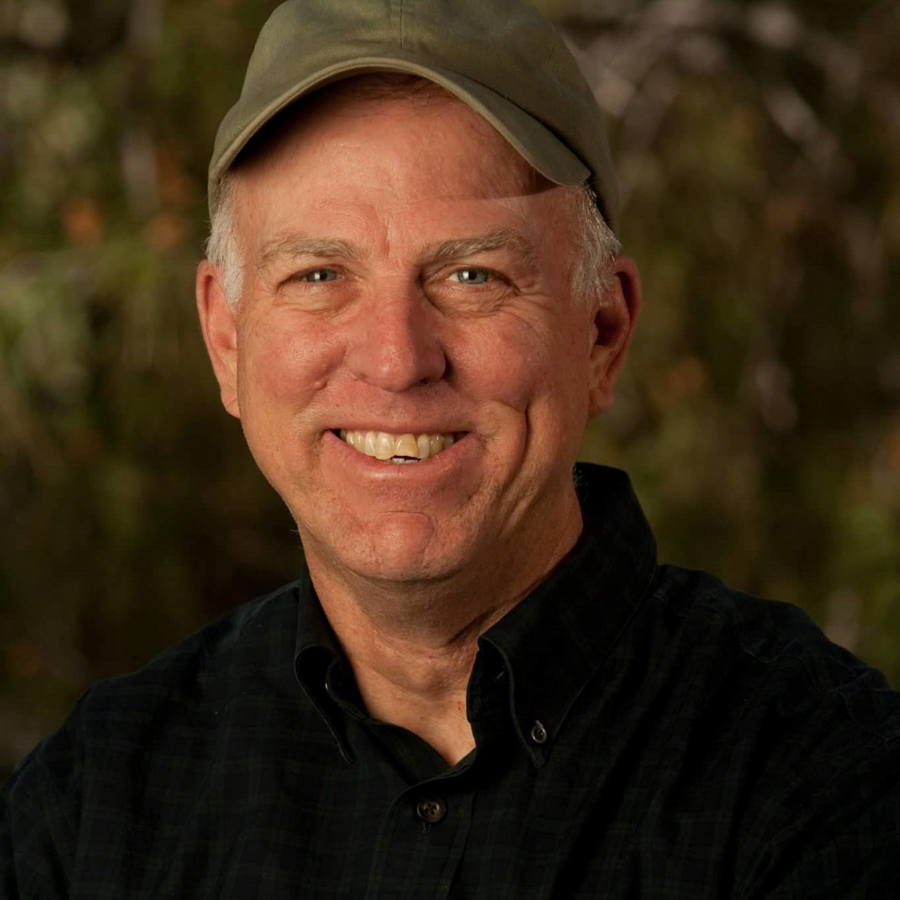
Steve Pyne
Interviewee: Steve Pyne
Interviewer: Doug Exton
Description: A brief survey of how the American wildland fire scene has evolved, beginning with the 1880 census map of forest fires to the present day. Topics will include the Big Blowup of 1910, the CCC, the cold war on fire, the fire revolution of the 1960s and 1970s, the mashup of institutions and policies that characterizes today’s scene, and the quickening of threats that is leading us into a new fire age. Steve Pyne is an emeritus professor at Arizona State University, mostly a fire historian, and the author recently of Between Two Fires: A Fire History of Contemporary America, Year of the Fires: The Story of the Great Fires of 1910, and To the Last Smoke , a 9-book series of regional fire surveys.
Date: 2020-10-15
Topics:
The visual topic map is hidden for screen reader users. Please use the "Filter by Topic" dropdown menu or search box to find specific content in the transcript.
Doug Exton: Thank you so much for joining us for tonight's Connected Conversation, a program conducted by the Idaho Humanities Council. If you're not familiar with our organization, I encourage you to check out our website, Idaho humanities.org. I'd like to remind you all that you may submit any questions using the Q&A feature located at the bottom of the screen. We will not be using the chat feature.
With me tonight is Steve Pyne from Arizona State University. It's an honor to have you with us tonight. I turn it over to you.
Steve Pyne : Well, it's an honor to be here.
And. It's always a pleasure to talk about one of my favorite subjects, which is fire. In this case, we'll look at the last 150 years or so of fire. Why does the landscape look? The fire scene in the US look the way it does today? Well, part of it is a result of how it evolved to starkly.
So let me give you some background on that. This is a useful place to start. Believe it or not, the 1880 census included a map of forest fires. The darker areas, or more frequently burned in some ways resembles what we see today. In some ways, it's dramatically different. It does not include, by definition, grasslands, deserts, and so forth, places that are not, forested.
So what it's recording by way of fires, are those fires set by nature, by lightning, all those fires set by people. And almost all of those were embedded in agriculture in some form or another. And then a new disturbance in the forest, aptly illustrated by this Currier and Ives print of a locomotive across the across the prairie, dividing the world, into two realms of combustion.
And indeed, this transition to fossil fuels will be the the great driver, in shaping the modern scene over the certainly over the past century. Well, in 1880, America was pretty much the Brazil of its day, generally condemned for its, abuse of burning. Our first professional forester, an emigre from Prussia, Bernard Fernald, dismissed the whole scene as one of bad habits and loose morals was simply considered a problem of, social behavior.
Not fire was not considered, an ecological presence of any significance or value. And there were a lot of bad burns, settlement across the country, converting land to agriculture for, a lot of land, clearing enormous amounts of logging, huge mountains of slash left on the landscape. And these are all scenes from late 19th, early 20th century, of what the burns could do, and thus provided a background and argument for the state to intervene in what was really a global project called conservation.
Something would have to stand between this sort of reckless use of the ax and, laissez faire burning, to preserve something, for future generations. That task was, there are lots of different groups, competed for the task in the sense. But, in the U.S., as globally, it fell to foresters, especially identified with this guy Gifford Pinchot, who head of the Bureau of Forestry and later the U.S. Forest Service.
He studied for a while under Dietrich Brandis, German botanist who set up the British Indian Forest Service, which became the basis for, forestry throughout the British Empire. And Pinchot, even before he headed, the Forest Service, was making declarations like this one that like the question of slavery, the question of forest fires may be shelved for some time at enormous cost in the end.
But sooner or later it must be met. And if any of you were fans of Kipling, you might wonder what happens to Mowgli after he grows up. So I've already introduced British India through, Brandis. It turns out that Kipling wrote a short story that describes what Mosley does. He joins the Indian Forest Service and becomes a forest guard, one of whose primary tasks, is to deal with jungle fires, as they were called.
And I like it because it shows the breadth of of international interest in fire. So, very usefully, we have the kind of creation story a moment, which also for this audience, usefully deals in the northern Rockies, in 1910, what became known as the Great Fires or the big blow up, in a sense, it created an American way of fire, which was different than all the rural fires, many of them large, giant mega fires and very deadly fires.
But this was different. And agency, committed to conservation was have to be responsible. The Forest Service responded 3.25 million acres burned in the northern Rockies alone. Much of that on August 20th and 21. All the pieces that would become the the way we now recognize, all the call outs, the the emergency funding, all the controversies during and after the fire were all present.
So the whole package, in a sense, crystallizes out and this, one moment, of which one of the, enduring emblems, of course, is, is this same, featuring a, a mineshaft, outside Wallace, Idaho, where Ranger Edward Pulaski held his crew and at gunpoint, while the firestorm raged around them afterwards. What to do with rehabilitating all of the, damaged infrastructure?
What about salvage logging? What about replanting? Rehabbing, imitating the landscape? All of these questions, still very much with us, were all rehearsed, fully. Then, the whole characteristic of of organizing crews calling people from all over, including the Army, here would be a typical crew, flushed out of wherever they could find workers. And unhappily, what to do with all the dead?
85 people died, 78 firefighters and six different incidents, all essentially the same time during the big blow up. Many of them unidentified, even as to name. That same month, August, however, a controversy boiled over in California and Northern California. Became known as light burning. And, a group argued that the Forest Service, approach to fire was fundamentally wrong, that instead of looking to Europe and a kind of paramilitary firefight against the flames, we should be emulating the American Indian who routinely burned at least the montane for us.
And in that way kept an open, kept fuels from building up, kept the forests healthy. This was taken as a very serious challenge. And it was not until the mid 1920s that it was officially condemned. It, in some ways just went underground and then later resurfaced. But the light burning was, was taken as a political challenge, to the Forest Service and to conservation in general.
Pinchot, Pinchot and others. Pinchot, said that you're either with us against or against us on this. The, Chief Forester, at the time, condemned it as Paiute forestry. And here's Aldo Leopold as late as 1920, while he's setting up a Forest Service fire protection system in the southwest, arguing, against light burning, and the challenge that it poses, although, again, this this is not easily interpreted in the terms that we understand today.
But the issues, that we're still debating where we're front and center then and in fact, one can trace it back to British India or French imperial, projects and the rest of it. And one final, element, August 1910. William James, one of our great philosophers. Hart. Harvard, professor, one of the architects of pragmatism, published his final essay.
James was dying in his, summer cottage in New Hampshire. The smoke from the 1910 fire was passing overhead, turning the sun over Boston to a coppery color. And James, alarmed at what he saw as a growing militarism throughout Western civilization. A martial enthusiasm that that would end in the trenches of World War One and a few years, wanted to find some way to redirect all of that energy to constructive purposes.
So we argued that we needed to rally against our common foe, which was the forces of nature and, that there should be a moral equivalent of war in the same way that there was a mechanical equivalent of heat. So there it is, the 1910 from Ed Pulaski to, William James. The country could rally around, the great fire fight, was a time of political activism.
The progressive era. Teddy Roosevelt, no longer president, is calling for a life of strenuous endeavor. And fire fighting on the Forest Service model seem to answer that challenge. Well, three future chiefs were personally on the fire line Greely, Stuart and Silcox. That entire generation would be branded by the fires. It was a kind of Valley Forge or Long March moment.
Congress responded in 1911 by creating the Wicks Act, which, allowed the national forest to expand by purchase. The target here was really the Appalachian Mountains, which were badly cut over and burned over. But it also set up a federal state cooperative program for forestry that would be founded on fire control. And hence we could create a national infrastructure.
Well, that really, inaugurates, 50 year era organized around and by the U.S. Forest Service, policy of suppression of fire exclusion as much as possible and pretty much, a project of hegemony, in all aspects. By the 1960s, however, this project, the wheels are starting to fall off. And, there are challenges, intellectual challenges, practical challenges, institutional challenges.
We began a program of trying to restore fire, good fire, distinguishing between good and bad fire, which the earlier era didn't do, and to introduce a pluralism of purposes and of institutions. And then I think, the last decade or so, we seem to be, inflecting into yet another era. So let's, let's follow these quickly through, a lot of energy and innovation applied to, put fires out all across the country.
The middle one is from Arkansas, North Carolina, and the lower right, California. Well, they're going to put a car on it. There's, fire control in Alaska. One guy would ride this thing between Anchorage and Fairbanks once a week. A lot of, technical innovations, hand tools invented. And, eventually in California, the idea evolved to putting a movable blade on the front of one of these tractors instead of just pulling plows, and gave us the modern bulldozer and war surplus equipment.
A, public relations spectacular, the use of, Army, biplanes and pilots, Forest Service observers to begin, reconnaissance of fire in the backcountry. But still, there were limits to what you could do. The backcountry was a long way out. Few roads, few trails. If you look out, few telephone telephone lines. And there was also a different backcountry.
All that cut over burned over land that had been abandoned and so someone would some at some point we would have to take on, these two kinds of, remote lands. And the solution is basically the New Deal, it's interest in conservation, rehabilitating society and economy and and land all is one grant, program. The Civilian Conservation Corps.
But hundreds of thousands of young men to work on projects. It's estimated that about half of all they did, involve fire control or pre suppression in one form or another. So almost overnight, we are able to create an infrastructure, to manage fire and, we have, we have camps of people who could be sent out to fight them.
1934 less essentially a year after the CC is created, fires break out again in the northern Rockies in the south was, Gus Silcox. Now, Chief Forester had been the number two man in 1910. Wants to know what we should do with these, with these fires deep in the backcountry. He calls a group. Together, they meet at Missoula.
And out of that, convocation, Silcox announces the 10:00 Am policy or what? What? One universal standard, to control every fire by 10:00 the morning after its report. Or if you fail them, plan to control by 10 a.m. the next day, and so on. Policy really unthinkable. Unless you have unlimited resources. And that's exactly what Silcox had.
The cook did enormous projects. This is a part of a 650 mile long fuel break that spanned the entire west front of the Sierra Nevada. And by the end of the 30s, thanks to selective use in the six, camps, we have the 40 man crew develops, in Oregon, the forerunner of hotshot crew and, the smokejumper program.
Again, the need to get control by 10:00. Interest at the highest ranks of politics. Here's President Roosevelt himself, who always fancied himself a gentleman forester, approving a new fire prevention campaign featuring Uncle Sam, who looks suspiciously like the character standing next to the poster, who is, in fact the artist James Montgomery Flagg, who modeled Uncle Sam on himself.
All this goes to war time and again, the, fire protection program of the public lands, gets militarized and then demilitarized. World War two is a time when it got militarized. All kinds of fire weaponry discovered. The United States is even attacked by, fire, bomb balloons lofted from Japan. And of course, the war ends with a new, fire weapon, the atomic bomb.
Many of you may have seen this photo often reproduced the lower right Hiroshima atomic strike, U.S. Army photo. This is not, however, the mushroom cloud of the atomic bomb. This is the pyro cumulus cloud from the burning city that followed the slashing and burning, set off by the bomb. So the military began to take, a serious interest in fire in large fires, the behavior of fires, how to start the how to stop them.
And that would feed into, a whole project of, fire research. Our first national fire prevention campaign also begins in 1942 out of alarm in California over, possible Japanese incendiary attacks. Pretty hardcore, even for the time. Fortunately, Bambi is released at that time, and Bambi, takes over the role. 1943 Disney refuses to allow licensing for more than one year, so a cartoon character has to be created by committee, by the way, and gave us, Smokey Bear in 1944, 1950.
Life imitates art, and we get little Smokey. All that war hardware, particularly, after the Korean War, is made available. Forest Service has priority protect priority access and through the Forest Service to the state. So the CC is gone, but, we can now mechanized almost overnight. And we began, we might aptly characterize as a Cold War on fire.
Operation fire stop, the one year project, the Forest Service and Cal Fire, set up at Camp Pendleton, to systematically convert, experiences, from, from the wartime, both, in terms of converting equipment, learning lessons for organization, and, of course, mobilizing science. Equipment development centers, emerge primarily to assist this transfer and fire labs.
We end up with three, by the early 1960s. And it's clear that some DOD funding and, civil defense funding was part of what, what allowed this to become possible. And also help to move fire behavior research out of forestry into, more physics and chemistry. Even Hollywood joins in in 1942 to about, the mid 1960s, a whole series of films, perhaps the the most famous Red Skies of Montana, clearly adapting the war story to firefighting, 1947 a quarter million acres burned in rural Maine.
A real shock and a sense that, civil defense, which is yet to be organized, but when it is, will consider fire as part of its mandate. I think Maine's 47 is the last of the great rural fires. Air Brentwood, 1961. I would consider the beginning of the modern, wildland urban fire. It's a dumb name.
We're stuck with it. I would regard this as where we want. Lots of interesting things happened.
Meanwhile, the Forest Service had pretty much completed its task. Nearly all the states. I think Arizona was the last, yet to come, joined, a national matrix with the Forest Service providing the organizing, muscle for it. Almost all research, prevention programs, policy, professional authority, almost everything the Forest Service had at all. There were only two dedicated fire officers in the entire National Park Service at the time, and there was a famous study in public administration in 1960 that identified the Forest Service as a paragon.
This is as good as it gets. 50 years later, people will be, people interested in public administration, and government will be looking at the Forest Service as a model of dysfunctional democracy. What happens, what happens is, the same that will happen with fire, although with, perhaps more optimistic outcomes. A new era is about to break environmental enthusiasm.
All the agencies, federal agencies will get new charters. They will each want to manage fire in their own way, for their own purposes. A big demographic changes underway. First from the baby boom and then, from immigration. And a civil society for fire is created, and the whole public domain is going to move from a kind of multiple use melting pot for which the Forest Service, was set up to handle to a more kind of special interest mosaic.
And those agencies that have a single task or don't have to reconcile what Congress is unable to reconcile on its own and hand over to the agencies, those that have that single charge will do better. Meantime, observers are, noting that there is a lot of ecological decay going on in places that have been deprived of fire, and fuels are building up.
It all adds up to what I think. It was a fire revolution. It was by coastal, maybe bipolar. One model emerged in Florida really targeting working landscapes, and prescribed fire. The other came out of California. It was looking at wild landscapes, was interested in natural fire. Prescribed fire could be used, but only as a means to assist, the transition into a more fully, natural program.
That's that's underway. A revolution. That's followed by a counter revolution, a lost decade rekindles, really, in 1994. But you'll notice that, all these shifts are now with large shifts in, political administrations and parties. And finally, I think we're leading it into something else, or very quickly. I don't want to spend a lot of time on on dates.
Kennedy was right. The torch is being passed 1962 Tall Timbers, a private, research operation, begins holding its, fire ecology conferences. The name was new fire and the Nature Conservancy conducted its first burn. So both of these are outside the agencies, and they're doing something different. In 63, the Leopold report targets, fire exclusion in the Sierra Nevada is an emblem of what?
What was wrong in Park service administration and the need to restore, those processes that were fundamental to primitive America. 64 the Wilderness Act creates a whole new category of land and brings with it, a new responsibility to fire, all this new environmental legislation. 64 Civil Rights Act, passed, symbolizing a reconstitution of workforce for fire.
By 1968, the Park Service has adopted the new policy and made fire restoration, its primary goal. As agencies split, in their policies, the Forest Service is being challenged. We have to find ways to pool resources during emergencies. 6970 Interagency Fire center opens. National Wildfire Coordinating Group talk shop to help all the different agencies and participants find common ground.
By 1978, the Forest Service was on board. And by 1980, with the Alaska Lands Act, Alaska is able to start, in a serious way in the midst of the fire revolution. So what was this about? Well, it was really a policy of fire by prescription. This could be deliberate burning, the usual sense of prescribed fire. It could be natural prescribed fire.
And don't try to parse the metaphysics here, but the idea was that it should be a way to have some kind of control or prescribed conditions set over the use of fire, in wilderness and backcountry areas and even wildfire itself. Multiple options, no longer a 10 a.m. policy. Has to be is commanding, you have options to control it in the traditional way or to contain it within certain perimeters or to confine it, which in many ways becomes indistinguishable from a prescribed natural fire.
All this by 1978, election in 1980, and we began our polarization. Even the weather began to accept fully wet and exceptionally dry a long drought that throughout most of the West is still with us. Politics changes civilian agencies are losing, to privatization and to military at the same time. By the mid 80s, the wildland urban interface is identified and returning.
It's, you know, having cities burn like this, it's like watching a plague reemerge. It's like watching polio, Come back. This is a problem we thought we had fixed. But I think in many ways it got mis defined. It was defined by the wildland side who saw houses complicating, their land management. It could have been, excuse me, could have been defined as an urban fire with funding, landscaping, in which case it's pretty obvious what you have to do, to fix it.
And by 1987, the Forest Service and National Fire Protection associations are launching a national initiative. Still with us, and we're still a long way from solving it. By the end of the decade, and the start of the new one, two major events sort of highlighting what would seem to be the future Yellowstone burns maybe 40% of the park burned on and on week after week during the summer of 88, 91.
Oakland burns. Excuse me. Some open parkland. Helps to get a fire initiated. And then 795 houses burn in the first hour. And off we go. Interestingly enough, even though the, urban side is completely incinerated here, you can see those little patches of parkland. The trees came through fine. Well, the trees are adapted.
Fire. The houses are. The catalytic year actually follows, another change in administrations and parties. This was 94. Our first billion dollar suppression year. And of course, the, South Canyon, tragedy. By the next year, common federal fire policy building on what was already there. But now linking them re linking everybody together is out, before the decade is out.
So Secretary of Interior Bruce Babbitt declares we are in a national fire crisis. And then 2000 wildfire once again in the northern Rockies, 90 years after the big blow up. We still can't stop those fires. All that equipment, all those crews, all that communication, all that science. We can't stop them. The same time, the National Park Service loses a prescribed fire outside Los Alamos, New Mexico, and burns into, the town.
And so we'd say we can't light fires or fight them and, following those breakdowns in the waning hours of the Clinton administration, a national fire plan is passed. Not really too little. Too much, maybe too much, but certainly, too late. Everything is lined against us as the new millennium starts. The fires are getting bigger.
Mega fires is a term is coined. More communities are threatened, and firefighters continue to die. By this point, the Forest Service is being gutted, by having by a change in the funding mechanism for large fires. And 50% or more of its entire budget is going simply to fight fires.
Change of administrations again. By now, new possibilities are around. We'll discuss them in a minute. But, it's also the, transition to a kind of civil society. Our, our government mental institutions seem to be more and more disabled. And inefficient in many ways by design, civil society is expected to, to fill the gap.
In some ways, it does a national cohesive strategy, is, requested by Congress but is not funded, not given any political authority. Still, it provides a convenient way for the many, many participants of the, fire. Fire protection forces in the United States, to come together. I mean, now we're dealing with volunteer fire departments, county fire departments, rural fire protection district states, federal agencies, all kinds of, other, landowners, prescribed fire councils, are created to help promote prescribed burning, both on public but also private land.
Continued to spread across the country. Suppression now has its lobby, its organization, a lobby for, better support of firefighting, and agencies like, The Nature Conservancy. You know, TNC now burns as much as per year is the National Park Service. And it provides a different model. Not, not either, a lambda that stripped or one, that is left, in wilderness conditions, but working landscapes working, however, to promote ecological goods and services.
So, so, a lot of intervention possible a really a different, a different way of doing it. A lot of ferment out there. But what's needed still is a way to bring all this together in a, in an organized and coherent way. Well, we should be clear that America doesn't have a fire problem. It's got a lot of fire problems.
And they all have different solutions. They all require different approaches. But one of the fascinating things, looking at it from my perspective, is the way it channels, larger cultural events and political events. Even our social order, the polarization we see in politics and economics, is not unlike what we see in land. A lot of attention to the wild, and protected by the urban.
Not much to that missing middle landscape and mega fires, really. The one percenters of nature is fire economy, gobbling up all the resources that might go for other, other purposes. We do see a division, even in our appreciation or understanding of fire. There's a nice, divide here in the foreground biosphere to a completely sustainable world, an engineered world, a world that could be a model that could be taken to Mars in principle, in a world that has absolutely no place for fire.
Partly it's a question of scale, but even conceptually, fire does not figure in this model, of the globe and the background. However, boiling over the Santa Catalina mountains, we see the Aspen fire, full throat, full throated burning, a place that needs to burn. Does burn. And there seems to be, this pretty well encapsulates the two extremes of our imagination.
So the wild, the purely wild landscape here. The solar complex in the northern Rockies, 2000 famous photo. The elk bath as it came to be titled, fire is simply a benign presence. But no people around. And then if we're going to put people in, we're back to biosphere two or its equivalent, and we have urban conflagrations returning and we have no middle that seems no narrative for the middle, no images of the middle, no sort of working narratives of of ourselves as the keystone species for fire on the planet using fire, using our unique firepower, to make a more habitable world.
Well, I think today we have three general strategies in play. A resistance strategy. Suppression hasn't gone away. It isn't going to go away. It is evolving. It is becoming more an all hazard emergency service where there are strong pressures because of the threat to communities. To make wildland fire, follow an urban fire service model.
If you want an example of this, I think Cal Fire, would be a good one. But there's a kind of Cal Fire light has been, adopted, for the, Front Range in Colorado. And we'll see how how that works out. But there will be strong pressures, to boost, suppression and provide protection. Restoration has been a goal for decades now.
Some of them thanks to, collaborative forest, landscape restoration that can assume large scale trying to get restoration at scale, changing the context for fires, trying to get ahead of the problem, hardening our assets like communities, encouraging more robust landscapes involving more than just prescribed fire, but prescribed burning, would be a fundamental part, even if there's some mechanical treatments involved as well.
The problem is getting this done, getting the funding, getting the social capital that's required, getting the full political capital to apply it, getting all the pieces to align, the for free for Forest Restoration initiative in Arizona was the flagship, 2.5 million acres. They were going to do 50,000 acres a year for ten years, for half a million acres.
Barely, barely got started. Several stumbles. Mostly now they're using managed wildfire, to get their treatment done. Some treatment otherwise. But, mostly the numbers are coming, by by a kind of box and burn strategy. Throughout. And that, I think, is it leads me into my third, category. Let's call it a resilience model.
I think there are many fire officers now, and observers who, say we have to accept the conditions were given play, the hand were dealt. We're not going to get ahead of this. Too many things are coming too fast from too many, angles. The fire community is not in charge of any of them. And we're evolving kind of hybrid management, point protection, that is suppression even on an urban model.
And the kind of box and burn for the backcountry or more remote areas, which can which, if done correctly, it's not simply, a black line, but a prescribed burn done under urgent conditions. So it's it's a real mash up, kind of hybrid management. And I think this is really, For much of the, public land, the treatment of choice, there are all in play.
And which one triumphs? Which one? Wins in any particular situation, it's much like a game of of rock, scissors and paper. There's one last element here that needs to be addressed as well. Humans had always operated in living landscapes, and we had changed fires domain. We expanded it by cutting, draining, drying, losing livestock in areas,
By our own, tendency to burn, our capacity to ignite. But there were always constraints, ecological baffles and barriers we couldn't exceeded, because we we are burning. We are feeding fire off living biomass. And as long as we're in that ecosystem, there were checks and balances on what can burn and how. But in an effort to expand our fire power, we began going into the geologic past, or what I think of now as lithic landscapes, once living landscapes that are now fossilized into coal and petroleum and other fossil fuels and burning those.
And these have no boundaries. You can burn day and night, winter and summer, rain or sun, wind, wind or fog. It doesn't matter. And all the old borders are gone. The amount available to burning is to burn is essentially unbounded, and the only containment, possible for all the stuff we're releasing, is the planet itself. We are, in effect, cooking the Earth.
So mega fires have now joined, our forlorn polar bear as an emblem not only of climate change, but of an Anthropocene. But I would argue that what we're really are talking about is the fossil fuel civilization. It supplies our energy sources. It's the basis on which we organize our land, our farming. Our our protected sites.
So many ecological pathologies trace their cells back, to our, our reliance or overabundance, our binge burning of fossil fuels. Hey, even our suppression. Suppose we took away all those airplanes and bulldozers and helicopters and engines of water tenders and, pumps, chainsaws. What kind of fire protection could we manage? We couldn't pretend to try to offer a counterforce to nature's fires.
We would have to do what humans had always done. We would have to manage the landscape, and we would have to substitute our own fires. Even our prescribed burning, by the way, is done with fossil fuels. It's kind of a creepy. One of the great examples I like of these two realms of burning colliding are the number of power lines that start fires, carrying power from one source, across a different landscape and, with, often lethal results.
And I think we can expect lots of novel ecosystems in the future. I think when you add up all of our combustion practices, all that we're doing, the living landscapes and all that we're doing with lithic landscapes, we're creating the fire equivalent of an ice age complete, with changes in sea level mass extinctions, large scale shifts and biogas graphy, the equivalent of out West Plains and those fields in the form of smoke, giant smoke.
Palls or what? I what I've taken to calling a piracy.
But as we move into the future. Well, for one final thought, yeah, all of all of the problem fires that we see, including, the piracy and as a result of our management or mismanagement of fire, our unique capacity, our species monopoly over combustion. But there's it's not something that has affects a final endpoint. And I'm often reminded of the Old Testament prophet Ezekiel, who declaimed, I shall go out from one fire, and another fire shall devour them.
We will always, be caught between fires that is, I think, what it means to be human. So with that, I'll thank you for your patience. And, I think we still have quite time for questions. Doug.
Doug Exton: Yeah. Thank you for that. Very insightful and very informative little presentation on the history of fire in the US. To open up the Q&A, let's start out with, this latest fire in California. A lot of the news sources have been saying how, like, the smoke will potentially even reach Europe if it hasn't already, from the California fires.
So with the fact that some of our fires now and those mega fires will have global impacts, do you think there needs to be some kind of a global effort to maintain these landscapes and stuff like that, not only just in the US, but other areas where wildfires are prone and these mega fires are starting to pop up more and more, such as Australia.
Steve Pyne : Well, that's a good question. There are lots of reasons to protect, much of our particularly our old growth and mature forests, simply for storing carbon, but also all the other ecological services they provide. But we ought to distinguish between, those fires which are being set to clear land, as for example, in Amazonia or Indonesian peatlands, and even large fires in places like California.
Fire is paradoxically is is conservative. It renews. And it what comes back afterwards is what was there before. It may take a while, but generally if the conditions remain the same, part of the issue now is that the conditions are not remaining the same. And in places where you have invasive grasses, this could be a problem.
So we're losing, stored carbon. But one way to protect those, many of these forests is by thinning, getting fire in so that the carbon that is stored there is not released in these great spasms. Even after I mean, even after many of these fires have blasted through, the canopies, the tree trunks are there.
They will decompose, but it's a slower process. So that is a different project. That is a different problem in terms of, carbon. Than say, Indonesia or Brazil, or burning fossil fuels. That is what needs to be stopped. These other fires, we need we need better control for lots of reasons. And one of the ways we're going to be able to, secure those places is by doing a lot of burning, prescribed burning, managed wildfires.
We need to expand our whole range of what restored fire can look like. There are lots of ways. So it's a paradox. And we shouldn't the immediate because, fires are so graphic and visceral and will grab eyeballs. It's always going to focus on the fires, and then you think, oh, all these fires are the same.
They are not the same. They are not having the same consequences. And we need to distinguish among them.
Doug Exton: And I think that brings up a really good point about the way the media is portraying them. Like you said, how they're all one gigantic fire when in reality they're multiple fires having separate effects.
Steve Pyne : Yeah. And they have different, different responses. It's not just one response, oh, we need to put out fires in the Amazon. I mean, is that really a fire problem? Is that something that can be solved by sending down air tankers and hotshot crews? No, that's a problem with political economy. It's a problem of land use. Fire is an enabling technology, but, it's not fundamentally a fire problem.
Same in Indonesia and some other areas. Same with, fire in the boreal forest. Fire in the, in, tundra. That's pretty rare. We're starting to see more of it. That's worrying, fire melting permafrost. Yeah, that could be worrying, but fire in the boreal forest. No fire. That's what boreal forest do. They burn? So we need to be able to discriminate all this.
What? What happens instead? I think because the fire is so graphic, it gets hijacked for other agendas. And so, we're not really proposing fire solutions. We're using fire to animate some other message. And the image I have is of all these people standing around this big fire and pointing to the fire, but they actually have their backs to it, and they're using the fire to help broadcast some message to their special group.
And what we need is for everybody to turn around and talk to one another over the fire. We share that isn't happening.
Doug Exton: Yeah. Then is there any kind of public policy figure in the West, or anywhere in the US that's really grappling with the public policy questions presented by our fire policy right now? Then does anyone really, like, get what's going on right now?
Steve Pyne : Well, I'm not sure if, who who you mean by who? The agent of this is, we've had a policy for 40 to 50 years that is adequate for what we need to do. It's been a problem of getting not just the money, but the social capital, getting political interest, not stalling, trying to roll back things.
We have a bill recently, it's been introduced by senators, Widen and Cantwell, I believe, from the northwest. To expand prescribed burning to provide some greater opportunities and funding for that. That's great. It's not really a policy problem. It's a problem of sort of freeing up the resources to make it possible, and that that isn't solved by dismantling regulations.
They're there for a reason. We could certainly expand our NEPA process. We need larger areas and longer periods of time. Right now, prescribed fire is done as a set piece, designated spot, designated time. And if anything's out of sync on the checklist, if don't do it, we need to be able to do whole landscapes over longer periods of time.
So when the opportunity presents itself, you can move. So that's that's a change of tactics. We need sort of approval. We need we need to tweak it so things like that can be done. Florida changed liability law 30 years ago, which put a bias really in favor of burning. We can change liability law that's not written in nature.
That's just that's for us. There are lots of things we could do, things like that, enabling people who are trying to burn make it easier for them to do it in a good way. There are lots of things that could be done right now. As I say, fire keeps being hijacked for all these other agendas.
And so we're not solving the fire problem because we're too busy arguing over other stuff.
Doug Exton: Yeah. And then many of the fires in California are. And oak woodlands is prescribed, fire in an appropriate tactic for those ecosystems.
Steve Pyne : Yeah. Yeah. They were, they were managed for, probably thousands of years. And regularly burned. And that was part of acorn harvesting. It was part of it was part of those landscapes. And we can certainly do that again. In many ways, they're particularly if they're not overgrown, with some kind of understudy, but if they're there are true oaks, savanna, then that's pretty easy to burn.
We should be able to do that. And that smoke may be a nuisance. It may be a seasonal nuisance, like seasonal allergies. But that's better than than being, locked in, your house for weeks because of the smoke outside. There's unhealthy. I saw notice in Denver they were advising people to have safe rooms where you could go to avoid the smoke.
Really? Has it come to that, we're we're prepared to do that, but we're not prepared to deal in a coherent way with with the deeper problem, apparently.
Doug Exton: Yeah. It's almost like just give a little bit to prevent the worse aspect.
Steve Pyne : You know, it's not that hard. I think if people were presented with honest choices about it, that they I mean, they're always going to be loudmouths and blowhards who want to use anything for their own personal publicity. But, but most people, I think, well, we'll be reasonable about it. We need to put our resources where, communities, municipal watersheds and so forth are threatened.
And that means putting it out there is putting it out the community hardening these structures. It's not we know the science. And some of this we've known for, for a whole for a very long time, and then demonstrate that we're not putting you at risk. We need to do these things, but we also need to take care of the backcountry.
Otherwise, the only fires that will come will be fires that are so extreme, we can't protect you at all.
That's not protecting it. We need to do both. So I think that's I don't think it's that hard really. I mean people recognize the difference between a flood and an irrigated field. They can recognize the difference between a wildfire and a prescribed burn.
Doug Exton: And I almost wonder if part of that is because of the visual impact of just seeing a fire like what that does to you. Because for me, like if I saw an irrigated field versus like a full scale flood, like the visual impact of an irrigated field, isn't that shocking to me? Like I wouldn't be like, oh, now like that's bad.
Whereas if I just see a fire, well, you know, in a controlled way, like still has that same visual impact of a wildfire. So I wonder if there's almost that, like psychological component playing in.
Steve Pyne : Well, there may be, but, people are drawn to fire. I mean, fire is is one of the most I mean, those who share a fire side used to be the definition of a family. I mean, there are a few things that are they're more inviting than the campfire. People get very mellow around it. It's not that we have one image of fire, and it's terrifying.
Fire. Fire is a shapeshifter. It's sort of nature is postmodernist. It's all about context. And we just have to have a little education. But we also need some different narratives. We need to get people. So the prescribed fire or managed fire can be as interesting and exciting in a sense, as wildfire. We don't need war stories that that served us ill in terms of fire.
But, you know, when Hollywood produces, an action film, it stars a prescribed burner that I know will have turned the corner. But until then, you're just not going to have the same kind of dramatic or moral, challenge, to it. And then since prescribed fire should be exciting in the same way, because that's the whole point of it.
You know, it's it's it's the case if you did it right. So it's not news.
Doug Exton: And then do you think that there should be significant policy focus on adaptation response, development. And then what do you think the ratio between adaptation and mitigation efforts should be?
Steve Pyne : Well, I think these have to be decided on a case by case basis. I don't think there's any universal, prescription, the home ignition zone, Jack Coen developed and others have demonstrated over and over again is, is where to begin protecting communities. I've suggested we expand that to a kind of more defensible space and recognition that, this is a social problem.
You know, fire is a contagion. It's a kind of contagion of combustion. We can model it that way. So unless your neighbors are also, follow it wearing their masks and, practicing social distancing, they're. You're going to fail. So I've suggested a kind of housing environmental risk zone, or so we have his and hers, and together, they can kind of provide a defensible, place for our communities.
And there are lots of ways to do this. We just sort of have. What we really need is a mechanism to talk about it. And then for the countryside, I think once people recognize that you're not putting them recklessly at risk, they will they will appreciate it. And you just need to do it. And we need to free up space to do that.
The, the policy reforms that that appeared in the 60s and 70s is pretty much consolidated by 78 needed space. They needed some geographic space to try. They needed some political and bureaucratic space. They needed some social space. They didn't get it. Things changed. And, that didn't happen. And so by the time we were able to restart or rekindle the project in the mid 90s, you know, everything has turned against us.
The 70s and 80s were really the last chance we had, I think nationally to to move in a large, reforming way. I'm varying from your question, even though I'm talking about large stuff. What I want to emphasize is that it's all on a side by side basis. The north side of the hill is going to be different than the south side.
The top is different than the bottom. You need to adjust it, and we need to be able to do our burning by people who actually know that landscape in that way.
Doug Exton: You know, there's no one blanket way to solve it.
Steve Pyne : You know, it's going to be different everywhere. California's fire suppression model does not work in Florida. Florida's prescribed burning model has not worked in most of the West. It's not for lack of trying. It's just that there it's different. And we need a different way to get fire in. So there's a lot of opportunity I think if we could remove some of the impediments a lot of it would, would begin shaping itself.
Doug Exton: And then our last question for the night is will future laws restrict mankind from moving into wooded areas. It seems fires become really dangerous when people's homes are in the path of a fire.
Steve Pyne : Well, I wouldn't, put a lot of money on that. Particularly in this country, we people are going to build wherever they want. We've had very little success, protecting coastal zone, subject to hurricanes and tropical storms. We've had, really, best minor luck in floodplains, some success in building codes and earthquake zones, but generally, no, we're not going people are going, going to move.
But we can certainly do a better job. And part of the issue so far has been a narrative of, Western. There's Western fire as the problem of dumb Westerners moving, building houses where there are fires. But thanks to climate change and land use, the fires are going to where the houses are. Bastrop County, Texas, Gatlinburg, Tennessee, for heaven's sakes.
Communities on the coastal plains in Georgia and Florida and so forth are now experiencing large and threatening fires in ways that had not been true before. So, it's not just a Western problem. And I think it's important to expand the narrative nationally. So it doesn't get, quarantined off as a California quirk or something that happens out West.
It doesn't affect everybody else.
Doug Exton: Yeah, it's something that we all need to be paying attention to, regardless of where we are.
Steve Pyne : And there are a lot of things, you know, a lot of things we need to do with fire. It's not just that we need to do this for fire. It's probably not a good way. Good idea to sprawl urban, everywhere. It's fragmenting habitats. It's doing a lot of damage for other things. How many of our, bad fires have started from power lines?
There's no excuse for power lines to be starting fires. We need to fix the grid anyway. We've known we've needed to fix it for a couple of decades. Well, maybe fire could give could act as a catalyst, socially as it does, and as it does ecologically, and provide an added incentive to do things. We should be doing anyway.
So we don't need $1 trillion program to deal with fire. We need lots of little programs to start chipping away at the things that are contributing to the problem. And many of these we need to do for other reasons as well. Even if fire didn't exist, we would need to do them.
Doug Exton: Yeah, I think that's a very insightful way to put it, in a very great way to round off tonight's conversation. So I want to say thank you again for having this talk with me, Steve. And thank you to everyone who attended tonight.
Steve Pyne : Well, thanks for the invitation. And to all of the all the viewers.
Doug Exton: Have a good night.
Steve Pyne : Bye bye.