
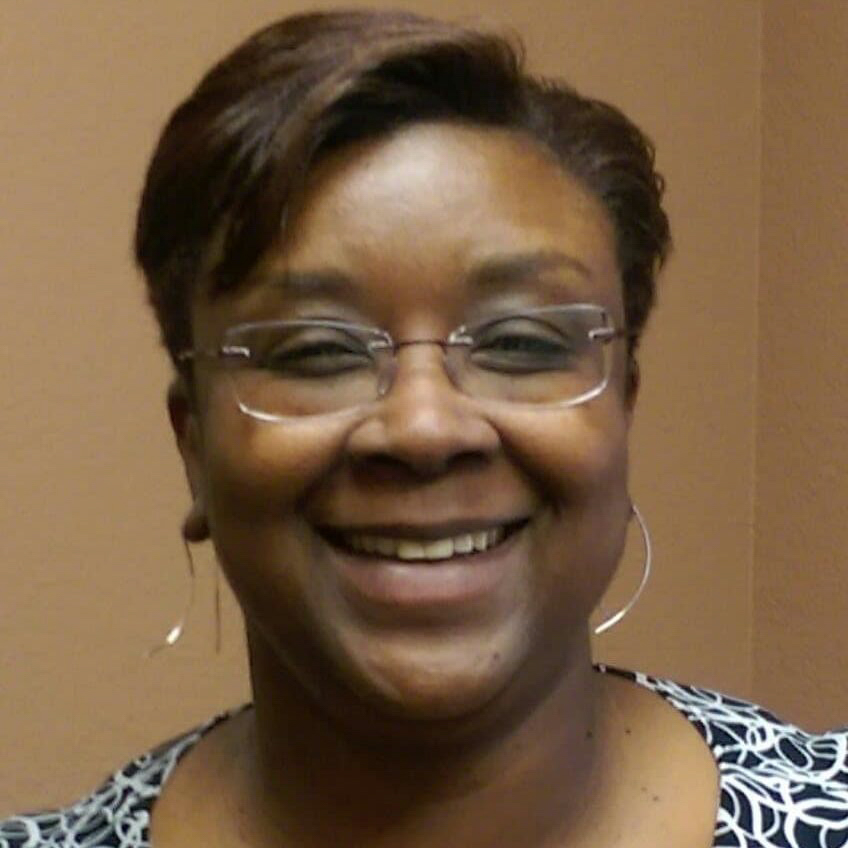
Salome Mwangi
Interviewee: Salome Mwangi
Interviewer: Doug Exton
Description: The refugee resettlement process is a long and taxing process, not one for the faint hearted. Salome takes us on a truncated journey through the process from fleeing one’s home, adjustments in the host country, until one is finally resettled in a third country. Salome Mwangi is a resident of Idaho’s Treasure Valley since 2004. She was born and raised in Kenya and relocated to the United States as a refugee with her daughter and the daughter’s father, who had fled his native Ethiopia, seeking refuge in Kenya, where they met, got married and started a family. As the Refugee Speakers Bureau coordinator at the Idaho Office for Refugees, she supports former refugees in crafting and sharing their stories in culturally appropriate ways in communities around the Treasure Valley and beyond.
Date: 2020-08-25
Topics:
The visual topic map is hidden for screen reader users. Please use the "Filter by Topic" dropdown menu or search box to find specific content in the transcript.
Doug Exton: Thank you so much for joining us for tonight's Connected Conversation. A program conducted by the Idaho Humanities Council. If you're not familiar with our organization, I encourage you to check out our website, Idaho humanities.org. I would like to remind you all that you may submit any questions using the Q&A feature located at the bottom of the screen. With me tonight is Salome Mwangi, and she serves as the Refugee Speaker's Bureau coordinator at the Idaho Office for Refugees.
It's an honor to have you with us tonight, and I turn it over to you.
Salome Mwangi: Thank you. Thank you so much, Doug. It's such a privilege and an honor to be sharing some of my experiences as somebody who came here as a refugee and also working within the refugee community and coordinating the Refugee Speakers Bureau, which is part of the Idaho Office for Refugees.
Excuse me. So the genesis of the refugee resettlement program here in the United States started in with the Disabled, Displaced Persons Act of 1948 at the in the wake of the end of the World War two. And then in 1975, there was the resettlement of Indochinese refugees through an ad hoc refugee task force, which had temporary funding at the time, and then the 1980 Refugee Act, which was passed by Congress.
Which and what that did is that it aligned itself with the US, UN, the United Nations definition for refugee. And I just thought we'd take a few steps back into what that looked like in Idaho, because this is the general US picture. The genesis of the program in Idaho started in 1975. The then governor, John Evans, was able to resettle people to allow people to come to the states through the Indochinese Refugee Resettlement program, and at that time, the people who are being resettled were the refugees from Vietnam, from Laos, from Cambodia and other southeast countries, Southeast Asia countries.
You can tell I'm a little nervous, but I'm going to settle down. And then after that, there was refugee groups fleeing the oppressive Soviet regime from Eastern Europe. And after that, then there was the other refugee groups that came that sought, resettlement and ended up here.
So I thought we would take a look and find out. So who is a refugee? How do you get assigned that title of refugee? So refugees are people who have fled their country and are unwilling or unable to return back to their homeland because of persecution or a well-founded fear of persecution based on one of the following based on their race, their nationality, their religion, their political opinion, or their social group?
In my opinion, I have found that, and really practically on the ground that it really usually isn't just one thing. It could be your religion and your political opinion or your nationality and the national group that you belong to. So any one of these five, as long as you are fleeing your country because of persecution or a well-founded fear persecution, then that qualifies you to be a refugee.
Now, in order for you to be a refugee, you do have to cross an international border. So you flee from your country, and usually people go to the neighboring country. The human being is an amazing person because we are the eternal optimists, hoping that the situation will die down and that we will be able to go back to, countries of origin.
Now, I'm well acquainted with this, because my own story started with getting married to a man who had fled his country, Ethiopia. We met in Kenya, which is my country of origin, and even when he fled, he was hoping that one day he would be able to go back. And so he had actually come over as a visitor, and every six months he would renew his visa to remain in Kenya as a visitor, in the hope that one day he would be able to go back to Ethiopia.
But that was never to happen. And so we ended up getting married and starting a family. And I was really amazed at this world that refugees operate in, that I was completely oblivious to, even though I was just. We were neighbors with a few options, yet I had no clue the atrocities that were going on in that country and how difficult they made it for some of the people, to the point to where they had to flee.
So my ex-husband actually fled because of his political opinion and because of the social group that he belonged to. He belonged to a tribe called the Oromo, which is the biggest tribe in Ethiopia that has been agitating for its own independence. But rather than being independent, there has been a lot of, civil and political opposition to the Oromo group.
So again, doing a big picture, taking a bigger picture, look at the displaced people, because really displaced people, you know, there's people who run away from where they are because of. And a very good example here in the US is Katrina, when people had to flee from Louisiana because they could no longer stay there. But that was because of an environmental, dilemma.
So currently, about 71 people have been forcefully displaced worldwide of those 41 million, about 41 million are internally displaced people. So that means that you're within your own country. You're within your own region, but you have had to move from the place that you call home into a better place. Maybe because of the fires, for example, like the fires we're currently experiencing or some other disaster that has forced you to leave your home, then we have about 26 million refugees worldwide and 3.5 million people who are seeking asylum.
I know people will ask the difference between what's the difference between a refugee and an asylum seeker? And I normally say it's kind of like the difference between seeking permission or asking for forgiveness. So a refugee is somebody who gets permission to gain entry into the third country of resettlement before they get there. So all your paperwork, all your background information, all that is done before you get into the country and an asylum seeker is somebody who, unlike a refugee, is able to gain access into the country.
You could be here as a student, you could be here and on training. You could be coming here to visit, and you've been granted a visa that lets you stay here for a short time. However, you're unable to go back into your country because of the well-founded fear, and so people end up staying and seeking asylum. So like I said, it's either seeking permission or seeking forgiveness of the groups that, of the refugees, of the people who run away as refugees, there's three options that are available to them.
There's repatriation and recreation means that the situation comes down in your country of origin and you're able to go home. So if it is fighting that has been going on the war in groups or whatever, come to a truce or come to an agreement, and the people are able to go back, there's local integration, and this is the next best option, such that instead of having to go back to your country when they are still fighting, going on, being allowed to remain in the country where you have sought refuge, your first country, that you have sought refuge.
But you'll find that many countries are unwilling to accommodate refugees and give them allow them to integrate locally. And that is what happened to my ex-husband, to where he wanted to remain in Kenya legally. But there was no legal means for him to do that. And they would tell him there's only two options. It's either go back to your country of origin, Ethiopia, or seek resettlement into a third country.
And that is where many refugees end up. However, of all this, of the 26.5 million refugees, when the system was working the way it was supposed to work before, we have, had all the challenges that we have experienced along the way. Only 1% end up being resettled as refugees in a third country.
So I just thought I'd give you a little bit of, snapshot into the conditions under which refugees leave, especially in the refugee camps. So you can have, urban refugees. And those are refugees who have probably somebody from outside the country who is supporting them financially so that they don't have to go and live in a refugee camp.
They're able to live in a, you know, a city where life is a little better. But for majority of the refugees who end up in a refugee camp, this is what a refugee camp looks like. And this is in my country of origin, Kenya. And I was horrified to see this because, like I said, I had no clue that this is what refugees face.
This is in the Kasulucamp, which is in Tanzania. And as you can see, when refugees tell you that they lived in a tent, it really is a temporary structure that barely gives you any sense of privacy.
This is the Mae La camp in Nepal.
And then I thought, let's just go through what the resettlement process looks like. Now, remember, this is a process that takes years for many people. They will have lived in a refugee camp for ten, 15, 20 years. There's very many couples who meet at the refugee camp, get married at the refugee camp, begin, start their families at the refugee camp.
And the process starts with fleeing home. So you run away from home because your family is under attack, your tribe is under attack, and so you have to flee in order to save your life. That is usually a very harrowing journey, and a journey of loss, and a journey that is filled with trauma. And then you get to the point where you're able to make it.
So, for example, let's say you're from the Congo, so you've run away from the Congo and you've managed to get into Burundi, or you've managed to get into Rwanda, or you've managed to get into Tanzania, and all these are countries that actually border the Congo. So you've just run away from your country and into the next country. Once you get there, you're able to seek the protection of the UNHCR.
So that's the United Nations High Commission for refugees. And when you get there, you're registered as a refugee. They listen to your story. They actually take down your information. And so while you're there, even though we say that you do have the protection, you're seeking the protection, those are still horror field camps that refugees end up in. The story of my ex-husband.
Is that because he was an urban refugee and we ended up getting married, he did not have to go and live in a refugee camp, but he did go to the United Nations High Commission for refugees and register as a refugee. So he had that paperwork. But that paperwork that had his picture in it had his name, his date of birth, had his basic information, did not accord him any protection.
The police from my country would still go and seek out, seek out refugees and get them imprisoned, and sometimes extort bribes from them in the process of, being deported was a long and drawn out process, and you would end up in a jail. And I can assure you that a Kenyan jail is the last place anybody needs to be.
During the time that we were together because of it, like I said, I was so ignorant to what was really going on. He was a person who was extremely nervous. I did not want to go out, and most days, because he knew that if he met with the police, then there was always the possibility that he would be harassed.
He would be asked to give money, and all he was trying to do was stay alive. Really? So the beauty of being able to go to the UNHCR, laden with fear and not always getting the protection that you're looking for, is that you have access to a third country resettlement program. The US has historically been one of the countries that takes the most refugees into the country.
There's also Canada is Australia, there's Belgium. And once you apply so you'll you'll be asked, you know, like, do you have any preference for the country that you're applying to. So some people will have relatives in Australia and they'll say, I if I can't, I'd like to go to Australia or if I can, I'd like to go to the US.
So depending on your circumstances and if you have friends and relatives who can help you in the initial resettlement process, then that is usually a priority. If you don't, then they will just apply. The UNHCR will apply to whichever country is willing to resettle you. Then the screening process starts and it's a multi-layered process where you have the security screening.
They listen to your story, they do some digging and find out is what you're saying true? Is your country actually at war? Is your group? Is your social group actually being persecuted? Then there's also a medical screening that you go through. And all these screenings that happen normally have, expiration dates. And you'll find the only way you can be able to travel once you, once you are approved, is making sure that your security screening that you went through is still valid, and your medical screening that you went through is still valid.
And if one or the other fails, then you kind of go back to the bottom of the line and then you start all over again. Fortunately, because of the situation that my ex-husband was facing and the fact that they had security forces from Ethiopia in Nairobi looking for some of those people who had managed to get away, they were able to process.
Now our process was expedited and it still took two years. So you can imagine how much longer it takes for the other people. And we were able to get to a point where the security and the medical screenings that had come back and that had come back as clear were, in tandem with each other. And after that, we were approved for resettlement into a third country.
In our case, it was in the US. And so two years from when we started, we were able to travel and get resettled in the US. Now, when we came into the US, we were initially taken to New Hampshire. And I like cracking this joke that, the people in New Hampshire or as cold as the weather, they really were a cold lot.
It was very difficult to get anything done. And it's probably not the people within the community, but the agency that received us was not very efficient or organized. I'm not sure what happened, and I knew within three weeks that that is not a place that I wanted to be for this, for the long haul. My daughter at the time was eight months old.
I remember she got sick and I had no clue what to do, where to go to, didn't know who to even ask a question about. Where do I get treatment for my daughter? I had a sister who at the time was a student at Boise State University, and she's the one who told me, you know, it's not supposed to be that challenging.
And especially when you have a child and you need a little more support. So with her encouragement, we were able to find our way from New Hampshire to Boise and coming to Boise, compared to what we had gone through in New Hampshire, was like night and day. I couldn't believe it when we got here, there were people from the agency at the airport who received us.
They put us up with, a host family who are able to stay with us. We were able to stay with them for about, I believe it was about 10 or 15 days while they prepared an apartment for us. And then we finally moved into our own place. And it was such a relief to be able to do that.
Now, the resettlement process is one that has so many fingers in this pie, and it's a good thing that we have so many people who have their fingers in this pie. Like I had mentioned before, we have the UNHCR, the United Nations High Commission for refugees. We have Congress, we have the US president, we have the U.S. Department of State.
So when the background checks are being done and the security checks are being done, they're actually done at that high level of the Department of State. Then when we get here, there's the Health and Human Services who make sure that we get Medicaid, that we get food stamps, that we get the supports that we need to get us off the ground.
Then you also have the national and local resettlement agencies, and those are the ones who receive you, and they assign you a case manager, and that's the case manager who makes sure that you're ramped up and you're off, and that you're taking off at a good speed in a good time. Because the resettlement process here in the US is one of the most rigorous.
And I really appreciated it because it helps you get on your feet as soon as you can. Obviously with some supports along the way. The longest that you receive support from the resettlement agency. Financially is a maximum of eight months. And a lot of the finances that, give it it's not direct cash to you. It is the rent that is being paid and the utilities.
And then there's a small allowance of I think it was something as little as $30. And that's supposed to help you buy a laundry soap and get your laundry done. There's also the state and local governments that obviously come in. The non-profits and the faith based organizations are phenomenal, especially here in Idaho. And then you also have I, individual donors and volunteers.
I cannot tell you how much I appreciated to this day, the donors and the volunteers who came to our aid. You would find that I remember initially somebody gave us a crib, but we didn't have a mattress for my daughter, who by that time was about nine months old. And I'm trying to think, my goodness, where do I even find a mattress?
And even if I find a mattress, how do I pay for it? And it is this volunteers who would come and say, you know what? I notice that you don't have this. Let me get it for you. I notice that you have pots, but, you don't have plates or whatever it is that is needed. They came around and sometimes it wasn't just the tangible stuff like I'm mentioning.
Sometimes it was intangible things, like a ride to a doctor's visit or a ride to church or to the mosque or whatever else, or whatever other support that you needed from the community. That is what the volunteers were able to do. And to this day, some of them are very good friends and I especially appreciate the fact that it's even when somebody had to move, maybe they had to move because of work, or had to move because family was moving.
They would actually hand you off to somebody else who would continue. And if it was not for them, I would not be sitting here today being able to articulate the process and the journey that this has taken.
So on this long road home to Idaho, I love this map and the whole terminology of Idaho and Idaho becoming home locally at this time. We have three agencies that welcome refugees and help them figure their way out. Around this new place is the International Rescue Committee or the IRC. And then there is the agency for New Americans. Both of those are agencies here in Boise.
And then we also do have resettlement going on in Twin Falls under the College of Southern Idaho. Refugee agency. So refugees in Idaho can either be resettled in Boise or they can be resettled in Twin Falls. Both are amazing places to raise families. And so I am really grateful for the opportunity to have come here. When I came here in 2004, when we were when we were resettled here, there was another agency called World Relief, which has since shut its doors as the numbers of refugees being resettled dwindled.
Now they're the ones who came matters at the airport helped find, to help, to find an apartment, to furnish it to. Now, people think that refugees receive a lot of money, that when they get here, they don't, because the funding that they receive is actually the one that buys a bed and buys the furniture and any other needs that you have, it comes from that pot of money.
So again, nobody's giving you the money and saying, go find yourself a bed. It's the agency that does that. Donations from the community may go a long way in making sure that when you get here, you are supported. So we were really surprised when we came here to find a host family that that they had said we could stay with them for as long as we needed.
And that was the first inkling to me about what a welcoming community Idaho truly is. Obviously, we were jet lagged. Time and time differences because I think Kenya right now is about ten hours ahead of us. So you can imagine, and I feel like it's harder traveling back into time than traveling towards time. Your brain knows about tomorrow but doesn't know how to go into yesterday.
So we really struggled with that in the family would tell us, it's okay, you do what you got to do to take care of yourself and really allowed us to process the process that we had just come through. The agency was also able to provide the volunteers. A lot of the volunteers that we worked with actually came through the agency that we were working with at the time, and so they were able we were able to get rides into the medical side and there's the immunization program that everybody goes through.
We had no clue what was going on. And then you come here anyway. So I truly appreciate the agencies and the support that they give refugees once they come here, because then it is a less scary journey. And even then, the occasion that you do not speak English. Now, I came here speaking English, but I spoke British English and so it still took me time to ramp up my English into American English and to understand exactly what was being said, and even for people to understand me.
A lot of times I remember once I needed to use the restroom, and I didn't know that it's called a restroom because we didn't call it the restroom. We called it the loo. So I was looking for the loo and no, but he had an idea what I was looking for. Finally, however, one gentleman who had lived in the UK said, Salome, I think you're looking for what we call a bathroom or a restroom, and they were able to help me out.
So the volunteers who worked with us went a long way in helping us decipher life and figure it out. And even when you speak English now, for those who do not speak English, volunteers are a great way to begin speaking the language because if you're with them and you don't speak any other language, you have to pick up English as a language, whether you like it or not.
We normally come here with our children, our children. It's so much easier for them to become socialized because they go to school or they go to daycare, and before you know it, your kids are coming home for me. My daughter started coming home with a vocabulary I'd never heard of. She would say, oh, you know, mom, Joseph had cooties.
And so I'd be on the phone with a daycare, finding out what are cooties and should I be scared of them? Or when she would come home and decide, oh, mom, I want mac and cheese. And actually, she didn't even call them mac and cheese at the time. She was really tiny. She called them ... cheese. And so I was again on the phone with the daycare, trying to find out what is ... cheese, and they would tell me what they are, and I had no clue.
I had not grown up with mac and cheese. And so again, that was that getting integrated into the community and making sure that I understand what it is my daughter needs in order to be able to meet those needs, as any good parent should. So once we get here, once we have our ducks in a row, so to speak, we one of the needs that we have is to be able to sustain ourselves.
The US resettlement program is all about becoming self-sufficient. And you hear that message from the day you from the first day that you get here, until you actually are on your own and your case manager is telling you goodbye. I've taken care of you. You guys are able to take care of yourselves. We're still here for the next five years until you become a citizen.
However, we feel like you've come a long way. Not imagine being able to do that in eight months. Coming to a new country, most likely without the language, with children, setting them up in school, you finding a job and figuring out your way to work and back home. It really is a crazy situation. However, it is doable. Many people have done it over the years, and I think more than just people being able to do that, being able to get to work and get their kids to school and figuring life out, is that this is the fact that once we get here, we're able to bring our flavors here.
And it's not just flavors when it comes to food, it's flavors when it comes to the food that we grow. I don't know how many of you are familiar with the Global Gardens, which is a a project of, Idaho Office for Refugees, where some refugees are given pieces of land where they grow food. It could be vegetables or fruit that are consumed here within the community.
So some of them, they're able to consume themselves. They I love being able to buy, or other greens that I grew up with that from our refugees are able to grow. Or it could be a restaurant. This is food from one of the refugee owned restaurants here. It's, Ethiopian food. Or it could be. I don't know how many of you love the very bitter, Middle Eastern coffee or the Middle Eastern cuisine.
It's right there. Or it could be other people who have been able to set up their own shops and, can make African clothes or things out of the African fabric. And for me, this is just an amazing show of how resilient the human spirit is and how when we work together, then we truly are able to achieve this dream of integration to where I don't have to give up myself in order to fit in this community.
And even for you who belongs to this community, we are still able to work together and to get life done. And while we're doing that, we are actually adding flavor. So I'm learning about the mac and cheese. You're learning about the bitter greens that are from my community and why do we like them, and what's the best way to make them in order to enrich both your lives and mine?
There's also there's very many people who see the African women who we tend to dress rather colorfully compared to how, the people here dress. And so trying to figure out, okay, so if I want a dress like that, where can I get it? Or if I want a bag, if I want to honor the community that you have come from and what you're doing, how can you do that?
And so one of the things that I am very proud of is the social integration program that we have at the Idaho Office for Refugees, where we are able to talk about the expectation of this community that you're coming into, so that as you're stepping into it, you're not getting caught on the wrong foot because, oh, I didn't know that I couldn't do that with my kids.
Well, I didn't realize that I couldn't leave my kids on their own while I run to the store. Because apparently here there's different rules. And it's true, there are different rules. So in the social integration, we go into the places where people who came here as refugees or as immigrants are made aware of. What are the traffic laws?
If it says 35, can you go 36? And what happens when you're given a ticket? How do you navigate that? Or, you know, I give the example of how do you handle your kids now that everybody lives in their own home? And yes, it does take a village, but in this village everybody has their own address where they live.
So this is the end and goal of resettlement that you would be able to get integrated and that you would be able to give some of your flavor and give some of your the strengths that you come with. Each culture, each community has its challenges and has its strong points. So how do we navigate those challenges that we're finding in this community?
And, a lot of this work is not done. I'm not the one who does it. In fact, it takes it really does take this community, this village. We have people from the city of Boise. We have people from the Boise Police Department. We have people from the Idaho Coalition Against Domestic and Sexual Violence. We have people who work with, who are experts at mental health.
And so we are able to talk about these things in a way that is non-threatening. And before they become a problem.
So I have breezed through this, and I have come to the part where you can ask questions, but maybe before you ask the question, I'm sure some of you are wondering, okay, so what happened to your husband? You're calling him an ex husband? Yes, he is an ex husband. Unfortunately, even though we survived the journey of resettlement and we made it into the US, our relationship was not strong enough to whether, the integration part of it.
And so he moved to a different place. I was left here with our daughter. My daughter is now 16 years old, and she has become the one who teaches me about. No, ma'am, that's not how things are done here. She plays, she participates in sports. She's played soccer. She's played basketball. And I have learned in the country that I came from.
I would have sent her out to play. And when she's done, she would come home when she when she was, you know, spent in energy. And now I've realized, wait a minute. That's not how parenting is done here. I have to attend those basketball games. I've had to figure out where is notice and where is Palmer and where is and, you know, just show up.
And for my daughter to realize, oh, because the other parents are doing that. So that is how my own story went. I became a citizen. I cannot believe it. About ten years ago. And so it's been an amazing journey of learning, of opening myself up, of allowing other people to come into my otherwise private world, to realize that refugees are people just like you and I, who unfortunately, have had to leave their countries and cannot go back because of one of the five reasons that I gave you, and that of the ones that we see here, those are part of the 1%.
Can you believe that just 1% of the about 26 million. So out of 26 million, just 260,000. And those are not the ones who actually come to the U.S. those are the ones who are resettled in any country. And so the U.S. takes a fraction of that. And I am very grateful that we were able to find our way here.
And so I'll open it up to any questions or comments that you may have.
Doug Exton: Well, I just want to say thank you for that wonderful presentation and all that information. Definitely. It was an eye opening, presentation, I think for a lot of people, one of the questions I did have to open this up is you mentioned you showed the different flows of the refugee camps. And I know some people like to refer to them as informal settlements rather than refugee camps and stuff like that.
Now, how do. Is the treatment of those settlements and those refugee camps kind of standard in a lot of different countries that act as that like middle country between the start of the refugee process and the resettlement process and like, what is that treatment typically?
Salome Mwangi: So the beauty of it is that you do have a UNHCR on the ground, along with the UNHCR, because they really cannot meet all the needs of the refugee. Their resources are limited. And so what I've found is that a lot of other, in the other countries, they actually call non-governmental organizations. So the nonprofits so you'll have you'll find Care International or the World Food Program or, Compassion International.
So all of them, you'll find the, Doctors Without Borders, you'll find many of them working in those refugee camps to meet, to try and bridge the gap between what the UNHCR is offering and what the needs are. They try and make it as humane as possible. But like I said, you'll find that there is.
These, almost like bad blood from the local communities who live there. And they wonder, so why are all these people who are coming from different countries receiving in our own country services that we do not have, you know, like they have medical services and maybe the local communities does not have medical services. But what I have found is that a lot of those NGOs who work in the refugee camps try and take care of the refugees, and they also try and take care of the local communities so that we don't have this animosity going on between the refugees, who are obviously fleeing their own country and have nowhere else to go to, and the
local communities where they have been placed. However, you'll find that a lot of times the refugee camps, in extremely remote places like the refugee camp in Kenya, the one that I just showed you is on the border of Kenya. And Sudan. So if you were to take a bus or public transportation, it would probably take you three days of travel just to be able to get there and that's part of that distance that they tried to put between the local community and the refugee community.
Doug Exton: And then what are some of the biggest surprises you personally had when you arrived in Idaho?
Salome Mwangi: Actually, in the US, everybody, it felt like everybody drove on the wrong side of the road. I grew up driving on the left. You know, everybody kept left. And then I came to the US and it was keep right. And so that was such a huge shock. It felt like we're going to crash at any time now because everybody's on the wrong side.
But obviously after a while it becomes your new normal. The food was also really, really surprising. I thought the food out here would be tasty. I was amazed at how bland it is. And I think part of it is that a lot of us came from communities where food grew. We haven't interfered too much with food. So you have food growing in its season, and obviously when you're eating it, it's in its season.
It's when it's tasty. So whether it's mangoes or oranges or apples or strawberries, we could only consume them when they were in season. And so you were getting the best nutrition and the best flavor for that food. And so it took me a long time to finally figure out how to cook food and give it the flavor that I was used to.
Doug Exton: Yeah, I can definitely agree with that. Since I moved from D.C. out to Idaho, there's definitely a lack in some flavors in Boise regarding food. And then what was the citizenship process like for you? And then do refugees also feel secure in their, status before they obtain the citizenship status?
Salome Mwangi: So the citizenship process is relatively straightforward. And I say relatively straightforward because and obviously this is information that I've gathered over time, the information that you submit when you're being admitted as a refugee is the information that me that they keep checking. So, for example, when you come here after one year, you're eligible to apply for your green card.
You're permanent residency, right? So the information that they look for is the same information that was set up when you were applying in your approval process. So you can imagine if my name was misspelled and I didn't notice because sometimes it it is possible not to notice that your name has been misspelled or they switch the names. That's a very common thing to where somebody's first name becomes their last name, and the last name becomes the first.
And then I come here and I'm applying for my green card. Now, if I try to say no, this is the correct or my names wrong answer, it has to go back. So so the little things like those that you think, hey, you know, you guys are going to correct it. That's not how it goes. So after one year you can apply for your green card.
And if you don't have anything again they do background checks on you. They fingerprint you and make sure that you're kosher. You're okay. And then after that, four years after you receive your green card, you're eligible to receive to apply for your citizenship. And again, it's the same thing. There's a background check that is being made. If you have not tangled with the law, you're fine.
It is when people get in trouble with the law and get misdemeanors or felonies on their records, that life becomes a little bit more challenging when it comes to getting a green card or getting, your citizenship. Now, for me, I, I didn't have any issue. I only had one. I've only had one speeding ticket and. That did not affect me.
It was a citation I paid. It affected my insurance. And that is now part of the reason why we're doing the social integration series is to help people realize if you're caught with if you get a speeding ticket, it affects your insurance. What can you do to take care of things like that so that your life doesn't become miserable because it's becoming too expensive?
But other than that, it was pretty straightforward. The agencies here, the resettlement agencies, the IRC or the agency for New Americans have somebody who's trained to do those applications. And the best part is that they're able to look at the information that you came in with and make sure that everything is following. And then if there's any hiccup, if there's any delay, they are able to call and figure out what could the delay be?
Is it more information that is needed? Is it something that you filled in that you didn't fill in the correct way? Yeah.
Doug Exton: And then what changes would you like to see in the refugee process within the United States, given your own experiences?
Salome Mwangi: You know.
Like I said, it's a really fast program because you're supposed to be self-sufficient in eight months.
And you find that in those eight months most people will lose their Medicaid. Most people will lose their food stamps because now you're working. So you find a lot of those supports that you had go away. Most people no longer receive, rental assistance because you're now working. So especially in Idaho, it would really be great if there's more education.
And that education really has to come from the community. I have been a case manager, and I know how overwhelming it was to try, and even just hitting the basics was overwhelming. However, from my own experience of having volunteers who came alongside me, who would come home and read letters, yes, I read in English, but there's some letters of which I had no clue what the implication is if I do not respond to it.
For example, being someone for jury duty, I was always being called for jury duty before I became a citizen. I've always I've only been someone once since I became a citizen. But then I'd look at that and I think, well, I'm not a citizen, so I'm not going to bother with it. And yet, no. So it took somebody who understood and who would say, no, yes.
You cannot serve on the jury. However, you need to send them a copy of your green card or a copy that shows them. This is the reason why I cannot serve. So having people who have run alongside me so not the case managers, because I really understand how, short staffed they are. But people from the community helping you figure life out.
And for those of us who had volunteers helping us, life has become so much easier. And because what they also do is that they connect you rather than waiting until the situation is really dire, they're able to connect you to whatever resources they're within the community to help you out, rather than waiting until it's too late. Now there's somebody who had asked.
There was a question about, do refugees feel secure before they become citizens? That can be really tricky, because if anything happens to you and you're not a citizen, there's always the danger of you being deported.
So, yeah, now when I, when I, before I became a citizen, I don't remember feeling that way. But I think in the atmosphere that we have right now, deportation has become a real threat. And we are seeing about it. We are reading about it in the papers. People are experiencing it. So I do believe that refugees and those who do not, who have not yet become citizens, do have that additional layer of stress that something could go wrong.
Doug Exton: And then building off of that, do you know, on average, how many refugees live in the US become citizens, or at least pursue that process of maintaining or obtaining a US citizenship?
Salome Mwangi: I know it's majority of them who do that, because the other thing that, happens is that if you do not become a U.S. citizen, the the system actually gives you seven years to become a U.S. citizen. If you are not a U.S. citizen in those seven years, you cannot receive public assistance. So any public assistance that you have may be receiving.
You know, maybe you're somebody who came here with injuries that was so bad you cannot work. So you're probably receiving disability, which is a minimum minimal amount, but you're receiving disability. If you are not a citizen in seven years, you lose out on your disability payment. That would also put any food stamps or any, any other public assistance that you're receiving at jeopardy.
Doug Exton: And then what kind of jobs are available for refugees within the eight month deadline from when you first become established in the US to that like cutoff point of benefits?
Salome Mwangi: So the beauty of it is that it's really up to you and how much English you are able to pick up, because one of the things that, especially for people who have what we call limited English proficiency, there's English classes that you can attend. And obviously, we are hoping that as you attend these classes and you start practicing, you become better at speaking the language and communicating in the language.
But you'll find some people just can't. They've been through so much trauma that it's difficult for them to retain. The new words of the new language that you're learning. And then that could also expand or limit the number of jobs that you can find. There's a lot of people who work in the hospitals. There's a lot of people who are caregivers.
There's a lot of people who end up, doing janitorial jobs. There's the beef factory somewhere out in Kuna that has really done a fantastic job at, bringing refugees in and working with them. And I think the other thing that people don't realize is that even though I may not speak English, there could be somebody in the group who speaks English so that person becomes an interpreter.
And even though you're not able to communicate with them directly, there's still another way of communicating.
Doug Exton: Yeah, that method is still there to communicate.
Salome Mwangi: Yes.
Doug Exton: And then what traits, did your family possess that you were able to be, set up with for like, the about two week period? I believe you said that helped you become one of that 1% that, became formally resettled.
Salome Mwangi: You know, I'm not sure that there was, I think the my ex-husband's story, when they were able to check it out, it checked out the fact that he was able to express that he felt like his life was in danger, even though he had run away. They were able to verify that. And then thirdly, what had happened was that he spoke Oromo, so he occasionally would interpret or translate things into between English and Oromo.
And so he actually got to work with the wife of the director of IOM. So IOM is the International Organization for Migration and the executive director of the IOM at the time. I don't know if that's the same thing. Today was at the same level with the US Embassy in Kenya. So he was able to do a direct referral.
It's very, very rare, but it happens. And so he was able to say, I know this man, I can stand for him. I believe his story. I'm handing you over to the US embassy and asking them to do all the background check and everything, and once they accept you, then you can go on the fast tracked. I mean, they didn't even say that it would be a fast track.
It's just that that's how it turned out to be. So because of that connection that he already had with the IOM executive director, we were able to come here a lot quicker than other people would.
Doug Exton: And I know you mentioned for your fast track, it was about a two year process from Kenya to the US. So how long is like the normal process about.
Salome Mwangi: About I think the minimum I've heard is five years. So somebody who's been in a refugee camp or from the moment they entered the refugee camp to getting to the US, five years, people are, oh my goodness, it took you such a short time. And there's others who've been in refugee camps for 20 years, 20 years.
Doug Exton: With your ex-husband. I know you mentioned how his group was being persecuted in his home country, and there were the people in Kenya, like looking for refugees of his group. So how do you how do you balance that while also going through the the long process of resettlement. Like do you have any safeguards put in place once you start that process to protect you.
Salome Mwangi: You don't. So it's almost like you're playing cat and mouse and a game of cat and mouse to where I remember it got to a point where he would not leave the house unless it was absolutely necessary. So he was a person who really loved going to church, and though at times he would just say, I'm not going to take that risk of going to church, or if I'm going to go to a place where I feel like I'm taking an unnecessary risk, I have to have somebody who's going to give me a ride.
So that really affects everybody, you know, because then you're not able to go with him places, even though you'd like to go together because he feels like he would be placing his life at risk. Yeah. To to do that.
Doug Exton: And earlier, when you're talking about the, Idaho Refugee Department, what? You mentioned the police role, and I was wondering if you could expand more on what the police role and working with the Idaho Office for Refugees is in regards to integrating the refugees into the community.
Salome Mwangi: So the beauty and this is something that's really unique here in Boise is that they have a refugee liaison officer. So this is a police officer who has been trained on how to work with the refugees and how to work through the languages and the cultures that sometimes hinder communication. And what we know here within the refugee community is that if you have an issue instead of, you know, trying to find a way to call three, four, three cops or whatever you can call Jessica.
Her name is, Officer Jessica Na, so you can get in touch with her. And so she makes sure that whoever is investigating, I mean, obviously, unless it's an emergency, if it's an emergency, you down 911. But the police officers responding to such a case will still call interpreters either on the phone or to show up there. So with Jessica, Officer Jessica, we've been able to come up with those, you know, she's able to see what are the crimes that keep being reported.
What are some of the challenges that the community is suffering from? And rather than going down the legal route of law enforcement and then the legal system, the court system, which obviously messes up your what can we do to mitigate that? What can you do is something that is, for example, domestic violence, where some of the cultures that we come from, hey, the husband is not happy with a wife.
He slaps around and that's it, right? Well, that's not going to fly here in the U.S. so how can we educate these couples who are coming in here on how to find alternative ways of dealing with some of the challenges that they face? And it's the same thing with dealing with children, because you'll find some of our kids come here and they're like, hey, hey, I speak English.
I'm able to understand what is being said. I can call mom or I can actually put mom in trouble because I can call and say, mom is slapping me. And by the time they get to the fact and realize, wait a minute, this is just the kid. Being a teenager, a lot of damage has been done, so that's part of what Officer ... does within with with the refugee community.
She's a great resource to where you can go to her and whatever it is. So you're able to talk without beating around the bush, which is what some of our cultures do. We talk while beating around the bush. You're able to just like, hey, this is what I'm struggling with, or this is what the challenges, how can we deal with this before it becomes it's out of control?
Yeah.
Doug Exton: And then do you have any suggestions on how the average citizen can better support refugees in our community? And the person asking, states that they don't have a whole lot of time our ability to participate in a formal organization, but they still want to contribute in some form. So any is geared towards that direction.
Salome Mwangi: So like I said, the IRC agency for New Americans CSA Refugee program could always benefit from more hands on, more money because the funding that they receive is federal funds. And federal funds come with limits as to what you can do. Being able to support them in the community sometimes, believe it or not, I still have people who send me a picture of a letter that they received in the mail, and they tell me, could you please read it to me and tell me what it is that I need to do?
Sometimes it is just that once a week, 30 minutes reading through mail and that is it. You could also help other organizations that support refugees. We have, digital social work services. They do mental health. There's a lot of refugees, like I said, who come here and after a while they lose their Medicaid and they're not able to continue receiving the support of their mental health counselor.
I know an organization called glocal. So G and then local, and they do a lot of work within the refugees that is outside the scope of the agencies. Sometimes they'll move furniture, sometimes they'll set up apartments for somebody who's moving. Sometimes they'll have something like a baby shower.
A woman who's come here as a refugee and has a baby and needs a crib or needs, diapers or needs whatever it is, they're able to help them get connected to those places.
Doug Exton: And earlier in your presentation, you mentioned how there's a lot of refugee groups in Boise and the College of Southern Idaho. It's the more recent edition for Twin Falls. Do you know of any plans for, more of a northern Idaho branch, I guess, for refugees, or is it more just focused in the southern part of the state?
Salome Mwangi: For now? I think it's just focus on the South and side it side of the state. And, I actually happened to take a short vacation and I went up north cause I've never been up north, and I'm not sure that that is the right place to take them at this time. There's a lot of work that would need to happen within the community in order for the refugees, when they go there to feel like they're in a place where they are welcome and that they can call home.
Right now, the atmosphere doesn't feel that way. When we were there, it was very obvious that we were sticking out like a sore thumb, and I'd gone there with my sister. Obviously another person of color had two kids and myself and even her husband, who is white, happened to say he had never experienced what he experienced. Now that he traveled with us, and just the sense of being on edge wherever we went to.
But the funny thing though, is that when people ask me where I'm from, obviously when I open my mouth, you can tell I'm not from here. And I said, I'm from Kenya. It's like they relax a little bit. So I don't know, maybe there is hope that refugee resettlement can happen there sooner rather than later on.
Doug Exton: I'm sure given time, the. That unfortunate, feeling will go away and the community will be able to adjust and be welcoming towards refugees, especially when they see all the wonderful things that refugees do have to offer towards communities. So fingers crossed on that.
Salome Mwangi: Fingers crossed.
Doug Exton: Yeah. My last question to round out tonight's presentation is the UN High Commission on Refugees easily accessible for a refugee, or is it kind of like a we have to jump through a few hoops to be able to access them?
Salome Mwangi: Usually wherever the refugee camps are, there's always a UNHCR office.
Doug Exton: Okay?
Salome Mwangi: So they always have people there. And from what I've heard, because I never ended up in a refugee camp, they tend to staff it with the locals to kind of like keep it, you know, on an even ground so that you don't have, for example, somebody running over from Ethiopia into Kenya and then finding his own people working there, and the very people that he was running away from are the very people who are now deciding how his case is going to be presented.
Yeah. But I in fact I wanted to to add something a little bit because you know, somebody asked about what are some of the surprises that I found when I came here. And one of it is probably the biggest is individualistic lifestyles where everybody lives by themselves, does everything by themselves. You know, goes to the store by themselves, goes to watch a movie by themselves.
And we don't come from many of us come from collectivist cultures to where I don't go to the market by myself. I go with my community and I don't cook dinner by myself. I cook with my community, and I don't eat by myself. So that that is another huge thing. And sometimes you'll find when we first moved here, we really struggled with that, with the fact that we don't seem to have the community that we were used to, you know, everyday living.
Doug Exton: Yeah, I definitely also feel that way because I'm just a very social person. But with Covid in the quarantine, that aspect of my life has been completely shut down. Right? I, I definitely understand that feeling of that shift overall into that more individualized approach.
Salome Mwangi: Yeah. And then, you know, if anybody wants my email address, I'm okay with you sharing my email address.
Doug Exton: Yeah, I will put it up. On our website right by the recording. Once the recording gets posted. That way anyone can reach out to you with any further questions or ways to help and unfortunately are out of time tonight. But I did want to say thank you again for joining us tonight, everyone. And thank you again, Salome, for giving us all the wonderful information.
Salome Mwangi: Thank you Doug, it's been a real pleasure and I hope you enjoy the rest of your evening.
Doug Exton: Everybody have a good one.
Salome Mwangi: Thank you. Bye bye.
Doug Exton: Bye.