
Vasquez, Abel
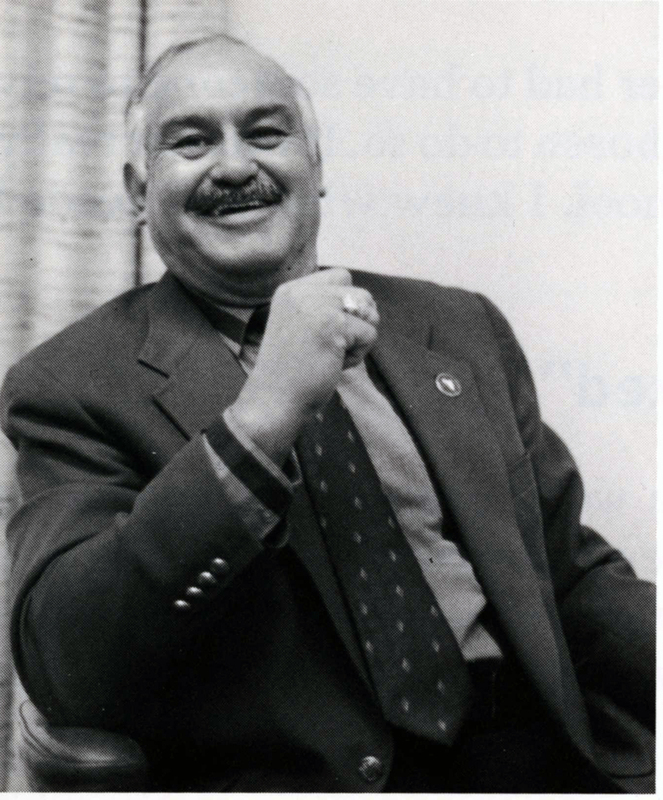
Description: Interview with Abel Vásquez.
Date: 1991-01-13 Location: Nampa, Idaho
Interviewer: Tórrez, Martha
Topics:
The visual topic map is hidden for screen reader users. Please use the "Filter by Topic" dropdown menu or search box to find specific content in the transcript.
Transcript
Martha Tórrez: Okay, Mr. Vásquez,
Abel Vásquez: Okay.
Martha Tórrez: Okay. I'd like to begin by just asking you how it is that you and your family came to the state of Idaho.
Abel Vásquez: Well, when we came to Idaho, it was much. I didn't have a choice. It was something I had to do. I was raised by my grandparents, and at the time we came to Idaho, I was only eight years old, so needless to say, I had to come to the state with my folks to work in the fields.
So that is how I came to be in Idaho?
Martha Tórrez: Now you were raised by your grandparents?
Abel Vásquez: I was raised by my grandparents due to the fact that my mother died when I was very young. It was a strange story. I guess it's because when my mother and father separated, I was six months old, my mother took my older brother and raised him until she passed away in 1940.
But my grandmother took my older sister, Helen, and myself when we were babies, and as little kids, she raised us. So I was raised by my grandmother from early childhood.
Martha Tórrez: And so, when you were living with your grandparents, where were you living? And if you could explain to me a little bit about how it was that you came to be in Idaho.
Abel Vásquez: How I came to be in Idaho was, we were living in Grand Junction, Colorado, and we were bean field workers. That's all we knew at the time. So we used to follow the field work. How we came to Idaho: my grandmother had a sister who lived in Salt Lake City, and we went from Grand Junction, Colorado, to Salt Lake City to visit my grandmother's sister.
And we stayed there maybe six months or a year, I can't really recall how long. And that was in 1937 or '38, I think the fall of 1938. In the fall of 1938, my grandfather and some other people decided to come to Idaho because there was field work to do, sugar beets.
Martha Tórrez: So the opportunity, or...
Abel Vásquez: Job opportunity arose. And so we came to Preston Idaho, me my grandmother, my sister and my grandfather. We went to Preston Idaho in the fall of 1938.
Martha Tórrez: Did you do any other kind of farm work? Other than beets, did you work in other types of agriculture throughout the years??
Abel Vásquez: Yeah, I remember, when we were little and stayed in Utah, we used to pull onions. I remember topping onions, somewhere close to Salt Lake. But when we came to Idaho, the season was to top beets. It was the fall of the year.
And so we used to meet and camp. We used a knife with a little hook on the end, like a machete, and that's what we did in 1938. We stayed there all winter of 1938. In the spring of '39, we followed the work.
So we came to Idaho. Why did we come to Marsing? I'm not really clear whether we knew somebody there or we just happened to say, 'Let’s go to the other part of Idaho, go to Marsing.' But all I know is that we landed in Marsing in 1939. You know, we were here before, they were here.
They were here.
Martha Tórrez: When you traveled to Idaho, did you come by your own transportation that year? And did you come out with other families, or was it just your family?
Abel Vásquez: It was just my grandparents and us. We didn't know anybody. We were just by ourselves. And when we came to Marsing, I think we were by ourselves also.
Martha Tórrez: So you drove?
Abel Vásquez: We drove here. We had, and I think it was an old pickup truck, if I'm not mistaken. But we landed in Marsing, and the ideal situation in those days was to find a farmer who had year-round work, where you could start in the spring, thin the beets, clean them, and then find some work in between. And then in the fall, you topped the beets. And so that's what we did.
Martha Tórrez: What are your very first memories of Idaho when you first got here? What did you think of it?
Abel Vásquez: Cold, especially in eastern Idaho. It was very, very cold. And, needless to say, working in the fields as a kid, we'd go out to the beet fields, and it was so cold the leaves, the tops from the beets, would break off. They were frozen.
It was cold.
Martha Tórrez: So do you have any idea where you're from originally?
Abel Vásquez: No, no, but I like it here. Yeah, it was very cold here.
Martha Tórrez: I know you said the very first place you came to was Preston.
Abel Vásquez:
Martha Tórrez: Can you describe where you lived?
Abel Vásquez: Well, it wasn't long ago, but I'm sure it was just a very small shack, probably just a one-room house that I can remember. We probably had to go to the farmer's house to get water.
We didn't have any bathroom facilities, you know, you had an outhouse. Okay, so that's what I recall mostly when I first came to Idaho: that it was cold.
Martha Tórrez: Now, once you got here, did you travel to other cities in Idaho or to other states?
Abel Vásquez: Once we came to Idaho, we went to Marsing. We stayed in Marsing and worked in Marsing. But while we were in Marsing, we used to go to other areas, like the McCall-Donnelly area to pick peas. We used to go to Emmett to work in the pea fields.
And also, we used to grow carrots there, you could tie carrots in the water in the Emmett area. And I also lived temporarily, maybe two or three months, in a labor camp in Oregon.
Martha Tórrez: And what was that like?
Abel Vásquez: As a kid, if you have your parents, or your grandparents, you don't put too much emphasis on things like we do now. You don't worry about the economics of it. You just work, go to school, and you've got a place to eat and sleep, and you're happy.
Okay.
Martha Tórrez: So it was positive for you?
Abel Vásquez: Oh, yes, very positive. I remember at that particular time, when we were living in that labor camp, my older brother Rudy got really sick with a constant virus, and he just about died there. But, needless to say, he didn't.
Martha Tórrez: But so he was hospitalized?
Abel Vásquez: No, I don't think he was. I think he was just taken care of right there in the camp. He made it through.
Martha Tórrez: Were there any other Mexican American families living in Idaho when you first arrived? Do you remember anything about the Bracero program or undocumented workers?
Abel Vásquez: I remember when they first started to come. As far as other Hispanics being here when we first arrived, I can't recall ever seeing any. I do know that shortly after we came, other Hispanics came to live where we lived in Marsing.
And I do remember the Braceros, when they used to come here to work in the fields. One of the things that really used to amaze me about those poor people was that they'd work out in the fields like we used to in the wintertime, topping beets, like I was telling you about earlier.
And they'd wear whatever they had, and, mind you, it was a hard life for them at the time.
Martha Tórrez: What else do you remember from that era about these people who were coming in, like the Braceros?
Abel Vásquez: The workers, when they first came here, would put up with almost anything to make money to send back to their families in Mexico. They would live in little houses bunched together, shacks all put together.
I do remember when we were living in Marsing in 1940–41, my grandmother used to take in boarders and cook for them. We used to have a little shack in the back, but we lived in a tent, and these people would come to work in the fields. My grandmother made extra money by giving them room and board, and she had to cook for them.
Sometimes there were maybe 12 to 15 people she would board, and she charged them about a dollar to a dollar and a half a day for room and board. She was doing all the cooking for those people on an old wood stove, I'm sure you've seen them. That's how she cooked for all those people.
Martha Tórrez: You mentioned these people put up with whatever they had to in order to keep working. Do you remember any kind of differential treatment they had to endure?
Abel Vásquez: Well, I can't really say. I don't know if they were treated any differently. At my age, I thought that was just the way it was supposed to be, I thought it was normal. So it's really difficult for me to say they weren't treated fairly, because I didn't know any better.
Martha Tórrez: Do you recall any specific situation?
Abel Vásquez: No, I don't recall a farmer ever mistreating them or discriminating against them. I cannot recall that. I know they worked hard.
Martha Tórrez: So it sounds like, compared to white workers, they did the same work.
Abel Vásquez: Oh, no, neither did we, really. If we didn't have proper clothing for the conditions, that was our problem. Nobody supplied us with anything.
Martha Tórrez: Was that difficult? Do you remember them having to go out and work without proper clothing?
Abel Vásquez: Again, sometimes we think ignorance is bliss. When you don't know there's something better, you do the best you can with what you have. I'm sure my grandmother and grandfather worried whether we were adequately dressed to do the job, but we didn't know any better.
Martha Tórrez: And you weren't around any other way of living, so that was normal for you: as long as you had a place to be warm and something to eat.
Abel Vásquez: So anyway, that's what I remember about growing up as a little Mexican boy here in Marsing.
Martha Tórrez: When you worked in the fields, do you remember anything about wages, what you were paid?
Abel Vásquez: Well, we always worked piecework, we never got paid by the hour. My grandfather always taught us, 'You're going to get paid for what you do, the more you do, the more you make.' We never worked by the hour. All piecework. I remember topping beets for six or seven dollars an acre.
I remember popping beets by the ton, I can't recall how much per ton, but we used to haul the tops by hand onto a truck. Sometimes the fields were so muddy we had to hitch a team of horses to the truck to pull it out because the weather was so bad. Those little things stick in my mind because they don't happen anymore.
Martha Tórrez: So work was basically just a lot harder than it is today?
Abel Vásquez: Oh yes, right.
Martha Tórrez: I mean, you were only like ten or twelve years old.
Abel Vásquez: And I have a grandson who's having a birthday today, he's nine years old. I sit down sometimes, didn't tell him, but I think: at eight years old, I was outside in cold weather, working alongside my grandpa topping beets. And today, we don't even think about it.
Yeah
Martha Tórrez: Right. Now on the subject of education, you did attend school in Marsing. Describe your earliest memory of school.
Abel Vásquez: I started school in Grand Junction, Colorado, in first and second grade. We lived in a place called La Colonia, next to a sugar beet factory, the railroad tracks, and the river, a typical place where they put all the Hispanics.
I think even today we sometimes segregate ourselves, not because Anglo people separate us, but because we do it ourselves. Anyway, I remember walking to school barefoot, we didn't have money sometimes. I started school in Grand Junction up to second grade, and I started third grade in Marsing.
Martha Tórrez: Was there a difference? Did the school system feel different from Colorado to Idaho?
Abel Vásquez: No, I don't think it was that different. At that time, school was about learning to read, write, and do arithmetic, the 'three R's.' That was most important. We didn't have all the extras we have today, but I didn't notice a real difference. In Colorado or Idaho, you learned to read, write, and do arithmetic.
Martha Tórrez: Right, school must have been nice for you. I know from my own experience that sometimes where I was raised, it was so cold I didn't have enough to keep me warm. You were one of many children, so going to school, a warm room, new pencils, Crayolas, a well-groomed teacher with polish and lipstick, was a whole new world you didn't have at home.
Abel Vásquez: Oh yes, right.
Martha Tórrez: Because of your living conditions, school was like an escape, something nice and orderly.
Abel Vásquez: Well-groomed.
Martha Tórrez: Teachers like that, our mothers weren't glamorous; they were busy raising children, and our fathers were out in the fields. So school was a completely different world.
Abel Vásquez: It's a completely different world.
Martha Tórrez: Do you recall any other Hispanic children in your class when you came in third grade?
Abel Vásquez: I was the only one, well, me and my sister were the only ones in Marsing until 1940. We were the only Hispanics.
Martha Tórrez: Probably one of the very first.
Abel Vásquez: First, right.
Martha Tórrez: First year in this area.
Abel Vásquez: Right, the first Hispanics I can remember. Then in 1940, some other people came from Grand Junction, and I remember them coming to live in Marsing. So it was just me and my sister who were the first Hispanics.
Martha Tórrez: Came here to set up to ah...
Abel Vásquez: Maravilla, yeah they were there.
Martha Tórrez: How do you recall being in school as far as grades?
Abel Vásquez: I was just an average student. My parents didn't put much emphasis on education, they figured they'd rather have a good worker than a good scholar. But we did fairly well. I never flunked a grade. The ironic thing is, we used to start school late, like in November, and only go about six months a year because we had to quit early to work in the fields and start late because harvest was still going.
So my teachers took extra time with me, helping me catch up. And the other kids, the Anglo kids, also helped me. All the teachers were really nice to me and my sister, and the students were very helpful.
Martha Tórrez: You started in November, it sounded like it was just you. Was that the norm for migrant families?
Abel Vásquez: School was always September to whenever, but we had to quit and start late because September and October had the best working weather. When it got cold, we went to school all winter. Then in spring, when it warmed up, our parents pulled us out to work. That's why I never flunked, I must have had good teachers who worked hard to help me catch up.
Martha Tórrez: He was a bright boy, from what I can see. Even when I met him before we got married, I saw so much potential. He's a born mathematician. After we married, he told me that as a little boy, the older men, who couldn't read or write, would single him out to figure out their acreage and pay. He had to be a smart kid to do that.
So your experience was shaped by the harvest, you had to leave school early.
Abel Vásquez: You know.
Martha Tórrez: It doesn't sound like you had to move to new cities or states often, so you didn't change schools much.
Abel Vásquez: I remember the only time I changed schools was when we came to Nampa. I started seventh grade there in 1943.
Martha Tórrez: What do you remember about being a Mexican-American student in school?
Abel Vásquez: Being the only one, I didn't think it was any different. I played with the Anglo kids, we fit right in. I never felt out of place.
Martha Tórrez: You spoke Spanish at home and English in school, was that a problem?
Abel Vásquez: Actually, we spoke more English at home because my grandmother was fluent in English. My step-grandfather didn't understand English, so we used Spanish for his benefit. But no, I don't recall it being a problem.
Martha Tórrez: It was more English-speaking than Spanish. It wasn't until we got married that we spoke more Spanish. I could see he was comfortable in both languages.
Abel Vásquez: By 1943, more Hispanics were here. In fact, a family from Grand Junction came to Marsing around 1940 or '41, my grandmother knew them. They're still here, dear friends. They later moved to Nampa.
Martha Tórrez: And that's when you started seeing more of them?
Abel Vásquez: Yes, at that time I started seeing more Hispanics in the area.
Martha Tórrez: Do you remember any teachers or school situations that stood out?
Abel Vásquez: Yes, one. In third grade, I think I had a crush on her. Mrs. Gilmore, my teacher in Marsing. She went the extra mile to help me. She knew I needed more help than the other kids.
She would take me by the hand and help me. That's what teaching was to me. I'm sure she knew I'd missed school and needed to catch up.
Martha Tórrez: Tell her about when you wanted to play ball but couldn't.
Abel Vásquez: That was in junior high, seventh grade. I wanted to go out for basketball. They said, 'Everybody who wants to play, come on down.' I was one of the first.
But to play, you had to furnish your own sneakers. I didn't have any, but I played barefoot the first day. The second day, I got blisters on the hardwood floor. My folks couldn't afford sneakers, so I didn't participate in basketball.
Martha Tórrez: And how did you feel about that?
Abel Vásquez: I felt... I don't know, it's...
Okay.
Martha Tórrez: Our two boys are very athletic. I'm sure he knew more than he could show. When our boys were in state-champion basketball and football programs, he went out of his way to make sure they had what they needed, he was reliving what happened to him.
In high school, our son lost pair after pair of sneakers, and he'd just go buy another pair.
Abel Vásquez: I think I was trying to relive my childhood through my kids. I really wanted to play basketball, but I didn't want to burden my folks, they could barely make ends meet. So I said I didn't want to play anymore. I never participated in sports because you had to stay after school to practice, and that was when we worked in the fields.
Being a field worker, you had to work when crops were ready, the crops didn't wait for you. As the older male in the family, I was next in line to help support us. I liked school, but by 14, it became a hassle. There were social pressures, clubs, nice clothes, and I felt inadequate because I wasn't dressed properly.
Martha Tórrez: You felt out of place.
Abel Vásquez: I felt out of place, not because I thought I wasn't adequate, but because I didn't have nice jeans, shoes, or shirts like the other kids. I knew something was wrong, but the kids didn't make me feel that way. I was my own worst critic. At 14, in ninth grade, I quit school.
Martha Tórrez: Did you feel resentment? Did you blame anyone for not fitting in, because of peer pressure and not having what others had?
Abel Vásquez: I didn't have resentment. I don't think the kids cared how I looked. I was my own worst critic. Some of those kids are still friends of mine today.
Martha Tórrez: So he just didn't want to humiliate himself internally.
Abel Vásquez: I told my grandmother, 'I don't want to go to school anymore.' She asked why, but I just didn't want to. I was 14. She didn't push too hard, she was caught between a rock and a hard place: if I went to school, less money came in; if I worked, more came in. She took the easy way out, and I was glad, because I didn't feel like I fit in socially.
If it had been economically feasible, she would have insisted I stay in school.
Martha Tórrez: That still exists, children brought in to work because they're extra hands. Has that changed over the years?
Abel Vásquez: Yes, it's changed a bit. Not because kids have changed, but because we as parents want something better for our kids, and we know education is the only way. My grandmother would have insisted I go to school if she could have afforded it.
Martha Tórrez: Did you have more education than your parents?
Abel Vásquez: Oh, I'm sure I did. My father never went to school. When he came from Mexico, he didn't know English, he learned to read by reading newspapers. He still speaks a little English, enough to get by. My mother and grandmother spoke English fluently, they must have gone to school somewhere, but I don't know how far.
Martha Tórrez: You value education greatly. Earlier, you mentioned 'macho thinking' when you decided to quit school. What do you mean by that?
Abel Vásquez: To quit school.
Martha Tórrez: What do you base that on?
Abel Vásquez: I was the man of the house. I spoke Spanish and English. I did all the figuring in the fields, how many rows, how much per acre, per sack. I was the family bookkeeper. My grandmother saw me as more responsible, especially since my step-grandfather was an alcoholic. She needed someone to rely on, and I was chosen.
We were more responsible.
Martha Tórrez: So you pretty much felt like the head of the...
Abel Vásquez: Yeah. Right. Because, needless to say, and it's a sad thing to say, but my grandfather was the one that raised me, was also an alcoholic. And so. Needless to say that, you know, and I knew that my grandmother knew that. So she had somebody to she had to have somebody to rely on. And I guess I was the one that was chosen to do so.
And so it it wasn't difficult for her for me to quit. I wouldn't say, you know, school wasn't really that difficult because I knew what was needed at home.
Martha Tórrez: By then, your real mother had died when you were ten. She'd remarried and had five more children, and died in childbirth. Your grandmother went and got all five and brought them to Marsing. When your grandmother died in 1945, you were 15, and became head of the household.
Abel Vásquez: When my mother died in April 1940, my sister and I were in Marsing with my grandmother and step-grandpa. We went back to Colorado for the funeral, and my grandmother brought back five half-siblings: Augustine, Rebecca, Alice, Chris, and Angelina (who died young). So she raised eight grandchildren total.
Martha Tórrez: Yeah.
His older sister married in 1947. That left them to raise each other, and he felt responsible. To this day, they look to him for guidance. When the youngest got married, he had to do the father's role, ask for the bride's hand.
It sounds like your grandmother was the most influential.
Abel Vásquez: Oh, yes, she was a very tough woman. How do you raise eight grandkids without modern conveniences? We heated water outside, carried it from a ditch to wash clothes and bathe. We hooked a water tank to a pickup to get drinking water.
Martha Tórrez: She must have been incredible. From what he says, she protected them like a mother.
Tell her about the time you came to Nampa for groceries and got accused.
Abel Vásquez: We came to Nampa to buy groceries, big shopping day. I was about 11 or 12. We went into a store, and soon the police came and accused my grandmother of stealing unpaid groceries.
Martha Tórrez: They couldn't arrest her.
Abel Vásquez: No, they took her to the police station. We had to prove we'd paid. We got our groceries back, but I don't recall an apology. I was young. Grandma always handled problems. I don't know if it was racial, we didn't know what racism was then.
Martha Tórrez: But if she hadn't spoken English...
Abel Vásquez: She might have ended up in jail.
But she was very outspoken, and fluent. She read them the riot act. My grandmother was domineering but protective. She taught us family was everything, take care of each other. We feared her more than anyone, she was the authority.
Martha Tórrez: After she died everything fell apart.
Abel Vásquez: Yes, my five half-siblings went with their father. My older brother joined the Navy. My sister married. It was just me, 15 years old, trying to hold things together.
Martha Tórrez: And you joined the migrant stream, going to Arizona. California for winter work.
Abel Vásquez: Yes, until I was drafted at 20 while working in a bakery in Calexico, California. I entered the service in 1951.
Martha Tórrez: What do you recall about your service as a Mexican-American?
Abel Vásquez: There were other Hispanics, but I didn't notice discrimination. I wasn't looking for negatives. The service was a great experience, first time I had clean sheets, three square meals, two pairs of shoes, a clean uniform, showers, and a payday. It helped me grow up.
Martha Tórrez: He's very patriotic, believes in defending the country.
Abel Vásquez: Yes, I'm patriotic. The service helped me more than my streetwise youth ever did.
Martha Tórrez: What do you mean by "streetwise"?
Abel Vásquez: Drinking, smoking, fighting, things kids do without guidance. I did what I felt like, no one to tell me not to.
Martha Tórrez: Any worst experiences from that time?
Abel Vásquez: Once, I got drunk in Wilder and crashed into a divider on the way back to Nampa, I thought I'd killed myself. Another time, in Yuma, Arizona, we lived in a labor camp for two weeks with no money, sneaking in at night, covering ourselves with a mattress. We went to a dance in Somerton, and locals ran us out for being 'foreigners.'
We had nothing to eat but green grapefruit, breakfast, lunch, and supper.
Martha Tórrez: How long were you in the service?
Abel Vásquez: Two years, 1951 to 1953. I served in Korea, never in direct combat, but we saw bodies in the river, men hanging from bridges, and once a Korean boy shot trying to enter our compound for food.
I enjoyed the service. I think every young person should spend two years in the military, it teaches responsibility.
Martha Tórrez: How many Hispanics were with you?
Abel Vásquez: Very few, from Idaho, I was the only one drafted. But in the camps, there were more from other states.
Martha Tórrez: On economics, how does your situation compare to your parents'?
Abel Vásquez: We're better off, not because I worked harder, but because times changed. Each generation wants to do better for the next. My grandparents wanted that for me, even if they couldn't provide it.
Martha Tórrez: What did you do after the service?
Abel Vásquez: I worked in the fields one more year, then in 1953 my uncle got me a job at Idaho Concrete Pipe Company, digging ditches with a pick and shovel. I worked there until 1982.
Martha Tórrez: How did you meet your wife?
Abel Vásquez: I promised God that if He let me live through Korea, I'd go to church first thing. In March 1953, still in uniform, I walked into church, and Martha sang a solo. We married in 1954, big traditional Mexican church wedding.
Martha Tórrez: She dreamed of him before they met.
Abel Vásquez: There were too many other girls, but he chose her.
Martha Tórrez: Her father, a minister, didn’t approve at first.
Abel Vásquez: He wanted her to marry a preacher. But after we married, I became his favorite son-in-law.
Martha Tórrez: You later found your real father.
Abel Vásquez: At 30, my wife found a letter in my grandmother's attic, from my real father, Corsicana Vásquez. He’d written asking to see his children after my mother’s death, forgiving as Christ forgave. We’d been told he abandoned us, but the letter showed otherwise.
We drove from San Diego to Monterey, my birthplace, searching phone books. By chance, we found Oak Street, and 659 Oak Street. I knocked, and met a small, bald man. I asked questions, he didn’t realize I was his son until his wife said, 'They’re your family!' He cried, hugged me, prayed. I slept like a baby that night, like I’d finally found him.
He apologized for the past, I told him, 'You don’t owe me anything.' I promised to name my next son after him, if it was a boy. We did, Joséph. My father still lives in that same house in California. I talk to him often.
Martha Tórrez: You have strong faith.
Abel Vásquez: Oh yes, we had a church upbringing.
Martha Tórrez: What about Mexican customs and traditions?
Abel Vásquez: I love mariachi music, rice and beans, tortillas, but I don’t like chili. As a kid, we didn’t celebrate Cinco de Mayo. I’m proud to be Mexican, but I was raised among white kids, so culture wasn’t emphasized. I didn’t push it on my kids, they speak English, have good jobs. Maybe they’ll explore their heritage later.
Martha Tórrez: What about language?
Abel Vásquez: I wish I’d insisted they speak Spanish. Today, bilingualism is valuable. But back then, survival meant speaking English, going to school, fitting in.
Martha Tórrez: Did you experience prejudice?
Abel Vásquez: Not as a kid, I didn’t know what to look for. Later, when promoted to purchasing manager at Idaho Concrete, some resented me, especially after they fired a college graduate to give me the job. My boss warned me, but I figured it was jealousy, not racism.
Martha Tórrez: Did you ever get your diploma?
Abel Vásquez: Yes, at 55. When the company folded in 1982, I was 52 and unemployed. I applied at the courthouse and became a deputy, but couldn’t go to the police academy without a diploma. So I got my GED in two and a half months for $20. Graduating made me feel ten feet tall.
At 55, I entered the police academy. It was hard, learning and physical, but my goal was just to finish. They treated me gently because of my age, but I graduated. Now, at 60, I’m running for Canyon County Commissioner, as a Republican. I love Idaho. This is my home.
Martha Tórrez: Do you define yourself as Mexicano?
Abel Vásquez: I can’t help it.
Martha Tórrez: Are you proud of what you are?
Abel Vásquez: Oh, yeah. I’m proud to be Hispanic, and American. My kids married gringos and a Guatemalan, life doesn’t go as planned. But family is everything. If I died today, I’d say I accomplished what I set out to do, not as a millionaire, but as a man with family who loves him.
Martha Tórrez: What do you think of the Hispanic Commission’s interviews?
Abel Vásquez: We need to promote the positive in our community, not just gangs and negativity. We have a lot to offer. As Kennedy said: 'Ask not what your country can do for you, ask what you can do for your country.' I hope when I’m laid to rest, they’ll say, 'He did a little bit.' Sometimes a little becomes a lot.
Martha Tórrez: Thank you on behalf of the Idaho Humanities Council I'd like to thank you both for your time.
Abel Vásquez: Thank you very much.