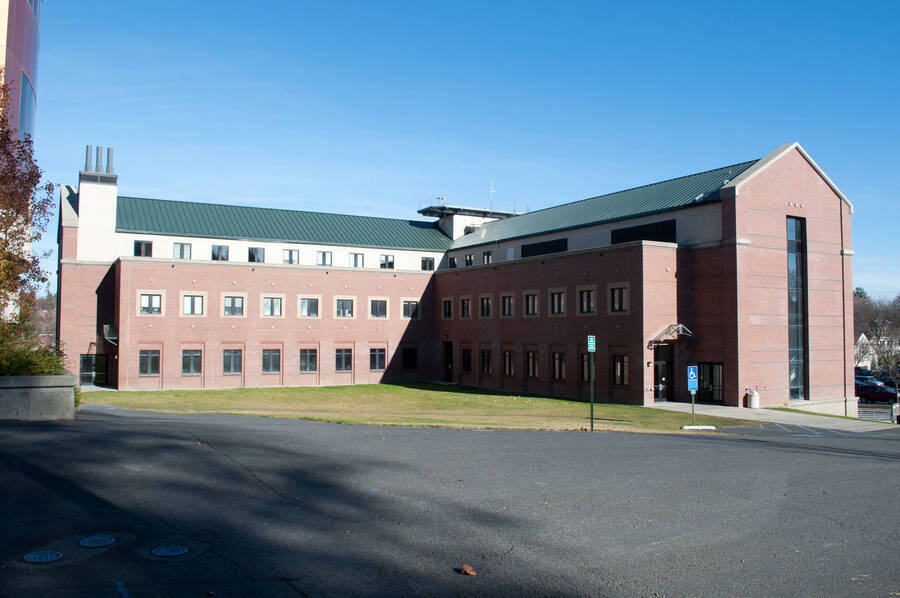
Engineering and Physics Building
Geographic Coordinates: 46.72924, -117.00987
Location: 7th street, N.E. of McClure Hall 691 Ash St.
Engineering and Physics Building Overview
Date: 1993-
Standing: Yes
Notes on Naming: Physics floor named for Leonard Halland, UI alumnus and manager of physics lab 1920-1940 and contributor to UI Foundation
Architect: NBBJ (San Fransisco)
Architectural Style: Postmodern
Description: 63,000 sq. ft.
Use History: Ground breaking October 1993, occupation fall 1995. National Center for Advanced Transportation Technology, Engineering outreach program, Mechanical and agricultural engineering classrooms, laboratories, offices, and physics department
Cost: $8,100,000
Sources: Register (Aug. 23, 1993), Argonaut, VF, Facilities Architecture Drawing Archives
History
The Engineering and Physics Building was built to facilitate the Physics Department’s growing needs, and officially opened in 1995 after two years of construction. It supports the Engineering Outreach Program, hosts mechanical and agricultural engineering classes, and houses the Physics Department as well as the National Center for Advanced Transportation Technology. This building continues the university’s expansion of engineering facilities that began in the early 20th century following the establishment of the College of Engineering in 1907.1
Design
The design combines Postmodern elements, such as a gabled roof and parapet ends, with Modern features reflected in the exterior wall treatment and window patterns. The silhouette of the building echoes the classic shape of many Collegiate Gothic buildings on campus. The layout allows ample daylight in interior spaces while limiting windows on the north and east elevations.2
Physical Description
The “L”-shaped, four-story building features a concrete foundation, metal roof, metal-trimmed windows, and metal-and-glass doors. Its exterior is primarily red-pressed brick laid in stretcher bond consistent with the campus motif. The building includes a large auditorium, lecture halls, classrooms, offices, labs, and storage.3
Notes
Browse Images