
Campus Photographs Collection
About the Collection
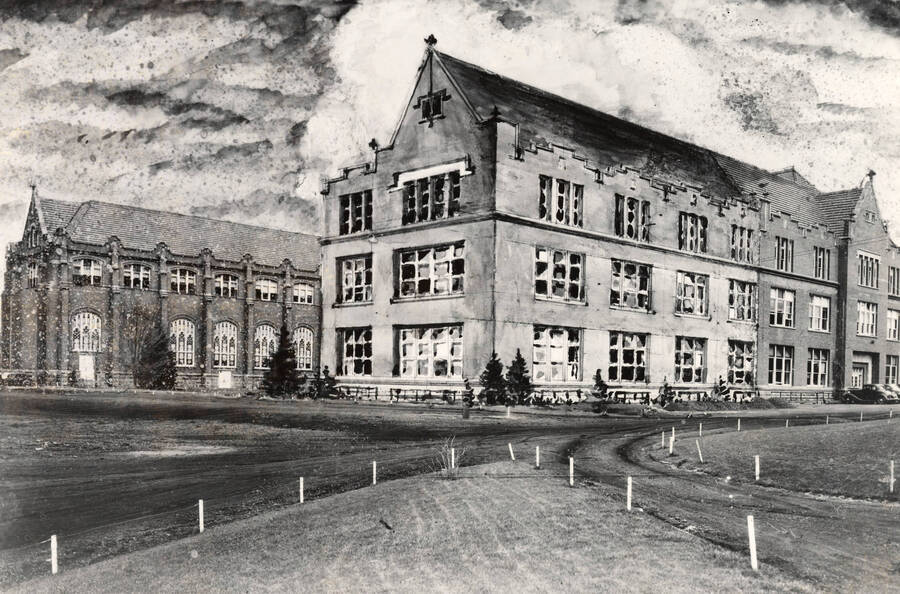
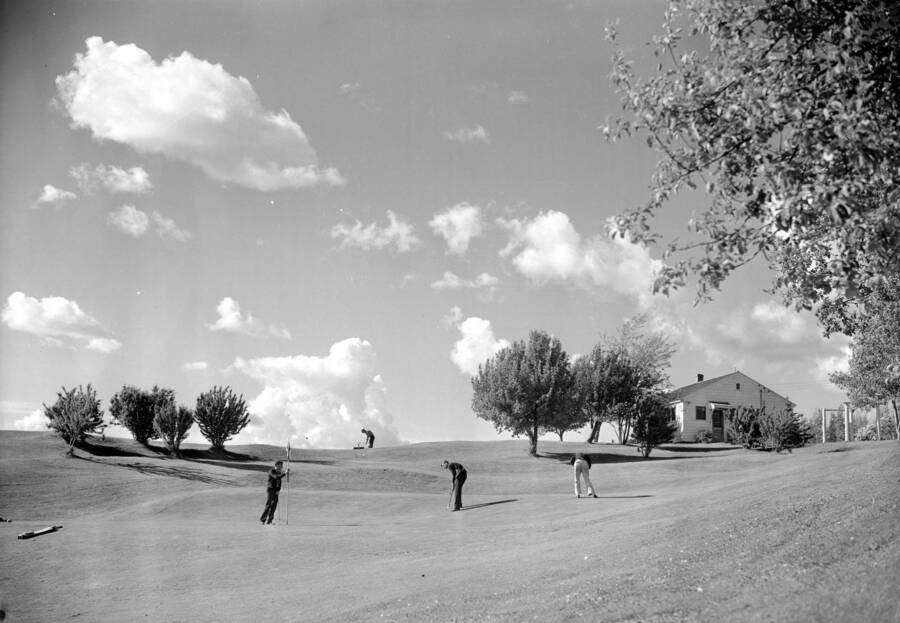
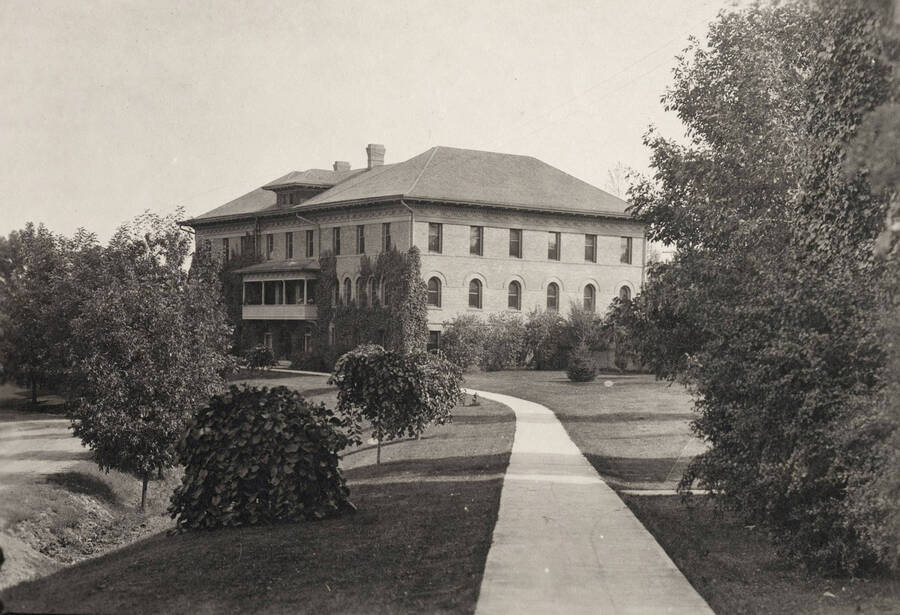
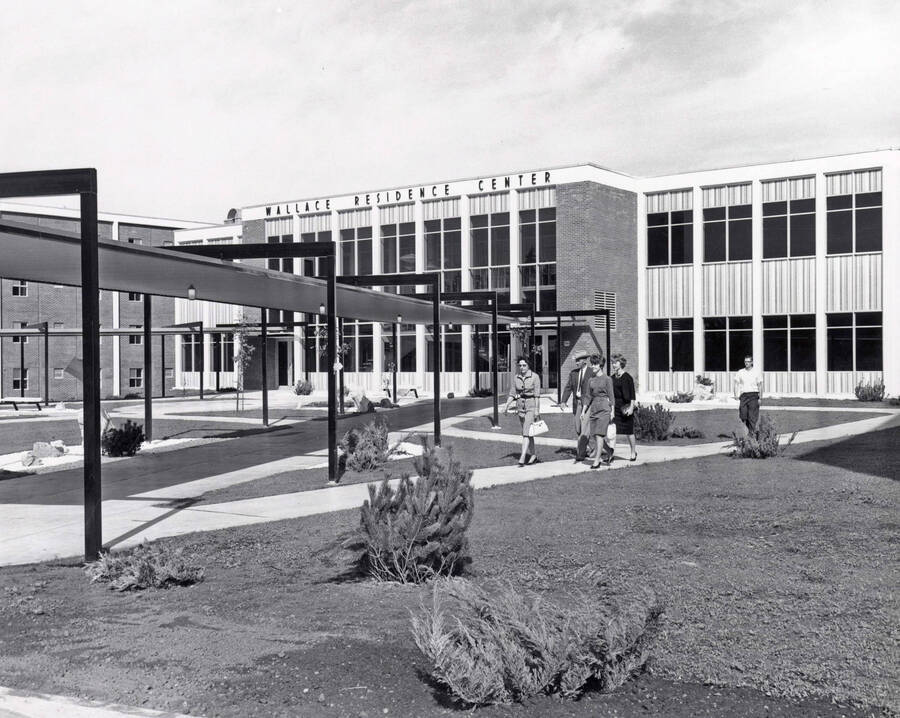
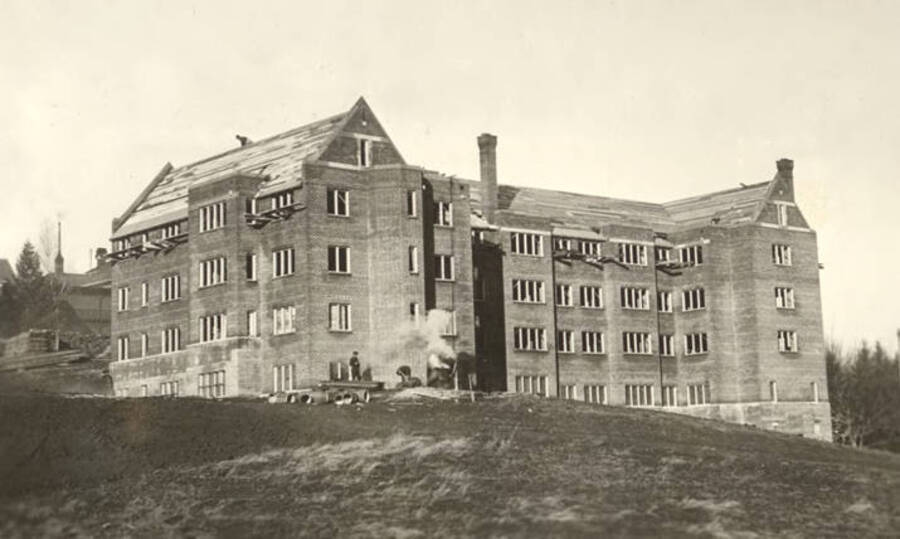
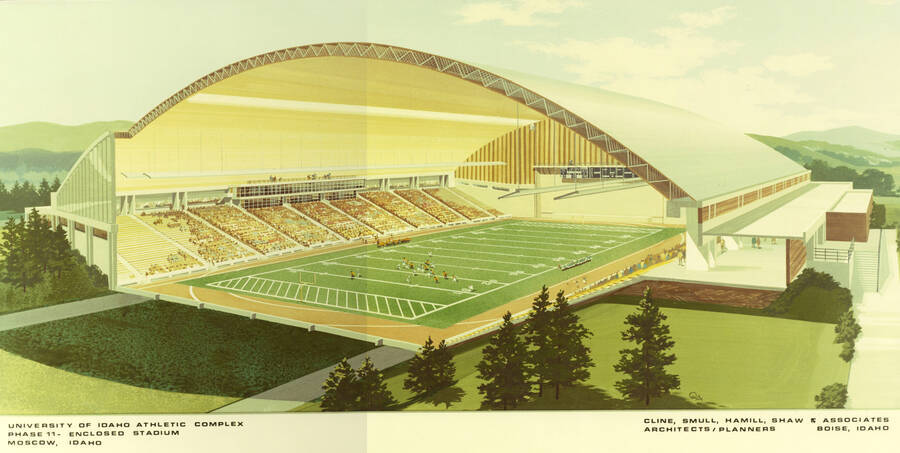
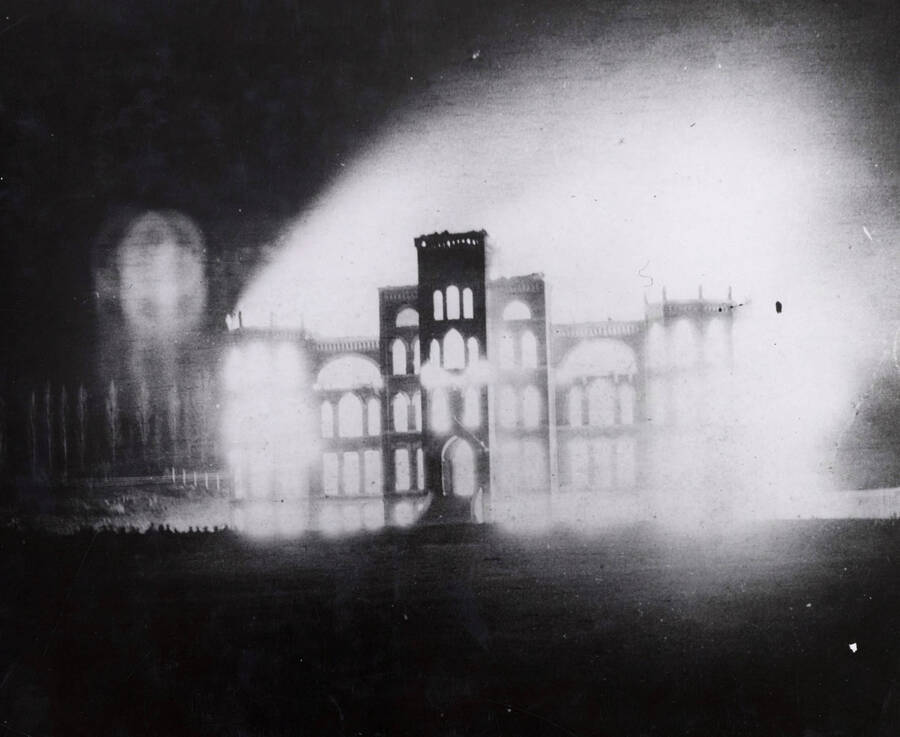
From Ridenbaugh Hall (U of I’s oldest standing building) to the Integrated Research and Innovation Center, each structure on campus holds countless stories about education, community, and design. The University of Idaho Campus Photographs Collection features more than three thousand images, ranging from the University’s earliest days in the 1890s through the present, illustrating the construction projects, architectural drawings, student life, and the evolution of the campus landscape.

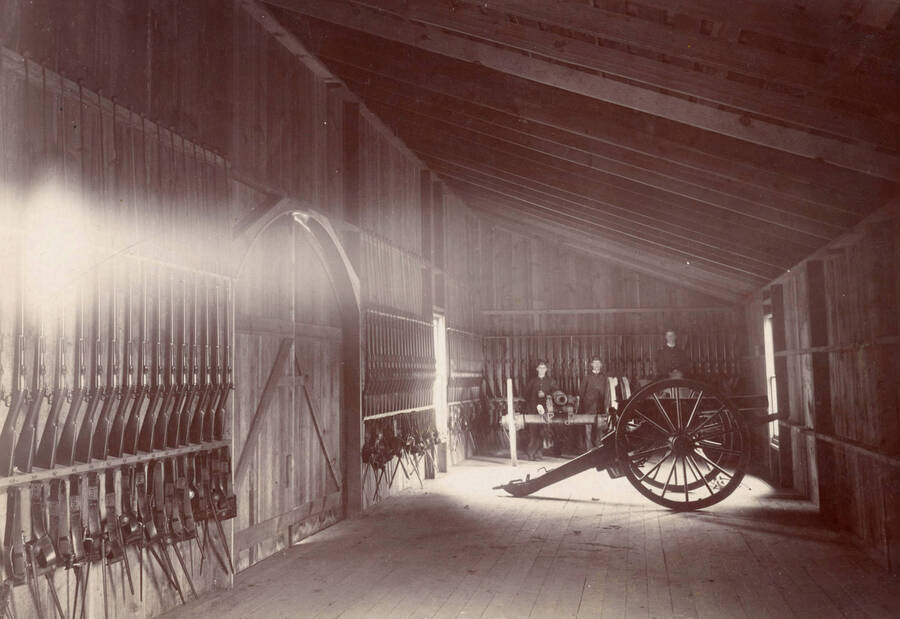
Most of the images are drawn Special Collections and Archives’ U of I Historic Campus Photographs Collection, which is referred to as Photograph Group 1 (PG1). The collection comprises thousands of images spanning from 1889 to the early 1990s and includes photography of buildings that have been demolished, added on to, or moved (in a couple cases). Color images of recent buildings added to campus since the 1970s have been added for continuity.
The U of I’s colleges, schools, and organizations have often changed buildings several times in campus history to accommodate cultural change and academic growth. For example, the Armory is a title that has been owned by three different buildings, one of which no longer exists. Thus, it is very important to note the dates for which one is seeking images.
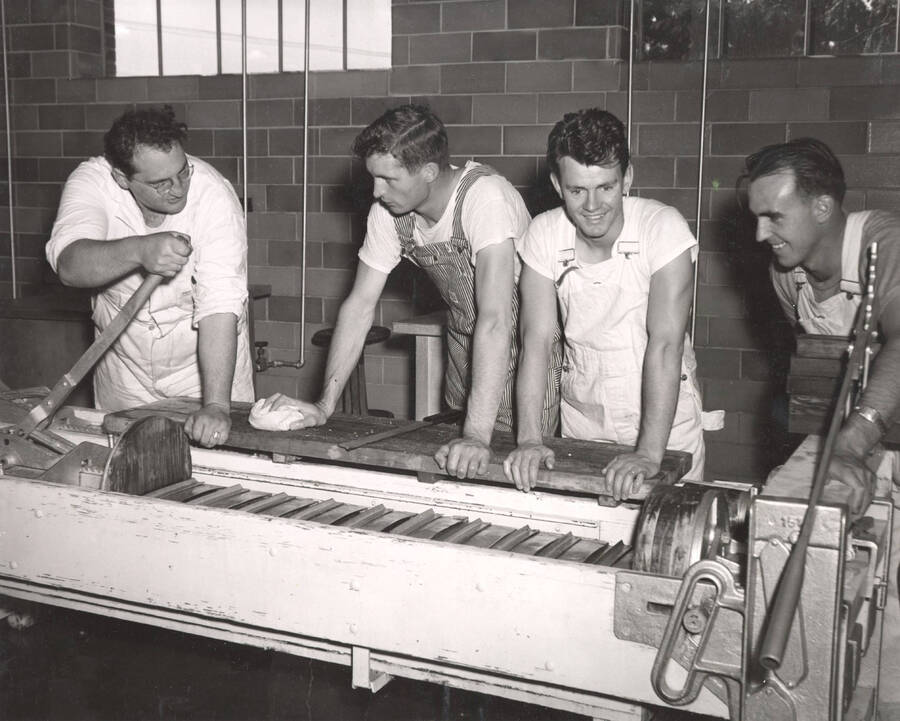
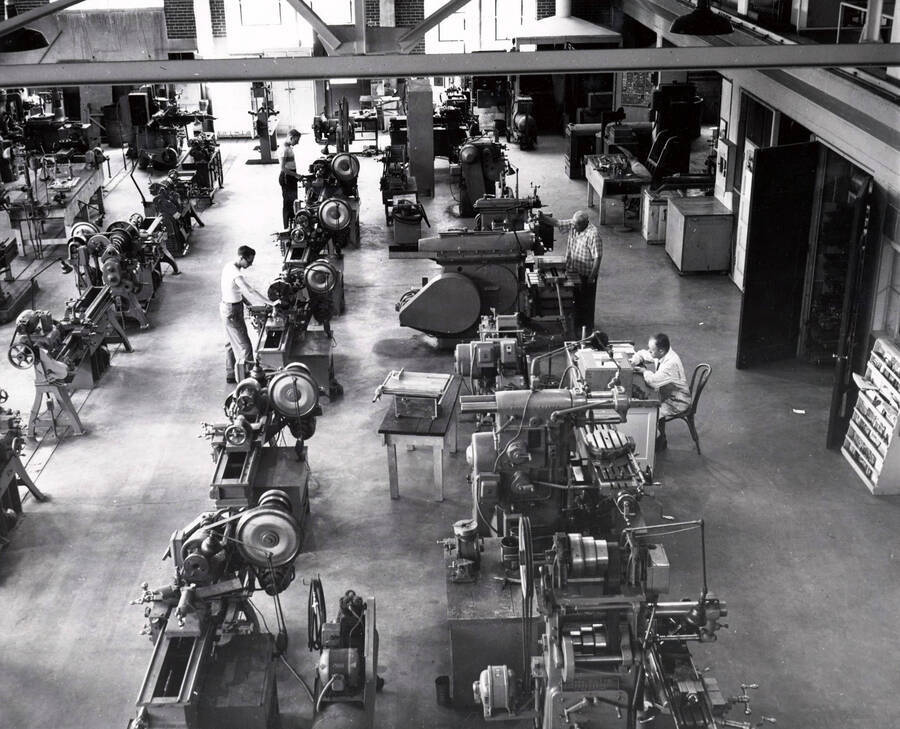
For example, if one is looking for a building that is not listed on our buildings page, they can use the search box to find the building sought (e.g. ‘infirmary’ or ‘dairy barn’). This photo collection also includes a limited number of academic activities and individuals. These images can also be found by using a keyword search (e.g. ‘biological’ or ‘Alf Dunn’).
Collection Note
Presently, the Campus Photograph Collection does not include the Greek houses.
This is for two reasons: 1) the PG1 collection contains very few photos of the Greek houses in particular, and 2) though the university has historically owned the land that the Greek houses sit on, the university does not own the structures themselves.
Researchers seeking historic images of Greek houses may wish to investigate the University of Idaho Student Organizations Collection (PG2) or the University of Idaho: Then and Now collection. Additionally, images of Greek houses in the Campus Activities Photographic Collection can be viewed by visiting the Special Collections Reading Room.
Sources
Building records cite “Sources” given with an abbreviation used in the original research by Judith Nielsen:
- Beacon: Gibbs, Rafe. Beacon for mountain and plain. Caxton Printers, 1962.
- Bookmark: Building names on the University of Idaho Campus, v.33, no.2 (December 1980).
- Cards: A bibliography of University buildings, ca.1955.
- Morton: Morton, Grant. General education and auxiliary building name history, August 1991.
- IHS: Idaho Historic Sites. Idaho State Historical Society.
- Inventories: Inventories of University Buildings for fire insurance valuation, 1953-1962.
- Maps of the campus found in University catalogs.
- Petersen: Petersen, Keith. This Crested Hill: An Illustrated History of the University of Idaho, 1988.
- Register: University of Idaho Register.
- VF: Vertical File, Special Collections.
- MG 70: Faculty Club. Records, 1945-1971.
- MG 125: Edmund Chavez. FPAC papers, 1959-1976.
- UG 12: President’s Office. Records, 1893-1965
- UG 13: President’s Office (Hartung). Papers, 1965-1977.
- UG 39: A. T. Schenck. Papers relating to the building of Memorial Gym, 1927-1929.
- UG 44: University building histories, 1890-1961.
- Facilities, Architectural and Engineering Services Website (archived).
- Building Dedication Plaques and Date Stones.
Credits
Building records were initially compiled by Judith Nielsen in 1995 and published online as the Campus Buildings list).
In 2013-2014 the University of Idaho Library’s Digital Initiatives department first digitized the photos in this collection under the direction of Estelle Sertich and Kevin Dobbins. Most of the content in this website was originally generated, vetted, or compiled via the tireless efforts of Jordan Wrigley, 125th Anniversary Intern in Special Collections and Archives. We are also grateful to Michael McMullin for providing us with geolocation detecting code for the original mobile map site.
The collection website has migrated into a new platform and updated by several projects since that time.
In 2025, CDIL Undergraduate Fellow Shelley Walker-Harmon reviewed all building records to update and enrich the metadata. Building on research done for the National Register of Historic Places nomination process, she added long form descriptions for many buildings that connect the images to deeper narratives about architecture, history, and campus life.
Technical Credits - CollectionBuilder
This digital collection is built with CollectionBuilder, an open source framework for creating digital collection and exhibit websites that is developed by faculty librarians at the University of Idaho Library following the Lib-Static methodology.
Using the CollectionBuilder-CSV template and the static website generator Jekyll, this project creates an engaging interface to explore driven by metadata.