
Dr. Dan Prinzing
Interviewee: Dr. Dan Prinzing
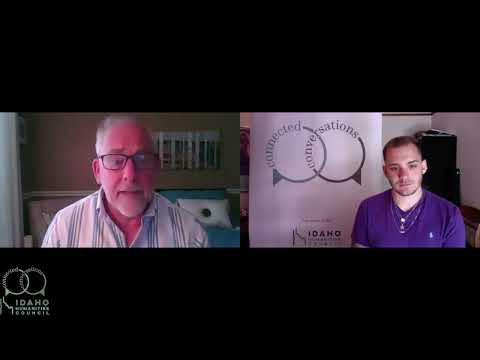
Interviewer: Doug Exton
Description: The Idaho Anne Frank Human Rights Memorial is the only Anne Frank memorial in the United States, is one of the few places in the world in which the entire text of the Universal Declaration of Human Rights is on public display, and is recognized as an international Site of Conscience. Constructed in the heart of Idaho’s capital city, how did it happen and what is its import to the community and state today? Dr. Dan Prinzing is the executive director of the Wassmuth Center for Human Rights, which built and now stewards the Idaho Anne Frank Human Rights Memorial. The Center’s mission is “to promote respect for human dignity and diversity through education and to foster individual responsibility to work for peace and justice.”
Date: 2020-07-08
Topics:
The visual topic map is hidden for screen reader users. Please use the "Filter by Topic" dropdown menu or search box to find specific content in the transcript.
Doug Exton: So I want to say thank you to everyone for joining tonight. And thank you to Dan for joining us from the Wassmuth Center. Dan, if you want to just introduce yourself really quick.
Dr. Dan Prinzing: Hi. Dan Prince in the executive director at the Wassmuth Center for Human Rights. And delighted to be with you this evening.
Doug Exton: Awesome. So tonight we'll be talking about the Anne Frank Memorial downtown Boise. So I guess my opening question is, do you wanted to talk about how it how the memorial itself got created, the purpose behind it?
Dr. Dan Prinzing: Well, it's a great question, Doug, and actually very timely because it was actually 25 years ago that the national exhibit and Frank in the world was brought to Boise. That exhibit was attended by over 50,000 people from throughout the state in one month's time. And it was the exhibit that planted the seeds for building a memorial to human rights in downtown Boise.
So we are, in fact, celebrating the 25th anniversary of the idea, the importance of what would a memorial to human rights say and represent within the state of Idaho. And so it is really out of that history of how and an exhibit that was so well attended. And, you know, frankly, I get a lot of questions, especially from students.
Well, when did Anne Frank come to Idaho? Why Idaho with. Yeah. Well, as we know, she never came to Idaho. But something in her story that so resonated with those who attended the exhibit that that's what fueled the idea for a permanent tribute.
Doug Exton: Nice. Oh, that actually answered the follow up question, which was why? And Frank specifically, is there any other reason, actually, why Anne Frank, was used as the inspiration icon for Human Rights Memorial?
Dr. Dan Prinzing: I mean, I always tell groups that are on docent led tours of the memorial that really the memorial is a tribute not to the person, but to the power of her words. It was the words that and crafted in her diary that so resonate. It is her hope for humanity. Yeah. Was in this un speakable horrors of the Holocaust in which she had crafted such an important message for who and what are we?
You know, I there's one particular diary entry, and we actually have it etched into the stone of the memorial, which she questions, why is this happening? Just because we are Jews, where she really begins to question when we begin to target the other. And of course, we define the there as someone targeted, demeaned, marginalized by race, religion, orientation, ethnicity, gender, ability, whatever factor be in there.
And she really begins to question that. And I think it was in that that her story resonated that people began to identify with, here was this young lady, a teenager in captivity or hiding for two years. Before being rounded up by the secret police and sent to the concentration camps, who had captured so much in her diary. And once again, it's the power of those words that I think really resonated with visitors to the exhibit.
Doug Exton: Given Idaho's history with hate groups, especially in northern Idaho. Do you mind touching on just that history a little bit? If you're able to.
Dr. Dan Prinzing: But I think that adds significance to the presence of the memorial. The if we take it back historically. So it was the late 70s and early 80s when that Aryan compound existed in North Idaho. And it's when we're name to film. We are as a center for human rights. Well, Bill was the Catholic priest in Portland who was asked to be the spokesperson for the Kootenai County Task Force on Human Relations.
It is said he was a very charismatic priest, and he chronicles in his book Hate Is My Neighbor, which I highly recommend for folks that are not familiar with this chapter in our history. It is a wonderful look at what was actually transpiring in North Idaho that really impacted throughout the state. But in his book, he actually talks about the part of the reason that he may have been approached to become the spokesperson was the fact that he was a priest.
He did not have family because they knew ultimately, if he was put in on the front line there, his life would be in danger. And so which obviously then as part of his life story, he became certainly that which we model our work after. What do you do when you're confronted by hate? Well, Bill never shrunk. He never stepped back.
He got louder. He got more passionate. He said, how do we confront hate with it? So I think it begins to tell us a very interesting story of how did the memorial came to be. When we come out of that history of the compound, we come out of the history of those in Coeur d'Alene who stood up against the, and then we have to, bring the story a little forward to 1993, when there was an initiative on ballot.
It was called proposition one, and it was an anti-gay initiative. In other words, really restricting, rights of the LGBT community in the work force and in housing in any service is with it. And what we saw at the time was that the general populace react to that and said, no, this is not who we are. We are not a state of hate.
Even though we seem to have this preponderance of folks that are wanting to craft us as that. And so the populace gathered up and formed a no on one campaign. It's actually when the Ada County Human Rights Task Force coined the phrase that we still use today. Not in my town, not in my state. Idaho is too great for hate.
And proposition one was defeated at the ballot. So it was after that then that this exhibit that was traveling the United States initially, those that were, advertising the exhibit made contact with Marilyn Schuler. She was that then director of the state's human Rights Commission and asking if we might be interested in the state of Idaho to bring the exhibit to town.
Well, Marilyn, as we do, and all nonprofit work began fundraising because it was a pricey exhibit. But with some corporate support and an extensive volunteer network, it brought the exhibit to Boise for one month's time. We talked to about those who had attended, but what it also did was it created this force within the community to say, hey, this is really who and what we are.
It is not that branding that came from an Oregon compound. It is not this branding that, dare I say, was being proposed by the state legislature. It is, in fact, that we are much greater than hate. And let's create this symbol a the memorial as something of our shared values, that this is really who and what we are.
Doug Exton: What so I guess my follow up question would be, is that the fact that the population is centered in Boise, and that's considered like the main hub of Idaho? Is that the reason why the memorials in Boise, rather than up north, where the Oregon compound was kind of as this sign, like even here where this hate is centered, we are still about who.
Dr. Dan Prinzing: Yes. Well, and I think there's a two parter to that, Doug, because what we do in quarterly has a human rights institute. They were founded out of the the confrontation with the King compound to really become that education force in North Idaho for human rights education within schools, then great car. Major Idaho philanthropist devoted to human rights.
And of course, we know more. Great story today saving the country of Mozambique and is working Gorongosa National Park. But Greg actually provided the funding for the purchase of the former Aryan compound to become a peace park in North Idaho. And so there's always been that presence. Now back to your question. I think it's always been symbolic that a human rights memorial would be built in the state's capital city.
Yeah, I like to reference actually that because of our location right in the heart of the city, that we are, in fact, the heart of the state, that we are where we are. The beating behind this force for good, that what does the memorial represent? What does it say about us as a people? You know, so often when I give tours in the memorial, I introduce the fact that the Idaho and Frank Human Rights Memorial is the only and frank memorial in the United States.
It's also one of the few places in the world where the entire text of the Universal Declaration for Human Rights is on public display. And it's also recognized as an international site of conscience. So usually when I have introduced that in the tour, the first question I get is, well, how the hell did that happen in Boise, Idaho?
And I think it speaks to that history that that put it in place, that there was an import and a statement that was made. Now, with your question, with the I think we also have to recognize the nature of Boise and the nature of those folks that live here, that so embrace the idea of the memorial. I'm always apt to share it that the memorial was not built by the city of Boise, nor was it built by the state of Idaho.
It was built and funded by individuals, businesses and foundations who said, yes, this is who we are. And I think it is that nature of something that was such a a start from a grassroots campaign that that's why it has such import today. I've often said that had it been built by a state or a municipality, almost like a top down approach with it, it would have been an imposed idea, but rather this was a groundswell.
This was an idea that germinated and said, yes, we support this. I've often credited to the our initial board, the first board of the business center, and really crafting the vision for the memorial. And we recognize we have two visionary or excuse me, three visionary founders. Affectionately I call they are our founding mothers. It was their idea that generated what we have become.
Well, it was really that support that they were able to garner from a population for an idea. Nobody knew what the memorial was going to be. They were putting out an idea for this symbol, this place that now in many terms, for many folks in the valley, it's sacred. This is sacred land for what it represents with it.
But I've often thought how they were able to fundraise for an idea. I can tell you just a couple of years ago, when we had the Maryland Schuler request for human rights within the memorial, it was a lot easier fund raising for that classroom than it was for the initial funding of the memorial, because we weren't we weren't selling an idea.
We were selling an actual this is what exists now. Can we expand upon it?
Doug Exton: Going off of that? Do you have any future plans for the memorial, or do you have to wait to see what happens with the potential downtown library expansion or anything?
Dr. Dan Prinzing: That's a good question. Actually, I do appreciate. Shortly after she took off as mayor, McLean, called me in, and we actually talked about because if you're familiar with our physical location of the memorial, but also our office, the joints, the memorial. So we're right there within that hub. And so the mayor really wanted to examine not only all of that property and space, but then that to your question, what are our future plans?
Well, what we have promised the city is we have tapped up the space at the memorial that when we added the Marilyn's to the classroom for Human Rights, we actually expanded the memorial, almost a third in size. What we have with the city is a licensing agreement. Okay, it is city land. That's why it is recognized as a public park.
But we control all the messaging and the programing within that. Now that also comes with the caveat. Even with the addition of the Marilyn Schuler classroom, I had to go to the city for approval. We wanted to add this physical structure within it. Know I had to get the approval of the city. And with their blessing, then they said, now go out and fundraise for it.
In other words, they were not going to fund it, but they had to certainly be in the loop to approve it and what it would be within the city. So that all occurs within our licensing agreement. Now, what we're very excited about is this city has now agreed to expand that license agreement, and we are in preparation to fundraise and physically build a new was in the center for Human Rights.
Within that licensing agreement will actually where our current office is located, in a small parking lot that adjoins the memorial. The city is providing a piece of a parcel of land that joins right to the back side of the memorial, and that's where will actually build the new office with it. Well, what I'm excited about is what it couples together.
So here we have the only and free memorial in the United States. And now imagine a comprehensive human rights education center located within that physical licensing of a memorial. No other city, no other state can say that. Yeah. And I said, if we really want to protect ourselves as a welcoming and a compassionate community, what a positive statement to have not only the memorial, but this education entity that is devoted to that, devoted to taking the memorials message and sharing it with communities in classrooms around the state?
Doug Exton: Yeah, I think that's a really interesting. I never knew that. And I also never knew until I honestly, until I worked at the HCA, I never knew the walls of the center was a thing. I never thought, oh, look, this is a memorial, but it's also owned by the city, but it still has, you know, a private entity governing it, essentially.
Dr. Dan Prinzing: Well, and actually, you're not unique in that. And that has always been one of our greatest challenges, because the center has never operated under the same name as the memorial. Even though we are two entities. It is us and we are it. And we were found. So as I said, it was 25 years ago that exhibit came to town.
Well we were founded a year later. Next year is our 25th anniversary as an organization, because we were founded for the purpose of constructing a memorial to human rights. And then once the memorial was dedicated to the public in 2002, we then became recognized as the memorial's education arm, that we are in charge of the programing on site, off site and online.
But many people know, especially in the education community, they know our work as the Wassmuth Center without the memorial. Most folks know the memorial without the realization that there is an education center behind it. And so, yes, you've just spoken to one of our greatest obstacles as an organization is just messaging that fact that it's us and we are it.
Doug Exton: How did you actually end up getting involved with the center?
Dr. Dan Prinzing: Well, I am old, you know, so I've been around a long time in the valley with it. It actually goes back to when I was a classroom teacher in the Boise district, when that first exhibit was going to come to Boise, a volunteer group formed a committee of educators to write classroom lessons to prepare students for coming to that exhibit.
I was on that first curriculum team when I left the classroom and went to the state Department of Education. I then drafted the first joint project between the state and the center, in creating a scope and sequence of human rights lessons for the classroom. When I left state government at the end of Doctor Marilyn Howard's administration, I came to the center as the education director.
And coincidentally, Marilyn Howard came on to the board of directors. So we continued to work together in the capacity or under the umbrella of the Cosmos Center. So I've often said I have been around since day one, before there was a memorial. And now, as I proudly tell my board, I am not their oldest employee, although I am their longest employee.
Doug Exton: Now, with your expansion and also the Wilson Center's 25th anniversary, are there any plans for special programing? So I know right now you offered the certificate to Human Rights? Yes. So is there any additional programing coming down the road that you can let us in on?
Dr. Dan Prinzing: Well, there is, and actually, with the added environment of Covid, we've been it's really looking at what we do and how we do it. How do we continue to engage participation and our broader donor base. So we've got a couple of pieces for it. I've said. I just completed drafting our summer newsletter, and as I was reporting, there's only one piece of our operation that we're not able to do right now.
And those are the physical tours in the memorial. We suspended all physical programing in the site, just simply because I did not want our docents exposed to something I did not want participate. We have a phenomenal summer reading program for ages 4 to 8. Well, we just did not quite know how we were going to social distance four year olds.
And so we we adapted. And that volunteer committee has done phenomenal work in creating a brand new resource for us. So by the end of this month, rather than the summer read the summer reading program occurring, we have now finalizing the production of 25 videos. The readers engaged in that program reading the stories for children. The backdrop is always the memorial.
They're filmed in the memorial, and they're sharing stories of hope and kindness, diversity, inclusion, empathy, mindfulness, young literature with it. So now we've created a whole new series that will be posting on human rights for young listeners. Well, myself, I was a single father for a number of years when my daughter was very young, and this was something I would have loved to have had with, okay, let's dial up and listen to this story together, rather than me always finding the books that I had to read each evening.
Here was something that we could have shared and then talked about. So we're really seeing this as a phenomenal resource to share. And of course, as you well know, what's the anything goes online. It's not just local, it's a national or international resource. So that's part of our new program. We are also finalizing the pieces that we'll be distributing in to the schools in the fall of our Upstander toolkit.
If you're not familiar with it, borne out of the messaging in the memorial, the center has two key programs the Spiral of Injustice. It's really how we look at and how do we frame the discussion of injustice as it devolves in a community. And it's a whole model that we created that really demonstrates that injustice starts with words.
It's language. It's the essence that them, when we begin to target the other, devolving from language to avoidance, discrimination, violence, elimination. Well, the companion piece to that was our Upstander program, that how do we confront injustice, we confront or interrupted by being an upstander. Now it's clarification. As a center, we never really developed an anti-bullying campaign. We're not really a good on the anti message.
What we wanted to look at were the positive actions that each of us can take when we hear or witness injustice. Even now, this was really born to us. Not to get political, but after the, campaigning in 2016, schools became just this battleground of words. And we had many parents or counselors or teachers calling us, saying, my student has just been targeted at school and being told they need to leave the country, that he or she is not welcome here, and we're building a wall.
I mean, this was rhetoric that coming out, and we have to remember that whatever is playing out nationally, it's going to come into schools. Yeah. Kids here kids bring it with them into the classroom. And one mother called me just distraught with a year. Her son, a young fifth sixth grader, is on the playground surrounded by his classmates, taunting him.
You need to leave this country. You're not welcome here anymore. And she said, what so bothered them at the moment is there wasn't a single classmate who stood up in his defense. There were no up standards at that moment. And she said, and you know what further exacerbates it? We're Native American, and we were here first. And she said, here is this whole concept of where are the up standards?
Where are those who are going to be willing to say, hey, wait a minute. That's that's not cool. That's not right. We don't do that here. So back to the point with so this summer we're finalizing our Upstander toolkit. It's a new classroom poster, a student brochure, student takeaways, that they can keep with them to remind them.
And a brand new video. We're in production this month on a new seven minute video on really? How do I act as an upstander? Now we use the acronym Act. The act as our action to be an Upstander. The A is ask. Okay, when you just said that joke or said that word, did you mean to be cruel?
Do you really know what that means? In other words, can we ask questions to create good conversations? What we're also working with is programing that can we confront injustice without becoming confrontational? Can we create a conversation? I still believe as a career educator that oftentimes things are set in ignorance. People don't realize the impact of the words. So can we call them out?
Can we have a conversation? So that's the ask. The C is choose. You choose to be an Upstander. It is a choice that is made that we actually reference in the memorial. When we were adding the Maryland Schuler Classroom for Human Rights, we had a funder from the East Coast. He wanted to find a special rock, tribute plan with a tree to add a message into it.
Well, this funder is a descendant of a survivor, Descartes from the Holocaust. His family survived the Holocaust because an evangelical Christian man in Poland who owned a glass factory saved or protected his employees. And he's descended from that. And there was one key word that he wanted on the tribute in the memorial. He said, can you highlight the word that this man, Reinhold Christman, chose to make a difference?
So that's our whole attitude between that attitude of being a upstander is that it is a choice just as much as being a bystander is a choice. It is that point of reckoning where I have to decide, am I going to step in or am I going to be silent? Well, what we also showcase is silence is also a form of agreement.
So if injustice is happening and I say nothing, it's as if I am standing there in agreement with what is occurring. The rest of the acronym for T is teach, teach by example of how you lead your life. I'm always taken back to Martin Luther King Jr in his Drum Major Instinct sermon. He used the line that he said, when I pass, when someone is asked to give my eulogy, do not let them say, I won the Nobel Peace Prize or let them recount that I loved and served humanity.
It was how he lived his life. So that is the T. Not only we do, we choose to be an Upstander but we live that. We, we're always happy to say that upstander is not a noun. Or if it is a noun, it's also a verb. And in other words, if you never see me as an upstander, how dare I call myself that?
If you never witness me in some fashion stepping up to defend others, how dare I call myself an upstanding? So that is the acronym we as Act. And that's the message we're putting out in schools. I'm really excited with the new video we're shooting this month, because we're actually in a school and we're filming two scenarios. One, when the students hear injustice, the second scenario when they witness and it's that freeze frame moment in a video.
Now, what am I going to do? It's my choice. What am I going to do? Well, obviously for the sake of our video, we're going to make the right choice both times.
Doug Exton: That's really cool that you're expanding your reach further into the schools. Is that a statewide program? Is like, is the program being adopted by the Idaho Department of Education, or is it more of like a preschool based that this.
Dr. Dan Prinzing: Yeah. More preschool. I wouldn't use the terminology of adopted by the state. That becomes a whole different process. And it's usually more in curricular materials, which I can speak to, because that was my role at the state when I worked there, many administrations ago. What we're really looking at is we produce resources, and we just because of our donor base, we're able to just send them out to the schools.
We also then conduct the training with them so that we can. We had a great, I might add, thanks to funding we had received from the Idaho Humanities Council and supporting through the CARES act, we were able to convert what we had been always are in person. Summer Institute for Idaho educators. And we did it online well and doing it online this year.
And the topic injustice to inclusion race. We actually reached into every corner of this state, every pocket with it online. Instead of teachers having to come to us for 3.5 hour, three and a half days, we went to them all online with it. And so we're appreciative of that funding opportunity that made it possible that that's what we're doing so much now is how do we make that outreach by mission.
We're dedicated to the students and teachers in Idaho. But the reality is our programing, our resources are in classrooms around the country. And because we're an active presence online, we also are reaching internationally. So the other program I would mention, right now and it is just exploding on is is our human rights certificate program. Now, this was specifically an initiative for the business community.
We had companies coming to us very active in diversity inclusion. They had policy. They had presence and programing for kind of that top down. And they came to us and they said, but how do we know that our workforce embrace that? How do we know that our workforce are committed to DNI? We are as a company, but how do we know that everyone who works for us is.
And so we actually received funding from Wells Fargo to develop our human rights certification program. This is a one of the kind in the country. It's a six hour online program that focuses on core human rights principles, diversity, inclusion, ethics, civility and respect. And we couple that with now being upstander in the workplace. You know, those conversations that take place at the watercooler, those things that are set off to the side, how can we then these principles of being an upstander in our community?
How do we translate these into principles, into the workplace? Well, this is a programing. There's a set that it was just exploded that we went live to the public with the program on January 20th, 2020, Human Rights Day in Idaho, MLK birthday. We have had over 300 new users since January. And every week we get we're we're constantly having to open up new sections to a well, that speaks to me that now, and I would say a lot of it, it's it's coupled with the nationwide attention after the murder of George Floyd.
And we're looking at the historic roots of racial injustice. I think we have a lot of companies, nonprofits, a lot of organizations within the state that are saying we need to do something. We need to make a statement. We need to be on the forefront of the conversation. And many of them are starting it with the certification program, making sure that they've got a cadre of employees that are certified, making sure that the leadership team I'm loving it is a number of nonprofits are coming in, making sure that their board members are certified.
In other words, they're saying, this is who and what we are. This is what we believe in because the certification program is not about what the company needs to do. It's not that the company needs to do X, Y, and Z to promote diversity inclusion. It's what do I, as the employee, need to do to be committed and show.
So even in the call to action, it's not what am I going to do down the road? It's what am I going to do tomorrow when I show up at work? How am I going to create this respectful, inclusive environment that recognizes the broader value of diversity in our workforce? And even that idea of inclusion, it's not that everybody has a seat at the table.
That's not enough. It's that everybody that is at the table is able to talk, have a voice, and that we all listen. And so it's those principles. It's that personal commitment. That's the basis of the certification program where folks can say, and literally, we did a number of focus groups in developing the program. And when we talked about what is certification and why be certified number, the employees that we were working with gave us the feedback, and they said, because I can put this on my resume and say, these are the values I believe in.
These are the values that when I apply to a company, I hope they uphold. But most importantly, this is who I am. And so that's this for us is a very exciting initiative, certainly expanding to much faster, than what we had even anticipated when we developed it. But you kind of begin to pick up here what we're finding in the work of the US center.
And I have to say, it's all borne out of the message in the memorial. That's where we're so tied together with the but rapid thing going real wide and thin with our programing. We have our core concepts that we're just going deeper with, and now we apply those in the classroom, we apply those in the business. We apply those in the community at large.
And that's what's real fun with it because the message is working. We have schools participating in our programs around the country. Now we're getting registrations for the human rights certification program from employees around the country. And we're getting questionnaires out of country because it is an online product or an online resource. It's attracting an international audience.
Doug Exton: With that international reach that you are having with this or with the certificate. How does the and Frank Museum in Amsterdam know about you guys here and what is it?
Dr. Dan Prinzing: So yes, and we've always had a great relationship with it. Relationship. So now it's kind of a fun triad because we have the Anne Frank House in Amsterdam. So I will do special request to them. They to me, you know, as I say, when you are the only in the United States that helps with our credibility and presence with it, and so we'll make some direct contact.
But then we have this trade because we also have the Anne Frank center for Mutual Respect in New York. Now they are the direct conduit to the end. Frank House, we're not a chapter. We're not an affiliate. We're an independent but we collaborate. And so it's the programming that can generate among the three of us. And so we have had some great opportunities interacting with the and Frank center for Mutual Respect with, you know, when the memorial was vandalized in 2017, one of the first calls I got was from them.
And at that time, their executive director flew out here, brought actors from New York who actually did the production of letters from in and Martin, they wanted to support the community. They wanted to support us. They feature a lot of our work as an Anne Frank memorial. And what are we doing to share? Not only a and story, but it's that broader messaging of human rights with it.
And so it always creates this interesting kind of a symbiotic, organic relationship among organizations. I couple that with because we are recognized as an international site of conscience. Well, the headquarters for the sites of conscience are also in New York. And so we've done distinct programing with them where they will call upon us as a site. Last piece I did, since we created the spiral of injustice.
And within the memorial we have the new statue of the other showcasing the spiral of injustice. So we developed a whole piece for them on how do you take a program idea that began at the Cosmos Center, translated into a physical, but became the statue and the memorial? And what is that messaging did in a much broader context?
So we're always looking at part know kind of it is the parts and parcel of working with other organizations. Our reality is there's no one out there quite like us because we have this physical memorial, plus then a comprehensive education center to couple it with.
Doug Exton: Now, you mentioned like adding the statue, which represents the spiral of injustice you were quotation throughout the years of the memorial has been around like as you expanded it. Yeah. And do you plan on adding any given just the recent events throughout the US, but also Idaho?
Dr. Dan Prinzing: Oh, I love your questions, Doug. With it. Yeah. You're stepping into our head of our day to day work with it. Yeah, a little bit of background with the the original quotes that were etched into the stone in the memorial. And there were over 60 some that were put before the memorial was expanded with the Marilyn Schuler classroom.
Those were selected by a volunteer committee that worked for over two years. We know that words matter. We take words seriously. And this volunteer committee spent hours know thousands and thousands of quotes submitted that they reviewed. But then they were also looking at the context for the quote, who said, you know, we use the example. None of us want the Joe Paterno effect, a great legacy that's diminished or or really shadowed by another event that occurred that really then brings back down the structure of.
And so the idea that these words had to stand and not only the importance but also frame the context of who said them. Well, because we are literally an environment where everything's carved in stone. When we added the Marilyn Schuler classroom, we gave us the opportunity to add seven more quotes. So what did I do? I went back to just like we did it in our origins.
I went back to volunteer committee, some of the committee members for the second round, same that had been on that original committee many, many years ago with it. And we looked at a wide variety of quotes that it was kind of our opportunity to say, okay, the memorial was opened and dedicated to the public in 2002. My charge to the committee is what voices are missing.
And so then they took that as their charge and really identifying then their audiences updating, really adding in to. So I think we've got added some very poignant quotes to your question. We're doing it again because when we physically build a new US center for human Rights, there will be opportunity to add a couple more quotes, not only on the building itself, but also on the walkway that will link from the office into the memorial.
But this is a long process. I always like to joke on tours that when we talk about that original, community volunteer committee selecting the quotes, one would think that human rights people are always very kind and very considerate of one another. Yeah, until it came to their quotes. And then I'm heard that there are still some hurt feelings within the community of somebody, quote, got selected in somebody else's did not.
And in other words, we become very passionate about those words. You know, so on that note, we just created this summer working with Stephanie Inman, a local designer in town. I created a set of 52 cards, 52 quotations from the memorial. So literally now folks can purchase this set and display a quote a week for all year long.
And they all the quotes are featured in the memorial. Well, first of all, it was difficult because we went with just 52 cards and we've got over 80 some quotes in the memorial now. And so I'm always telling folks, I hope we selected their favorite, but it really was this chance to this power of those words and what we were hearing from teachers and folks and say, I want these quotes showcased in my classroom or in my office.
Added resource. Now.
Doug Exton: Yeah, no. And I've been there multiple times, and every quote that is in the memorial is beautiful. So I want to congratulate you and everyone that served on this committee for selecting them.
Dr. Dan Prinzing: You know, a good situation because, you know, certainly one of the strength of the backbone of our organization are the volunteers. Our docent committee is phenomenal. These are folks that dedicate time. Those hours and talent to give the tours and the memorial when we are in a non-pandemic time and we're actually giving tours. Yeah, we're we have tours for over 10,000 students a year where teachers, both K-12 and university, bring in students to really interact with the messaging in the memorial.
Well, what I always love is each docent has his or her favorite quote in the memorial. It's kind of like what grounds the space for them? And when I get asked that question, which is my I always go to the Confucius quote because it is such a wonderful starting point for discussion. So right there etched in the stone Confucius.
What you do not want done to yourself, do not do to others. Well, you and I know that quote we've heard that in other forms. That is that standard golden rule. With that, we just happened to go with the original source, who was Confucius. And I thought, what a wonderful. When I'm asked, what is the memorial mean to me?
Or what is the work of the Smithsonian all about? That's my go to. I said, this is what we stand. We are nonpolitical, non-governmental. We're a nonprofit education center committed and devoted to what? Well, by mission to promote respect for human dignity and diversity through education. Well, to me, Confucius quote says at all. Why would I do to you what I wouldn't want you to do to me?
That's also how we begin to build a community. That's how we begin to foster empathy. And that in our programing is becoming a major term. Such a difference from sympathy or, you know, sympathy basically. Yeah. It's a it's rough being you. Empathy. I understand. Yeah. Maybe that wasn't my battle, but I've had mine and I begin to identify with you.
Where do we begin to find that common humanity? That this is really a shared story?
Doug Exton: Yeah. Do you mind talking more about the design of the memorial as a whole?
Dr. Dan Prinzing: Yeah. Yeah. Well, I know I think that's a it's important because I think a lot of folks don't recognize the purposefulness in the design. The, so certainly as the centerpiece is that bronze statue of Anne Frank. Had the memorial been just that statue, perhaps the amphitheater in front of it. And if you've noticed, behind the statue etched into the concrete the size of the secret annex in Amsterdam, had it been just that Anne Frank story right there?
It would have been the Holocaust monument, the Holocaust Memorial. We had a student years ago who was doing her graduate study at Yale. She was looking at Holocaust memorials across the United States in her study, she selected five that she wanted to personally visit. And we were one of the five. She looked at those who were kind of the unexpected in Holocaust memorials or monuments.
If it is a community that has a large Jewish population, probably not a surprise. Yeah. So if you're up on the grounds of a synagogue, probably not a surprise. Boise, Idaho. Yeah, a major surprise. And so that's why she wanted to come here. And what caught her was just to your question. It was the design of the memorial itself.
Because she echoed. Had it been just that Anne Frank piece that would have made it just Holocaust? But the moment and looks across the amphitheater, there's the Universal Declaration for Human Rights, born out of the ashes of the Holocaust. She said, now we've expanded that story. So in the design, it really the memorial is a journey. Not only is it an journey, but it's our journey.
It's your journey. It's mine. It's I had one goal when we expanded with the addition of the classroom. I said I want everyone, anyone to come into the memorial and find the piece of timber there so that they are there. Their story is represented with it. And so that's what you get the design. So architecturally, do we have symbolically the Amsterdam skyline, the arches, the angles of all the walls and the roof line.
Amsterdam has the canals. We have the Boise River, Amsterdam has the bridges over the canal. We've got that great historic trestle bridge that enters into the memorial. You've got that vantage where? And looks out the window. Now, realistically, we know she didn't do that a lot. It would have been far too dangerous. So when they were in hiding.
But conceptually, it is her look out into the world. It is her longing. It is her inquisitiveness. It is her hope. But Elias, Anne's last immediate surviving relative, who was her cousin three years older, came to Boise in 2014. It was he. He was the director of the Friends of Anne Frank in Basel, Switzerland. They control anything and everything and Frank everything.
Anne Frank is under copyright. It was he who granted us the permission to use the Anne Frank quotes in the memorial. He had never been to Boise, Idaho. He was a professional actor in Europe is in addition to running the friends of Frank. Well, in 2014, at the age of 88, he was coming to the United States to speak in L.A. and he said, I'm going to fly up to Boise.
He came to the memorial. He came to that bronze statue of and he grabbed her elbow and he just started to weep. He said, this is my cousin, and there's nothing like this anywhere else in the world. He said, for what you have captured here in the design, it is and is complete story. Yes, it is the Holocaust, but it is her hope for humanity.
And he said that doesn't exist elsewhere. And that's what's so resonated with him. It was that much broader design when we added the Marilyn Schuler classroom. We had an educator that pointed out something I had not even realized in the construction. Initially, when the memorial was built, the statue of and kind of stood at the at the side margin dating from.
And then you went forward to the UTHR and then over to the quote circles. She was on the margin of the memorial. When we added the classroom, then all of a sudden she became in the center and the educator said, it is as if now the memorial has wrapped its arms around and she and I thought at the time how symbolic that is when we are working with those who have been identified or viewed as the other, when are they like and going to feel safe to come out of their hiding when they know they had been embraced by a community?
When they know that there are arms of a community or wrapped around them to protect them. And I thought how visually symbolic now that the memorial is wrapping its arms around and say, you're safe here. When the memorial was vandalized in 2017 at a young man who texted me early one morning, me said, I feel like I need to just come down and stand by and I want to protect her.
And I thought, there we go. That is what the memorial does, is we want to stand together. We want to protect one another. That's how we build a community.
Doug Exton: Yeah. And I was in the industry about two years ago, visited the Anne Frank Museum. And I can definitely attest that the memorial here in Boise, it complements the museum. But they're they're very different.
Dr. Dan Prinzing: And so, yeah.
Doug Exton: And different in good ways. Not. Yeah, different in bad ways. Yeah.
Dr. Dan Prinzing: I think it just tells more of the story, you know, that they become moments in time. I think what I appreciate so much and not only in my role at the center, but in, you know, I get the great pleasure is I get to step out to that memorial every day. You know, I always say the memorial is my office.
Yeah. And what gives me such pleasure is when you recognize that it is not just about a moment. I would say it's about a movement. It is about much more than ourselves. That it is much more about our aspirations, that it is much more of our vision for community. And how do we come to that? You know, I equate that a lot with what we're seeing nationally that will the murder of George, George Floyd and others that that are continuing is see in the news marking this that this is more than a moment that this is a movement for justice.
So back to your question a bit ago about new programs. We have a phenomenal committee this summer also working on. I said we had crafted our spiral of injustice to examine that revolution. This summer, we're working on the spiral of justice. How do we now begin? From the me space into something much larger than myself? To foster or to encourage a free and just society.
So I'm really excited because this is going to be a wonderful companion piece with the spiral of Injustice. I think that's the key point in the center's work, is we never want to leave folks hopeless or leave in the negative, yet we want to feel the hope, and we want to feel the empowerment that I can make a difference.
I've been using a lot in presentations this summer, especially in our work as Upstander. It's not that you and I have to do the same thing. It's just that you and I do something. How you choose to be an upstander may look very different than how I do. That's what we're seeing in this movement rather than a movement.
Because what are folks doing? Yeah, some are writing checks to support the work. Some are marching in the streets. Some are doing a lot of education for themselves. Some are having some real tough conversations at home. But to me, that's all the hope. And that is what the memorial represents. That let's start that conversation. Let's begin to not only reflect act, but let's act.
I've often said to when we added the Maryland to the classroom, and it is really the example of who Maryland Shuler was in her career and in her influence in the state. She was also one of those visionary founders of the memorial. She was also always needling me. She would challenge me with it because her mantra was always, what are we going to do?
How could we step up? It's not enough to just talk about the issues, or to think about them or to reflect upon. She said, that's nice, but what are you going to do about them? What are you going to do to make your mark in the world as an upstander? And I so appreciated that challenge because what in fact she did was also craft part of the message of the memorial.
It is a call to action that in this moment, you have to each decide, what are we going to do? And if we choose to do nothing, that's also a choice. But is that the right choice in this time?
Doug Exton: No. I think that's a very beautiful messaging, and I love how you're able to tie it back to Maryland. Yeah. All the way. Now, beyond the vandalism in 2017, that was all over the news. Have you either witnessed or heard or know anything about the response from hate groups that are still in Idaho? About the memorial?
Dr. Dan Prinzing: Well, there is always.
Doug Exton: Any response from them.
Dr. Dan Prinzing: Yeah. Well, you know, it's one of those that, you know, what a person should never do is Google their own name. Because you don't like to see what comes out. Yeah. And when I have done that where I have been cited and what sources have cited me and the accusations made not only about the vandalism or what the memorial, that can become a little disturbing.
So you should you should never do that. Okay. What is our reality? We know hate groups exist. You know, at this time they've also been emboldened that they have always existed. But now they've almost come to the forefront become mainstream. Yeah. I was, talking with a colleague today and we were looking at images that came out of San Diego of literally cars driving down the interstate with full scale large swastikas in the back made proclamation.
This is who and what they are with it. Okay. This attitude has been emboldened with it. Where we know that exists. Yes. But I'm going to take you back to, as you mentioned, the vandalism. I had a reporter, a national reporter called me and AP we the vandalism broke first locally, nationally and then went international. The reporter asked me the one question, which is this who and what?
Boise is? Well, that one hurt because she was immediately taking us back to that area and compound.
Doug Exton: You know.
Dr. Dan Prinzing: My response to her at the time was, watch and listen to how the community reacts, not to the act of an individual or an individual that brought hate into the memorial. What how did the community react? Overwhelming. It was as if someone had broken into their homes. And that memorial is personal. What did they say? It was a ground.
You know, was the ground up effort. You know, and that's mine. How dare you step into that space that I helped funded with my pennies and nickels and dimes that came from students and businesses and individuals alike? And ultimately, when that reporter wrote her article, it was an article about how a community stands up to hate. Well, since that vandalism in 2017, we know that the community is watching over the memorial.
We know even that we officials in state government, whether at the municipality or at the state level, are watching this because as we started with, that memorial represents our shared values. This is who we are. So I'm going to always insist and some accused me, I have pink colored glasses or that I'm a little pollyannaish in my attitude with it, but I'm going to insist that the memorial represents more of us, of who and what we are, than that Aryan compound ever did.
But that was a small band of people that had gathered together that just happened to get a lot of media attention. But that's not who we are.
Doug Exton: Yeah, I feel like that touches to Idaho as well. I know as a whole isn't like that. There's just a few that end up getting the media coverage. Yeah, and make it look like that.
Dr. Dan Prinzing: Exactly. And so I think it's a reputation that we're always going to be fighting. I think unfortunately out of that hearing compound we got branded. That's why I always get very excited when national media sources pick up on the memorial, when nationally were being looked at for that human rights certification program. Because to me this is a much better branding opportunity for the state.
Now, you know, when you have legislation that targets the transgender community, other pieces that were passed. Yeah, it kind of harkens back to what some folks think about us as a state. But I'm still going to push back and say it's not who we are. It's not who we are that we are. Just as that slogan from the early 90s.
We are too great for hate.
Doug Exton: And I think that is a gorgeous way to end tonight's talk, because we are unfortunately out of time. So thank you to everyone who attended and thank you, Dan, for having this talk with us tonight.
Dr. Dan Prinzing: Thank you. Thank you for the opportunity.
Doug Exton: Yeah. Have a good night, everyone.