
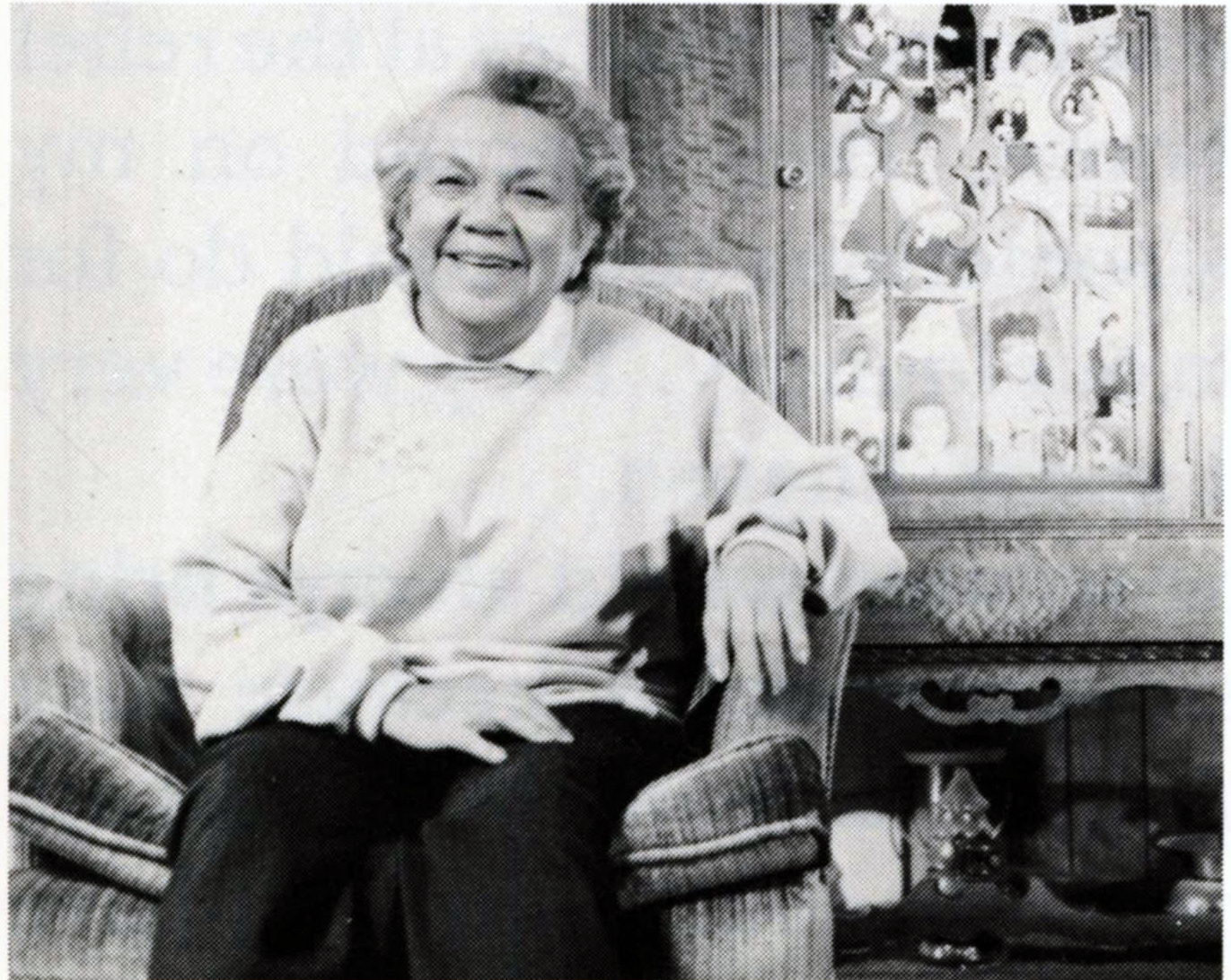
Huerta, Juanita Zazueta
Description: Interview with Juanita Huerta.
Date: 1991-03-12 Location: Pocatello, Idaho
Interviewer: Luckey, Angela
Topics:
The visual topic map is hidden for screen reader users. Please use the "Filter by Topic" dropdown menu or search box to find specific content in the transcript.
Transcript
Angela Luckey: The following is an interview with Mrs. Juanita Zazueta Huerta by Angela Luckey. The interview took place in Mrs. Wertz home, 1135 East Fremont. Pocatello, Idaho, on March 9th, 1991. This is part of the Idaho Hispanic Oral History Project. Okay. Can you tell me when your parents when your family first came to this country.
Mrs. Juanita Zazueta Huerta: In the spring of 1918, about in April, may they come. And she did work in agriculture.
Angela Luckey: So they were how did they come?
Mrs. Juanita Zazueta Huerta: In a train? They came on the train with a lot of other family, Mexican family who were bringing at that time.
Angela Luckey: Did somebody go down to get.
Mrs. Juanita Zazueta Huerta: They must have imagined that somebody would be there to bring. These people are married. Because, like, I believe it was the war time and they would bring it to different places. And they brought these people with but ones that come with my parents, they brought them to Lincoln, Idaho, near Idaho Falls, to the sugar factory. There you loom houses where they would house them for the Mexicans.
They would bring them. That's that. That was a that was a place they would bring them. And from there they would send them like to to Shelley and to different to. I can't really tell you, but there's little agriculture towns around Idaho Falls and around Ferd and Shirley. There's Goshen, there's Presto, Basalt... So those are the little places of the names of the little towns of that.
There were farmers then. These towns were planted in these little places where the printed sugar beets and potatoes, and that's where they would house the farmers. I would imagine coming, taking the ones they needed, so many families that they needed.
Angela Luckey: So they were housed in, in that one place. And then every day they would go out and come back.
Mrs. Juanita Zazueta Huerta: They'd take them and keep them there. If, say, that if it was in this, it was in the spring, they would need them to work in the fields and the potato in the beet fields, like for thinning and growing. And so the farmers would just probably take the families that they needed to work.
Angela Luckey: Did everybody work?
Mrs. Juanita Zazueta Huerta: Yes, they came from work. I mean, the men folks were the men folks.
Angela Luckey: But that not the women.
Mrs. Juanita Zazueta Huerta: No, not the women at that time. Not the women, not. I never did hear my mother say that the women would just their man work.
Angela Luckey: But they brought the women with them.
Mrs. Juanita Zazueta Huerta: Yes, they brought the families. They were families with children. And same family with children.
Angela Luckey: So did your parents become citizens then?
Mrs. Juanita Zazueta Huerta: No. My parents never did become citizens. They never really learned to speak English. And I guess they just I don't ever remember the term that they ever spoke about making themselves citizens. They just. My father worked on the railroad and he learned enough English to get by. But I never I never did hear the members say or nobody whatever ask them you know.
So they just, they just worked and lived, you know, and they had their children and of course at that time. But then, then they had to be have birth certificates. The children and my brothers and sisters and myself were all born here, and we've all got our birth certificates that we were born here, you know, but, you know, they didn't become citizens.
Angela Luckey: So they came here for their jobs. Yes. Did your father talk about, doing his job? What kind of tools? He used?
Mrs. Juanita Zazueta Huerta: Well, he was a section hand. And this man. See, and put spikes in. I remember that he put railroad in, and I guess they just kind of. Whatever section hands do. I remember that they add a little cart and he'd go to the tool house or whatever. We lived in the section house, and that place where the workers would meet wasn't too far from our house, and they had all meet there in the morning and go out on this little I.
And I'm sure it had a name. Yes, but and then in the evening you'd come home. And I don't never remember that he really discussed what whatever section I to do, I guess I do. I don't really know. Okay.
Angela Luckey: Did your mother, what did she do all day?
Mrs. Juanita Zazueta Huerta: No. My mother just took care of us. And then in the summer, she would take us. I remember as kids growing up, and there was people around there that had, strawberry patches and raspberries and stuff, and. And to tell you the truth, I really don't know how with her why she when we, she used to take us to pick raspberries and then we'll just there wasn't big patches, but I remember unshared and my mother would get us to pick raspberries.
And I remember that I forget so much for the lady of the people of the little patch of raspberries. And and so much was for us. And then my mother would. What can this fruit I remember? Somebody must have showed her. I don't remember that. But she used to put this fruit up whenever we would pick. And they gave her.
I know that she wasn't for wages. I don't remember that gave her any money. And it was just like food. She we would just pick the fruit or whatever. And then they would give her so much and then she'd take us home, whatever it was, and she would always tell us. So we had to learn how to work that.
That's the way you go about, you know, maybe we complain, I don't know, maybe we go, what are we doing this work? But I remember she used to say that we were we'd like to play all summer when there wasn't any school, but she would put up, take some fixed, I guess, a bunch of tortillas or maybe whatever, and and take us to these places.
I remember there was this real nice lady. She was a sweet lady, Mrs. Cedarburg. And then they had, she had plums and apples and raspberries, strawberries. And we used to go over there and pick all the stuff, and we'd climb the trees for apples and plums and, and I remember we used to take some home. American. You know, my favorite share with or whatever, you know, whatever.
Angela Luckey: Where was this.
Mrs. Juanita Zazueta Huerta: In Firth, in Firth. And. Mrs. CW, we were right across the river. I remember very well the snake River. Now I just wonder. I have never gone back, but my brother has gone back. And he says that how it seemed so far away when we were growing up. But he says now, and that it just right there, you know, now things don't seem that far away, you know, and the places that seem so big to us than are not really all that big, you know.
Angela Luckey: So when your family came on them and gone, you, they came straight to Idaho.
Mrs. Juanita Zazueta Huerta: Yeah. Straight to Lincoln, Idaho, near Idaho Falls.
Angela Luckey: What was it like in Idaho? I mean, can you describe your first memories?
Mrs. Juanita Zazueta Huerta: Yes. Well, there was mostly farming, like, say, Idaho Falls. They ... and all of that wasn't there. And then, first is only, I think 30 miles from Idaho Falls. It's not really a whole lot for schools. And that was where we'd go mostly was styrofoam and wheat. And then really, my mother and dad had friends in Idaho Falls and we'd go, like, whenever there was a circus or something in town, we'd go and stay with these friends.
And from there we would go like on the 4th of July. And that's what we're like closest. And then when we, when we really wanted to see a lot of Mexicans and that I remember we'd come here to Pocatello and we'd come on the train because, like, you worked on the railroad, he had a pass, and we could come here to Pocatello.
And then that time there was a lot of Mexicans here in Pocatello. So you got to come to the railroad and then. And if we wanted to do that, like you say, socialize, I guess this is where we would come. And like when my father was sick in the hospital, they'd bring them here to the old General Hospital over there.
The you. So they used to rely on them actually, because he went to Mexico. But my mother never did go back. But my, my dad did even in 1926 to. And then by then the relatives lived in Torreon. So that's where he went and met, you know, some relatives in Babylon. But my mother never but always, remember somewhere, always that they would always talk about their country.
They never did reminisce over and over and over and, and I remember, like I say, when read TV and radio and all that stuff, and those kids never got bored with the stories that they would tell us. They repeated them over and over again. My mother was raised and had asked her. Her family was like her mother and dad.
They too, they were poor people, but they took care of the cabin for a rich man and they would take in the summer. They would take the cabins up to the mountains, I guess. I don't know where they took their cows, but my mother used to say about how they would climb up in the mountains and they would sit down, I guess some some kind of a high place they could see down in the distance, and I could kind of visualize because they in the distance, they could see the smoke of the trains that would go by far away.
And she would dream of someday getting a moment train and going away somewhere. And she did well, she could move, but she never she never did go back to Mexico, never to visit. And she always would talk about how Mexico and her and my dad, that's what they would talk about of Mexico. I guess that's the only thing to talk about them.
My daddy's work permit and but we have we did have company. People from Pocatello would visit us out there for the Mexicans that were in Shelley, too. There was at the sugar factory. They had a lot of little houses, and there was quite a few Mexican families that lived there to insure me. But see, my folks went straight to Lincoln, Idaho.
That's where they had to. And there was a lot of Mexicans initially that lived there and worked in the fields and farms and there.
Angela Luckey: Where there are a lot of other families that went to Lincoln with you.
Mrs. Juanita Zazueta Huerta: Oh, yes. Well, see, that's a that's trainload. And from there they dispersed and and there's we go over the many different places and like I say probably I don't know, I don't really remember I remember these Mexican families that lived in Chile. Now I can't tell you for sure if they were brought there like from Lincoln, you know, like they might have been brought there.
But Lincoln was where they brought them as a group, and then they might have brought them to Shelley to closer to the farms that were around them, so that I don't remember. I don't remember that, but I remember the Mexicans that lived in and that we used to go visit them, some in the farms around around Lincoln and around there that lived for but not not right there in the sugar factory.
We lived them in the farms.
Angela Luckey: Did they have their own little land or.
Mrs. Juanita Zazueta Huerta: No, no, no, they didn't use the house, just that they just housed them. No, I didn't have no land. They might have land at a garden. Maybe we go to. Other than that. No, that made this work there for the farmers.
Angela Luckey: So it was a land. The houses belonged to the farmer. Yeah. And then they just lived in there. When they were there.
Mrs. Juanita Zazueta Huerta: They moved in and just lived there. And they worked for these farmers. And and I don't ever remember any mistreatment or anything. They just worked for the for the farmers. And they had interpreters. I always remember this one lady, Mrs. Pearce, her name was in Pablo. She was in Chile. She was the interpreter for the Mexicans around there.
Just to Mrs. Pearce, my mother talked about her man who had already I could be. I must have been 6 or 7 that I met this lady, Mrs. Pearce, and my mother. This was Mrs. Pearce, one that was the interpreter for the Mexican woman, and she spoke very well. So I guess that's why they. And she wouldn't wear the war end.
And I tell you that they made so much commotion. You know, when the war ended in 1918, there was whistles and people making a lot of noise, and she went to to the Mexicans and told them, you know, you know what? They didn't know what was going on. And she explained to them, we're real happy now because our war has ended, and that's why we're all so happy.
My mother used to tell me that into Mrs. Pearce went and told the Mexican people what was going on at the end of the war, and after that, my mother used to say, see, some of them went back to Mexico, some of these Mexicans went back and others didn't go see, my mother didn't go back. And then after my dad out of jail on the railroad, well, then we figured that was a steady job.
Good. And, you know, we didn't have to worry. And then we just stayed there and birth. And that's where we were all born there and went to school there.
Angela Luckey: You went to school there from first grade to the eighth grade?
Mrs. Juanita Zazueta Huerta: Yes. I remember my mother took me the first day by the hand to the first grade, and I just stayed there. And no, the people were nice to us. I don't, I can't complain about that. We were the only Mexican family. But like I say, we had company from Pocatello. They'd go, president, but they never mistreated us in any way.
My my dad did this job on the railroad, and that was it. And my mother never and no schooling. And we just went to school. And I can't say that they mistreated us. I remember when my little brother, when my little sister was born, how that I can't badmouth the LDS people. You know how they talk about them.
The ladies of the Relief Society are that. I do remember that when they went to our house. And how are you doing messing with them? Is there something we can do for it? Can we do can we do your laundry? I remember that and and they were very kind to us and to my mother who didn't speak English.
And every Christmas I remember they'd always bring us the things for Christmas. And they tell us so. And we were puzzled because it say, Santa Claus left this at our house, and we used to say, well, how come you never come here? Do you know you could very well have brought those presents here, but we would get presents from everywhere in the church.
We didn't socialize with them. But I'm not saying we were invited to other things. We were the only Mexican family. And maybe that's what they were doing, a good deed or whatever. But they they used to tease my dad is there. They'd go there to visit him and say, well, what are you doing this Sunday? Are you playing the drums in the Lutheran church or something?
You know, teasing them because I tell you that we that we joined all the churches, but we didn't. The Lutheran church was right across the street. And even now there's a mrs. Johnson. Sometimes I can see you. It's charge of them. And she was there from birth, and she was in church across the street from out. And on Sundays.
We used to like to hear because they had the windows open and they'd. I'd like to hear them sing. They sing a lot. But see, to go to church, we'd have to come to Blackfoot because there was no Catholic church in church, but there was LDS church. It was built in church. There was the Presbyterian Church, but not Catholic.
It was in Blackfoot territory, I don't know, in Blackfoot and then in Idaho Falls Church. And the Catholic Church was we were made our first Holy Communion in Blackfoot and now in Maine. We were baptized and but I named and the priest that were there, he's there a long time. And we were friends to the Hernandez's who, you know, Marcella died in a do you know was Speranza Lacey.
So she belonged to that family. They were a large family. And they lived in Blackfoot, in the sugar factory. So sometimes we would even walk from Blackfoot to for two from the Blackfoot to go to church. And then we'd go on a little visit over there to the Hernandez's, and they would take us home and take us home.
Angela Luckey: How did they take you?
Mrs. Juanita Zazueta Huerta: They had a little car.
Angela Luckey: What kind of car did they have?
Mrs. Juanita Zazueta Huerta: Girls, I don't remember. It was a noisy car, but they would take us home and from Blackfoot. Different.
Angela Luckey: So you walked almost everywhere. You had to go?
Mrs. Juanita Zazueta Huerta: Yeah. So we walked and we would walk to Shelley. That was six miles to Shelley. But if we went far then we could go on the train. And my dad had a fence, but it didn't seem like it was that far to us. I remember on Sundays my father would fix a lunch and my for my dad got an old 22, I'll never know.
But we'd go and when we wanted to go anywhere, we'd go down to the river. We went to the snake River. You know how it is along the snake River, with those two little boys that got murdered there. And for the dog when I seen him on TV, it all brought memories to me because we would go down the road places, on the river there at first.
And then there was, what did they call railroads that are off to the side? And like a branch or something off of the main drag there was. And then maybe the train would go back in there to get the sugar beets and that we'd go for walks way back in there. And do you know why we don't just go on walking on the railroad tracks way down too close to the hills to put.
There's the two press stones, and then there's they stop and go, you know, to the little places where they would take the.
Angela Luckey: And what time was the mat Marsh?
Mrs. Juanita Zazueta Huerta: Well, I can't really remember. It must have been maybe ten, 11 or mean.
Angela Luckey: So your mom would pack a lunch.
Mrs. Juanita Zazueta Huerta: And we'd start out walking. You'd want.
Angela Luckey: How long would it take?
Mrs. Juanita Zazueta Huerta: Oh, gosh. I don't know how long, how long it would take. And then there was a family that left, there was any. I don't remember their last name. There were Catholics, their infants. And sometimes they would pick us up and give us a ride.
To ministry. I can't remember the name of that Catholic family. Right of him.
Angela Luckey: So your mom would pack a lunch in the morning and you'd walk to church? Yeah. Go to church. And then after church, what would you do? Have a picnic or.
Mrs. Juanita Zazueta Huerta: Well, imagine. So we must have we maybe we ate on the side of the road. Who knows?
Angela Luckey: You don't remember?
Mrs. Juanita Zazueta Huerta: No, I don't remember. But then we would go to the Hernandez's home and then and then then they would give us a ride home. And I do remember. And their names were, Nicole Hernandez, and his wife was Rosalie Fernandez. They were the mother and father to these Hernandez's, you know, Marcel and Brenda Lacey next. That's a big family.
There were about 15 in that family. Yeah, that's a very large family. They were from like 20, 20 year Tommy. And sometimes you see them like, there's a few more like you when Manuel Hernandez. They're not related to that. Manuel. Remember, for nine. But their last name was Hernandez too. And it was a different family around on the ship.
And quite a few of them come over here. Feel now. Oh, man. No it wasn't many. Go to.
Angela Luckey: Henderson now. When, when you went to school, you said that you were the only Mexican kids there. Yes. What? How many of you. Who was the oldest one or how? You know.
Mrs. Juanita Zazueta Huerta: My oldest one. We were five. I was the oldest. And I have a sister, Rosie. And my brother lives over in Washington. Alberto and my brother Frank and my sister Gary. And we were five, and I went to the eighth grade there in first and the rest of life. And then when we moved here to focus on my brothers went here to Montreal school.
But mom was too, I didn't, I just went to the eighth grade. And in those days it was, it was so different than it is now. And it was such a you couldn't go to school with the closure had. You know what I mean? Where you just didn't fit in. And you, you if you had any sense.
No, I definitely think, you know, you were embarrassed because you couldn't compete with the, you know, your clothes just didn't fit with what you had. Like.
Angela Luckey: What did you wear?
Mrs. Juanita Zazueta Huerta: Well, I guess we were dressed, but what I mean is, you felt that you had to be better dressed. And I know I didn't want to go to school and, you know, with the clothes that I had, they, well, you know, better dress and stuff. And then you were real conscious, that you were dressed. Now, now the kids in these past years, I think that they laid out their Levi's and and squirted that Clorox on my.
You wouldn't be caught dead with a pair of pants like that. Now, in those days, anyway. And it was depression time. And still you felt that you needed to be, you know, better dressed as you got older, I imagine, because I remember, I remember like, say, Tony Rogers and his sister, only the best dressed Mexican kids in town.
And, they were always well-dressed. So. So you are. You were real. Come on. Just how you were dressed to go to school.
Angela Luckey: Did your mother sew or or where did you get your clothes?
Mrs. Juanita Zazueta Huerta: When we imagine. No, we thought they bottom. It was a little. There was a store there and for it dies merchandise. Red ribbon is what I see. The little country stores where they. Everything is in there, you know, everything. Shoes, stockings, dresses. Groceries, everything was in that store. And I remember that my dad got paid. What?
We were paid that we, you know, we'd go there and buy clothes and shoes and stuff, you know, but of course, you know, imagine that they did. They had to, you know, watch and see what they bought. And five pairs of shoes. I remember when we were going to go out of town, when we was going to go in the summertime to the 4th of July in Idaho Falls.
My dad would take us out and buy us all the same damn pair of shoes. He'd been all getting brand new shoes and you had to take care of of my mind. And we just warm up and take care of them during the summer months. Like, I have no idea, really. You know how how that went. But, you know, we all got brand new shoes, and we were going to go out of town.
Angela Luckey: Did you wear your shoes every day?
Mrs. Juanita Zazueta Huerta: Well, guess with Mr. White or old words, I suppose, to help me. We were wearing shoes, but I don't remember. Just. I really can't remember. To tell you the truth, I even wonder right now. We made that. But no, I remember... And we got everything at this or going to do or whatever. And daddy, we can and it we just do start daddy store and main store there in front of us to store.
Angela Luckey: Did he, provide credit whenever you needed?
Mrs. Juanita Zazueta Huerta: Yes. Yeah. We had credit there. It died. And I remember my mother go and get things that she needed. We could do stuff and clothes and we can get clothes and. Yeah. To credit. Yeah. Those credit.
Angela Luckey: How did they work that? Did he have an, notebook or something?
Mrs. Juanita Zazueta Huerta: Oh, no, I don't remember that. It did. It must have been just groceries. Where to give it to you, I don't remember. I don't remember that he did. No, I don't remember. He did. They both my mother and dad could both write like the one thing that I remember very well. I remember my mother and dad both writing letters to their families in Mexico, write letters.
Angela Luckey: So they were educated in Mexico.
Mrs. Juanita Zazueta Huerta: Well, yeah. I don't think they they might have learned to read write because they could both read and write. But I don't think that they had any education or anything. I always tell my kids, I said, well, your grandma and grandpa were really nice people. They didn't have no college education. To be nice with me because they were they were they were real nice.
They were real nice people. They were really nice people, both of them. When they died, I really can tell Angela they had their funerals were so big. I mean, maybe they, from. So that's one thing I always remember that you think they won't even remember the good deeds they did and all that. Know when my my father died first to me.
I remember you know, so many people come to his funeral. And when my mother died, a lot of people were there. Lots of people were both, in my opinion, because they were nice. They were good human beings. And like I say, they weren't highly educated. They just went to school and and never learned to read and write. But and we just nice people.
Angela Luckey: So did you have any problems with, language in school? I mean, you said your parents spoke Spanish. The you being Spanish.
Mrs. Juanita Zazueta Huerta: Then our learning.
Angela Luckey: In in school, was it hard for you?
Mrs. Juanita Zazueta Huerta: Well, I don't remember. Just come I learned English. Imagine that. Come easy to me. I remember that I didn't have any problems. No, I just went right through school till I went to the eighth grade, so, you know, and I wasn't any. I was the big of the kids that were in my room. So I figure that I must have just gone through this must I must have cut, right away.
I don't remember that I had any problems in school. No. And I love school. I really know school, and I know and I think now myself, thinking how much I liked school at the time was like it is now, of all the things that they can do for people and you know, and minorities, I see in my mind, I don't think I even got married.
I just went running right around the school, you know, that's how much I love. That's how much I love school. I really did I really did love school.
Angela Luckey: Did you play with, English speaking kids when you were little?
Mrs. Juanita Zazueta Huerta: Other kids.
Angela Luckey: So you probably learned English then while you, before you went to school.
Mrs. Juanita Zazueta Huerta: With the kids that were around. Because. No, like I say, in those days, you just everybody then, you know, you you weren't invited or anything. I do remember we went to ask to go do anything. You just. We were used there. And then see the the foreman of the railroad of the of the section. He lived close by.
Mr. ball can't remember his name. And he had a daughter. She got my divorce. I don't remember that. He had a wife. She must have died. You know, I don't remember that Mr. McKee was the foreman. And his daughter Katie lived with him, and. And she had a daughter that was my age. So she would play with that.
She was nice. Jean. Her name was Jean, and she would play with us. But other than that, I don't remember. We just made our own fun and then we just played together, I guess, because I don't remember them sociological thing, but very.
Angela Luckey: Do you can you tell me, describe a typical day then in your family? What time did you get up and. Yeah.
Mrs. Juanita Zazueta Huerta: Well, I mean, I just got up, my dad left for work, and we'd get up and go to school.
Angela Luckey: Did your mom get up? Any earlier than everybody to make.
Mrs. Juanita Zazueta Huerta: Sure she must have. She must go. And I don't remember, you know, in my mind and especially any special thing, you know, she must've just got up on time because she was a good mother in life. So she used to go up. And as we got older, well, to normal, they'd get up. Each had their own thing to do and like two women, the housework type, that they meant nothing.
You know, we didn't just we just worked in the fields and that we never had any outside jobs to say, per se. You know, my sister. No, not most of the younger sisters. We after we moved here to Pocatello, she grew up. She worked in the laundry at Troy, Parisian laundry. She worked for a long time.
And then she. And that's when the war started. And then they brought soldiers here at this airbase. It wasn't there. But that's where she met her husband, Dan. So their names. It was an army. Army from Texas.
Angela Luckey: So was just your same family that lived in the house? Well, you didn't have any answer, uncle.
Mrs. Juanita Zazueta Huerta: No, no we didn't. We always would think about it, though. We did like to have a have a man or an uncle, grandparents or something. No, it was no. And many, many relatives in. So it was just us. We didn't.
Angela Luckey: You said that you sometimes worked in the fields with your parents.
Mrs. Juanita Zazueta Huerta: Oh, yeah. So we as we grew up. Yes. And we grew up working there. And the beets and then the potato and then.
Beets hoeing and tending and stuff like that. So, see, after my father was laid off during the depression from the railroad club, and then we were old enough to to be able to work in the fields.
Angela Luckey: What did your dad, then you said he went to work on the railroad. Or was he, like, working in the summer in the fields and then in the winter in the railroad? Or did he just quit the fields and go to the room?
Mrs. Juanita Zazueta Huerta: Do you know, after he got laid off from grandma, that's when we went to the fields. When when we when he first come, they worked in the field. Then when you got the job on the railroad, then there was no more fields. But then it was new to us, to them about working in the fields. Because then after he got laid off from the railroad, then they were old enough to go to work in the beet.
Why do you. That's it was depression time and there wasn't any other work. And then when we come back, when we come here to Pocatello, that I tell you, these friends, we kept telling us, what are you doing out here on this farm? Things can be better for you in Pocatello. And they kept after saying, go visit us and leave this place.
What have you got here in the especially in the wintertime, there was nothing, you know, and, so, maybe a little bit of job here and there, but there was that nothing standing. So then that's when we moved here to Pocatello. Was depression down? And then then they were giving, there was a job at the WPA and stuff, you know, and so it was it was better, you know, it was better.
We didn't I can't remember where the first little house that we lived in, but anyway. And then they would give, they would give the people and I mean, we weren't the only ones. It was depression. The lines were so long they'd give you a maybe you little sack of flour or a package of, grapefruits and oatmeal and plum milk.
The powdered milk. I remember my mother making big pots of cocoa and making biscuits and things, and, you know, life was a lot better here in Pocatello. And then still, you could work on a farm. So farms were right out here, tiny and stuff like that, you know? But the life was better here, Pocatello, than we have to that.
Well, then my dad got work again on the railroad, and he would take care of those little parks that are over there by the depot, and that he would go water and the lines and stuff like that. And from there he and I guess he must have retired, I guess, because I remember that it didn't work anymore. But he took care of the little parks right there.
So see the beginning he was back with the Union Pacific.
Angela Luckey: How did then you came to Pocatello in about when? 19...
Mrs. Juanita Zazueta Huerta: Well, I was, I was 14 years old. I remember very well. Yeah, we we rented a little house. The Morello's lived kitty corner from us, and it was very. And I was his mother and dad, and they were really nice people. My father and my grandmother. My mother, you know, Francis and her older sister, they were very nice people.
And they were always I remember they were always bringing me nice little things, you know, because, well, they knew what was going on. It was depression time. And he worked on the railroad there in the roundhouse or whatever. And their dad made ten houses, and then so the people that had jobs at that time, they knew, you know, the things were hard for the people to do kind of jobs.
And then they were really nice, generous people, really nice people. And behind us lived, my companion, Manuel Sierra's mom. And so she was only married to him for the... They lived behind us. So there by the colored room. No, that's not there anymore. It was a colored church home there, across the street from Idaho's.
Mom know Idaho person. I knew Idaho first when she was a little girl and she always loved Mexican food. I remember she'd go across the street over to the canyon, and I was trying to remember those people's names. She'd go there in the leaves. I don't believe that. Her name. I understand Richard Jones. It was Idaho. She moved here that maybe my 30 years.
And then what she did that Mexican immigrant talk from Chico. Real happy Idaho. So she she acquired the taste of Mexican food from way back. She laughs and remembers, you know, she only does like, Mexican food.
Angela Luckey: Speaking of Mexican food, how was it when you were trying to cook Mexican food for your mother, for instance? Who really knew? Did she have trouble finding all the ingredients? Oh, well, you.
Mrs. Juanita Zazueta Huerta: Know, I really can't tell you. I don't I don't remember, you know what I mean? They weren't. She had any. Yeah, she must have. She must have bought like her spices and that like say in Blackfoot. Must have been married because she couldn't have got them in first in the grocery stores or were there. So she must have and she they would talk to each other, say that, you know, she could visit with the ladies in these places and they would tell her, you know, about things.
So she must do not like the spices and things in those places like Blackfoot. But this woman, I don't really remember once was here, like in Pocatello. Like I told her, there was a lot of Mexican people at that time, and that time they gradually that there was dances and, and a lot of dunes, and they had big night forts over there.
There was a big boarding house where, upstairs and dances every weekend. And then a couple of blocks down there was my gate building. You'd have to climb down. There was another place where the Mexicans would have dances every Saturday night. And and I remember they had the they had a good time, I remember that, but it was it was like time and there was a lot of Mexicans and they whooped and I had a good time.
Angela Luckey: Did you go to the dances?
Mrs. Juanita Zazueta Huerta: Oh, yeah. We used to go to the dance.
Angela Luckey: Who played or what kind of music?
Mrs. Juanita Zazueta Huerta: Well, I mean, I'm they had guitars and Feldman Stovall, Domingo. Yes, I was it just died here because I remember him. So where we were, he played the violin and, there was a little group of men that, Fidel played the mandolin. And, and they had guitars and stuff, and they'd play through the dances, and I.
They didn't show up for the dance. Everybody was restless, you know, they they managed in and again, they would take their kids and they'd go to sleep and they put them under the benches and stuff like, there, you know, and then there was fights on Saturday nights and it come rolling down the stairs. And if was there wasn't a fly to the dance.
Well, it wasn't a good dance that Saturday night and there had to be some kind of disagreement or something like, but it was all in fun. They went and, you know, never anything real dangerous. I remember it just happened in good time.
Angela Luckey: That kind of dances. Did you do?
Mrs. Juanita Zazueta Huerta: Well, not me, but they used to, just regular night. There was a couple of ladies that would do the dance and and the dances, and I remember that they'd be real happy when they did. That was my grandma didn't marry. She did. Do you get dance to it? And do you know Joe Ortega? Well, it was his mother.
She was a very nice.
Angela Luckey: Lady to my two year old. I mean.
Mrs. Juanita Zazueta Huerta: She married Vida Martin. Run, Mary. Santa Monica. She was a nice lady, and she loved to sing. And Rosalia and more or less. And then Leonard, sister Leonard started out. You know. Oh, that's his sister. That's right. Yeah. You know Josephine, she lives in there, right across the street from your brother Leonard, you know, and you to go to church on time.
And that was her sister, Josephine. Josephine. And their mother was going and going community. And all that time, they were pretty ladies. Come in. So real pretty.
Unknown: Woman. She managed to dance.
Mrs. Juanita Zazueta Huerta: I remember we dress so pretty. She would do the fancy dances, you know.
Unknown: Like, it's pretty neat.
Angela Luckey: Did you do the jitterbug or did you do Mexican dances or. No.
Mrs. Juanita Zazueta Huerta: Not me. No, it was afterwards. I just I don't remember that there was any special kind of a dance. Any time. Just really. What was that? Well, see, I guess some folks dress up just. I think just plain dancing. You get.
Angela Luckey: So how did how did you meet your husband?
Mrs. Juanita Zazueta Huerta: Well, every summer we lived here in Folk Town, but every summer there was. They planted a lot of, peas for, in the, in the Teton.
Angela Luckey: Basin.
Mrs. Juanita Zazueta Huerta: In Griggs. They would plant a lot of peas and a lot of Mexicans from all around me come from Wyoming, Montana and Idaho. Utah did. And these peas were fresh peas for marketing. So they had big sheds and everything. And they hired Mexicans for everything. There was big company, of course, the contractors were Mexican. They were they were white guys.
I remember their flagship cars, but they had Mexicans that were like Foreman's and the lead man. But to us it was more like a fun job. And Rudy and I were reminiscing about that today. We talked and we never made any money, but we had a lot of fun because as you went to, you pick your hampers like that, then you'd go and weigh a man and they paid you each time.
You each time you took your hamper the way they pay you. So and then there was trucks that had candy, ice cream, whatever, so you could go with the kids and all of that, but they'd just get their money and go right and spend it right then. But it was a fun job and know that, like I said, and we all kind of knew each other, you know, we'd meet every summer without religion, and it was only about, say, a month or two or something like that.
Angela Luckey: How old were you about this time?
Mrs. Juanita Zazueta Huerta: Oh, how about 18, 19 and 20? Because I was 21 when I got married and my kid come from Nebraska there, there was people over there that heard about this here, a big and supposedly and that they'd which they didn't make any money. I don't, don't think anybody made any money, but it was kind of a summer job, you know, if you didn't have anything else to do and say, like, see where Mike was from, like Scottsbluff.
And then there, that's another valley. And and those are all summer jobs to vending.
Angela Luckey: And allowing.
Mrs. Juanita Zazueta Huerta: Them potatoes and meat. It's like here.
Angela Luckey: But it's a very.
Mrs. Juanita Zazueta Huerta: North Platte Valley it's an old plant. Marianna Scottsbluff. And you know, those little towns your whole family becomes. So I guess this here goes Chuck Martinez. He was going to come and he ask anybody if they want to come down over to work. And Griggs, you know, took a piece. And Mike well, I guess his parents were pretty strict.
His dad was with me that well, it was a good time to get out of here. So he signed up and he came here to Driggs to pick these two. And that's where we met him. And then we would do each other just that summer. And then we decided to get married. And I guess that's what it was.
So I figured maybe 21, I was getting too old. I better hurry up and get married. Maybe I won't get another offer. So go ahead. So. And I was the oldest of our family. Didn't know he was nice.
Angela Luckey: He's nice.
Mrs. Juanita Zazueta Huerta: And he was a churchgoing person and and supposedly he didn't drink, which he did a little later on. But at that time he did them. And then we went to live in Nebraska, and they were very nice people, very nice. Mike's family, as a matter of fact, his older sister just called in this morning. Her son in law works for the like Idaho Power sort the company and he'll be.
Yesterday was his last day and he's retiring and he was just telling us that they're very nice people and there's a lot of Mexicans over there, and not to Mexicans. And I liked it because it was so many Mexicans. And they're all kind of related. So if they have some dough and I tell you it is, and there's so many of their family in it, you know, they're kissin cousins.
I guess you might say, my girls, I would love to go down there because it's, so nice and friendly and they have so much food and staff. They're, they're very nice people. And so I liked it.
Angela Luckey: And tell me about your wedding. What? It. Tell me where I go.
Mrs. Juanita Zazueta Huerta: Was a really nice wedding. It was in the Catholic church. There. The like I say, they're all so nice. It was a real Mexican wedding, you know, we all pitched in and made a nice wedding, but I was there alone. My parents didn't go to here in Boca Down. And at the time, I guess maybe. Well, I don't know.
They they just met nobody. Nobody moved from you.
Angela Luckey: You got married in Nebraska.
Mrs. Juanita Zazueta Huerta: Yes. I was married in the Catholic Church in Scottsbluff. But, don't I tell you that my dad, when I was married here would say stable, you know, you know, the courthouse doctor George Hinckley married my dad, his mother and his sister, the one that's a man now. And it's a picture that she just she just had her golden jubilee.
And you take your picture, you up?
It's a sister. She just had her Jubilee here. Just a you just hear this last year. Can you believe. They're in Scottsbluff and, her she came when her mother came and my dad said, well, you're not leaving. You're not leaving here with my daughter. I better know she's married. So that's how come we got married here to the, you know, judge.
And then that's how come I went with them home with my mother. Abuses against. And we got married in the church here in Scottsbluff. It was a Mexican wedding. All the relatives and everything. It was nice. It was in the farm in September, so there was a lot of flowers. We didn't have any flowers from the florist, but we had flowers from my guess, all the gardens in the valley.
So many flowers. I remember there was so many dahlias and they were so pretty well there. That valley is, you know, it's really nice. Everything grows so good because they have cold winters, but they have real hot summers. It can be at 9:00 in the morning. It can already be 90 to 100 degrees. It's that hot. But in the winter, the winters are cold and all that.
The winds come from Montana, not the way the Dakotas and stuff. So it just whistles down. But in the summers it's hard to make and grow. Beautiful gardens and beautiful flowers and everybody's got a garden. So there was just two rows of flowers now and then. Mexican dance and musicians. Thank you. And next to years for this nice.
And then in the fall then like it was in the fall right away. Mike went to work in the fields at that time and he was 19 and I was 21. And I'm like, I see his family were all very nice.
Angela Luckey: People, very nice. Can you describe what you wore?
Mrs. Juanita Zazueta Huerta: No, it was just, making wedding dress it, it and was the dress that his cousin had for her wedding. She had just got recently married and and she said, well, my dress is real pretty and nice and it'll fit you so you can wear my dress. And you're like.
Angela Luckey: What was it made out of?
Mrs. Juanita Zazueta Huerta: Well, I really can't tell. It was just a regular wedding dress. It.
Angela Luckey: Was it satin? No.
Mrs. Juanita Zazueta Huerta: No, not satin.
Unknown: It was couple of camera.
Mrs. Juanita Zazueta Huerta: Kind of fitted, maybe with lace, people. A lot of lace.
Angela Luckey: And then. Did you have a long, long.
Mrs. Juanita Zazueta Huerta: No.
It's just a short, little short man. Extremely short. And it was his cousin then got married recently. We see we got married in September and she might have gotten married like in July.
Angela Luckey: Actually, July 1972. And your bouquet that you carry, you just said the cut flowers.
Mrs. Juanita Zazueta Huerta: Cut flowers. There's like I say, there's a lot of food for flowers from the gardens. As in his sister. As a matter of fact, I think Sister Veronica fixed to the front. And they are real. His sisters are really, really into doing things like that where they entertain a lot with each other because the real were artistic. You could say anything they do.
They put together quick and pretty and nice. I mean, it now seemed to me I wouldn't even know where to start, but no, they beings, I guess that they're all together and always doing something. They're they're real artistic. All of his sisters and his and his family are real artistic people.
Angela Luckey: And then you had a dance? Yes.
Mrs. Juanita Zazueta Huerta: It was. And then.
Angela Luckey: Did you have a dinner for everybody? Okay.
Mrs. Juanita Zazueta Huerta: This isn't this is a new reclamation dinner, I guess. Enchiladas and molino rice and a little bit I remember. And the ladies are all chattering and, you know, it was just a just a nice get together, I guess. But I remember it was really nice, man.
Angela Luckey: How did you get from your house to the church?
Mrs. Juanita Zazueta Huerta: Their cars. Yes. They had cars. They did great. Like I tell you, they're all real and like they had do so much of that stuff over there. See, they're always having baptism and the weddings and things like that. They're always doing.
Angela Luckey: Some do they do parties for those things?
Mrs. Juanita Zazueta Huerta: Oh yes. All of those things. Yes. Like, you know, Vicky and Johnny, don't you know? You know, Vicki is the curator. I've seen them give you a home. Johnny. And with them, like they got married for Valentine's Day. I remember all the all the Valentines stuff and things like that. Did you just do things? Always do things like that.
Angela Luckey: So what are the as a as a girl before you got married, as a teenager, what did you do for fun?
Mrs. Juanita Zazueta Huerta: Well, we already lived here in Pocatello. I remember visiting with friends. I don't remember that. And then see, like I told her, it was depression time. There was there was a it was called the NYP for young people. It could work. And I remember I worked at that thing. It was sewing to do something, and that's what I do now.
I remember I knew there was a place for all the young people that did my work and man could get. I think you get $17 a month with just a little thing, but it was you could go on you so by hand. I remember sewing by hand. So maybe baby blankets and things like that. And then they had everything there, you know, it was just to keep the young people busy at that time, you know, keep them out of mischief.
But no, there wasn't you didn't have any money, so you didn't have too much to get mischief with.
Angela Luckey: You didn't go to the show or.
Mrs. Juanita Zazueta Huerta: Oh yes. Yes, there was, there was right here. There was the Rialto and they charge $0.25 a ticket. And on Tuesdays, two for two for 25. I could get in. And I loved the movies. I remember I'd go at 1:00 in the afternoon, I'd stay, I'd stay, and I'd seen the show twice that. That would take the whole afternoon.
But no, the I guess that's about it for entertainment.
Angela Luckey: Did you get to sit in the main floor?
Mrs. Juanita Zazueta Huerta: Well, they would separate, but I don't remember. I remember that we would sit wherever we wanted to. I mostly separated the colored people because I really can't. I can't remember that they would separate us. But I think it was a committee that set up Malcolm and it was a national team. It was like a leader. And the manager was Mr. Grossman.
He was the one that only place in those apartments. And right over here by the ironing studios where he is. And I mean, and at that time, I mean, they really good for the way, you know, and he was the owner. No, I really can't say that. Tell to the truth. I can't remember that we had to sit in the same place that I know that they talked about it.
And I think that it was the colored people and they couldn't sit down on the main floor. They have to go to town.
Angela Luckey: How about the Indians?
Mrs. Juanita Zazueta Huerta: Oh, I don't I don't really remember that. I don't really remember if they were separated or not. Don't I don't remember that. But I remember that they did separate. Another thing, there was a lot of that time. I do remember that you couldn't just go and sit anywhere, and I couldn't find some things like that, you know, you didn't go in and that I do remember.
And then Mexicans too, could be Mexicans and coloreds and that you just couldn't see it just anywhere. And they, they just would wait on you if you'd go into a place that they didn't, you could sit there all afternoon. You just don't. So you're not going to do that if you know you're not one to go sit there.
You could never leave.
Angela Luckey: Or do you mean they wouldn't serve you in some of the fountains?
Mrs. Juanita Zazueta Huerta: Yeah. That's true. Wouldn't serve you. No, no. And I know what you remember. I think it was Joseph's that you ran into place, and he said, I was it. I wasn't too happy because they wouldn't wait on us. But we're interested. We don't serve you boys. You go up the street. There's a place he's been. Well, the only thing that that I want.
You call this boys. Hello? Okay. That's all right, Jack. Good as a compliment. You left this. We don't serve you boys. You have to go and wait on you. There. You don't serve you boys. So there was places where you could. You went Serbian at that time, there was a lot of prejudice there will always be prejudice. Always.
But. Oh, no, but it's nothing. I really think that things changed after World War Two. And just when I think that it changes in my mind. Mostly I think it was after World War two. Everything's changed. Life changed a lot before that. So I really think it was a lot of race prejudiced. It was too much. And you, you know, even today there's race prejudice too.
And that's something you can't change. Even if the president says you like your neighbor, no matter what color he is, that don't matter. If you got prejudice in your heart, you're not gonna. The thing that's so sad is that if you tell your kids about prejudice today, I'll never forget. One day I went to the store that was on.
He comes down the street, this little white boy and this little colored girl, and he had his arm around her. And that looked that see their children to him, that his friend. And he can't see any difference. She's probably just like him. She probably. And they were walking to school just as happy as could be then to children, I guess they're all the same.
But when they're growing up, they start understanding prejudice. You know that. Don't play with those kids because they're not like you. Them things like that. Even I remember when we moved to this house, there was a family that lived in that house over there. And Cecilia, well, Gregory was a month old, and I remember Cecilia's 2 or 3 year old, the man she'd go out and play and I tell her story.
Imagine with this one there, I looked out my back and I've seen her over in that yard, and I've seen the woman telling her to leave and she didn't want to over no yard. And she had a little girl and, you know, and it really hurt when you see a thing like that, you know. But she just she and told her just, you know, to come and go.
But as the time go that we've, we've lived in this house for 30 some years. Gregory was a year old. We moved at this house, but we've lived here. Good grief, I don't know. I'm not up for... 32, 33 years and see the people all changed and stuff, you know, they were just renting so that. But no, we I am not I'm single.
Complained about my neighbors and and when we moved across town, the lady of my neighbors, the, when you judge people for what they are, you know, they you'll find they're just like you. Just maybe their skin is a different color, but they're just just like you. I'm not in any race. No matter what color you are. There's good people and there's bad people, you know?
And if you have prejudice in your own heart, you know, you just can't help it.
Angela Luckey: When I first came to Pocatello, I was invited to have enchiladas, and I went and they made them out of flour tortillas. I was so disappointed because where I come from, these corn tortillas, in down in El Paso, were right by the border in. And I always thought when I came up here, I always thought that people didn't really know Mexican food.
And then there was a lady that told me that when the first Mexicans came, they didn't have the corn, so they couldn't make the corn tortillas to make them. So they adapted the flour tortillas. Can you tell me a little bit about that?
Mrs. Juanita Zazueta Huerta: Well, my mother had a metate, so my mother would cook her corn and she would, And I have. Yes. And we love to sit when we were little to see my mother, she would grind the corn and she would make the tortillas. And we thought it was so interesting to see my mother, you know, look into it and leave it with him.
She'd make gorditas, you know, and open them up and put. Well, no, don't tell you the truth. We didn't have don't remember. We had butter, but she had lard and she just and they were so good. But we like to see my mother grind the corn and then make the picture here. But no, I don't remember. Tell you the truth, I don't remember my mother making tortillas.
I guess, for some reason she had corn and she'd cook her. Can't call none until they put it into the... Lime? And she would cook a corn and chip, make the and make the tortillas... And now see my girls, they don't like corn tortillas. They they rather have a flour...
They're a little difficult to eat out. And so you do have to have flour tortillas. They don't like corn. But we were raised on corn tortillas. And my mother, she had her meat that did for years. And you are still it. I had my mother's milk. I had the sheep. But I can tell them this is, my era.
She's got. I've got my gave them... But she had a matete. And after I went, she didn't know she had a for a long time. And then, you know, Isabel, Sam Sanchez's wife, had to tell her mother. Did you did you? To get to know the mother.
Okay. And she made cheese like this. They had cows, I guess, and she'd make she cheese, you know? And and I guess they they do with the method. They would. They refine them after they made cheese to make it a fine grain, I suppose, because I remember my mother. Well, you know. Well, that old and yellow was to me meant that were really loathsome.
And she gave her method to do the, you know, so what you have to do and I don't know, I've have no reason to live on the farm. I have to they moved into town, made my house right over here by the what used to be the Frazier's.
And then my mom and dad lived there. Yeah. Comes whatever happened to my mom to the that they'll never know. But I do have our milk. I think it's it's deep and it's. You can't get those. Most of them are kind of like this, but my mother's that was a deep. Okay, so my grinds, garlic and caminos and all of that has spices in, in them.
Okay. So that my mother. That's true. That was my mother's. And then nowadays my kids now are more and and they're like, it's been used for years and years. Well, you know, it's smooth and it's smooth.
Angela Luckey: Did you eat any special foods like during Lent or Christmas? Special things.
Mrs. Juanita Zazueta Huerta: Well, I remember so well, but my mother made the best tamales. You shoot, I don't. And you know who learned? I guess I thought my mother was going to live forever. I never learned to make tamales like my mother. And the one that learned was Rita's mother, Frances. Frances made very good tamales. And she would always say, well, I learned from your mother, but I just thought my mother was going to live forever.
I never learned to bake. But for Christmas, my my mother used to make tamales. And anybody, everybody is welcome. I guess it was like the basket or the fish and bread and I don't know, and and no one would. And she was always so happy when her friends was around her and, and, and eat and, and staff and she'd make oodles and those to me bring back she made little the noodles of tamales for anybody and but and but coffee and everybody's welcome and our house was full of people tamales and my dad used to like to never need him and his friends or they were.
The men were at one thing and the ladies were, but everybody was happy and everybody was chattering. And that was at Christmas time. It was Christmas. And I remember that, I don't know if you know, when. Do you know this lady lives over there? Christmas called. So they would like over here. It's crippled. Maria I she's a real good friend.
Well, her mother's doing an activity there. She's. When I remember that they'd always say that for New Year's. She made a Nancy. I never did go. I don't know, but I used to hear that she made a lot of tamales around. I know there's Christmas. Yeah, in God's basement, too. Like my mother, you know, and everybody welcome. And everybody would go to the movies.
And that she made good tamales. Now I don't I never did eat them, but everybody was. But to me my mother made and Frances she Frances could whip up an enchilada and to Molly's and my girls would say, mom, how come you don't do my cart train? I was sorry about that. I have to do it 2 or 3 weeks in advance.
Know when Aurora worked here at the bank? Every year that hit like a potluck, you know, they tell everyone. Be sure to tell your mother she's going to make enchiladas or whatever. But that day. But that was weeks in advance. I had to have them at noon. When then she'd come from work in a hurry and pick them up.
So that was an all day job. I'd make the tortillas one then. And then I had a by noon on the day that she needed them. And I had to do. No, I'm not like you're friends. See our friends. She could whip up $15 to Molly's overnight. I'm not making. And no, Frances was a good like cooking she.
But the tamales you. Well, I learned from your mom. I had a little something about that I. I knew what I don't know, and and I still I don't know how to make tamales. My kid goes to Nebraska and they make a lot of tamales, all of that. So he's the one that makes tamales. You just for the family here?
Sometimes it turned out all right and. Well, how did it when I was there, one more thing or another, they could have been better food. Everybody. But he was a little bit. No, not me. I do make enchiladas like Raymond. I said Raymond. I told him he would have lunch, I would like Super Bowl and stuff like that.
Mom, would you make peace of mind? You won't allow it. And again, 2 or 3 weeks in advance so that I can have his enchiladas were you'd come and pick them up to take these and see if it's from the beans and rice, and they would you can like have the pans already taken right. No, I wasn't much for your team.
My girls like when they were home, they and they were fast and they learned how to cook Mexican and go to whatever they they were really good at pudding. They were good.
Angela Luckey: No good. Did, how about during lent? Do you have any special things in that?
Mrs. Juanita Zazueta Huerta: No. I remember my mother used to make a bit of flour. Now, see, I don't do all of those things. My mother wouldn't make up, you know? I mean, they haven't come out on now, see all of those things. And my mother used to make and my mother used to make. But now she I never I never learned to do them and that never, and I never I never acquired the taste of it.
There has to become one. You didn't make some. As a matter of fact, I got a package. What I don't do are the shrimp and things, you know, like they do is they come out a little bit. But then I got my own one. And I love that, you know, got rid of that. My mother made a good container that when it was first place I could with them or someplace.
I think it was when we went to visit Virginia in Los Angeles. She was one of the guys that her work lived in downtown Los Angeles. And his wife or his mother in law, somebody had made some cake and then some new work, and she had it in there, and it was really good. I think it's very good, you know, but but, I just I just don't make it good.
But my mother did.
Angela Luckey: Did you ever hear of cocoles (sp?)?
Mrs. Juanita Zazueta Huerta: Isn't that right? Can't. I've heard of it, but, how do they fix it? No, I don't stewed corn.
Angela Luckey: They just do it with milk and sugar.
Mrs. Juanita Zazueta Huerta: What was that? Right? Oh, no. She, never eat that. But they make it like, look at my oatmeal and. What?
Angela Luckey: Yeah, it's like a cereal. It's like the stewed corn you get in the cans. Except it's a lot tastier. My grandmother always made that. And then during lent, a couple of that. And, when you say that and then there's and the and the camera on camera and stuff for lent during,
Mrs. Juanita Zazueta Huerta: But I never heard of that. The first one you said cocoles (sp?). No, I never heard of that. And no, I've never heard that. Even in Nebraska. I remember my cows, a lot of relatives. Well, one summer we had two of my cousins that stayed here. One summer they lived in Torreon and they stayed with us through the summer.
And then I can take them. They had relatives in Juarez, so we just didn't we didn't want us in the country. There they were from school that. I think that's when Mike went to pick them up for the ones and and that's where we took him back. Marie Chew and Conchita and their sister Josephine, she she came to, but she was living with Vicki.
Because kids were little Mickey right there. Yeah. She worked in the courthouse. So she came and she took all the children, which was Ronnie, Kelly, Johnny and Vince. You know, even Bernie, I guess she had all her five kids in the Jose. And just to go to.
Angela Luckey: Well, tell me a little bit about when we came. When I came to the pre-interview, you said that you used to translate. Yeah. How did you get started in that?
Mrs. Juanita Zazueta Huerta: Well, no one mother just, my mother would just say that, I guess you just assume that I knew both bridges, and I did. I translated, and I found I'd done a good job, and I. And I enjoyed doing that, I still do, I really enjoy, you know, when anybody asked me, you know, and now only one of my granddaughters, I would, I don't remember, do you?
As a matter of fact, she came over the other day and she's the one that, you know, she. Yes. And she came over the other day. Some lady was sick in Aberdeen and she'd been draining the veneer. She'd had the flu, and she would ask me if I would come up and make an appointment for. I made an appointment with Doctor Magness and see her the next day.
But no. And then one day she'd come with a carload of Mexican ladies and, roving band, and we'll have the men welfare I can get you. Oh, I bet she even made me mad. I said she's not even supposed to be in... I got real mad.
And I got ready, and I went over there, and the girl was still wound up in that office. Shit. These Mexican ladies were from American Falls or Aberdeen. And I guess she wasn't gonna give them any help. Stamps and stuff like that. Where she was still wound up when I went in. Nurses. Well, I think that there's some kind of misunderstanding your mama and what she went and got on one of the Mad Men to come to be there.
I said, I don't know this lady, so I said, I just come here to to translate for them. I mean, I'm not related to them. Nothing. What? When the man seen me talking to come, but he come stood there because I don't know just what had gone on before. I don't know what really what had gone on before.
They. I went over there, but gradually when the man seen that I was, you know, they don't ask me what she was asking me, but she was still mad. The girl that was taking everything and she was still mad at him. And then I explained to her just as well. And the way that she was talking, I didn't know if that's the way she was before.
I don't blame them for getting mad, but and I and I told her, you know, they said, we're not lying there. Here's our papers, whatever. And we told them, you know, so I don't know what did it I brought up. Maybe I'd try to interpret herself, but maybe she didn't explain to them right, or something. But after a while, when this man come and stood there and listen, well, then he and he told girl, you know, we'll take whatever you know.
And then gradually she calmed down to and she said, we'll just tell them to make sure to see their landlord and that, you know, that we need stay from here of their rent and whatever, you know. And I told them what she was telling me, and madam, what they told me I'd tell them. And and then they said, well, we're not trying to get anything with what they deserve in Arizona.
They treat them. They had come from Arizona. We got the same house in Arizona. And and I said, well, I really don't know. You know, you tell them to come back and bring me these papers. And gradually we talked to Scarman. Now that she was really mad, even herself. And when I got there and when I brought, I told me the way should they had treated him.
Well, I was mad myself, you know. I said, well, no, I can see that if they don't have some of them, if they really don't have somebody to help them, well, you know, they, they have like in that regard a prejudiced or if they could just maybe not like you just because of what you are, they don't even know.
But they'd like you to begin when you walked in there to begin with, you know. No, there was a time when I, you know, we talked and never and never got any start coming down. And I don't know what she says in these papers. And they had been working in one of the centers and stuff, and, and they needed more or she needed a little more information.
And then she started coming out with me to them is that I'm stuck in Osceola. Okay. And there's a seat that was empty, secure. You recently because I couldn't see them. This is that was or whatever, you know. So, no one I enjoy doing and they always want to pay me. No, no, I don't want any money.
And no, I don't want you to welcome to eat. No. When I walk home, when they're right there from the welfare, they wanted to give me an all. I said, I walk home myself. I said I know exercise will do me good. So no, you know, they they've always wanted to pay me. I don't want any money. I really enjoy doing it for these people.
You know, when they ask me, do I feel that I help them? You know, I, I think that I do, you know.
Angela Luckey: Do you work for the hospital?
Mrs. Juanita Zazueta Huerta: I have, yes. See my daughter in a much easier accident on her and my son got a divorce lawyer, grandchildren of the kids of Pocatello Regional. And she'd call me up sometimes I come back to the hospital to interpret for some lady that weren't there. And and I know, and I've even a video putting a clip question for this lady.
She needed some instructions and stuff, and I translated her. Yes. They take you? Yes, they take me. There was only one word that I was stuck on. And I come home in a hurry. And I've got a dictionary that has both languages and has fallen to pieces. I taped it up the other day, because I was the class, which is my what?
What is the translation to Consuelo? And I really don't know what I know that it to what is Consuelo? Contreras like to cheer you up or. Yeah. Give you pay. Right. Something like that. And I was going to look it up in my in my dictionary that I have the definition of Consuelo. And I said, well, I know this one word was really kind of there's a part of your body and I really want and I sure am bothered.
And I come home in a hurry and looked at it and it was what I was thinking. But I didn't want to say until I see the dictionary.
Angela Luckey: Have you ever translated in court? Yes, I have translated it.
Mrs. Juanita Zazueta Huerta: Was that like for divorce and stuff like that? Yes, I no, I just do the best I can. No, I, I'm not for real fancy words, but I know that more or less what they mean and then they and that's the way that I follow through that way. And I'm, I'm not I'm not doing the fancy word again.
I, I know what they might mean. And my manager, how would you know?
Angela Luckey: Do your kids speak Spanish?
Mrs. Juanita Zazueta Huerta: Mary Ellen, she and Mary Yellen interpreted some odd issues at the hospital in London. And she there's a lot of people who would people there to go into the hospital you know. So she she lives she's gone to Mexico to with verses of a and a loaded with the kids and and the chaperon and she interprets it back to the she loves it too.
She loves it. And Virginia, she lived long. She too. She lives in manners. And she is without a lot of people. They don't speak English. They're she's not into it any more. Shenanigans and I'm through with that. She has friends, families in the know the matter. Some of your friends are in Mexico right now, but she likes to talk to you know, there's lots of Mexicans in California she lives in.
Very nice. I guess there's a lot of things in Aurora. Aurora can get by. And one of the moves in Denver, she can get by, but she lives of dreams. And that's a great question. She's not quite sure, but she can get by herself. She does not. And she doesn't interpret or anything, but she can give my talking to, you know, people and Cecilia don't know really Robert he understands or which is if he can have a conversation with you.
Raymond doesn't know a word. Neither does Gregory. And Eddie could get by. But Raymond, Cecilia and Gregory, they don't know. When Gregory started work on the police department, they said, oh, now we got a Mexican here. He'll translate. Sorry about that. Hey, do you know he needs an interpreter? You. I know if he doesn't even speak and Raymond doesn't need a ray, but.
And I have said no comprende. They. And, you know, I really thought that we spoke good enough here at home that they could learn. But now. And Cecilia was, you know, going in charge of this and that. You're talking about me. What are you there you are too. I heard you say la mujer. You let me go. But she doesn't.
She doesn't understand me to know that. In fact, you know, she works at the hospital too. Sometimes they've asked her, you know. Nope. Sorry. Can I help you? I don't really know who. The interpreter for them in the hospital where I know them.
Angela Luckey: Well, are there any special traditional things that you've kept up in your family? That they're Mexican?
Mrs. Juanita Zazueta Huerta: No, I really can't pinpoint anything. No, I really that I passed on to my kids, I really can't say no, no, I really I really can't pinpoint me. One thing that we might have kept up.
Angela Luckey: I just have a few, few more things I'd like to know. What about the organization that used to be here in Pocatello? Can you tell me a little bit about it? I, I it was. Well, yeah, when I came.
Mrs. Juanita Zazueta Huerta: Yeah. Well there was a lot of movement and things, you know, I remember that they did report 16 of September. As a matter of fact, Annie was right. She was one of the chief them for one of the queen of the 16th of September. She never allowed his daughter treats over Rio. Pretty girl. Very nice. Teresa. I think one greater was voted for Queen Elizabeth in September.
That's when Annie was. And as a matter of fact, I ran and nanny's picture the other day with their laundry grandson and And no, no. And it was always really nice. You know, I, I remember that it was. I really can't tell you when it started to, you know, everybody go on their own way. But it was nice in those days.
They really would get to it. You know, the 5th of May and the 16th of September, the old timers, you know, given their speeches, I remember when we were young with them. I wish they very up with their speech. We was a gym to get dance. And, you know, all that good, especially the old, old guys are the real patriotic to the, is an army that we could stay with them, whatever.
And they'd go on and on, you know what to do. But it was and, and their picture wasn't big, you know, big pictures and medals and pins and red, white and green, whatever, you know, and then ribbon and all. And it was it was nice. I remember we enjoyed it all the time and they brought there always had a leader and a man and a woman.
Well, as a matter of fact, my mother, they called her the president, that for years the president that I called her because she was the president of the. And then I really, you know, Joe Ortega's mother, Maria and I if when Maria and Maria marianna president you know, that's the way she would know. And I found this old timer and say it was so many Maria, you know, but she was a model of this man.
But and she spoke real good, you know, non-English speaking. She could speak a little bit Spanish and, and knew she would give a speech. And she was the real good talker. You know, the young man, she got ran a lot. She was a real intelligent lady. She was the trade. You and she was. And I remember it was it was a fun time, I remember, but I really can't tell you when gradually and gradually there was just too many chiefs and not and never what did I what do they say.
Too many I none of chiefs whatever. And then it just kind of fizzled down. But I remember it was a fun time. And they used to collect, you know, for the 16th September for the dances. And my music was really nice work. Tell me the truth. I don't know where they come from. Maybe they were local, I don't know, but I remember the music was really nice and and it was a fun time.
And everybody buy a new dress and like stores with J.C. Penney's. I remember many from out of town buying new dresses and bread and stuff. It was a fun time.
Angela Luckey: But how many years did that last?
Mrs. Juanita Zazueta Huerta: Well, I really I really can't tell you that Seymour could have stood quite a while. It lasted quite a while, and then all of a sudden I. I remember that I used to it was too many. Too many. You just didn't seem to get together, right? For some reason, I. I can't tell. You know what it was? It it caused it to, you know, it just wasn't done anymore.
But I remember them going from house to house to the Mexican collections for their celebration and stuff, and people would come from all over. I remember it was people from all around like say, Aberdeen Blackfoot and and pretty soon I remember they were saying they couldn't find a place to have it. They weren't random places. I think they would say they didn't want to random House big enough to have their celebrations, and maybe they got discouraged.
I really can't, I really can't tell you what what happened because. But anyway, all in all, the years that it was on was a fun time. I do remember that was a fun time because even when my girls were growing up, I remember that the girls from Aberdeen, they were running for queens and princesses and stuff, you know, and they'd come here and dress and things and.
Angela Luckey: How was the Queen picked?
Mrs. Juanita Zazueta Huerta: By votes? But who voted? I can't tell. Yeah, that I think it was done by votes, I think system by. Oh, really? Can't tell you how I was. Oh 50 Queen for there. So what the 16th. That's the Independence Day and the 5th of May is what, the end of a revolution, wasn't it, Yeah. What is that like end of a revolution?
French? Or when the French your. When Maximilian was in Mexico.
Angela Luckey: Hum. Well, I see that's about all. There's some Aladdin ends here. Did you have any radio programs in Spanish in those days?
Mrs. Juanita Zazueta Huerta: No, no, no, it wasn't until, Steve Rella, you know. But no, when I was growing up. No, there was nothing like that. I don't remember. Well, Mexicans in that time did to I don't remember that they were that well organized or that they used to merrily say, I don't remember. No, they just didn't do it because. No.
Angela Luckey: When you were a little girl, did you play any kind of games that were Mexican games?
Mrs. Juanita Zazueta Huerta: No, I don't remember any games. But maybe my mother didn't play any games. I don't remember of any Mexican games.
Angela Luckey: No. Like when you were outside.
Know, think about it.
Mrs. Juanita Zazueta Huerta: I know, I know how we did. No, we didn't play any of those games. And like I say, we were the only family there. And maybe if there had been other Mexican children to play with. No, no, we didn't have any Mexican children to play with.
Angela Luckey: Did your did your parents did your parents, your mom or dad? Did they cook anything? Any special way like fit in the outside or anything?
Mrs. Juanita Zazueta Huerta: No, I'm the same with you.
Angela Luckey: She had a regular stone.
Mrs. Juanita Zazueta Huerta: Yeah.
The regular stone. Well, no, because we just lived in the section of the railroad.
Angela Luckey: Did you have an.
Mrs. Juanita Zazueta Huerta: Excuse me? And then when we moved in, the town was, you know. Oh.
Angela Luckey: Did you have an icebox or a refrigerator? What did you. How did you keep your food fresh?
Mrs. Juanita Zazueta Huerta: We might have had a nice box. Yeah, we had a nice box, because, see, the section had an ice house. And I remember we used to go there and we could have ice. There's the ones that worked and we'd go to the ice house. And when my dad with, with the pick would get a chunk of ice to put in the icebox, we would eat the and the, the little mama.
Yes. They had a nice box and I, I think they used to say that they'd go up that like Highland Park and that to get ice for the summer and the section houses, it was the ice house and no, the ice was stored in sawdust. I remember that it was an ice house and the ice was stored in, in some mystery.
And then those ones that weren't there could have I seen them? I would like chainsaws to put in my ice box. It was a small market.
Angela Luckey: And when you went to visit the people in Blackley or Idaho Falls, you said you kind of made an all day trip of it. Yes. Any. And sometimes you do a ride back. Yeah. And if you didn't, you just walk.
Mrs. Juanita Zazueta Huerta: Well, like I told you so. Yeah. Like to the Shelley and to Blackfoot. We could but like and like I say, when we left Idaho Falls or we come here to Pocatello, we'd ride the train back and my dad had a family pass.
Angela Luckey: What if it was snowing?
Mrs. Juanita Zazueta Huerta: Well, we just didn't go.
Angela Luckey: We just stayed home.
Mrs. Juanita Zazueta Huerta: It stayed? Yeah, we just stayed home.
Angela Luckey: No. You had called the chemical?
Mrs. Juanita Zazueta Huerta: Yes. And most of you had called. Yeah. We'd have to come. And like I say, we got our clothing from this here store. Yeah. And, cracked.
Angela Luckey: That little.
Mrs. Juanita Zazueta Huerta: American, that little market. Yeah.
Angela Luckey: Who owned it?
Mrs. Juanita Zazueta Huerta: Mr. Di di is a name that is real common. There's a lot of dyes in here. Every now and then I see I'll hear a name and, you know, people that have passed on from birth and around Shelley. And it says they lived in Turkey and the dyes becomes gosh was.
Angela Luckey: Gosh was.
Mrs. Juanita Zazueta Huerta: My gosh was and who Mr.. Gosh. Well, I run one of the grocery stores, Andrews. Those that are names of families were.
Angela Luckey: In the first area.
Mrs. Juanita Zazueta Huerta: In the fruit area, and there was one family of Norwegians and one of which is a girl's name was Hannah, and the boy's.
Angela Luckey: Name was Hans.
Mrs. Juanita Zazueta Huerta: And the dad worked on the railroad to see there was a Mexican and a Norwegian. Another nationality. And they lived in for the night. And there was some. Forest, which is peaches, kickoffs, I don't know do. And there was there the family check ups and like I say, the families that were and from fruit I'd like I say they always I have a little brother that's buried in the cemetery and fruit and it's just a little flat and.
I remember my brother died there, and there was another Mexican that was killed there. At first he was a young man. He was going to catch a train and he missed. And his legs went under the train and cut his legs off, and he bled to death. By the time and the hospital was in Idaho Falls. And he's buried there one year.
My brother and sister never come back. Imagine. Find him. Even if you land in in spirit and in truth in the 70s.
Angela Luckey: And I remember other than, your job sewing when you were young girl. Did you have any other jobs? Did you do any.
Mrs. Juanita Zazueta Huerta: Other work outside the home?
Unknown: No, no, I mean, the church.
Angela Luckey: Can you think of anything else that you think you'd like to add?
Mrs. Juanita Zazueta Huerta: No one can think of. No. You'd have to ask me.
Angela Luckey: But I ran out of questions.
Mrs. Juanita Zazueta Huerta: Yeah. No, there's nothing I.
You know.
Angela Luckey: Thank you very much.