
About the Collection
The Collection
This digital collection was developed in recognition of the P1FCU Kibbie Dome’s 50th anniversary in 2025. It presents a selection of images and documents from the archival collections of the University of Idaho Library’s Special Collections and Archives, with a special emphasis on the Kibbie Dome’s formative era in the mid-1970s. The events and subjects represented in this digital collection reflect the history of the Kibbie Dome and some of its predecessor sports facilities on the University of Idaho campus.
All but a few of these historical images and documents were newly digitized for this collection. This curated selection showcases the Kibbie Dome’s half-century history through the lens of the University of Idaho’s archival collections, reflecting the rich and serendipitous nature of historical documentation. The building’s history is illustrated by different kinds of archival materials that capture the spirit and activities of their respective eras.
Discover more Kibbie Dome-related material in other University of Idaho Library digital collections:
- The Vandal Video Collection includes videos of football and basketball games held in the Kibbie Dome.
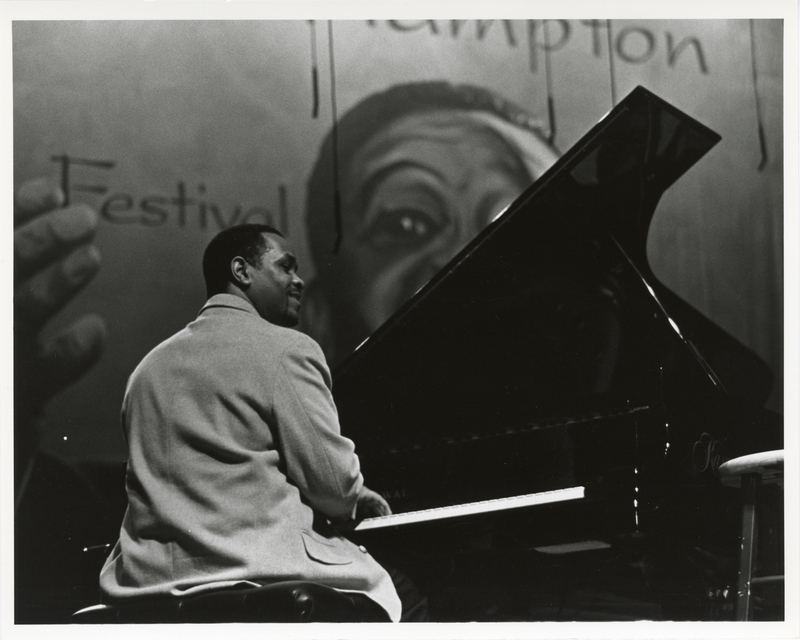
- Lionel Hampton Jazz Festival events were held in the Kibbie Dome for a number of years.
- The Campus Planning History digital collection includes campus plans, including the Kibbie Dome.
- More photos of the Kibbie Dome can be found in the University of Idaho Campus Photographs Collection.
History of the Kibbie Dome
Before the Dome
In the fall of 1975, University of Idaho students and Vandal fans walked into the Kibbie ASUI Activity Center for the first time. The covered stadium was visually striking, with a barrel arch roof spanning 400 feet and cresting 12 stories above the ground.1 The enclosed stadium was a much more comfortable and modern facility than previous visitors had ever enjoyed on the University of Idaho campus.
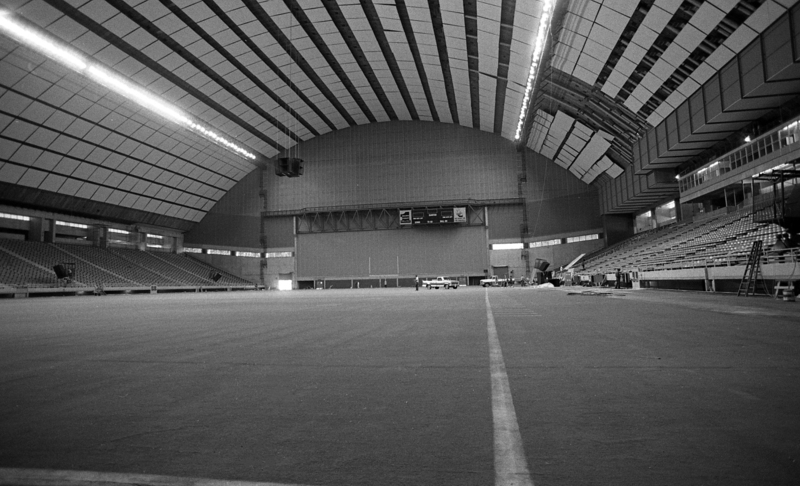
Athletic activities in Moscow date back to 1893, just months after the University of Idaho opened its doors. University football games, track and field events, and other sports brought together athletes and spectators in whatever open spaces were available, both on campus and in the growing town. An open field between the Administration Building and Memorial Gym, named MacLean Field in honor of the university’s third president, James MacLean, was the site of many sports events beginning in the 1920s.
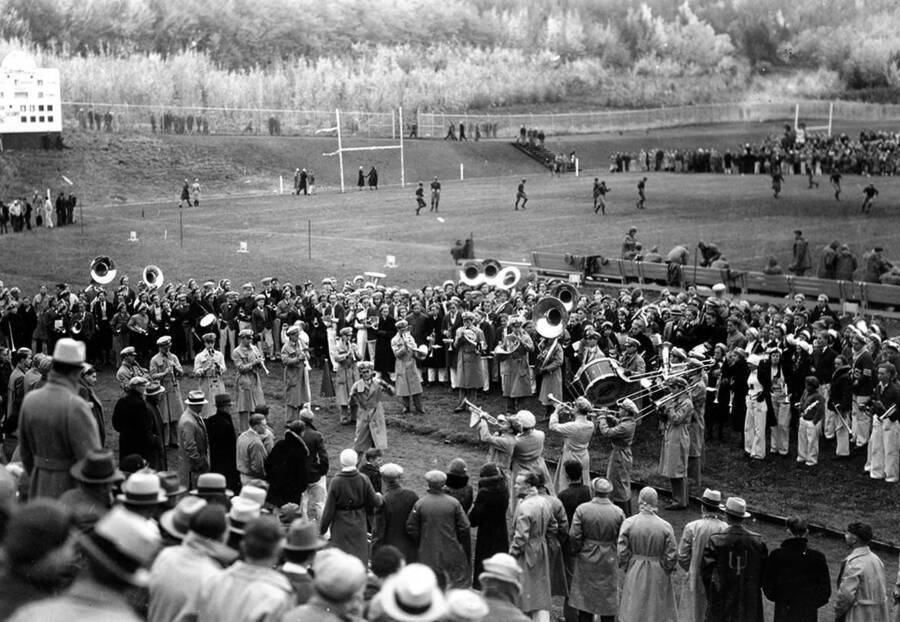
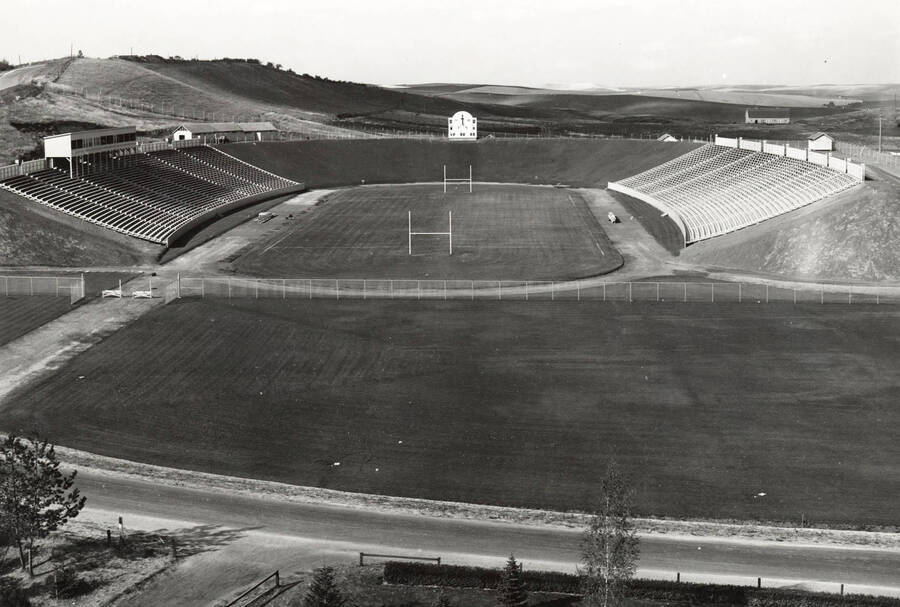
By the mid-1930s, despite hardships imposed by the Great Depression, the university constructed its first stadium. Neale Stadium, named for University President Mervin G. Neale, was completed in time to host the 1937 football season. It was a horseshoe shaped complex that relied on campus topography to create an earthen semi-circular ring around the athletic fields. Wooden benches could accommodate several hundred fans, though the facility still lacked locker rooms or outdoor lighting. For three decades Vandal fans packed the bleachers of Neale Stadium for football games and track and field events. Harsh Palouse winters and general wear and tear took a toll on Neale Stadium over time; after being condemned in August 1969, the stadium burned down due to suspected arson in November 1969.2
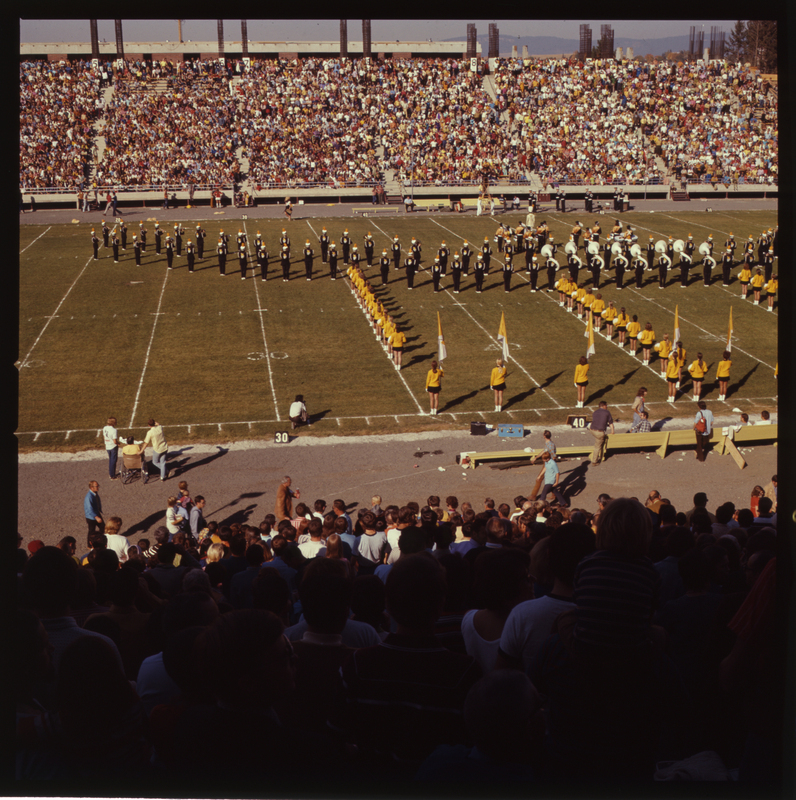
While a new stadium was under construction during the 1969 and 1970 seasons, University of Idaho football home games were played in nearby Pullman, Washington, and other locations. In October 1971, the University of Idaho hosted Idaho State University in the new Idaho Stadium. The new facility, built on the former Neale Stadium site, featured concrete bench seating and enclosed luxury boxes for VIPs and press. Perhaps energized by the investment in their program, the Vandal football team won the Big Sky Conference in 1971 with its best record to date.
Construction of the Kibbie Dome
Original plans envisioned Idaho Stadium as an outdoor venue with a seating capacity of more than 20,000, co-located with a separate indoor arena for basketball and cultural events. When financing for those plans fell through, campus leadership set its sights on a single multipurpose facility that could be constructed on a tight budget.
The university put out a call for bids to construct an enclosed stadium, and a small Idaho-based company was among those that responded. Trus Joist Corporation proposed a design centered on wood micro-lam arches and a steel truss system.3 Following the completion of the building in 1975, the Kibbie Dome received the Structural Achievement Award from the American Society of Civil Engineers.
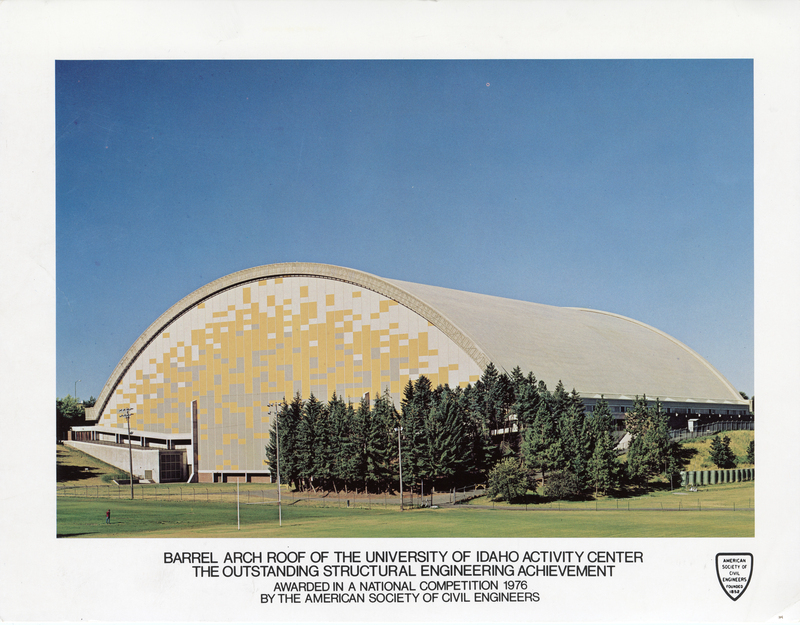
The Kibbie-ASUI Activity Center was named in honor of two critical sources of support for the stadium’s enclosure. William H. Kibbie, who attended the University of Idaho in the 1930s, made a $300,000 gift to kickstart fundraising, and later donated more funds for the renovation of the Kibbie Dome roof.4 Support from the Associated Students of the University of Idaho (ASUI) was also important. Together, students advocated for a multipurpose event space and dedicated significant student fees to the effort. Concern emerged early on that the common nickname “Kibbie Dome” failed to acknowledge student financial support for the building5 (another party objected to its being termed a “dome”, when its shape is, in fact, an arch or vault6).
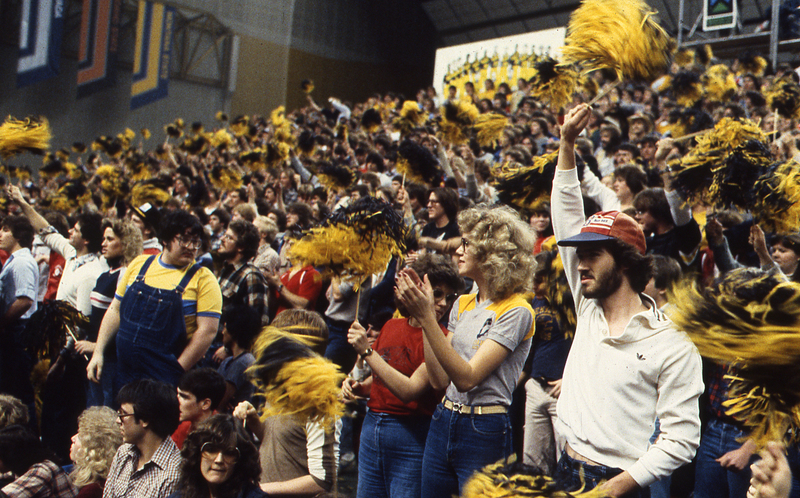
The fully enclosed Kibbie Dome opened in 1975. William H. Kibbie and Governor Cecil Andrus, among others, spoke during the dedication ceremony at halftime of the 1975 Homecoming football game on October 11, 1975.

Partners have continued to invest in the dome’s maintenance and development. Problems with the roof necessitated significant repairs in 1982, the East End Addition was completed in 1982, and life and safety upgrades to the facility were conducted between 2009 and 2011, among other repairs and upgrades over the years. In 2023, local credit union P1FCU pledged support and gained naming rights for the next decade.7
A Home for Athletes…
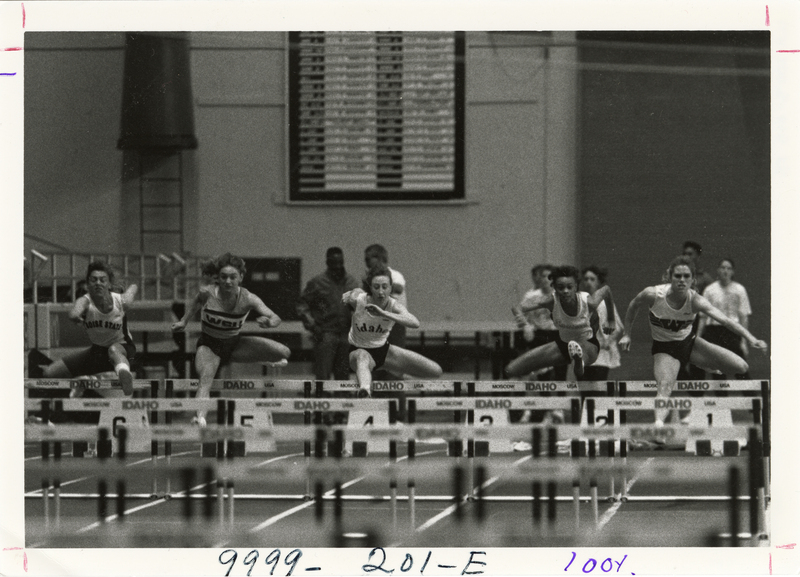
Athletes of all stripes have found a home in the Kibbie Dome. Vandal football, basketball, and track and field competitors may immediately come to mind, but rodeo riders, youth athletes, and Special Olympians are also part of the arena’s history. As a multipurpose activity center, the Kibbie Dome has adapted to accommodate a diversity of athletic events. Spectators, for their part, are always close to the action and protected from whatever weather might come rolling through the Palouse.
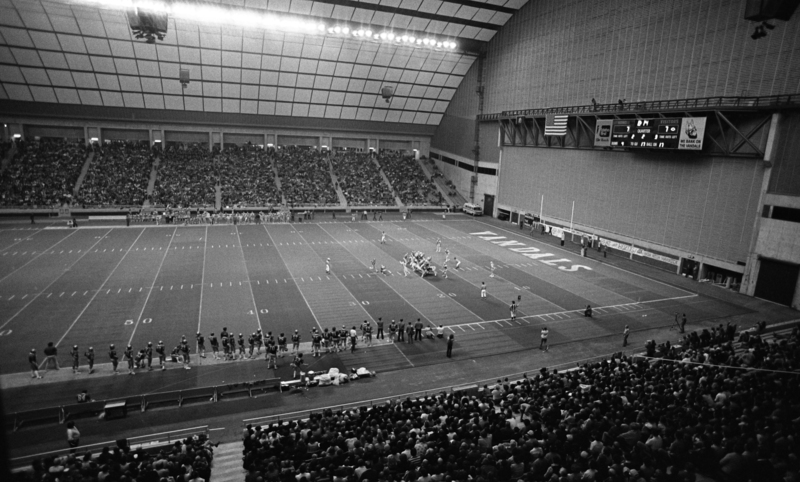
The first football game under the dome, on September 27, 1975, pitted the University of Idaho Vandals against the Idaho State Bengals; the result was a 14-29 loss for the Vandals.8 The next game, on October 11, ended in the Kibbie Dome’s only tie, 31-31 against in-state rivals Boise State University. During halftime, the dome was officially dedicated in a ceremony attended by President Ernest Hartung, benefactor William H. Kibbie, and Governor Cecil Andrus.9 The Vandals’ first win in the dome was the Homecoming game on November 1 against the Montana State Bobcats. Just a few months later, the inaugural basketball game ended in victory for the Vandal men on January 21, 1976. For nearly a decade, basketball in the dome was played on a hard rubber court installed directly on the concrete floor. A second-hand hardwood court purchased in 1984 improved overall conditions for players, though reportedly diminished what was a significant home-court advantage. Basketball players and fans further benefitted from a custom configuration in the form of Cowan Spectrum. News coverage in 2001 described it as a “more intimate setting” than the multi-purpose activity center.10
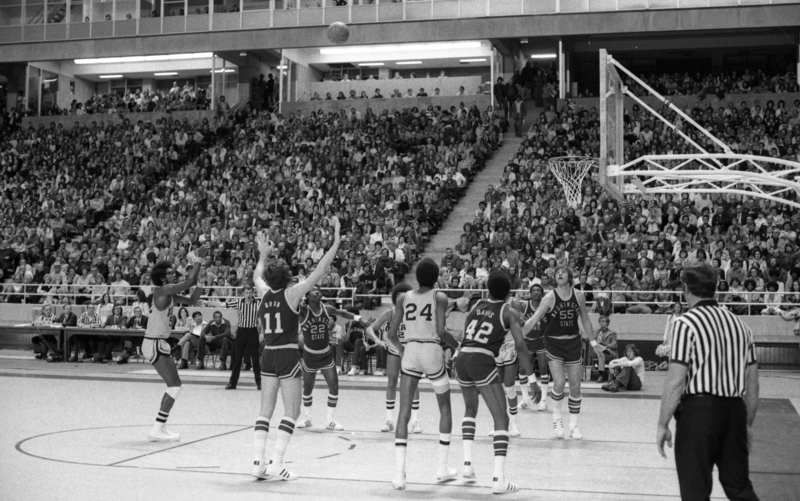
Vandal track and field, along with tennis, also moved into the Kibbie Dome in 1976. In 2017, soccer games moved into the facility. In addition to official collegiate competitions, the fields, courts, and even stairs of the Kibbie Dome have hosted countless hours of practice for U of I’s athletes. Beyond the student body, Idahoans from across the state have broken a sweat under the barrel roof, playing championship high school football games, competing in Special Olympics events, and hitting the indoor track during Relay for Life fundraisers.
…And So Much More
Purpose built as a flexible indoor activity center and the largest event space in the city, the Kibbie Dome has been transformed into a concert venue, a sales floor, a ceremonial stage, a memorial site, a polling location, and much more. When alumni or local residents are asked about their most vivid Kibbie Dome memories, responses run the gamut from seeing Kenny Rogers perform to being enchanted by Lipizzaner Stallions to walking across the stage as a Moscow High School graduate. Countless memories have been made in the Kibbie Dome during its first half-century, and countless more lie ahead.
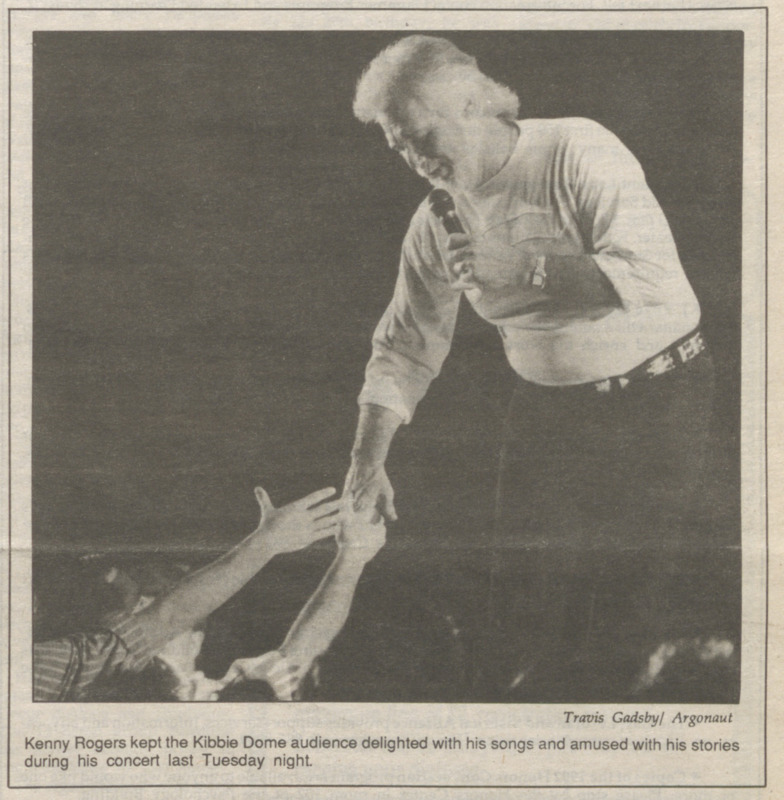
The U of I has long relied on the Kibbie Dome to enrich student life. Chart-topping musical acts offer hardworking students a chance to let their hair down. The world class Lionel Hampton Jazz Festival offers entertainment and education at once. Impressive marching band showcases are as exciting as the games they complement. Events organized by students, such as the Tutxinmepu Powwow, broaden horizons and make space for community. Even as some events have found a new home in the ICCU Arena, which completed planners’ original vision for sports facilities a half-century after ground broke on Idaho Stadium, the Kibbie Dome remains a beloved site of campus life.
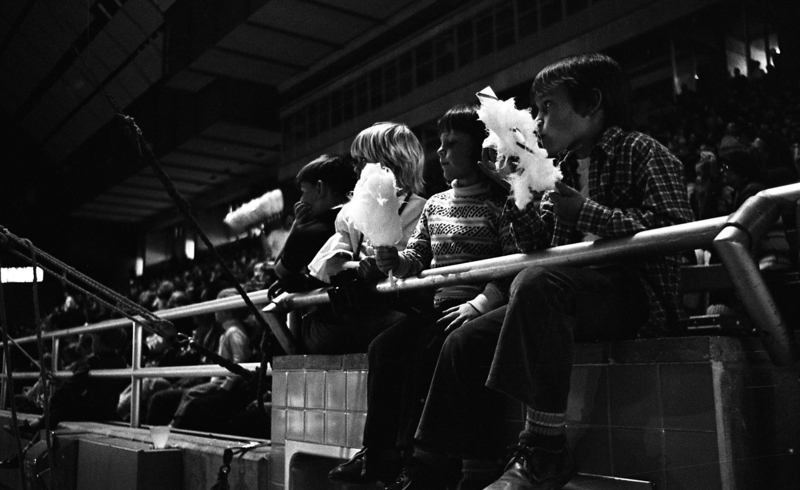
The Kibbie Dome has served an important role in the greater Moscow community. Events organized by private groups, including businesses and local organizations, fill out the Kibbie Dome calendar and bring both fun and meaningful experiences to the Palouse. In 1977, Moscow children and children-at-heart were treated to acrobats, clowns, and exotic animals by an American Continental Circus show. Home and auto shows gave local shoppers an opportunity to peruse carpet samples or inspect the latest RV and motorbike models. For many years, students and residents of western Moscow cast their votes inside the Kibbie Dome, which was an official polling place for Latah County. The Kibbie Dome’s capacity – on the field, in the stands, and along its concourses – in relation to the size of the Moscow community has made it the natural choice as a gathering place for civic activities and entertainment.
Today, the P1FCU Kibbie Dome stands as a testament to the perseverance and ingenuity of the University of Idaho community. It has evolved from a novel experiment in indoor sports architecture to an essential part of the university’s athletic and cultural life. It is a venue that has seen generations of students and alumni come together to celebrate their community, its athletes, and the institution’s achievements.
Sources
-
Kibbie/ASUI Activities Center pamphlet. Kibbie Dome 50th Anniversary Collection, University of Idaho Digital Collections. 1975. https://www.lib.uidaho.edu/digital/kibbiedome/items/kibbiedome268.html ↩
-
“Neale Stadium condemned, WSU field used.” The Idaho Argonaut. September 9, 1969. https://www.lib.uidaho.edu/digital/argonaut/items/arg-1969-09-09.html; “Neale Stadium burns.” The Idaho Argonaut. November 25, 1969. https://www.lib.uidaho.edu/digital/argonaut/items/arg-1969-11-25.html ↩
-
Building the Kibbie Dome (1975). YouTube. https://www.youtube.com/watch?v=BnXltcy54co ↩
-
William H. Kibbie letter to Ernest Hartung re: pledge of money. Kibbie Dome 50th Anniversary Collection, University of Idaho Digital Collections. 1974. https://www.lib.uidaho.edu/digital/kibbiedome/items/kibbiedome261.html ↩
-
ASUI letter to the Argonaut regarding dome name. Kibbie Dome 50th Anniversary Collection, University of Idaho Digital Collections. 1975. https://www.lib.uidaho.edu/digital/kibbiedome/items/kibbiedome205.html ↩
-
Name change proposal. Kibbie Dome 50th Anniversary Collection, University of Idaho Digital Collections. 1981. https://www.lib.uidaho.edu/digital/kibbiedome/items/kibbiedome260.html ↩
-
Richert, Kevin. “What’s in a name – or names – at the U of I?” Idaho Education News. June 21, 2023. https://www.idahoednews.org/kevins-blog/whats-in-a-name-or-names-at-the-u-of-i/. Archived: https://perma.cc/CWZ2-CPKR ↩
-
“Vandals take thrashing from ISU.” The Idaho Argonaut. September 30, 1975. https://www.lib.uidaho.edu/digital/argonaut/items/arg-1975-09-30.html. ↩
-
University of Idaho vs. Boise State University (Football), 10/11/1975. Vandal Video Collection. 1975. https://www.lib.uidaho.edu/digital/vandalvideo/items/vandalvideo45.html ↩
-
Bonagura, Kyle, and Dave Wilson. “An ode to the Kibbie Dome, college football’s weirdest stadium.” ESPN. October 7, 2021. Archived: https://perma.cc/XZ9L-VBDL ↩
Technical Credits - CollectionBuilder
This digital collection is built with CollectionBuilder, an open source framework for creating digital collection and exhibit websites that is developed by faculty librarians at the University of Idaho Library following the Lib-Static methodology.
Using the CollectionBuilder-CSV template and the static website generator Jekyll, this project creates an engaging interface to explore driven by metadata.