
Description: With Bernadine Cornelison (sister). Family's Bovill homesteading. Cooking for firefighters (1910). Governor McConnell's family. Purchase of mansion. Family's pet bear. Backwoods humor. 6-8-76 2 hr 33p
Date: 1976-06-08 Location: Moscow; Bovill; Fortynine Meadows
Subjects: bears; families; farmers; fires; forest fires; holidays; homesteads; horses; livestock; winter; women
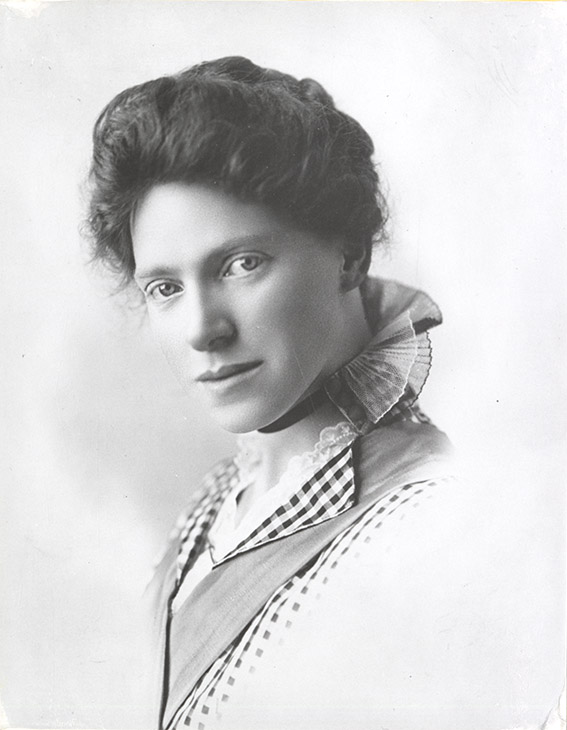
Ione Adair
Born 1883
Occupation: County assessor; teacher; postal clerk; timber homesteader
Residence: Moscow; Bovill; Fortynine Meadows
Topics:
The colored topic bar is hidden for screen reader users. Use the topic buttons below it, the "Filter by Topic" menu or the search box to find specific content in the transcript.
Sam Schrager: This conversation with Ione Adair took place at her home in Moscow on June 8th, 1976. Also taking part is Bernadine Ione Adair or Bernadine Cornelison, the interviewer with Sam Schrager.
Ione Adair or Bernadine Cornelison: I took down the homestead between Bovill and Collins, just about halfway between Bovill and Collins. We started out going out on the homestead when we were in high school. That was always our summer trip. He took us out to the homestead and settled us up, and there we were for the rest of the summer. It was a very nice trip. We always had plenty of company around us and always looked forward to the trip. My two little sisters, Bernadine and Marjorie. See, Marjorie was about right around three years old.
Bernadine was just a little older than that. Mother dressed them in what we'd say are pantsuits nowadays. That's the only way you can say it. Pantsuits nowadays. I stopped to think what would happen if some of the old churchgoers that went to the Methodist church and to the Presbyterian church and the Episcopalian church would step out on their front steps some morning and see these congregations coming down dressed up in pantsuits.
Would that be a surprise to them? It would be, huh?
It certainly would be a surprise to them. My father put us on saddles, stride saddles, as soon as we were large enough to ride a horse. We always had our own horses. We rode divided skirts. Those were just divided skirts, that's all. I remember one time we went out and a man by the name of McPeak from Clarkia run a tax train from Clarkia out into the 49th middle country and back into the grandmother country and all of that part of the country over in towards Avery.
We stopped and had a meal at what was called White Rock Springs. It was a very pretty little place. The white rocks were, I suppose, not the granite.
Well, it was just that white rock that was all through this section of the country. We had one horse that had this idea that when it was given something to eat that he could do just exactly as he pleased. So the first thing he did was to start uphill bucking the pack off just as hard as he could buck. He bucked and he bucked. McPeak started after him but he couldn't catch up with him. The horse was always ahead of him. He finally said, I guess we're going to have to use your skirts this time, gal. So my father took the back part of my divided skirt and McPeak took the front part of the divided skirt and we washed the trail following the horse. My father just would call up with the horse and unloaded my cargo back onto the old horse again. This time he wasn't given anything to eat until he got through. Oh, there were mean things, those horses. Some of them were very, very, very, very, very, very. We had one that was called, let's see, it was an old.
What was the one that you wrote the story about?
Bob. Bob was the story of an Indian pony. McPeak did bucking for the Indians using him just for a pack horse. The Indians had run a race with him just a short time before that and lost. The Indian was so disgusted with the horse that he bobbed his ears and bobbed his tail. Now you know what that would mean to a pack horse. Bobbed his ears and bobbed his tail. And I was unfortunately the one that was chosen to ride the old pack horse out to Clarkia the next day when we came out. And it rained hard. And if you know how rain on a horse's ears could go when you had no ears to work, you can just imagine how the horse's ears would work with that rain trying to keep it out of his ears. It was awful. And his tail was just bobbed right short to his body. So he was an uncomfortable horse. But he did take me up the hill. They absolutely allowed me, did not allow me to walk up the hill. And so I had to stay on my horse regardless of what happened. But Bob took me up.
Sam Schrager: Now why would he go ahead and bob the horse like that anyway? It sounds kind of mean.
Ione Adair or Bernadine Cornelison: The Indians liked the horses. But when a horse betrayed them, when he was betting on them, when they bet and they didn't keep up his end of their line, he got paid for it. He got paid for it. And that was old Bob. He was a strawberry roan and a beautiful animal. Just a beautiful animal. And sure footage, fortunately for me, he was sure footage because it rained that day on the wooden trails over those places. It got very, very slippery.
Sam Schrager: To ride side saddle. To ride side saddle. Did you have much control over a horse when you were riding side saddle?
Ione Adair or Bernadine Cornelison: I didn't do side saddle. We used a stride saddle. Ben said if you're going to ride horses, you're going to ride horses like men ride horses. You're not going to run any chances of any means. And he said if you're going to ride horses with me and go with me, where the place that I go, you're going to ride side saddle. So we all had stride saddle and we all rode divided skirts. And the first people that saw us riding in town thought Daddy was, well, just a little bit off to have his daughters riding around town on a stride saddle. So no one was riding stride saddle. My mother, she had a horse in Kansas and she had a horse when it came west. But she rode side. She was used to the side saddle and she rode the side saddle. But Mother had too many horse duties to take care of on the homestead to do very much riding. We took some little side trips around over the country. But she didn't ride the side saddle. You were the good shot.
Sam Schrager: Was she your mother?
Ione Adair or Bernadine Cornelison: Mother was a good shot. Daddy got her a little single barrel shotgun.
They used to be so many of the wild pheasants up and around in that section of the country. Just the wild birds. And she could pop one of those birds out at any time. Always scatter birds. We'd go off and come in with a string of birds and fish. At that time the fish were coming above Elk River. Elk River was the town that was put in after Mr.
Theo Trumbull's father took up the homestead at Elk River at the homestead and took his family out into that part of the country to live. When they first went out there, there was no fish in the upper portion of the stream. See there are two falls down below. Have you been down below the falls?
Sam Schrager: I've never seen the falls, but I've seen the pictures of them.
Ione Adair or Bernadine Cornelison: The upper falls is much the higher and it has worn out as it goes down. It's worn out a very deep basin underneath where the water gets it. Here about 10 or 12 years ago, there was a couple of youngsters from Lewiston up in that part of the country. One of them decided that he was going to green bathing in that pool. Not realizing there would be an awful suction under there. He was drowned. They rescued the one boy, but the one boy was drowned in the pool. The lower falls was not as high and not as deep. We have pictures over at the house of my sister and Bernadine. Lew and I were standing on the rocks of the lower falls. It's a very good picture of the falls. I have that one somewhere around. I don't know 30 years now, but somewhere around I have a picture of the falls.
Sam Schrager: Do you remember Trumbull's family?
Ione Adair or Bernadine Cornelison: Yes, very well. Very well. Seale Trumbull attended the university here. And Carrie McConnell Bush, the Governor's youngest daughter, and Seale were quite chummy. Mrs. Arnett had asked us all to go out to the cabin with her at breakfast week. Her father owned a bunch of meadows up there and run cattle on the meadows in the summer. She liked to go up and stay on the cabins. She invited my sister and I to go up with her. It was Lewa and Carrie Bush and me. We went up to spend the summer with Carrie. When Mrs. Trumbull found out that we were in that part of the country, she said there's a Fourth of July coming along. And she said I'd like to have the whole bunch come over and spend the weekend with me on the Fourth of July. So we went over and spent the weekend with Trumbull's the Fourth of July. And Mr. Trumbull said we were going to give you a real treat. He said I sent back, and I think Pennsylvania was his home state, and ordered stocking for the Elk River for planting in the creek. And he said they came in this spring and I planted them, and no one has been allowed to fish in there until you girls. And he said I'll fix you up, lions and foals, and you can have your first fish. So we got fishing up with the family up there. And they were the first elk fish from Elk River. He was determined to let us have all we wanted. They were taught, Ruthie. Yes, Theo, I think, graduated from the university here, but I'm not positive of that. Because he had an impediment of speech, and studied quite badly, and went back east to some school for correction. And when he came back then, he went back to university again here, and I think finished from here, from there. But I'd have to have one of the old books. There were no daughters, just Theo, and his father and his mother. And there was an elderly person with them that I don't know just who they were at that time.
Sam Schrager: Did people go to Trumbulls as a resort?
Ione Adair or Bernadine Cornelison: They did in later years, they did. Because Trumbulls had quite large cabins built around. And they used to go there for a great deal in the summertime. It was beautiful woods, and the fishing was wonderful. And you could just catch anything you wanted. If you were hunting, you could have all the birds you wanted if you could get out and find them. We always had plenty of birds. I have a picture of Mr. Owings, and he was coming in with a hunting trip, he and my father. And he had the birds hanging down like this, with his gun and his birds down. And he had 16 or 20 birds on that one string. They always took my mother along when they went hunting, because she was such a good shot. Bernadine wasn't a good shot, but she could bird the shot. She could tree the birds.
He didn't tell you about that the other day, did he?
Sam Schrager: No, I don't think so.
Ione Adair or Bernadine Cornelison: I had this little cabin out on the 49 Meadow country, and Bernadine was spending the summer with me. We started off down to the spring, and for the first time I started off without my revolver around my belt. Mr. Chedsey, who lived with us over here at the house, gave me a 38 special revolver. And he said, now when you go out on the trail, no matter where you go now, you carry this gun strapped around your waist, and you always carry it with one empty cartridge. He said, that way if anything happens, if they're climbing over logs or anything like that, and anything does happen, and your gun goes out of the cartridge, he said you are protected with the one. So I always carry the one extra shot along with me. Well, we started out to the spring that morning, and I forgot to take my gun. I got about half way to the spring, and up went these native pheasants. If you don't know our native pheasants here, you don't know how curious they are. If they get up above, anything disturbs them, they immediately hit for a high spot. And then they'll watch from this high spot for whatever is bothering them down below. And so, my sister says, well, you go back and get the gun and I'll treat the bird. And she watched the bird, and she stood there and made little noises, just enough to keep him busy. I barked at him.
Sam Schrager: You barked at him?
Ione Adair or Bernadine Cornelison: You barked at him. Just enough noise to keep him entertained. Well, I went back to the cabin and got the gun. Well, we had bird that evening for dinner. We liked the bird. And she treated the bird. We've always teased her about it. Well, we were eating. Teasing the bird. I got the bird and I treated it.
Sam Schrager: Were the Bovills there when you first were out in that country? Were the Bovills there when you first were in that country?
Ione Adair or Bernadine Cornelison: Oh, no. They came in much after that.
The Bovills came in quite a bit after it. Some of the old papers had an article, and I might have the article in the basement, but I hadn't gone through that bunch of old stuff. I was trying to go through some of it and discard it and get it sorted out. And Bovills came in when the two girls were about eight and ten years old, I think. Dorothy and Gremlin about eight or ten years old. And Mr. Bovills took it up as a cattle range. He was from England, and taking in this part of the country, he decided that that would make wonderful cattle range for summertime up there. So he brought cattle down from Canada and shipped them in and used them. And they'd only been there a short time until so many people began to come in and build cabins around the town, that is near the town, and to take care of it. They helped it. They soon built up quite a little trade for the homesteaders into that section of the country. Mrs. Bovill was the superintendent, or not the superintendent, but the trustee of the school district up there. And Mr. Frye, the man where I had my rooms at the hotel, was another trustee. And his brother -in -law, Mr. Wallin, that lived down on Willa and Cimitos, you come to Wallin Cimitos before you come to our homestead, and before you come to Collins.
And they had their...
I can back up on that. Clara Ransom Davis was the county superintendent in Latahl County. And when I finished high school, I wanted to teach. That was my idea. It would be a good idea for me to go into teaching. So I went up and talked to her and she said, Well, all I can give you is a permit. She said, I can't give a regular teacher's certificate. I can give you a permit until the next examination comes. And then you'll have to take the examination. And if you make the examination, well then you can have your certificate. But she said, I'll do that for you because you know all these people out there. And she said, I think it would be perfectly alright if we do it that way. So she gave me my first certificate. And I taught when I was out in the spring, as soon as the water went down, so that we could get through the roads up there and then a decent leave.
And Mrs. Muehlville sent word up to me that she was giving a party, a birthday party for her two children. And she'd like very much to have me come down. She said, you just dismiss your school and come down this afternoon and spend the afternoon with us. Well, that sounds like a good idea to me. So I got on my horse and dismissed my school and started off down the road to Bovill. About halfway between Collins and Bovill, I met the county superintendent and a friend of hers coming out to visit my school. I dismissed my school. I had eight youngsters scattered all over outside acres up there. Oh, that was a mess. And she said, but I've driven on this thing. She said, it took me two days to get here. You started off, she had a single horse and buggy and the friend. And they stopped. I think about, well, it's right near where Jerry would be now. It was the old Joe Wells place at that time. And they stopped at the old Joe Wells place and stayed all night and drove in the next day. Well, then she was expecting to start back that evening and get caught up on her way home. So she wouldn't have to take the full day coming on home. So there was nothing for me to do but get a hold of one of my youngsters and corral the rest of them. And we finally got them back into the school enough that we could demonstrate that we could at least teach school. And I had to go, oh, I missed that party. Here I had three of the trustees of the school and all had permission for me to stop, to miss the school and go on down to party.
Sam Schrager: Do you think that Mrs. Ransom was put out to see you coming down to Bovill?
Ione Adair or Bernadine Cornelison: I don't doubt that. I think she was thinking of all the time it took then to make it from Moscow to Derry and to make it from Derry on in until that section of the country. I think she was very much disgusted to think that any teacher would have the audacity to dismiss her school and go off down like that and attend a party, a birthday party. Of course, as a fact, it was one of the trustees of the school that was giving the party and asked me to come down and it gave me permission to come down. So I felt perfectly alright, as far as I was concerned, but she didn't like it.
Sam Schrager: You know, that makes me think, when you went out and the family went out to the homestead, did you ride horseback out there or did you take a hack out there?
Ione Adair or Bernadine Cornelison: Then he had it in a digger. I'm very with the Brinjawntal. He had a farm out here.
It's on the road to the airport when you go down past the Hagedorn place and over across country to the airport. My father's farm was right at the corner. You make a quick turn and start back west again towards the airport. So we always had horses and we had buggies. Being a doctor, he used single horses or he used the double team if he was going any distance at all. We always had horses. I can't remember when they didn't drive or ride. We both ride horseback and we drive horses.
Sam Schrager: Was it a two day trip for you to get there? Was it a two day trip for the family to get there?
Ione Adair or Bernadine Cornelison: No, we usually left here about four o 'clock in the morning. That seemed very early and the roads were very poor so you took your time to it. Our first stop usually was at what's called the Anderson Bridge. Now whether that's the Anderson Bridge still now. I know where that is exactly. It's not too far west of Derry. No. We stopped there and feed the horses and take care of the team. Then back up again after we had our lunch and fed the horses. Usually we would make it on in the next day to Collins. Make it later in the evening to Collins. We always made it in time but once we had a big surprise and went out there. My father had given Frank Wallen that had his homestead and farm down on what was called the Wallen Meadows. That's just up.
You're still going west when you go to Wallen Meadows. Then you turn and go to the northern election for the Collins and the Collins Country.
I have it in my own mind but it's very hard for me to tell you unless you have these old places as we remember them. At any rate, Frank was going out one spring and Dad said to him, Frank said, I want you to take a sack of potatoes out and put it in the cabin for me for my family when they come out. He said, just put it inside the cabin. I think it will be alright. Frank said, well yes, you can put it out there and leave it in the cabin. So he took the potatoes and put them in the cabin. When we went out we began to look around for potatoes. We didn't see anything that looked like potatoes. We didn't know what to think about it. All of a sudden we noticed little bumps along the cracks in the wall.
You remember how these cabins are chinked? You remember how the cabins are chinked in?
Dad had made his mother's especially attractive because she didn't like to be out there anyway. So we had the lining put in, house lining. The whole cabin was lined with this house lining so it made it much lighter. Then we could decorate it as we pleased and fix it up. At any rate, we had the cabin lined. One of us happened to discover that there were bumps in the lining along the wall. We began investigating and we found that the pack rats had packed all the potatoes that we had and carried them in and put them along the chinks in the cabin. We got most of our potatoes back and they were still usable. We had to get them back from the pack rats.
Sam Schrager: When you say house lining, what was it like a cheesecloth?
Ione Adair or Bernadine Cornelison: Well, it was heavier than what they call cheesecloth now. Cheesecloth was quite a bit thinner than this house lining. The house lining was on the unbleached muslin type of material. You could just tack it on and take it in its strips right close to the yard wide. Put it down and tack it down. We did a good job of that when we left to fix it in the winter and fix it all up for the mice, for the rats. We had a good time on that.
Sam Schrager: You said that your mother wasn't so excited about being out there.
Ione Adair or Bernadine Cornelison: Mother, well, if she could help by living out there, and, what do I want?
If she could assist in any way, getting his homestead right applied on that, she was willing to take the children and live out there during the summer months. She didn't enjoy it. She did the very best she could, kept us out there, and took care of us. Saw that we always had plenty to eat and were comfortable. The cabin had an upstairs, it had a loft that was high enough that when you were in the cabin that you could send without bumping into the ceiling. We had two beds upstairs. We always had some company for mother, some friend of hers that would be with her during the summertime. She would stay with mother in the upstairs apartment in the loft. We had two beds, or three beds upstairs. Then as the family increased and more friends came in, Dad had a barn built just across the road from the cabin. He had this barn built in through there and had this meadow grass, that bear grass.
Do you know bear grass?
Sam Schrager: Yes.
Ione Adair or Bernadine Cornelison: Do you know how good a mattress a bear grass mattress is?
Well, we'd make bear grass mattresses getting it down on the meadows and around the edge of the mountains. And make mattresses and sew up gunny sacks and make a good big mattress out of it. Pine balls. Pine balls. Oh yes. Pine balls to put them underneath it to make it springy. And the pine balls are there.
Unknown Speaker: Would you like to rest a minute? Have a cup of tea? Me?
Ione Adair or Bernadine Cornelison: No, I'm not. We could maybe a little later. So, did...
Unknown Speaker: You wanted to hear something about the 1910 fire, didn't you?
Ione Adair or Bernadine Cornelison: Oh, yes.
Unknown Speaker: Yes?
Ione Adair or Bernadine Cornelison: That's very interesting. Get her out now.
Oh, she suggested that I ask you about the 1910 fire.
Oh. I have to go back so far. Okay.
In 1910, the fires were all through. You find in the papers, all the papers are referring back to the year that the fires of 1910. All through this section of the country. And they... Long in August, you find articles in most of the papers referring you back to these. Well, Mrs. Durham had a homestead. And I had a homestead about two miles and a half or three miles the other side of her place. And Mrs. Taylor wanted me to come over and spend a week with her. We used to change around so as to give company to different homesteaders there, isn't there?
So I went over to stay with Mrs. Taylor. And during the daytime, it was quite cloudy, hazy. And of course, we never had been in the woods and never had been near the fire. Had no idea really what to expect in that section of the country. And we didn't know the reports they were getting from out here. That there was no trails going in, they were open. That you could get in to where these homesteaders were or anything like that. And my father got quite excited and he went as far as Clarkia. And tried to get someone from Clarkia to take him out to the homestead to see if we were alright on the homestead. They wouldn't allow him to go on in. The Rangers wouldn't allow him to go on in. So he said he just has to wait and we'd get word from there. Well, I got up one morning and it was quite hazy. Usually in the mornings, we'd clear off a little while and then that haze would drop in again. So that began to worry us about that time. And I got up one morning and saw a deer out across the edge of the meadow. And I never thought I wanted to hear the deers, more than I know. But anyway, I fired at the deer. But my aim was anything but good and old Betsy wouldn't help me out on that either. When my arm was going this way and this way and this way and this way. And Mr. Deer went running off the other way and I didn't have a deer. Well, just shortly after that Mrs. Taylor got up and she said, you know, I don't like this haze. I think we ought to go back over to the other homesteaders and see what they think about this hazy condition they were having. Well, before we got things packed around and in a cabin to go, there was a knock at the front door of the cabin. And Mrs. Taylor threw a robe around her and went to the door. And here was the head ranger, the forest ranger for that section of the country. And he wanted to know if there was any trails going any farther east than where we were. And we said the only trail we know of is one that goes about a mile and a half east. This is Taylor's cabin. And we had been worried about this hazy condition. And they had gone over where the cabins were clearer and out from under the timber more. And they had gone over to stay at what was the Kip Calkins cabin. We decided to stay over there until we could make up our minds whether to go back over to the other homesteaders or not to go over. So there they were, the ranger and everything. And he said, we have a crew of fourteen men out here and they haven't had breakfast yet. And he said, if we go on over to your cabin, to Mrs. Taylor's cabin, and get a fire started, will you get something for these men to eat while we pack on into the fire?
So we said we would. And they said they would take anything that we needed from there. And they had supposed to have had a cook along with the camp, but they lost him somewhere on the way. And they thought he would catch up in a day or so. And if we just take over, they would see that it was taken care of, that the government paid for it. And so forth. So we went over with them. And that was our first experience with the fire. The first thing we did with the fire is going with the pack horses and going with these men, and packing across the river, and getting a campfire set up, and cooking potatoes for fourteen men. Do you have any idea how many potatoes men eat?
You made the bread too.
They eat an awful lot of potatoes. She still doesn't like potatoes. We had them. They give me a bucket, and I take it down to the creek and scrub these potatoes, and bring them up and hang them over the hooks on the fireplace, and boil the potatoes. Sometimes they would use just boiled potatoes with bacon and gravy.
Anything that you could get. A can of tomatoes is always good out that way. And men like tomatoes very much. Especially if you can get a Vanek. Or a...
Do you know what a Vanek is?
I don't think so. Well, a Vanek is a... These old timers, and the old campers, always had their flowers set. So that when you opened it up, inside of this would be a soft mass of dough, and they would use the sourdough for starting it. Using the sourdough for starting it, and then they put it into this flour, and then mix it up. And that would be the raising for your Vanek, or your bread, or whatever you used. Sometimes you would fry it flat in a big fry pan, and brown it on both sides, and cook it until it was thoroughly done through. And then you could use it with gravy, or with tomatoes, or use it with tomatoes, or anything else that you could think of that you could get someone to eat, if they were hungry. If they were hungry.
Sam Schrager: Well, did this crew make this cabin their headquarters for fighting the fire?
Ione Adair or Bernadine Cornelison: No.
Sam Schrager: Or was this just on their way through?
Ione Adair or Bernadine Cornelison: We went from our place to Mrs. Taylor's place. That was her cabin. And they said they had to break trail and go on about three miles farther. They thought that they were detecting the beginning of the fire there, and they wanted to know if we would go over with them, if they gave us transportation and all. So we went with them, and, what did I say, we slept that night. Well, hardly that, because they liked to go up and stay on the cabins, and she'd invite my sister and I to go up with her, as Lula and Carrie Bush and me. And we went up to spend the summer with Carrie. And when Mrs. Trumbull found out that we were on that part of the country, she said there's a Fourth of July coming along, and she said I'd like to have the whole bunch come over and spend the weekend with me on the Fourth of July. So we went over and spent the weekend with Trumbulls, the Fourth of July, and Mr. Trumbulls said we were going to give you a real treat. He said, I sit back, and I think Pennsylvania was his home state, and ordered stocking for the Elk River for planting in the creek. And he said they came in this spring, and I planted them, and no one has been allowed to fish in there until you girls. And he said, I'll fix you up, lions and foals, and you can have your first fish. So we got fishing up with the family up there, and there was the first Elk fish from Elk River. He determined to let us have all we wanted. They were taught everything. Yes, Phil, I think, graduated from the university here, but I'm not positive of that, because he had an impediment of speech, and studied quite badly, and went back east to some school for correction, and when he came back then, he went back to university again here, and I think finished from here, from there. But I'd have to have one of the old books. There were no daughters, just Phil, and his father and his mother, and there was an elderly person with them that I don't know just who they were at that time.
Sam Schrager: Did people go to Trumbulls as a resort? Did people go to Trumbulls as a kind of resort?
Ione Adair or Bernadine Cornelison: They did in later years, they did, because the Trumbulls had quite large cabins built around, and they used to go there a great deal for their... in the summertime. It was beautiful woods, and the fishing was wonderful, and you could just catch anything you wanted, and if you were hunting, you could have all the birds you wanted, and you could get out and find them. We always had plenty of birds. I have a fact, a picture of Mr. Owings, and he was coming in with a hunting trip, he and my father, and he had the birds hanging down like this, with his gun and his birds down, and he I think had 16 or 20 birds on that one string. They always took my mother along when they went hunting, because she was such a good shot. Bernadine wasn't a good shot, but she could bird shot, she could tree the birds. He didn't tell you about that the other day, did he
Sam Schrager: No, I don't think so.
Ione Adair or Bernadine Cornelison: No, what is... And I had this little cabin out on the... on the 49 Meadow Country, and Bernadine was spending the summer with me, and we started off down to the spring, and for the first time I started off without my revolver around my belt. Mr. Censy, that lived with us over here at the house, gave me a 38 special revolver, and he said, Now, when you go out on the trail, no matter where you go now, you carry this gun strapped around your waist, and you always carry it with one empty cartridge.
He said, that way if anything happens, if they're climbing over logs or anything like that, and anything does happen, and your gun goes out of the cartridge, he said you are protected with the one... with the one... So I always carry the one extra shot along with me. Well, we started out to the spring that morning, and I forgot to take my gun, and got about halfway to the spring, and up on these native pheasants. If you don't know our native pheasants here, you don't know how curious they are. If they get up above, anything disturbs them, they immediately hit for a high spot, and then they'll watch for this high spot, for whatever is bothering them down below. And so, my sister says, Well, you go back and get the gun and I'll treat the bird. And she watched the bird, and she stood there and made little noises, just enough to keep him busy. I barked at him.
Sam Schrager: You barked at him?
Ione Adair or Bernadine Cornelison: Barked at him, just enough noise to keep him entertained, while I went back to the cabin and got the gun. Well, we had bird that evening for dinner. We liked the bird, and she treated the bird. We've always teased her about it. Well, we were eating, that's over. Teasing the bird. I got the bird and I treated it.
Sam Schrager: Were the Bovills there when you first were out in that country? Were the Bovills there when you first were in that country?
Ione Adair or Bernadine Cornelison: Oh no, they came in much after that.
The Bovills came in quite a bit after it. Some of the old papers had an article, and I might have the article in the basement, but I hadn't gone through that bunch of old stuff. I was trying to go through some of it, discard it and get it sorted out. And the Bovills came in when the two girls were about eight and ten years old, I think. Dorothy and Gwenlyn about eight or ten years old. And Mr. Bovill took it up as a cattle range. He was from England, and taking in this part of the country, he decided that that would make a wonderful cattle range for summertime up there. So he brought cattle down from Canada and shipped them in and used them. And they'd only been there a short time until so many people began to come in and build cabins around the town, that is near the town, and to take care of it. They helped it, but they soon built up quite a little trade for the homesteaders into that section of the country. Mrs. Bovill was the superintendent, or not the superintendent, but the trustee of the school district up there. And Mr. Frye, the man where I had my rooms at the hotel,
was another trustee. And his brother -in -law, Mr. Wallin, that lived down on Willins Meadows, you come to Wallins Meadows before you come to our homestead, or before you come to Collins.
And they had their... I'll back up on that. Clara Ransom Davis was the county superintendent in Latah County. And when I finished high school, I wanted to I wanted to teach. That was my idea. That would be a good idea for me to go into teaching. And so I went up and talked to her and she said, well, all I can give you is a permit. She said, I can't give a regular teacher's certificate. I can give you a permit until the next examination comes. And then you'll have to take the examination. And if you make the examination, well then you can have your certificate. But she said, I'll do that for you, because you know all these people out there. And she said, I think it would be perfectly alright if we do it that way. So she gave me my first certificate. And I taught well off in the spring, as soon as the water went down so that we could get through the roads up there in any decent speed.
And Mrs. Mowell sent word up to me that she was giving a party, a birthday party for her two children. And she'd like very much to have me come down. She said, you just dismiss your school and come down this afternoon and spend the afternoon with us. Well that sounds like a good idea to me. So I got on my horse and dismissed my school and started off down the road to Bovill. About halfway between Collins and Bovill, I met the county superintendent and a friend of hers coming up to visit my school. I dismissed my school. I had eight youngsters scattered all over the outside acres up there. Oh, that was a mess. And she said, but I've driven on this thing. She said, it took me two days to get here. You started off, she had a single horse and buggy and the friend. And they stopped and I think about it. Well, it's right near where Derry would be now. It was the old Joe Wells place at that time. And they stopped at the old Joe Wells place and stayed all night and drove in the next day. Well then she was expecting to start back that evening and get caught up on her way home so she wouldn't have to take the full day coming on home. So there's nothing for me to do but get a hold of one of my youngsters and corral the rest of them. And we finally got them back into the school enough that we could demonstrate that we could at least teach school. When I had to go, oh, I missed that party. Here I had three of the trustees of the school and all had permission for me to stop. To miss the school and go on down to party.
Do you think she, do you think that Mrs.
Sam Schrager: Ransom was put out to see you coming down to Bovill?
Ione Adair or Bernadine Cornelison: I don't doubt that. I think she was thinking of all the time it took them to make it from Moscow to Derry and to make it from Derry on in until that section of the country. I think she was very much disgusted to think that any teacher would have the audacity to dismiss her school and go off down like that and attend a party, a birthday party. Of course, as a fact, it was one of the trustees of the school that was giving the party and had asked me to come down and it gave me permission to come down. So I felt perfectly alright, as far as I was concerned, but she didn't like it.
Sam Schrager: You know, that makes me think, when you went out and the family went out to the homestead, did you ride a horseback out there or did you take a hack out there?
Ione Adair or Bernadine Cornelison: I had it... It's very with a French on top. He had a farm out here. I'll locate it for you. It's on the road to the airport when you go down and you go down past the Hagedorn place and over across country to the airport. And my father's homestead, or not homestead, but farm, was right at the corner. You make a quick turn and start back west again towards the airport. So we always had horses and we had buggies. And being a doctor, he used single horses or he used the double team if he was going any distance at all. And we always had horses. I can't remember when they didn't drive or ride. We both ride horseback and we drive horses.
Sam Schrager: Was it a two -day trip for you to get there? Was it a two -day trip for the family to get there?
Ione Adair or Bernadine Cornelison: No, we usually left here about four o 'clock in the morning. And that seemed very early. And the roads were very poor, so you took your time to it. Our first stop usually was at what's called the Anderson Bridge. Now whether that's the Anderson Bridge still now... I know where that is exactly. It's not too far west of Derry. No. But we stopped there and feed the horses and take care of the team. And then back up again after we'd had our lunch and fed the horses. And usually we'd make it on in the next day to Collins. We'd make it later in the evening to Collins. We always made it in time, but once we had a big surprise and went out there. My father had given Frank Wallin that had his homestead and farm down on what was called the Wallin Meadows. That's just up... The flowers went down to Tafey's uncle. We would go down to Avery and see what information we could get. Or if we'd be able to get any information out to our parents from there. So we walked, it was 28 miles from the Mr. Flowers homestead into Avery. And we walked this 28 miles and we got down to the bridge at Avery which crosses the St. Joe River. And just as we were starting across the bridge here, Mr. Flowers was stopped by a... Well I suppose it was an official... It was officially stopped because he was in a uniform. And he said, you can't go into Avery. And we spoke up and he said, well we can't go back where we come from.
And he said, what are you going to do?
He said, I wasn't sure about that, but he said, we'll go over here and see what information we can get. What we can do for you.
So we went across with them and there was a big smiley man came up and he said, where are you in from?
And I said, we're in from the 49 Middle Country. Huh.
He said, I know you. He said, my mother has been sending pieces for building and making quilts to you all winter long. And she said, we drop it off here at Avery and you get it. And she said, you make quilt pieces out of it. And I said, yes, that's what we've been doing. I said, we've been getting quilt pieces. And I said, you must be Ben Albert. And he said, I am. And he said, alright, I think we can do you pretty well. And he said, we'll put you up on top of this caboose here. On the top of the back of the train and the caboose at the end of the train. And he said, we'll put you on the back of this caboose. And he said, from the looks of you, I think you'd like a nice bowl of hot water and some soap. So we said, we sure would. So he put us up on the top of these caboose things. And we crawled up on there and he said, now there's nobody coming in through here but me. He said, you don't need to worry. And he said, just go right ahead. So we got a good bath. A good sponge bath and good clean clothes on that night. And he said, the next day we're going to go down towards Tico. And he said, there's one bridge down below here. And by the time we get to this bridge, they may have it built across so that you can get across. Otherwise we'll just have to take you across the best way we can. And he said, we'll put you on the train that goes into Tico. And it's in there. So after we had our bath, he took us down to another place where the arello men all ate. And they gave us a good meal. And he told us that we could stay on the caboose that night. And Mr. Flower would stay and his uncle would stay on the caboose with us. So that we would feel more comfortable. And he said, you'll stay all night and tomorrow morning we'll try and make it across this bridge and down into Tico. So the next morning we got up and after hotcakes with the railroaders, we went on down and walked across what was left of this old bridge. It was the, some of the, oh.
Sam Schrager: Timbers?
Ione Adair or Bernadine Cornelison: The timbers were still there that you could step from one to the other and make it across. At any rate, we made it across and got on the train that took us down to Tico. So we got into Tico and we asked about what time the railroad started from Moscow. And he said, well, I'm sorry but you just watched the train starting to Moscow start to Moscow and you said you missed it. I said nobody told us that we had to be on the lookout for that. No, he said, unless someone had knew that you were coming, they could have made that.
Sam Schrager: But anyway, we went in to talk to the man at the people there and he said, aren't you the two girls from Moscow?
Ione Adair or Bernadine Cornelison: We said yes. And they said, well, you don't need any money. He said, all you have to do is to get on. He said the train will take you down there. You don't need any money. He said, we'll vouch for you. So we made it on to Moscow then and we came up Third Street here, walking up with high boots, hot nailed boots on. They didn't rattle on the sidewalks when you come up. We made it up home. And Myrtle was very much worried about her mother because her mother was still back up at the cabin. So we had to, Myrtle stayed with me then until her mother got down into this part of the country. They finally got everyone all sorted out and put in.
Did you tell him that Avery was under martial law and they had to switch you up and down the track during the night because the fire would keep chasing you? Did you tell him that Avery was under martial law?
Avery was under martial law and they had switched the train and moved on between the fires.
Sam Schrager: Really?
Ione Adair or Bernadine Cornelison: Yes, it was under martial law. They had taken all the women and children out of Avery at that time. That was a division point.
And they took all the women and children off and just left a few men there as the guards. So that's the reason that Ben Albert was very particular where he put us. He gave us a choice, sleeping in the caboose. Yes.
And it was exciting not knowing where you were going and what you were going to do. We had a comb and when we left the Meadows that morning to walk down to Avery, the only thing we had to put our clothing in was a little salt sack.
You know little salt sacks like you used to get little sacks of salt?
So I put a brush and a comb and a pair of clean stockings and a handkerchief and a bandana in my sack and Myrtle fixtures up equally good. So we had clean clothes stockings to put on that evening and all but we did get a chance to get cleaned up and it sure felt good after walking those 28 miles on those dusty trails.
You must have felt like a different person when you got to Moscow with everything you had seen and done. So did the family.
Sam Schrager: The family did too? What do you mean?
Ione Adair or Bernadine Cornelison: Oh we were rejoicing so because we had no news and people were telling the men to burn to death.
Sam Schrager: During the summer when the family was out at the homestead, your father would stay in Moscow and keep practicing?
Ione Adair or Bernadine Cornelison: He came out every weekend or tried to come out every weekend and spend, he'd drive out Saturday afternoons and come back Sunday morning or early Monday morning. He'd usually spend a couple of days out there with us so that Mother had company and she could enjoy Dad's company and go hunting with him and all. He liked it very much. That's when we had the bear that I told you the other day that the bear got away.
What was I telling you about the bear?
Sam Schrager: You told me about the bear in Moscow. Is that when he got away?
Ione Adair or Bernadine Cornelison: Dad had him out in the backyard over at the big place. Had him anchored out there to a tree and he got away some way. Dad came home at noon to feed the bear and found him on the top of the Mother's dining room table looking at a glass that was on the top of the table. My father yelled at him, he said, get off of that. He got but he slid across the top of the table. He did leave nasty spots. He started out and then he went up the stairs in that big dining room or the big stairways over there. He went up the stairs and Dad after him, trying to catch him, and the bear could go upstairs faster than Dad could. He said don't ever let anybody tell you where the bear went. He went upstairs. Dad and Dad could go downstairs. They could go fast either way. But anyway, he got him down and got him tied up again. The next day he came back and here was the bear loose again. This time he got loose and went to that maple tree which is just south of the bay windows here on the front parlor. What we call the front parlor. He went out there and the bear had decided to climb that tree. He got up the tree alright but then he got caught up from the top. He got his chain caught around these little limbs and things and they couldn't get loose. Dad couldn't get up to get him. So Dad said there's only one way that I know to get a bear out of a tree. That's to call the fire department. He called the fire department and told them he had a bear up the tree up there. Wanted to know if they had any good climbers that could come and get him. And for long the whole Camus environment were up. And they made a big to do about getting this bear out of the tree and so forth. They had pictures of the bear at the time. After all these years I don't know if I could still find them or not.
Sam Schrager: The bear, where had he come from again? The bear? The bear?
Ione Adair or Bernadine Cornelison: Mr. Birch, a friend of Dad's, was a hunter. He was hunting on Moscow Mountain out here. He found the den with the mother bear and this little bear in it. The bear was small enough that when he put it in his coat pocket, he had a big overcoat pocket. He just chugged it down in that overcoat pocket. He brought the mother and the bear boat down together. He put the bear, as I understood it, went to a butcher shop. The little bear came to my father because they thought Dad would like to have that little bear. So Dad liked to have the little bear but as the bear grew older he began to show vicious streaks. We were afraid that he might attack my sister. The little one played with him so much and Dad was afraid he might injure in some way. So he wanted to send her, get rid of him.
Pink Griffith was the head of the athletic department in Moscow up here at the university. He wrote back to John Middleton who took his place at the university when Mr. Griffin went east. He told him that he would like to get a bear for a mascot for the Iowa University. Dad said, well I have a bear you can have. So Middleton and some friends of his tracked the bear and put him in a cage so they could ship him. They shipped him back to the University of Iowa. They had him there for three or four years. They said that he finally began to show the real bear trait in wrestling with these athletes. He decided that he was still a bear.
So they finally got to the age where they said they had to get rid of him. So they had him just stuffed and he is in the museum at the Iowa University. To the best of our knowledge that was the report that came out from there anyway.
Sam Schrager: You mentioned, I think, there was one time that a friend was visiting, was that from Spokane? That he had a little run in with the bear?
Ione Adair or Bernadine Cornelison: Yes, I did. I was telling you that the other day, I think, when you were in. My sister's beau came down to visit one day from Spokane. He liked the bear and he was having a pretty good tussle with the bear, knowing what to expect. The first thing he knew, he had stripped his plant leg from one end down to the other and just flipped it clear down. When my father was a much larger man than O .E. and Ben hustled around and we found a pair of trousers he thought he could keep him in until they could get him down to Mr. Yangles. And see if he could get the trousers attached so that he could go home that night. That's what they did. I mentioned Mr. Yangles. Mr. Chet Yangles was the son of Mr. Yangles, the tailor here. And he was the one that fixed the trousers for O .E. so that he could get back the little can on it. And that was Chet Yangles' father.
Sam Schrager: Did you girls play with that bear regularly?
Ione Adair or Bernadine Cornelison: He was quite playful and you could play with him.
Yes, he loved water and we had the hydrants that came about in the yard. He'd stand there, he had a key, he'd spray himself and then if he went to turn off the water he'd put his paw on it and just bridge his heart. He knew exactly how to do it too.
What were some questions you wanted to ask her?
Sam Schrager: Well, you know, one thing I was going to ask you to tell me about was how your father came to buy the mansion.
Ione Adair or Bernadine Cornelison: The mansion?
Sam Schrager: Yes, how he happened to buy that. You mentioned to me something about that before.
Ione Adair or Bernadine Cornelison: Mother would enforce peace. Well, my father was in the bank when they went down to the First National Bank and he was well acquainted with the cashier at the First National Bank. The cashier said to him, Dr. Hogg would you like to have a big house?
Dad said I'd like to have a big house. He said my wife's been wanting one but the little cottage we're in is much too small for the family. We were living up on 3rd Street at that time and he said I would like to have a larger one. But he said I can't afford to make a change. And there was a man standing right near him and he said, Doctor, don't you have a homestead up near Bow Bell?
Dad said yes, I took up a homestead up there when this homestead act went through and he said we've been spending our summers out there, every summer since then. And Mr. Pearson said, Align Mr. Pearson from the Madison Lumber Company. That was the beginning of the Potlatch Lumber Company in this part of the country.
Mr. Pearson said, I'll go out and look at your place and he said if there's anything I think we could use, I'll go out and look at your place. He said, would you like to sell it?
My father said yes, I would. He said, well I'll buy it for you on one condition. If you get a larger house, will you let me have a room?
I'm so tired of living in hotels. I'd just like to have a room and a home. Dad said, I think my mother could take care of that alright. So he had plenty of room up there. So that's the way it was. Mr. Pearson gave Dad the offer for the property and Dad took up the offer with Madison Lumber Company. They paid for the timber on the claim and they had a, what was it, one of the requisitions was that as long as my father or the family wished to spend the summers on the homestead, they said that they had the privilege of living on the homestead for the summer, using it for a recreation home. So that's why we kept it after it was proved up on and after it was sold and we still had the property. And Mr. Pearson came to live.
And it was, we always went out and spent our summers there. That's the way Daddy bought the house. That's the way Dad got the big house because Mr. Pearson said he was tired of living in hotels. He wanted to get out of hotels. And if he would buy the property, would Dad be able to take care of this property and make the exchange?
And Dad said yes, I can do it that way. So they did. We have the picture of the banker down here paying, the real paying, and his wife and his two children. They spent a week with us out there on the homestead. Mrs. McConnell stayed out, there was some too. The lady got her picture.
Sam Schrager: Stayed out with your mother?
Ione Adair or Bernadine Cornelison: She was very good. And at the time when they were getting things ready for the museum, she should tell you this. Tell them how you happen to have Mrs. McConnell's picture.
They wanted a picture of Mrs. McConnell. Oh.
Unknown Speaker: Are you getting tired?
Ione Adair or Bernadine Cornelison: Mrs. McConnell was camera shot I guess because one of her family had a picture of her. And we had this little Kodak picture that we took out of the homestead. And she was very dressy. Even out there in the woods she wore a ... around her neck. Very much so. And I also, I think I have a picture of her, so she looked around and there was this picture of Mrs. McConnell and Mother and my little sister. So they took that to Mr. What's his name?
Sam Schrager: Ott
Ione Adair or Bernadine Cornelison: They took out Mrs. McConnell's picture and made a very nice picture. He used a little picture. It was so tiny.
Sam Schrager: That we had, wasn't that queer?
Ione Adair or Bernadine Cornelison: None of the McConnell's had a picture of their mother. None of their had a picture of their mother that they could use. They were trying to get a picture of all the ladies, the governor's wives, back in the older generation going back. And they were trying to get them. And they came around and asked if I didn't have one. Don't you have anything?
And I finally happened to think of this old one, an old album that I had. Just a little Quebec album. Just to paste your pictures in. And this one that showed Marjorie as a small youngster and Mother standing beside Mrs. McConnell. And Mrs. McConnell standing between the two. Which was a very fine picture of her. So we got the picture from Mrs. McConnell.
Sam Schrager: What kind of a person was she?
Ione Adair or Bernadine Cornelison: Mrs. McConnell. Mrs. McConnell. As you remember her.
Sam Schrager: What was she like?
Ione Adair or Bernadine Cornelison: She was a timid, shy person. She just didn't like political life. And when Mr. McConnell went down as the governor, she didn't want to go. She had her home here and she wanted to stay in Moscow. She had her friends here. She didn't want to go to Boise. And she was not politically minded. But she was a shy woman.
Just timid. And none of the children ever were.
None of the children were ever.
Sam Schrager: Which of the daughters went down and acted as the hostess for him when he was governor?
Ione Adair or Bernadine Cornelison: Yes, she went down.
Mamie went down and was a hostess for Mrs. McConnell when he was in Boise. And she did the honors there and Mrs. McConnell took care of the home here. She met Senator Borah there. That's the name of America. And she meant that Senator Borah was while she was working with her father in Boise.
He had three sons, two sons. Young Ben.
And he was...
They were the cuties, the youngsters. The cuties.
Young Ben went back east and whenever Ben went anywhere, young Bill went with him. Ben was a large man and a fine looking man. And Ben and Will was a small man. And just, well you never take them to brothers at all. Ben wanted to go back to the medical school. And so they put him in a school back east, a medical school. And he graduated from a large school there. I think it was Rush, but I'm not sure. At any rate, Ben graduated. And when Bill came west, after having been back with his brother in the east, he decided that he was going into mining instead of becoming a doctor. So he went in and investigated the mines and did all he could trying to make up his mind one way or the other. And then the older one, when he came west, decided to come to Montana and join the...
He never practiced medicine. Well, he decided when he came west, he started west, and he came as far as Montana and decided that he liked the woods and all better than he did the idea of being a doctor. So he went into the forestry work. And Ben was on a horse. Let's see if I can get that straight. Ben was on the horse. And started off on some side trip of some kind. And the horse slipped and fell through Ben and caught his leg in under the horse. So that he wasn't able to get out or help himself. And he tried to get up and make it into the saddle, but he couldn't make it. So what he did was turn the horse loose and let the horse go back if he would make its own way back. So he did. And Ben lay out there for two days. I think it was over two days in that drizzling rain. And as a result of that...
Tuberculosis. Yes, he took tuberculosis. And he was... At that time they were living just back in the Methodist Church. There is an addition to the Methodist Church that has been built on since then. Just back in it. Between that and the...
Between those two places. A man by the name of Griffin. Griffin, an attorney here in Moscow. He had a couple of sisters that wanted to come west and live within that year. So he built this house just back of the Methodist Church. And the two sisters came and lived with him. And when they went back east then, he rented the house. And the McConnells were the first people to live in the house. And then they moved the house up on the corner of Polk and Jackson.
Van Buren. It's the next street up. Van Buren. And they moved the house up on the top of the... up on the hill farther. And McConnell still lived in that when they... When Mrs. Bush and Mr. Bush were married. And they moved then up on the... Up on the Buren's place at... Up on B Street.
Sam Schrager: Well what happened to Ben after he died?
Yes.
Ione Adair or Bernadine Cornelison: You mean Ben the brother?
Yes, Ben the brother died. And as far as I know, Will the brother was dead. But no one seems to be very... He just took off. He just was one of these people that didn't have pleased. That was all. If he wanted to work in the mines, he wanted to work in the mines. He was in a fire at some hotel in... These are Wallace or Kellogg. At one time, he was quite badly injured. He limped quite a bit. From the injury from this mine. But they never saw him only just once in a while. He'd appear home, come in, see the family, and then off again. They never knew where he was. This is when they lived down here, back in the Methodist Church. It was just before Ben died that Will came home. And he said he just decided he wanted to come home and see what the family were doing. He just came home to see what the family was doing. Very soon after that, Ben was dead. And then they always felt badly about that because it seemed like every time Ben would... Every time Bill would come home, it was always some tragedy afterwards. And later, his father, when they lived up on Van Buren and Third Street, in that house up there... And that's before his father died. And just before his father died, Bill appeared on the scene one evening. Just decided to come home and see what the family was doing. It would be a short time after that. When his father was dead, he just wanted to see his father, wanted to see how he worked.
Bill was a query, but...
Just had different ideas of life.
I let the water boil, so I'll serve her first.
Would you like a cup of tea?
I thought you would like a little cup of tea, but I'll let the tea come dry.
Sam Schrager: Do you remember Governor McConnell very clearly? Governor McConnell himself?
Ione Adair or Bernadine Cornelison: I'm wondering what kind of a fellow he was.
He was a state politician.
He was a politician from one end to the other. That was his business. He was. He was a jolly, jovial man. I think you've seen these pictures of him. Oh yes. Lots of those. And... I do. As I say, she was a... This is McConnell. Just a timid little woman. She didn't like politics. She didn't like the politicians' life.
But the girls, the daughters, were really altogether different.
Sam Schrager: They took after the governor, would you say?
Ione Adair or Bernadine Cornelison: Well, Ollie took after her father. She was inclined to be short, and fluffy. And took more after her father. Mamie was Mrs. Borah, and she took after her mother. She was more timid. Not as timid as her mother. And she felt that she could take care of things for her father down there as well as her mother could. And that she would be able to do it. And she was. She took over very well. Everybody was very fond of Mrs. Borah when she was in Belizey. And Ollie was a little short and chunky. And Carrie, Caroline as we always called her, was short. I think she was only about five two, five two and a half. And quite thin. She did have very good health. She had... I can't think of only the St. Vitus dance, and that isn't the... That isn't the... Not epilepsy. No. No. It was a nervous affliction. And was quite nervous.
But it wasn't epilepsy or anything like that. She had poor health but was always up. And was able to get around and chunky.
I don't want to stay too long. Well, I thought I was getting this out pretty hard.
I don't want to tire you.
Sam Schrager: Oh? What kind of tea is it?
Ione Adair or Bernadine Cornelison: A little sugar then.
Sam Schrager: How about just one cube or spoonful?
Ione Adair or Bernadine Cornelison: There are so many things that I could tell you that I don't know where I could start, where I could stop.
I know I'd like to come back again and we could talk some more. If it would be okay with you, that would be a good way to do it.
Maybe a little bit of Mabel Gaynor.
Whether she was a relative on Mabel's side or whether it was Ward's family. The name was Warren. And whether she was on the Ward's side or whether she was on Mabel's side of the family, I don't know.
But we used to be up there a great deal. We always had to get around. I think sometime when you come in again, she should tell you about how they spent their time on the homestead. In the window, out there over there. Oh, definitely. I'd like to hear that. Snowshoes when daddy insisted on having exercise.
What's that?
About old Sylvest.
Sam Schrager: Well, not though. That's two other stories. We can do that next time when I come in. You know, there's one story that maybe you could tell me now because I thought it was a great story when you told me it before. Was that MJ Shields that you followed in town?
Ione Adair or Bernadine Cornelison: That was a great little story. And I love the one about the moon. The man on stage, did you carry that one?
Sam Schrager: That story was about, it was about MJ Shields, right?
Ione Adair or Bernadine Cornelison: MJ Shields, by God. He used to wear these big beaver hats, you know. The men wore these big beaver hats that looked like plush crowns. And he always wore it, and he worked the cane. We used to chase him up and down the street here. He'd keep behind him, just firing up behind him so we could hear what he was saying. And not enough to bother him. And he'd go, I think, along the street. And MJ Shields, by God. MJ Shields, by God. MJ Shields, by God. Would he be hitting his cane on the... Each time he said it. Emphasizing it. He had his own idea of his own importance. And he was talking to himself as he walked up the hill. Well, I hope he's had a very lively experience. He's enjoyed it all. I think the last couple of years he hasn't been able to get in her garden and do things he'd like to do. She has marvelous memories. Oh, marvelous.
You know, there was a story that you told me when I was here before. Was that... I'm trying to think of exactly what it was about. I think it was driving the car out when you lost...
Sam Schrager: Was it the muffler? That you lost?
Ione Adair or Bernadine Cornelison: I owned. When you lost the muffler coming up from Lewis, I think it was.
What's the last story again? The what?
The muffler on the car.
Oh, the muffler on the car. Well, I think we should do that next time too, because that's a long story too. That's a good story.
You remember him beautifully.
I guess I'll cross it by itself. You listen to the 60 Minutes on television. No, we don't. Oh, marvelous. Particularly, she wrote next, and she wrote to us saying that she was forgetting at 42. And so I wrote back to her and I said, forgetting at 42. When you are 80, what will you do?
More things to remember, more things to tell. After all, Phyllis' birthdays aren't ill. That's the kind of thing she does, is right off the bat. What I view as wonderful.
Do you still have any, by any chance, any old...
Well, the 49 Middle Country at that time. Those are buggy middles. They never could dry out. Maybe almost like the Irish peat moss I imagine in that. And you step on it, and a horse starts across those. You know very well that he's either going to go down, or he's going to come up someplace else. And you hope he comes up someplace else. There was a bunch of boys here in town at one time, three brothers, went out on the meadows. And they decided that they were going to have just a pack, put the foot on a pack, pack the horse and leave him out there. They just take care of the horse and see that he had plenty of food to eat. But they weren't going to feed him anything until there's grass and so forth. Well, they got those horses. The creek, the streams are down this way. How can I tell you about that? How can I get that to you?
The little streams are, as they go down, work in underneath. And it's soggy underneath. And this horse went to go across the creek and didn't make it. And his hind parts went in under the edge of this bank. And the boys couldn't get him out. So they decided they'd do their own packing then. So they left the horse there. When Mr. Carter, we got a man to stay out there with us and do odd jobs and come out once a month and pick up the mail for us out at Avery. And he decided that it would be a good idea while he was out there during the wintertime to fur trap. See, if he couldn't get Mink and Otter and enough with the price of them that he could make a little money on the side. So he decided that he could use Sylvest. Sylvest is what the boys called this horse up there that they had since it got away from them and went under. And so he decided that the day that he was going to use Sylvest was the day that he was going to let us go on the trail following him. And he would walk ahead and Mervin and I would come behind and we would pull a bag of Sylvest back of us and that would kill our tracks. And his tracks would be obliterated by our tracks and all. So that's what he did. And he'd set his traps and then we'd go on ahead and pull this old piece of horse meat over our tracks. And so it was not a very nice job. But still we did it. We thought we could do it and we wanted to get out and we wanted to have the exercise. My father said, you're not going out there and sit down and eat hotcakes for morning, noon and night and come back of glob of flesh. He said, you have to exercise. So we told Carter that we had to exercise and that at certain dates he had to take us out on these trips. So he went. Sometimes it would be a 15 mile trip around the track. And then we'd get our exercise. So Carter would say, Sylvest goes today. Sylvest went today, Mervin and I went today. And we trapped the old horse.
Sam Schrager: He would bait the traps with Sylvest too?
Ione Adair or Bernadine Cornelison: He would bait the trap with the horse meat. Sylvest's meat and take care of it. Here's what I told you about the moon story.
Sam Schrager: Would you tell me that story again? Would you tell me that story again?
Ione Adair or Bernadine Cornelison: Uh huh.
Sam Schrager: Do you remember it do you think?
Ione Adair or Bernadine Cornelison: I'm afraid that one I only remember part of. I'll leave that until next time. I think she's leaving.
Ok, we can leave it until next time. Ok, we'll leave it until next time.
This man Carter was running the stage between Santa and Clarkia. Clarkia and up to Santa and Fernwood. Now those are little stations between Clarkia and St. Mary's. The only way that you could get at that time two St. Mary's was by stage. You had to know the stage lines when it was coming and so forth. And Carter had the stage driving up there for one winter. So one winter day he came into the station and said that he had to go up to Santa to pick up a couple of teachers that were coming back down to Clarkia. And he had to try to make it then on down into this part of the country. They're coming into Avery and into Clarkia and Bovill and on down to this part of the country. And that was the only way of getting through there was to make that stage connection. So he said he'd go up and pick them up. He went on up and he picked up these two teachers at Clarkia, at Santa. And on his way back as he came through Fernwood, the next little station through, which was principally about three saloons and a hotel. And that was usually all that was there. It came by this man out in front was waving him down and he stopped to pick him up and to see what he wanted. And the hotel wanted to go down to Clarkia. And Carter knew that he'd been imbibing too freely. He didn't dare to put him in the cab with the ladies. So he decided to boost him up on the outside of the clock. Carter decided. Carter decided. Well, this old fellow was just overcome with the sight. When he got up on this high seat and looking out across these meadows through and the shadows on the trees and all, it completely overwhelmed him. He didn't know what to do. He reached over and just simply had to express himself some way. He reached over and put his hand on Carter's knee and he said, Carter, ain't it funny? Ain't it damn funny on a nice night like this, Liz?
When you don't need no moon, why there she hangs. I just love that.
Carter said he came very nearly falling off the front seat. He said, on a nice, bright night like this when you don't need no moon, why there she hangs. I've wanted her for years to ride that into the Regis Vages. I think she just pulled out $100 with that. But she just doesn't settle down to it.
Well, I'm going to go. I don't want to stay any longer. Well, she's gone for two hours a year. I've enjoyed very much talking with you, but I don't want to...
Interview Index
Adair homestead was between Bovill and Collins. The girls rode stride saddles. A bucking horse and divided skirts. An Indian horse with ears and tail bobbed as a punishment. Slippery trails. Father insisted they ride stride saddles, although some townspeople wondered. Mother was a good shot, but too busy to ride much.
Elk River Falls. The Trumball family. Invited to spend the Fourth of July weekend there, the girls were the first to catch the fish Trumball had planted. Bernadine freed a native pheasant. Her .38 special revolver, a constant companion in the woods.
Arrival of Bovill family to graze cattle; they soon had a trade with homesteaders. Trustees of the Collins school. A surprise visit from the county superintendent, when Miss Adair had dismissed school at Collins to come to the Bovill girls' birthday party.
Adair farm location. The family made the trip to Collins in one day, stopping for lunch at Anderson.
Packrats chunked their cabin with potatoes. House-lining. Mother didn't enjoy homesteading, but did it to help. A friend would stay with her in the upstairs loft. Beargrass mattresses in the barn
Her experience of the 1910 fire. The hazy conditions. As she and her friend prepared to seek out other Homesteaders, a fire crew arrived and enlisted their help to cook for them. Potatoes and bannock. Moving with the crew. Concern when short-term folks joined the crew - two men and her gun insured their protection. Pay. Excitement of the situation. Trying to stay clean. Parents didn't know what had happened to her.
Return from fire fighting to Moscow, via the train from Avery. They took their clothes in salt sacks.
The Adair's pet bear at the mansion. He got loose in the house; he climbed a maple tree. Discovery of the bear. The bear became University of Iowa mascot. The bear ripped a visitor's trousers. The bear's playfulness.
Mr. Adair bought the mansion by selling his homestead to the Madison Lumber Company.
Mrs. McConnell never had her picture taken. The Adairs supplied a Kodak snapshot of her in recent years. Mrs. McConnell was shy and did not like political life. She stayed home when he was governor; daughter Mamie acted as his hostess in Boise and met Senator Borah there.
Story of Ben and Bill McConnell (continued).
More about the McConnells. The unusual lives of the sons. Governor McConnell was a politician. McConnell daughters.
How M.J. Shields talked to himself.
A birthday rhyme on getting old.
A horse drowned in the soggy depths of Forty-Nine Meadows. Trapping with Mr. Carter and "Sylves", the dead horse. Father told the girls to exercise in the winter.
Carter gave a stagecoach ride to a drunk who was amazed by the moonlight.