
Description: With Bernadine Cornelison. Family life in the McConnell mansion. Father's medical practice; friendship with Nez Perce. Mother's poor health and optimism. Family move to Moscow. Reading club. Bovill fishing. 11-16-76 2.4 hr 62p
Date: 1976-11-16 Location: Moscow; Bovill; Fortynine Meadows; Elk River
Subjects: Native Americans; bankruptcy; churches; colleges and universities; fishing; holidays; illness; mansions; music; professors; religion; winter; women
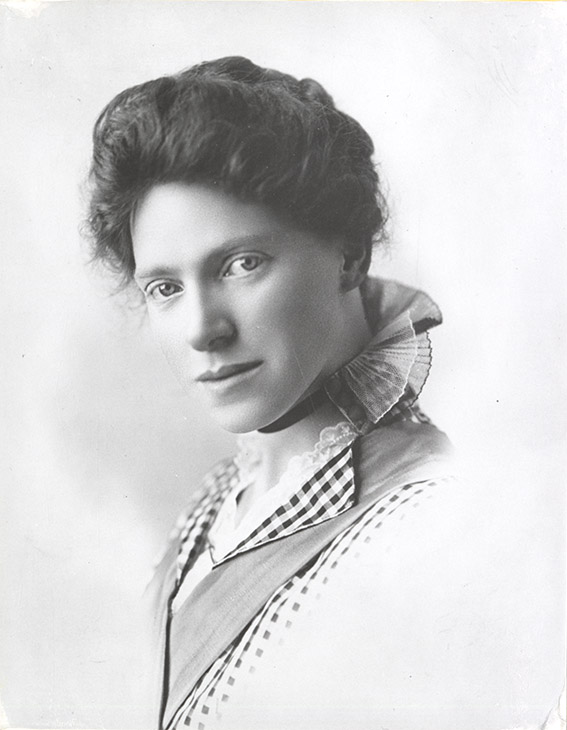
Ione Adair
Born 1883
Occupation: County assessor; teacher; postal clerk; timber homesteader
Residence: Moscow; Bovill; Fortynine Meadows
Topics:
The colored topic bar is hidden for screen reader users. Use the topic buttons below it, the "Filter by Topic" menu or the search box to find specific content in the transcript.
Sam Schrager: This conversation with Iona there took place at her home in Moscow on November 16th, 1976. Her sister, Bernadine Adair Cornelison, also took part in the conversation. The interviewer was Sam Schrager.
Ione Adair: Uncle Sam, I'm that used to run the Times Democrat here in Moscow years and years ago. And, he was love fishing and he wanted to go fishing with us. So we went fishing. So my sister and I decided we'd break down once and take it with us. We took him up to Elk River, and he cut side of the bridge.
You know, bridge over the river. And he sat down with this pole, over that bridge and fish like you would for catfish in Carolina. That's where he was from. And he sat there all afternoon and fished in that bridge, and marginally fished up and down the stream, and we had a nice basket full of fish between us when they got through.
Coming in, Uncle Sam decided he'd sing for us, and we'd rather have him sing than smoke those old cigars that he smoked. So we told him to sing for us. We asked him if he knew any songs. Oh, yes, he said, I know a song. So we started in before we left Bovill to sing. And he sang verse after verse after verse till we landed down here and put him on the lot where the, employment agency is now.
That was their, their home. And we let him out there with an empty basket and song from Bovill.
Bernadine Cornelison: What was the song? You told me that once.
Ione Adair: I told you once, but I can't remember the name of this song.
Bernadine Cornelison: So it had verse after person.
Ione Adair: But verse after verse. I think he must have made it out before they went along. He didn't even know someone that long.
Sam Schrager: He didn't catch any fish on there.
Bernadine Cornelison: Now, just that old cousin where.
Sam Schrager: You didn't catch any fish sitting on the,
Ione Adair: No, I didn't catch any fish.
Sam Schrager: You think he learned from you how to do it? He'd want to go up and down.
Bernadine Cornelison: The street every. He like to move around like he.
Ione Adair: Well, he, smoked in Carolina, and he knew. He knew how to fish in Carolina. For though they were catfish. I think. And you had to fish there that he didn't know anything about going up and down the stream and watching the hose and watching for the fish and catching them when they got on. Didn't know a thing about that.
You just waited for the fish to come and take his bait. And it they got on. They got caught like he had a page.
Sam Schrager: Could you usually catch as many as you wanted to when you went fishing?
Ione Adair: Yes. Always. No limit. Always where we had our limit. If we didn't have some others tucked in underneath somewhere.
Bernadine Cornelison: I mean, was there a limit?
Sam Schrager: No, I don't think it was their limit in.
Ione Adair: The 15 fish. And there was no size limit. You could have any size you wanted, any size you could catch. There was no, no limit to fishing.
Sam Schrager: Was it your father that taught you how to fish out there?
Ione Adair: Yes.
Sam Schrager: Because you'd mentioned to me that you went on the stream with him, right?
Ione Adair: I always went with him. Why do you. When you want to go fishing, I go with him. Whether I know the rest of them would go or not. That always went with my father fishing. And we always covered all of our fish that we needed. And then. And doctor had field fish for years up and down the.
Bernadine Cornelison: Road.
Ione Adair: Elk River stream. They knew every hole, and I think they knew all lake trout by name. And if he caught John, he did. They will catch James tomorrow that we drive up. We leave here early in the morning. So to get up there just about daybreak, about the time the sun was up and we'd start fishing and we were always through early.
And then we had great times fishing up and down there. My father had an, waist, waders, and they came up on the of the rubber and came up above his waist line. And then he got a penny and he'd take one hole and I'd take another. Or if was a big one, we'd both take the whole.
But the disturbance in two places would cause the fish to bite a little lower, a little farther down. And when we were fishing with angle worms, we did it that way and went fishing as grasshoppers. We had to get out and thank our grasshoppers while it was down in the morning, before they began to get lively. They're always very stupid at night, and as soon as it gets cold, the grasshopper will pull up his wings and stay right down there next to the ground where it's warmer.
And then they spring as it comes up and the warm air comes on. Then they get up and climb up on the on the grass, and you take a flat piece of shingle. And a wrap or a flyswatter if you have one there. The best thing is to catch them. Well, and we shot those grasshoppers and put them in our bacon, and then brought the next one and put them in the barn.
Bernadine Cornelison: The raise worms.
Sam Schrager: You did.
Bernadine Cornelison: A mulch down here. He raised his fishing worm.
Ione Adair: Under those, old willow trees. He put manure and leaves, and then he would put coffee grounds and, let us within minutes, leaves on top of that and then keep it covered so that nothing could get in and catch his worms. You can screen it went over the top of the tub, and he kept all of his worms in.
They in the tub for going fishing. And when he went in the spring, when they were before the grasshoppers got lively. Which is your name? The worm. Late in the fall, if they start again with anger, worms, and during the summer you face the grasshoppers and.
Sam Schrager: What kind of pole did you fishing gear did you use? Was it.
Ione Adair: Well.
Sam Schrager: Yes.
Ione Adair: I had a collapsing pole. Then he had. Well, he got me one and then he got one because he thought that I was catching as many fish as he did, and maybe he had 12 on right. And so he got himself and collapsible pole. They're the ones they slide down one section inside the other. And when you pull them out you have the long alongside, better prepared.
Sam Schrager: Easy for carrying.
Ione Adair: Yes, easy for carrying when you're in the car or when you're going to the fishing ground.
Sam Schrager: Did you use a spinning reel or what kind of real did you use.
Ione Adair: When you, I you does no ordinary ten cent spinning wheel from the from the Tri-State. Oh, it's just anything to wind your, line up on up and getting tangled. And then he had a long one. His was, had a, a ratchet that will wind it up and the a handle on it that you could wind it up, and it was a real, a real spinning wheel.
And mine was just an ordinary ten minute, but I caught just as many fish just dead.
Bernadine Cornelison: Caught more or less.
Sam Schrager: With it about, big then with the trout. Big, then with the trout big.
Ione Adair: Then they were much larger than they were in later because they were, the later ones were younger and the ones that hadn't been caught the year before, you would manage to go up. We were the first people that fished in Elk River. And that's the on thing.
Bernadine Cornelison: You caught in that once.
Ione Adair: I think I told you that about the clock troubles, father inviting us over, and we went over for a 4th of July celebration and, fished for the first time in Elk River at the bridge that crossed Elk River there he had sent east, and I mean a lot of those eastern brook trout, and put them in Elk River.
And that was above the, above the Elk River falls. And the fish couldn't get up the falls. It's very hard for them. And they're very, very few of them came up and there were no fish in the stream. When Mr. Trumbull took up his homestead. So he sent back east to his own home and had a shipment of eastern brook trout.
And they put them in the under the bridge at Elk River there.
Sam Schrager: And he wouldn't let anybody fish.
Ione Adair: Even then. Anyone thinks that is something. But, when Mrs. McBride and my sister, two sisters, Marjorie and, Lula and I came up to spend the summer with her and her caravan on breakfast, we. And while we were there, Mr. Trumbull sent word over that they were having a 4th of July celebration at his homestead and asked us to come over, and we went over to the homestead, and while we were there, he told us that we could go fishing, and we were the first ones to fish in Elk River.
Bernadine Cornelison: Time, right? The first dandelions. Have you ever heard there's no system this time around here? That all that was in his books and.
Ione Adair: And my father came with in the fall of 93. And, that was the fall when we had so much rain that the, farmers couldn't get in to get their wheat. If it was cut, it was down and it couldn't be saved. And it it was sacked. It was in the wood in the field. And they couldn't even get in to salvage that grain.
It, it started right in of sacks. They couldn't get it. And this old gentleman who had been in Kansas from quite near where my father had been practicing, found out that the animals from Kansas. And he came up to make his acquaintance. And then he invited Dan over to his place, and he said, that. Did you like Glen dandelion greens?
And then he said, I don't know. I never have eaten dandelion greens. I've eaten greens and mustard greens, but never dandelion. Well, I said, you send the girls over and I'll give you a mass of dandelion greens. And then he said, where did you get dandelion green? Well, he said, I sent back to Kansas and got the seed for the dandelions.
Bernadine Cornelison: I was getting a bet on.
Ione Adair: Raising dandelion for my green. And that, I think, was the beginning of the dandelion. I quite the country, but that's how it happened. They lived over on, then Van Buren and see whether then on Van Buren Street, just the other side where the telephone buildings on Van Buren, isn't it? And on the left hand side of the street, beyond the telephone and on the left hand side of the street, there was a house.
It stood up on, a hill that had three separate like it was a basement. And the upper story and the story on top of them. And that's where this old gentleman from Kansas lived.
Bernadine Cornelison: And his name was Andrews or Anderson.
Ione Adair: Andrews or Anderson? I'm not sure, but.
Bernadine Cornelison: He started filming live.
Ione Adair: Every.
Sam Schrager: Day. Do you remember, whether it was very hard on the local people that year after after the harvest to get through the winter.
Ione Adair: Very, very hard. My father had, House is on Jackson Street, right straight across from that Creighton, the back of the Creighton building, and there was a stairway that went down to the alley, and we lived just across the alley and that stairway and that kept going back and forth every once in a while, as the our mother and the children were getting along.
And he wasn't very busy up there at that time, that they.
Bernadine Cornelison: Would bring produce for the bills.
Ione Adair: He was paid entirely in produce that year. I don't think anyone had money enough to pay him. And when my father first came to the Creighton's and took up his office upstairs, his sister from Johnson used to do her shopping in Moscow, and she came over and came to his office and asked him to go over and meet the proprietor of the Wheeler store, which was then where the the tuna building is now.
That was a mother who lived store and then so that went over with it and met Mr. Hooper and, his clerks there at the store a short time after that, Mr. Hooper came over to the office and said, doctor, didn't I understand you to say the only relatives you had in this part of the country were Mrs. Gibson, your sister at Johnson, and then said, well, yes, that's what I said.
And he said, well, there is a gentleman over at the store, there's outfitting a family of five children. And when he got through and went to pay the bill, he said, charge that to the doctor. And there and Mr. Murphy said, I just ask him to wait until I had checked with you. Brand is. Did you just say you only had the one sister with two children?
And he said yes. No, that he missed you. Hooper says, what do I do with the gentleman? Then said, just tell him nothing doing it. He said, I'm a stranger in this part of the country and have a family of my own. And he said, I'm not upsetting anyone's children but my own, and I'll do well to do that.
So the children didn't get it. It was a family from Potlatch or Princeton up here somewhere.
Bernadine Cornelison: And boy.
Sam Schrager: I wonder what made him think he could use, your father's name to get away.
Ione Adair: That happened to be the same invention, a family of theirs at Princeton.
Sam Schrager: Also, he was pretending.
Ione Adair: He was pretending to be, I at the time is. And that was the first time he'd been in town. And he's not so obsessive about fitting the children for school. And,
Bernadine Cornelison: That's the trick that these people have. It was explained to me in California because two different stars charged things supposedly to be. And I never believed them. And they said there was someone new moved into the area. There's certain kinds of people to go to and take out the new names and write checks on them.
So what happened to you. And that was.
Ione Adair: That was the fall and everything was so hard to get and you just couldn't get anything.
Sam Schrager: To do, you know whether, remember whether your father and mother were discouraged by, by that having happened as soon as they came to this country.
Ione Adair: I mean they.
Sam Schrager: Were discouraged by the hard times as soon as they got here. Oh, yes, they were.
Ione Adair: And they we had a family that lived right across the street from us, the the name, the layman. And my father opened up his office over the Creighton building. He went down the street to see what he could find in the line of grocery stores, and he went into Mr. Lehmann's store, and Mr. Laban said there piled up there, there.
And he said yes. And after dinner where he said, you look enough like that. Sure. There are family physician in Illinois today that were there, and they stood and visited work for a while. And then he asked if he would, if there would be any chance of him having an account there until he could get it paid and straightened up.
And Mr. Layman said, why, certainly you can go in there and an account at the, layman's distillery on Main Street. And that's where the first trust bank is now he at that time, there was a, real estate office or something next to the corner. And next to that was the Mr. Lehmann's grocery store. And next to that was Hagan and Cousins, meat market.
We used to laugh and hay and incursions. Meat market, because every time we had a windstorm, as we moved up into the big house here in the museum, Higgins would send his men up to gather up the willow branches and take them out to smoke his meat with. That's what he used for smoking and meat and and he gathered up all branches, all that window for the babies.
Bernadine Cornelison: So I think there was the principle in.
Sam Schrager: Do you, know, what made the family decide to come out here to come to school?
Ione Adair: Yes. My mother my father had this sister at Johnson. And this is Gibson at Johnson and the big house that they lived in. When you go to jump, you been in Johnson?
Sam Schrager: No.
Bernadine Cornelison: Where come was.
Sam Schrager: Just. Where is it now? What's it near?
Ione Adair: It's south. You go down and pass the old. Well, I say the old Burns place, but that doesn't mean anything to you.
Sam Schrager: Well, is it, is it, is it not too far from Linville? Maybe. Is it not too.
Bernadine Cornelison: Far from that way?
Sam Schrager: Is it towards Linville? Linville?
Ione Adair: Linville? No, no, Linville is north, south.
Bernadine Cornelison: West.
Ione Adair: And Johnson is south. West is out. Past these, over south main Elm. And you come to the first road that goes to your to right. And we always say, go past the old Cooper place and the Burns place. But if you don't know those places, you don't know them on and on down the road, and you need the road that comes in from Pullman going down into, Uniontown and Condon and then through there you meet that road, you go down to Johnson on there, and Uncle John had a lighthouse that was, quarter of a mile when the main part and the world and small town, I don't remember much of a
Town now and not. But Uncle John's they mentioned it was at that time, with down a quarter of a mile from town.
Bernadine Cornelison: And our first window there.
Ione Adair: We reckon remember very plainly, because it was a heavy, heavy fog all winter long, and it turned in, sweeping over from Lewiston and the Hill Country. And when it was right, the main street at Johnson, my cousins, my sisters and I, we ran down this quarter of a mile and meet the phone and come in with it.
Bernadine Cornelison: To the home. Had Boggs and Kinsley, oh.
Ione Adair: Where we'd be went when we got home because of the fog on our hair and on, and the clothes that we met, that fog every night at noon and run down that hill. And that was. That was really something.
Bernadine Cornelison: That's a new experience for you.
Sam Schrager: But why did did that? Why did your parents decide to come here? Just because your father's sister was living here?
Bernadine Cornelison: Mother was terrified of the storms in Kansas. Oh, you ask you all why you left Kansas?
Ione Adair: Then had this sister living in the West and mother was down. She didn't wait a hundred. Well, not much over a hundred. When she came west. And then there were those cyclones kept going across that part of the country and the electric storms. And mother was left alone. So much with her three children, and they had to be out on call, and she'd have to stand those electric storms. Alone
And it just terrified her. So daddy said, well, if it's too much for you, why don't we go west and settle in the West? Where Lida and John are and and just turn up again? So they did. And they claimed they kept Uncle Jonathan in, Pullman and took him down to Johnson, to his place. And we lived there for a month or two months with Uncle John and Aunt Lida on the farm.
And then he came up to Moscow and Pullman and Uncle John said, which place do you want to try? And dad said, let's try Pullman first. So everyone go teams. At that time you had no cars. So he took the team and it took dad and mother in the team in the buggy and drove up to Pullman. And mother looked around.
Pullman, and she didn't like the looks of the town. And they had an old uncle, Uncle Thanos here that lived up on university, you know, in Pullman, on the College Hill. And so they took mother up there. Uncle final had a large lot, and they said they give 100 Pullman. I will let you have this lot and you can either sell or not.
And you said you have to to find a place to live or you can find a place up here. They said, I think you can find a place to live in Pullman on the hill, another set up there on the hill, and looked down over Pullman from the colored hill down on it, which is a dad. I can take it, he said.
You will be at your office. Your office will have to be downtown, and you'd be at your office, and you'd have to have the team to go to your office. And I would be sitting up here on this hill with three little girl and no means of getting in our early to that. Simply can't take it. So then no said, all right, let's go to Moscow and see what.
So then they drove over to Moscow and the third street was the highest hill there was in Moscow that you could travel on. And they travel. I was there in St Louis and around this part of town here and there and down on Main Street. And, that's. What do you think of Moscow? Well, she said, I'll take Moscow any time the Pullman did.
I can't take my. So they've rented a little house down on Jackson Street, right across from the alley behind Creighton's. And we lived there one year, and at the end of the year, old Mr.. How Mr. Hall, John Hall was it commissioner and county commissioner, and he had had a young son, and his son was.
Needing attention. And we came to the one that is the. But if you could tell him what was the matter with the boy when the boy in had, I presume is is polio? In the early days, they didn't call it, but meningitis and and the so that took care of the boy and got him feeling that. But he never got the full use of his legs.
He always had to go into either a a walker or a wheelchair. And Mr. Hall came to my father and said the doctor, how would you like to have a nice little home up on Third Street? Dad said, well, I'd like it. Yes. Why do you need? Well, he said, the county commissioners have just taken over a little home on Third Street for the taxes.
And he said, if you would like to move up and be in that home, he said, we'll make arrangements so that you can pay for it and can move up to them in a home. So we did. We will get on the things on the third street, and that is the train. Van Buren and Polk and the when he it's a third house at our coming this way is the second house from the big white house.
It stands on the corner and we moved up into the little house on third Street.
Bernadine Cornelison: And mother then by then had five children and help. And the little cottage was kind of small that's the reason mother wanted a big house house so bad. She went to the extreme.
Ione Adair: Because he always wanted a house large enough that you could turn your family loose in them. And not have to run around dodging them all the time, so that once he was always asked me for a larger house. And finally dad got the big place. I think I told you how he got the big land in there.
Sam Schrager: Yes. He yes.
Bernadine Cornelison: Became.
Sam Schrager: You.
Ione Adair: Did they this man at the bank.
Bernadine Cornelison: You told him that?
Ione Adair: I'm sure I did.
Sam Schrager: We did it. Well. Well, I was just wondering about that, though. Now, that man at the bank, when he knew about this land out there, he knew that your father.
Bernadine Cornelison: Had it had you.
Ione Adair: Was a timber cruiser. And he knew my father had this timber up the other side of Bovill. And, so when Mr. Payne down at the office, asked him if he would like, he said, you want a larger house, how would you like this big fight? Meccano house. And then said, you like it? They said, I can't take care of it.
I couldn't pay for it. And Mr. Pearson was standing in the in the lobby, and he heard my father say it can take care of me. And, you knew that dad had this land up there by boat. Now. So he stepped up and said, you have land up above. I want to. And he said, yes. And he said, I'm working for the timber company, and I would be glad to make it over.
And if I buy the place, he said, if you sell it to me and look it over and appraise it with one idea in mind, and that is that I can have a room in that big hall.
Bernadine Cornelison: They all were just.
Ione Adair: I don't like living in a hotel and so didn't have to tell you. He said, if you can buy my timber claim, it said, and I can get the house, you can have a room.
Sam Schrager: Did he stay for long in the house with you?
Ione Adair: Yes, we had them as long as the, as long as the Potlatch Lumber Company was in this section of the country. We had some. And the partner lumber company with this. And then Mr. Pearson was the first one, and then his brother came. Bring followed him. And as long as we as long as the potlatch was connected up here, the Bovill part, part of the country and in the timber business, we had homes there.
Timber man in that office, this little northeast of. They called it their office. And then they had the baths. It was right on the floor and it wasn't far down to the to hotels to get meals.
Bernadine Cornelison: And I wanted to sell some thinking, some about the little cottage out on Third Street when mother was had five children and help and the girl between I, me and my sister died two years ago. Flora got diphtheria. Of course, there were no, hospitals or anything in the way of, of, What's the word over here for somebody who had been in an.
Ione Adair: All new accommodation for sick people, was there.
Bernadine Cornelison: So daddy was so terrified that the rest of us would get it. And I was about quarantine, and, I was about three then, but I still couldn't remember this house. And he held it, hung wet sheets up over his door. That was one way of hoping that the the rest of us and give us he had and, we didn't already have somebody on a septic on those, and now I don't know, but I can remember those sheets.
Sam Schrager: And did she get over it?
Bernadine Cornelison: No, she she got over the diphtheria. They thought, that's what it was that. But we think was probably a form of polio because she got over the very good part. But she was paralyzed and died shortly after she was that man was over nine.
Ione Adair: Months and I both had typhoid in Kansas, and my mother had typhoid and had been ill. She had, uncle Tom, a deer that lived out in the country about ten miles from, Moline, from the city where we live. And he had a son, and this son was chasing around over the country, and he stayed with us whenever he was in town.
And, he stayed there and he had typhoid. And his father took him up to the farm and kept him there. But mother got it after Cline had had it. And she was ill for a long time of typhoid. And as she was getting up, then I came down with it, and I had, I had the typhoid.
Whenever it's about. Oh, imagine, four years, four years old, possibly five, but I wouldn't say for sure. All I can remember sitting up in the some of the side of the rain barrel on the side of the house, recuperating. And one of the neighbors brought, well, when I was a child, a great big doll. And I carried that bell around me all the little with me all the time.
And I'd sit out there with that rain barrel in the summer. This old doll. We need to get strong enough to get around and do things.
Sam Schrager: Did you live in town in Kansas?
Ione Adair: Yeah.
Sam Schrager: In town.
Ione Adair: Kansas?
Sam Schrager: Yeah, in Moline.
Ione Adair: Moline.
Bernadine Cornelison: So that is of Missouri.
Ione Adair: We lived in Kansas.
Sam Schrager: And then when when you came out here, did did you have any money left to speak of when you got here with the family? Did he have savings?
Ione Adair: He had $65 in the bank when he got here in Moscow.
Bernadine Cornelison: I came on a train.
Ione Adair: And had to pay part of that, to had the drain and bring his books and take them up to above Creighton's to the office. And then he, old Griffin was a dream. And at that time he was a big fella, over six feet tall and large in proportion. And he just picked up that barrel of books on his shoulder and toted it up the stairs and put it in the office.
And then they said they didn't even puff one, which was then the most unusual.
Bernadine Cornelison: Of course, I suppose $65 in 1893, you would feel like you had a little this thing.
Sam Schrager: Do you think many people left Moscow right at that time because of that? Do you think many people left right then? Because of that bad year? Do you think they know they could.
Ione Adair: Didn't get money enough for me? They couldn't have left. The farmers were out there, they had their land and they had to stay with it. They couldn't leave. We had lots of chicken.
Bernadine Cornelison: Now I can remember the factory over here. People used to bring in things from their farms when they were butcher. They bring in spareribs or. And that was so good. But they would be so medium backbone. So maybe we just would love to have those brought in from Mondavi out of our own, I think.
Sam Schrager: So you a pretty well, well, I born.
Bernadine Cornelison: And not I was one.
Ione Adair: We lived well. We lived well. I remember one thing. Well, the mother had one of the big cattle. She didn't bring any cooking utensils or anything from Kansas with her because that was too hard to pack dad's books. And he was operating at zero, you know, which all he could take care of. So she cut down on everything, and she wanted a big cattle in which to buy own meat.
And there went down to the second hand store, and they found the big iron cattle about that high. And it had been at one time an enameled kettle, the enamel white enamel around on the inside, and they didn't want to use it until he had that enamel checked. So that he could scrub it and be sure that it was sterile inside.
So when I got home from school, I would sit down with a chisel and a hammer and sit there and chipped away at the enamel on this old kettle. That's where she got it down, so that it satisfied him, that he could get it sterile. And it was sterile.
Sam Schrager: Hard work too.
Ione Adair: Yes, it was hard work.
Bernadine Cornelison: I bet I chipped.
Ione Adair: Away on that. And now I have an aluminum kettle, and I'm trying my best to get the deposit, the water deposit out of that aluminum kettle, and I can't get it out. I used a screwdriver.
Bernadine Cornelison: Get the.
Ione Adair: Putty knife and everything, and I chipped away at that eventually. I suppose if I don't put a hole to the electrical, I'll get it cleaned.
Sam Schrager: Well, you know, in 1893, I understand that that, Mr. McConnell went bankrupt at that time in that.
Ione Adair: Yeah, she went bankrupt. It shows on the abstract. I had the abstract when she signed the bankrupt papers. And in order to save the home, she took up bankruptcy and saved the whole place. And at that time, it was this entire block, with the exception of, the corner that Mr. McConnell had deeded to the Swedish losing church where the church stands now, where the senior center, senior citizens there.
And on the next corner, on the other corner, was a large livery stable. And in that livery stable, Mr. McConnell ran the funeral service there, kept the hearse for the town and then the hay for the horses. And, in that large three story barn, the horses were kept on the lower floor and the hearse and the buggies on the second floor, and the hay in the and the barn.
Then that was afterwards torn down, and they built the parsonage there for the, Lutheran Church. And the place wasn't quite large enough. They wanted to, enlarge their church. And so dad sold them all 15ft, the, his end of the lot to so they could build their church that much larger. That's how the edition was put on under the church later, divine was but torn down and the parsonage was built there for the church.
Sam Schrager: And, you know, I've heard of that during that hard time that if Mr. McConnell had foreclosed on some of these people that were in trouble, that he could have avoided going into bankruptcy. But he decided not to do that. Do you know if there's any truth to that?
Ione Adair: I don't know there's any truth to it or not, but I don't dummy, because he, he he and,
Bernadine Cornelison: Tom and.
Ione Adair: Maguire. Maguire and, McConnell. Maguire built this large the to the building down here and, he had the big building which is rented then to modern Wheeler Company and, he owned this place. And by Mrs. McConnell taking out bankruptcy papers, you could save the house without any any, What was that word?
Sam Schrager: No liability.
Bernadine Cornelison: It would not have been put in the house if she had bankruptcy on it. Why did he lose the house?
Ione Adair: What did he do?
Bernadine Cornelison: Why did he lose the house of. She had filed bankruptcy.
Ione Adair: Why did he lose it?
Sam Schrager: Lose it? Didn't lose it then, did he? Wasn't it.
Bernadine Cornelison: Shortly after? Because it was vacant for a long time. And then daddy borrowed 1900.
Sam Schrager: Although she.
Ione Adair: Signed bankruptcy papers. But that didn't keep him from losing the house. He eventually lost the house.
Sam Schrager: I see.
Ione Adair: But then he had set the file on it so that he would they would save them the one building anywhere and acquire and, McCullough Maguire on the big the tuna had to give that up at one time. David's had a small grocery store in the basement of the McConnell Maguire Building, Europe, but now known as at the donor and the man that lived next to us on the third Street was the man that, run the grocery store for David.
And that's when Postum first came in. That's going back a long, long way. Then the last name was Postum. Cereal was invented, and Mr. Illusion l u t o n was the name Mr. live next door to us. Brought a package up for his wife to try to see what it tastes like. And, as youngsters are running around in the neighborhood, I wandered in at Mrs. Lewis breakfast and she was sitting there drinking Postum.
And I said, what are you drinking? Coffee? She said, no, they look like coffee. And she said, no, it's Postum. So there's something new on the market. We never heard of it before. And Mr. Newton wanted me to try it the so he could recommend it at the store. And so she gave me a taste of Postum. I didn't dislike Postum, it just taste and I wasn't used to drinking coffee very much.
And Postum this taste very similar to coffee. And, and so I said, well I like that. And she said, well I'll see you again soon. So she gave me a box, the Postum and I took it over. And at that time I had been having, Quincy very badly. And every winter I had a spell of Quincy.
Bernadine Cornelison: You know what it is?
Ione Adair: It's a swelling.
Bernadine Cornelison: On the.
Ione Adair: Inside. And then an acute Quincy attack breaks your tonsils up to an enormous size, and then they finally gether and break like a boiled. And so I had had them so much Quincy trouble, and they didn't want me drinking coffee. And yet I wanted something hot to drink. So when I took this package over, they made Postum for me.
And I started in on Postum. At that time it was a cereal and it came in a, thick pasteboard carton paper. And when I got to drinking it and dad said, let me try that. So he tried it and he didn't like Postum, especially the usual cream in it, and he gave a sugar in his. But I didn't care for the sugar, so I didn't use sugar.
Well, we went that way for quite a little while in the winter, and mother said, I'm tired of making two cups of coffee for breakfast if I'm going to drink Postum. So she started in on Postum. Up until that time, mother had had periods of sick headaches. Every so often she'd get one of these raging sick headaches and they didn't think about it being coffee that was making me any.
And after mother had taken them for a short time or headaches began to disappear and she kept on drinking Postum with that and me, she didn't have any more sick headaches. So she got over the sick headaches and.
Sam Schrager: What didn't your father want you to drink? Coffee? Was there. Was it thought to be bad for you?
Ione Adair: Yes, I had heard.
Bernadine Cornelison: That. Was that. We just never had coffee.
Ione Adair: After I'd had the Quincy attack so many times, I began to get rheumatism in the knees. And, at a romantic condition. So they decided that if I liked Postum, it'd be better for me than coffee. And so I got along with both of them. We had an old attorney in Moscow, JCL, there that had the offices right next to their heads up over here, the great building, the next big window next to that was then that window.
They enjoyed the elders window, and Mrs. Eldred was gone one winter, and I was having an attack to post a post in.
Sam Schrager: Quincy.
Ione Adair: The Quincy. Quincy. And he came and sat with me so that mother and dad could get their rest. And he spent the night with me. And if I needed a drink, I had a drink. And if I needed anything, he was there to help me. So after I got over it and was able to go back to school, old Mr. Eldred came up every noon.
Then the house on third Street and picked up my lunch and brought it to me. At the school. I was placed on the third floor of the old Woodworth School, and that was three stories up, and too much for me to make up and down to go home, and then will allow me to do it. So he then Mr. Elder came up and brought my lunch to me, and many a day I went there.
At that time there was, medic medicine called and the floater steam. But you've heard of it or not, I don't know. It was otherwise California. Colorado mud. It was, Oh, a mineral or mud,
Bernadine Cornelison: Denver mud.
Ione Adair: It was a medical, mud and came in in little time.
And you took it out like putty and put it on where you were having a pain. And I made those trips up and down the stairs to the third floor, the old Woodward school with packs of mud, Colorado mud around my knees because the knees were so severe that I couldn't go up and down the stairs without me, and I went till the end the school year with Colorado mud around my knees and and I would say, Claire, bringing my lunch up to me so I wouldn't have to make the trip up and down the stairs.
Sam Schrager: It sounds awfully kind. He must be like your family.
Bernadine Cornelison: Like you. We adore him.
Ione Adair: To the father, then. And I never noticed any trouble with my heart. Then. After that, for quite a long time, I had to get over with and was only then to along about 19 was at 60.
Bernadine Cornelison: For that, Be part of that.
Ione Adair: Is about 1960. And I had the trouble with my heart again. That was the first. But I had fish.
Bernadine Cornelison: Daddy knew you had had trouble with your heart, daddy? No. When you were much younger. But because I can remember, he picked up your hands. Well, and your fingernails would be purple, near to be purple, and he'd go and get you covered. Pills. And he probably did so.
Ione Adair: He was always watching, but never said anything. You just look, you never told me.
Sam Schrager: When, You were telling me some about things that you did when you were kids in Moscow. One thing you mentioned to me, I think, was going down the hill, sledding down the hills. Did you kids used to.
Ione Adair: View sixth Street?
Sam Schrager: Sixth Street, What would you do there?
Bernadine Cornelison: Well, I.
Ione Adair: Think that it wasn't paved. There were no buildings there, and, nothing but the the courthouse came in there later, but we used to go down sixth Street and bobsled and then clear down you go clear across the main street on that stuff. When you get to Main Street, where you'd run into some horse and buggy going down the street.
There used to be an old butcher, the name of Weinman, Harry Weinman and some of his people are living around the country now. I don't know just where they are, but he was a butcher and had a butcher shop about where the true value or, farm store is. And he had a butcher shop there and the after school youngsters and early evening Jews would get their hosting parties arranged, and we come down the hill and then we'd run across this main street to the butcher shop and the old Mr. Weinman was always watching for us.
He knew we'd be there, and he always had a weenie for each one of us. And a dill pickle. And you got a weenie and a little pickle for a nickel.
Bernadine Cornelison: They were heated, were they? Did he mean.
Ione Adair: He'd watch for the youngsters and they came home in school? Always had that part of what we need. And a Dale pickle for them. And we always stopped and we made and we used to when we lived on Third Street, we used to hitch our sleds on the back of the wood wagons. They always hauled wood. What would end?
And they'd come in on town and down on Hayes, and then down third and start along the road trying to sell their wood or delivering wood. And we used to hitch to our sleds to the back of the wood wagon and get on the sled and drive our way up past where that schoolhouse is now. On it. As you go up on Mountain View Road, and we'd go up past the Mountain View Road, and along that little, road that goes from there up to the mountains or up to the monument, we call it the ditch orchards and ideas rest if you know where those are.
Well, we'd go out that way as long as we wanted to ride, and then we'd get off and we'd ask the man to stop, let us all. And we done tire by and watch for the team coming in to school. And we'd hitchhike on the team come the end and come back home again.
Sam Schrager: Would you write out your letter on the wagon?
Ione Adair: Oh, on this land. Oh.
On this land. Important to get lots of tumbles too. Because the roads, the snow was deep and the roads were not too wide for a sled.
Sam Schrager: It sounds a bit. Sounds a bit risky to me.
Bernadine Cornelison: I suppose it is, I guess.
Ione Adair: But no one ever got hurt.
Bernadine Cornelison: I think I encourage you to. The last time you hear about the bank concerts they used to have, and you could think of the band leader's name.
Sam Schrager: She didn't mention.
Bernadine Cornelison: The whole time about the bank concerts. I was a big entertainment coach with the band, concerts.
Ione Adair: All of the band concerts.
Bernadine Cornelison: Every one.
Ione Adair: That was in the early, early days, a Moscow, probably someone at the Chamber of Commerce, could take you back far enough to get on to where I remember them. The band concerts always played. There was own Mr. Kerry Carey. Why? I think it's spelled the same as this. Bob Kerry up here, and, he had the Moscow band and they had a big band wagon, and they'd pull this big Van Reagan for celebration up onto main Street, and the band would get into the wagon and give us a concert.
And it's usually Saturday evenings when everybody was supposed to be downtown, and all these big crowds gather around Kerry and his band wagon.
Bernadine Cornelison: Rather than stand there. I remember I there's a bandstand built downtown someplace over a bandstand.
Ione Adair: The bandstand I remember, well, this was, this was an unusual, wagon that they'd fitted up so that the van could be comfortable. And then on the wagon, we had the big band, then concert. They played it. Everything. All around the news. They had big, Pioneer picnics. They all came months and played out.
North east of town. I don't know what the place would be called out, past that Evergreen School. And I don't know whether the school is still out there. And, but, Mr. Munson had a large place, and it was timber on the back end of the place, and he used to have the pioneer picnics always.
And your pioneer picnics out there at the Munson Place and the band and the band wagon was always there to play active at the volunteer picnics.
Sam Schrager: Do you, What was I thinking at,
Ione Adair: You sure? I don't have any more questions?
Sam Schrager: Questions I've been asking you.
Bernadine Cornelison: Well, you have.
Sam Schrager: I've. I've been asking you questions.
Bernadine Cornelison: And now.
Ione Adair: And so.
Sam Schrager: I, I was thinking about, living at the, at the mansion and my living living at the mansion. And I was thinking about the calling that that women used to do, did do you remember them calling people, calling and presenting their cards?
Bernadine Cornelison: Yeah. Like, yes. That was the Moore card people over there, you see. That will.
Ione Adair: Do. Rest. Stand over.
Bernadine Cornelison: There. Yes, that's a card.
Ione Adair: Well, the people people always used to call when they had certain days on this side of town for calling. And on the other side of town for calling, and they would alternate back and forth. And every woman they went calling, it was somebody had a calling card and a calling card case. And when they left, they always dropped the card on the little table by the house door.
Bernadine Cornelison: Also listed the day that they would be at home for callers. So they were dressed up and serving.
Ione Adair: On the bottom of their calling cards. They usually said Tuesdays or Wednesdays or something like that, so that you knew what day you could call and the acceptable and any and the places and they were calling it. And that little brass band standing there was given to they h little, who was in the engineering department at the University, and he.
Yeah. Yeah. And his wife came west just after they were married and their wedding, they were given this little calling card band. And then this is all with, an intimate friend of Margaret Sweet. And Margaret sweet was the. I think she was a librarian at. At any rate, she taught in the letters and normal at that time.
And, when Margaret died, she left the calling card. Mrs. little gave the calling card case to Margaret Sweet when she was through with it, and they moved away, or he died, and she moved away. And Margaret Street had it for years. And when she died, it came to Ville Dale sweet lived in the the tumor and, Shirley apartments her and they call it now.
Frances. I know and then you read it was the mass. Sure thing.
Bernadine Cornelison: Firehouse.
Ione Adair: Manor.
Bernadine Cornelison: Moscow manor, their old Moscow manor.
Ione Adair: And then you read it came to Belle. Sweet. And when Belle Sweet had had it for a number of years, and her yelps was failing her, and she had to leave the university and the library at the university, and she decided to go over to Portland. She's the Margaret and, Belle had adopted a young girlfriend, in the country.
What was it? Greenville. No. And anyway, they adopted this young girl and brought her up. And, she was living. She and her family had moved over to Portland. And so Margaret, Belle decided to go over to Portland to be near Jean and her family. And so she gave up her apartment down here. And I was down when there was the she was putting up things to one side, and I said, what are you doing with those veil?
And she said, I'm getting into the Baptist church rummage sale. And I said, not that little brass then. And she said, yes, the little brass band. And I said, well, that was Mrs. Reynolds. And she said, yes. And I said, would you give it to me? She said, I'd love to, if you'd like it, take it. So I brought it home and I polished it up and put it on there in the corner and there it stand.
It's been there ever since I did.
Sam Schrager: Did your mother used to go calling on other.
Ione Adair: Boys and.
Sam Schrager: So it was something that was frequent. Come. Could she expect the callers at her house every week?
Ione Adair: Every day? The day that the card said she would be have to be dressed and ready for college if they came?
Bernadine Cornelison: I was part of it. Oh, my.
Ione Adair: The way some of them come in to call and they like the looks of the old plays outside in.
Sam Schrager: The mansion.
Ione Adair: Here. Yeah, curiosity brought a good many of them in, but there was always someone calling that.
Bernadine Cornelison: Ever tell you about the time? And the big house was this. Yes. What happened? A lot of Indians. And they thought this was the county jail because of the settlers. So they came to the door with the van that they had kind of bringing the jail. Oh.
Ione Adair: Did I ever tell you about the time that they that the Indians came to dad's office?
Bernadine Cornelison: Yes, she did that. I don't think so.
Ione Adair: So I tell you about there.
Bernadine Cornelison: Oh, you know. Oh, this was I had.
Ione Adair: An awful hard time trying to keep up and remember what I told people. That's nothing.
Sam Schrager: That's okay. Well, what was the story?
Ione Adair: My father had, told you had this office up over ahead of Creighton store and he sent east and had an electric company. He wanted to, give electric treatments. Right.
Bernadine Cornelison: And horoscopes. My horoscope. Let him see it. Bones and.
Ione Adair: Rheumatism and arthritis and so forth. And he wanted to be able to treat them electrically. And so this company made him an enormous, big, beautiful thing. Battery. Oh, it was longer than that fireplace and longer than that. And high. It would reach in as high as the picture above it in an enormous thing. I had these great big glass wheels, and the wheels are generated as you turn, would generate the electricity.
And then it was connected to a chair and sitting on a, on a platform with the chair insulated underneath the standard. So the electricity didn't move. The chair. And he would put a patient on this chair and then take the different, instruments for tuning them on the neck and around the hand or wherever they needed that he would use the different.
Well, an Indian came up one day, and one of the treatment they used to have, the cord held, and Indians have caught up over here to the old post office. And, when the Indians were caught and this old fellow was having rheumatism very badly. So he came up to dad's office and asked him if he would give him a treatment for rheumatism.
So then gave him the treatment, and, the old fellow wanted to know to be all right if he brought a friend that. And father said, why, yes. Is the all right. So he may only be with them. And after court resolved, came to the office with 4 or 5 Indians, and then had shown him how if you took a hand and took one of the electrons in your hand, then it would go through the bodies of all that they came in contact with.
So the Indians all took hand, and there gave him the the electrode, and then turned on the wheel. And the Indians couldn't let go of each other. And they began to drink and holler and jerk and holler and then stuff, and but because they heard the man on Main Street there, and we wondered what kind of a word they thought he'd been carrying up there.
But the Indians were just fascinated. But that electric battery. And every time they'd come to court, there'd be a bunch of them come up to the office for a treatment. They'd want to get someone that hadn't been there before and hadn't had a hold of their hand and couldn't let go, and so they had to do it. And he treated them well.
They then wouldn't take any charge for it. He was getting such a kick out of it, he couldn't take any charge for it. So the Indians then got to bringing in Indian jerky. That's the the jerk.
Bernadine Cornelison: Of,
Ione Adair: Venison and,
Bernadine Cornelison: One of the.
Ione Adair: Healthy they bring in healthy and the Indian jerky in payment for the entertainment. And then had quite a quite a double handful at one time, an Indian and, you know.
Sam Schrager: Healthy.
Bernadine Cornelison: There were.
Ione Adair: Helping.
Sam Schrager: With that.
Ione Adair: I gave them all away. But I think two.
Sam Schrager: Well, they did, did only one person hold it at once? Who did the whole hand?
Ione Adair: They take a hold a hand and.
Sam Schrager: One person would hold one. And then the last person would hold the other end.
Ione Adair: There all.
Sam Schrager: Through everybody.
Ione Adair: And go through everybody in their you go through them and they couldn't let go. It seems that they had that on. And they put the electrode next to the machine at the other end one. Then the Indians on that side and, and the machine on this side, and they couldn't let go.
Bernadine Cornelison: It also had a price cut arrangement for who could look at and see the bones in their hands or in their fingers on that bad somebody.
Ione Adair: Oh, it's your stitches.
Sam Schrager: So you're going to be like the Indians that, you.
Bernadine Cornelison: Know, farm for the like every month.
Sam Schrager: Some people didn't die. I had the idea and didn't and didn't treat them very well either. I want a a.
Ione Adair: He liked.
Bernadine Cornelison: Them. You know, they.
Ione Adair: Had them the presbytery and the Presbyterian Church every year had a meeting of the Indians up here at Road Church, and they, the Indians at that time used a lot that was right across from the park up here on street when they owned the city park. That was the low, peace there in it been graded for First Street for the park.
Bernadine Cornelison: But down below.
Ione Adair: On the other side was a large, large lot which was fenced in with a high board fence. And the Indians used that for, camping ground when they came up from Lewiston to the, to that lovely to the Presbyterian.
And they all they, the families had all come up with them and they'd set up their tents and they just laid there about, no place during the week of the presbytery. And they used to take us, they take us girls up, and we knew the Indians that he'd met at the office and others. And he used to take us up and, and, initiate us in the ways that the Indians were living and how they cooked and how they did that the at their camp.
Sam Schrager: Do they have teepees?
Ione Adair: Yes. And they clean things. They always set up their keeping. You see, they had their family. Each Indian had his family teepee in it, set it up and the little youngsters be running around there and the mothers with the babies in their arms or on their backs and greenhorns, big time watching them.
Sam Schrager: Could you go inside the teepees? Could you go inside the TV? Yes.
Ione Adair: We went inside and sat down on their blankets and have blankets rolled up and set around on their blankets, or if they had some other hand folding chairs. They were really an innovation at that time and we moved them.
Sam Schrager: You in there, You would eat there?
Ione Adair: No, we didn't eat there. They, they always brought the jerky to stand at the office. My dad and back at home at any level are clean. Yeah. He would, to lay on. He loved to lay on that early journey. In the evening, he sat and read these medical magazines or the paper.
To lay on this jerky very this machine that I was telling you after dad's death, we didn't know what to do with it. And so we called him Charles Carr. So I don't know if you know Charles Castle, grocery.
Sam Schrager: Had the grocery.
Ione Adair: Or c so his father had the grocery, but, Charles was the youngest, the young man in the family. And he down on Jefferson Street somewhere has a home down there.
Bernadine Cornelison: Now he's living.
Sam Schrager: I, I think so, so I'm not sure, but I think so.
Ione Adair: I think he's still living, Bernadine. Although I don't know, it's been so long since I've,
Sam Schrager: But you seen.
Ione Adair: The.
Sam Schrager: I heard you gave it to him. No.
Ione Adair: Yes. We asked him if he knew of any place that we could give this.
Bernadine Cornelison: The secret or promising. Beautiful.
Ione Adair: We wanted to get rid of the machine, to get it out of the office, because Mr. Ramstad wanted to rent the office up over here, and we had to get rid of all that stuff. So, he told us that he was quite sure that they would be very glad to have it at the high school. And as a demonstration of the earlier days of the making of electricity by friction on the real side.
And so we gave it to him. It was in a big glass enclosed glass case, and then all the little instruments that belonged with it and the bandstand and, and their name printed across this way, especially for the W in there.
Sam Schrager: Do you think.
Ione Adair: Still Idaho and that's it's still down here at the high school, and I and this is the physics department that I'm not.
Sam Schrager: Sure. Do you think that that helped, that it was helpful to people for rheumatism to treat? I go.
Bernadine Cornelison: Down.
Sam Schrager: Do you think it helped people be.
Bernadine Cornelison: Like a vibration or something, a vibrator? Right. Okay.
Ione Adair: So and the reason that he got it and and they seem to think so because they repeated it all for an audience other not only the Indians, but they both.
Bernadine Cornelison: Were involved in towns.
Sam Schrager: You know, these visits that that you were talking about the cars, were they considered formal visits when someone if someone came to visit your mother, was it usually a sort of person that she knew but not a close friend? It would usually be someone that was just an acquaintance that would come, or.
Ione Adair: Usually acquaintances that would come. Although, I presume some strangers did, wanting to see what the place looked like inside, you know, but generally it was your friendly car at that time. The people of the university and the people of Moscow intermingled a great deal.
Bernadine Cornelison: More than they do now.
Ione Adair: They do now. They're what do you call it?
I don't know how to say it, but.
Sam Schrager: Segregated more.
Bernadine Cornelison: Broadly are.
Ione Adair: They're segregated and they're very,
Sam Schrager: Aloof.
Ione Adair: You if you meet anyone socially, it's usually on this side of town or someone that has lived on that side of town and moved on to this this side of town where sixth Street and Beacon Avenue was usually the division point between the University and Moscow, the city of Moscow, as far as the social life was concerned, but they intermingled with a great deal more than they do now.
Now they're also busy with their own, entertainment and, and business.
Bernadine Cornelison: And they're calling about the music teacher. This is why the early music teachers at the university.
Ione Adair: Oh, oh, Isaac Jackson.
Bernadine Cornelison: No, no, the one that you tried to teach the railroad to. I think this is the one. One that you tried to teach a riddle to. Oh, this is a pamphlet for.
Ione Adair: How do I get started back on then?
Bernadine Cornelison: Well, I could start you on that. You just have a reading club and gathered reading so many times.
Sam Schrager: A reading club. Club?
Ione Adair: Oh, yes. We had a little reading club. There was 8 or 10 others that met with Mrs. Arnett. Mrs.. Them and their own Mr.. Statue and Rip Van Winkle, and after she went up into Canada and she gave it to us to bring back, she said they belonged in a state.
Bernadine Cornelison: As a beverage and all.
Ione Adair: Just they don't know anything about Rip Van Winkle in Canada. And she said it belongs back in the state where people know about it. So it, Mrs. Arnett was great for young people. And I had these two sisters, and we used to go up to her place to read. And, then she invited in 2 or 3 others until we got a group of about 8 or 10 people.
Sam Schrager: And what did you read? What sorts of books Dickens.
Ione Adair: Dickens. We were particularly fond of Charles Dickens works, and we read Nicholas Nickleby, Indoors, Little and The Tale of Two Cities and and.
Sam Schrager: David Copperfield.
Ione Adair: We just we just read because we liked it and and we all enjoyed it. Well, finally there was, and music director at the university, a lady, Mabel McKim, read, and she taught. So the girls. And then they brought in a young man, baritone by the name, Stuart Fuller and Stuart Fuller and Mabel McKinley became very good friends.
And, when Mrs. Arnett invited them up to read Dickens with this, and they were delighted, and they came up to read Dakin. Well, after we read Dickens and while we were passing out the refreshments, we usually had some little cookies or a cake or something, and we passed out. While we were passing ourselves, we got to talking about riddles and each one of us would give a riddle and then the rest would guess, see if they could guess it.
Well, Stuart Fuller was very interested in riddles, and he tried to think of one that he could.
Sam Schrager: Remember.
Ione Adair: And give the other people up at the college. And so we tried, and he tried to win again, and we'd repeated over and he'd repeated afterwards, and we got the really gave in. Where what is it can go up a chimney down and down the chimney down, but can't go up a chimney up there, down a chimney up.
Bernadine Cornelison: You know what it is.
Santa Claus, you know, never in the wrong generation. He did very.
Ione Adair: Well, Stuart. No, it's just another generation. You never, ever heard it before. Well, Stuart practiced and practiced in practice, and one evening he was out and some of our friends were there. And Stuart got the, conversation round to riddles. And he said, I know our little. And they ask him what is the word? And he says, it's up a chimney, up and down a chimney up.
What is it?
And that was it all over again. Nobody could guess it. It's an umbrella. You can't put an up a chimney. Up? No, down the chimney. Up.
Bernadine Cornelison: That's the way they spend their evening.
Ione Adair: Efforts to the up and down the chimney. Well, Stuart just got it for them. That was chimney.
Sam Schrager: As I was pretty mixed up.
Bernadine Cornelison: That was in the days of umbrellas.
Sam Schrager: And the days of little else. Were riddles a popular pastime, or riddles a popular pastime? Oh, yes. Everybody knew riddles. We sure don't anymore.
Ione Adair: No, nobody. No one knows a riddle nowadays. I don't believe but that, it was entertaining. If you knew something that nobody else knew or could guess. But you haven't. So to had.
Bernadine Cornelison: It, you got it.
Sam Schrager: This, this reading group, was it, of young people who had gone to the university or just local? Just master young folks or who was at that reading club?
Ione Adair: Yes. And my my two sisters and myself. And this is our in Arnett and Carey book. That was that was five. And then anyone that you wanted to invite, she knew a young man by the name of Atwood at MIT. At young, Atwood had been with her on the homestead one summer, just a two or boy, so that she had some idea of the company.
And as a terribly. And she invited him and then she had another one. Another boy had been up there by the name of Estes, and we invited him, and we just kept inviting, and sometimes we'd be invited inside and.
Sam Schrager: Read aloud.
Bernadine Cornelison: You know,
Ione Adair: I don't know what happened to Stuart Fuller, but neighbor McKinney, was teaching here at the university, and he came down with diphtheria and died with the family attached to diphtheria. And she was a Christian Scientist and wouldn't have worked for any doctor. And she died from the effects of. And before she died, she had a cousin, the name of Renfrew.
And they lived on that, well, between here and don't know.
Yes, it is still there's a road that goes straight north and goes up over a hill and straight north, and a house that's on that farm. Well, the ranchers lived there, and they were distantly related to Mabel McKinley. She was, I think there's a reason, possibly, that she came. Where's the teaching at the university. And before she died, she one evening had a small phonograph.
One of these little, cylinder ring phonographs, the old the first polygraphs that were made. This was a round cylinder horn. Not the flat, not the flat ones, but the round cylinders. And she sang a couple of some for Renfrew. And I was teaching, at Collins and Renfrew. Came through at one time and stayed for a couple of days there at the hotel where I was staying.
And, then when he went back, he fell just before starting there and broke his arm. And as he went back to his homestead, it was, oh, must have been. At least it was over on the, Marble Creek. And he must have been at least 20 miles or from.
Bernadine Cornelison: From Holland.
Ione Adair: And on his way back he had to cross a long and crossing. There's a long he lost his balance and fell into the creek and couldn't make his way up. Well, he had told the boys at the store that he would be back in a certain time and he wasn't. He didn't return at the time, they said. So the boys took the horses and started over to my creek to see what had happened to Renfrew.
They didn't come back. And, when they found his body in the creek, and so they put the body on the horse and brought the horse and brought the body back to Cowan's, and they made a casket there for him. And he's buried out here in the cemetery. Well, I was fooling around at the store while the men were working, building this casket.
And one of the men said, where's the phonograph? And they said, what's in that? Thank you. Just we brought over out in the other room. So they went out and got the phonograph and brought it in and set it up on the counter. And they store and started the phonograph playing while they were working upon himself in store for Renfrew.
But the first song that they played was a song that Mabel had some for, for Renfrew. And they played to, three of these round cylinders. It seemed so queer to have her singing while they were working on the casket to bring Union to Moscow for her funeral. And I don't know if whatever happened to the phonograph or, but he was he's buried out here in the Moscow cemetery, were they.
Sam Schrager: They weren't the same. There wasn't her singing.
Bernadine Cornelison: Here was never made records.
Sam Schrager: Oh, he had made records.
Ione Adair: They made records.
Bernadine Cornelison: So I wonder how they.
Sam Schrager: Your was his girlfriend at the time or just. Just a close friend.
Bernadine Cornelison: Relative, I think.
Sam Schrager: Oh, relative.
Bernadine Cornelison: They were.
Ione Adair: Relatives. They ran through this.
Sam Schrager: And then McKinley was his record player.
That must have seemed very strange to you.
Ione Adair: It did. It seemed very strange to me.
Sam Schrager: Had you been there when she sang him the song? No.
Ione Adair: But I'm the song for it. But the moment she started, I recognized her voice when they said the little cylinder. Everything in motion.
Bernadine Cornelison: I wonder just how I made them.
Sam Schrager: Well, they still do. So it isn't hard.
Bernadine Cornelison: Enough for different.
Sam Schrager: But, you know, when you talk about, death like that, it reminds reminds me of that, that, scandal around Moscow when when Winnie Booth ran off with Doctor Lambrecht. You remember that?
Bernadine Cornelison: How is remembered?
Ione Adair: Very much. This is, this is where Burke lived. Let's see.
Bernadine Cornelison: Not this block.
Ione Adair: Not the first block, the second block, right across from the Catholic Church. And that, large house there. That Martin lived there afterwards. And, this is never claimed that never lived there. And doctor Booth was, the minister of the old Sixth Street Methodist Church, and they lived in the house next to this church. I think they call that a Baptist church.
Now, if I'm not mistaken. At any rate, that's where they live. And Winifred and the doctor had quite an affair, and, Mrs. Network didn't know anything about it, of course. And I don't know that she could have done anything to him, but at any rate, they've decided to go over to, Tina together and.
Bernadine Cornelison: Know Larry Loeb.
Ione Adair: They eloped, as far.
Bernadine Cornelison: As I know.
Ione Adair: But anyway, they.
Sam Schrager: Go to elope. If you're married, isn't right. But he was. He was married, Brooke.
Ione Adair: Winifred was one of it was married. But they went to they went to our Fino and went to the hotel in Athena and, registered. And while they were there, Winifred died. Now, whether the doctor had given her something or whether she took something herself, I don't know, but she's, she's buried out here on the.
Sam Schrager: Well, didn't he kill himself?
Bernadine Cornelison: I think so, I.
Sam Schrager: Think he I think he killed himself, is what I heard.
Ione Adair: After he answered in go after after her death. And then he died. And Mrs. Meadowbrook lived in his house across from the Catholic Church, and she stayed there for.
Quite some time, it seemed afterwards, because there seemed to be quite a question here. Legal niggling that she had had to remain in Moscow. Then she moved from here to Spokane, and she kept in touch with a number of people here in Spokane.
This lady that had the,
Rip Van Winkle statue and took it up to Canada, lived almost across the street. The Catholic Church is here, and she was in the parsonage. And then her where the Catholic Church stands now was Mrs. McBride's home. And they moved that over and I believe it's her. And she's the next street.
Sam Schrager: Over.
Ione Adair: That his widow.
Bernadine Cornelison: But they were good friends.
Ione Adair: And this is that book had, just that she claimed it was made out of the door of the church, that the, Mayflower Brewing Company that came over on the name of honor, that that that was the church that remained the company that left the church, came over on the Mayflower. And this was made from one of the doors.
And that church, and we'd seen it a good many times. We saw it up here, and then we saw it after she moved to Canada. I've often wondered what happened to it afterwards, whether it was ever taken care of in, or it was a very pretty little chest.
Sam Schrager: I had heard that, that that was very upsetting in the, in the Methodist church services were at the time that that had.
Ione Adair: Happened that practically divided the church for a while. They had quite, quite a time down at the church following their.
Sam Schrager: Well, did the people think that that they really were in love, or did they believe that that he and she I heard some people had said that he had hypnotized her and then use no one.
Ione Adair: Knows what happened and said, the story of the Buffalo Code tells quite a bit about it. By Carol Riley. Bring just quite a bit about it. But, even even she didn't know. No one knows whether he did or did not.
Bernadine Cornelison: And never heard of it.
Sam Schrager: And you and I understood that there was just a love affair.
Bernadine Cornelison: He had killed her, then killed himself. This. I don't know who told me that.
Sam Schrager: Well, that's the way the book it is has worked to. But I think that's that's the way most. But why upset the church so much? Is it? I wonder if it's just because he was a member. Because he was the minister's daughter.
Ione Adair: That even the minister honor, she, But they didn't, they didn't approve of it in the first place. And then the fact that he was the minister and he should have had better control over is the reason that and so forth. And I think.
Bernadine Cornelison: Churches used to be very, very strict. And they would have these big revival meetings here. People are going to go down and saw this trailer be saved, and then they give all the joy and stuff. And I have a list. Well.
How about the violins? Oh, this is just, evidence.
Sam Schrager: So is this the one where the girls couldn't.
Bernadine Cornelison: Yes.
Sam Schrager: Yes, but then the churches then did the church that you went to have a lot to do with the social circles that you moved in in Moscow, Moscow, here in the early days? Oh, no.
Ione Adair: Said churches had degrading not to do with it.
Bernadine Cornelison: I don't think you understand this question. Did the church that you read to have a do they do with your social standing.
Sam Schrager: Or social circle, with the people that you that you would spend your time with? No. You don't think so? No.
Ione Adair: They were too severe. Maybe we always went to church down there.
And none of our friends, as far as I know at that time, were members of the church or or went to the church.
Sam Schrager: To the same church.
Ione Adair: That they.
Sam Schrager: Say you went to.
Ione Adair: And to the same church you used to work and from the first on third Street and then in from this, down to the church on Sunday and then back, I had one,
One teacher, one Sunday school teacher that I dislike very much. He belonged to the post office force, and there wasn't anything I could do about it, but I was just just a youngster and he was Sunday school, and, I didn't agree with him on a good many things and never failed to tell him. And so now I'd go in the church to a service after Sunday school, and they were all on the benches in here, and he was an usher.
Likewise.
Sam Schrager: And for before he left, you see that many hours?
Ione Adair: Oh, yes. And snap his fingers and oh.
Sam Schrager: Why did he have something against you?
Bernadine Cornelison: To know what other people do.
Sam Schrager: He just was asked the.
Bernadine Cornelison: Way that he.
Ione Adair: Made other people go over. But I always felt it was personal when.
Bernadine Cornelison: Oh, you did. I didn't know that before.
Ione Adair: When he went to see me, I was always sure it is.
Sam Schrager: Very well. That's because you disagreed with him in Sunday school. Where would you disagree with him about? Was his ideas about religion for.
Ione Adair: Different that part of the religion? He'd stand up for one person on the Bible and I'd stand up for another.
Sam Schrager: It sounds like you.
Bernadine Cornelison: Maybe that's very graphic and, you know, one time in Seattle, but I was over there for surgery. The cabin staff would go in and that's where they put all these electrodes on your head. Nothing. You had some absolute self. And breathe in for five minutes with your mouth open and then close your mouth and read for five minutes.
It's quite a nerve wracking thing was you have to sit absolutely quiet. So what I finished is very good of understanding. You were so perfect in this. What were you thinking about? I said I was saying mentally nursery rhymes to myself. Nursery rhymes, she says. I never known numbers nursery rhyme. So she brought me up a nursery rhyme because he helped take care of me.
Not. And I spent her whole time in that office in my mind saying nursery rhyme. And she was all me. So they put a nursery rhyme. I had a good teacher.
Sam Schrager: Did your parents encourage you to express yourself when you felt right? Did your parents encourage you to express yourself? If you disagreed with someone like this man, were you encouraged to say what you thought?
Ione Adair: I was supposed to say? What I thought if I didn't agree with them, I'd say so. Especially on the story of Jesus and Martha, when they would when he was wiping his feet, were they with her hair? And the other was out in the kitchen? I think dinner. And I said that they'd been no way to do.
Bernadine Cornelison: The menial tasks. Martha was doing the menial tasks and Mary was analyzing.
Sam Schrager: Did you have someone you said you had someone living in who was doing the helping?
Bernadine Cornelison: Oh, yes.
Sam Schrager: Mother, did you have it when you were here? Living here? To someone living in did. How well did that person usually fit into the.
Bernadine Cornelison: Treated like a part of the family? We they were called hire girls and we always had very fine ones. And they really were just like a member of the family, weren't they?
Ione Adair: The what?
Bernadine Cornelison: The higher girls were always like a member. They at the table was, but they served. But then Jenny and all these different ones.
Sam Schrager: Were, they were, they were considered a member of the family.
Ione Adair: Yes. They obviously.
Bernadine Cornelison: Didn't say some of them.
Ione Adair: All the good. We had a little old room, the one I told, told you about when we took mother over to see if she liked to live in Pullman and she lived up on the College Hill and, our son, I had the misfortune to lose one. I. And he was, Oh, quite some time in, in a hospital.
And like the nurses very much who they stayed longer be if he could have. But at any rate, he used to come over, and when he would come there, he would always ask them to sign or to say, grace. My father always said Grace at the table. And Uncle Frano had a way, he thought, perfectly natural, ordinarily. But when he started to say grace, his voice trembled and.
You'd say, And then the, there and so forth. And I looked up at one time and Uncle Stanley's glass, I didn't turn down. And that was before the days of where they attached it to the muscle. And they're now open and close, the same as the other. But Uncle Sam, as I didn't turn down in that glass, I stream straight ahead.
Well, and before we went to the table, I said to the hired girl, Bertha. You know, Uncle Silas, I didn't turn down. And when he says Grace, it will look straight at you. Oh, no, she said, and I said, yes, it is. That's true. So we all sat down at the table, and Uncle Silas down in the end with his wobbly grace.
And Bertha looked up, and then I was looking right straight at her. She just began to swell up. Funny, I funny she begin as well. Hold your breath. Tried to stop it and couldn't. She pushed your chair back quietly and slid off the back door over there and down on the back porch and down into the woodshed, and all the time she was going at that laugh of hers, which is pinched way.
Bernadine Cornelison: I'd be very, very happy.
Ione Adair: She just kept that up, and you could hear out there in the back of the woodshed. And she tried to come in and she got up partway up the back steps, turn round to go back to the bird.
Laugh her head off again. Well, she finally got to the table where she could bring those things in and put them on the table for us, but she could not sit down and she just went up. And every time she think about the side of looking at her that way, she started off with fields of left prayers.
Bernadine Cornelison: Where is blessings for endless prayers for everything good. Everybody we just had to sit. Couldn't bring the food after further.
Ione Adair: Blessing for she was funny.
Bernadine Cornelison: Seeing him come.
Ione Adair: We we just love them. They were. She was married and they had seven children of their own. After she left us over here, Jim G married a man that she saw on the street corner. Once she was going home, past what is now the, What was the corner store? No microbus. Now. I think it is, isn't it?
And anyway, that's there, and this man was standing on the corner watching people go by, and Bertha turned to the girl, was with her and said, see that man said, I'm going to marry him and take him off the street. She did it. It took her a year so to do it, but she did when she finally married.
Bernadine Cornelison: They are very compatible couple.
Sam Schrager: She didn't. Did she know him at the time?
Ione Adair: She said met him, but she managed to get acquainted with him some way. How? I couldn't tell you. But she saw the man, and she knew the man that she was going to marry. And she pursued him. She got him well, then he went in. They were on a farm up here in the country at that time, but he took the examination and went into the post office, and he worked in the post office at the same time I did.
And we had trips all over this country together, Bertha and Sam and my sister and I, everywhere. Whenever we wanted to go, he said.
Bernadine Cornelison: Whenever violence to go off alone on these trips.
Sam Schrager: Tremaine did like for what?
Ione Adair: My father's death.
Sam Schrager: She hiking her for.
Ione Adair: I had to my father's all day. As they came up and they said, now you are alone and when you want to go, that leaves us. Or do things. Let us know, because we're not tied down. Our family is all grown, excepting one girl, and she turned up here to go for a while. But, they always go.
We went to the Glacier National, we went to the Yellowstone Park. We went to very much.
Sam Schrager: For,
Ione Adair: We went to, up here on the.
Bernadine Cornelison: Rushmore mama, out of the.
Sam Schrager: Mount Rushmore.
Ione Adair: Everglades. We've been all over the country there. I went places when we'd take an ocean to go anywhere. Well, we just pick up, loaded into cars. We had a car, and I had a car, and anytime we could, we'd start out together, take our vacations together. But she still left.
Bernadine Cornelison: And it's not anymore.
Sam Schrager: Where you were you really very close to your father. When were you very close to your father? Were in your younger years? Were you very close to your father?
Ione Adair: Was I my father?
Sam Schrager: It sounds like you did a lot with him. He sounds like.
Bernadine Cornelison: The place to go. Oh, the only boy.
Ione Adair: He had me, the only boy had. And anything that he wanted to do, I would do during the, flu epidemic here. And I did.
Sam Schrager: 1918, around.
Ione Adair: 1918. And, I just go everywhere with him on, on trips.
Sam Schrager: And what was that like?
Bernadine Cornelison: Hell, it was dreadful. See, we allowed to see training camp here, and all these boys got the flu. They had them because of the heel turn and drop hospital and the.
Ione Adair: Judgment night and day and I get in when I leave work and come home. And you'd have someplace out here in the country, and you tell me to go to a certain place, like out here at Joe. And he said, I'll tell you from there. And he'd go to sleep, and I'd drive the horses until we get to Joe, and then he'd tell me which way I was to go over there and after we got the car and once we were driving from here, they telephoned to him and ask him to come over to Villa, that the people in the post office there were very ill, and they wanted a doctor at once.
Well, it happened to be.
Oh, quite, quite late in the evening before we got started and bitter cold. So we took a jug of hot water and heated it on the stove, and put a of hot water in the car. Carriage didn't have heaters those days and set it down and then put the robe over it. And that kept our knees warm. And we drove to out here.
Here's the Naylor place. Do you know where that is? On it. On there. We drove that far and the water froze. Not in the jug, but in the car, in the hose. So we stopped and sewed up the hose, and we stopped at the edges about the hose. And then we drove from there on to, to, Villa without any trouble after we got the hose.
So now we got the vial and he stopped at the post office there, and they were sleeping in a room at the back. They offered the postmaster and his right, and he treated them. And then they told him of 3 or 4 others that had to be held, and he treated those. And I stayed at the post office while he drove around town.
We went to these different places and took care of them. The last time was about four miles from Villa on a side road that went in under the trestle this side of Bella, and then on towards, well, I suppose to be towards the airplane. They very. No, but he went off that far and I, I went with him that time because we could cut back across.
Sam Schrager: And then was this the same time, or was this later with.
Ione Adair: No, this was all later.
Sam Schrager: This was afterwards.
Well, during that flu that you went around with with him, I heard a lot of people died in Moscow.
Ione Adair: Yeah, I said them. Then Bernadine and my sister were, nurses.
Bernadine Cornelison: Were the first civilians that had the flu, that he was treating all these Army ROTC men. But my sister, I got the flu. Now, we were over at the way up.
Sam Schrager: There's the others. Is that how you got it from nursing the others?
Ione Adair: No, no, they had it before you had. And see, they had the army here.
Bernadine Cornelison: That was just in them.
Ione Adair: The ROTC at that time. And they used this big house up here that we call a Lewis house. It's the.
Sam Schrager: Army. Lewis.
Ione Adair: They use that hospital and they used, barn that used to be the Stewart Stewart barn on right across from the Animal Hotel. They had that for the hospital and the hospitals were full and people were just going all the time.
Bernadine Cornelison: But the thing is they nursed all these people. But he never had the flu. That's so frequently happens. The doctor goes and takes care of something that is contagious.
Sam Schrager: And doesn't get it doesn't.
Ione Adair: Get.
Sam Schrager: Well. How did how did he, treat them? What did he do for them?
Ione Adair: I don't know what he did for them. And so that night.
Bernadine Cornelison: He had to wear a mask, then had to walk and marry.
Ione Adair: That beaver and give them something that would check their cough. Most of them had a very severe cough with the flu at that time.
Bernadine Cornelison: We all worked in cheesecloth baskets over our face.
Ione Adair: We had a, a man at the, Methodist Church at that time. He had just come in as when they changed at the conference, he, he came in in the fall and then new man and then had to call on Elk River. And so he said that he would ask someone to cook with him. I was working and he didn't want me to to lose my time or lose my sleep for that.
So he asked the managing minister to go with him. And over near the hill, which is this side of an Elk River, and before you hit the valley on the other side, they were going up the hill, and ahead of them in the road was a wrong curve there. And that is stopped the car, in trying to get the minister to get out and pet the bear, and he absolutely said he wasn't trying to make the acquaintance of any mother bear, and he wouldn't get out.
But he went with Dan over to Elk River, and they treated 10 or 12 people and Elk River and people that were wanting help. And the snow was so deep that they couldn't see that, didn't know where to go. So he got a man at the drugstore to take him around to these different places where he had to, to visit them.
And then on the way home, there was a little mill on the right hand side, and there are all these are coming back and Little mill set back in, and they came up and standing in the road, when dad came back and asked man to come in and they went, he went in and gave medicine to a number of people there at that time.
And the minister said, of all things I ever saw, it said that certainly was one them.
Sam Schrager: All at night or.
Ione Adair: At night.
Sam Schrager: Was this at 18 or was this later?
Bernadine Cornelison: Oh, that was an epidemic.
Sam Schrager: This was the epidemic during.
Ione Adair: The during the epidemic.
Bernadine Cornelison: Daddy was kind of health officer then too.
Sam Schrager: Oh he was this close.
Bernadine Cornelison: This shows and the church is very if you a lot of.
Sam Schrager: Congregation that was his decision to close down these churches and schools. Yeah. He made that decision because I know they closed them down all.
Ione Adair: Before they closed down in.
Bernadine Cornelison: April.
Ione Adair: We had to go over the Thanksgiving number, Uncle Sam Oliver's, which are on the, on the, employment office on that place at that time. And Mrs. Williams wanted us to come down for Thanksgiving dinner, and dad was the, what do you call.
Bernadine Cornelison: County health.
Ione Adair: Officer? A county health officer at that time. And, he said, you can't go down. Oh. She said, we'll pull all the blinds down and darken everything. You've just come down and have dinner with it. But that's what we did. We slipped in the back plate.
Bernadine Cornelison: And you had dinner with. Oh, we had the big.
Ione Adair: Sister Thanksgiving dinner. And he closed the.
Bernadine Cornelison: Churches and schools and day.
Sam Schrager: People weren't supposed to congregate in each other's homes and congregate.
Ione Adair: And we didn't have.
Bernadine Cornelison: Nearly the fatalities of most towns that.
Sam Schrager: Why do you think? Because everything was shut down, Was that was that really your father's decision?
Bernadine Cornelison: Yes.
Sam Schrager: Where did he end?
Ione Adair: Where they had just come into town as a young man. I don't know whether he was married then or whether he's married after they got to town, but he was just a young man, and they started the, movie on third Street, where, it's between them. I'd say old words, but you don't know old bridge between the corner and where?
Felton had he office. And in between there was where the movie came when you started his movie and then refused to let the movie run while you gone, while the epidemic was on. And Kenworthy was a manis man. You ever saw, I don't think I never seen him to ask him if he's ever forgiven him or not, but but he was an awful man, a mad man.
Sam Schrager: So as county health officer, your father probably had to go out to all these rural place. Yes, it was his responsibility.
Ione Adair: Anyway, he had to go up on.
Sam Schrager: He was that kind of a doctor that he he wouldn't mind to go out for wherever he had to.
Bernadine Cornelison: I don't think you could have stopped him. And I don't think we ever had a Christmas dinner or a Thanksgiving dinner, but somebody had an emergency, a bad illness or accident, and that he would have to leave dinner to go, but he would go. That's the kind of man he was.
But they were busy days.
Ione Adair: I was teaching. Up until it time I went into the courthouse. And county treasurer and tax collector and collected. And the 1918 taxes so that I was.
Bernadine Cornelison: I mean, that is a bank account better than I do I transposed numbers I was making an error.
Sam Schrager: When you when you collected taxes, then what? When you collected taxes, then did everyone just come in and pay them to you or did you have to go out?
Ione Adair: No. The I they came to the office and had Moody was just appointed as deputy sheriff.
Bernadine Cornelison: You know him? Oh yes. You get lots of money from him.
Ione Adair: And, I had a room full of girls up there writing the taxes and writing them up for people and all and half used to come in and at the office. There was no central heating. Each office had its own stove, and, half like to come in and stand on my stove and just over the over the counter.
This way and watch my girls at work. And it used to make them so disgusted that Sam, I have him just standing there watching them work. He never said a word and never did anything, and he just watched the girls and moved out of the way. If someone came to the counter first to write the taxes for them and you know, he was funny.
Sam Schrager: When you mentioned the Owings fan, that's the same Sam Owings that the man that did the Times Democrat, that local paper. Now, that always struck me as kind of unusual to have a Democratic paper for him in a town that was so strongly Republican as this one was.
Ione Adair: What was it didn't make any difference to him. You, within the time Democrat, that was his business. He was a printer and he printed the Times Democrat.
Sam Schrager: But it seems like if his politics had been Republican, he might have done he might have had an easier time. I guess.
Ione Adair: He had.
Bernadine Cornelison: Was that the only paper in town then?
Sam Schrager: I don't think it was the over.
Bernadine Cornelison: I ask if that was the only paper in town.
Ione Adair: Oh no. The married was that good? Was the star mirror at that time. The star married at that time.
Sam Schrager: Well, what kind of a fella was he? Was he the kind of guy that would stick up for his beliefs and didn't care what you thought?
Ione Adair: Well, yes, he's.
Bernadine Cornelison: Kind of right.
Ione Adair: He had his own mind and he wrote his own editorials and everything, and he put on a paper and it was a good paper, but it was a democratic paper. There are a few Democrats scattered around over the country. And, I guess he got those. And we had the little star mirror, and that was run. I'd forgotten who run it first.
But Agatha Johnson finally bought the Starr mirror and and took it over and ran it. And she stayed with the bushes and with McConnell. She had a room at McConnell, David McConnell. And she also taught in the university for a while. And I get the James honor.
Sam Schrager: That's that's before Josh Lanphier read that.
Ione Adair: It was before Lanphier. I'd forgotten about Lanphier. Lanphier had it after that.
Sam Schrager: So she ran it by. It was her newspaper. Then. That's,
Ione Adair: Before he took over.
Bernadine Cornelison: A kind of women's rights.
Sam Schrager: That's pretty good that that, that she could do, that she can do that. Didn't have any opposition to a woman running the newspaper so.
Ione Adair: They could do that. He did it. She went to the with the man in the name of Sutton. And he also taught at the University. He was a teacher at the University. One Halloween. I guess the Salahuddin and Sutton and Sutton were in a small car coming up First Street and some Valentine triangles.
Bernadine Cornelison: Halloween.
Ione Adair: Halloween had strung a wire across the street towards this side to the trees and trees on the school ground and trees on the other side, and strung a wire across and this is this. Mrs.. I guess, this Sutton at that time and the two were in the car, and that was a time when they had, windshields that broke in the middle, and you can put part of it down.
And the other and they were coming up the street and struck that wire, and I don't know how they happened to think the duck down both of them so that their their windshield caught the wire instead of their heads, because their heads would have been the direct line of that wire across the street. But they saved themselves. Oh, and believe me, there was a scathing article in the paper the next day on Halloween, pranksters and and I should.
Sam Schrager: Have been sure. Did your did your parents consider themselves Republicans or Democrats?
Ione Adair: I think my father was a Republican. He was always.
Bernadine Cornelison: Thought took over from there. So we all took over from there that he was a Republican. We are just.
Sam Schrager: Proud about his footsteps. Well, we follow the.
Bernadine Cornelison: Conventions and speeches. We stayed up until about 2:00 that night of the election.
Sam Schrager: Well, but that didn't stop your family from being close friends with the. Oh. Oh, no, they were never. No.
Bernadine Cornelison: Just like they never discussed that was reading.
Ione Adair: In the news. Family. The fact that he ran a Democratic paper and was a Democrat didn't make a bit of difference, that.
Bernadine Cornelison: They were virtually.
Ione Adair: We knew them and we liked them.
Sam Schrager: Lee mentioned to me that that you were saying to him, Lee, my friend next door here at the mansion, that, that Mrs. McConnell was a real bug on cleanliness, that she. Really. Yeah. Mrs. McConnell really clean things a lot. She kept things very clean. Is that true?
Ione Adair: Oh, she was. Well, I call it filthy, clean.
Bernadine Cornelison: Nasty, clean.
Ione Adair: Yes. Everything had to be thoroughly gone over in the house from one end to the other. Her pile of silver was polished every week. This mirror was washed every day. There's spots on there now where, in the washing. It took the silver and a gold leaf. You can see places.
Bernadine Cornelison: Where there it.
Ione Adair: Was really. It was washed and washed and washed everything. The scrubbers, they clean and well did.
Sam Schrager: How did your mother feel about cleanliness? Did she feel that was that? Was she that stringent? The strict.
Bernadine Cornelison: She like.
Ione Adair: Clean things and that was my duty. Every Saturday and Sunday was to clean the things at the house as much as we could. I think we had the first, vacuum cleaner that was ever in town. It was called a dump. We and it was a tall stood about that high about this big around and very heavy. And every Saturday after I'd get through work.
I mean, we often work at school or in my work. I had to take that heavy vacuum cleaner up the stairs and bring it down a step at a time. And what, like the stairs? I did the.
Bernadine Cornelison: Balance that right.
Ione Adair: It had to be clean it every week. It was a thorough cleaner. It had to be clean. Yes, we had, of course, those men upstairs and, and the rumors in Professor Isaac Jackson, Clarksville had the northeast or the southeast room, and that Sigourney and the physics department had the North, the south west rhythm. And I had the room and my sister on this side, and the men, from the Potlatch Lumber Company or the Milwaukee Lumber Company was and it was known then had the other room on the other side, and there was lots of travel up and down the stairway, and it had to be clean.
Bernadine Cornelison: And I actually know that I it's just one brother house.
Ione Adair: I, I either had to sweep it or I had to use the vacuum on it, and it was in titanium and it had it around circle about this big at the top, Of the country. And as you swept, you could look in there and see the dust going across the in.
Bernadine Cornelison: I was.
Ione Adair: Laughing.
Sam Schrager: Did all the rumors eat at the eat outside of the home and none of them with you?
Ione Adair: Well, we had a hired girl, but she had all she could do to take care of the other part of the house. And,
Bernadine Cornelison: So all to the house. And we used to take up buckets of snow and spread our carpets. And so anytime we stopped to.
Ione Adair: We were integrating carpets at that time, more bathrooms in gray. And, we'd take up, newspapers and barf on them and put them on the few of them, or we'd take up a bunch of the snow and sweep it off, you know, and pick up the desk. That was before. That is a vacuum cleaners.
Sam Schrager: But Mrs. McConnell would have been considered an extremely, scrupulous cleaner. I really had a scrupulous.
Ione Adair: That's right. She was extremely, extremely clean and dressing.
Bernadine Cornelison: We took her out of the cabinet here one summer to visit mother because the mess. Well, I hadn't paid for, and she enjoyed it.
Sam Schrager: But mother, well satisfied with the mansion as a as a place to live. Was it enough space? Was it finally adequate for her?
Ione Adair: Yes, and it was. They had for years. They used the back parlor the one next to the fireplace. And in that this corner.
There would be. The folding doors here and in this corner they had, the folding bed. It was a nice looking wooden frame then, which folded up and looked like a piece of, ornamental wood in the corner. And that was Mother and Dad's room for a number of years after we moved over. Then, then. And mother decided that they would take up the stairway that went up to the bathroom upstairs.
It went from the kitchen up to the bathroom. Or you can go up the main stairs to the bathroom where they, fire. Fire. One fire stair. Yes. The stairway is now the fire escape. And, so they did their and enlarge the room with the windows. You notice the windows that go this side and this side.
And, and that was the.
Bernadine Cornelison: That built.
Ione Adair: Bob's bedroom. Then they got a, section of walnut bedstead and dresser and stuff in here. And the seven there.
Bernadine Cornelison: Was furniture large.
Ione Adair: And stood very tall, had the glass on the top of it, and that was tall enough for my father's, underwear and clothing and anything he needed. And the dresser had was an enormous big dresser. And it was.
Bernadine Cornelison: Like Albert, like.
Ione Adair: Mother is.
Bernadine Cornelison: Doing all that line. So they made very well.
Ione Adair: It was an enormous thing.
Sam Schrager: So they didn't use the back parlor? Oh, yes. They were still. No, but not for a bedroom.
Bernadine Cornelison: That's after mother and father were ill. I'll move downstairs because there was no bedroom for her. Because they had to provide this room. Take care of the, work things. And then mother and father for they weren't. Well, I move down into this. Front part that we called it. She slept there, so she began very well.
Sam Schrager: But the, But the back parlor was was it used as a parlor as well as their as their room? As their bed?
Bernadine Cornelison: Oh, yes.
Sam Schrager: I see they used it as both. And they just opened the bed up at night. When I see.
Bernadine Cornelison: It was a beautiful piece of attention.
Sam Schrager: I believe it sounds really lovely. Did you use mostly the front parlor or the back parlor for one?
Bernadine Cornelison: Would that a good.
Ione Adair: Family use the back part?
Bernadine Cornelison: I mostly, but because of the fireplace I think.
Ione Adair: We used the front side it. When we opened it, we had company or.
Visitors of any kind. We used the the front part at that time. There was a time when the heat was not sufficient in the in those two.
Bernadine Cornelison: Room.
Ione Adair: To keep the rooms were in the and then had a stove put with and whose neck. It's all I can think of. It had a stove. When
Sam Schrager: Where? In the um,
Ione Adair: Built. He had a frame made to fit into the fireplace.
Sam Schrager: I see.
Ione Adair: See, and the. So get into the frame. And he used that and for a couple of women. Then we started in on the Arcola. There was a little, little, finish advertised. It was called in Arcola and it had registers. And you could, heat the rooms for the registers and put the small furnace almost anyplace in the house.
And we put it in the end of the hall, and when it up into the attic and put an expansion tank in the attic and attached the Arcola.
To the extension tank, and then you had to feed it in the hall and hallway downstairs. Would, would our, coal. And we used that for one winter or two winters. And we found it wasn't sufficient because we had to keep someone working at this furnace most of the time. So there was an old furnace in the basement.
And about that time the stokers came in and so I decided that I was tired of cleaning up after their own furnace in the hall. And I had a stove here put in the the downstairs in the basement, and the men put it in. That was a winter just the day before New Year's or the day before Christmas.
Bernadine Cornelison: So important there I know.
Ione Adair: They came up and changed it. Paul and Paul and along with the plumbers and they took the old Arcola back and did the work on the furnace downstairs and attached the stoker. And then we put in
Bernadine Cornelison: 20 minute cold in
Ione Adair: Downstairs room. And that had the coal that the grass that was that at that time, a high sidewalk along this side. And the wall across the stem, there. And he had the cold that in and and park there.
Bernadine Cornelison: It went down the chute in the air and.
Then the coal go down the chute into the basement.
Ione Adair: Yes. Thought run it down and shoot into the basement. And he had the boys. We always had a boy staying with us to take care of the wood or the coal.
Bernadine Cornelison: Or the thing that was there.
Ione Adair: Widely, and or the horses and the cow or the chickens. We had all of those things on this block and they run it into the coal and into the stoker, and the boys work with it and put it in. So then outside went there now, and it shows where the where it went in.
Sam Schrager: Did you have both a boy and a girl and, a woman cooking and a boy who was doing this other work always students.
Ione Adair: We had to.
Bernadine Cornelison: Use the boys always were.
Ione Adair: We had, students for years and generally they were for the as a year. I mean, the signal new house. We had more boys than the new house. And.
Sam Schrager: Well, did you find that that when you had other people living in the house, like the borders and the and and the people, the health.
Bernadine Cornelison: Boards or the borders?
Sam Schrager: Well, I mean, the rumors. The rumors, yes. Did they, did they change the at all the the way that the family was in the house? Because I think nowadays when it's only just, you know, a couple and their kids, it seems like you don't have other people living in the same house.
Bernadine Cornelison: There are no, never. There never was.
Ione Adair: Always someone in the house. You never.
Sam Schrager: But it didn't. It didn't affect you the.
Bernadine Cornelison: Way the outsider, the sterling.
Ione Adair: Doctor. Isaac Jackson, Cardiology, music department at the university, he came in, I think was the first music musician at the university. Then that was shortly after that. They had the Stuart Fuller. And this is the claim and the noise department that. He was the he was a musician at that time. And he had that north south east.
Bernadine Cornelison: Room and Steinway grand up there.
Ione Adair: And he lived there for over ten years. And that really. And Doctor Phillips. Felts from the chemistry Department had the other room. And then came Doctor Gurney, and he was in there for over ten years in that same room. And then after that, Dr. Gurney came in, Nelson Collins and.
Bernadine Cornelison: His department.
Ione Adair: And he had that room. And after working there in this suite, took a.
Bernadine Cornelison: Class and, three.
Ione Adair: From the university. So they had.
Sam Schrager: Did they have rumors have the entire upstairs. And now when after after the girls were at home.
Bernadine Cornelison: While he was always at home. And, I left in 24. My younger sister lived in 18 and her, her younger sister married to the bottom 2018. But, I was always there. She was always the manager.
Sam Schrager: Was it, did your parents, keep the keep the rumors, for an income or we just because they had all that space really bad.
Bernadine Cornelison: Mother was a whale of a business when she could have been. And that was her project. She was going around those rooms so she would be a pittance. But nevertheless, that was something her mother was very proud to be doing. Continued at that time. By that time that it was making. I like the doctor to know, but.
Sam Schrager: But she managed that end of the.
Bernadine Cornelison: That idea from.
She's on the job in the stock market. She was well, for years she was to break me apart during my she was either on the couch in the dining room in front of the windows so she could look out and see what was going on. And I come into the school and mother said, let's buy some stock today.
So she get out the paper and we buy subsistence, such as us to stock on paper 100 shares or sharing, and then goes inside to sell us the six weeks we give money. And they got. It was a fine dream for division and multiplication and percentage and things. I should be good at math. I used to be. Let's see.
I'm still glad to be of the first sale of this stock.
Sam Schrager: Did you invest later yourself? Well, her, her being tubercular, it was a congested condition that that she had for years and years.
Bernadine Cornelison: She had it for years. But it was the rest of us who died of heart trouble. But daddy took all good care of her. He just the doctor. We all did.
Sam Schrager: He didn't. He didn't parameter to, to work in the house very much.
Bernadine Cornelison: Nothing to study us. And see, here's something they used to use. Are there discusses that they have the doctor, but that is some price read of a new treatment for tuberculosis. That was a large number. Thank. Well, I would say chromium now, but that probably doesn't come to me because I was a little girl. All this thing around to the back side he had on the standard had a tube coming.
I'd always know, like carbolic acid. And then she was to put that mouthpiece in her mouth and breathe that so many minutes a day, so many times a day. And I was class and never, never, never to go in there. And put that in my mouth and breathe in there in society, my general consciousness, I guess I I'm very conscious about you.
And so one day I did. Nothing ever happened. But I was so proud of myself.
Sam Schrager: What was in there? Was it carbolic acid?
Bernadine Cornelison: The mouthpiece smelled like carbolic. So I suppose the cap. It was.
Sam Schrager: It was there.
Bernadine Cornelison: Steaming. I have no idea what it was.
Ione Adair: It had an additional smell. You could.
Bernadine Cornelison: You could tell that it was.
Sam Schrager: But when you say that that he adored her, does that mean that he would do anything that would make her, I think, feel better or happier?
Bernadine Cornelison: Or you?
Sam Schrager: So in a sense, she.
Bernadine Cornelison: Then that he said, mama, mama, where are you? At the house. I didn't. And mother was very musical, and usually she was on the couch or in the dining room. You can hear with his eyes singing or humming. He was very happy. The person, don't you think? Mother was a very happy person.
Ione Adair: Oh, you. He's always singing about.
Bernadine Cornelison: All kinds of bad things happening with you. I have good question.
Sam Schrager: Well, do you think that that to your to your father that, pleasing her would be what would motivate him to do what? You know, what he would do? Like the moves it sounds like were really, up to her. Where where are you moved?
Bernadine Cornelison: More or less. But, So I was supposed to. My father. And so close to my mother. I don't remember the band trips, but I have his great interest in medicine. I wanted to be a doctor very badly. And I was coming in after school for an hour or two with both of them before it got dark. I flipped out of daddy's office and discussed what he did that day with his medical legacy.
How much? So that was they. Still, I remained interested. I grabbed the medicine, the common time magazine, the music.
Sam Schrager: Did you ever think of becoming a doctor?
Bernadine Cornelison: I wanted to, but. Policy. I was born too early. At the time that I was wanting to make my major in education in medicine, I took a lot of school, but that certainly would not be acceptable. Did I not practice for years? He was that the older generation when no one would be a doctor?
Sam Schrager: What? Was he opposed to it, or was it just was it just his thinking of the troubles?
Bernadine Cornelison: He thought I didn't have the the disease to do it either. I was sick a lot when I was in. I mean, he thought I didn't have the health for it, but he was very physically.
Ione Adair: Strong in it.
Bernadine Cornelison: That was one he didn't know. There is a Texas battalion. But, I think it was primarily because within doctors were not readily accepted.
Sam Schrager: I understand there were very few.
Bernadine Cornelison: I mean, you'd grown up with that idea. I think that in different.
Sam Schrager: Well, do you think that he felt that that a woman's place was in the home, as they say? He didn't care about, that.
Bernadine Cornelison: We were free people in our own home. We were allowed to. He was strict in some ways. For instance, until I was in college. After that, in college, I was supposed to be home by 1030 at night. Whether it was a vampire, a movie, or something that was just for these things, it was supposed to happen. But he never inflicted his ideas on us from church or anything.
We left because we thought.
Sam Schrager: Was your mother very religious? Now did she didn't like too much part? No.
Bernadine Cornelison: Mother wasn't very well. She never had any extra energy. I the I went to church. We always all went to church. That was the extent of our religious endeavors was going to church.
Ione Adair: Oh.
Bernadine Cornelison: I think she fought for that. What I should do, I guess God gave me a kind of device because I said go to the common and I loved it. I was still my main interest was in medicine. If I just things right.
Sam Schrager: Did you study music in college?
Bernadine Cornelison: Oh, yes. I went to Boston and Chicago, then some Cisco. Really?
Ione Adair: Was thinking. Speaking in church reminds me of when the old Belgian had his meetings down here.
Bernadine Cornelison: Oh, this is how it depends on.
Ione Adair: Was the.
Bernadine Cornelison: Belgian. And Barbara was the name of the mountain.
Ione Adair: That fountain had these meetings. And it was on the lot where the first office stands now. It is built down there. That was before the Methodist Church was built there. Period. And then he have his revival services down there.
Bernadine Cornelison: Well, fire and brimstone.
Ione Adair: Uncle John Gibson can swear more. And I think more than anyone I ever knew of, excepting Doctor Hatfield. And he got me interested in those meetings. And went down.
To that meeting and finally decided that he wanted to be. Uh when you call, it I.
Bernadine Cornelison: Convert, converted.
Ione Adair: A Christian. So he took up with those, and he's meeting. He had a friend, at Johnson that they were very fond of. Yeah. Mr. Thompson and Mr. Thompson went to the revival meetings there at Johnson and Mr..
Thompson decided that he wanted to become a Christian. And so he went to the church and all.
And one of the requisites was that if you were a Christian, you had to say grace. Everything at the table. So Mr. Thompson took that as his special. He got the same grace on us. And John didn't say grace. He just had to silence at the table for a minute or two. Something down the line. He went down to Johnson one day, and they stopped to visit Thompson and had dinner with them.
And then. Mr. Thompson had been very religiously saying grace ever since he'd been to the meeting, and they sat down to the table and Mr. Johnson Thompson for just a little embarrassed to say grace, and turned it on to John when they'd been up swearing hence itself, and so many other occasions. So he decided what to say. Grace.
He just reached over and picked up the good fruit casserole and passed it down to John. And, you know, by sitting down with the side of him, looked up it his funny, and he'd been broken in into having Grace at the table, and he looked up at his father, and he says, daddy, Grace. And daddy didn't pay any attention.
He just went on fasting thing. The little fella looked up again and he said, daddy, Grace. Daddy still didn't pay any attention. So the lunch he looked up and real said, daddy, Grace, than you say grace. Daddy bowed his head and said, Grace.
And I think that's a good one.
Bernadine Cornelison: I do.
Ione Adair: And that. Two very old friends that got together.
Interview Index
Fishing with "Uncle Sam" Owings, who fished from the bridge, southern style; singing on the way home. Ease and style of fishing with father near Bovill; bait and gear. Raising worms under willows at the Mansion. First fishing in Elk River.
Raising dandelion greens in Moscow stared the dandelion pest in the area.
In father's First year in Moscow, 1893, his pay was all in produce. A man named Adair tried to outfit his family at her father's expense. After established credit with Lehman. After storms, Hagan took the willow branches from the mansion for smoking his meat.
Father's sister lived at Johnson, near Moscow. She and the other kids ran home with the fog in the evenings, Mother's fear of being alone in the Kansas storms caused them to come West. Mother chose Moscow over Pullman because of isolation of hills from downtown. How they acquired their living quarters in Moscow; decision to buy the mansion.
Potlatch men boarded with them. Father hung wet sheets when sister was ill. Family typhoid in Moline, Kansas. Father had $65 when he got to Moscow. A strong drayman. People didn't have enough money to leave in 1893. Chipping enamel off their iron kettle.
McConnell's bankruptcy saved the mansion and the rest of the block; eventually he lost the house.
Conversion of family to postum from coffee for health reasons. J.C. Elder brought her lunch daily when she had quinsy; use of "Colorado Mud."
Bobsledding down Sixth to Main; Wineman the meat man sold the kids wieners and dill pickles. Hitching sleds to wood wagons, siding out of town.
Band concerts with the band wagon on Saturday evenings and at festive occasions.
Calling cards for formal calling. History of her calling card table. Many visited mother in the mansion out of curiosity.
Father's electric machine for rheumatism treatment was very popular with Indians, who liked to hold hands and grasp the electrodes. Father was good friends with the Indians. Visiting their camping ground in Moscow during the week of the Presbytery. Father ate their beef jerky.
Frequent mixing between university and towns people then compared to now.
Her small reading club read Dickens especially. The music professor who couldn't get a riddle right.
After Mr. Renfrew's death on his way back to his homestead, local men built a casket for him at Collins; while working, they played some of the records that Mabel McKinley, his relative, had made for him.
Winnie Booth and Dr. Ledbrook: he lived next door to her. Mrs. Ledbrook and the chest she claimed had come from the Mayflower. Furor at the Methodist church over the affair. People gave jewelry to the revivals. Importance of church in determining social circles. Her dislike of one Sunday school teacher, (continued)
The teacher made the rows squeeze together in church. They were told to express their views when they disagreed. Bernadine learned nursery rhymes from Ione.
She was the son father never had. Accompanying father on country calls at night. Crisis of the 1918 flu - father was county health officer, and closed public buildings. His trip to Elk River. Adairs had Thanksgiving with Owings family in secret. Kenworthy's anger at father for forcing him to shut down movie. Father's frequent evening calls.
She was county tax collector. Hap Moody watched her girls work. Owings put out the Democratic paper although he was a minority. Agatha Sutton ran the Star Mirror and taught at the university; her near accident from a wire stretched across the road on Halloween. Family was Republican, but politics didn't affect friendship.
Mrs. McConnell had an obsession with cleanliness. Using the Duntley vacuum cleaner on the stairway. Boarders at Adair home.
Inside the Mansion. Spreading snow on their carpets to keep dust down. Parents used back parlor in mansion as their sleeping room. Removal of back stairway. Bedroom furniture. Use of back and front parlors. Father put stove in fireplace. Use of arcola furnace and stoker. A boy student from Sigma Nu house lived in to take care of furnace. Roomers at the house. Mother had business sense and kept roomers as her contribution; she introduced Bernadine to stock market as a game. Mother's tuberculosis made her partially invalided. Father adored and cared for her. Inhalation treatment for mother. Mother's pleasure in music.
Bernadine's great interest in medicine. She wanted to be a doctor, but father opposed it because women weren't accepted. Freedom and obedience in the home. Bernadine's training in singing.
Uncle's conversion and grace at the table.