
Description: With Bernadine Cornelison. Women homesteaders in the timber. Experiences of 1910 fire. Friendship with father. Dr. Watkins family. Carrie Bush and Mary Borah. 2-24-77 2.5 hr 59p
Date: 1977-02-24 Location: Moscow; Bovill; Fortynine Meadows; Wallace
Subjects: children; divorce; drinking; fires; forest fires; homesteads; illness; illness; murders; politics; railroads; suicide; teaching; women
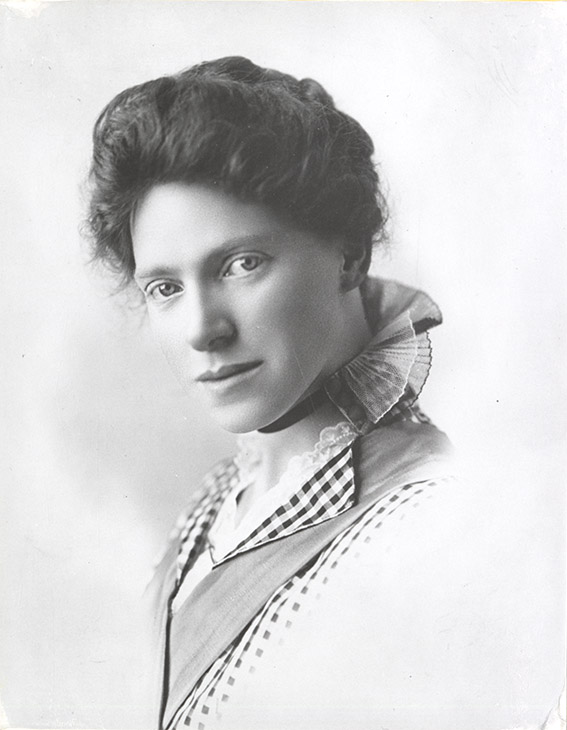
Ione Adair
Born 1883
Occupation: County assessor; teacher; postal clerk; timber homesteader
Residence: Moscow; Bovill; Fortynine Meadows
Topics:
The colored topic bar is hidden for screen reader users. Use the topic buttons below it, the "Filter by Topic" menu or the search box to find specific content in the transcript.
Sam Schrager: This conversation with Iona Adair took place at our home in Moscow on February 24th, 1977. Her sister, Bernadine Adair Cornelison, also took part in the conversation. The interviewer was Sam Schrager.
I'm wondering why there were so many women here.
Ione Adair or Bernadine Cornelison: Why the women went off there?
Well, in the first place, the locator out through that part of the country had a wife that wanted a timber claim, a sister that wanted a timber claim, two sisters that wanted timber claims, and there was a couple of women here in town that wanted timber claims that we all knew. So, when the locator had located this particular batch of timber out in what was called the 49 Meadow Country, and he took this bunch out to show them the country and the timber. And if they wanted to locate, then we could all locate there within a certain distance of each other. It was practically a little colony by themselves. So, that's the way we all happened to go out there. And I joined the bunch of Mrs. Torsen and Mrs. Durham and Mrs. Taylor and Winifred Calkins and Kip Calkins.
Following us when we located out there was Erwin Hansen and Art Larson went out with him just to be on the homestead with him so he'd have company. And they were on one side. And they were four miles and a half off on one side. And Mrs. Torsen was in three quarters of a mile. That was a colony. Mrs. Durham. And my homestead was about four miles over on the other side. And Mrs. Taylor's was over that way. And so we all got together just as a group and would take our trips out together. And it was a saving on packers and so forth when we all went together. So, that was... What else?
Sam Schrager: Were most of these ladies as self-reliant as you were? These women?
I can't hear you. Well, it seemed like to be a homesteader it took a lot of self-reliance. You had to depend on yourself and your own resources.
Ione Adair or Bernadine Cornelison: You had to depend upon yourself. But the others, of course, surrounding you that were homesteaders, or that took up homesteaders, all helped if you needed any help or anything like that. And Mrs. Durham and I planned the winter together. I was four miles and a half from her place. And so we decided that she and her daughter and I would live together that winter. And I would go back and forth to my place as I wished. And it was all snowshoeing, of course, mostly. And that's the way we traveled. Then my father was afraid that something might happen and that we'd have no means of getting word out to the outside of an emergency. So he and Mrs. Durham and I decided that we'd hire a man to stay with us that winter. And so my father made the arrangements with a man by the name of Carter. And Bill Carter said that he would trap that winter and would try to make up for any additional expenses that he would do or needed. And that he would go out once a month anyway to get the mail and bring it to us. And the rest of the time he would spend trapping in that part of the country.
Sam Schrager: Was he staying at the same cabin that you and...
Ione Adair or Bernadine Cornelison: Mrs. Durham and her daughter and I, we were the three that were together. And Mrs. Turson, who was a miller here in town, had a cabin about three-quarters of a mile from our place. But she only spent the summers out there. Let her sister run the business here in town and she went out and spent it on the homestead while the weather was good.
Sam Schrager: Oh, I was just wondering, did he, when he was there, did he have to sleep in the barn or was there...
Could he sleep in the house?
There was no barn there. He could sleep in the house too then. He slept in the house with us, yes.
Ione Adair or Bernadine Cornelison: We had, I don't know whether you know, beared grass or not. But it's a very wiry grass and holds up when you make a mattress of it. And we made a full-size mattress for him. He was over six feet tall. We made a full-size mattress for him of this. And each day we would roll it up, put a blanket over it, and it could be used as a seat. In case that you wanted extra accommodations.
Sam Schrager: Just a mat of bare grass? It was just a mat of bare grass?
Ione Adair or Bernadine Cornelison: Just a mattress of bare grass. We made the mattress out of gunny sacks that we had and then cut the bare grass and laid the mattress for him. And that was his bedroom. And we had a bedroom across the end of the cabin. And I had a single bed and Mrs. Durham and her daughter had a double bed. And during the daytime we had fixed them so they would, the double bed would fold up in the wall and out of the way. And the single bed was used as a seat during the daytime.
Sam Schrager: Didn't you have an attic in that place a second start?
Ione Adair or Bernadine Cornelison: We had an attic in the place. And that's where we kept flour and sugar or things that the moisture might affect. We had an outdoor cellar and we kept the canned goods in this outdoor cellar. But the upper was the attic. We kept the flour and the sugar because that would be warm from the heat in the cabin. And it wouldn't get solid.
Carter one day got everything all ready to go out for the mail. And left early in the morning for it was, they called it 28 miles out to Avery by trail. And he didn't go back in to Clarkia because that was a longer route. It took 45 miles to get in that way. So he went out the short way to Avery and the mail was all sent to Avery. And he would go out and get it. Well he got everything all ready and left early. And after he left Mrs. Durham decided that she had to wash. And the extra soap and stuff she needed was up in the attic. And the only way into the attic was by ladder and the trap door. So we brought in the ladder and opened the trap door. And Mrs. Durham went up to the attic to get the flour or whatever it was that she needed. And about the time she got up there the ice on the legs of the ladder broke off and the ladder went down. Mrs. Durham went with it. And as she went down she hit the end of her spine on the ladder and dropped off in a faint. Well Myrtle and I didn't know what to do so we just grabbed up a bottle of camphor that was there. And intended to put it under her nose where she'd breathe it. And Myrtle miscalculated and put it on her eye. On her forehead and it run down into her eye. Well that brought Mrs. Durham to in one grand rush. We grabbed her while she was in that condition and put her over on my bed. And she lay there all afternoon just moaning, oh my tailbone, oh my tailbone. It nearly drove us crazy because we didn't know what to do about it until Carter got back anyway. We couldn't send word out. We couldn't do anything. And neither one of us were going off and leaving the other one alone with the mother on a 28 mile trip out to town. So we just endured moaning and tried to keep her as comfortable as possible. When Carter got back then he could see that Mrs. Durham was in a very bad condition and would have to be taken off to town. And so we waited for about a week until she got to feeling a little better. And then Carter took her and started off to Avery as a 28 mile trip for a woman with her tailbone injured and on snowshoes. So she got along very nicely until about the last mile and a half or two miles of the trip. And then she broke down. She just couldn't go any farther. So Carter practically carried her on in to Avery. And then they got transportation from Avery on the train and brought her down to Tico and on into Moscow. So we had her in the hospital for quite a little while here after that until she began to get better. Well, Myrtle and I were then left alone with just Carter as companions. And so we got along very nicely. But the next time Carter went off to Avery to see how Mrs. Durham was getting along. And it left Myrtle and I alone. And we were sitting eating our breakfast one morning and the cabin door opened. And in walked a grizzly funny looking little old fellow. And he said, oh you're here.
And we said, yes, who are you?
He said, I'm dynamite.
And I said, you are?
He said, yes, they all call me dynamite. He said, I'm working on the railroads and on the tunnels. And I do the drilling for the holes and putting the dynamite in. And that's where I got my name.
Well, I said, you do have another name, don't you?
He said, yes, I'm Joel Chandler Harris. And he said, my mother thought the name of Joel Chandler sounded very nice. She'd been reading about him. And so she called me Joel Chandler Harris. Well, he came in and he stayed. He said, I'll stay here until your man gets back. So he stayed. We couldn't say get out. We had no means of putting him out or anything. And so we said, all right. So he took the bed and unrolled the bed that night. And that was his bed until Carter got back. Well, when Carter got back, then dynamite left and went over to Larson and Hansen's cabin. And he spent the greater part of the winter at the Larson and Hansen cabin. But he was a funny looking little fellow with whiskers all over.
Sam Schrager: Was he staying there?
Ione Adair or Bernadine Cornelison: We were so surprised. He said, I've been living in your cabin while you were gone. We knew somebody had been there, but we had no idea who nor what. We said, I've been there. He said, when your man gets back, I'll go on over to the boys. And that's what he did.
Sam Schrager: Was he staying there to protect you? Was that the idea? Was he staying there to protect you? Was that his thinking?
Ione Adair or Bernadine Cornelison: We don't know. We don't know what his idea was. He was just looking for a place to land. And he saw the place was vacant and he just landed. So we did a lot of blanket washing and all when we got to capturing this.
Sam Schrager: You know, he stayed at Elsie Files' place too. Because I know Carol Brink once mentioned that to me.
Ione Adair or Bernadine Cornelison: She mentioned this guy, Dynamite. She spoke about Dynamite too, did she?
Well, Elsie was a class on what they called, another branch of the little north bird called the Floodwood. It flew, it went south and east. It went south and east and the potlatch went the other way. And we were on the other side of the ridge from Elsie. She was quite a character. You should have known her. She was delightful. She certainly was. One night we were going on the trip. My father, after I had been out there so long, the government decided I had to come into a trial at Wallace. And in order to get to the trial at Wallace, I had to be notified to get out there. And there was no one in this part of the country that knew where I was or the location or anything. And so my father undertook to come out and notify me, which he did. And he left word that we would need a packer to bring us out. And he walked out that 25 miles from Avery, 28 miles, and told me that I had to come in for the trip. And so they got the packer out and the packer, Ira McPeak, lived at Clarkia. And he had been packing things with us for us so that he knew where we were and how to get to us and so forth. And he brought the horses out for us. And he brought a horse out for me to ride that an Indian had owned. And he lost the race for the Indian. And the Indian was so mad that he cut the horse's tail off and his ears right close to his head. Well, the day that we started out with the pack train, after my father got there, they put me on Jim the horse. Bob. What was it?
Bob. He called the horse Bob. Bob because of his bob ears and bob tails. And McPeak said, you ride Bob because he is so sure of footing. And he said, you ride out on Bob. Well, I had taken cold a little while before and I was subject to attacks of Quincy. And so they dolled me up and everything they could find in the cabin. It was warm. And I mounted Bob and we started off. Well, there's one place that we used to call little Lake Thelma. It's a different name than that now on the maps. And I don't know what it's called now. But at any rate, you had to go up a very high, very steep ridge to get up to the top and come on over into the Clarkia country. And we always, in going up, hung onto our horse's tail and made the horse pull us up instead of riding because it was this way. It was so rough you couldn't ride comfortably on it. We always held onto the horse's tail. Well, I was on Bob, which had neither ears nor tail. And so I had to stay on the horse. And I'd been having the Quincy at the cabin and was not in a very good condition to be riding out there anyway. Well, we got to what was called the, not the company, it was the halfway cabin. It was the government cabin. And they had blankets and cooking utensils and heating and so forth at the cabin. We got to the cabin that night and who was at the cabin but Elsie Vile. She had heard that...
Sam Schrager: Anybody home?
Ione Adair or Bernadine Cornelison: Yes. I always give you a recording of you.
Sam Schrager: Did we come again? Did you understand me?
So you met...
Who was he?
Ione Adair or Bernadine Cornelison: She was across the street. Oh, across the street.
Sam Schrager: So Elsie Vile was there?
Ione Adair or Bernadine Cornelison: Elsie Vile had heard through the, well I suppose it would be the wireless, that McPete was coming out to our place and she wanted to come out to Clarkia. So she walked from her place and down to this government cabin because she knew we'd stop there. And she had with her a great big bulldog. And see that was for protection on her cabin, that she had this big bulldog. Well she was at the cabin that night when we got in. And I had this enormous head of hair. And the rain had wet the neck of the turtleneck sweater I was wearing. And the sweater was wet. And we couldn't get out of the sweater. So McPete took one side, the packer took one side, Elsie took the other, and they took my hair down and the skin, this turtleneck sweater up over my head until they finally got it off and I was made as comfortable as possible. Well Elsie and I slept in one bed that night, just little bunk beds in the government cabin. And along in the night came the pack rats. And the bulldog didn't like pack rats. So he started chasing him all around the house, in the cabin, all around the floor. And whenever the pack rats would be, the dog would get too close, the pack rat would be up on the beds. And the dog up after him, you can imagine how much sleep went on in that cabin that night. We couldn't calm the dog down on account of the rats. And we couldn't catch the rats and he couldn't catch the rats.
Sam Schrager: Couldn't just kick him out of the cabin?
Ione Adair or Bernadine Cornelison: Couldn't chase him out. They didn't have any idea of going out of the cabin.
Sam Schrager: The dog?
Ione Adair or Bernadine Cornelison: Oh no, it was cold, snow deep outside. You don't put a dog out in the snow and leave him. Especially a short haired dog like a bulldog. But, we got off the next morning and went on in to Clarkia. Elsie took the dog and went with us. And we all got to Clarkia safe. And it was quite a trip that time.
Sam Schrager: Your father had come out all that distance by snowshoe? Had he snowshoed out to the cabin?
Ione Adair or Bernadine Cornelison: Yes, snowshoes or walking. Which is amazing because he was not an athletic person, but determined.
Sam Schrager: When you got to Clarkia, you still had a long ways to go to Wallace.
Did you get on the train there?
No.
Ione Adair or Bernadine Cornelison: Oh, I had a long ways to go. Yes, my father stayed there with me for two or three days until I got my throat cleared out. And then we went on up to Wallace and got there in time for the trial. The difficulty was that the railroad had placed, what do you say, entries, had filed on a lot of what was supposed to be railroad land in that section of the country. And they were given by the government certain townships and certain, what do you call it, railroads had rights over certain townships in order to settle up this part of the country. And some of those railroads, townships or filings, were over on my place and part of them were on Mrs. Cockin's place. So we all had to go in for the government hearing at Wallace. But we could take the train from Tekoa and make connections and get up to Wallace for the train.
Sam Schrager: Did you win that time?
Ione Adair or Bernadine Cornelison: No.
Sam Schrager: You lost that?
Ione Adair or Bernadine Cornelison: No, I lost it. I lived there for 22 months or more and fought the fire and fed the firemen with the help and made the trips back and forth. But I lost it. We did the best we could and Bertnell French was a representative from Idaho back at Washington, D .C. And Bertnell tried his best to have it reopened and a new van put on. But they said no, it wasn't. It was that I was over on the other, my location had gone over and that I hadn't lived out there at a sufficient length of time. They sent out one of these little, we call them patent leather men from Washington, D .C. and patent leather shoe men that didn't know a darn thing about timber or living in the woods or even living. And he'd come in, he'd look over your little cabin and say, it's not a suitable habitation. And I had a little garden patch and I raised radishes of lettuce out there and all. He looked at my garden patch and said it's not sufficient cultivation for a wood. And did that...
Sam Schrager: Did that to your face?
Ione Adair or Bernadine Cornelison: Yes.
Sam Schrager: To your face?
Ione Adair or Bernadine Cornelison: Yeah, oh yes. He didn't mind telling us. That went on like that. He came in and he got Mrs. Durham and Mrs. Torsen's place and my place and Kip Cockin's place next to mine where she was located on one end of the meadow and I was at the other end of the meadow. Our cabins were quite close so I had company out there and she lost hers and I don't know, there's a whole bunch of them in through there that lost it on account of this man from Washington, D .C. that didn't think people could live under those conditions. Although we were living under them. Well, during the fire season in 1910, this same man was put in charge of a firefighters' brigade that was sent off into that part of the country. And at that time, he had sent his report in to Washington, D .C. and they'd cancelled all of our homesteads out there but we were still on the homestead because we didn't know but what it might be opened or reopened at any time. You never know when they were fighting it. And he was put on in charge of the firefighting brigade that was sent off into that section of the country. And one morning, Mrs. Taylor, who lived alone about a mile and a half or two miles from Mrs. Cockin's place, and she was a little uneasy about the smoke that had been drifting into the country. So she came over to stay with me so as not to be alone at her cabin in case anything should happen. Well, we were... there was a rat at the door that was just barely outside and Mrs. Taylor got up and answered the door and there was this man who had reported all of these homesteaders standing at the door. And he said that he was in charge of a firefighting crew and that they were trying to locate the fire which was causing all the smoke in this part of the country. And he wanted to know if there was a trail any farther east. So she told him of her trail that went farther east and he said he'd take his crew and go over there. Well, we got up and dressed and decided that we'd walk over and see if they had found her cabin and if they were still there, which they were when we got there. And the men that were camping around the fire on the outside, some of them were inside of the cabin and were trying to get something for breakfast. And Mrs. Taylor said that she would help the men. So she got busy and fixed pancakes and things for the men inside the cabin and outside the cabin. And when they went to move on then to locate farther to locate the fire, Mrs. or Mr. Roach said to Mrs.
Sam Schrager: Taylor, wouldn't you ladies like to go on with us a little farther and get a meal for us at noon so we'd have something to eat?
Ione Adair or Bernadine Cornelison: And we said we would. And so we followed the night. We got them a lunch of pancakes or rolled cakes so they'd have something to eat at noon. And that evening then they wanted us to stay and get the evening meal for them. Well that was my first attempt at cooking outside over a fireplace and also Mrs. Taylor's first attempt. But we managed to get something for the men to eat that night. And they fixed a bed for us right along by the side of the horses that they had taken in there. And the horses kept stomping and chewing and stomping and trying to fight the flies all night long. So we didn't get very much sleep. But the next morning they wanted us to continue on and take care of the men we had.
Sam Schrager: How many did you have?
Ione Adair or Bernadine Cornelison: We had about ten or fifteen that we were trying to fix for them. And they had their own provisions but we had to take care of the provisions and the cooking. By the way, it took me years to like potatoes. I cooked so many potatoes in water buckets over the fire. I didn't like potatoes for a long, long time after that.
Sam Schrager: Were you prepared to go on with them?
Ione Adair or Bernadine Cornelison: You didn't have your clothing and all your belongings. No, we just learned what we had and got along with the time being. Because they had to keep on working and going far. They had a man.
Sam Schrager: What was his name?
Ione Adair or Bernadine Cornelison: Johnny, Johnny, Johnny, Johnny. Anyway, he was a man here in town that we knew of that was a cook. And he had gone on the firefighting crew just for the experience and was a cook. And they left him up on the top of what was called the freeze out ridge when they camped there the night before coming on to our cabin. And they left him up there and he said that he would pack things and have everything all ready and that the crew coming through could pick them up. And that he'd cut across country and come over to this part of the country. But Johnny missed the packers. And Johnny missed everything when he started out across country and he got lost. And so he just kept traveling. He said he thought he'd find something sometime. And he finally landed in the camp. But for that time they needed firefighters so bad that Johnny wasn't allowed to cook. He was put on the firefighting. And Mrs. Durham and I continued cooking. And then they brought in a team of...
Sam Schrager: what were they called?
Ione Adair or Bernadine Cornelison: They were short termers. You told me about that. Yeah. From Montana. Right. And they had a camp right next to ours. But they had their own cook. And finally Mr. Roach gave Mrs. Taylor and me a man and a flunky to help us out so we didn't have quite so much work to do after that. But at any rate, Johnny was put on the firing line. How long did you cook for the Bayonne? Huh? How long did you cook for them?
How long did you cook for the Bayonne? Huh? How long did you cook for them?
We cooked for over 40 days. The government paid us for a little over 40 days for our service for the firefighters.
How much?
Well, it was 40 something dollars. It was about a dollar a day I think.
Sam Schrager: What did you think of the experience at the time? What'd you think of that?
Ione Adair or Bernadine Cornelison: It was just experience. That was all. Always something new coming up. Something that you weren't expecting. I was in the morning like the fire. One morning it was so smoky outside. After a perfectly still night and then the smoke would drop down with the... I suppose it was the dampness of the evening that the smoke would drop down. And I heard noise out on the clearing near Mrs. Cockin's cabin. And I got up and Mrs.
Taylor said, what are you going to do?
And I said, I'm going to see what the racket is. And so I got up and put on my robe and went outside and took my gun. I had a revolver along with me. And I took my gun and went outside and just at the edge of the clearing on the other side was a beautiful little deer. I never had shot at a deer. I'd eaten the meat and loved it. So I thought, oh gee, that would be good to have some meat. So I took old Betsy and aimed at the deer. Well about that time the gun began to go this way and this way and this way and this way and up and down and up and down. And I got buck fever and I couldn't shoot. I couldn't shoot at that deer. I just had buck fever too bad. So I missed the deer and I went back into the cabin and stayed there. Finally got over my buck fever.
Sam Schrager: Is buck fever what happens when you try to shoot a deer?
Ione Adair or Bernadine Cornelison: That's when you get the shape. You get buck fever. That is your nervousness. Your entire nervousness and the nerves of your body are all out of control. And your gun arm means nothing. You just go one way or the other. I tried holding it with both hands and it didn't work or anything so I just turned around. Sam, did she ever tell you the final chapter of this Mr. Roach?
Yes, I think so. When she was over on Pears. Yes, he apologized. He was sorry. I forgot.
Sam Schrager: I was going to ask you when you were on that fire cooking, did you ever have to move the camp to get away from the fire?
Ione Adair or Bernadine Cornelison: Not exactly. We were camped on one side of the river and they decided that that was a poor place for our camp. It was a more level place across on the other side. So they fixed up the fireplace on the other side and moved our camp over. Well, the firefighters were all out on the line and one day there was a heavy wind came up and we noticed that the men were beginning to come in off of the fire line. Both at our camp and at the other camp, the Montana camp across the line. And we wanted to know what and they said, well this is as nearly a clear place as there is from here up to where the fire line is. And they said there's no way of stopping it with this wind.
And we said, well what do we do?
They said there's only one thing to do that we can tell. That's to take your blankets and go down to the stream. And if the fire comes close, get into the water and cover your head with a blanket, leaving an air space, and stay until the fire has passed over. It may be awfully hot, but if you're in the water you possibly could survive anyway. That would be the only way of doing it. So that's what the men, the two men that they left for Lackey Boys with us and the men that had drifted back all got their blankets and we went down to the stream. And we sat there on the log at the edge of the stream and watched the fire coming. Well somewhere, well we were sitting there, somewhere along nature took a funny little quirk and a wind began coming from the other direction and forced the fire back. And it was within a very short distance of where we were camped there at the creek. But it forced the fire back the other way and it didn't come into our little corner of the woods. So we were very fortunate that time. I thought I'd say goodbye to everybody. We did too. My father went out to Clarkia and tried his best to get McPeak or someone to give him a horse and let him go out to our cabin. He wanted to know what had happened to us. He hadn't heard from us and he didn't know what had happened to us. And he had a daughter out there somewhere and the men wouldn't give him a horse. They wouldn't allow him to leave Clarkia. He had to stay there at Clarkia and get word if he could. But he stayed there at Clarkia for a few days but they couldn't get any word from us because of the fire cut. It had cut across. When she came home she was wearing these filthy dirty pocket clothes. Her hair was singed, her eyebrows were kind of moth eaten. And her face was monster. And her revolver around her waist. She came clumping up the street. And we're glad to see her. Oh dear. Why don't you tell this man then, actually Jay Roach. You told him that I owned him.
You told him that? About Pierce.
About what?
About meeting him at Pierce. Oh. She told me. I did tell you about meeting him at Pierce. But while we were on the fire line up there, actually Jay Roach was taken from the heat of the summer and all the responsibilities of the fire and the firemen and all. And he got a very severe case of diarrhea. Summer diarrhea. And he came back in the camp looking like a lost sheep. I never saw anybody look like he did.
And I said, what's the trouble?
And he told me. And I said, well, I can't go myself because I have to stay and help Mrs. Taylor get something for your men to eat tonight. But if you will give me a man by the name of Ricketts, which I knew here in Moscow. I knew his wife and Jack Ricketts. I said, I'll tell him where to get some medicine in my cabin and I'll send him back to the cabin and get something which I think will help you. Well, my father being a doctor had given us all kinds of every medicine that he thought we would possibly use. And I knew where it was and what it was. And when he found Ricketts and I sent Ricketts back to the cabin. And Ricketts got some clean clothes for me and some clean clothes for Mrs. Taylor on his trip. And the medicine for A .J. Roach. Well, A .J. Roach took it and within a short time was able to get back on the firing line again and take it home.
Sam Schrager: Sure were nice to him. Yeah, you were pretty nice to him considering that he wasn't very nice to you. No, he wasn't.
Ione Adair or Bernadine Cornelison: But then the man was in trouble and he had to have help. And I had the means of giving it to him so I got it for him.
Sam Schrager: What did you think of him though? What did I think of him?
Ione Adair or Bernadine Cornelison: Yes. I didn't think very much of him. But I had to respect him because he was at the end of the camp and all. And in disrespect, should not have been given to him because he was doing the job he was given to do. Although he was not trained for it. But he was doing the best he could. But I didn't like him.
I didn't like him at all.
Sam Schrager: Now what's your next question? If the homesteaders had been able to prove up on those places, would they have sold to the lumber company after it was proved up?
Ione Adair or Bernadine Cornelison: Well, the lumber companies were in this part of the country all through that section of the country. Clarkia and Meadow Country and beyond. And from there clear on up into Avery. They were buying the timber from these homesteaders. And those that were allowed to prove up sold their places. But those others lost it and lost their time and lost the money that it took to do their improving.
Sam Schrager: Would there have been a pretty good profit for the people who proved up if they had been able to?
Ione Adair or Bernadine Cornelison: At the time, most of the people out there would get all the way from $3 ,000 to $8 ,000 depending upon the sand of timber on the particular location. And some of them got along very nicely. This Elsie File, I just don't remember rightly whether she sold hers or whether she lost it. I think she lost it. She lost it. I think so. Mrs. Brown, Della Brown Griffith, had a claim right close to Mrs. File. And I think that she got her claim. Some of them did in that location and some didn't. Remember me telling you about dynamite being at our door. When Carter got back, he said that, no not Carter, but a man by the name of Fleming came in. Myrtle and I had been out to Moscow to see Mrs. Durham when she was in the hospital. And Carter took us out, but Carter had some other business on hand and didn't want to take us back. So my father called Avery and found that there was a man there by the name of Fleming, A .J. Fleming, from Canada that knew that section of the country and the trail and would be glad to take us back to the homestead. And that's the way we got back to the homestead was by Fleming taking us. But Fleming and dynamite over at the boys' cabin, dynamite was staying with Hansen and Larson, and they decided they wanted something to read. And they knew that Mrs. Brown had left a lot of reading material at her cabin, so they decided that they would go over and get some of this material and bring it over to us so that we'd have something to read likewise. When they went to investigate the cabin, they found phonograph records. And we had one of these little tiny ford, the first little phonograph with a long morning glory horn and all. So we had one of those, and so they saw these records over there and decided that they'd bring us some records, so they brought over a load of records for us. We had a great time playing those records we hadn't heard before. And they brought the magazines for us. And Fleming spent two nights or three nights there with us and dynamite.
Was he the one that liked his liquor? Was he the one that liked liquor? Of course it was taboo for the girls. And one of these two men, when he was taking them out, back to where they were going, as they were crossing a little bridge, he looked down and said
Well, there's a bottle of liquor we should take while I play New And he was over a St. Patrick's Day booze up there. He'd been drunk for quite a while. But the man at the office said that he was alright and he knew the country and that he was over it sufficiently that he could take us back. Well, we picked up the bottle of liquor and he started to put it in his bag, in his knapsack, and I said, I think I'd like that. And he turned around and gave me a look and handed me the bottle. Well, I put the bottle in my knapsack then and carried it. I thought, well, you don't get any unless you take me with it. Well, we got to the cabin where the government cabin, our halfway cabin between Avery and the homestead.
That was just a lean-to, wasn't it? Just bottles put up to keep the rain off you?
There's no cabin. Oh, yes, it was just a lean-to. It wasn't a cabin, it was just a lean-to. A three-sided lean-to with a roof over it and you built your fire out in front of it and the heat come in, supposedly, to keep you warm. It did, but it also melted the snow on the roof and the water dropped down your back in the middle of the night and scared the life out of you. But, at any rate, we reached the cabin. We got the bottle an hour and a half out from the cabin.
AJ's, oh, what have I got, a spiel with liquor caught up with him. He got to the point that he just couldn't carry his knapsack any longer. It was too heavy. So, Myrtle and I divided the knapsack and put it on our bags and helped AJ as nearly as we could until we got to the lean-to. Well, he curled up at the lean-to for a little while and we gathered up a little kindling. Everyone that was supposed to use a lean-to was supposed to leave kindling enough or wood enough for the following part to use. And we started a fire outside and got AJ next to the fire and got him sort of thawed out a little bit.
And I said, would you like a drink?
And he said he would love it. So, Myrtle and I mixed up, put on some, got some hot water from the vessels there. And we fixed up a drink for each of us, making it light but with heat and the liquor was enough that Fleming soon got through enough that he could get up and get firewood enough to keep us for the night. And he set out with the fire and kept things going and we stepped inside the lean-to and fought the water dripping. But in the morning we all got up and had our breakfast and started on to the cabin. We got through the night alright. Maybe because finding that liquor was a good thing. AJ Fleming was a remittance man from Canada. He had been shipped over from England and was a remittance man from Canada and came down into that section of the country and just traveled around to get acquainted with the country. So he knew the country he was going into. In the meantime, he had gone down into Michigan somewhere. I don't know just where but Mrs. Borah and Mrs. Bush, that's Mrs. William Borah and Mrs. Bush had gone to this resort and were spending a few days at the resort. It happened to be the time that AJ Fleming came down from Canada and he got acquainted with them. So when he came in and said that he knew Mrs. Borah and he knew Mrs. Bush and it also helped to give us something that we could rely on and we felt very much better about AJ Fleming after that. He was a funny man. He wrote poetry. He could spill all poetry by the yards. I have a poem, I think I still have it in the basement, that he wrote about the homesteaders out there. He would write part of it with his left hand and part of it with his right hand. It looks so funny to see the two different handwritings on this poem.
Were they any good? Were the poems any good?
Oh yes, they were good.
Sam Schrager: What is a remittance man? What is a remittance man?
Ione Adair or Bernadine Cornelison: Oh, it is a man that doesn't conform with the way of life in England and the family are practically ashamed of him. And so in order to get him out of the way, they send him over to Canada. He would pay him so much a month per year. As a British subject he would be acceptable in Canada. He was accepted in Canada. He had been in one of the wars and had a very deep scar across his forehead here and up into his hairline. We asked him once, he said, I suppose you're wondering where I got that scar and he said yes. So he told us it was during such and such a war and that he was wounded in the war but other than the scar was all that he had that showed that he wasn't. And that's why they call him a remittance man. They pay for them. The parents do. The parents or their relatives pay for them to stay out of England where they're ashamed of having them known as a cousin of so and so or the Earl's oldest brother or something like that. I wonder what you had to do to get kicked out of your own country like that. Maybe it wouldn't take too much. Maybe that scar wasn't from the war. Maybe he got into trouble. He may have had something besides a war scar. I don't know. It could have been a war scar but we had to take his word for it.
Sam Schrager: Well, it sounds as though your father was interested in having protection for you and the other women too would rely on outside help.
But did they have to rely, would you have been able to rely on yourself in tight spots too?
Ione Adair or Bernadine Cornelison: We did. We did. We hired men to come in and clear up the clearing and the buildings and put up the buildings for us. We hired a great deal of our labor from the men at Clark Hill. We had one man by the name of Carter Marsh, a Frenchman, and the other was named Al Champagne. That's a interesting name. Al Champagne was the brother of the wife of the man that owned the big saloon in Clark Hill. His name was Champagne and Al Champagne was one of them. So we had those two men. They got wood for us and Carter would get wood if we needed any. But these men and cutting down the old trees and clearing up put the wood shed full of wood so we had no trouble with the wood.
Did you have to have a certain amount of clearing other than for protection?
Yes, you were supposed to have a certain amount of clearing and gardening and any other, what do you call it, improvements that belong on a home. I had to have a barn. I didn't have a horse, but I had to have a barn, which I used for the wood shed.
Sam Schrager: Was the 22 months that you were there, was that in a row continuous?
Ione Adair or Bernadine Cornelison: Yes, with the exception of the time I took off and went to Wallace.
One week I took off, about the first of March, and Mrs. Durham was here at the hospital at that time. Myrtle and I came out with Carter and decided to come on down to Moscow and see how the mother was getting along and to be out in civilization for a little while. And they were gardening out here over the South Hill Road. People were gardening along in there and the vegetables were coming up and you could see them. That was in March of that year. It seemed awfully good to see all this land. I know, but they're giving that land to the railroads.
Would that be sort of like eminent domain, is that what they call it?
They just go through and take property because they need it for a highway or something.
Sam Schrager: Is that what happened? Did the railroad just get the land?
Ione Adair or Bernadine Cornelison: Yes, the government just gave them certain sections of land in order to get this country opened up. And I don't know what they ever expected to do with the land. The Southern Pacific, the New York Pacific, got some wealthy. Railroad rights is what it was.
Sam Schrager: If your land, if your homestead had not been on the government, I mean on the railroad land, would they have left you alone?
Ione Adair or Bernadine Cornelison: I presume so, but I don't know because they tackled so many of the others that... So it might have been either way. They might have gotten you one anyway. I couldn't tell how that would have been decided. I remember, I think I do correctly, you were saying something about stolen timbers. There was a discussion of that too.
Was it a stolen timber claim or something that they wanted?
Yes, but that was down here on Ruby Creek out from Bovill.
What's a stolen timber?
It wasn't the same thing.
Did you take up two homesteads? Hm? Did you have two homesteads?
This was a stolen timber down here. And I filed on that. You said, you were filed on that. I had the two sections.
Sam Schrager: Did you get to prove up on the stolen timber? Huh? Did you get the stolen timber?
Ione Adair or Bernadine Cornelison: Yes, I did in a way. This is funny. The potlatch, I had this, it's on Ruby Creek out from Bovill. It had a mine. And Elk Horn, Bovill and Elk River on that line across there. And the potlatch lumber company were that they, no fire, so they started in the timber before a certain date in the year. And they said, you can't start a fire, can you
Well, some of those timber men up there got too smart. And they started a fire in the timber, burning brush and so forth. And my father and I went out to see, someone coming in from there told us that part of my land was taken by the fire. And my father and I went out to see about it and see how much damage had been done. And the cook for the lumber company decided that we'd have dinner with them. So we had dinner with the lumbermen and the cook that day.
Sam Schrager: And while we were sitting there, the old cook came in and said, you owned that timber up there?
Ione Adair or Bernadine Cornelison: And I said, yes I did, at one time. And he said, the fire took it and they started the fire out of fire season. And he said, if you need a witness, I can be one for you. I said, you're a cook?
He said, I'm a witness also to anything that interferes with my rights as a citizen. And he said, my rights as a citizen would be to tell you that the fire was started and that it took the timber on your claim. And my father said, would you witness that if it was necessary?
Oh yes, he said, I'd witness it if it was necessary. So we came back to Moscow and my father and I went over to Potlatch to the main timber company office. And went in and met the president of the company there. And he wanted to know what trouble was. So we told him that it had been up to the timber and it was badly damaged. And wanted to know what could be done about it. And he hesitated for a little bit and he said, don't you think that a fire liability payment would be sufficient?
And my father said yes, if it was sufficient. So we sat down and he wrote a check and I took the check and came home and cashed the check. And gave up the timber.
Sam Schrager: Was it a good payment?
Ione Adair or Bernadine Cornelison: Yes it was. It was over, well it was almost $2 ,000 for what was there. And it only cost me a very little coming and going once or twice from Bovill where we spent the summers anyway.
Sam Schrager: Did he know that you would be willing to take it to court? Did he know you would be willing to take it to court if you needed to?
Ione Adair or Bernadine Cornelison: We told him afterwards that had it been necessary we would have taken it to court but we thought we'd give him a chance first. So he didn't know when he wrote you the check that you would have. Because they were just being fair. There were other people affected up in that part of the country besides my claim. And that had timber claims or sorts on Ruby Creek. I just remember that phrase, stone and timber. I never knew what it meant.
Sam Schrager: I wonder what, was that about the same time do you think that the town of Bovill almost burned down? Was that in that same fire?
Ione Adair or Bernadine Cornelison: That was before that. That was before the town of Bovill burned. You might have owned a Ruby mine up in that Ruby Creek district wasn't it?
Sam Schrager: Did you see what the land was like after it was burned? Did you see what the land was like after it had been burned over? Did you go through land that had been burned?
Ione Adair or Bernadine Cornelison: It was hilly. I don't mean just your timber claim. I mean in the woods. It was what they called a stone and timber act. And you could file on it and by paying a certain amount for so many acres you could get your claim on it.
Sam Schrager: What I was thinking is when you go back through timber, like through the land that had been burned over say in that 1910 fire, what did the land look like?
It does.
Ione Adair or Bernadine Cornelison: If you go between here and Clarkia by way of Bovill, go to Bovill and then from there on across to Clarkia you pass a lot of that land which at one time had been burned over and has come back to second growth and their growth timbered. It's reforested itself. A great deal of that between Bovill and what used to be Clarkia, that whole section of the country into there was lumbered off at one time, most of it, by the Potlatch Lumber Company. They were at one time called the Milwaukee Lumber Company and then after they got out west here they called it the Potlatch. I don't see how daddy ever had time to practice his medicine because he was always having someplace with her. He didn't care if he was on his daughter. Everyone was doing it. I was teaching school and had money enough to take care of these things that they came up and my father got interested in getting me connected with the pioneering out on the homesteads. I can't imagine him letting her go. So he approved of the idea. Oh yes. Because with my sister who is two years younger than myself, he was so cautious about everything we did. Maybe he learned a lesson from all the worries she caused him. I don't know. But he didn't want us to take advantage of something. I was my father's boy. Yes she was. He had no boys. He had no son. And I used to drive with him during the flu epidemic here. I would drive at night for him. He would work during the daytime at the office taking care of his patients at the office. Many a time we would drive out at night after dinner to visit the sick in the country. And Dad would be so tired that I would do the driving. I would drive to a certain point and wake him up and ask him which way to go. He would tell me where the location was. I would drive on and he would go back to sleep again. That's wonderful. That's the way. I fished with him and I hunted with him.
Sam Schrager: Do you think he just figured that you could take care of yourself?
He didn't have any real reservation about you going out on a homestead by yourself. Let me tell you something.
Ione Adair or Bernadine Cornelison: She always has been able to take care of herself. Any emergency she's level headed and thinks there's some way out of it.
Did she ever tell you about the time she pulled her tooth?
This was when she was about seven or eight years old. Tell them that.
What?
When you pulled your tooth. I'll tell you. This was the beginning I think. She had to have a tooth pulled. And at that time it was on the dentist there. The dentist had traveled through and told Daddy what to do before he had his tooth. So I think it was Daddy that started to pull your tooth once. Yes. The dentist. I had teeth before youngsters were supposed to have teeth. They came through early some way. I don't know how. And the front teeth. And they were, I guess they were decayed. I don't know what. Because I wasn't old enough to really know. But there was a dentist came through and he, my father was telling him about the teeth. And he gave him a lot of paste and plastic. And told him what to do to save the teeth until the others were ready to come through. And so Dad came home and brought the instruments and worked on my teeth being very careful not to hurt me. And I had the, I had those teeth then until the others came through. Finally had tooth down here. It was aching. And Dad said to me, you come down to the office and I'll take care of that for you. So I went down to the drug store in the back to the office. And Dad got his faucets out and I opened my mouth and he pulled the tooth. Or part of the tooth. He just kept part of it. And before he could get the tooth out of his faucet and in the cuspidor, I was out of the chair and about three blocks down the street towards home. I went just as tight as I could go. Nobody was going to hurt a tooth of mine like that. It hurt me. And away I went. Well we had a little outdoor cellar. And above the cellar was a little open loft. And the children used to play in this loft. That was our playhouse. And we'd go up a little ladder on the outside and up. So when I went home I could feel the edge of that tooth in my tongue. And it bothered me terribly. And I went up to the little playhouse and took a shoe... what do you call it? Sh... shoe... Ha ha! hat's that? What do you button your shoes? A shoe buttoning. Oh yeah. Yeah. Shoe buttoning. That was what we were using up there. And I took this shoe button with the hook on it. One hook. One hook. And I reached in and I pulled the rest of that tooth out. When my father came home at night he said, uh, how's your tooth? I said, I pulled it. He said, you couldn't pull that tooth out. I said, I did. I opened my mouth to show him that the tooth was gone. How did you do it?
I took a shoe button. Button hook. Buttoning. And I pried it out with a shoe buttoning. I think from then on he knew she was going to do anything. He said, I could do anything. So after that... Well we came west in 18... Uh... 1993. 1893. The fall of 1993. That was the year that was so wet here that the farmers couldn't get into the fields to either cut their grain or those that had it grain couldn't get in to harvest it. And, uh,
what is I, I started out with one particular thing to tell you about it. We came,
now I know. We came west and Dad wanted to take care of my teeth. I had some that needed care. And she started it. And Dad said, nothing doing. Nobody gets in my mouth. So, he said, well, we'll see what we can do. We'll just let them go. So there was a dentist here in town by the name of McBride. And he had an office in the Moscow Hotel. A south office that looked directly across into the telephone building at that time. And he went to Dr. McBride and told him what the trouble was. And wanted to know if he could suggest anything. And the doctor said, I think we can. And Dad said, oh what? And he said, uh, how would you like to come down and have dinner with us?
Bring the gal. So, my father and my mother and I went down and had dinner with the doctors. And I got quite well acquainted with the doctors. And the doctor played the violin. If there was anything I loved it was violin music. And he played for me. And we had dinner two or three times down with the doctors. And I got very well acquainted with him. And he played the violin for me. One day he said to me, I noticed when you left that you had a tooth down the ear that needs taking care of. He said, it's going to spoil your looks if you don't have it taken care of. I was quite a proud little youngster's dad. And he said, come up to the office and let me see what we can do about it. So I trudged down to the doctor's office at the Hotel Moscow. And the doctor put a big rubber band around my neck and a shield here to cover me. And worked on my tooth being very careful not to hurt me. And he said, would you come back and let me do the other one?
And I said yes. And I went back and did the other one. Well he took care of my teeth from that time on until all my back teeth came in and filled them all as they needed it. And I went to the doctor and had them taken care of. I wear the violin. I had them all taken care of. I was down at Dr. Miller's yesterday and it reminded me that Dr. Miller had the office in the telephone building which was directly opposite the windows where I used to sit at the doctor's. And I told him, I said, I years ago had my first teeth taken care of directly across here at that window on the other side. And he said, your doctor did a wonderful job. He said, your teeth are still in good condition. So I went down to Dr. Miller last night and was looking in my mouth and I said, doctor, it's been a good many years that you've glanced down into that cavern. I said, are you still working it?
He said, yes, I'm still working it. So he relined my plate yesterday so that I could get her on. So you really have a piece of candy. Try them out now. A little rest. Yes.
Aren't they good?
They'll stick in your teeth. They're really tasty though. I think they are. They're called orange sticks I think.
Orange sticks?
They're called Rosauers' candy cutter. We'll just try them.
They're good?
Sam Schrager: I think they're good.
Aren't they good? Well do you think that there were people who would think that Ione's independence was too independent for a girl?
Ione Adair or Bernadine Cornelison: She never worked on anything else. She never implemented it on anyone else.
Sam Schrager: Well you know how people talk and all. Oh, they may have. I don't know.
Ione Adair or Bernadine Cornelison: Of course she was alone, there were several people from here doing approximately the same things. I think she's told you how she was one of the first people that ever wore a divided skirt. That shocked people, but then soon others began to wear divided skirts. I don't think she was too... she was courageous and I think it haunted her.
Sam Schrager: And it still doesn't.
Well some of these other women that were out there, I wonder, was it harder on some of these other ladies? What? Some of these other ladies that were homesteaders, was it harder on them than it was on you to be alone and to take that kind of life?
Ione Adair or Bernadine Cornelison: Mrs. Durham was a widow. She had this one daughter and she thought that would be a chance for her to make a little more than she was doing dressmaking here in town. And that was her. And Mrs. Tarson was... She married the druggist that had the store down where Birkin's Hardware is now. And she thought that it would help out a good deal if she could take a homestead when this homestead of this locator was lining up this bunch of people. She thought that if she was anywhere near someone else, it would be a good idea. So she did that. Mrs. Durham, as I said, was a widow with one daughter. Mrs. Taylor... Well, she said her husband died, but she never seemed to be very sad about it. And we thought that they probably had had a divorce. That was my idea of Mrs. Taylor at any rate. And Mrs. Brown, Dela Brown Grippus, at the time she took up her homestead, the one where A .J. Fleming and Dynamite got the books. Her brother was a locator. And she was just a young college girl at that time. Finished college. But she married Griffin after that. He was in the construction business. So we knew him and we knew her. And others out there were just about the same. Elsie Fyle was Elsie Watkins, Dr. Watkins' daughter.
And the aunt of the young lady that wrote the buffalo coat, the history of her uncle and the buffalo coat. Were you rather close to...
Sam Schrager: did you become rather close friends to any of these women that you were with?
Ione Adair or Bernadine Cornelison: We've known them here in town. My cousin Mrs. Durham did sewing for me when we were youngsters. And for my mother. And Mrs. Torsen trimmed hats for us. And all of the rest of them. We were all acquainted one way or another. Some we knew better than others but we learned them after we got out on the homestead. This is Mrs. Durham.
Sam Schrager: Was she related to the Durham and Kaufman store?
Ione Adair or Bernadine Cornelison: No.
Sam Schrager: Another?
Ione Adair or Bernadine Cornelison: No, she wasn't.
Sam Schrager: What about this woman that ran the hotel at Clarkia?
Ione Adair or Bernadine Cornelison: That woman that you mentioned to me. Mrs. Ferdy.
Sam Schrager: Was she French?
Ione Adair or Bernadine Cornelison: Ferdy F-E-R-T-I-G. Run it.
Sam Schrager: Did she run a saloon there too?
Ione Adair or Bernadine Cornelison: No. She had the little rooming house down the line between Clarkia and the schoolhouse. Mrs. Clark ran the two football. I remember those boys. Clark.
Sam Schrager: They ran the, what do you call them, sir?
Ione Adair or Bernadine Cornelison: Collins too. We called her Aunt Clark. Yes, she ran a rooming house at Clarkia. I mean at Bovill.
Sam Schrager: Did you think of yourself at the time as being a pioneer? To think of myself? As a pioneer?
Ione Adair or Bernadine Cornelison: Oh no. I never thought about it being a pioneer.
Sam Schrager: Well, you know, it seems as though you're a... Nowadays, when women will, it seems, will do a lot more, have a lot more independence than they used to. It seems like you had that independence back then. The sort of thing that a lot of women nowadays are striving for.
Ione Adair or Bernadine Cornelison: You see, my father was born in Iowa. And his father was a doctor and went up into Colorado. He got the mining fever and went up to Colorado, one of those big mines up around Boulder, and Colorado Springs were opened up. French Creek, I think they called it then. And left my father and his wife with a sister of hers by the name of Taylor in Iowa. The Taylors moved out to Oregon, down at Amity, Oregon, out from Portland. And my father was just a youngster when they took him out there. So he was raised in the West and in that open country down around Portland. And so when he landed here, it was still West to him after having been in school. Because his father died. Our father's father was dead or died when he was up in this mining area with his men. He went out as a doctor with them. And so that left grandmother alone with two little children. The little children and grandmother, they came to Oregon. They went with the Taylors down into Oregon. That's how daddy happened to be taken to Oregon. So you figure that he was more accustomed himself to pioneering. Well, you take a youngster about 17 or 18 years old, then raised in the West and decided to become a doctor. And went back East to Rush College on his own. And worked his way through the college. And he was practically a pioneer in a good many ways. Then he came West. My mother's health was so poor in the East that he decided that he'd come West then to see the twin helpers. So he sold out his practice there in the little town. And came out to his sister's at Johnson down here.When you're in Johnson, in the main town, have you been in Johnson
Sam Schrager: No.
No?
Ione Adair or Bernadine Cornelison: No. But I know where it is. Well, anytime you're down there on the main street, you look straight down a long lane that is from the town. And the lane used to go perfectly straight. And at the end of that lane was a great big house. And that was Uncle John's house. And so we spent our first month in Johnson. Daddy came out and we went down to Johnson to his sister's. And he took mother, Uncle John took mother and daddy down to Pullman. And to decide whether they wanted to locate in Pullman or in Moscow. You told me about that. I think I told you about that. Because she didn't like the hills. That's right. She didn't like being out of town. There were no memories then. She didn't want the hills there at all. So we went, came into Moscow. And I'm glad because I don't like Poland. She said she would take Moscow because Third Street was the only hill then that she could see in Moscow, except in the mountains. Was your mother's family, she grew up on a farm.
Sam Schrager: Was her family a poor family? Was her family a poor family when she was a girl as farmers? Or were they fairly well fixed?
Well they farmed.
Ione Adair or Bernadine Cornelison: Well, he had a farm. And they made very good work on the farm. And that was, they were not wealthy. No farmer is wealthy. Them. But they made their living by living on the farm. And they all died early. I think farming must be very hard. I never had any grandparents because they were all dead before I was born.
Sam Schrager: But you know, this, I wondered what you think about this with nowadays with women striving to be independent. You know, trying to be independent and have jobs and work of their own and not just be housewives and that kind of thing. And I was wondering, I mean this seems like what you were doing back then without even thinking about it.
Ione Adair or Bernadine Cornelison: Indiana was one very heavily populated at that time. Her sister nature, I think. The sister next to her wasn't of that temperament at all. She liked to flirt with the boys. She didn't flirt. Not yourself. But she was an adventuresome person. She never would have cared to have gone on none of the things that I understand. Do you think that... She liked challenges.
Sam Schrager: And she didn't, you think she would see them as difficult or hard going?
Something new.
Ione Adair or Bernadine Cornelison: I think the only thing that puts the fear of God in her is electricity. She's afraid of electricity. Electric storms she doesn't like. And anything in the house that looks like it might be throwing a little spark into bringing me to get an electrician out. Because she just will not touch it. So that's how she's afraid of it.
Sam Schrager: I still don't know if she understands just what I mean when I try to say it to her. But compared to the way that people are today, it seems like she was a pioneer in more ways than one. Yes she was.
Ione Adair or Bernadine Cornelison: Although they didn't call her that. I mean she was like some of these women that started out... Well I think Abigail Adams was really one of the first women that worked for women's rights. Although she didn't call it that, but she started that sort of thing. And I think just without realizing, this has always gone her own way. She'll even... I won't say she'll argue with the doctor, but if she doesn't pick a sense of it, she will pick such a sense.
Sam Schrager: Well back in those days when she was young, was she interested in women's rights at all?
I don't think so. She had too many others. But women had to go here pretty early.
Ione Adair or Bernadine Cornelison: She was mixed up in politics just once, unless when she was elected county treasurer and tax collector. And she went into civil service at the post office. But now she liked going out and giving these speeches for electioneering for her office. Daddy went with her.
I don't know how many of you have done that, because he was always looking out for Viola.
And she really didn't need looking out for us much because she was so independent.
Sam Schrager: He was that way with all the sources, as I said. Was there much of a campaign to run for... Oh I don't think so. They had to make all these surrounding towns and give talks. Old beating.
Did you tell me once that when your father was really quite sick that he had you come and make him up? Or his eyebrows?
Ione Adair or Bernadine Cornelison: I was struck by that. Yeah. He was always in bed just before his death. I took care of him for six months. Which I love. I wanted to be a doctor. But I was born in the wrong generation before... Oh, she said she was proud. I'm glad to hear her say that to me. But when his beard began to turn gray, his hair never turned gray. But his eyebrows and his beard were kind of reddish, yet again getting gray speckles in them. His eyebrows got gray. So one day, when he was still quite comfortable in bed, he asked me to go up to the office and get a small bottle of bottle or something. So I went and got it. Not knowing what he would give it. We said there was a toothbrush pad. So I brought it up and he put this on his eyebrows, not his beard. And he was still in bed, but he still was proud. I just loved him. His periods.
Did you think of that professor's name? Which one?
One that talked about Idaho history. Oh, I had been trying to...
Sam Schrager: Brosnan?
Ione Adair or Bernadine Cornelison: It was Brosnan.
Sam Schrager: Brosnan?
Ione Adair or Bernadine Cornelison: Yes. Brosnan. Brosnan.
How do you know about Brosnan?
Sam Schrager: Oh, well I just knew that he taught Idaho history here.
Ione Adair or Bernadine Cornelison: My father... I think you told him this too. Did I tell you about the...
Sam Schrager: Daddy and his hearing aid?
Ione Adair or Bernadine Cornelison: No.
Sam Schrager: No?
Ione Adair or Bernadine Cornelison: That's a good last one.
Aren't they good little things?
And, well, my father got a... was getting a little bit deaf and it bothered him. With his profession he had to be able to hear what everyone said. So we got him a hearing aid. It was one of the very first ones that were put out. And the hearing... the battery split into his vest pocket. And the hearing aid came up into his ears. Well, he wasn't sure he was getting good service out of that. And he would, at home, go into one room and then ask us to speak to him. And then he'd try to catch what we said. And he kept on with that, but trying a little lever, high and low and medium and so forth. And on it. Well, Daddy belonged to the Chamber of Commerce. And one day Dr. Brosnan was the speaker at the Chamber of Commerce on Idaho history. He was especially interested in the spring up here on Paradise Ridge. And this monument that's out here where the old... Well,
it's on B Street, A Street, I guess. Out at the north end there's a big rock. There's a monument out there. And he was telling about those things. And my father decided that he would go down and listen to the Idaho history by Dr. Brosnan. So he took a place quite close to Dr. Brosnan and went in to take out his hearing aid. And Dr. Brosnan would go on with his story. And they had to sit here and he'd shift the lever one way or he'd shift the lever the next way. Dr. Brosnan would lower his voice and he'd shift it again. Well, he watched Dr. Brosnan to see what he was going to say or how he was going to speak in order to change his hearing aid. And he watched him intently. When he came home and we said, did you hear Dr. Brosnan?
He said, no, I couldn't understand what he was saying. I said, well, that's just too bad. You'd have to try again. So the next day I was up at the post office at the university station which was then... What do they call it now?
The U-Lut. And Dr. Brosnan came through the office and stopped to talk to me. And he said, you know, Miss Adair, I didn't know that your father was so interested in Idaho history. And I said, oh yes he is. I said, he's quite a western man in the beginning and is very interested in anything that is historical. Well, he said, you know, I gave a speech at the Chamber of Commerce yesterday and there wasn't a man at that table that gave me the attention your father did. I just thought that. I didn't have the courage to tell him that my father came home and said he hadn't heard a word. Now, isn't that good?
That's a good story.
Did you have some special things you wanted to ask her about, Sam?
Sam Schrager: I wanted to ask her about teaching a little bit too. About what the experience of teaching was like. Now, you told me once when I asked you about teaching, about the time that the supervisor came out and you had to bring the class back. But I was thinking about more of what teaching was like at that time.
Ione Adair or Bernadine Cornelison: I can't tell you what teaching was like. What about in the public schools, I know. You had to do several grades. The public schools are so changed now. In the early days, I had usually high third and low fourth grades and had all the way from forty to fifty youngsters in the two grades in a room. And you carry on your discipline with that many children and your instructions and all for that many children and you've got your hands full. And now they think if they had twenty or possibly twenty-five, they have a full room and they have no time for preparation excepting after hours. And in the early days, you did your work yourself and you did it on your own time. I can remember her coming home with stacks of papers as she was grading and eating them. Had written lessons. And they were disciplined too. The children, when I was in school, it was about the time she was teaching. You had to march in and march out of the school rooms. You were never allowed to just visit the door freely. You marched from the walk up to the school and took your seats. Once I was kept in school, a whole week, an hour after school every night because I chewed gum and cut it. They were all together different things. You were responsible for the children coming and going to school. If anything happened, you were responsible for them. And so you had your discipline not only at the school but either coming or going. Well, you couldn't be everywhere at once. No, but it was your responsibility. No, but somebody would tell on them. You'd always remember. Always somebody to tell, you know. It reminds me at the time that Harry Orchard was in the, what was it, the WIP, what did they call that? The IWW? The W-Union. Before that I think.
Sam Schrager: The what? What was it, where? What about Harry Orchard? What about Harry Orchard? Harry Orchard? Did you ever hear about Harry Orchard? I've heard about him, but what were you going to say about him?
Ione Adair or Bernadine Cornelison: Oh, he was instrumental in killing some men down around Boise. He was in the Union and they were having this fight for Union wages and he was instrumental in killing them. And I was teaching over here at what was then the old Russell School, the building where this new building is now. And had the fourth grade and a little youngster in it with a name of Horton McCauley. His sister was the speech director at the university at that time and Horton was in my room. And there were things going on that we were trying to get to the bottom of it. A little group of youngsters were carrying on pretty high for a time and we were trying to get to the bottom of it. And we couldn't find anyone that would tell us that we could get to give enough of it, that we could have anything to go by. And I was talking to Horton and I said to Horton, somebody must know, somebody must tell because we have to get at the bottom of this. And he looked up and he said, Harry Orchard never confessed and I won't either. Now that was Harry Orchard. Well, it went on that way for oh, possibly a week or so. And we were still ferreting around trying to get at the bottom of this trouble. And one day the papers came out in big headlines, Harry Orchard confesses. I took the paper over to the schoolhouse with me and I showed it to Horton. And I said, Horton, you said that Harry Orchard never confessed. And I said, he did. And I said, it's up to somebody to help us out. Well, we got a full line on the whole business and it got it taken care of. I wasn't just Mr.
Sam Schrager: What was it? What was going on? Huh? What was going on?
Ione Adair or Bernadine Cornelison: The house way down at the end of F Street, the big old house still stands way down there. And there was a group of these youngsters were committing all kinds of depredations at this old house. The house was empty. It had been moved from here on A Street up to F Street where it goes up. It had been moved beyond where the schoolhouse is out there now, the other school. And we were trying to find out what was going on and who was guilty for the depredations that were being done to the house. And we couldn't find anybody.
Sam Schrager: So they were just, they were vandalizing the house?
Ione Adair or Bernadine Cornelison: Vandalizing the house and, oh I don't know what all was going on. All sorts of things. Well Harry Archer confessed. The little fourth grade youngsters shouldn't be doing it. But Harry Archer didn't confess. But when Harry Archer confessed we got the whole business. You'll find out about Harry Archer some of these times. Oh, I've heard about him. I've heard about him. Because I remember then they had the trial.
Sam Schrager: They had the trial of Bill Haywood and Clarence Darrow came and defended Haywood and Darrow.
Ione Adair or Bernadine Cornelison: And Borah, Borah came in on that too. That was a struggle to have that large on TV. That was funny.
Sam Schrager: Did you ever meet him, Senator Borah? Did you meet Senator Borah at all? What do you remember about him?
Ione Adair or Bernadine Cornelison: Oh nothing. In particular he was a large man. I wouldn't say that he was over six feet tall or something like that. But he was a large man in every way. And he had a remarkable face. A face that if you saw it you remembered it. But I can't tell you what he was. The lines, they were serious and all. And yet at the same time they were not stern or forbidding or anything like that. But he was just a man that you were comfortable with at the same time. You never felt like taking any privileges or asking anything of him. He was a... what do you call him? A lone wolf?
Sam Schrager: Did he talk in a common way or did he talk in a... Yes, his... forceful.
Ione Adair or Bernadine Cornelison: His social voice was very pleasing and his distinction was very good. You could understand him. I could understand him but then I did then anyway. It wasn't because I was part of him.
So Sam did you take the talks that Lee gave over at the house the other day?
He gave a talk about the museum. And Mrs. Wood had called me afterward and said she contributed some things to Lee's talk. But the things she contributed were not correct. I just wondered if you taped it and got her voice out. She told that Dr. Church came to Mother's door and asked her if she would live there. Well that was when he was going by. Mother was in the garden and they talked garden and he said this is very much like my home in Pennsylvania. And he wondered if Mother would live there. That's the way Dr. Church got into the house. And she said that he came from Indiana and knocked at the door which to me is quite different. She just... She gets off of himself. She has ideas but they're not always straight ideas.
What was the other thing she said that was so wrong?
One thing that she told Lee over here was that we used to take the banisters that go up the stairs and twine the pine boughs on them for decorations at Christmas. And decorations, more things about decorations. She was never in the house. She never was in the house. So she had no idea. Well I'll tell Lee. I told him. The basement light had been on quite a while and I thought he probably hadn't been in the basement and realized the light had been burning so long. So I called him to tell him about that and then they said Mrs. Woodard told me that she told you that Dr. Church came from Indiana and that is not correct. I forgot about the other thing but the second thing she told me. So you want to check on anything that he gives you that has been given to him by Mrs. Woodard?
Sam Schrager: I can't think of anything. Well you know in talking about Mrs. Borah I was thinking that I hadn't really asked you whether you did see much of her or remained in contact with her after she went back to Washington.
Did you still see her and remain friends?
Ione Adair or Bernadine Cornelison: You see Carrie Bush or Carrie McConnell and our family were very great friends. Very good friends. And Mamie would come to visit with the McConnells and we always saw Mamie when she came. In fact Mamie picked out a suit for me down at Boise and had it sent up to me because Carrie had a suit I liked very much and so she found a suit that she thought would be pleasing to me and she sent the suit up to me. And she always had so many things to tell about Washington and the things that they do. And a great imagination and flair of brutality. She had a Negro maid that she had had I think about ever since she went into Washington. And Daisy was just the source of a great deal of information for Mary. And Mrs. Borah said that she came to her one day and she said, Mrs. Borah said, may I have Thursday off?
And Mrs. Borah said, what do you want with Thursday off?
She said, you've never asked for Thursday before. Why do you want Thursday off?
Oh, said Daisy, Thursday is heckling day. And she said, all we Negroes get together down on the street and we heckle white people to try to make them angry. I love that word. Thursday is heckling day and I'd like to ask Thursday off. So, little things like that, they're funny. Well, I own Mrs. Borah's sister Carrie Bush, was practically a member of our family. She enjoyed our family much more than she did her own family because there was no one else. Her brothers were gone and her sisters. We were always together. We went on picnics. They took her on every vacation. Carrie was on the picnic with us. If we went anywhere, Carrie always went with us. Capping, every summer she'd kill camping with us. It was good company. We were speaking about homesteads or stone and timber claims. After I had the homestead out there, my father decided that he thought I should take a stone and timber claim because all you'd have to do is pay so much an acre for your stone and timber claim. So, he got in touch with some man that was out on what they call Cedar Ridge. That's up from Kendrick and out into the country from Kendrick. This man said that he had a couple of locations out there that he thought my father might be interested in for me. So, Dad and I hitched up the horses and we went out to the old place. The man was living in a two-room cabin, a very nice cabin for that part of the country. His little old mother was living with him. He had sent back east and got his mother to come out and live with him. My father and the locator decided that there was still quite a bit of snow. It wasn't a very good idea for me to get out and go over the claims. If I didn't know any more about the timber, then he did. But my father has been used to the timber out by Bovill and Collins and Clarkia. So, he said, you stay here and visit with Grandma. He said, I'll go with the boy and we'll go over the claim. If I think it's suitable, I'll come back and we can go over, either today or tomorrow. So, I stayed with Grandma. She was someone in her 90s. We sat and visited about the timber, about the country and all these things. I finally asked her about her son. I said, is he your oldest boy?
Oh no, he's not the oldest, he said. I said, no. How many children did you have?
Well, she said, I just don't recollect. She said it was 12 or 13, but I'm not sure which. Years had just gone by. So, I saved that for my father when he came back. I thought he'd enjoy that. I think one reason that Carrie was with us so much, we always had transportation that had good riding horses and good driving horses. And the McConnells didn't. And then there was always something doing around our house. So, it was just an actual gravitate. So, she was really at the house a lot when you were there. Oh yes, and they lived right down here. We have some pictures of Carrie and Mrs. Bright at that time and I own them.
In front of the mirror that the McConnells had down in that house, taking their house down the street.
Sam Schrager: Do you remember other things that Mrs. Borah had to say about what life was like back there in the big capitol?
Ione Adair or Bernadine Cornelison: Very careful. She was very popular.
What's that, Bernadine?
Sam Schrager: Mrs. Borah. I was asking if there were other stories that Mrs. Borah told you about Washington. That strange place back there where they make all these laws. No.
Ione Adair or Bernadine Cornelison: She used to tell somebody, but there were always just little things that would come in in a conversation. And it was very hard to get them all collected so that you could tell them what that was. She caught her sister. Heckling when I remembered that one very well. Mrs. Borah caught her sister, Mrs. Bush, a couple times a month. They'd have a long conversation. She was very entertaining, telling all these wild things about Mrs. Longworth and somebody else. And then Mrs. Bush would come and relay Mamie's conversation to us. They were always entertaining. She had a great sense of humor.
Sam Schrager: Do you think she changed much in the years that she spent in Washington? Who?
Ione Adair or Bernadine Cornelison: Me and Mrs. Borah?
Yes.
Sam Schrager: As being a Senator's wife for a long time.
Ione Adair or Bernadine Cornelison: Yes, she did. You haven't had a chance to read Mrs. Perrine's book, Elephants and Donkeys. You probably would get a lot out of that from Mrs. Borah because Mrs. Perrine was Mary Louise Bush. And she spent a couple of years or more with Mrs. Borah in Washington. And Mrs. Borah gave her this material for her autobiography. It would be a biography when it was given to her. So there'd be lots of that, I'm sure, that would tell.
Sam Schrager: Well, Carrie Bush was married to Ben Bush, right?
Ione Adair or Bernadine Cornelison: He was a foster.
What?
Carrie married Ben Bush. Carrie married Ben Bush. Carrie McConnell Bush. She married Ben Bush. She married him in 1910. And Mary Louise was their daughter. She was born a year or so afterwards. And then they had one son, a young Ben Bush. And he's working for the government now on something and I don't know just what. They sent him at one time down to Antarctica. And he wrote back and told about the penguins down there and all the funny things that happened. The funny thing with that family was Ben and Mrs. Bush and the two children, they were the most separated family. You never saw them together. They never talked about each other. And Mary Louise would come home to visit and she'd stay with somebody else to settle with her mother. We never could understand that because our family were so close and they just didn't seem to have that close tie together. It wasn't because they were separate and young. You know, well it sounds like they found a lot of warmth in other families like in your family. We did but I don't think they did. I don't think Carrie and her family, her children, were close at all. There wasn't any warm feeling there.
You mean Carrie and?
Mary Louise and Ben.
Mary Louise and Ben?
No, they weren't.
Mary Louise married quite young and she married Mr. Perrine who was a musician and lived at the big Perrine ranches that I think are out in Twin Falls. They were only married three or four years before his music didn't pay for their upkeep and Mary Louise was teaching. She decided that teaching was just too much to try to keep the house and to teach and to support her husband too. So they were divorced and she came back up and lived at home for a short time and then went back to Washington D .C. a couple of summers to be with Mamie and work on this autobiography for the Elephants and Donkeys. She taught for years the D 'Ambajos.
Sam Schrager: You know when you mentioned divorce that reminded me of something else I was going to ask you about.
In the early years, like when you were young, divorce wasn't very well accepted, was it?
Ione Adair or Bernadine Cornelison: Not at all.
Divorce wasn't very well accepted. I know. It didn't stick well in the family and the person. The family were as disgraced as the people that were giving the divorce. Well, the son Ben divorced his wife shortly too. Oh, yeah. Ben was quite a character. He was Carrie's husband. He was the head supervisor of the forest and the land for quite a while in Boise. You'll find his records there.
And they lived up in what was called the Burns House on A Street.
He wasn't here very much, was he Pinky?
I never can remember seeing them together.
Sam Schrager: He was in Boise?
Ione Adair or Bernadine Cornelison: I don't know, but I never saw them together, Carrie and her husband. I was old enough to remember them from 1910 on.
Sam Schrager: Do you remember when Dr. Watkins was killed?
Ione Adair or Bernadine Cornelison: Who?
Sam Schrager: Dr. Watkins, do you remember when he was killed? When he was killed?
Ione Adair or Bernadine Cornelison: I wasn't in town at the time. We were out at Collins or Bovill on a homestead. My father came out to tell us about it. And that's when the story that I told you about my sister saying, if God be for us, who can be against it.
Sam Schrager: Would you tell me that story again?
Ione Adair or Bernadine Cornelison: Yes. Yes, afterwards. But my father was over here at the old place and he had just started down the street. And it was about even with the first house over here. When this man on horseback came up the street, or down the street, I don't know which. And Mr. Creighton lived in that greenhouse, the second house, down this Rawlsons and then that slate colored house. And then the next is the greenhouse. Creighton's lived there. And Mr. Creighton just came out of the house and started down the street. And he saw this horse either up or down, I don't know which way. But he called out to the horseman and he said, what's that shooting?
And the man turned around and shouted him. And the bullet went through Mr. Creighton had his arm up this way across his stomach. He had a big stomach too. Quite a pussy man. He always walked with his arm across his stomach. And the man went on then and Dad said he just stopped perfectly still. But he didn't want to get down and get mixed up in that. And he went down the street then a little ways and he met some men coming up. And they were from Dr. Watkins office. How did Dr. Watkins have to go? Whose is it now?
I think it's been taken down. I'm not positive though. I just wondered how he had to go. It's a little insurance office that... What's his name?
That's next to the Tidal Building. A little tiny office building down there. Right. Well that was Dr. Watkins office at that time. It's now I think two insurance businesses or something like that. It may have been... I never thought to look for it when I was down. Well one is the Tidal Office. Right. I think it is right next door to that. Does that mean that your father saw Mr. Creighton get shot?
Sam Schrager: Your father saw Mr. Creighton get shot?
Ione Adair or Bernadine Cornelison: He saw the man shoot at Mr. Creighton. Just looked at his arm. But he didn't go down. Not until afterwards. After the man rode off. After the man rode off. As I say I didn't know whether the man was going up the street or down the street. But Dad missed him one way or the other. Because he stopped. When he saw him shoot he didn't want to get mixed up in it down there. But Dr. Watkins had those offices down there. The offices were built for Dr. Watkins. And that's where the man shot him. He shot him down.
I'll tell him about Marjorie. I'll go get some things on his father. Oh I should go soon. But do tell me about Marjorie. That story about Marjorie. That story about Marjorie. Oh! The crying gal.
Well when we were on the homestead out at Collins. We always went out every summer. And my father always came out on Saturday. And he managed not to be in his office on Saturday. And he came out to the homestead on Saturday. And then back on Sunday he'd be in the office again for the next week. And so the family went out and lived on the homestead. While my father stayed in town. My sister Marjorie was about, I imagine about three years old. When we first started going out there. And she always, whenever she'd sit down at the table. She always had to cry. Regardless of what was there, what was said or anything. The moment she pushed her in a high chair up to the table. The tears began to come. One day my old uncle of mine said to her. Kid what's the matter with you?
And she looked up at me and said I'm just not happy. That's the only reason we ever had for it. When Marjorie cried. Well the post office at Troy had a minister on the postal rod. And he served all the towns which were little towns then. From Troy to Derry to Helmer. And to all the little towns. And finally Collins. Collins was the last on the line. And the minister would always stay over until Sunday. And on Sunday he would hold services in the church. Or the school house for all the homesteaders there. He considered that was his duty and a good chance to preach the word. So he always had his service. Well he would give the sermon for the next Sunday. Would be on such and such a text. And he'd give you the text. Now remember the text and if you have your Bibles look it up and read the rest of the chapter. Well we got the text for the next Sunday. It's the Lord before us who can be against us. And we tried. We thought well now that's the thing. We'll teach Marjorie to say that for daddy when he comes up. He'll be there Saturday and we'll just have her say the golden text for daddy. So we tried all week long to get Marjorie to say the golden text. If God be for us who can be against us? Do you think the child would do it?
She just had a blank out for that. She wouldn't say a word. She wouldn't try. Well Saturday evening we were all sitting around the table. And daddy pulled Marjorie's chair up to the side of him. And after he said grace he turned and looked at Marjorie and she was crying. And he said Marjorie what's the trouble?
He didn't answer. He just reached over and took her by the shoulder and shook her a little bit. He said stop your crying. He's getting exasperated because she cried every time he sat down at the table. Well Marjorie looked up at him and with tears rolling down her face said to him If God be for us who can be against us?
That just melded him. She didn't get any punishment after that. She cried all she wanted to. I thought that was pretty good.
Sam Schrager: The first time she said it? Was that the first time you got her to say it?
Ione Adair or Bernadine Cornelison: That's the only time she ever said it and I don't think she ever said it again afterwards.
Down here at the Methodist Church a number of years ago they started what was called the Golden Age Club. I think you possibly heard about it where they meet. I think it's Monday evenings but I'm not sure now because I haven't been with them for so long. The minister knew Mrs. Tom and she knew me. He said we just have to have some help to get this thing started. We'd like to have some of you people tell stories or little incidents that happened that you can remember. He was well acquainted with him. They never hunted or fished together like he and Dr. Hatfield and some of the other people. But he knew the doctor and he knew the family and Elsie File. Tell about the sleigh bells. The what?
The sleigh bells. Oh, the sleigh bells. Yes, when over at the museum they have a string of sleigh bells. They used them two years ago I think it was on the door. We used to always use them on our front door until people got to stealing things off of the doors. So we didn't put them out anymore. We didn't want to lose them. But shortly after the doctor's death, Daddy was called one day over to the home. Mrs. Watkins always had those very severe migraine headaches. The doctor would keep medicine and treatment for it. So Elsie called my father and said, Mother has one of her severe headaches and she would like you to come over and see if there's anything you can do for her. So Daddy got in the sleigh and he hitched up the horse and drove around. They lived right across from the Presbyterian church up here in that little house. It has a cupola up. He drove up in front and Mrs. Watkins was there in the room when he went in. She looked up and said, Doctor, I didn't hear you cunning. He said, I don't think you would. I wasn't very noisy. She said, don't you have any sleigh bells?
Daddy said, no, I don't have sleigh bells for my horse. He said, I just don't have the bells. Well, she said, we'll see about that. So she sent one of the girls up to the barn, or the wood shed, and asked them to bring in the sleigh bells that the doctor had used on his horse. She gave them to my father and said, when you come, be sure to use the bells so that I can tell when you're coming. And Dad always used the bells on the horses ever after that. That's where those bells came from. Oh, that's a nice story.
Sam Schrager: Those bells were, and I think they were kind of Dr. Watkins' trademark too, because Carol Brink writes about those bells. Well, they're a beautiful tone.
Ione Adair or Bernadine Cornelison: Oh, they're nice. They're lovely music. Tingle, tingle. They were just lovely. We loved them. So that's how Dad got the sleigh bells.
Sam Schrager: How great a shock was that to the town when Dr. Watkins was shot? Was that a really great uproar in the city?
Ione Adair or Bernadine Cornelison: Yes, it was. Everybody was up in arms about it. They went, they farmed a posse and followed the man out to his home. And he went to an upstairs window and would shoot at the men that were down below and tried to kill some of them. But they said that his aim was very poor. It didn't hit anybody.
Did they kill him? I don't remember.
He was upstairs and his little old mother was downstairs and she came out and tried to get the men to disperse and leave. She said he is not in his own mind and he longed to do something that would be very sorry for him. She thought, I do wish you'd disband and go back. And she said, I'll get him down and see what we can do about it. But they weren't able to dispense it. They stayed with it until the man was shot. And it was serious and they just had to have him taken care of then. Dr. Watkins, in those days, all of the insane people, or people that were off as he used to call them, mentally, were sent to our funeral. That was the place for them. And this man had been bothering his mother and bothering some of the neighbors around. And they had him arrested and took up to the courthouse. And at the courthouse, they judged him insane. And one of the doctors that pronounced him insane was Dr. Watkins. And so as soon as the man was able to get out, whether he was released or whether he got out of the asylum, I don't know. But at any rate, he still had it in for Dr. Watkins because he was the one that said that he should be in Orofino. And that's why he shot him.
Sam Schrager: But he did go down to Orofino. He was sent to Orofino.
Ione Adair or Bernadine Cornelison: This man was sent there. He was sent to Orofino. Yes, he was sent to Orofino. The doctor sent him to Orofino in the first place. And then, as I say, he either escaped from there or was released, I don't know which. But at any rate, he still had it in for Dr. Watkins because he was the one.
Sam Schrager: One other thing I was going to ask you is, do either of you remember when Carol Brink's mother killed herself?
Ione Adair or Bernadine Cornelison: She may.
Sam Schrager: Carol Smith's mother?
No, Carol Brink's mother. Dr. Watkins' daughter.
Ione Adair or Bernadine Cornelison: Elsie Files' sister. Oh, yes. Yes, she killed herself.
Sam Schrager: Do you remember that happening?
Ione Adair or Bernadine Cornelison: I do. I do. She was Carol Brink. She became Carol Brink. She was Carol Brown. By Ryrie. Right. Brown after Ryrie. Her husband died. And then she married Brown. She married Brown. She married Ellic Ryrie. And Ryrie worked in one of the banks here and was considered a very good man and all. And after his death, this Brown, Nat Brown, I told you, was a locator and located his sister on the flood wood out here. And he was, well, we called him a rounder. That was all he was. He was just simply a rounder. He'd drink extensively. He would be super, yes. No, I've heard the same thing about him. I've heard him, yeah. And all. An heir do well. And he was such a different type entirely from Mr. Ryrie that I suppose that it appealed to the sister. I don't know, but that was my supposition that it was the extreme change. And she married Nat Brown. Well, they got along fairly well for a little while, but it didn't last. And finally, when she comes to the point, as you said, that divorce was something that just wasn't heard of. It was a disgrace to the family and a disgrace to the people. And she didn't want a divorce, so she took what they thought was ground glass and committed suicide by swallowing the ground glass. And Carol was just a small child at that time. And Elsie, the sister, took care of Carol. That's how Elsie and Carol happened to be together.
Sam Schrager: Do you remember her, the mother? Do you remember the woman? Carol's mother?
Ione Adair or Bernadine Cornelison: Yes. She was a very good looking woman. Elsie was inclined to be a little heavy like her mother, a little stout, but the sister was tall and slender and very light hair and you really would call her a beautiful woman.
Sam Schrager: In the book that Carol Brink wrote about her, Snow in the River, she seems to present her as a very emotional and moody woman. She played the piano, she said, very emotionally.
Ione Adair or Bernadine Cornelison: She played the piano very beautifully, but as you say, emotionally. I think that came on most of it, the melancholy spells and all. After Alex's death, she was much more so after that. Carol was just a young, young girl when her mother died. And Carol, in one book, we felt that she didn't give Aunt Elsie a proper introduction because she seemed to be critical of her and not too fond of her. Elsie did everything in the world for that girl. She gave her a big party score and got her pony card. She was especially kind to her. Carol, I think, resented the fact that she was her mother but was still having to take care of her and boss her. I think in the book that she leans a great deal to Ryrie's brother.
Sam Schrager: That's right.
Ione Adair or Bernadine Cornelison: He speaks very highly of it. He was the one that the people didn't think very much of in Moscow. Well, she was a child. She was a child and he appealed to her by being good to her and all. Douglas, I think, was the only one. That's right.
Sam Schrager: Douglas? Isn't she amazing how she remembers this?
Ione Adair or Bernadine Cornelison: Yes.
Sam Schrager: I couldn't think of Bosworth the other day. But he wasn't highly thought of in town. She presents him as a rather controversial man in the book. She does love him but his own business affairs were so mixed up in the book. He went from rags to riches and back again. She said that he gave her so many lovely things. Miss Elsie didn't have the money and she sold for Carol and made her clothes. The law would come as an air duel and bring Carol something very beautiful.
Ione Adair or Bernadine Cornelison: So of course he impressed her. Alright.
Sam Schrager: Who wouldn't?
Ione Adair or Bernadine Cornelison: Miss Elsie was a nurse and she had very little to go on and her mother to take care of and all. When she had Miss Carol in, she just had to be careful. And they were used to the old style things that the mother had for Elsie and her sister and all. And they were out of date for little Carol. And this brother Douglas was always buying and getting things for her.
Sam Schrager: Did they call her Miss Carol?
Ione Adair or Bernadine Cornelison: I don't know. Miss Elsie. Oh, Miss Elsie. That was the woman that raised Carol.
She was not the talker.
Sam Schrager: What is it? Chatcolet, was it? Huh? Chatcolet?
Ione Adair or Bernadine Cornelison: It was on the lake. Yes, it's all good. Oh.
Sam Schrager: Is it a Chatcolet?
Ione Adair or Bernadine Cornelison: Chatcolet. Yes. No, it isn't Chatcolet. Rocky Point.
Uh huh. She and I would get in the boat and go way up where the river flows through the lake for fishing. And we could hear Elsie sitting up on the porch talking to my sister and Bertha Hall. And we could hear her just as clear as we could see. She never stopped for a comma. She just kept going. She never stopped for anything. But she was entertaining. Oh dear. She was. She'd tell about different cases that she'd nursed. And she'd always pause something amusing about every one of them that she would recall. You'd just laugh your head off to listen to her. She was always... Always had something funny. In 1910, the year of the fires, Elsie was married at that time and was living in Wallace, she and her husband. And while the fire was all around Wallace, Wallace was practically surrounded by the fires of 1910. And they have a... not a sister school, but... well, I guess you'd call it a sister school. At any rate, they had a school and a church there for the Catholics. And out in front of the building is this big statue of Christ. And Elsie said that during the fires that all the congregations, the Catholics, would congregate around this statue of Christ and pray that the fires would not burn the town. And all it. And she said it didn't. It burned all around it, but it didn't burn the town. And she said she thought it was the prayers of the Catholics around the statue. She's not... she was out of the Presbyterian. She bought Carol a little buggy. A pony cart. A four-wheeled buggy. And a little Shetland pony. And Carol loved the enemy of the town because she had the Shetland pony and the little carriage. She was very generous with it. I heard it many times. She'd take people out for rides. Loved to pick up the children in town and take them out for rides. Now Miss Elsie used to give birthday parties for Carol. And it's the only birthday parties I ever went to. For we were each given a gift instead of taking a gift. Miss Elsie would have a little gift for each child that was asked for the party. And the one I remember so well was a little wooden tail about so big. And all the top was... now we would call it cellophane. We wouldn't call it that. It was a clear blue kind of plastic stuff. And the little tail was filled with candies. I was so impressed. Seems like a very nice custom. It's also good things like that for Carol.
And we covered your list?
Not quite. Carol's my age. Maybe a year old. So Carol couldn't when she was living with Miss Elsie, couldn't have been more than 10, 12 years old. So she has a childhood remembrance. Maybe not too accurate. I've seen both sides.
Sam Schrager: No, we haven't quite covered the list, but we're close. Close to covering it. I should really get going. It's almost 6 .30. I have to get this done.
Ione Adair or Bernadine Cornelison: I've got things out that I have to do.
Interview Index
The "colony" of women homesteaders in the timber. Staying with Mrs. Durham in the winter; Mrs. Durham's fall from a ladder. Appearance of "Dynamite."
Going to Wallace from homestead in winter for a hearing on legality of her homestead. Travelling with Quinsey. Evening with Elsie Pfiel and her bulldog in the government cabin.
Loss of homestead due to report of Ashley Roach, a "patent leather" man from the East. Involvement in fighting fire of 1910 as cook for crew headed by Roach, (continued)
Cooking for fire fighters in 1910 fire. A man lost with the cooking supplies. She got "buck fever" when trying to shoot a deer. A very close call in the fire. Her return to Moscow after the fire. Roach's discomfort when fighting the fire. Intention of homesteaders to sell to lumber company for a good price.
A pack trip with A.J.Fleming, who had a bad hangover; his "discovery" of a bottle on the way. Fleming was a remittance man and a poet.
She lived on homestead continuously for almost two years Loss of homestead to railroads. Her stone and timber claim on Ruby Creek.
A cook offered to testify against Potlatch because of its responsibility for the burning of her timber claim, but they agreed to pay for damage.
Father approved of her homesteading. Driving father around during flu epidemic. Her ability to care for herself: pulling her own tooth as a child. A dentist who won her over with the violin.
She was courageous and independent. Background and motivation of other women homesteaders.
Father's background and pioneering instincts; he grew up in Oregon. She was ahead of her time; she always went her own way. She ran for county treasurer.
Father darkened his eyebrows his last illness. Father's inability to hear Dr. Brosnan was misinterpreted as close attention.
Teaching school in Moscow. Strict discipline, responsibility for children. A boy who was willing to confess the details of vandalism only when Harry Orchard confessed.
Impression of Senator Borah as "a lone wolf." Correction of some stories told about the Adairs. Friendship with Mary Borah. A story Mrs. Borah told of her maid. Closeness to her sister, Carrie McConnell Bush. A grandmother who couldn't recall how many children she had.
More about Mary Borah and Carrie Bush. Lack of closeness in the Bush family; they spent their time with others rather than with each other. The stigma of divorce in society.
Father witnessed shooting of Mr. Creighton by Steffen.
Sister Margie quieted father by reciting "the Golden Text."
Father was given Dr. Watkin's sleigh bells by Mrs. Watkins. Shooting of Steffen by posse after he killed Dr. Watkins. Dr. Watkins was responsible for judging Steffen insane and sending him to Orofino.
Suicide of Mrs. Brown, the Watkins' daughter, rather than face an unhappy marriage or divorce; Aunt Elsie Pfiel then raised Carol Brink, her daughter. Carol Brink's idealization of her Uncle Douglas. Miss Elsie: her story of the saving of Wallace in the 1910 fire by prayer before the statue at the Catholic Church. Carol Brink's pony and cart. At her birthday parties each person was given a gift.