
Episode 40 : Re-wilding Item Info
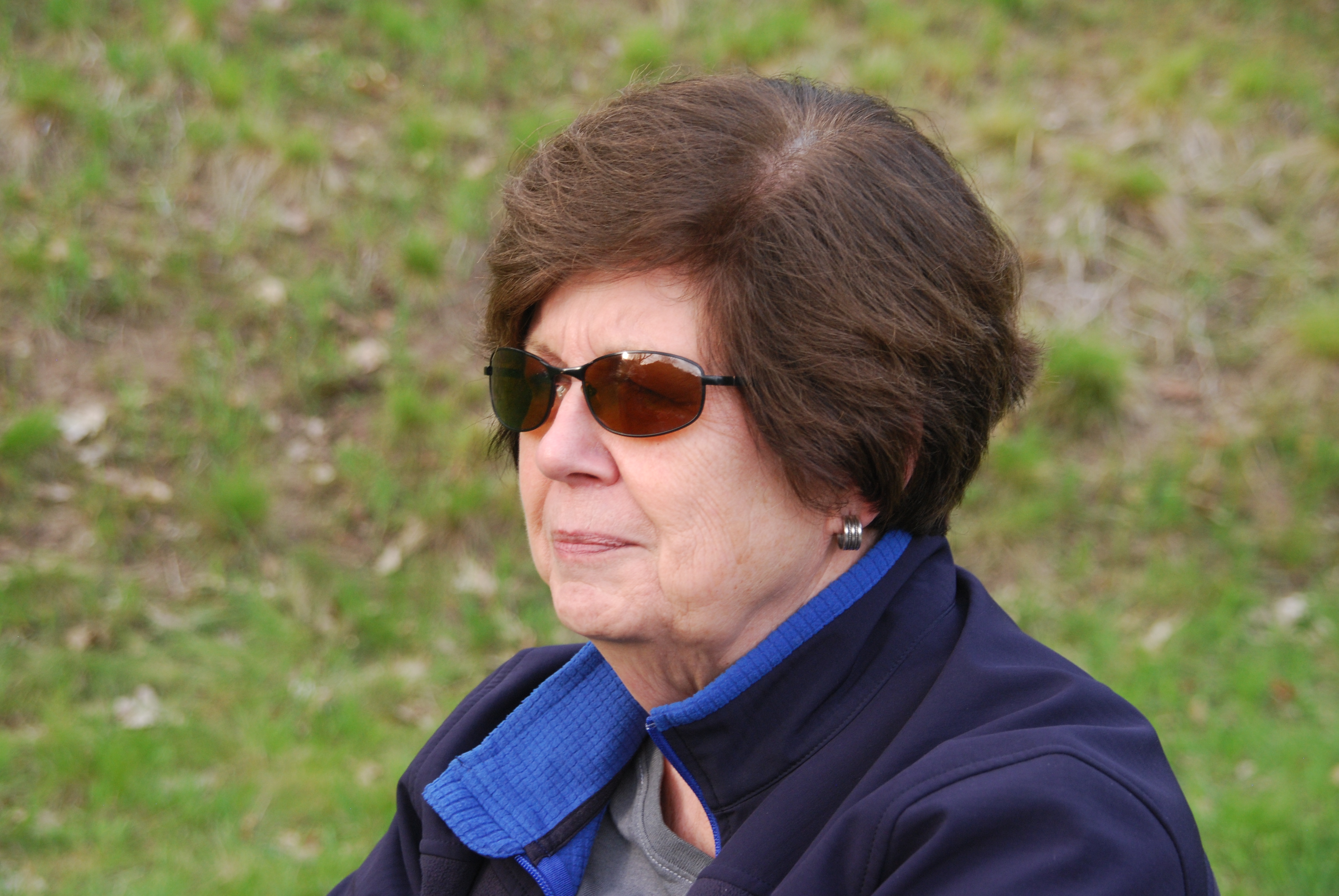
In this episode, titled “Re-wilding,” Jane Holman describes some of the practical aspects of returning settled sections of the Selway-Bitterroot country to wilderness.
Jane graduated from the University of Montana after growing up in Dixie, Idaho. She spent the years of 1968-1972 at Moose Creek Ranger Station with her husband, Bill Holman, who was the wilderness ranger there. From there, she moved to Washington, DC and spent 29 years working for the U.S. Department of Education, although she always revisited her Idaho roots. After retirement in 2004, she returned to Moscow, Idaho. Among other pursuits, she serves as the secretary for the Selway-Bitterroot Foundation and remains active in stewarding the wilderness, both politically and on the ground.
Audio Clip
Interviewer: Debbie Lee
Interviewee: Jane Holman
Location: Moscow, Idaho
Date: March 5, 2013
DL: So do you remember any points where you were....where there was like a conflict or some decision that had to be made that was different now that the Wilderness Act was being implemented? Like for chainsaws or roads or vehicles back there or... I mean just some points where a decision was made after the wilderness act that would have been a different decision before it. Were you there for any of those?
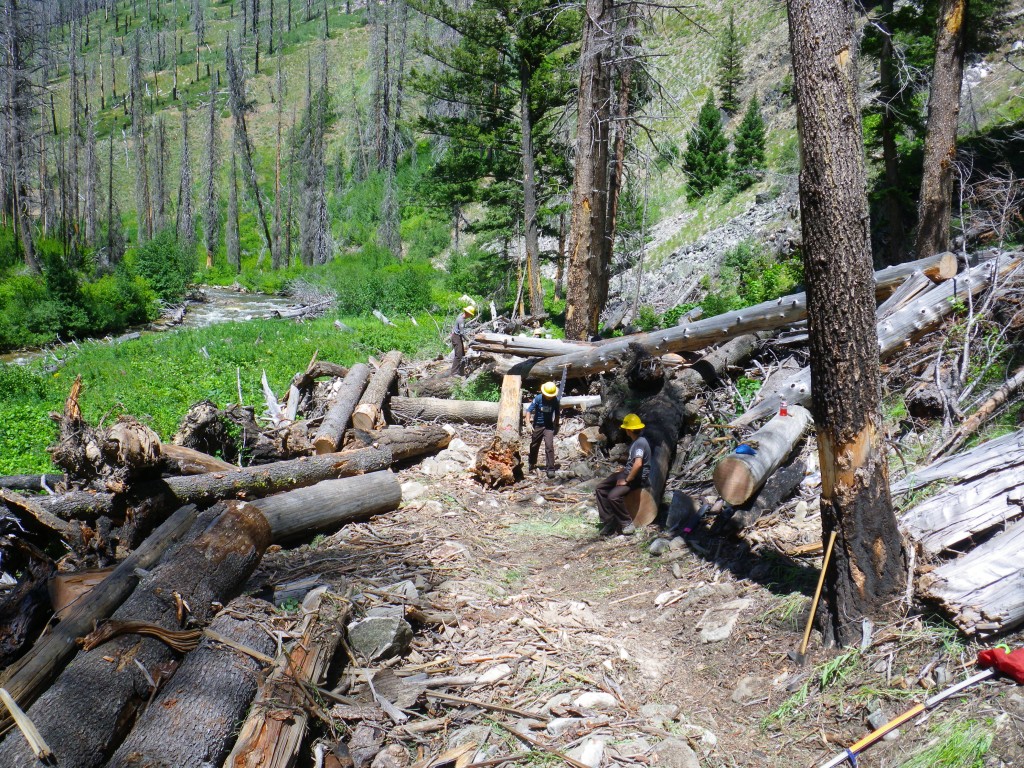
JH: Oh sure! um...I think the first fall....probably in '68. Um there was....hunting season was about to start...so that would be mid-September I think. And I think it was the Three Links Crossing trail in from Big Fog. It hadn't been cut out and of course, outfitters used that trail and all that so we knew that had to be cut out. So Bill and I and Emil and Penny and a couple of head of stock, I think. We had pack stock, we weren't riding. Headed up there to cut out the trail, and of course, Emil had a chainsaw and he was chaining away because ya know, we had to get it done 'cause hunting season started the next day or whatever. And... anyhow, so those were kind of interesting things that um...Bill went along with at that point I think in order to have the trail open, I think. We didn't do that anymore or I don't think Bill did it anymore after that, that I recall anyway. Emil may well have, 'cause he was off by himself a lot.
DL: I see....but you were aware at that...
JH: Oh yeah
DL: In that maybe five years before you wouldn't have...
JH: Oh, I would never have thought a thing about it! A silly little thing I remember from being on the Salmon River that when you would hike down a trail and cross a creek there was always an old tin can on a bush someplace 'cause you could use it to drink and that was just what people did for each other cause that was how you managed in the backwoods. And I remember remarking on that, and of course it was very anti-wilderness that you would leave any old tin cans along the creek! It was just something I was used to, but it was just interesting how in your mind you see "oh, ok that would be wrong" but you have to think through how those changes affect you. There were lots of issues with Jeeps, the guy at Seminole Ranch had the Jeep and he would you know, fly stuff in and then we would have to go tell him to take the Jeep back down and all that...and I can't remember if there was ever legal action, or how that all played out but I do remember that being an issue and of course then you had to worry about the outfitters and were they using chainsaws and...oh, it was...it was a constant thing.
DL: Yeah...and now it seems to be pretty....um... accepted back there.
JH: I think so. I mean I don't know what the outfitters do these days but I'm quite sure they don't do it obviously, if they're using mechanized things, I think they're pretty used to having it be....and I'm sure there have been some cases over time where they had to ya know....but you can understand how it took awhile for them, I mean, that's their livelihood and it made their work a whole lot harder when that change came along. Plus, they used to be able to leave their gear all winter. They'd have a cache of all the stuff and their tents and all those kinds of things and of course, they made them stop doing that and then they um....one of them had an old cook stove. An old big old, ya know black woodstove and Emil blew it up one time with dynamite...haha...in order to get of out of there...and that irritated the outfitter community quite a bit. So there was a lot of violent things going on too with the wilderness implement there.
DL: So how did you feel about these changes? Were you...um...did you have any conflicts inside? Like, I see that this needs to happen in order for solitude or whatever wilderness character you were implementing for but at the same time, people had been doing this stuff for twenty years...like was it difficult for you? Like just....intellectually?
JH: No, I don't think so...I remember thinking it was great, because I was very pleased that these huge pieces of land were being saved forever and....now, I confess, of course, I'm living in a nice little cabin there in Moose Creek. It's not like I'm living in a tent all summer and all that sort of thing. Although, I probably would have been fine with that too but...ya know, it was a comfortable life there and all that. But no, I thought it was good. I liked the idea that we...that we were making that way of life. Easing it into that way of life and the solitude would always be there and hopefully....you know, the trails needed to be there so people could have access. But I liked the idea that it was protected in that way and, I thought it was good. So no, I felt very good about it. You felt like you were part of something wonderful that's happening and something really important.
DL: I see. So, now when you go back there do you see...do you feel like you were part of making that place...of re-wilding it or whatever?
JH: I do. I kind of do. I mean, I certainly feel like a part of that place when I go back. I mean, it looks very much like it did when I was there. There's a few small changes, you know, and one of the big one's is...and one of the changes that occurred, although, not so much while we were there was, that they started letting fires burn in the wilderness and that wasn't really true while we were at Moose Creek specifically. It was more after we moved to Missoula that that started to happen with Bob Mutch and all those guys. Now, when I floated the river a couple of years ago and when I was back last summer, you notice the landscape has changed because it used the be that the northern, the north facing slope along the river was all green and dark timber and all that and now a lot of it is snags and all that from the burns....and that's ok. You know, that's part of the continuity of nature and it will once again be dark timber and it will burn again so um it's good, I like it, I'm very fond of that.
DL: So when you guys...I know that when my grandfather was back there that there were a lot more cabins back there and there probably were still a lot when you first got back there in 1968 so part of the process of re-wilding the landscape was either letting those cabins rot back to earth or like they did at Seminole Ranch, actually transporting them out, or burning them.
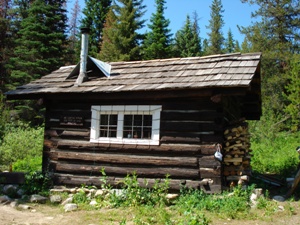
JH: Yes, Bill and I burned one, one spring. The old Faye Smith cabin which was down below the station. Just down on the flat just a little bit north of Seminole, and yeah I have a picture somewhere of us just standing there and I just thought "oooh." And so... but yeah, it felt weird to burn that cabin. But, on the other hand it was in the wilderness and there shouldn't have been a cabin. Are there other cabins? I don't think there are any other cabins that are on the forest, that I'm aware of that aren't... maybe you can see a sill log or something. It's part of history. But I don't think there's any cabins left that aren't on private land there, that I'm aware of, in the Selway.
DL: No, I don't know of any, but I have seen cabin footings in some fields where you can.......like Hawthorns usually grow up where the cabin footings are so if you see a field with four Hawthorns you know that that's probably where the four corners of a cabin, as in if you dig underneath there you can find the footings.
JH: There's some place probably up by where Moose Creek Ranches, there used to be Daffodils in the spring that you'd see that would come up and I think eventually they go away but....
DL: So, how do you feel about even just the remains of stuff like that? Like is that.....because how, where do you make the separation from the natural environment to the historical or the cultural and um....I mean, I don't think there's an answer to this it's all just kind of speculation but since you've been such a part of this history I'm just wondering how you feel about it?
JH: I'm actually ok with places where you can see the old sill logs and stuff and I like being able to find out uhh... like, through projects such as yours for example, who lived there and why they were there and what they did there and all that, and going: ok, that's the remains of somebody's dream from one point but now it's part of the....because you can't ever make anything completely pristine again it's just not possible and so I think it's ok if there's little bits left. I mean I was pretty happy to see the Seminole Ranch gone. Cause it was, you know, awfully modern and all that sort of thing and didn't need to be there since the forest service had purchased the land. But um, maybe it's just cause I was there but I'm not offended by going by North Star or Selway Lodge or anything where there still are buildings and you know they may not be there someday, I don't know but, I think it's ok, I don't mind seeing it. Cause part of it... it's wonderful to be in those places to enjoy nature but I'm also fascinated by the history of why people are there and what made them come there and all that sort of thing..... and I grew up with lots of people who lived like that and it's just interesting....so, I like it.
DL: Um, can you just talk a little bit more about burning that cabin? Um...what it was like?
JH: Well we just walked down, I'm pretty sure it was in the spring, nobody else was around I don't think and oh, we probably took down some white gas or something and just poured it on the foundation and burned it up and it burned up in a short amount of time. I assume we went down late....must've gone back later and cleaned up the residue from the burning. I don't remember actually doing that but maybe some of the staff did. I do remember that. But it seemed......I don't think in those days I knew who Faye Smith was and obviously I had not heard the tapes of him and all that sorta thing...um, I probably would've, I might've felt a little differently or it's not that I wouldn't have wanted to do it but it would've felt more poignant I think had I known that beforehand.
DL: Yeah...So when you moved back to Idaho...what was it...seven years ago?
JH: Um, it's eight years ago this year
DL: Eight years ago.
JH: yeah in 2005.
DL: So were there things that you noticed about...cause I know you've been going to the backcountry a lot, since you moved back, that you thought "oh, I forgot about this I really, now I remember how much I really loved this." Or...do you have one of those kind of moments?
JH: I think one of this... things is the smells. Oh my gosh, the smells of the Balsam Fir or you know spruce trees or something or those really wet places where it's mossy and all that. I loved that. It's great, I like that. And I just like being out where there are no people. I mean I can cope with people but I think it's better to be where there are no people. So I enjoy that a lot. And I love the Palouse. I just think it's the most beautiful sensual landscape there is anywhere. I would come home at least once or twice a year from DC and I always would fly to Spokane and rent a car and drive to Dixie and it would always be....it was always like, ohhh...when you started out, left Spokane and started out on the Palouse, it's the most peaceful landscape, I've always thought. That was always in the back of your head when you remember the wonderful places, and maybe all that stuff gets you through when there's a lot of crowding and irritation and you're in traffic for hours and all that. Good memories to start with.
Gallery
- Title:
- Episode 40 : Re-wilding
- Date Created (ISO Standard):
- 2013-07-26
- Description:
- In this episode, titled "Re-wilding," Jane Holman describes some of the practical aspects of returning settled sections of the Selway-Bitterroot country to wilderness. Jane graduated from the University of Montana after growing up in Dixie, Idaho. She spent the years of 1968-1972 at Moose Creek Ranger Station with her husband, Bill Holman, who was the wilderness ranger there. From there, she moved to Washington, DC and spent 29 years working for the U.S. Department of Education, although she always revisited her Idaho roots. After retirement in 2004, she returned to Moscow, Idaho. Among other pursuits, she serves as the secretary for the Selway-Bitterroot Foundation and remains active in stewarding the wilderness, both politically and on the ground.
- Duration:
- 15:31
- Subjects:
- 1964 wilderness act women moose creek selway-bitterroot foundation
- Section:
- Wilderness Voices
- Location:
- Selway-Bitterroot Wilderness (Idaho and Mont.)
- Publisher:
- Wilderness Voices, The Selway-Bitteroot Wilderness History Project, https://selwaybitterrootproject.wordpress.com/
- Source:
- Wilderness Voices, The Selway-Bitteroot Wilderness History Project, https://selwaybitterrootproject.wordpress.com/
- Original URL:
- https://selwaybitterrootproject.wordpress.com/2013/07/26/re-wilding/
- Source Identifier:
- Selway-Podcast-ep40
- Original Format:
- Podcast
- Type:
- Sound
- Format:
- audio/mp3
- Language:
- eng
U of I Digital Collections contain unique digitized and born digital archival materials in a variety of formats. The Library is committed to ensuring our resources are accessible to all users. Please contact us if you need support accessing or using this archived content.
Contact us about this record Library Help- Citation:
- "Episode 40 : Re-wilding", The Selway-Bitterroot Wilderness History Project, University of Idaho Library Digital Collections, https://www.lib.uidaho.edu/digital/sbw/items/sbw323.html
- Rights:
- Copyright: The Selway-Bitteroot Wilderness History Project. In Copyright - Educational Use Permitted. For more information, please contact University of Idaho Library Special Collections and Archives Department at libspec@uidaho.edu.
- Standardized Rights:
- http://rightsstatements.org/vocab/InC-EDU/1.0/