
Living Learning Community
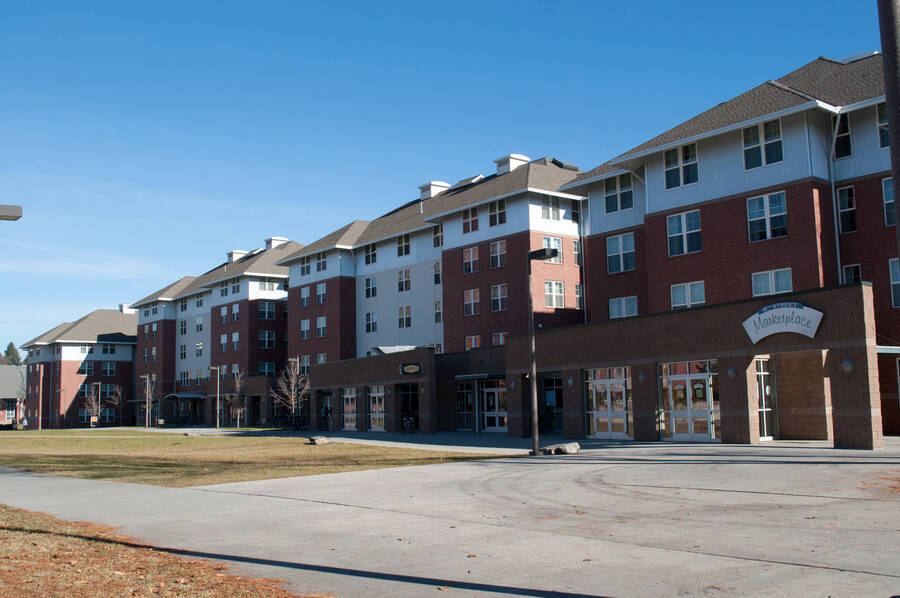
Geographic Coordinates: 46.730454, -117.012744
Location: Corner Line Street and Sixth 901 Paradise Creek St
Living Learning Community Overview
Date: 2003-
Standing: Yes
Architect: Design West Architects P.A. (Pullman)
Architectural Style: Postmodern
Description: Eight residence halls and office/dining structure
Additions: Phase completed Fall 2003
Sources: Facilities Architecture Drawing Archives
History
The Living Learning Community (LLC) was designed to meet increasing demand for on-campus housing as existing space became insufficient. The university had resorted to housing students in hotels, modified lounges, and repurposed dining hall areas while permanent solutions were developed. The LLC was completed in two phases between 2003 and 2004 and designed by Design West Architects P.A. It provided 202,000 square feet of new residence space with 600 beds and became a hub for immersive student experience. Its eight themed buildings—Gem, Syringa, Sage, Upham, CNR, Gault, Engineering, and Honors (Scholars)—include classrooms, offices, a dining hall, and a campus marketplace. LLC 3, designated the “Global Village,” accommodates international programs, military and veteran services, and student exchange initiatives.1
The LLC was built on the site of Gault-Upham Halls (1954–2003) and carries a legacy shaped by tragedy: a 1956 arson fire in Gault Hall claimed the lives of three students, leading to state-wide investigation and reform. Funding for the LLC followed a bond model pioneered by the university in the 1920s, with repayment sourced from student room and board fees. As of 2024, the LLC continues to serve a diverse population of students seeking enriched academic and social experiences in a residential setting.2
Design
The LLC complex includes eight Postmodern, suite-style buildings arranged in a quadrangle. Each building was designed to support academic success and social development through access to communal kitchens, study spaces, and lounges. The planning emphasized inclusivity and integrated student services by incorporating offices, classrooms, retail, and residential spaces into a single development. Public-facing elements such as the 6th Street Marketplace and the Housing and Residence Life information center extend the functionality of the LLC beyond student housing. The complex reflects a contemporary response to the university’s long-standing commitment to residential life.3
Physical Description
Each H-form building is wood-framed and clad in red-pressed brick laid in stretcher bonds, with vinyl siding in a clapboard pattern and metal siding at the upper levels. LLC 1, 4, 5, 6, 7, and 8 are four stories tall, while LLC 2 and 3 rise to five stories. The taller buildings display a tripartite expression with rough-hewn brick bases, smooth-dressed brick bands, and vinyl-clad upper stories. Roofs are medium-hip forms with asphalt shingles, dormers, and two square cupolas. Window fenestration includes double-hung, four-sash vinyl windows with decorative mullions; windows set in brick walls rest on header-bond brick slipsills. Entrances are marked by bracketed metal hoods above single-leaf doors with side panels and transoms. A one-story commercial wing known as the 6th Street Marketplace connects LLC 1 and 2 at ground level and includes retail space open to the public. A similar wing connects LLC 2 to LLC 3 and houses the Housing and Residence Life information center.4