
Description: With Robert Clyde (son) Killing of Will Steffen for Dr. Watkin's murder. Double suicide of Winnie Booth and Dr. Ledbrook. Folk beliefs. Early politics. The 1903 compilation of North Idaho history. Stories of Shorty Hill. 1-7-75 2 hr 36p
Date: 1975-01-07 Location: Paradise Ridge; Moscow; Lewiston
Subjects: women; birth control; farming; teaching; clothing; fashion; churches; religion; death; colleges and universities; voting; politics; Psychiana; education; family life education; world wars; discrimination; Ku Klux Klan; IWW; strikes
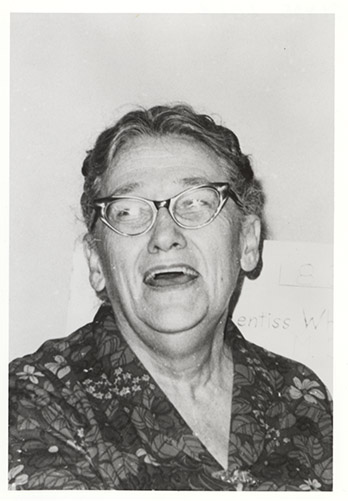
Lola Gamble Clyde
Born 1900
Occupation: teacher; farm wife; local historian; frequently addresses groups and aids researchers
Residence: Paradise Ridge; Moscow
Topics:
The colored topic bar is hidden for screen reader users. Use the topic buttons below it, the "Filter by Topic" menu or the search box to find specific content in the transcript.
Lola Gamble Clyde: The college kids that were enrolled were three of his half-breed Indian daughters. And my mother always liked Sir James Douglas because she said, oh my, she said, when the king wanted to knight him, he said, no, I will not accept a knighthood unless my wife has made a lady. If she will be Lady Douglas, then I'll accept the knighthood. So it was Queen Victoria by that time, and Queen Victoria said, that's fine with me, it'll be Lord and Lady Douglas. And he was made Lord and Lady Douglas. And I think that's interesting.
Sam Schrager: Your mother remembered, did you remember teaching the three kids?
Lola Gamble Clyde: Oh yes, she remembered teaching them real well, yeah, yes. My mother taught mathematics in particular, she said they weren't so good at mathematics, but they were very charming, lovely girls. So that's good. But that's how young, that's how young we are out in this part of the country. I think they understand it may be better in Canada. Oh, I mean, so they have more feel for it too. They're all slower paced up there, and you go down and it's all, Victoria's all antique shops and it's all historical things. Wednesday afternoon they close shop, it's vacation. And you go in the middle of the afternoon around four o 'clock and the shops are locked, they're having tea. And they don't want to sell you anything. It's tea time and what are you doing there? And I think that's really interesting. Victoria has lots of Scotch people, you know, many, many Scotch in Victoria.
Sam Schrager: And they all boast about the Gordon Highlanders and about Vimy Ridge, how Admiral Farsh said to Canada's great general being, he said, can Vimy Ridge be taken?
Lola Gamble Clyde: And being said, let the Gordon Highlanders support me on my right and we'll take Vimy Ridge in the morning. And the Gordon Highlanders supported him on the right and they did, they took Vimy Ridge. And they slaughtered the comedians, these royal Gordon Highlanders, they just slaughtered them. The Gordon Highlanders were just almost wiped out. But in Victoria there were many Gordon Highlanders relatives, you know.
Sam Schrager: Was this during World War I?
Lola Gamble Clyde: Yeah, during World War I, when they took Vimy Ridge. And they had a great, and one of the big, one of the real nice quotations that I had given at several memorials was John, Lord John Binion, they had a great memorial at Aberdeen in memory of the Gordon Highlanders who'd been killed at Vimy Ridge. And this is a lot of memorial exercises, it was. They shall not grow old as we who are left grow old. Age shall not weary them, nor the years condemn. At the going down of the sun and in the morning, we shall remember them.
Sam Schrager: Who was this written by?
Lola Gamble Clyde: John Binion, Lord John Binion. He gave the address at this memorial for the Gordon Highlanders that were just slaughtered at Vimy Ridge.
Sam Schrager: Well, would you like to tell me something about Snow on the River, about what you think is most important?
Lola Gamble Clyde: Yeah. Well, Snow on the River, even as a buffalo coat, is the story of Carol's father's people, of Dr. Watkins and his people. Snow on the River is the story of Carol's father's people. It starts with the three brothers who came to opportunity in Moscow, Idaho from Caithness County, Scotland. And of course Caithness was the northernmost county of Scotland. And it told about the bitterness and the rugged lives they had led there. So each of these three sons vowed that they would come, go out into the world and make a fortune and leave the country. So they came to America, each with his own dreams, his own capabilities, his own desires and his own destiny. And they came to opportunity, or Moscow, Idaho. And they went to live with a lady named Mrs. McAllister. And the story is that she was a good Scotch lady and she could make haggis and oat cakes and all the old Scotch food. And Carol said, I wanted the boarding house to be close enough to the church so they could hear the music wafting, they could hear Abby's music coming from the church. So she said, while it was really the Lampman House over on First Street that was the boarding house, I moved it down there to the Grove Apartments on the corner of Van Buren and Third Street because that was a nice strategic place. And most of us remember when it was called University Club and Abe McGregor Golf and John Cushman and those young faculty people lived there.
Sam Schrager: Was the woman who ran the place really Scotch?
Lola Gamble Clyde: Yes, she was. She was a Mrs. Mackay. She's changed each of the names enough so. And she always says, now don't try to make history of this. They're just features, figments of my imagination. But you can say that they remind you of somebody if you want to. So I always say, well, Carol, this little girl that looks at us across the years and across the pages of this book just reminds me an awful lot of you. And so that's why I always say Snow in the River is a story of Carol's own life and her father's people. So the three, the three McCallister boys came to board with Mrs. McCallister, the three young, the three young. The three young. Yeah, the three Ryrie boys came to board. And of course, Angus was the studious one. He wanted to be a minister and he'd run out of enough money and he couldn't become a minister. And Donald was the handsome one, dark and dashing and handsome. And he was going to make a fortune. He wanted gold and that was all. And Willie, the youngest, was very carefree and charming, altogether charming. He's just in love with life and he doesn't want to try to change it. He just wants to enjoy it. But since Mrs. McCallister was a good Scotch lady, she saw that all her boarders would go right up there to the Presbyterian Church every Sunday. And it wasn't too hard for her to persuade them. Maybe it was their religious training and maybe it was just Dr. Watkins' three, two beautiful daughters. It goes right across the street from the Presbyterian Church, lived Dr. Hawkins.
Sam Schrager: I guess you call him Hawkins in this book or not?
Lola Gamble Clyde: No, I think he has another name. I think he has a different name. Well anyway, lived Dr. Watkins and his two beautiful daughters. The oldest one was Abby and she was dark, beautiful, soft, dark, velvety eyes and lots of dark brown curling hair. Very, very talented musician. Her music teacher said to her when he heard her play, she put such feeling into it, he said, oh, you must learn to control yourself because your music will destroy you. But Angus, who loved music, would sit in his boarding house and listen to the strains of all this high class music drifting down and he fell in love with the lovely, lovely Abby. And Willie, who was more carefree and happy, fell in love with a younger daughter and her name was Connie. But Connie had eyes only for the dark, handsome Douglas. But Douglas wasn't going to be marrying any girl right away. And I should just let you take the tape because all the rest of it is on the tape. Well, I can take it from the tape. Yeah, yeah, because it's all right there on the tape. And I really do a better job on the tape. I should see if I can get it back here. And I'm thinking about now, as far as what really happened, there are different descriptions and I've read in different sources.
Sam Schrager: Now, one thing that I'm wondering about is, do you think that there was any motive at all for what, what Steffens did?
Lola Gamble Clyde: No, I think not. I think that he was just, that he was mentally disturbed. And nowadays they probably would have known what to do. They could have taken him and given him tranquilizers and helped him. But in those days they didn't know anything to do because I heard people tell other people who knew him as a young man. And he wasn't just a little boy, as the book makes him. The book makes him a very sympathetic young youngster. But he was a big husky man. And he was about 39 years old when he killed Dr. Watkins. And I heard a man tell how he had worked up in the woods someplace with him. And he had great arms, great strong muscular arms. And that he had been a butcher. And that he often cut up the meat with a meat cleaver. And they'd taken the meat cleaver and tried to kill some of the men around the lumber camp. And I think he was a dangerous man when he, you know, when he...
Oh, yeah,… that's fine. Yeah, yeah. But what's this... When it says on his tombstone that beautiful rubbing that was made, he says, he feared not.
Sam Schrager: How did he take that to mean? What's that supposed to mean?
Lola Gamble Clyde: I think that there were some suicide notes left. The contents of neither of them were ever really made public. But it was said that on an envelope in his pocket they found a note that said, If the inevitable comes, I want to be buried at Pullman. And that he'd written a list of men. And also on that list was a man named Jolly and a man named Held. Now underneath him he wrote, I didn't get the right ones after all. So he was just beside himself and carried grudges. And he wanted to strike out at somebody. But one of the great tragic things I always thought was how this bunch of men, instead of trying to coax him out and get him to a doctor for help, how on this lovely Sabbath afternoon they went down and threw open all the hardware stores in town, got out all the muskets and guns and loaded them. And about 60 men or more formed a sheriff's passe and went dashing out through the feet. And people who saw the feet, it was August, and people who saw the feet the next morning said, It just looked like a thrashing machine had been through it. Just so many people trampling and shooting at the house. And after they'd shot for about half an hour, the little old gray-haired mother, who must have been so sick with fear and worry anyway, finally she came to the door and held up a white dish towel and waved it and said, You can stop shooting now. He's dead. That seemed like such a heart-gripping thing, when you think what she'd gone through and the worry in the mother's heart over this son, and to have it end that way. And I knew some of the men who took part in that hunt, that Sunday afternoon hunt, and some of them, after they got old and looked back on it, said themselves, Well, I'm not proud of my part in it. I'm sorry that I ever had any part in it. And I should think they'd all feel that way if they could have gotten a hold of him and taken him peacefully and handcuffed him and subdued him and gotten him on for treatment.
Sam Schrager: Do you think that they made any effort at the time to try to say, Come on out with your hands up, and that sort of business?
Lola Gamble Clyde: No, I doubt it. I never heard anything to that effect, that he was a dangerous, wild man. There was a lot of the young men around town, and they threw open the... He shot one of the sheriff, the deputy sheriff, too, a man named Cool, and he's buried down at the Genesee Cemetery. Very fine man. And he shot the horse out from under him. And it seems, you know, it seems, looking back at least, all these years later, it seems that they could maybe have taken him without.
Sam Schrager: Do you think maybe what it was was they just wanted to be rid of him?
Lola Gamble Clyde: I mean, having... Well, I suppose that was the simplest way. In those days, people who had mental problems weren't looked upon with much sympathy. They just thought, Get him out of the road, and get him out of harm's way, for they can't hurt anybody else or themselves. And it was just the simplest answer in the frontier days, I think. They didn't know about psychiatry and tranquilizers. I wonder, though, if some of this stuff that they talked about him, how bad he was, or mentally unbalanced, I wonder if a lot of that wasn't after the fact. I mean, I wonder if he was really a worry to the town before that. Well, I just doubt it. I just doubt that he was that much of a worry. The only incident I ever heard of was besides the Lincoln, the doctor killing, the Lincoln killing Dr. Watkins was when he'd taken the butcher's cleaver to these men up in the lumber camp. So all the business in Buffalo Code about Watkins sending him down to Orofino and this other business, him riding through town fast, all that's a fiction. Well, I just wouldn't really know, but I think probably it is. Carol has made him a very sympathetic figure in the book, putting the flowers on Jenny's grave, and rather a disturbed young youngster, but he was a mature man and he was a big husky man. So there may have been a little more justification in the men trying to subdue him before he did do any more damage.
Sam Schrager: What did people say about, you think, when they were trying to give some kind of a motive to his getting Watkins? You know, is there anything to this idea that he'd been beating his mother and Watkins had told him to lay off?
Lola Gamble Clyde: Well, I'm not sure about that. I wonder if people said if that was an old story that went around. Yes, there was instability in the boy all along, from childhood on.
Unknown Speaker: How are you?
Lola Gamble Clyde: Fine. There'd been a lot of instability in him. And of course in those days, they didn't know quite what to..… how do you..… there's instability in him. Oh, I'm just telling about Buffalo Code. We're still Buffalo coding, Bobby. Half monsters on the table. How do you... Half monsters on the table. Yeah, but not half a monster goes out and kills people because of it. Oh, that's true. That's true. Not yet anyway. Half of them need to be killed. I didn't tell him that Tom Wall's father took part in this hunt and he had run this hardware store and he threw...
Unknown Speaker: Did you talk about how old Collins hid out and sent his deputy out to get him?
Lola Gamble Clyde: Oh, no. That's better left unsaid.
Sam Schrager: Oh, really?
Lola Gamble Clyde: Yeah. That doesn't sound better left unsaid. That sounds good. The deputy got to get him the deputy. The descendants are still right here in town. I don't review that part. I should review the part, though, about how Tom Wall's father was a ninja. Tom Wall's grandfather was quite a good engineer and that sort of thing. And the plumber. So he just quipped out his slide rule and did a little measuring and measured and he said, It was my bullet that killed him. They found him. See, they took pride in it instead of the... Did they tell you how Tom Wall's grandfather...
Unknown Speaker: did you tell them how Tom Wall's grandfather plumbed the house of ... out there?
Lola Gamble Clyde: No. I didn't. The old grandfather may have taken that trade. They went sure.
Unknown Speaker: Wasn't that what Tom Wall said?
Lola Gamble Clyde: Well, we won't get that on tape, Bob. Well, that's a good sounding story. Yeah, history isn't any good in West Virginia. That's the way I feel about it, too. Well, in the book, they do tell about how this deacon in the church, they wanted to defrock him because he had gone down and done some plumbing in his house of .... And of course, this house of ... is the big old apartment house down there right west of the electric railroad, what we call the electric railroad there on A Street. Well, there's a big old house just west of it on the north side of A Street, and that was the house of ... right there. And that was where the man was down fixing the plumbing. But he was ruling elder of our church, too. But someone said, well, don't they think those ladies had any need for some indoor plumbing?
Carol brought that part out, but she doesn't say it was Tom's grandfather, but we just happen to know it was. Well, this story, though, about the sheriff not doing anything, we don't have to use the name, but he was... Now, see, I read there's two versions of that. That's a point in the whole incident that's not clear in the way they tell it. And neither version has him not doing anything. But it's a real confused part of the event. Yeah, well, it seems like Mr. Cool was the deputy sheriff, and he rode up, I think, and met him up about where the courthouse is now, up there to head him off. And I think he's the man that shot, broke the horse's leg, and Stephen's abandoned his horse and ran on out through Swede town and on out through where the fairground now is to his home. But he also shot Cool at the same time.
Sam Schrager: And the idea is that the sheriff sent Cool out after him?
Lola Gamble Clyde: Well, I wouldn't know. That's always been one of the questions around. Yeah, that was why didn't he go himself instead of sending him.
Sam Schrager: Did he lead, did the sheriff lead the posse that went after him?
Lola Gamble Clyde: I think he was probably there, yeah.
Sam Schrager: Was there any idea of who, I mean, were there leaders of it? I imagine there must have been.
Lola Gamble Clyde: Oh, I imagine so. It seemed like it was all the leading businessmen that were available around town. Because Mr. McFarland was there, and he was a ruling elder of the Presbyterian church, and he ran the big drug store and plumbing shop. Not drug store, hardware store and plumbing shop there in the corner of 3rd and Main where the First National Bank now is. He ran a big hardware store there, and he opened it up on Sunday and got out guns and ammunition and so on for them.
Sam Schrager: Did Cool's family feel pretty bitter about it, and Cool's family about what happened?
Lola Gamble Clyde: I never knew the family, and I never got to talk to any of them. But I did find the grave down at Genesee. Of Cool, he's buried there. They had come from Genesee.
Sam Schrager: Well, if we backtrack a little bit, as far as you know, the details, or you've heard them, how did the shooting itself of Dr. Watkins take place? We've pretty much got the last part where they surrounded the house, but what was the scene for the shooting?
Lola Gamble Clyde: Well, it's just about as it was in the book. It was Sunday, and he was driving in the buggy. He didn't have any little boy in with him, but he was coming back from a call out in the country. And he met the Steffens' boy. And the Steffens' boy was really out looking for the other men rather than Dr. Watkins, but he met Dr. Watkins. And he killed him, and it seemed like most of them said he was there coming down 3rd Street. And the horse knew the way down to the office, and the doctor's office was there on 2nd Street, right under where you live. It was right there in the neighborhood, in that building. And the horse carried the body and the buggy over there and stopped in front of the building.
Sam Schrager: And then, did they say that Steffens said anything to Watkins before he shot him?
Lola Gamble Clyde: Well, there was nobody left to tell it if there was, you see. There was nobody left to tell that. But he did meet George Creighton on the street, and George Creighton of course is the man that founded Creighton's store there. And he shot him in the arm.
Sam Schrager: And then from there, didn't he go to get water? Is that what happened? Something happened. After that, who did he meet after Creighton? After Creighton?
Lola Gamble Clyde: Well, I don't remember that. What did I say on the history? Did I give you one of those sheets or not?
Sam Schrager: Well, the way you understand it, Collins and Steffens never exchanged shots. No, I never heard that. Because the big question was, that he doesn't get away. Okay, but then it says here that Jones was pumping water when Steffens arrived. That looks like good water, Steffens said, and asked for some. Then he said, what in the hell is the matter with folks? I understand a warrant has been issued for my arrest. And then Collins came along to Jones's place at that time. And that's where an incident happened there. Did you hear about Steffens saying that sort of thing at Jones's place?
Lola Gamble Clyde: Yeah, at Jones's place. And it seemed like Jones lived on out there someplace. I don't even know where Jones lived. Leading Cool, he rode on toward the courthouse, just beyond the courthouse square. She was accosted by Jones Collins, who for some reason permitted him to escape. Now that's the only thing they say there. And you know the old drug store there, Kay, you know, she's the daughter of him, Harold Collins. A little farther on, encountered Sherman Mix on a running fight. Now these Mixes were in on it, and a running fight ensued. Steffens shooting a Mix four times, mixing a Mix of several shots. The last shot struck Stephen's horse, breaking its leg, and the Mix shot the horse. He then deserted his horse and ran to his mother's house, which was within a quarter of a mile. Yeah, that's it, the house.
Sam Schrager: You think Mix did shoot his horse, probably?
Lola Gamble Clyde: Oh yeah, I think so, yeah, that was probably it. I've just forgotten. Well, there's so many people involved in this. Yeah, that's right. I wonder how long they besieged that house and shot at it. Well, as I understood it, maybe three quarters of an hour that they shot, they all, they lay down in the grain fields, and as they all said, the grain fields were just flattened like a flasher machine had gone through it. There were so many of them. And they lay down in the ditch, there was a big ditch, Paradise Creek, flows right through there, yeah. And they lay down in the ditch and shot up at the house, and they took cover, and there was quite a little shooting went on, and there was a little balcony upstairs, out through the window. And that he could shoot out through the window over that balcony. And then after a while, the mother came out, there was no shots from the house, and pretty soon the old mother came out and waved a white dish towel at them and said, you can quit shooting now, he's dead. And that's about the way it was. And most of this history in there, John Naylor and my father and Henry McGregor and those early people wrote that up for the men that came through the country. You know, it's written in the old time language, and those were the people that worked on that history of North Idaho.
Sam Schrager: Do you know where those people came from that put together that history of North Idaho, incidentally? I don't mean to get off the subject, I'm just...
Lola Gamble Clyde: No, I don't. I think they came up someplace from California, maybe, that put it together. But they had the same thing, they came in and had people work on the history, you know, and at least they got it down. And then they charged them, they ran a picture and the story of your life, you know, and you paid $25 for that.
Sam Schrager: Did you pay for just a story, your story?
Lola Gamble Clyde: Yes, even for your story. And the big pictures, of course, they cost a lot more. And then it was taken for granted, you'd want to buy one of the books. And I think the books were $25. But at least they got it down, and that's really what I thought was important, looking back over it, otherwise it had been no, none of that early day history.
Sam Schrager: What do you think are the shortcomings of that book? Where does it fall short? Do you think it's as far as accuracy goes, or where are its weaknesses?
Lola Gamble Clyde: Well, there wasn't much research went into it, it was just each of the elderly gentlemen remembering how it was. And memory is rather fallible, you know, over the years. But I think each one remembered in his own way, and they were all smart, educated men that worked on it. My father was a minister and well trained and well educated, Mr. Naylor was educated and wrote many, many fine historical articles later. And Henry McGregor was a school teacher, and they were from an educated family, they were all very well educated for those times, because they'd all come in from other places to Moscow. And so I think it's about the best, it's the only record in fact that we had of the early days, so at least they got it down. And they wouldn't have got it down if these young enterprising men hadn't come in and seen the thing as it was. And while it was, I think that that was really important.
Sam Schrager: What do you think at the time, was there some disagreement over the whole thing?
Lola Gamble Clyde: Oh yes, there was, there was. My mother, who was a very retiring lady, she thought it was ridiculous of my father to write up a story about his wonderful accomplishments, you know. But my father had more of a feeling for the history of it, he thought this was a good idea to get this down, of how the thing had been. But my mother thought it was, she didn't believe in any self-glorification, and why she said all these people had $25, $50, whatever it took, they had their picture taken and put it in the book. And she took rather a given view of any kind of publicity. And there was that difference of opinion among them, some people thought it was.
Sam Schrager: Who wrote these portraits of the people, did the man write it himself and submit it?
Lola Gamble Clyde: Yes, he would come, the man came and talked to them about what they'd done, where they came from, and so on. And then these young men wrote them up. If you notice how they're all very glamorously written about what fine upstanding, wasn't it rascal in a carload? They're all upstanding gentlemen. And they changed the wording a little from one to the other, but many of the same words are used, like outstanding fine citizen, their zeal and energy have gotten them far, and how they've improved their homesteads. And there's quite a similarity among them, although they had made a little effort to change some of the adjectives, but the same general pattern applies to all those worthy pioneers.
Sam Schrager: It's funny, I wonder how they were even able to tell who was who, because they came from the outside. I wonder if they just went around and talked to everybody?
Lola Gamble Clyde: Yes, they did. They went around in chalk. And like I say, the main qualification you have to have was that fifty bucks. But I'm glad they did it. Oh yes. I'm so glad they did it, otherwise we would have no record of those early days. And I am intrigued by the early elections, even know who ran and on what party and what the issues were and who was elected. And that's all invaluable. It'd be awfully hard to trace those records. We didn't have the big old book to look in. I wonder.
Sam Schrager: And there were many, many old books of records, because many years later, when the discussion came up about how did Moscow get its name, were there any Russians here?
Lola Gamble Clyde: I went through lists of voters in old books at the courthouse, just book after book, trying to find a Russian name, someone who had homesteaded here or had voted in the general elections, and I couldn't find a Russian name. There wasn't a Russian name among them. So it was lucky we had those records, because we could go back and trace.
Sam Schrager: What do you think about the general North Idaho history that they have in there? Was that written by, somewhat by local people?
Lola Gamble Clyde: Well, I think by local people, at least helped with it. But the final finished thing, of course, was done by these outside young men who'd come in and got in shape.
Sam Schrager: Was there anybody from around here who was sort of head of the local effort to get this thing going?
Lola Gamble Clyde: Well, I have just forgotten, but I imagine, I'm sure that my father, Mr. Naylor and Mr. McGregor and Tom Tierney and all those people had a finger in the pie, because they were, and probably the newspaper editors. We had some quite outstanding men. There was a Mr. Jolly ran the newspaper here, and they also ran a law firm called Good and Jolly, which was a good name for a law firm. And they were very bright, capable people. Boy, you know, Lillian Ottness' dad, Jay Woodward, wrote up a reminiscence of the jollies, of Mr. Jolly and Mr. Jolly.
Sam Schrager: Was he the one that was thin? One was thin and one was really heavy. Yes, mhm. And he said the guy was really salty. Yes, that's right.
Lola Gamble Clyde: Oh, yeah. They were smart. The jolly men were real smart. Many years later, I knew a daughter who was on the debate team at the University of Idaho, and she inherited her father's skill with words. She was a good debater.
Sam Schrager: Did you ever hear about the debate that he had with the other newspaper?
Lola Gamble Clyde: I think it was the Star, when the Star came in. Oh, yes.
Sam Schrager: They didn't get along at all?
Lola Gamble Clyde: No, they had big wars going on. Yes, yes. Yes, I'll say.
Sam Schrager: Do you remember anything about that at all? Because he mentioned an incident or two that Woodward did, where they back and forth in the papers.
Lola Gamble Clyde: Oh, yes. Well, I remember my father went into politics in 1895. Of course, I wasn't born then, but I've often heard them tell this story. And during that time, there was great war between the Governor McConnell faction and the Willis-Sweet people. And in those days, the state legislatures elected the senator. Since then, you see, it's gone to the people. And my father had gone down from Latah County, and they were very anxious for him to vote for Willis-Sweet. Well, my father had been brought here by Governor McConnell, and he was very friendly with Governor McConnell. And my father voted for Governor McConnell. So when he came home, there was great repercussions over that. And the followers of Sweet brought some kind of charges against him that he did a little drinking, and as I say, since when was it wrong for Irishmen to take a little snort of whiskey?
But my father, anyway, could prove that any whiskey he'd ever bought, he'd bought it for his hired men. And one of the papers ran a big headline saying, Daniel out of the liar's den. That he'd been tried to be excommunicated from the church, you see. But he was vindicated. The jury found him not guilty of any of these things they brought against him.
Sam Schrager: Well, what were they bringing against him? That he drank?
Lola Gamble Clyde: Yes, that he did this little drinking.
Sam Schrager: That was an offense? That wasn't illegal then, was it?
Lola Gamble Clyde: Well, I don't know. I'm wondering what it was they were... Maybe it was for the Presbyterians. They were just trying to bar him from the Presbyterian church. And, however, the newspaper ran this big headline, and the title was, Daniel out of the liar's den. He'd been vindicated. Oh, I see. That's where... Yes, he was vindicated.
Sam Schrager: Well, now, was this business between Sweet and McConnell, were both of them trying to become part of the legislators?
Lola Gamble Clyde: They wanted to be United States Senators. United is Willis Sweet Hall, you see, is named for Willis Sweet. And they were rivals for the Senate. And it almost hung on the one vote that my father cast against Willis Sweet and for Governor McConnell, and Governor McConnell became Senator. And after that, they passed it then, so the people themselves never again would they allow one man's vote to sway an election. Direct election. So the direct election came as a direct result of the Willis Sweet-Governor McConnell fight. That was one of the far-reaching effects. The other effect not quite so far-reaching was the trial about Daniel in the lion's den. So, you see, they had their political squabbles in those days, too. Oh, I'm sure they did. As I understand it, as I remember John Platt writes in his book on Genesee, they took politics much more seriously. Oh, yeah, they'd win on election day and carry off the election box. If they were afraid somebody had gotten in that they didn't want, well, the ballot just disappeared. Boxing everything. And it's whoever carried the biggest gun and provided the most whiskey on election day.
Sam Schrager: Are there cases of the boxes getting taken away in this candidate thing, this area?
Lola Gamble Clyde: That's all before my time. And like I say, I've been on the election board 42 years and they've never gotten away with my election box, I'll tell you. We ran a tight ship. I can't believe that could happen with you. 42 years of it and we ran a tight ship and nobody ever got to vote that wasn't legally qualified and nobody stole the election ballots. But in the old days, 50 years earlier, I think maybe that went on alright. I think maybe it seemed like election day was quite a good day to get drunk and they finally passed some kind of a state law. The saloons had to be closed on election day so people wouldn't get drunk and would know what they were doing when they were in to vote.
Sam Schrager: I suppose that was one of the things that they were buying votes with drinks, right?
Lola Gamble Clyde: Yeah, they'd get them a little bit drunk and then they'd tell them who to vote for. Yeah, I think so. Whoever put up the most and the best, that was...
Sam Schrager: Well, in this fight between Sweet and McConnell, do you remember any of the people who were on either side at that time, besides your father being from McConnell?
Lola Gamble Clyde: Well, the Davids.
Sam Schrager: Were they on McConnell's side?
Lola Gamble Clyde: No, the Davids were on the Willow Sweet. Mr. David, the father of the David boys, were all Willow Sweet people, great followers of his. And it was pretty well divided. The town was pretty well divided. But my father maintained that he'd been elected to elect the Senator and that was within his jurisdiction to vote as he saw right. But the followers of Willow Sweet seemed to think that the majority, who the majority, the majority of the people had wanted should be elected. But that was problematic. They didn't know whom the majority wanted, didn't want. And my father maintained he'd gone down there to elect. Was he selected by the party or by... By the people. He was elected. He was elected, yeah. As a representative. I see. That's how we get it. He was elected to go to Boise. And then in turn, the state legislatures in those days elected the United States Senators.
Sam Schrager: Well, was this a long-standing disagreement between Sweet and McConnell?
Lola Gamble Clyde: Yes, it went on for a long, long time. It went on for many, many years. There were the two factions in the Republican Party. It was all within the Republican Party. They were both Republicans.
Sam Schrager: Was there any real difference between them except the personalities of two different leaders or were there other things involved?
Lola Gamble Clyde: Oh, I don't think so. I don't think there was much difference between them. You know, I don't think there was much difference between them. So it was just personality conflicts. Yeah, it was just personality conflicts. That's right. Who wouldn't be surprised if it didn't have some strong effects in the social, who was close friends with who, I'd imagine. Oh yes, I think it was. I think it was. Yes, I thought… yes. Yes.
Sam Schrager: Your father, did he actively help McConnell on other occasions in political law?
Lola Gamble Clyde: Oh yes, oh yes, yes. Up until Governor McConnell quit. We always had great goings on among them about political matters. My father was a great believer and a great supporter of Senator Borah. And he was always writing him letters telling him to try and end World War I and get the boys home and so on. My father was a great admirer and a great supporter of Senator Borah. Well speaking about Willis Sweet, as I, Jay Woodworth, I haven't had a chance to read the document yet that he wrote. He did a little, he wrote down a story about how the university came and he talked about Grandma, he's got a book I can cut pictures out of. Grandma did she though. He was brilliant but eccentric and sort of lazy kind of a guy who had a real drive but yet was very lazy and sort of a real mixture and a character too.
Sam Schrager: You know about, what do you know of Sweet? What did you hear about the way they talked about him? Was he the key man in bringing the university to Moscow?
Lola Gamble Clyde: Oh I kind of doubt that. He always took great credit for it, you know. But I doubt that he was a key man anymore. We had old W. J. Brigham from Landville and he was credited with introducing the bill and established it. My father was in the legislature that year and he was for bringing it to Moscow. And there were many, many people besides Willis Sweet. Governor McConnell was one of the people. Old Charlie Munson was a great friend of the university's who helped get it established.
Sam Schrager: What about, do you know what they say Sweet's role was? I mean, he spoke to, what did he do? He went down and lobbied for it?
Lola Gamble Clyde: Yes, I think so. I think that was about the size of it. But they were all, everybody from here, Charlie Munson always liked to tell the story about how they divided the state according to the needs. They put the insane asylum over at Blackfoot because they needed one and they put the penitentiary at Boise because all the crooks lived in Boise. But up at Moscow we were so ignorant they gave us the University of Idaho. And that was a standing joke with Mr. Munson and Governor McConnell and all of them. That was the standard way. But of course the real thing was to keep North Idaho paying taxes in Idaho and not going off and joining up with Washington and sending all the good mining property to pay taxes in Washington to keep the mines in Idaho. And I think it was sort of a trade-off among the legislators. They let Boise be the capital and we could have the university. I think it was a political trade, all right. And it worked. And it worked. That's what we wanted. That's what we wanted and we needed it. And I think that's the way it went, all right.
Sam Schrager: Can you remember any more of who the Sweet Springs were besides the Davis? What the Sweet faction was? Because I'm trying to figure out and get the names straight. Who was on which side and the disagreements that they had.
Lola Gamble Clyde: I just... Look back at those... I would say that the Naylor family were with Governor McConnell. I'd say that all the Naylor's stuck with Governor McConnell. And they were influential, bright, smart people, all of them. Of course the two newspapers, and you'd have to look that up in the newspapers to tell that there was that division. The jollies, though, were for... The jolly newspaper was for McConnell. I see. So the other one must have been against him. Yeah, it would be against him. But they were two in this small town. How they made a living.
Sam Schrager: Are there any stories about their disagreement itself? I mean, about whether face-to-face kind of stuff between McConnell and Sweet?
Lola Gamble Clyde: Yes, I think so. I think so. I think there were plenty of it. Plenty of it.
Unknown Speaker: Can I take this thing?
Lola Gamble Clyde: Yeah, you can take it home, honey. Well, I would say that I think maybe the newspapers would have more of it. Yeah, along about 1895. Pete Orkut was a good editor, and he wrote on this same paper that defended the McConnell faction. Pete Orkut. And he's a man that wrote about Daniel out of the lion's den and so on. And he was real smart. He was a real sharp man. And everything he wrote was real good, you know. And he was real clever. And then there was somebody else. Let's see. Yes, I remember my father telling me that down in Boise, one person came up and tried to hit him with his cane. And that's my good friend's father, Mabel Gano. You know, her father was a man named Rod Drury. And he was down there. And he picked up his cane and struck my father with it. He was so wild because he hadn't voted for Willis Sweet. And he was a great big tall man. And a big husky man. And I've often heard my father tell that story. And it was interesting to us because his daughter and myself became such very close friends over the years. I suppose he and Mr. Drury weren't very good friends. No, no, no, no, no, no, no. That was the how of that.
Sam Schrager: Did he ever talk about remembering what went on down there at the legislature? Some of the things that happened? Or like what they thought, how they managed to get this deal through to get the university?
Lola Gamble Clyde: Well, it seemed like it was a trade off, that they traded with Boise and the Southern Idaho. If they weren't careful, they'd just secede from the state and then they'd kick the mines and their good agricultural land with them and pay taxes over in Washington.
Sam Schrager: How many times?
Lola Gamble Clyde: Two Catholic Irishmen.
Unknown Speaker: And pretty soon the Protestant Minister comes walking down, looks over his shoulder coming down the street and he slips in the door. And I said, ahh, look at that. It went terrible. Pretty soon the Mormon Bishop came walking down the street, looked up and down, slipped in the door, said, ahh, look at that. Isn't that terrible? Isn't that a terrible thing? And pretty soon the Catholic Father walked down the street to Whistlin and sang and opened the door and walked right in, never even looked right or left. Irishman says, an A pastor must be somebody sick in there. So that's kind of all I wanted to know. I might as well tell you now what that is. And that you've got. And Creighton said to Claesus Peterson, he said, oh, he's just a cross between a son of a bitch and a Swede. So Claesus Peterson said, I'll be darned. He's related to both of us then.
That's supposed to be a true story. Oh, I think that is true. Old Claesus was quick on the uptake. Good God. He was smart as a dickens. He was smart as a dickens but quick on the upbeat. I thought that was pretty good.
Sam Schrager: When Gus tells that story about the shooting on the 21 Ranch and Shorty Hill, did you ever tell that Shorty Hill was involved in the shooting itself? Had something to do with firing shots?
Unknown Speaker: No, he never fired shots. Oh, I know you're not there. He was bringing a herd of horses in off the range someplace into the 21 Ranch and saw, he was up on a hill bringing a herd of horses in. I saw them. Isn't that right, Mom?
Sam Schrager: Well, I saw, I went and looked it up in History North Idaho and there is a Short Hill who was a hired hand and that whole business. Well, that Shorty Hill is what they meant. They call him Short Hill and they went and let him shorty. That trial though, they found him innocent and it shocked the people and they were convinced that she had done it.
Unknown Speaker: That Short Hill had done it?
Sam Schrager: No, that she had done it and I think Short Hill was tried too for something. It had to do with the same case. Kenny, you straighten up and be quiet now.
Lola Gamble Clyde: What was it? Didn't she give him some money and tell him?
Unknown Speaker: Yeah, I told him, you just take these cattle and head straight on over to the salmon river to some line shack that they had down there. You don't come back for six months or maybe never… whatever the score.
Sam Schrager: But you never heard of Short Hill getting in trouble for that. I mean, he was never tried as far as you heard him. No, I never heard of him. I never said that he was ever tried. And you know that story about Ed Hill getting hung? There's this book out, have you seen his Tales of the Palouse? Just this guy wrote, I don't know how he put it together, he's from, I think he was a reverend in Whitman County. It hasn't happened very long but he's got the story of that hanging. Oh, he did. Yeah, that they came in after. Yes, they did. And I'm not sure in his story whether they came in after Ed Hill as well or not. But I think it's maybe pretty much the way Shuri told it. Ed Hill did something to get them mad.
Unknown Speaker: Was one a black man?
Sam Schrager: No, I don't think so. Yeah, the way Gus told it to me was that the black man in the story was a guy that they sent him back from Montana with. And he escaped from the train and he was handcuffed to this black guy. He got away and then later came and turned himself in.
Unknown Speaker: Now I...
Sam Schrager: That's the way, I asked him about it again.
Unknown Speaker: Now I thought maybe that he was in jail with the black man and they went in to hang the black man and Ed Hill said, you can't do that so they hung him too. Did this book say whether they used him as counterbalances?
Sam Schrager: No. They were hanging him out. I don't know. I don't know how they might have hung him. I'll tell you, I don't know. Somebody had the book and I was just really looking at it quickly. But I'll take a close look at it and see. Because the story is in there. I guess it doesn't make much difference whether they counterbalanced or not. They counterbalanced and was right. They threw one out each window. Oh, they just had a single rope?
Lola Gamble Clyde: And the ropes were there. Yeah, they had one rope. They put one on each end and threw them both out and killed them both. Which is sort of an interesting thing. And I used to go by and see the rope marks there on the old back in the back. And I guess you can still go up there and see the rope burns. I'm sort of surprised that Shorty Hill never tried to do anything. Or the Hill family didn't because it just, you know, they sound like such a tough bunch. Well, um, I don't know really. He threatened a lot. There was one guy he knew who lived over here in neighbors to us named Link Strome. And he'd walk down the street behind him and curse him. He'd wake the lot, get you out you old so and so. And I would riddle you with bullets. And that Link Strome, even in his old age, was scared to death. He'd avoid him, go across two or three streets to avoid Shorty Hill.
And one time he was down, weren't they down at Gus's? Didn't he last saw old Link and tried to drag him?
Unknown Speaker: No, he was an Indian, but he said that he, uh, Link Strome came and was driving from a lower place there. Shorty said, you ran out with a gun and got in the road as they drew him driving up. He said that the guy stepped on the gas and drove clear out over a pile of posts. Yeah, he was scared to death of them. Because Link told me about that. He says, I tell you, he called me on the phone. He said, it's dangerous. He says he'll kill Gus someday down there. I said, no he won't, Gus is so good to everybody. Oh, he said he's no good that old, Shorty, you know.
Sam Schrager: Well, was this Link Strome mixed up in the hanging?
Lola Gamble Clyde: Yes, he'd gone in and helped. He was one of the young bucks around town that went in and helped in the hanging. So this was a lot later when he was scared. Yeah, this was years later. They were both getting pretty old. But old Link called me and told me how scared he was.
Unknown Speaker: Do you know who was, as a little girl, was quite a good friend of George Hill? Who's that? Virgil Frei's wife. Oh, uh huh. And she had pictures of George Hill and all the crowd men up there.
Lola Gamble Clyde: Oh yeah, she told me she used to go with one of the Hill men, one of Shorty's brothers.
Sam Schrager: She's still alive?
Unknown Speaker: Must have been a son or grandson.
Lola Gamble Clyde: Virgil Frei, well she's an old lady. She told about how he wore these big fancy gauntlets and took her riding and so on. She wasn't that old though. Well, maybe not.
Unknown Speaker: Because Virgil was in the Second World War.
Sam Schrager: Is she still around?
Lola Gamble Clyde: Yeah, she lives up at Harvard.
Sam Schrager: What's her name?
Lola Gamble Clyde: Uh, Frei.
Sam Schrager: F-R-E-I?
Lola Gamble Clyde: Yeah, F-R-E-I.
Sam Schrager: And her husband's Virgil?
Lola Gamble Clyde: Virgil, uh huh.
Unknown Speaker: I guess they're still alive. Oh yes, I think so. I haven't heard anything of them for a few years. But she knew this George Hill and had photographs of him. Yeah.
Sam Schrager: It sure sounds, it sounded in that other book that really there wasn't any reason to hang at Hill except maybe he'd gotten away. And his knife was sticking in the deputy sheriff. Other than that, what?
Lola Gamble Clyde: Yeah, that's true. That's true.
Sam Schrager: His life is circumstantial, isn't it?
Lola Gamble Clyde: Yeah. Well, I knew now George Horton, who had Jim Wilde's place ahead of Jim Wilde, who was, you know, he was alumni director. He, in his old age, he talked here to me once about it and he said, I was one of them. Again, there was a mix, one of the mixes.
Unknown Speaker: One of the mixes?
Lola Gamble Clyde: Uh huh, Sherman Mix. He's the one who did the killing of the Steffens. Well, Sherman Mix and George Horton, he said, we were just young fellows out there in the, around Palouse. And he said they were going to get up this vigilante committee to go and kill Ed, lynch Ed Hill because he'd stolen horses. He said, I went. He said, I'm ashamed that I ever had anything to do with it. And I said, well, don't you think you would be, George? Yes, he said, it's bothered me all my life. Because he became quite respectable, but he said, I was just young, I was only about 16. He said all the young fellows were going to go out and lynch Ed Hill and...
Sam Schrager: Did he say that they were going to lynch Ed Hill and not this other guy?
Lola Gamble Clyde: No, going to lynch Ed Hill, uh huh, for stealing horses. But maybe for stealing horses. Yeah, for stealing horses, that's the lynching part. But they lynched this other guy. That guy's a mystery to me. And he said we were all been drinking, that's what George Horton said. He said, oh, we'd all been drinking. He said, I was just a young kid, I didn't know any better. And he said, I just went along with the crowd. And he said, I've been sorry all my life. There was a lot of them.
Sam Schrager: Did Gus, has Gus said anything about Shorty Hill trying to defend Ed Hill while he was in jail? Did he say, has he said anything about that? You don't remember? That Shorty went over to the jail?
Unknown Speaker: Well, it wasn't Shorty so much as this George went. Uncle Gus tells it that George Hill went with the rifle and sat in front of the jail every night. Yeah. Until harvest time came, or pain. Yeah, to keep them from killing the lynchies. Then they sent Tom Hill, who was a brother of Shorty's and George's, and kind of a drinking man. And one of these lodge members, whoever the lodge was, came along and said, come on and let's go have a drink. Nothing will happen tonight. And Tom went with him. And when they were gone drinking, the rest of the lodge broke the door down. It was sort of the way Uncle Gus tells the story.
Sam Schrager: You mean the lodge just deceived him? Got him to leave?
Unknown Speaker: Yeah. This one member of the lodge went along and said, come, let's go have a drink. And so he went to have a drink and the rest of the members of this lodge, I don't know what Masonic's are out, or whatever lodge they had, going, maybe it was just the vigilante committee. So the Hills were worried that something might happen. Yeah, they knew something might happen. Yeah, that's right. And everybody knows that from out around there. And you know there's a little station out there called Ringo Station and Ringo Butte out there, you know, out on Beyond Viola there's a kind of a little, a pointed kind of a butte. They call it Ringo, Ringo Station. Now one of the Hill girls was Mrs. Ringo. She's dead now too, but that Ringo Station and Ringo Butte.
Lola Gamble Clyde: She was a Hill, wasn't she?
Unknown Speaker: I don't know, I heard you say that somewhere they were connected.
Sam Schrager: Do you know where these Hills came from? I mean where they grew up and around here?
Lola Gamble Clyde: Well, around Viola is where they grew up.
Unknown Speaker: Right there where George Hill used to farm, wasn't that their original home?
Lola Gamble Clyde: Yes, uh huh. That was the original.
Unknown Speaker: Or did they come from over on the prairie?
Lola Gamble Clyde: No, right out there. And Shorty worked up on the prairie.
Unknown Speaker: That's where he robbed the ancient and drove the station. Yeah, yeah, he drove there at Soldier's Meadows and then he worked up there for the Hoff.
Lola Gamble Clyde: I told you about that, didn't I? About how Lawrence Hoff got drunk. Lawrence Hup was, oh he was a big prominent lawyer in town. He said, well he's a little boy, he remember waking up in the dead of the night and his mother was crying and the father was trying to console her and she said that Lawrence's brother, whatever his name was, had gotten Daisy in trouble and Daisy was their hired girl. And Papa said, oh never mind, we'll just paint Shorty Hill and Shorty will marry her and we'll fix it all up for you. So he did. They did, they paid Shorty and Shorty married her and she was the mother of those crippled children, but Daisy, see. I thought her name was Rose. Oh, that was a later one. Shorty had two wives. Daisy was the one that was first. And then, you know, Shorty wanted his, I heard Lawrence tell this and he'd been kind of drinking at an alumni band. So then when Shorty wanted his social security, I went to town to get it for him because I figured he had it coming. So I went to Lawrence Hup.
Who would you go to? And I said, Lawrence, I'm sure you should have it. And I said, I don't quite know how to go about it. But he's been spending so many years, he's worked for us, he's worked for Gus, he's worked different places. I said, he worked for you folks, yeah, Lawrence admitted it. So I said, can you fix it? Oh yeah, he fixed it up. Well he got it for Shorty. He got Shorty his social security about $100 a month then, which was a lot of money when they started. And, but what do you suppose? I got the bill, the Lola Clyde, for looking after Shorty's legal affairs. So I just wrote on that bill, I said, Lawrence, this has been, was paid in advance, you know. And I fired it right back in the mail to Lawrence. So next time I saw Lawrence on the street, laughing his head off, and he said, oh Lola, I guess you caught me that time. And I said, you're darn right, I heard you tell him about how indebted you were to Shorty. And I just figured that this has all been paid for and forgotten about. Oh, he said, I never would have sent it out, it was just the girl in the office sent it out. Well, I said, I sent it back and I wrote, paid in advance on it, and you can go tell her the story if you want to.
Sam Schrager: So, yeah, he just, what's the, I don't want to keep you, but what is the story about him robbing the bank?
Unknown Speaker: Oh, I don't really know if there was ever any story to it, it was just, it was supposed to have been a bank where it was robbed over on the prairie. A lot of these stories were just a myth. I think he just made them up. Well, he's the kind of guy, he's the kind of guy his story gets made up about still. He made them up and Uncle Gus made them up. And told us kids just to entertain us. And, but what was it, there was a bank robbed over there on the prairie someplace, and so they couldn't find out who did it, but Shorty went out to a rodeo where he was riding a bad horse and bucked his hat off, and out of the hat, we even felt a whole bunch of paper dollars for silver paper money. But I don't know.
Lola Gamble Clyde: That, I think it was just one of the stories that Uncle Gus made up.
Sam Schrager: Did he drive coach for Felix Warren on stage?
Unknown Speaker: Oh yes, yes, yes. He was the stage driver for Felix Warren from Forest down through Soldiers Meadows and into Tamney and Lewiston. And then he hauled, he either drove a freight stage or something up through to Orofino too, for somebody, because he was telling me one time how on the way up, no, the way down, he saw, came by and he saw a man standing out in the middle of Clearwater River. When he went back on his next run, I told the sheriff or something, and the sheriff went out and got the man, and they brought him in, it was a Chinaman. And they tied his hands with wire, and tied his feet with wire, and tied him to ropes and thrown him down the bottom of the river. And the wire on the hands had broke loose and let the rock go and the Chinaman had stood up. And he was standing out there and Shorty said that he had to haul him back into Lewiston on the next load. He said, oh my, he's stuck. And that one I got straight from Shorty, he told that one himself.
So that was the one Shorty Hill made up himself for. Oh, that probably happened. Oh, I imagine. Oh yeah, those were wild days, wild, rugged days. And the old man had many adventures, that's true. Many, many adventures. He just seemed like Shorty, he seemed like he was in more interesting places at the, at interesting times. He was kind of footloose and fancy free. He worked in World War II down on the, what, the Garbage Dump? Or the Garbage Dump out of one of the air bases?
Lola Gamble Clyde: Yeah, and this was interesting. He said there was a big convoy of young soldiers going out. They were going off to die in Europe. But they yelled back, did you ever see, did you ever know, tell them you saw the wild men.
Sam Schrager: Did you ever know Gus Gamble, Earl Clyde?
Lola Gamble Clyde: Yeah, uh huh, uh huh. They yelled at him. It had been years since they'd been here. They were wild men. Yeah, they were. They had a batch of them. Oh, and Shorty was among the wildest. Harley was the wildest.
Sam Schrager: Who?
Unknown Speaker: Harley Clark. And Sammy and Danny were wild. They were young.
Lola Gamble Clyde: They were young and full of...
Sam Schrager: These guys around here too? They were friends of...
Lola Gamble Clyde: Oh no, they were from the East. Well, they were from... Yeah, so long. I'm gonna run. My boy's getting heavy and he's terribly sleepy. And goodbye, darling. Come see Grandma tomorrow.
Unknown Speaker: Thank you… thank you for everything. You bet. We'll see you later. We'll see you later. We'll see you there. Thank you for shutting the door. Keep being the cold out. Right… yeah. No.
Sam Schrager: Well, couldn't resist it. We were talking about Shorty Hill.
Unknown Speaker: Oh, yeah. Yeah, he was a wild old man in his day.
Sam Schrager: You know, there's one point about Steffens... that I wanted to ask you about still. That is, there's two conflicting views in these two articles about how he was killed. One of them, the North Idaho History says that the power of Burns indicated that he had killed himself. Yes, uh-huh. And here, this article, it says, one thing for certain, he did not commit suicide. Yeah. What do you, what is it the way you've heard it? Did he kill himself or was he killed?
Lola Gamble Clyde: I think he was killed, all right. There were so many bullet holes through him that I'm sure that he was killed. And I don't think he killed himself. But each one of them didn't want the responsibility, so they passed it off that he killed himself. But I doubt it. I think they killed him, all right. I had some more, I had some more clippings like that too, from the paper. I had one from, I had the original. In fact, they had it, they'd papered the house with it up there. And when they tore down the old Watkins house, they had paper, newspapers that they had pasted on the walls. And it had the story of the Watkins murder. Mm-hmm. And I did have that, but I don't have it anymore. I don't know what happened to it. It had come right off the walls of the house. They'd given it to me because I had this collection of stuff. And I let somebody have it and I didn't know what happened to it.
Sam Schrager: What, how did Mrs. Watkins take it?
Lola Gamble Clyde: Well, she was a very fine, kind, placid lady, and a very deeply religious lady. And I think she just took it in her stride that it was the Lord's wheel and so on. Because I knew her in her old age and she was a very fine, cultured, lovely lady. She'd come from English nobility. She'd been a descendant of the Lord Woodhouses. And all her glassware and much of her silver was done with a British coat of arms on it. And she had come from a very aristocratic, old English family. And she was a very kindly, lovely, darling lady, Carol's grandmother. So I imagine she just accepted it as part of life. I think Carol has done a good job of her grandmother in the two books. I think that's just about the way Mrs. Watkins was. That's the way I always will remember her. And do you think her portrait of Dr.
Sam Schrager: Watkins is also very much an demanding one?
Lola Gamble Clyde: Yes, I do. I think so. Well, now, I was thinking about talking about our other incident, which is linked in Buffalo Coat to the same. Yeah, Dr. Leadbrook. Yeah, Leadbrook and... The Winnie Boots.
Sam Schrager: Now, as you understand it, as you've heard it, how do you piece together what happened?
Lola Gamble Clyde: Well, there is a difference of opinion, of course, about Dr. Leadbrook. The book makes him the idealist, the dreamer, the reformist, the man that's always upholding the right and working for the good of the community and that sort of thing. But according to the old timers, that picture is hardly true. Nearly all the old timers said he was a very peculiar man, that he had very peculiar looking eyes. And some of the old timers thought he had hypnotized the minister's little daughter. And others said, well, he was a dope addict. And I suppose even in those days they had people that used it. And that he had her under the influence of morphine when he killed her. And all I know is just looking at the pictures, and the picture shows an older looking man than what Carol paints him in the book, that he's older. And that he is... And the picture hanging on the wall to the Gritman Hospital taken of him shows his peculiar looking eyes, his very peculiar looking eyes. And Mrs. Ingen, who ran a studio, a photograph studio in Moscow for many years, told me when the book came out, she said, well, I have photos here of him and of the little Booth girl. And she said we had taken Winnie Booth's picture, and we had it in our window. And it showed her holding a rose and looking down at it and a side view of her. And it was a lovely picture, and we put it in the window for display purposes. And Dr. Ledwell came by and stopped and looked, stood and looked at the picture a long time, and then he came in and he said, I want you to do a picture of me just standing with a profile view too. But have me looking at Jenny, and then put the two, or Winnie is her real name, have them, put two of them in the window where we're looking right at each other. And Mrs. Ingen, who was a very forthright little old lady, said, we certainly did nothing of the kind. Said we took his picture, but we certainly didn't do any such thing as that for him. And there was a great difference of opinion.
Sam Schrager: He wanted his picture taken looking the same way?
Lola Gamble Clyde: Yes, looking like he was looking at Winnie, and then Winnie would be looking at him. And he wanted that pose put in the window of her store, and she refused to do it. And it was rumored at the time that he left him a suicide note, and that he asked that they be buried in the same grave so they could be together in death. And of course that wasn't done either. He is buried all alone, there's a single stone in a large lot that he'd bought and intended it for four people. And he is lying there alone, and his wife did go back to England. And Jenny of course is buried there at the west entrance to the cemetery.
Sam Schrager: What is it that it says on her stone?
Lola Gamble Clyde: Yes, in her note to her parents, she asks that they sing at her funeral, there's not a friend like the lowly Jesus. So the stone has that carving on it, there's not a friend like the lowly Jesus. And they did sing that at her funeral. And it's on the stone.
Sam Schrager: As far as the actual, what actually happened, is the story, can you explain that? Did he came out to Big Bear Ridge in Goddard, is that what happened?
Lola Gamble Clyde: Yes, she was teaching down I think at Kendrick. And he came down in Goddard Friday afternoon, because school was out. And he came there in Goddard, then she was gone. And then Monday morning the word came back that she was found dead up at Orofino. And the young boy that she'd been going with, who was John Drury, Mabel Gaynor's brother, she'd been going with him all that winter and seemed very happy, seemed like a very true romance. It was his solemn duty to get on horseback and ride around to the neighboring kids and tell them there wouldn't be any school that morning, that their teacher was dead.
Sam Schrager: I try to understand what happened there. I find the incident one of the most mysterious that I've heard of in local history. Because, do you think that there was, when you say there was a great difference of opinion, do you think that there was a belief among some people that she went willingly?
Lola Gamble Clyde: Yes.
Sam Schrager: And that it was actually a double suicide?
Lola Gamble Clyde: Well, I think there were some people thought that, and other people thought that he had this great influence over her. Some people said, well he was a hypnotist, and he hypnotized her. And she went against her will, she didn't know what she was doing. Others said, well, that he'd gotten her used to dope and she'd been sick, he doctored her. And that she would go to get on account of the dope. And that he used that as an inducement to coax her away.
Sam Schrager: Had she been sick?
Lola Gamble Clyde: Well, I think that that's right about her having broken her leg. That was true, an incident. She had broken her leg and he had doctored her for it.
Sam Schrager: I wonder if that was a very long time previous to her going out to teach?
Lola Gamble Clyde: I think not. I think not too long. I think maybe the winter before, probably. Our grandma Wall, who was marrying McFarland, she was teaching with a sister, Daisy Booth. They were teaching over at Palouse. And Winnie was teaching down by Kendrick. And Grandma remembered very distinctly the word coming that Winnie had been killed. And that she took over Daisy's room and taught it while the sister went up to Orofino to help the father identify the body. One thing that, when I was talking to Laura about this, my wife, she was saying that she had thought that under hypnotism a person wouldn't do something that they didn't really want to do. And I don't know whether that's true, but I think that's a truism. I think people think that that's generally true. I think so, too. I think Carol handles it beautifully because she opens the book. And the minister's little girl in the pinching poverty of the Methodist parsonage is going out to find the Golden Gate. And everything that's beautiful and wonderful has come in the missionary barrels from the Golden Gate. And she knows that that must be just right next to heaven. So she's starting out to find it when Dr. Watkins picks her up on Long Paradise Ridge and brings her home. And in the end, she leaves her where she's found her Golden Gate lying in the arms of the men she loved. And the rooms all surrounded with the buttercups that she and he have picked. And the room is filled with the gold and the buttercups of the spring. And Carol brings out to us in a very subtle way that here she's found the gold that as a little child she sought to look for. But she's idealized the doctor so much that we all feel so sympathetic with him that he was this wonderful dreamer and idealist, married to an unloved and unloving wife as a matter of convenience. And that here he's found his true soulmate. And it makes a very lovely story of it. Well, if you were going to venture a guess about what really happened... I think if I was going to venture a guess, I might say that maybe she did go willingly and maybe she didn't really understand what it meant. And maybe he did exercise a great influence over her.
Sam Schrager: But the way it seems to me, it seems like there's a very good chance that it was willing on her part. Yes. Do you disagree with me or agree with me?
Lola Gamble Clyde: I kind of agree with you because some of the old timers said, well, Carol has made her a very high-spirited, highly intelligent girl, you know, a girl with lots of character and stamina, defying the narrow, constricting views of the small, provincial town where she is. But most of the old timers weren't of that opinion. They thought she was more... that she didn't have the strength of character of her sister, that she was more sort of a weak sister. And she might have come under the influence and been half in love with him and gone as an experiment or something. So there is that difference of opinion among the old people that knew them. Well, you know, the view that's presented in the history of North Idaho is quite categorical. It says she was innocent, she was hypnotized, and he, who we had no reason to expect, was the kind of man he turned out to be, was totally... A reprobate. Right, and he was... he plotted it and she was... And I think that's perhaps what it is, is just a view that was going to be written down as the accepted view. Yes, I think that was probably it. But among some of the discerning old people, they were of the opinion that she didn't have the great strength of character and the idealism and so on that Carol has attributed to her, and that he wasn't the dreamer and the idealist and reformer that Carol has made him, that he was really quite a wretched man, maybe a little bit off, was what some of them felt. He was just a little bit off the rocker.
Sam Schrager: Was he a frequent attender of the services and he was of her faith? She was Methodist, right?
Lola Gamble Clyde: Yes, her father was a Methodist minister. No, that doesn't seem to hold water that he didn't identify himself much with the church work at all… no.
Sam Schrager: What happened there after the... first, what happened when they found out about it?
Lola Gamble Clyde: I've heard that it caused a great furor in Moscow, is that... Well, yes. My father had known Reverend Booth over at Goldendale, Washington, because when my father came home from Victoria, he was sent to Goldendale to establish Presbyterian churches, and there in the Methodist church at Goldendale was Reverend Booth. Then when my father came to Moscow, to his surprise a few years later, to Moscow came Reverend Booth with his little family. And my father had very high regard for Mr. Booth. He said he was a very fine, gentle, quiet person, and my father thought he had a very lovely wife and family, and they certainly grieved. And of course the good Methodist women, they would be just more than shocked at all this hanky-panky going on, you know, and they would have no time for anything like that. And so maybe that is how some of the reasoning came in, that she was hypnotized and under the spell of this biobiscious man, the way they've written it up in the Idaho history. But on the other hand, I know that Carol has colored him greatly from what the old-timers said about him, that he wasn't the gentle, idealistic reformer that she has painted him. She made him such a sympathetic figure. I think what I'm looking for is if there is an ounce of truth in Carol Brink's portrayal of it enough that it can be viewed as a certain amount of willingness on the side. Yes, I would think so. I think there must have been some willingness because, after all, she didn't have to go. And there must have been some. She must have known he was coming. There must have been something. Although she'd been very happy in the relationship with this young John Drury, he'd been a dashing, handsome, tall young fellow, and quite the catch of the country. And she'd been very happy going to the little neighborhood parties and school parties with him all winter. And he was shocked beyond belief when this word came. He just couldn't believe it that this had happened.
Sam Schrager: Was this her first year teaching, do you think?
Lola Gamble Clyde: Yes, I think it was. So she was really quite... Quite inexperienced.
Sam Schrager: Now,… also, you told me that as far as... we take the two events. Would you say that the Watkins, the killing of Watkins had a much stronger impact in the community at the time? Or would you say that they were both shaking and shattering events?
Lola Gamble Clyde: Well, they were both quite shattering. Carol makes them both happen in the same year. And I don't think that was just true. I forget what I got out of the history book there. I think there was a year's difference. One was in May of one year, and the other was in August of the following year. But Carol makes it just a few months from May to August apart. But I think that it was a year and two months apart, as I remember. You told me that the impact of Dr. Watkins' death was so great that people remembered what they were doing on that day. Yes. Yes, they all remembered. I was just coming in from a picnic out at Moscow Mountain. I was standing right there on Main Street, and I saw the buggy go by, the horse going slowly by with the doctor leaning over it, and didn't know he was dead. But I just saw him leaning there in the car, and I thought he was sick. I saw George Creighton and the blood running down his arm. I was walking down the Main Street. Each one remembered what they were doing. And I think maybe the death of Dr. Watkins shattered the community more than the killing of Winnie Booth. Well, both of them were just great tragedies, the greatest tragedies Moscow has seen. But I think Moscow took these love affairs a little more in their stride, maybe, than they did something so far-reaching, because there were many families involved in the shooting. There was the sheriff, there was George Creighton with a bleeding arm, and Dr. Watkins, who had been a power in the community, gone.
Sam Schrager: Did you say to me that you felt this was sort of comparable to John Kennedy's assassination?
Lola Gamble Clyde: Yes, yes. It had that impact. People remember where they were when the word came that John Kennedy had been shot. You will always remember, it's galvanized in your mind, where you were and how it came to you. And I think it was the same with this, because so many, many of those old people, they can tell you right where they were and what they were doing, and who came and told them. A boy came riding on horseback and meth-es. We were coming in in a wagon and he told us. And that has stuck in their memory all these years. Then the fact that the next doctor also met an untimely end, that made me very curious about whether or not the Moscow people started thinking that the doctors were jinxed in this town. Well, Carol has wrote a short story, and she's called it The Doctor's Office, and she tells about three, the three doctors, that all came to tragic ends there. And they'd all had that office. Dr. Watkins had been on the Board of Regents for the University of Idaho, too, because he was a well-educated, trained man. And he'd been instrumental in getting the first administration building built. And one of the favorite sayings of the old-timers was, well, it sure was good to be on that Board of Regents, because they used the very same brick up there that they put in the administration building. They built that doctor's office with the very same brick. And, you know, so we had that kind of people then, too, you see. And they were looking for things like that. But the doctor's office, anyway, had housed all three of these.
Sam Schrager: Is that the Good Food Store now? Is that what it is? Is it that building right on the end of the block?
Lola Gamble Clyde: No. It's right under where you are, right where you go up the stairs. You know, it's had its face lifted. You know, there's a nailer's office, and it also says on it, it's right to the, as you go up the stairs to your face, it's on the right, it's the building on the right. It's not quite as high as the other building. The building on the right is the nailer real estate office. I don't think there's anybody in it right now, because Roy's out at the nursing home. But it was his office for many years, and that was the doctor's office. And then Dr. Parsons was out looking for gold in the Buffalo Haunt Country, and fell off a horse and fractured his skull. So he was the third doctor to die tragically there. I'm just wondering, do you think that at the time people were saying, I would imagine that people would say, boy, there's something wrong with this office, something wrong with the, we're having bad luck on our doctors. Yes, that's right. Yes, they made a point a bit that this was a jinx, that the office was a jinx place. The doctor's office was a jinx, there was a jinx there at the office. Bad luck.
Sam Schrager: Did the next doctor move in the same office, do you know?
Lola Gamble Clyde: Well, yes, I think the three doctors that practiced there first was Dr. Watkins, then Dr. Lindbrook, and then Dr. Parsons. I was thinking of the one that came after Parsons. I just wonder if he moved into that same office or if he found someplace that was a little less jinxed. I think he went someplace else. I don't know who came after Dr. Parsons, but I think it was somebody, I think they went someplace else. It was almost as far back as I can remember the Nailers had a real estate office there.
Sam Schrager: What about the buffalo coat portrayal of the widow, the one woman who was completely ignored?
Lola Gamble Clyde: Oh yes, who got a divorce, the divorce lady. Oh, that's right, the divorce, that's what I meant. The divorcee. Well, I remember a lady that lived there on 3rd Street in a little house about where the little shopping center is, above the Market Time drugstore there. About where the shopping center is. She lived there behind a little picket fence and had lovely flowers. And I suppose that was the lady. I've forgotten her name, but I suppose that was the divorce lady. And a lot of them were looked upon with suspicion, you know. You took the men for better or for worse, and no matter how much worse they were on the air of thought, you stuck right with it to the bitter end. And nowadays, I believe in women's lib. I think they're lots, darn lot smarter.
Sam Schrager: Do you think that the portrayal that Carol gives to the attitude that a small town would have towards its divorced women was accurate?
Lola Gamble Clyde: Yes, I do. Yes, I think that that's very well done. You just didn't get divorces in those days. If you were, you were a fallen lady of some kind. It's so hard for me to believe that people could feel that way. Well, I think we back in those days they did, though. I think there was, oh, she was a divorcee. Goodness, that was horrible. She had fallen from grace.
Sam Schrager: What's your impression of the women's lib on the air of thought? ... I don't know if I've really hit everything on these two cases, but I can't think of anything else.
Lola Gamble Clyde: Well, I think you have the main things. I think those are all the main points. And those things I've given you are the reactions of these old-time people. That's the best thing. They were still alive when the book came out. And that's how Mary, on all these pictures and things, how she got the word. She went to the two grandmothers and other old ladies and got all that. And then she went to some of the old-time scrapbooks. And they'd say, oh, yes, now there, that's the seamstress. That's Mrs. Mills. She was 96. She was the seamstress in the story. And then they talk about the Italians. Well, those were Johnny Givory's people. They weren't Italian, they were Syrians. But she makes it that, and that's all right. And the whole way along, they could help pinpoint who these various folks were. Even, I don't have Christine's picture, but you know, she had the little servant girl, Christine, just over from the old country. And she had her there in the house, and she liked Christine. Well, Christine worked for me years later when my kids were little. She told me how Mrs. Watkins would hold up a cup, they'd do dishes together. And Grandma would say, cup, cup. And then she learned to say it. Spoon, spoon, and Christine learned to speak English there. And Christine was maybe 75 back in the 40s. But as the young girl, she had worked there, and she was the Christine of the book. And I didn't get Christine's picture, I should have. She's dead and gone now. But Christine told me many interesting things about her. And all of them were always so sweet about Grandma Watkins. How good she was. Now she ran to wait on the doctor. And how she spoiled the daughters. Daughters didn't have to do anything. The daughters were just home from... They went to Portland to the finishing schools and were well educated and lovely. And Grandma wanted them to be ladies. Well, the picture in buffalo coat of Christine is that she was very much part of the family. Oh yes, very much part of the family. And she learned all these things. And Christine said Grandma Watkins wanted her to learn how to do things her way. But she also accepted the old time ways. You make us some of your Swedish hotcakes. You make us some of your Swedish sausage. And how do you cook it in your land?
And Christine would bring in some of her ways of doing things. And that Grandma Watkins was so kind and so lovely to her. And Christine just worshipped her. And Christine is an old lady here at my house helping babysit my kids. We often talked about what a lovely experience her first years here in America had been living with Mrs. Watkins.
Sam Schrager: Did she leave service of Mrs. Watkins to get married?
Lola Gamble Clyde: Yes, uh huh. Then she married a man named Olson. And that was a happy marriage. And she had many little trinkets and things that Grandma Watkins had given her. So that was nice.
Sam Schrager: I think maybe I'll want to talk some more about Mrs. Watkins when I've read Caddy Woodlawn, which I haven't read yet.
Lola Gamble Clyde: Oh you haven't… well you've got to read that because that is Grandma Watkins. I've got a thing I'm going to give you. Or did I give you that sheet? Oh you did, I've got it. Oh yeah, get your Xerox off that because that was published right when the book, when Caddy Woodlawn came off the press. And I think that's awfully well done. I think it's real. This is the one with the picture of Mrs. Watkins. And this is Grandma Watkins sitting there. You see she was an old lady then. I think I was about 42. And there she sits and that is Grandma Watkins just like she looked then. And she was a fine old lady. Just a grand, kindly, placid, lovely, darling woman. And she had seen life in many forms and known many sorrows. And she had raised little Carol, you see. And she was a fine old lady. And like I say, she was Carol in Woodhouse before she married Dr. Watkins. And he was educated at Oxford, I'm sure. And they were English. And like I say, she had, many times I've been there and seen the lovely glassware with the British coat of arms and silver with the coat of arms on it. And I have a button bracelet and it has a button on it with the British coat of arms from her people that Carol gave me. It has a little button and it has the little coat of arms of the Woodhouse people. And of course I have all those darling little Haviland cups that I get out. They all came from the Watkins. When Carol left she said, oh I just, she was going to go into this small apartment down in La Jolla. And she said, I don't want to take all this stuff. I said, don't sell it to just anybody, sell it to me, I'll buy it. And I did. I bought all those little sweet things and I have the desk where she wrote Caddy Woodlawn. And I have just lots of the Watkins memorabilia around. Because I was greatly fascinated with the stories and so were all my children. Yes, I bought hundreds and hundreds of the books and given them for presents and had Carol autograph them from all my grandchildren. It's really, really nice. I don't think I... ...were ever sold of little women. Isn't that something?
It's just gripping. And no matter where you go around the world, they've read Caddy Woodlawn. It's required reading in 45 of our 48 states. The children, it's required reading in the grades. And 45 of the 48 states. I'd better read it. Fast. Yeah. But it's something like Little House on the Prairie. I'm anxious to see them do Caddy Woodlawn on the television. Make a wonderful story. It's a lot like Little House on the Prairie. In fact, I think Little House on the Prairie is based on Caddy Woodlawn, if you ask me. Well, I'm thinking right now of Buffalo Coat. The summer that came out, I must have reviewed it. I think I must have reviewed it maybe 50 times just that one summer. I'd hardly get home and there'd be somebody calling them to come and do it over again, you know. People were just mesmerized by it. And the sexton out at the cemetery, we went to find, of course, the graves. And he said, it's funny about Winnie's grave. It's laying there all these years and nobody ever went to see it. He said, every year now there are flowers on Winnie Booth's grave. And he said, more people come out here and ask for those graves. He said, I'm just continually taking somebody to find the graves. And that was interesting. And of course, Snow in the River was well received over the years. I didn't do so many just right the first year. I did it maybe 10 times. But one year I did it 75 times in the 12 months I did Snow in the River. And they never got tired of hearing it. Goodness.
Sam Schrager: Do you know anything about what Winnie Booth's family did afterwards? Did they leave the country?
Lola Gamble Clyde: They left the country and I never kept any track of them. Now Grandma Wall knew what knew Daisy Booth and they corresponded for quite a while. But I just at the time, I never thought to ask her what became of them. But they both had graduated from the University of Idaho and probably the University of Idaho would have some record of where Daisy went and where she taught. There might be something there.
Sam Schrager: Oh, the girls both attended the school?
Lola Gamble Clyde: Yes, they both attended.
Sam Schrager: Did Mrs.Leadbrook ever, was she ever known to pass any kind of verdict on what happened before she left?
Lola Gamble Clyde: No, I think Carol has portrayed Mrs. Leadbrook just about like she was. There seemed to be no, so little remembering of her among the old people. Most of them, we never saw her. We don't really think about her. We knew him, we saw him, we had him, but we never saw Mrs. Leadbrook. None of those old timers that we talked to when the book came out seemed to ever have remembered Mrs. Leadbrook. So she must have been a sort of a background person about the way probably Carol has her portrayed. Because Carol of course knew them all.
Sam Schrager: Well, when you say that the, you speaking so much about the book, Buffalo Coat when it came out, do you think that what it did, was it rekindled the discussion of these events?
Lola Gamble Clyde: Oh yes, oh yes, they all started in remembering when and remembering who was who and it all went on, you know, day and night for all that summer. It was, no matter where you went, that was the topic of discussion. And of course, Carol's auntie, Elsie Fyle, was alive. And she was a miraculous storyteller, a woman of great charm and just totally lovely. And there was nothing any more fun than get her telling about the old town stories, because she was much, much older than I and she remembered it all firsthand. And she could remember it. And it's too bad she didn't leave a few memoirs, because she certainly had it all down firsthand.
Sam Schrager: What do you think outside of Moscow I would imagine that the impact of these events was a lot less.
Lola Gamble Clyde: Yes, I think so. I think outside of Moscow, there was no radio, there was no television, newspapers came out maybe once a week. And I think it was just, it wasn't as gripping as a bank holdup, you know, that would be a lot more exciting. And I think the people just didn't pay too much attention to it. Although the Spokesman Review did write it up, and it's in the old copies of the Spokesman Review. They wrote it up and it's there. But I think as far as the immediate vicinity, they were all too busy making a living and supporting their little families and trying to get along to be too stricken over it. But I do think in the church circles, it furnished an awful lot of discussion for a while anyway.
Sam Schrager: Do you think it was the topic of servants?
Lola Gamble Clyde: Yes, I bet it was. I'm sure they'd get up and go on about the inequities of the town… i guess you're...
Sam Schrager: I think, to change the subject, I'm thinking about newspapers. There was that one paper that I've heard just a bit about that sounded sort of interesting to me, and that was Owings' paper, the Democratic paper. Do you remember anything about that?
Lola Gamble Clyde: Well, I knew the Owings family. The Owings, yeah. The son is still alive. They called him Soty Owings, the youngest son. Tom Owings, he was a football player in the Musker High School and he lives at Boise. And he's remembered in particular because when Mrs. George Creighton died, she'd had no children of her own. And the little Owings boy had delivered newspapers to her door. And she made him very wealthy. She left him a big part of her fortune. Mrs. George Creighton left the young Tom Owings part of her fortune.
Sam Schrager: Was he grown up by then?
Lola Gamble Clyde: Well, no, not too grown up. The rest of it she left to Bill Cahill, the old banker in Moscow. But Bill Cahill and young Soty Owings got the book of Mrs. George Creighton's fortune.
Sam Schrager: For delivering her newspapers?
Lola Gamble Clyde: Yes, he had delivered the newspapers. He was a cute little red-haired boy and she'd liked him. And he got her fortune. So that's what we remember about Tom Owings. And, of course, being Democratic and Moscow's so staunch Republican, I'm sure that Mr. Owings and his Democratic newspaper would be very much in the doghouse in the county. He would just be beyond the pale, you know. He would be the enemy. That's what I was thinking. This guy must have been quite a character to be able to write a newspaper that would be unpopular. Yes, yes, to be so unpopular in the town of Moscow. Yes, he must have done alright because he ran a grocery store here in Moscow too, the Owings grocery store. And I bought things many times in there.
Sam Schrager: I want to show you...
Lola Gamble Clyde: It was to ward off evil spirits, I guess, but there were hex signs on the tops of arms.
Sam Schrager: What kind of hex signs would they be?
Lola Gamble Clyde: Oh, maybe like a Loranian cross, a cross of Lorraine, or an eight-sided figure with a cross in the middle. And they were called the hex sign to ward off evil spirits and bad things off your farm.
Sam Schrager: When they talk about evil spirits, what kind of spirits do you think they had in mind?
Lola Gamble Clyde: Do you think they were... Oh, things that caused disease, I think. When cattle got sick, you know, it wasn't that they were suffering from some disease. There was a hex on them. There had been a hex put on them and that was a bad spell cast over them. And if they didn't give down their milk, it wasn't that they were just holding up on the milk, it was that there was a hex on them. That these hex spirits had put evil things on them. According to what he has here, in a number of cases they were witches and believed that there were people who were responsible for the spells.
Sam Schrager: And was that true of the people there?
Lola Gamble Clyde: Yes, I think so. Yes, I think so. Some people cast evil spells. Of course, the very, very, very old ones probably believed that. I think they were getting a little more enlightened by the time they got down to Earl's mother. I never heard her really believe that. But at least I've heard grandma, Earl's grandmother, my children's great-great grandmother, tell about back where they came from. There were these people who could cast evil spells.
Sam Schrager: Do you remember her telling about the ways that they got rid of the evil spells or turned the spells back on them?
Lola Gamble Clyde: Oh yes, there was many ways, you know, all the old superstitions. Like we, you know, we don't believe it, but when we walk under a ladder we'll throw a pinch of salt over our shoulder just in case, you know? And we'd say, why sure, we had to do all those things. And grandma still had a little belief in some of those that if a black cat crossed the road, why cross yourself and say a little prayer right away? And that would undo the bed sign. There were many, many different signs that were bad. There were signs, like the black cat crossing the road would be a bad sign. Yes, it would be a bad sign. And red clouds on the sunrise, that was bad. Of course all of them say, well that means rain. Well if they were in a certain shape, well that meant bad things going to blood maybe. Bad things like that, bloodshed. They were omens. Omens, yeah lots of omens, lots of things were omens. Big bad luck.
Sam Schrager: Well do you think, was this especially strong with Pennsylvania Dutch from their background?
Lola Gamble Clyde: Yes, I think maybe, maybe. I think maybe the Pennsylvania Dutch were more so than other people. Because many of the things that have been handed down, like breaking a mirror, that seemed to be a bad thing with the Pennsylvania Dutch. We know it's bad to break anything, but it was particularly bad luck if you broke a mirror. Bad luck for seven years. Well those sound like the cat in the mirror, like some of the most often held superstitions. Often repeated, yeah. All around, yes. That's true in all parts of the country I think.
Sam Schrager: What about some of the farm beliefs about stock and things like that? Like he has some in here, for instance he says, and he has them in the journal too, the first calf dropped by a cow should not be raised, it should be sold.
Lola Gamble Clyde: Oh yes, yes, I know that. And if the cow held up her milk, it was witches and things were making her do it, instead of just natural meanness. And all kinds of things like that. Yes, kill a barn swallow and the cows will give bloody milk. Yeah, yes, I've read that.
Sam Schrager: If butter is slow in coming, say, butter, butter, butter, butter, butter, come, there's no greater witch than I. Come, butter, come, come, butter, come. Peter's waiting at the gate, waiting for a butter cake, come, butter, come.
Lola Gamble Clyde: Yes, I've heard that, I've heard those. I've heard about dropping a hot iron in the butter and that would scare the devils and witches out of the butter, out of the churn. Instead of just knowing that your milk, your cream was too cold and warming it up a little, they thought there was something down in there keeping it and if you threw in a hot iron, it would scare away the bad, the bad women. Yeah, and women who were having their sick time, they shouldn't make kraut. The kraut would go sour on them and it would be terrible. It wouldn't cure right. And all kinds of things like that. That's really interesting. Yes, yes, it was part of the belief that the women were unclean at their menstruation period and that they shouldn't make butter, they shouldn't make bread, they shouldn't make sauerkraut because all those things wouldn't be good for you if the woman had done it at that time.
Sam Schrager: What was the woman supposed to do then, nothing?
Lola Gamble Clyde: Retire, I guess, into her bedroom.
Sam Schrager: Do they ever hear things about marriage, about how you're going to find out who you're going to marry and that sort of thing?
Lola Gamble Clyde: Well, I've always heard about walking downstairs in the mirror on Halloween night and looking in the mirror and your future husband will peek in the mirror. And of course the young men took advantage of that and they'd follow them down in the basement and peek in the mirror right along. That was a good way to do it.
Sam Schrager: On Halloween night?
Lola Gamble Clyde: Yeah, especially on Halloween night. That was a good night because then there were spirits walking all over the earth and a little supernaturalness came in there and that was a good way to find out.
Sam Schrager: Was this something that, this wasn't just Pennsylvania Dutch?
Lola Gamble Clyde: No, that was quite troubling to me. In the country school play parties they would do that one because the girls were all hoping the right boy would know and never walk down the stairs and peering into her mirror for her. But there are many other things that girls should, one old time recipe for how to find out who you'd marry was to bake a cake and the recipe, this was printed, the girl should take so much of her own water and that was in italics and mix the cake with that and then eat it. And when you went to bed you'd dream of the right young man. You should dream about something I think if you've been doing things like that. I remember the great grandmother when I was very pregnant with one of my babies and we had about 30 of the soil conservation boys planting all that group of trees out here along the ditch. The only thing we had to do was just feed them their new meal and we were just delighted to have the boys. So I just cooked up everything good I could think of and just loaded the table down for those 30 hungry kids. And I remember grandma, the children's great grandma saying, and now when you get the table set you must go into your own bedroom and don't let those 30 young men see you. And I said well grandma I just can't do it I've got to see that they get fed and get coffee I've got to stay out here. And that was very vulgar and immodest of me to do it. But it was so funny because when one of the young men threw over two little sticks of gum my oldest daughter broke one in half and she said I'll give half my stick to my little sister. And the next little girl broke hers in half and she said I'll eat half and I'll save half for the baby that's inside of mama. And I said there the 30 boys sat from the sidewalks of New York and they'd had to be deaf, dumb and blind if they had known of my condition as they talk about. And not a one cracked a smile they sat there at my table perfect gentleman all 30 of the little boys from the sidewalks of New York. And grandma later, great grandma later said now that's just what you had coming for telling these children. Well I said those boys just loved it they thought weren't those nice generous little girls they gave the gum to. I said they had to be deaf and blind if they didn't know what was going on. But that was the period of this great modesty this great retiring to your room. And I think that was some kind of folklore probably that all these strange glances would cast some evil spell maybe on the unborn child. I took a chance on it man. Robert seems to be doing pretty well.
Sam Schrager: Oh that was Bob eh?
Lola Gamble Clyde: Bob was expecting us, Bob was expecting us, what we were expecting. So he's doing alright. He's doing fine. Yeah he's doing fine I think he's alright. But I always will remember how very gallant and gentlemanly that bunch of rough kids from the sidewalks of New York were not a smile. They went right on eating their nice big substantial farm dinner and not a smile was cracked. Nobody looked at anybody. I remember about how you tell who you're going to marry. The old one I heard was that you picked the pebbles of the flower. But that's so common to me. Yeah well there were many other ways of doing it. You know there was all kinds of things. That dreaming about them that was something believe me. And I suppose the person that was upper most in their mind they all would dream about that one you know. But if two gals dreamt about the same boy he'd be in a bad fix. He had quite a little job. But there were many. There were many things like that went on.
Sam Schrager: What about on dreaming? Wasn't, weren't there beliefs that certain dreams meant certain things?
Lola Gamble Clyde: Oh yes I should say. There were books and books published about that. Well I don't mean what the smart people, the educated people say. I mean just what people used to think. Yes. Oh yes. Yes there were lots of different things. You would dream about your future husband. That was one especially if you ate this certain kind of cake. And you, to dream of a chicken. That was bad luck to you. To dream of any kind of a bird. Most dreaming about birds was bad. I don't know why they were ill omens. But that was bad. And there was an old saying among them. Dreams go by contraries. And that meant if you dreamt that you were very happy or going to a wedding you'd be very sorrowful and go to a funeral. If you dreamt that you were out going to a dance well maybe you'd be down sick in bed. That whatever you dreamt about the opposite would happen to you. And if you dreamt about bad things then something good was going to happen to you. And they'd say dreams go by contraries. And I think maybe part of that was psychological because so often you remember the bad things you dreamed about. Being awfully frightened or falling. Those were the things you dreamt about. But if you thought that's just the opposite. Something good that's going to lift me up is going to happen. You see it was their way of rationalizing. And I think that was maybe a good thing. But all of them had that saying. Dreams go by contraries. You dream one thing and it'll just be the other way. And that was good. That was good psychology.
Don't you?
Sam Schrager: Yeah, it makes a lot of sense. It makes lots of sense. It encouraged the kids. You know in the spirits and I know that may sound funny to young people these days but from what I've read and heard it seems like spirits were really important to. And many people believed in spirits.
Lola Gamble Clyde: Yes, and ghosts. People were always seeing ghosts. And somebody came back in the night and told them something. And they had a vision in the night and there they were. I remember when our neighbor down here, Ed Snow, was getting old and sick. And I went down. His boy had died. His 28 year old son. Fine, handsome young man. And I went down to comfort him. And he said to me, oh I knew he was going to die. He said, Bill Clyde. That was Earl's father. Bill Clyde, who'd been dead 20 years. Bill Clyde came in last night into my bedroom and he sat right here on the bed. And he told me that. He told me, he said, Floyd, it's going to go. But he said, you needn't worry because it's a beautiful place and it's a lot better. He'll be a lot better off than here. I'm there and I wouldn't tell you this if it weren't so. And he said, I'd believe Bill Clyde anytime. And Ed wasn't spoofing. Ed really felt that he'd seen him.
Sam Schrager: Did he expect his son to die anyway? I mean was there any indication?
Lola Gamble Clyde: Oh yeah, the boy was awfully sick with pneumonia. And of course most of us thought a young husky man like that would recover. But he did die. And he said, oh I knew he was going to die. Bill Clyde came in the night before and told me. He said, Bill Clyde was here. He came right in and sat on my bed. He told me that Floyd isn't going to make it. Floyd's going to die. But he said, it's alright. It's a wonderful place. I'm there and I'll be right there to help take care of Floyd.
Sam Schrager: Are there other experiences like that that you've heard of?
Lola Gamble Clyde: I mean I'm sure that there have been. Yes, yes. I've heard that in particular I'll always remember because it was, you know, he shouldn't, no one would have expected Floyd Snow, 225 pounds 6 feet 4 inches of young 28 year old manhood. No one expected him to die. So that always will stick in my mind. But I remember another young girl, she was rather impressionable and maybe 15, she said, oh I knew that grandma was going to die. She said, last night I dreamed about grandma and I could just see her lying right there in bed and she just looked so bad. And I knew that grandma would die. And grandma dead. Grandma was an old woman and everybody knew she was going to die. And it wasn't so unusual but the girls that I dreamed about last night knew she was going to die. I have to have somebody come, someone who had been dead 20 years come in and sit down and talk to you and you feel it. You know him. Yeah, yeah, that was real unusual and Ed was a real right man. He'd been our county commissioner and he wasn't given to that sort of thing and he wasn't superstitious and he wasn't deeply religious. But I'll always remember that because none of us had expected Floyd to go. It was just so unexpected. But I always remember Ed sitting there and telling me that. Of course he was in deep, deep grief. And he had thought lots of Bill Clyde, they'd been great friends together all those years. He said, well Bill Clyde told me that he came and sat right down here on the bed and talked to me.
Sam Schrager: What about haunting?
Lola Gamble Clyde: Oh yes, I've always heard about the haunted houses, you know. The wind creaked or the wood rats got to running around in the attic. There were people up there walking around. I'm not superstitious, you know. I'm not either. But I used to feel that it was just all silliness but now I feel that at least many people that have had experiences like that, there's something to it. Yes, well a lot of people have that second sight or that feeling. Many of the Irish are just carried away with it. They have fertile imaginations and are sensitive to changes and nearly all of them have favorite ghost stories and things that go bump in the night, you know. And I'm just not... Well I wasn't, you know, I'm not asking you about personal belief. What I'm asking about is what people say. Oh yes, I have lots of people that have seen ghosts and my father came straight from Ireland, you know, and that's where they really had the ghosts. But he wasn't much of a believer. He told one cute story about how he was driving home and the little people in Ireland were walking right across the road. And the horse stopped and wouldn't go any farther. And he got down and looked right between the ears of the horse and there he could see these white little people walking across the road. But he tied up his horse and went up there to look and it was an old white cat with a bunch of little kittens going across the road.
Sam Schrager: Was this here in Idaho?
Lola Gamble Clyde: No, that was back in Ireland as a young boy. And he had many stories about the banshees that would come and sit on the window and keen. And when they keened, that meant someone was going to die. And somebody did die, they'd die in that house. But the little banshee would warn you it would come. And the banshee was a small little woman in flowing robes. She'd be about 18 inches high. She'd come and stand in the window and keen. And that's the weird waving sound they make at death. And at the Irish wakes they were keen. So the little lady would come and keen and someone was going to die. And I've heard many of them from Ireland tell that if a bird flew against the window, I would just think that the thing saw its reflection or was trying to get into the light or something. They said, oh no, that is an awful bad sign. A bird flew against the window, someone in the house would die right away. And there were many of them believed that. And the dog howling at night. I think they heard the coyotes up in the hill. But many of these folks from Ireland, that was an awfully bad sign. The dog was howling and it was grieving because there would be a death or bad sickness in the house. And the dog was baying. And to me the dog was just barking at the coyotes.
But for the people who believe that, I know it's all very real. It's just very real to them. And I know people that if a black cat crossed the path, they wouldn't go to town. They'd turn around at home. They didn't want to have any accident or anything happen to them. And those beliefs carried down a good many years. My generation, I don't think any of us did much believing along that line, but it carried down a long time. I wonder if the Banshees made it into Idaho because it seems to me that a lot of the beliefs got stopped at the ocean pretty much. Many of them didn't quite make it. No. Well the only place I heard about the Banshees crying and these ghost stories, because there isn't any good Irish Catholic that doesn't have a ghost that walks in it. What good would they be without a walking ghost?
Most of them came with the Irish settlers. And my father being Irish and my cousin folks who settled here were Irish. And they were great on the Banshees and the ghosts and the signs of trouble and the signs of death and signs of sickness. And everything was a bad sign. My mother didn't go along with it because she was educated in Victoria and she didn't take the Jews. And of course my father didn't much either. But his relatives who came from Ireland, they were great believers in Banshees and ghosts and the little people. The fairy people and the fairy rings and the dancing at night of them.
Sam Schrager: What was this supposed to be? Who were the fairies supposed to be?
Lola Gamble Clyde: Well they were just little people. They were small people. Maybe the 18 inch size. And they did good. Most of them were very good. The fairies. They brought you good things. They presided after baptismal. There was a fairy there and bestowed like the fairy godmother certain gifts. They were good people. And if you watched you could see if you went out by the full light of the moon you could see them dancing in the grass. They were always out looking for fairy rings. We know they're just mushrooms is what they are. But they thought that the fairies had been there in May goals. I'm not sure what maybe the dogs had been out there too. And made the grass a little greener. But anyway they thought they were fairy rings.
Sam Schrager: And there were bad fairies as well?
Lola Gamble Clyde: Well yes there would be bad ones too. But most fairies were good. And the bad ones were imps and other things. But there were lots of... All the things were ruled by that, you know, our life cycle. And if we were born under a certain sign that was bad. And the full moon was always good. And the waning moon, that was when bad things happened. The waning moon was a bad cycle. But the waxing moon, that was good. And do things in the waxing of the moon, all that was good. And the waning of the moon, be pretty careful and quiet what you're up to.
Sam Schrager: Was this Irish?
Lola Gamble Clyde: Yes.
Sam Schrager: Not Pennsylvania?
Lola Gamble Clyde: No, this was Irish. It was moon business mostly. And of course in later years we got to know that the moon did control the tides. And a lot of the earth things were controlled by the moon. So maybe they had a little more to it than we thought. I thought it was all just a bunch of bologna. But there may have been a little something to it in the background. Because there are more things in heaven on earth than are dreamed of in our philosophy. And if you're going to be a writer and that sort of thing, you've got to believe in something, don't you? And if you bring three white carnations out to ladies, why, that shows you're an idealist and a good person.
Sam Schrager: I'm sure that it's getting…
Interview Index
Mother taught Sir James Douglas' Indian daughters in Victoria. She admired Douglas for refusing to accept knighthood unless his wife was made a lady. The memory of the Gordon Highlanders who were slaughtered taking Vemay Ridge during World War I.
Synopsis of Carol Ryrie Brink's Snow in the River, the story of her father's and two brothers' fortunes coming to America from Scotland, and of her own childhood. (Continued on tape 76.9)
William Steffen, the murderer of Dr. Watkins, was a disturbed man who today would be treated for it. Old timers remembered that he had tried to kill men around a lumber camp with his meat cleaver. The list of intended victims found on his body shows that he was beside himself with grudges. She regrets that they did not try to get him to surrender peacefully, but fired on the house as a huge posse. His mother's despair. Some of those in the posse later said they much regretted it. He had not been a real disturbance in the town previously.
(Bob Clyde, Lola's son, enters) Mr. Wahl measured with his slide rule to prove that his bullet killed Steffen. Plumbing the house of ill-repute. The sheriff was said to have sent Deputy Cool after Steffen, who mortally shot Cool. Recounting the events surrounding Steffen's shooting of Watkins. The siege of Steffen's house.
The Illustrated History of North Idaho was put together by enterprising young men from California. A number of old timers including her father and Mr. Naylor wrote up articles from memory. Lack of research was the book's short coming. People paid to have their stories and pictures included, and a man interviewed each one about his background and accomplishments. The printed descriptions drew each man in similar glowing terms. The book is a most valuable record of our early days, (continued)
Writing North Idaho history. The Jollys.
The McConnell and Sweet factions fought over which man would be selected by the Idaho legislature to become U.S. Senator in 1895. Her father cast what was probably the deciding vote for McConnell, his close friend. This led to a change in law to provide for direct election of senators. Her father was then subjected to an attempted expulsion from the Presbyterian church on charges of drinking, but he was exonerated. The newspaper headline declared: "Daniel Delivered from Liars' Den." Common practices in the early days were the stealing of ballot boxes and buying votes with drinks; but that's changed. Mr. David was a Sweet supporter; Mr. Gamble supported McConnell on many occasions. Many besides Willis Sweet were responsible for establishing the university. Despite the standing story that Moscow was ignorant and Boise full of crooks, the real reason was to keep North Idaho in the state. Rod Drury tried to strike Mr. Gamble for refusing to vote for Sweet.
(Bob Clyde enters:) Two Catholics watch religious leaders enter a house of ill-repute.
Creighton is bested by Peterson in a debate on the parentage of a dog. More about Shorty Hill and the shooting on the Twenty-One Ranch. More about the hanging of Ed Hill: the two men were counterbalanced on one rope. Linn Strom, one of the men who took part in the hanging,was threatened with death by Shorty Hill many years later. George Horton told Lola that as a young man he joined the vigilante gang which went to hang Ed Hill for stealing horses and regretted it the rest of his life. Ed Hill's brothers guarded the jail, fearing he would be lynched; but Tom Hill was lured away to get drunk one night, and the deed was done.
Shorty Hill was paid to marry a hired girl that the family's son had gotten in trouble. Years later Lola asked the man's brother to get Shorty social security, and got a bill for it. Shorty and Gus both made up stories and entertained the kids. Shorty told how he saw a person standing in the middle of the Clearwater River; it was a Chinese man some others had tried to kill by throwing him in the river with his hands and feet tied.
The wild men in the old times.
Steffen was killed by the firing, but it was said to be suicide at the time so no one would fear the responsibility. Mrs. Watkins took her husband's death in stride, because she was an exceptional woman.
Winnie Booth and Dr. Ledbrook. Old timers remember his bug eyes, and suspect he used morphine. Mrs. Egan, who had a photography studio, remembered him asking to have his picture taken and displayed so that he would appear to be looking right at Winnie, but she would do nothing of the kind. His suicide note asked that they be buried in the same grave, but he's buried alone in a plot intended for four people. Winnie's note asked that they sing "There's Not a Friend Like the Lowly Jesus" at the funeral, and that was put on her gravestone. Account of the events leading to "the double suicide". John Drury, her boyfriend, rode around in shock to call off school. Among the interpretations, Ledbrook had hooked her on morphine while treating her for a broken leg. Carol Brink's story version idealized them both. Many old timers felt Winnie lacked the strengh of character and idealism attributed to her in Buffalo Coat. Mr. Gamble knew and liked Mr. Booth. Reaction to their deaths by Methodist women was severe. Winnie's likely complicity.
The tremendous impact of Dr. Watkin's death and the events surrounding it, involving the whole community. All the old timers remembered where they were and how they learned what had happened.
The deaths of three doctors in a row made people feel the office was jinxed.
The divorcee in Buffalo Coat did live in Moscow; it was a stigma to leave your husband, no matter how bad he was. Christine, who worked for Mrs. Watkins in the book, later worked for Lola Clyde and told her how good it was to be in the Watkins' household. Lola has acquired much Watkins' memorabilia from Carol Brink:when she moved to an apartment in La Jolla, California.
Caddie Woodlawn is a more popular book than Little Women. Lola gave fifty talks on Buffalo Coat the summer it came out, and people talked about the book day and night. Less interest outside of Moscow, with the lack of communication.
Mrs. Creighton left Tom Owings, her newspaper boy, a great part of her fortune. Sam Owing's Democratic newspaper was "in the doghouse" in staunchly Republican Moscow.
Beliefs. Pennsylvania Dutch hex signs on tops of barns to ward off evil. When animals got sick or cows ceased giving milk, they were under spells from witches. Superstitions. Omens of bad luck. Dropping a hot iron in the butter scares witches away. Women menstruating shouldn't prepare food. Whom you will marry: walk downstairs with a mirror on Halloween; bake a cake with your own water, eat a piece, and dream about him. When Lola was pregnant, grandma warned her to retire at dinner so the CCC boys wouldn't see her, and their glances cast a spell on the baby.
Dreaming. Birds were bad luck. The contrary of the dream would come true; since people dreamed about bad things, it was psychologically reassuring. Ed Snow dreamt that Bill Clyde, dead for twenty years, visited him to tell him his strapping son was about to die, and he did.
Second sight of the Irish . Her father sees little people on the road, but on close look it's a cat with white kittens. Banshees keen before death. A bird flying against a window or a dog baying were very bad signs. Strength of these beliefs dying through time. Good fairies. Waxing moon was good, waning bad.