
Description: Legendary local characters. Why parents left Sweden; Varmlanders ;come to Troy. Getting by on the homestead. Family copper mine and brickmaking. Neighborhood criminals. Decline of opportunity; ruin of country by erosion. 8-6-73 1.5 hr 37p
Date: 1973-08-06 Location: Dry Ridge; Troy; Moscow; Park
Subjects: Native Americans; accidents; death; drinking; farming; food; forest fires; homesteads; hunting; immigrants; languages; livestock; lore; mining; timber; winter; women
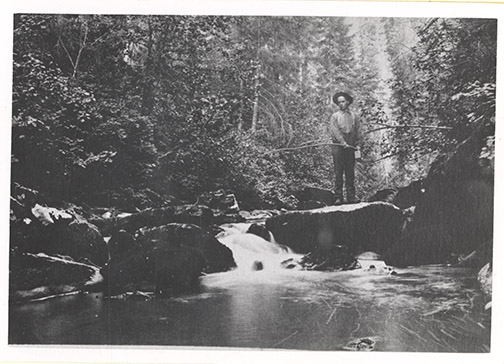
Carl Olson
Born 1895
Occupation: Thresherman; operator of gas station and car dealership; sawmiller; miner; Troy councilman for 24 years
Residence: Dry Ridge; Troy
Topics:
The colored topic bar is hidden for screen reader users. Use the topic buttons below it, the "Filter by Topic" menu or the search box to find specific content in the transcript.
Sam Schrager: Carl Olsen has a great store of vivid recollections about early times in the Dry Ridge, Bear Ridge country in the town of Troy. He speaks of why his parents left Sweden and of the man Per Johansson who told the people in Minnesota of new land opening up around Troy. He talks of his large family's homesteading and the copper mining and brick making they did. He explains the effects of early land use and the extensive commerce that centered around Troy. He touches on early law and order and how criminals might be dealt with and he recalls characters, a mean sheriff, a real giant, a foolish miner, and a phony hunter. It should be okay. I think the first thing I was thinking of asking you was why your parents decided to leave Sweden, come to America.
Carl Olson: Well, I don't know. But you put that on the paper?
Sam Schrager: Oh, it's okay. No, do.
Carl Olson: Well, you come there for the getaway from the military, capitalism, and religion. That sounds pretty bad, you know. I think the whole country knows. I'll tell you why religion, you see, they run the country at that time. The church at Pomeroy, something like the Catholic said, you know. But they start breaking away when they left. Now, religion is just like it is here now, you know. There was one kind there. You had to go to church, you had to do everything, you know. You were boss, you know. Actually run the country. And then the military said, you didn't believe in wars, I guess, not for too many fellers. Believed in that. But that's one reason… see there… it was like it is here now, you know. You were forced to go in the army. There my dad is. That's when he was in the army, in Sweden.
Sam Schrager: So he had to serve.
Carl Olson: Yeah. I don't know how they went some three, two, three years, but it wasn't worth long each year, I don't believe. I don't know for sure how long they had to spend. I think they had to spend a couple of years anyway.
Sam Schrager: What about the capitalism that you say?
Carl Olson: Well, you know, all the people were poor there, you know. They didn't have nothing. It was a pretty poor country, you know, Rocky and the, it was like going up in the mountains here and there, you know. About the same thing where my folk come from. Of course, down there around Stockholm and down there it was perfectly good land, you know, but that was all taken up. All the people owned that. And then, you know, the system was over there, it was like what they called it feudalism, if you ever know what that is. Well, if it was a family there, and when they died, the oldest boy got everything. See, the others didn't get nothing. And that's why it grew that way, you see. It got bigger and bigger and bigger estates. And that's the way it worked in Sweden at that time. But that isn't there no more either. feudalism died out, you know, finally. They had slaves to do all their work, you know.
I think capitalism was on the way out, too. Thank you. You surprised me a bit. If you go back in history, you know, the first of us were real slaves, you know. But slaves that worked for the people, they'd come under the feudalism system, too. And that went on then so long as it was room not for the people, you know, to live. And then when that got the tough, then it got rebellion and they took it over. Then the kings come in and ruled, you see, all over Europe. The kings ruled after that, after the feudalism did. And then the kings of ... went into democracy. Now you see, of course, that was capitalism here now, 100%. And it can't last for those reasons. When you settle in the United States, you settle in the East Coast, you know. And when it got too tough for the people there, you kept moving west.
They'd take a homestead and so forth and they'd have a store or a little sawmill. And all such was a future for them to go through, you see. It's not here now, you know that. The small business are dying out all the time. The big chains are taking all the business, the big factories are taking all the business there, and the big farms, you know, where they're going, 10 ,000 acres, you know, 2 ,000, 3 ,000 acres. Where are you going to go? Just the job, that's all you got. And that's getting so rotten that you didn't even have a ruling debt now, you know. Sure, go on strike, strike, strike. That's what caused the inflation now. If there's anything you're going to guide, it's to guide the wages. I believed in, when I was young, you know, I believed in the union offer because when I went out, worked out to carry my own bed and sleeping in the old bunkhouse. No beds are nothing, you know, obviously they're stinking them in the sweaty feet, you know, they hang the socks up. You couldn't order a sleeve from the stick. So they cleaned that up, you see, the union. But now they're getting so big that they're starting to ruin the country, ruining it for a strike.
You know, as I do, there's a saturation point on everything, isn't it? Well, let us just strike, then that thing is going to cost more, so they don't gain anything. When they buy it back, their money goes back, see, and what to do then? So all I heard was, save your money, save your money, so you don't go into the poor house and so forth. What's the use of saving money? It's going to go like this now. The money I saved when I was young, two years, be wiped out.
Sam Schrager: What you're saying is that the way it is here reminds you of the way it used to be in Sweden when it made your parents come over here.
Carl Olson: So you see how that is. And that's the way it was over there at that time because that country was settled all over, you know, full of people, see, it was not a place to go.
Sam Schrager: Did your parents have a farm of their own over there?
Carl Olson: Oh, he had a little bit. They didn't have many acres, you know, they had a couple of cows and used the old side, old a cup to hay with. They didn't do any trashing or anything like that because, well, they didn't have fields enough, most of them. And that's the way they lived there, you see.
Sam Schrager: Do you know if he had to hire out? Huh? Do you know if he had to hire out and work for a big environment?
Carl Olson: They went up north. I don't know what my dad did, but he was pretty young, you know. He was only 22 years old when he come here. But they went north and done some logging, you know, in the winter and worked. But that wasn't for him being very much for all of them to do, you know. It was pretty tough, too, you know. When you get up north, there is colder and the days are short. You can't put him on by six hours in the dark, you know. So what he used to tell about that old, you'd float him to log down the creeks, you know, to the mills and so on. But now Sweden has got to put a good government, you know, it's pretty good. You're taking care of 100 % there, 100%. You got a home to live in or you get a home for you? You got no... and stuff like they have here and ... and all that, sick people. Everybody thought that was a darn good, you know, here, but it's no good. It's good, better than nothing, you know. When a people gets broke or he gets so he can't work, he's got to live somewhere. Well, then they poke him into those big homes, you see. And there's half crazy people in there and there's everything in there. They can't. They don't want to live that way. You wouldn't want to eat it if you're for good shape, you know. When they poke him all in one bunch, he shouldn't do that. You could have a little house for him and then have a house like they got here and put the people in, that's got to be taken care of. Then they can live the way they want to. But before they would lay the poor house here, you don't remember that, I guess. They had an old religion on, they'd poke him in there and they would rag it and half starve to death and fighting and quarreling all the time.
Sam Schrager: They had those out here too. They had those out here too.
Carl Olson: Yeah. I talked to a fellow that come from down south. They had a poor house there and they had one out in the desert, you know. And there you've got all kinds of people here, you see. They've got miners and farmers. And they were quarreling and fighting all the time, you see. And they'd run away. Then they had to run and find them, you know, and mix up, you see, like that. They didn't know where to take care of people. My way of taking care of the country is two things they have to do. The one thing they have to do is take care of the people. And if you take care of the people, the people take care of the country. You'll never have them in trouble in the country. And that's the whole secret. Of course, they're getting there a little better now. And they used to be here. Now we've got Social Security and all this, you know. That's pretty good. If they wanted to have Social Security, you'd have to build 15, 20 houses like the God of Moscow to take care of the people. You'd be all broke. But you can see it yourself. Didn't say it, you know, talk all their money, you see. See, you've got to regulate things. You've got something to go by the people. And that's why the young people, they don't know what they want today. They run all over. You don't know what they're looking for because of no future, you see. The job, that's all that is left.
And then the whole tax system they've got here. Tax your home. If you don't own a home, you don't own it now. You're leasing it, paying so much a year to live in it, don't you? Taxes, that's the same as a lease. Now they're getting something. We pay $525 on this little thing here, taxes alone. Then we get an empty building… what happens… we lose it. And that's paid taxes on an empty thing that there's no income from. That's what happened in the last depression, that's before you were born. Big building in Moscow there, you know, a fellow had a name named David, you know, three, four stories high. Lost it on taxes. It was $4 ,000 taxes against it. $4 ,000 then was the same as $50 ,000 now, per million. So you couldn't pay it and sold on a tax sale. For everybody that had an apartment house in the 30s, lost them.
Because the people that lived in the apartment houses couldn't pay their rent, see? And you couldn't kick them out, they had to keep them there. And you didn't get enough money to pay the rent from there, they didn't keep it up. Rich people, millionaires, went broke on having apartment houses. You know what, a lot of stuff here has got to be corrected if they're going to lose the country.
Sam Schrager: Let's go back and start with your parents coming over here. Let's start with your parents coming over here.
Carl Olson: Well, they come over here in 1897. They come on the boat, there were six weeks on the ocean, and they had to come to what they called the steers, that was the cheapest rate, you know. And they lived way down in the boat there, you see, there were rocks. See, we get up here on the boat, on this, it didn't rock so much there. He had way up, and it rocks again. All the people that had money, they always took to that place, you know, but that was a whole lot of cost over there. But they had to take the exteriors way down the bottom. And they feed them, fed them all right, but they had black coffee, the mothers had a little bread, but it was about all. And they start to come up, and that old ship was going like that to lay it over. He never thought he was going to make it across at all. And then when he got to Minnesota, my mother stayed there. And my dad come out here a year ahead and took this, Dr. Homestead, you know. And then when they come here, there was no railroad. Here, it ended in Moscow, and he had to pack everything on his back from Moscow that was 22 miles off to the ranch, and so forth.
Sam Schrager: How did he happen to come to Idaho, do you know?
Carl Olson: Well, it was because it was land to take here, you see. See, a lot of the eastern stuff were taken, and a lot of them, it was some left on the prairie, just like the Dakotas, you know. But it was cold and windy, and no timber, no nothing, see. He couldn't even build himself a home there unless he had money to buy lumber, see. But here you had the timber. You could make a log cabin, that's what my folks did, you know, you had firewood. So you see, it was a whole lot of advantage to come out here and to go on the prairie in those days unless you had the money. So you could build yourself a good home. And that's the reason you come out here. It was good at home, Saturday in Nebraska and Kansas. It was quite a bit of land there in Montana, you know, too. But prairie land and cold winters and blisters, so you could see 50 feet even. And what mother said when you stayed with the relatives there in Minneapolis, not Minneapolis, but out of Minneapolis. The barn was about 150 feet away from the house, you know, and they have a wire. And a rig to take a hole off when they went out there and fed the cattle in the winter because if you didn't, you couldn't find your house. You could take a hole or a thing and slide on the wire to guide you. Yeah, the mother said, they didn't have money, they stayed over there dead. When the storm came up, they had to catch that rig and go out in the middle of their cows and take a hole out of it and go back to their house.
Sam Schrager: How did your father happen to find the homestead that he found, you know? How did your father happen to find the homestead that he found, you know?
Carl Olson: Here? Well, they surveyed the country, you know, and then they had the locators and called them. See, it stayed in Moscow, you know, and maybe they wanted $5 or $10 to go out and find the place for where it hasn't taken. That's the way they found them. See, it had a map then. And then the mark on the map, this is taken and this is taken. And the next man come to know where to go with it, you see. That's the way it worked out. I don't think, I don't know if they paid those locators anything or not. Maybe the government had a, you know, free of charge. I don't know about that for sure, but I guess they had them free already, maybe. So they could help them out, you know, to find the homestead. Because the country, at that time, they wanted to grow, you know. So they helped the people quite a bit that way.
Sam Schrager: Were there many farms around him when they...
Carl Olson: Well, there's, after you get to divide here, you go between here and Moscow. That's halfway between here and Moscow. On that side, there was quite a few farms. Genesee country and all that, because that was open country. You could get field quite quick, you know. No timber there, you know, all open. But here, timber all over you can see it there now. They took quite a while, you know, to get a piece of field. Had to cut the trees down and let them... They ring the trees. They call them big yellow pines like that. They take the axe and they cut the ring around it, cut the bark off, you know. And then they die. Then they die, and when they got dried, they bore a hole in them and... They set a fire in them and burned them down. And so we did burn the tree up too, all the way, big tree down. They bore a hole this way, then they bore one here, and they come together, and then they put some coals in there and had the little bellow out here. They start the fire, and then when you had a star that burned, that log up, see. And that hole here was a smokestack, in other words, you see. Yesterday, we declared land. And then they used a lot of timber to make fences with, if you had a lot of it. They'd fall trees down to keep the cows from running away. See, they had high and many limbs, you know, and cows couldn't get through.
Sam Schrager: When did that area come by the name of Little Sweden?
Carl Olson: Well, there were so many Swedes here. That's why. They named it that, the people. You had names for everything in those days, you know. You made them your status because the country wasn't settled. Now you say Moscow and Troy, Rodin, Des Rodin, and so forth, and there's Genesee Country and that, you see. And that's the way they had to name the stuff, so they know where they were, the people. See, we had names on everything on our farms. So we talked to each other, we knew where the folks were, or where they were going. Like the big point, the little point, the mining point. We had, that's our names now, at east, around, north hill, and north up in the lane. We said, that's a road that run there. If a man was common, we'd say, is a man common, north in the lane, and all that. Names like that, all over. That's really named. And the mining hill, where we had that mine, that was the mining hill, it was hills, you know. It went from kind of a ridge, you see, the names, big ridge and middle ridge, and all that stuff. So that's where they knew where they were, and that's the way all these other names were, you know. Now, we talk about people. Well, we had a neighbor, August by the creek.
He lived by the creek, and that's the way we know who they were talking about. So on. All that kind of stuff.
Sam Schrager: So what were the first years like? What were the first years like for your parents out here?
Carl Olson: First years. Oh, they were tough… were we tough… because, well, it wasn't too bad after one year because next year the railroad caught me on. My dad worked on the railroad, so he made a little money that way, so he could buy a little stuff. But the hazard was pretty tough. I asked my mother why she didn't go back to Sweden. This country looked so much like Sweden, so we didn't get homesick. Because the living was standing better here in Boston, Sweden, you see. Because they had to start with nothing.
Sam Schrager: So it really reminded her of Sweden, this country. It really reminded her of Sweden, this country.
Carl Olson: Yeah, it reminded her of the hills, you know, the timber. They come, you see, where we live out there, where we live, this pretty hilly country, you know. But there's sharp hills, big ones, you know, so we have big fields on all of us now. And canyons and roars, you know, and there's a big creek from below our place that we used to fish in all the time. And then we got enough money to get a gun, then we'd shoot a lot of grouse, you know, to eat. A lot of blue grouse down there, can you? We used to hunt all the time, you know, fishing all the time. We'd quit, too. No, no, no came more than to fool with you. You'd shoot all you could. My brother shot three birds, one shot, one time, you know. Three blue grouse. And then catch all the fish we could. Nobody to look in your basket like you do now.
So that helped quite a bit. But the deer, they were shot out pretty fast. It was deer in here, you know. They bought the deer for five dollars apiece, you know, and those fellers had guns. They made 11 that way so long that they could catch. They'd shoot them and take them to Moscow, sell them for five dollars. So the deer was cleaned out pretty good when I grew up. It wasn't probably any, but there's a lot of deer here now, though. They can't. The moo would go back. See when they start logging in the mountains, then they'd carry them back. That's why they're here now. And then they got the limit on them, and we can't shoot more than one.
Sam Schrager: Tell me how the country was different then in the woods than they are now.
Carl Olson: Different how you mean.
Sam Schrager: How it's changed. Well, last, when we were talking before, you were explaining to me why the creeks used to run.
Carl Olson: Well, that's because they didn't cut the timber off. See, the timber is cut off now all over. And the snow goes off right away, and the cricks get way up, you know, in the spring. It flows off. This creek here used to run all year, you know. Businesses were big, you know, but it was... It'd be about this wide and this deep all year round. I was fishing it all the time. Now it isn't a drop of water in its mouth. This here is off and dry anyway, but... That's what race they had. When the timber got cut off and there was a little wind coming, the snow would go just like that, you know. You know, when you take it all off, you know, because nothing's protected. But when the timber was there, the snow fell between the timber. It was shaded around all the time. You wouldn't... The Moscow Mountain... The snow would lay off to you. You know, before the sun was gone. So the runoff was a lot more even. Yeah. Even all the time, you see. I've never done... I can tell a smile. And you can see... In the spring when you get quite a bit of snow here, you go down and look at these creeks. There's just pure mud coming down. And those days the water was just as clear as the crystal. So now the country's going away too, you know. On the top of it. You can imagine that this country isn't a hundred years old yet. And you look and see what's happening to it. Out in the fields, in the spring, it'd be ditches, this deep all over. The mud, the top soil is going away. They have something left to stop, of course. They're working on that quite a bit now. I'll tell you, you should change the way of farming. You take a steep side hill, you know. You can plant grass on it and hay. Don't put wheat on it, you know. They put wheat on everything. Now these are the way to farm, you know. Well, we get a lot of rain. Heck, it is just deep and foot apart maybe just like a hill over here now. All of it goes down in the creek.
And it's only a hundred years old. You know how fast this is deteriorating. They had the farmers got hard up here in the Depression days, you know. Then they paid the farmers for not putting any wheat, you know, because they had too much. But then they didn't tell them what land they got put out. So some fellas had little money. They went and bought land all over. No matter how it looked. Then they turned that in, you know, and brought money on it. Instead of that, they should have pulled the farmers and paid them a little more money. They said, now this side hill, you take that out. Don't farm this. Because here's where we lose the mud, you know. They had no regulation like that. So if it's a country that thought they couldn't have a root, we're not far away from the United States. We're running out of water everywhere too now. Troy is up for the out of water now. It's new, it's still everywhere.
No, I know.
Sam Schrager: Let's go back to when you were a kid and what you remember from then. Being a little boy on the farm and what the life was like when it was just a homestead.
Carl Olson: Well, it ain't much to say there because we didn't see much. I didn't see a town until I was ten years old. I don't know what the town was. Because we had three horses on the place and you couldn't let everybody ride a horse. There wasn't enough ten to twelve kids into your horses, you know. And it was nine miles, that's quite a hike. But when I got about ten years old, we used to hike to town, you know, to carry butter and salmon, you know, to have the butter. Some days it was up, we got a dog and the butter was melted. Then we carried eggs too. And then walking down .., there was no rock roads then, you know. The farmers rode up and down with them wagons, you know, and the dust was ... You can see the water where your feet were, barefoot and the sign because we didn't have enough shoes. So it wasn't any fun.
Sam Schrager: Were the first winters really hard on the map? Were the first winters really hard?
Carl Olson: It wasn't too bad. The winter was pretty good here, but never had any wind, you know. With the Minnesota there, you had so much wind. And you rode back here, and that's how the wind was. Oh, you rode back and told them you can throw your hat on the roof and delay there all year. But you can't do it. Thousands of timbers got out. Didn't blow a toll hardly then, you know. The timbers stopped the team here, of course, down around ... They had a little breeze, I guess, but they appeared to have any.
Sam Schrager: Well, how was your father making a living? How we made it living?
Carl Olson: Well, this is as tough as it looks because we live different now. There's a lot of kids in our family, you see. So when one of them grew out of his clothes, in next kid wars, we had patches on everything, you know, walked before, we'd thrown them away. The real war out, you know. And you see him with the shoes. See, the next one, the next one. My mother, she made the clothes here, the sewing machine. And she bought the cloth and sewed her pants and shirts and everything. And you could buy a cloth for 15 cents a yard, then, you know, get his shirt stuff. And for overalls, I guess it was maybe 25 cents, maybe. So you could make a pair of pants for two bits and you should have sold it yourself, you know. And then they raised their own food, the buds and everything, you know, and had a little archer down there, too, but then you had to wait until three years before that would bear them. And then we had chickens and eggs and we didn't get to eat much eggs because we had to sell them for groceries to get sugar and stuff like that.
And they all were putting the same pickle, you know, but nobody had that much.
Sam Schrager: What jobs was your father doing then? What jobs was your father doing then?
Carl Olson: He worked out quite a bit. He was a carpenter, you know, and a brick layer . Not an expert brick layer , but he laid the brick, the chimney s and stuff like that. So he never had a little break yard home. So he made brick and we sold them from Santa Peace. We didn't sell too many, but we sold quite a few to the neighbors, you know, who had the chimney in their house. We had to get the old stovepipe out because that was a hassle to have a stovepipe because you might burn up your house, you know. So they all put in chimney s. And then he was pretty good with that broad accent on it. You know, all the making about that wide, you know, and he'd dovetail it together in the corners. And he'd cut, make their own shingles. Cut a knife, you know, big long like this. Then they had a wooden club get hit that knock off a shingles, you know. But the nails, you had to buy the nails. You couldn't make that. And I remember the nails for the first come out, they were square, you know. I don't know if you've ever seen any of you. So my dad, he sent the older brother to get, buy some nails, you know. So he gave him a sample of how big it should be, you know. So he wouldn't forget. And he went down to the store. Then the round nails would come out. The kids didn't buy any nails. They'd come home and told my dad that they'd have any nails. They told him they had the round ones on them. So they had to go back and get some round nails. We made a cast iron, I believe, then. Square was, most of them, break easy. I don't know how they made them, they was taper all the way, you know, in the square nails, they called. But the round nails, they were sharp on the handle, you know.
Sam Schrager: Did you say that you made your own bricks?
Carl Olson: Yeah.
Sam Schrager: How did you do that?
Carl Olson: Well, we had the, the ring was about this big square, see. Then in the middle of it, we brought the pole down. And it took all the iron, the rods and stuff, and drove in that pole, see, all over, see. And then we had the sweep on it here and the horse out there. And the horse walked around and this thing mixed the mud, you see. And one of us would throw the mud in, and the other one would stand there and take it, and it would come out and throw it in the mold. He'd catch it by hand, throw it in the mold. Five, I think it made five, a week at a time, in that mold. And then we had the sweep, smoothed it out to the top. Then we carried out to the dryer, at a place where you'd dry them, you know, boards and lay-down. And that's the way we made them. One guy was shoveling in there, in dirt all the time. And then they'd throw in so much water to get the mud the right, the right thickness. But they were, they were number one break, you know, because, well, some of them were good. Then we had a kill, and we set the break in the kill, you know, leaving them about that much apart. And then where the fireplace would come in, come together like this. And then they'd put more on the top. And that fireplace, where you put your wood in to burn them, to make them hard, you know. That's the way we burnt the break. But they had to be re-burnt, too, you know. We'd have one kill to be about, because there's a room here and about that high, and we'd set the break all over it. And the top break, then, you see, and the one on the sides, they didn't get burnt enough. So then when you tore the break out, you picked out all the burnt break and reset it again, and then burnt them again. That's the way we had to get them hard enough.
Then we made our own skis, own sleds, made them ourselves. And then finally got a black switch-off, and there we'd make our sleds to ride on, for ourselves, you know, small ones. And then we cut down the fur tree that was crooked at the bottom there. And we peeled that off, and that's where we made a ski from. It's easy, you'd have that up in the end. So we had to make everything happy. Everyone could buy enough. And then when we got older, we trapped coyotes, and so were them, but you didn't get much for a hide. Fifty-something dollars and a half is all you got for a coyote hide. I told you to paint your hero head.
Sam Schrager: Did he have to learn how to do a lot of this for the first time, or did he learn a lot from his neighbors, or did he know the rest of it?
Carl Olson: No, he must have learned that in the whole country because he did a lot of work here for me. I guess, you know, some people, it's nature to some people to do things like that. All this, like my oldest, that's not the oldest running, but... Third boy, Albert, he's still alive. He's an autumn, he even became it, you know. He knew everything about a car, he didn't have to see it even. He's no fool. And he used to say that, that man, Albert, he can fix a car with a plier when the other feller's looking for the tools, you see. He used to have good, you know. And I asked him one time, huh, if he ever got stuck on our automobile, you know, what's wrong with it? For real, he had one, he said, had a come up from Lewiston, and he... He'd come up the grade, and he said he'd turn to the right, and the car would die, so long as it went straight ahead and to the left. He said, all right. So Albert, he... He was in Moscow then, and he said a come up. He tried it, and took a look at everything he could think of, and he went out and tried it. But he turned to the left, and he looked for the right, and he died. So he thought, he didn't know what to have to look at. And then he took the carburetor report, and he took the clothes out. And it was a... One of them ..., it wasn't the cork float, you know, the other kind. And then he happened, and he said he took it up to his ear, and bang, there was something in there, it was leaking. So it got water in it, or a gas, see. And when you turn quick to one way, the throat went down, see, and choked the car. That's what happened. That wasn't funny, he said. Me for new went stuck on that one, though, he said.
Yeah, he was a good one. Too fast, he was fast. When I had the automobile business, he was my mechanic, you see. In those days, it was so much for a job, you know. He didn't spend so much, and everything, you know, he put them in so they were fast. Could make good money on it.
Sam Schrager: So what was Troy like back then, in the old days? Well, you seen the picture here, didn't you? Wasn't much of a picture.
Carl Olson: It was a little better than that. It grew pretty fast, though. There was a few people that come in here that had little money, you know, and they put up this big store down there. So it was a pretty good little town. And then there's a lot of railroads built, you see. And they cut a lot of ties here to people, hen, hen. And they hauled them down here, and they shipped them from here, and then there was small sawmills going up all over. So people started getting work for them. And then they started getting fields. So you go out and hang and put in ten days or something, and the harvest come. That was about thirty days, you see. And then they had small sawmills, and they hauled the logs in on the slabs in the winter. And sometimes they'd have a half a million feet to sow, and that lasted about a month in the spring, and that's the way you got your work outside. I worked on seven different sawmills in my time. Seven, there isn't any left here now. They were all over in the canyons, you know. And they couldn't log in to somewhere, and in those days, because you had to put the logs on the wagon, you know, and you couldn't... keep hauling the logs on the wagon in that rough country, you know, and uphill. Orchids couldn't pull no load, but the sled is different, you know. Put on the sled that slides and you could haul twice, three times as much on the sled, you know, on the wagon. And then the wagon is so they're high, you know, and you had weeds that's high, you had to roll the logs way up there and the sled is way down here, so you could roll them right on, you know. And that's what they've done all the logging in the winter. There was a lot of meals around here. And then they came to see me now, they didn't have no timber, so they saw a lot of wood down there, and the Lewiston didn't have any timber. So they saw a lot of wood down there, it was a heck of a wood down here, you know, a hundred feet long, you know. Wood piles laying by the railroad tracks to be loaded on the cord. There was a bunch of Spokane, some of it, and Moscow and Genesee and all that. It was the biggest shipping center between Spokane and Lewiston, Troy was. They called it the biggest little town on earth, it was a nickname for Troy for a long time. Yeah, and that's why you've got to name that, before all the stuff, the ship out of here. Then they started getting fields, and then they had the wheat and oats and all that that come in there, and they shipped that out, you see. So that's why it was such a shipping town.
Yeah, and it was a rough town, too, you know. There was a couple of tree-murders in this town. Yes, that's plenty for a small town, you know. And they served to get, shop the policemen. He was a mean guy, anyway, so people of north here, you know, for a heavy drink or whatever, you know. They said they celebrated for three weeks, but they found out, they took out the whole haze.
Sam Schrager: Did you hear about that when you were a boy?
Carl Olson: Yeah, I remember I was four years old when it happened. My dad came home from town and said they shot the policemen. Then I talked to an old fellow yesterday. He was here, he said, he'd seen him. He'd seen him shoot the policemen. He lived right down where it happened. He was 84 years old, this guy. And that's a guy named Cord. He never said, I don't know, that big of an album in Washington. That's about Colfax, you know.
Sam Schrager: How did your father say it had happened, do you remember what he said at the time?
Carl Olson: Well, he didn't know much about them when he first told them. He went out of town, too, you know. The town wasn't taken in, so there was a few buildings on that side of the railroad track that was out of town. And he had no bases going out there, you know. And the old lady and the old man, I think, got in the court. He had been hollered for the police. So he got a little rifle out and told him, we have a cross-stays fence, I'll shoot you. But old Hayes wouldn't stop, so he shot him. He could have shot somebody else, too. One of the bullets went through the hotel side down here on the corner. I guess Hayes wasn't too well-liked. He got paid so much for each guy he throwed in. That's the way he paid him, too. That made it bad, you know. He put one man in because he had a lame back one day. Wagon, you know. Pretty high on them wagons, you know, and they had a seat way up. And then they had a step here, and this feller, he only got up in the wagon, and he had a kink in his back, and he fell back. And there was old Hayes to grab him and throw him in jail.
Sam Schrager: For what reason?
Carl Olson: He thought he was drunk. Yeah, he was mean as that. He went out and got him, and he tied him, tie a rope on him, and lead him in to town here. When he coughed up, when he was drunk. And he put his own son in the jail, too. Yeah, he had two sons, and they were twins. One was a barber, and another one was a farmer. And I don't know what they done with it. They was somebody else when they had it. A blacksmith's out here, and his boy, and Hayes boy, done some damn thing, and he arrested both of them, you know. This old boy ..., and one of the boys was sitting in the jail there, he said, the old man can't do this, can he? Well, he said he's already done with this. And then they were crazy. That Hayes boy was kind of a tough one, I guess, too. I don't know what he done, if he was a barber, and they were twins, so you couldn't tell him apart. When the truck come down, the rest of the became his faces. The barber went out in the country, and he felt the wrong guy.
Sam Schrager: He's like his own sons, huh? What was the other murders that you were thinking about?
Carl Olson: Well, it was a felony of risk, and he got stabbed in the stomach. He come from a dance down here in the hall. He got cornered about something, and he turned around and stabbed in the stomach. His name was Driscoll. And then the other one wants to get a restaurant, get a little restaurant, this guy. I forgot if he was a Negro, or was it Negro? Okay, the woman, anyway, he throwed him out on the sidewalk, you know. I guess he was getting cut up or something too much. Then there was a spike in the wooden sidewalk. He stuck up about this far, and hit him right there, and killed him. He didn't want to kill him, you know.
Sam Schrager: Right in the forehead?
Carl Olson: Yeah, his spike shaken up, you know, went to his head here, in his brain. Then he shot that burglar too, I guess he didn't arrive to shoot at him, but he didn't have to shoot him. He died.
Sam Schrager: What was this?
Carl Olson: It was downtown, even the post office, upstairs from the post office. He lived behind the sun's down there, waiting for him. Yeah. Oh, you know, there was a lot of criminals too, you know, that come from the old country, you know. He skipped, get away from crime. Two or three of them around here, I thought, if they come to this country, we'd get away from them. Getting caught, you know. I guess I told you about the ... sold a pig, huh?
Sam Schrager: Tell me that one again, because I forget it already.
Carl Olson: Well, there were a couple of farmers up there, and they were close together. So they went to the hog, and hung it up in the barn, you know. And then we went to work, I guess, I don't know if they went to work, or went to town anyway, they went away from us, for a while. And when they come back, the hog was gone, you know. So long they done, they took a piece of rope with them, and walked over to the neighbor, and he said, you can give us that hog, or we'll hang you in that tree. And here you come with the hog. So you see, you didn't need any cautious stuff here to penalize them. See, see how quick they got rid of that case. They got the hog back, and the other fella went home, and that was all it was to it. Now they go to court and fight here for three months, or anything like that. That was a slick way.
Sam Schrager: You're saying that they knew they could tell who the, who the guy was, and what he was.
Carl Olson: They knew everything. Now you take care of all up here in North Korea, we lived. There was only two people there that would steal the race, and we all knew them, you know. All around, they knew who had done it. And that's what these people did, you know. They knew right away who had done it. And that's what he took the rope and went over there and told him, hang him in it, come right out with it. But nowadays, you don't know what the criminal is at all. You know, you can't tell. In those days they did. They knew them all. And then there was other rough stuff going on here, fellas, on the burned trade. He took a home Saturday night to come and kidnap him. You never found that guy anymore. And then he took the places. He, he ain't proved up yet. But they found one man hanging down in the canyon in the tree here. But I think that was after that happened. They never found out who he was either.
Sam Schrager: Why was this guy, how did he know he was kidnapped?
Carl Olson: Well, he lived there on this place in the cabin seat to prove up. Maybe he had a couple of years left. Then he'd go and get, when I showed you, land paper, you know. And he hadn't proved up yet, so they wanted to get rid of him. So they took the place.
Sam Schrager: So did people suspect the people that took the place?
Carl Olson: Yeah, the people that took the place, they didn't want to kidnap him, but nobody seen it. There was no proof. What happened to him, you know? But he disappeared anyway. And that was tried again on another place. But they got the wrong guy that time. His name was Big Anderson, they called him. He was a goddamn big, you know, his army. It was just that wide bull. This is widest. You're both in your arms put together. Yeah, just about. And big and tall, you know, he had whiskers and you'd walk for two minutes. Kansas, I see them. And they had a sore on his leg here. And they tried, on the home side of it, they tried to trick, same trick with him. They come up there. He lived on Big Bear Ridge. He said, you know what he'd done? He used to one iron feller by the legs and knocked the other feller to hell. And they would chase him off his place. Took one guy and used him for a whip. Feels that big and strong. That's no fooling.
I seen the guy come home quite a few times. He was a giant, believe me. He was out clearing land of one guy, you know. And really, log laying on the ground with logs. There's a room here and one then was about that big, you know. And I don't know how to paper off. Big Anderson said to this, there's a guy about my size. You take all of that, Anderson, I'll take this one. And we'll carry that log over on the log pile over to burn them up. He was clearing land. Anderson take up the log. And the other feller was hanging up there. He took the log and the man and all. She fell. ... Oh, he was big. He was an old sailor. An old sailor. He had a soul in this league that never healed here. He washed it in the cold water in the winter and he put this hard, called Tamarack tree on it all the time. That's what he used for. He used to fight a character too. He's going to make a machine that run forever, you know. He worked on that all the time. He lived in a little cabin, you know. When somebody come in there, he'd throw a blanket over it soon, but he would see it.
And he'd ask him, how are your machine coming? Oh, it just lacks a little bit now, he said. I just about got it. He never got it made up.
Sam Schrager: What was this machine supposed to do?
Carl Olson: Well, instead of having a machine that would turn itself so you don't need no power on it, you see, that's what he was working on. See, he couldn't let it pull itself.
Sam Schrager: Nobody ever saw it, huh? Nobody ever saw it.
Carl Olson: No way. I guess after he died, he had to kind of weed there. I think it was kind of broken somewhere, water or something that drove him to see it. In some way like that, he had it figured out.
Sam Schrager: Did he walk with the cane usually?
Carl Olson: Oh, he had two of them. My brother, one of them, he met him. We haven't seen him then yet, you know. We didn't know much about him. He met him. He had been to town, Troy. He met this guy and my brother. He had run ahead in the woods. He thought it was on Carolina. Oh, you know, he can see ground. He was big, too. He was whisker, and then he combed like this. I'll bend over. He was like that. He walked. He was bent over. He was like that. When we come home once and we had a dog, that dog ran ahead when he seen him. When he left, the dog took after him and barked and barked and barked. He thought it was some big bear, I guess. He made his own clothes. He had overalls. He made his shoes of overalls. He'd make them about that thick. Then he'd put a couple of rivets through here on each side and put them together. Then he had the big overalls. He made them about that big so he could put them up easy. For his sole hair, you know. He was dressed funny, you know, too. You seen him, you know. When they scare you, all right?
Sam Schrager: You mean he made shoes out of his overalls… yeah.
Carl Olson: He got about five, six thicknesses, you see.
Sam Schrager: Did he work?
Carl Olson: Well, I don't know why we left him. I can't figure out how to get. I don't know why I couldn't figure out how to get him to work. He sold his face. I guess he lived on that when he sold his homestead, you know. He took a homestead as a guy that I took to have a guy and get to come back, you know. Right. So I guess he had that money. That would last him a long time, you know… no… he was a ..., right? I don't know. He said, yes, he was going to be married. Oh, yes, he said, I've been married. Did you have any kids? I don't know, he said. Then he said he was on the boat, you know, and the captain got mean. He said he took and put a rope around the captain and throw him in the ocean and be held there, roped, and he begged for mercy before I pulled him out. I suppose maybe he had done that too, I don't know.
No.
Sam Schrager: Did he say how he got the sore?
Carl Olson: No. I think it was a kind of a cancer. It was big too. I've seen it, you know. It was about this big right in here. But he never did heels. He didn't seem to get much bigger either. It was all meat, you know, rent.
Sam Schrager: It was about eight inches or ten inches long. Yeah, not that long.
Carl Olson: But he got pretty old before he died. I think he was up in the eighties when he died.
Sam Schrager: Were there any other guys like that were as eccentric as he was that you knew when you were young?
Carl Olson: Yeah, ... He lived in a park. I didn't have any calling. He was a queer guy, anyway. He was always looking for men, you know, men that he was digging. He had a mine there. He had a homestead down there in the park country, way on the brakes. It was nothing but rocks, he said. And he started mining. He was looking in the desert, you know, where there's no men at all. He asked him why he didn't dig in there before. Oh, he said there was a tree standing here. He said it was gold like that. There's where the men were laid, he said. So I started mining there.
Sam Schrager: The tree was pointing?
Carl Olson: Yeah, the tree. The tree was bent over. So he mined right under there. He said, everywhere he died. Then he take his rock to Moscow, you know. Then he take them rocks to Moscow, you see. And he said, is that any good? Oh, you told him that's no good. You know what he told him? He carried them back. Boom. He thought he was hitting them. Yeah. Then he had a gun, you know. And it was 45-70. And he thought all the guns were the same. So if he seen a .22, he'd say, that's a small 45-70, isn't it? Yeah, he was quite a character, that guy.
Sam Schrager: And he really meant it.
Carl Olson: Yeah. Oh, yeah. He didn't know what it was. He got a foolish, you know, too, you see.
Sam Schrager: What did you say?
Carl Olson: He... Yeah, you know, kind of silly little bits. And then we have more of a kind of a... One they call wild game here. But he was... And he said he was... He had a lot of dogs. He had four, five, six dogs. He had them all the time. Then he had a... a bear here, you know, full of saddles and a gun. Long hair. He was in the same style as the young people are today. I seen him only once. And he... Oh, he was... He'd shoot all the time. He had shot cougars and they had done all that stuff, you know. And he never shot them. He shot this at them. His bullets were off on the end. They had warms of the end longer on here than they wore off. So this thought he'd try them out over there, he left them all a quick tour part. So they took a gun this act and put it up in the tree and make it look like a cougar. Then they had a guy below there and he had a rope on it. So he yanked on that rope and... They told him, said, Hooker down there now. You better go now and get a... Oh, yeah. She said... Man, he didn't dare to look that way.
Did yank on that rope? That thing was winking. He shot up all the shells and the cougar was still there, alive. That was a whole wild day… but... Yep… i suppose you want to hear that story about my dad and the Indian then, huh?
Sam Schrager: Oh, yeah. That's a good one.
Carl Olson: Yeah, my dad come out here from... Back east. And they were talking and talking about... He was kind of religious, you know. He told everybody he was terrible. He said, I heard you killed an Indian. And the Indian, my dad said, killed an Indian? I went down to Lewiston to get my citizen paper. He said, and the first thing they asked me, he said, How many Indians have you killed? And I said, one. You can't get no paper on one. You got to kill 12 first. I think he went home and believed that, too… no.
Sam Schrager: Had he ever killed an Indian? Had he ever killed an Indian?
Carl Olson: No… the way it started out, what my dad figured out afterwards, he was working for a farmer out there in Moscow. He was coming down Paradise grade, you know. He had a wheat load, you know, and a wagon. And a steep grade, too, you know. He met two Indians there, and they were drunk. They were swinging their guns and hollering and everything. And my dad said, if I had a gun up here, I would have shot those Indians. They scared me to death. They said, but I took the break off and used my whip, and the horses started off to beat hell, and then they all stopped. He said, and seeing that funny rig go down, they never seen a wagon, I guess, before, you know. And that's what saved him, he thought. That's the way I think it started from that. Because he said, if I had a gun, I would have shot those Indians. And I was forced to work off that manual back east, you see.
... The Indians didn't bother any people here. They were here around all the loose and everywhere. They had trails up here. They didn't come up here very much after they settled here. But there was trails all over. They come up here and hunted near, you know, and fished them, these creeks, too, being Indians.
Sam Schrager: They kept coming after people were homesteading.
Carl Olson: Yeah, then they quit then, you see. Then they stayed on the reservations, you see. But before, you know, and they saw more. They're the ones that... They claim, they're the ones that kept the rain. The rain gets so clean and nice, you know. You take a rain here now, you know, like, it's high, you know, and dry. The grass fires were running here all the time. So the Russian ever rode up. And that's the way they park. That is named there. That's over in Boulder Creek. That's out of Derry. And it looked like a park in there to people when they come, you know. It was big yellow pines and no underbrush at all, you know. And they claimed the Indians done that. They had fire to that long grass, you see. And then the drawers, you know, where the timber was just ticked, because it wasn't burned there, you know.
Sam Schrager: The sawmills pretty well handled the timber that was being cut off this country when people were starting farms. The sawmills around here, is that where the timber went?
Carl Olson: Well, you see, the homestead at first, you know, the sawmills couldn't come in until it was homesteaded, because they were meant land, you know, all of the time. You couldn't take any timber off or nothing. But when they sat in there, the Swedes, a lot of Swedes stopped in Minnesota because they got started there, you know. And therefore, they stopped you when they come. And then they'd find out where to go from there, the Swedes. And that's how they happened to get that way here. The fellow named Perry of Hampson, he found out that they surveyed this land east of Troy here, you know, ready for homestead. He had to survey the land, you know. That was a lot of work, and when he got into timber, it took slow. But you take the end of the sea, in Moscow, and that was open country, and that was surveyed 10, 12 years earlier. So that was all homesteaded, you know. And he come back here, and he told all the Swedes over there in Minnesota to go to Troy, or it wasn't a Troy land, but he told them to go here to Moscow. He said, this land is open now, and if you go out there, he said, he had a song made like, I'll bring my song made to you and go with you. And that's how they got started, the Swedes, see. And that's what he done. He took a song and he let them come down here, too. And then whenever they had a Swede come to Sweden, they'd have to go here, you see. And that's how they got settled quick in that one spot.
Sam Schrager: He found out about it back here. He was in Idaho, and he found out about it. Were a lot of the Swedes in Minnesota, they come from the same places in Sweden? Oh, no, they were mixed. They were mixed. Yeah, it's a very small country in Sweden, you know.
Carl Olson: So he was not bigger than that county, most of them, you know. Värenland was the name where Matokkum and then he had a small land,… and several letters, small landings, and all that, name like that. See, they talked a little different, too. You couldn't understand them all that pretty good, but they had a different language, each one of them over there. And then the real Swede language, I didn't understand that at all. See, I didn't talk English until I started going to school. I had to learn that there. There was nobody to learn from, but they were all Swedes around you. When you grew up, and I was in Elk River, my brother was working there. This was about 1912, or it was a long time after. We were standing out there in the street, and two guys was talking to V10. I said to my brother, what kind of language are those people talking?
And he said, that's Swede. That was the real Swede, you know. See, they come from Stockholm, you know, where they had the schools a little different. That was the real Swede, but I didn't understand them. And that's the way it was with the others, too. He had different words, like, Þica had for a girl, and janta. Janta is a girl, too. That was in our language, janta. And Þica was in the small landings. She and so on. So they had different.
Sam Schrager: Well, but when you went to school here, there were mostly Swedish kids that you went to school with, right? So how did you learn English? Did she teach all the kids English?
Carl Olson: Oh, yeah, man. She got her from Moscow and in there, you know. She was in the picture of the whole school there.
Sam Schrager: But at home, did you still speak Swedish?
Carl Olson: Oh, yeah, my mother never learned English. She was home all the time. She never got the chance to learn English. But then, of course, she was still with all the women. Yep. Well, I don't know how to start it, I think. Didn't have no shoes against the sprite. So we run barefoot between the house and morns and run races. Bases between the house, barn and the house, barefoot. Then if we had any shoes, Steve gets the horn as a rock. But we couldn't get them on next morning, anyway. Because we didn't have no more shoes for them. You get that letter, ..., you know. So we had a lot of problems with our shoes that way. And if we got them softened up a little, we'd put tar on them. We made our own tar from the roots of the stumps, you know, pitch. Put that in a kettle, you know, and then you put the fire on the outside and then the tar would come out, you see. Then we mixed that with the teller. That made pretty good shoe grease, you know. That's why we got our shoes cleaned up for heaven.
Sam Schrager: Would you have to stay inside if you didn't have them?
Carl Olson: Oh, yeah. We couldn't go out. We run barefoot in the summer all the time. All the time we were afraid of anything from across the creek. Barefoot was when they... crawfish was there. You know, the crawfish is, you know. We had a lot of them in the creek down there. They're about that big, awesome. See anything white, you know, you think is food. So we had to watch every corner across the creek… you know.
Sam Schrager: You started to talk about the winter in 1910, too.
Carl Olson: Well, there isn't much to it. It started, but... Buffalo Hump Country, well, I understand it, and they kept going around and around till they got over to Clarkia, and then most people got caught there in that... canyon, you know, smoke, so they couldn't get out. I think it was 16 or something, and then died there, if I'm mistaken. Not quite a few of them killed. And they had fired. These crops, they wasn't... You see, they didn't have the machinery like they had now to farm with, but, you know, they had horses, you know, and the crops, they got in pretty late all the time, so... And it was dry, and heck. Somebody else wasn't hiring that. So it was pretty bad this year.
Sam Schrager: Were the people around here afraid that the fires were going to get all the way down here?
Carl Olson: Well, they didn't seem to scare them much in those days, for some reason. I don't think this timber here would burn like it does up in them countries. It wasn't taken off, you see. And then we had the quakes here, you know, running out too, you know, and putting cold nights here too at that time. But it never come this far, anyway. It seemed like it followed that mountain range around there, you know, and cleaned up the cold leaves. I don't see why we didn't have more fires here, where all the land made the clear, you know. Cut them, slash the ground, and stick fire on it. I don't know the form we had. And we had to do it when it was pretty dry, so everything would burn up good, you know. You'd slash trees about this big. Of course, we watched them too. But they never had any bad fires here at all. I don't think it's the house burnt up from a fire yet, that is, a Ford. Grass fire. And a wall. It was kind of funny, all right.
Sam Schrager: Do you think most of the homesteads that got cleared, did the lumber just get burnt up, or did it go to the sawmills?
Carl Olson: Oh, it went to the sawmill quite a bit, I would think. But I think it was more burnt up than it went to the sawmills, because it's sawmills. They didn't take so much timber, you know, because they were small, and they had to log in to winter, and they would live on the sleds to get them in. So, in our country, I know that there was more treatment burnt up than there was in the other place. But when you get up in the mountain here, you see, where there was no farmland, that timber was sawed up, all of it. But down on the radius down here, that was wasted, most of it. And of course, in the bad canyon now where they couldn't farm, then, that was fine, a little like back in the bad creek canyon. We never figured that they could take the timber out of there when we lived there, you know. She didn't have no rig in them, but the last war, or the first war, and it'd been the railroad down that canyon and sawmills that timber out, there was a lot of yellow pine in that canyon, big trees, you know. And they had a fire there too, then, but it didn't do much damage.
So I guess they sawed up more than it was wasted already, when you figured all out, you know, in the mountains and the canyons. But it was a lot of wasted timber.
Sam Schrager: But when would you say that these little sawmills started going out of business?
Carl Olson: Well,… it hasn't gone up, but it lasts. The last ten years around here, it hasn't been hardly any small sawmill. There used to be one up here in town. That was bigger than the head of those things. But all those set up in the country, they'd been gone for about 20 years or more. But there were a lot of them, you know.
Sam Schrager: What did you know about this guy, Vollmer? Vollmer? Well, he was here, you know, and they named the town Vollmer after him all, right?
Carl Olson: He had a lot of money, I guess. He was an Englishman, I believe. And the man borrowed money, you know, he charged about 12 percent on it for more. And he borrowed $100, you know, and he'd get about 80, because he took the interest out, see? And the people didn't like him at all, you know. So they lost a name. He lost his name here, too, you know, Vollmer. It was named Vollmer to start with. But the name of Troy, I don't know how they happened to Troy all know, but they didn't like Vollmer anyway. And then he went up on the Cambridge Prairie, there was a town named that's right there, and he lost that, too. He lost that name because of Cottonwood now, please. And he had people didn't like him at all. Of course, he didn't see there, too, because he was rich. Oh, yeah, but huge for him.
Sam Schrager: Was there a lot of helping out between the places? Huh? Was there a lot of helping out between the farms?
Carl Olson: Oh, yeah. Oh, yeah. Yeah… yeah… i don't get to play all around because they were all from Ford, you know, they didn't have anything. They always worked together, helped each other, but they didn't have any boys. But the women worked quite a bit those days, too, you know. They take all the Swedish women, you know, they don't know what they were. They didn't know all the milking, you know. That was, that's what they done in the old country, 100%. They don't know. The men never worked, never milked the cow in Sweden. So they don't, there's all these Swedes up here, they don't, the women don't, only all the milking. And they worked in the field, too, a lot of the hay business. My mother worked out the field quite a bit. She didn't even saw the wheat. I had them. And then my dad, he come behind with the arrow and harrot down. They didn't have no cedars those days, you know. They didn't have much farm machinery either.
Sam Schrager: How did he harvest?
Carl Olson: Well, they had the thresh rigs come around, the old horse power come around. And then they had, after a while, they got the steam rinks. But the first steam rinks they had, they pulled the engine with horses. It wasn't settled, it was held. Should have been here the other day downtown, it was a woman. Stopped on the bench there, she had a whole box full of pictures. She wanted to know who this was, and if that. The picture of the trash, old trash rink there and picnic picture. You used to have a picnic up here. There's no other shirts, you know. Every year, the 24th of June, outside picnic, you know. He had one of those pictures. And I probably forgot about that. I don't know where he got all those pictures from, though. We're putting a whole lot of them.
Sam Schrager: What about your family's mining? You told me that the family had a mine when you were a kid.
Carl Olson: We done the mining, not him. We were the miners. Yeah, we done the mining. I showed you the picture of me that I read and dug. We had that tunnel in the ground.
Sam Schrager: You showed me the picture. I was wondering if you'd tell me how the thing came about and what you did with the mine.
Carl Olson: Well, you see that mine there was right next to our place for half a mile away, see. If I had a name Cox, he used to want to start it the first time. And he mined there and nobody could take that ram because it was mineral on it. So you couldn't take it home, said then, if somebody contested it from mineral. So it was 40 acres there. It's never been a homestead on. It's still that way. He mined and mined there, and he was a bachelor, and he had a check. All he had for his stove were a whole lot of rocks, and he'd make his sword over, and he'd put them in hot rocks when he baked them. And he was digging away there, and it was on the range. Like that, see, and he had a tunnel in here.
Sam Schrager: And I had to come down and ask him, well, have you found anything yet? No?
Carl Olson: No, he had. If I don't find something for his own, I'll hit daylight. That meant he would go through. Well, he quit. I don't remember him very much. Then, a bunch of Troy, he took it over. He did robot tunnel. And he had a couple, a string of copper about that wide in it. And he sank his shaft there, and then he connected Cox tunnel with this one, so he could go in one and then climb out through the other one. Well, he gave up. Then my brother, he jumped the clay, and then we took over in 1912. We robot tumbled about 300 feet there itself, and then we did a core grade at two beside him. We didn't find nothing either.
Sam Schrager: What did he think he was going to find?
Carl Olson: Copper. It was copper stringers there right there, right on the top. It wasn't big enough, you know. They talked it wide enough. We went down on them, you see. But they didn't. They seemed the whole of the same. It was rich copper ore, but it wasn't enough. So we spent the winters there, you know, mining in the summer. We were stretching or doing something else. I'm telling you about them two old fellers who said, I never feel like gritting… remember that… ... Well, they had those two old guys there. They had a machine there, how to take the copper out of the ore, see, leaching it. You'd have to, when you needed you got to burn it first, so the sulfur goes out in the copper hole. Then they put it in the acid. Then they put iron in there and the copper was a stick of that, so you knew what to experiment with that machine. And they were half-width between our camp with that rig, and every time we come home from the mine, they'd say, one day closer to the grave, and I feel like gritting, the old man would say. And we didn't know what happened. We went by saying, I feel like gritting. It sounded kind of funny at all. So we finally told them, he said, that's crying on the, on Scott. Greeting is crying. You're crying. I feel like crying, he said, because you're working so hard. I'm afraid you're going to get hurt down in that mine. That's what he meant.
Well, you know, mining is kind of a safe work, and we were pretty young kids, most of them. Not kids, but 15, 16-year-old, I guess, three of us. And we had to bring the holes and put the dynamite in and light the fuses. Then we come back next day, we had to dig that out and haul it out. One more brother, he was left handed, so he worked pretty good that way. You see when you're driving the tunnel, you know, like this, the tunnel? I'll be up here gritting the holes, see? And he was left handed, so he'd be on this side. That worked out perfectly. Then we'd build new holes here. It'd be each on one side. Then we'd build the other holes here, and they were upward, really this way. That was the easiest hole, the sudden, what held it, and swing your hand a little. You'd build them up, you know what they were for? The upward?
Just to break the rock out. So these holes would bring that, break, break out. And the door would want to break. These holes would go in straight. The high holes go in straight, and low holes go up. Yeah, the middle hole, not the lower. The one on the bottom has to be straight too. We had six holes here. Then when the lifetime would diffuse, we'd run out of there, so we wouldn't get caught. I'll take a little picture of that.
Sam Schrager: You kids must have gotten a little tired of not hitting pay dirt in there.
Carl Olson: I never hit any pay dirt in my life. I don't care what I tried. I tried everything. We were in Montana and drilled for oil. Same thing there. Didn't hit no oil. It was oil there, but it wasn't enough. That's it around the shell of Montana. I never was lucky. Some day they might dig there. If they got on deep enough, it might be enough there, you know. If they get down deep enough. The copper mine, I don't know. But it was fun. We don't have in the winter. It was not the new anyway in those days in the winter. We couldn't find no work then.
Interview Index
Parents come from Sweden to escape "militarists, capitalism, and religion," Course of history from feudalism to monarchy to democracy. Capitalism failing because all land is taken, small business is dying, unions are striking. Inflation wipes out savings.
Parents farmed and logged in Sweden. Poor care for elderly in America. Poorhouses. The way to take care of the country is to take care of the people. Taxing homes.
Parents cross ocean in steerage. They choose Idaho over prairies. Locators help them find a homestead. Deadening trees to clear land.
People give names to places to identify them. Country reminds mother of Sweden. Shooting game with no wardens. Deer shot out, the meat sold in Moscow.
Cutting of timber caused erosion, and drying-up of creeks. Farming on steep slopes must be controlled. The country close to being ruined.
Carl doesn't get to Troy from Dry Ridge until he's 10. The long hike, barefooted, carrying butter. It never used to be windy.
Getting by on the homestead. Making clothes; growing food. Confusion when round nails replaced square nails. Brickmaking at home. Making sleds and skis; selling coyote hides.
Albert, his brother, an expert mechanic, is nearly stumped.
Early Troy. People work at splitting ties, harvesting, sawmills, winter hauling, farming. Troy a major shipping town.
Mean Marshall Hays killed mixing in a domestic scrap. Drunks celebrate his death. He arrests a man with a bad back and his own son. Other Troy killings.
A suspected pig stealer is threatened with hanging. Criminals were known locally. A homesteader disappears, and the kidnappers take his place.
Big Anderson, the giant. He whips his would-be kidnappers. He carries a huge log. Walks with two canes, because of a festering sore. Looks like an animal, scaring kids and dogs. His perpetual motion machine.
The fool from Park who mines where a tree points, He hauls his worthless rock back from Moscow. He thinks all guns have the same caliber.
Wild Bill, a phony hunter, is unmasked by a phony cougar.
Carl's aunt believes his father shot a dozen Indians to get citizenship. Father meets drunk Indians. They kept ridges clear of brush by burning. How Park got its name.
Per Johanson spreads word about Troy area to Swedes in Minnesota. Different Swedish dialects. Carl speaks only Swedish until he goes to school.
Olson kids play barefoot in the snow. Shoes get stiff, are greased with tar made from tamarack root.
Local people not too worried by 1910 fires; few timber fires here. Timber cleared for fields largely wasted, other timber used.
Vollmer lends money at high interest, and towns don't like to be named after him.
Swedish women work milking cows and in fields.
Copper Chief, the Olson boys' mine. Its prior history: Cox, its first owner. "One day closer to the grave and I feel like greeting," another miner always tells them. Working the mine. Never hit pay dirt.