
Description: Food and water on family homestead. Clearing land. Road building. Homestead ethics. Town of Nora. Tramps. 8-17-73 1.5 hr 25p
Date: 1973-08-17 Location: Dry Ridge; Troy; Clarkia; Nora Creek
Subjects: homesteads; horses; immigrants; livestock; lore; lumber; mills; murders; parties; post offices; railroads; water
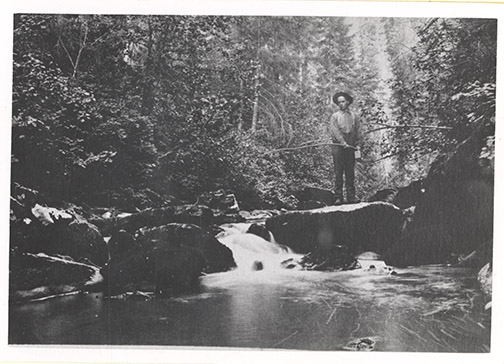
Carl Olson
Born 1895
Occupation: Thresherman; operator of gas station and car dealership; sawmiller; miner; Troy councilman for 24 years
Residence: Dry Ridge; Troy
Topics:
The colored topic bar is hidden for screen reader users. Use the topic buttons below it, the "Filter by Topic" menu or the search box to find specific content in the transcript.
Carl Olson: So you see what they have to go through with here that people don't understand, you know, that all of these new people, how far their bigger job was to clear an acre. It was a big job if you had a lot of brush on it and stuff, you know. Then you had to cut the brush, first the big ones, and pile them up and burn them before you'd break even. Then you had the stump to cut them with, you see. When you were breaking, there was a stump in your way to throw your plow out and go around the stump. But there's one guy here, he liked the stumps I believe. He lived out here and he never, he wouldn't even set fire when it was burned, you know. He kept plowing and plowing and plowing, you know, and when the stump was here, the dirt would fall over and leave a big opening below the stump, you see, because they didn't throw it over or nothing. So one day a fella come by there, I was working for this guy. I seen an old man standing there with a stick today, he said, and putting a brace against that stump and he was crying. So I stopped and up there, he said, asking what's the matter. Oh, this stump was falling over, he said, I don't want to fall over.
That's true too, you know. Well, you know exactly all the truth, you know, but he never touched them. You can maybe, those stumps have been there so long that maybe you could kick them out, you know, they're rotten. But he wouldn't monkey with them, he plowed around them, see. And it was pretty steep, sized in like this, where they were. I seen the stumps there all the time when I drove. So you can see a lot of funny things too, you know.
Sam Schrager: Did he just like stumps? Was he lazy?
Carl Olson: Well, I don't know, he was kind of lazy all right. He just got by, you know, he was one of those farmers that had just done so much. When they built this house, why he didn't put the corners on them or nothing, you know. The boards were sticking out like this, he didn't saw them off even. That's the way this house looked. And everybody was talking about why he didn't. When he comes through the corner like this, you know, then the board wouldn't be too long. He wouldn't even saw it off, he'd let it stick out there. He'd let it put the corner on. So the whole house worked up one time, and he built a new one. And he didn't put no corners on that one either. And you drive right by it when you go to do it. About a mile out of town here. Yeah, there was a lot of other things going on those days.
Yeah.
Sam Schrager: Well, how would you get the stumps out mostly?
Carl Olson: Well, after a while, you know, then they had stump pullers. They had drums, they made it themselves, blacksmiths, you know. They make a drum and then they have a sweep on it. And then a horse on there, you see. And then they'd put a cable around the stump and then the horse would go over there. And then they'd pull and wrap that cable around and pull the stump out. But you couldn't take very big stumps of that, you know. Maybe like that. But bigger than that, you couldn't pull them out at all, you know. So you couldn't get them all if you had to burn the big ones. But stumps was also about a foot through or smaller, and you could pull them out with the stump pullers.
Sam Schrager: Did you use dynamite at all?
Carl Olson: Well, you couldn't buy any dynamite around here, then you... It was too high a price for one thing, the people didn't have it. It was too dangerous to have, you know. You have kids around, have dynamite, you know. That's no good. That's pretty dangerous stuff. But when I cleared up some of my land, I used dynamite on that. That was after the First World War. You had some sheep powder they sold the farmers in. That's pretty good for stumps. It wasn't too strong, you know. If you get too strong a powder under the stump, it cracks it, cracks it instead of pushing it out, you see. So you'd have this liver sitting there. But this powder, the government didn't have that much powder, so they pulled the stump out pretty good, you know. So I used some of that… you know.
Sam Schrager: How would you set that up to blow out the stumps with the dynamite?
Carl Olson: Well, we used to make a hole under and stick a stick in and put a fuse on it and light it. And the bag would keep going, you know. You had to get away from it, so the whole stump would fly into the area. I told you that when I was clawing how I got rid of the roots. Yeah, I didn't. I guess you forgot. I tied a stack of dynamite sticks on the handle of the plow. And whenever I hit the stump, I stopped and stuck it in. About a half a stick was enough to blow that out. Then I'd have the horses get up and bang. I'd get to be sure that the horses went fast enough so it wouldn't go along too fast. So that's the way I got all the stumps out. That was the roots, you know. You couldn't see them, you know. You'd hit that, you know, and kind of maim the farm, you know. When you got all the stumps out, there was nothing to it.
Sam Schrager: What was the main diet that the family had on the homestead? What did you eat when you were a kid mostly? What did you eat when you were a kid mostly on the homestead? What was the main food that you ate? Food?
Carl Olson: Oh, well, I'll tell you. Skim milk and mush and potatoes. And if you had any fruit, you'd eat that. It took a while to get the fruit tree up, you know, so we didn't have that right away. But we had a pretty good sized orchard on our place. And that's what we ate about all, the little meat. And, you know, we had no free-dators. You couldn't go and butcher a steer or anything in the middle of the summer. It was all spoiled, see. So you never got any meat. But most of them had been here a while. We went together and butchered a cow or something, you know. And it would take a quarter of a piece home, see. And it would keep in the winter because it was cold. That's the only time you had beef, it would be in the winter. And in the summer, we had pork. We salted that down, you know, in the ... We salted pork. The pork keeps pretty good, you know. You can salt meat down pretty good too, but it's got to be of a strong brine then on it, you know. So that's what we had to eat then. Pork in the summertime and meat in the winter mostly.
Sam Schrager: What did you tell me last time about how often you had mush?
Carl Olson: Oh, every night we had a premiere. Grin, took a sack of grain and grinded on that water mill they had up there, you know, big stones that went around. Cost you two bits a sack to grind it. That's 150 pounds about. And we cooked mush out of that, see. You get all the grain that way. It was healthy food, you know. So you see, it didn't cost much to feed the family in those days. A sack of mush like that would last our family all winter. There's only about a dollar for it. It costs more than that for a sandwich now. Would you have anything else for supper besides the mush or would that be... Well, we'd drink skim milk with it and bread if you want to eat some bread. But that wasn't... There's no use to eating the bread with it because you had your bread in the mush, you see. And that's what we had for supper all the time. That is the first 15, 20 years, you know, after that. After you got more feel and more work, then you had a little more money so you could buy some stuff for the summertime. We never seen an orange or anything like that. No.
We get some hard candy once in a while. When my dad went down and bought little groceries, the old cleric, he'd always take a package of candy because he knew we had a lot of kids. So we got one apiece and then they were gone. You know, it was home steady. And then the water problem, we got water problems. Now, they had water problems worse than these. See, unless you happened to have a place where it was a natural spring but there was no water around, how are you going to get it? And the trouble with the homesteaders here, they stayed in Minnesota, a lot of them, and there the soil was sandy. You couldn't dig it well. It wouldn't hold it. You see, it'd leak out so they thought it'd be the same. They didn't see them here so they never dug no wells the first few years. But here they found out that hard pattern under here, you know what that is, kind of a clay. That's waterproof. So my dad, he made his cistern 12 feet wide and about 8 foot deep in that hard pattern. And then he set up a brick and there you had, that's the waterway you had, you see. No more. We couldn't waste any water there. You didn't, I bet you for all the kids that was home we didn't use up five gallons a day. See, and to start with, my mother carried water for half a mile in the bucket. Half a mile to the spring, see, before they knew you could make a cistern. And you couldn't make a cistern all over that hole either. If you hit the wrong kind of a clay, it wouldn't hold. If you hit this soapstone, they call you know, that would leak out like that. You had to hit hard pan, real hard pan to hold it. But it would hold just like a real tank, you know, wouldn't leak at all. Just waterproof. I remember when my dad was making a big cistern, a butcher from Troy come up here, you know, to buy a cow, you know, and he looked at that cistern and he thought that was great. And he told about how many gallons it would hold, you remember that.
Sam Schrager: He told about how many gallons your father did?
Carl Olson: Oh, I forgot now how many he said, maybe about a thousand gallons maybe. You know, something like that.
Sam Schrager: Would it come close to drying up in the summer?
Carl Olson: No, it wouldn't dry up at all. Well, you see, the upper part of it was the top soil, that wouldn't hold it, you know. So you had about three or four feet in the top there that wouldn't hold the water at all. Down below where you hit the hard pan. And then to hold that, good, you know. And then if it rained, it would seep in a little too on the side, you see. Yeah, the old cistern, I remember that. The one had a pump, hand pump on it. But that was good water though. You can see there's no mineral in it or nothing because it was rainwater, all of it. And then you'd catch water from the eels, too embarrassed, you know, for washing clothes with it. That was no good to drink because it'd be soot on the roof, you know, and they'd get you on the water and get black, kind of. So that was the water problem, you see. It's just as bad as trolley got it now. It's just about running out here.
Well, when we washed, we had to wash, we all washed the same one. We never throw the water out, see. And you wash clothes, had to wash in the same thing. Of course, we didn't take very many baths. My dad, he made a big tub kind of, of wood, see. Then we'd all bat in the same water, see. Tea, now they call it on sweet, that tub. I remember that. It was about that deep and it was made of wood, you know, sitting up and down this way and then the iron straps around to hold them together.
Sam Schrager: It's about three feet deep?
Carl Olson: Yeah, about that. You know, and about, oh, it'd be about six feet long, maybe two and a half feet wide. That was sitting out on the ground, you know. We wouldn't have no room in the house for that. So in the winter, you didn't take any baths. So maybe that's, maybe that's good too because I read about two, three years ago in the paper where the doctors were examining why people get so much cancer. They found out the people that take the most baths had the most cancer. Do you believe that?
Sam Schrager: I don't know.
Carl Olson: Yeah, that's what they claim. I've seen some more about it. Lately, too, somebody wrote about this, it's medical. They claim your skin cleans itself, you know, see. And it's a chemical or something that comes out here and stops the germs from going into your system. See, in the long, oh, you hardly ever heard of any cancer at all, you know. And now it's just all kinds of it, you know, in the country. I don't know. And the doctor wrote this and said, I hate to write this. It sounds bad, you know, because people will take a bath maybe.
Sam Schrager: Can you explain how the trails that the people use grew? Can you explain how the trails, the trail system grew? Did each homestead make its own trail to its own place? ... No, trail, the trails.
Carl Olson: If it wasn't too thick timber, you know, you didn't have to make any trails. If you had cows, they made the trails for you. See, when you went to the pasture, you'd take the same route all the time. Therefore, we had our coyote traps in them, cow trails, you know. They were all old. We had one we called the big trail because the cows went to that part of the canyon for pasture. Because with better pasture, they didn't wear it down yet that deep, you know, in the side hill. But on the level, they didn't wear them down before. And we're about that wide, you know. Cows always made a trail. And that's the kind of trails we had on the ranch. But if you had to pack something in, then you had to shop a trail in, you know, and make it wide enough to carry the pack, you know, from the horse. See, but the other trails were cow trails. And everybody had cattle, you know, for milk, you see.
Sam Schrager: What about the trail to the homestead itself out from, to get into your own place, to the house? Did you just cut that in?
Carl Olson: Oh, yeah, you didn't have a trail there. You had a wagon road in, they called it, you know. See, you'd cut out wide enough for the wagon that's about that wide, see. And you'd cut out that much brush, if the brush was too heavy, you know, and saw it off the stumps close to the ground. You see, if you stuck them up, the wagon wheels or the axle would hit them. That's the way they made those. There's a lot of those roads all over, you know, because after you've been here for a few years, they all had a team, you know, or horses because they had that to farm with. But they all had a wagon road in, you know. And, you know, it wasn't like it is heaven automobiles now, you know. You know what the two fellers said when they met on the road? He said that the fellers come and let the load and the motors up and everything. He met the fellers. If you don't get out of my way, I will do the same as I done to the other guy I met.
What did you do… i drove around him and said,… you can't do that when you meet the corridor. He would bang like that.
Sam Schrager: How did they decide where the wagon, main wagon roads went that went from town to town?
Carl Olson: Yeah, that was the county that done that. And that's why it had so many hills in it, you know, because they followed the lines between the places. You wouldn't go across the left head though, you see. So we had hills like this, you know, all over the country. They followed the survey line between you. If you had a few place where we're here, and mine here, the road would be here, see. Right on the line. Yeah, on the line. See, that's why we had so steep roads to start with. You wouldn't think about going across the other man's place at all. You were up and down, up and down, you know, like that. They didn't have no automobiles then. Anyway, there's horses to pull over the hills. But when you come to haul something, then you were in a pickle. If you had too many hills, you know, you couldn't haul much of a load. We had a lot of them. That wasn't all. We had the mud to contend with. That was the worst.
You know what a big wagon wheel is? Yes. And the road was about that far from the ground. We had a lot of places where we had mud that went clean up to the axle in the spring. It was a heck of a job to get to town in the spring, you know. You had sharp tires, tires were narrow, wheels were on you, cut and cut and cut, and the water would stay in them. It was no greater than nothing, you know, see. So the roads were terrible, you know. There's nothing like this now. And that's why, where we lived, you know, we were 90 miles from town, so he couldn't cut them. He couldn't go under tires and haul them in. He was too far away from town. He couldn't make it in the day. See, that made it a little tougher. The people that lived within two or three or four miles, you know, they could haul their stuff in. Because, yeah, they were safe. We had three or four hills that were a quarter mile long and about that steep. You know how long it takes to get up there with a team of horses on the road. You had to rest them horses maybe ten times before you got over that hill.
Sam Schrager: What kind of a grade do you think that would be?
Carl Olson: Oh, about 20 percent, anyway. You see, they couldn't change them. They had to go where there's no way to change them, hardly. There was too much timber, maybe, and so forth. You get to the other man's place and they wouldn't do that. But some place you had to because there was no other way to get around it. Then you had to go around the man's place. It was too steep and too much timber, you know. Big trees and thick, you know. You couldn't build the roads there at all. We won't do a big hill. We had two more places, but the Dry Creek Hill was a creek they called Dry Creek. They had a bridge there about 75 feet long and about 30, 40 feet high. That was quite a ridge to build in those days because it was down like this and then up like that. You know, I crossed that bridge with my trashing outfit. I was scared to death every time I thought it might go down. So we'd take the engine off and then we had a long cable and put on the trashing machine so we wouldn't get all the way to one spot. That's the way we crossed the bridge all the time.
There's no road there anymore now. We took it around.
Sam Schrager: Do you know who built that bridge or bridges like that?
Carl Olson: I don't know the name. Healy. Healy. He was a bridge builder. He had three or four of them. One of them lived on Little Bear. I think I thought Little Bear was a bridge builder.
Sam Schrager: Would the county pay for that or would the home centers?
Carl Olson: Oh yeah, if it was a county road you would. But if you didn't have a county road then you had to take care of it yourself. See. You know. Then they had the poll tax those days you call it, you know. Two dollars a day it was. Poll tax. Everybody had to pay that tax when he was 21 years old. And then you could work it out if you wanted instead of paying the two dollars. So they worked it out on the roads. See. And that's the way they kept up the roads quite a bit. Just from the poll tax alone. I even worked out the poll tax myself. Didn't took it off yet then.
Sam Schrager: Was the poll tax giving you the right to vote? Is that it?
Carl Olson: Oh yeah. You had to be 21. Poll tax that just meant the poll tax was put in more for building roads than anything else. You see. See. And then when they started giving machinery, when they took off the poll tax, you don't pay that no more. They had that all over the United States I guess. At one time.
Sam Schrager: Was the road from Troy, let's say, out to your place already there when your folks started homesteading?
Carl Olson: No roads at all. From Troy east. Because no road whatever. No road anywhere. Not even a trail. Because it just spins away, you know, ready for homesteading. Nobody lived there, you see. Wild country. But you see when they keep moving in, moving in, you know, they went between the trees or wherever they could with their roads. And some of them that they maybe fooled around a couple of years before they had no road at all. They'd carry it on their back, you know. Suppose the road went here now and you were half a mile from the road and you'd walk in from its place out to the road, carry it on its back, see. You know, it was awful in the country here. I should take you over there, show you something like this. I was there to contend with. But you don't see them hills anymore. They take them away.
Sam Schrager: Well, when they first put the road out, do you think they paid much attention when these guys are coming through to the property lines? Did they try to go along the lines when they came out?
Carl Olson: If it was possible, they'd do it all the time. And in those days, you know, they didn't have no wheels. The horses and the horses would go up steep hills, you know, so they'd put it there. And especially if it was opening, open country, you know, maybe big trees only, no brush, small trees. Then you could build a road pretty fast, you know. Some places you didn't do anything but just drive on the ground and was level. See, when we got a little side in, then you had to pick off someone on the upper side and throw the dirt below so the rig wouldn't stand this way, see. And then it didn't have to be wide or anything. So they didn't have that problem because just like I said when you had them two guys met, you had to back up or get around some way, see, if it was trees around them. But you always saw the spot, you know, when it was open, so you could drive off and get by that way.
Sam Schrager: Do you think that they got, that they worked together in building the road in the first place? Or was it sort of each man going out and going through and then the road just took shape that way?
Carl Olson: No, they had a road to be built and it went to a certain community, you know, where quite a few people all went out and worked on it. Free work, donated it, took their 50-odd horses, you take the horses along and all that, you see, and build it that way. Because to start with, you know, they didn't have no government, you know, I might say, you couldn't get any help to them. They didn't know how long it took before they started the county roads. They started there and then the county built them, you know, see. But they taxed you so much that you built them anyway, you know, they taxed your land and the poll tax on it. It went for roads, all that stuff. But then it wasn't too much hauling, you know, in the early days because they had nothing to haul, nothing to sell yet. Except those that had ties and wood, but for grain, you know, they didn't haul much grain. A lot of people fed up everything they raised. They had cows, you know, and horses and they wouldn't have much to sell. You could sell the butter and stuff like that, you see, and eggs. So they didn't have any heavy hauling until they started getting fields. Then you had better roads. You know, they got stuck a lot of times. There were wagons good out of the hub, you know. Had to throw the load off, pull out, and then reload it again. It was that bad, you know. If you come to a place where it was real mud, you know, and nothing hard under, see. You know.
Sam Schrager: You say that your father didn't even try to sell his wood down in Troy? So your father didn't try to sell any of his wood in Troy?
Carl Olson: No, we never cut that in because it was no use. Because he couldn't haul it in, he couldn't make it in the day. But, see, it was nine miles, a 18-mile trip, you know. That was pretty long in a day when you got a load. But you could live within five or six miles, you know. You could do pretty good if you hit all one load a day anyway.
Sam Schrager: Well, how, the homesteads, were they all about the same size out there then?
Carl Olson: Oh yeah, 160 acres. But you could take, I showed you that paper, the preemption paper. Then you could take, pay so much an acre, and then you could have a homestead beside, then you get 320. There was only one guy on the ridge that took it, and it was Slodin. He had a preemption, so he got 320. But they took that preemption off, I don't know how long it used to. He finally took it off, too.
Sam Schrager: Was there any trouble with the land being taken up and other people wanting to move in and not being able to get homesteads?
Carl Olson: Yeah, there was no homestead to take, you see. It could be land, you know, or I'd left, but it had to be enough for cultivating land or one up for seven acres, I believe, before you could take a homestead. Had to be that much good land, see. I think it was only seven acres, I'm not sure about that, but something like that. Then it went to stone and timber, you know, you take a timber claim, but that cost a little money, you know, something like the preemption did. You paid so much, you know, for timber land. You didn't have to live on that either, but you had to live for five years on a homestead. Five to seven, I think you could live up to seven if you wanted to. And then you had to live six months a year on them. Or have somebody be there and jump it.
Sam Schrager: Did I tell you about that guy in the Clarkia where they had speed homing the tree?
Carl Olson: I don't think you told me that one. I mean Clarkia, that was the last homestead, the Marble Creek, you see, homestead and timber boat. So they went down there to homesteads and then the lumber company sent in a claim jumper. See, he'd watch you if you didn't stay six months while he'd report it. And somebody else come and take it, see. See, and this guy was running around doing that up there, you knew who he was. So they met him on a trail one day and he pulled a gun on him and buried him right there. I seen the grave myself, I'm talking about. And it said, you're a good woodsman, but you're a little son of a bitch or something that sat in there and here's where you belong. And he hung the shovel on the tree where he was buried. That's how I happened to stop there. A postmaster and I that used to be here went fishing, you know, we took this trail and he didn't see it. So I said, go back here, something funny here, I believe it was the grave here because you can see the rice in the ground a little bit. And I looked up and there was a gallant can, you know, they cut the front out and they had scratched him and told all about it. So they got rid of the claim jumper. They didn't do nothing about it either. The government or the state never tried to look for him or a thing. Because he was a bitch, you know, running around sneaking like that, you know, way back there in the homestead. They had to carry everything on their back there too. And if he wasn't, if he didn't live six months, you know, he'd watch that, you know, he'd go from homestead to homestead.
Sam Schrager: Was he trying to get it for the lumber company?
Carl Olson: Yeah, that's what they claimed. A lot of good timber in there, you know, and a lot of the land there was timberland. You had to take timber claim on it. It wasn't enough cultivating land. It was both, you know, but there was a lot of homesteading too. And that's what they were after. So you see, all the nicks and then the limbs. They had now someone had lived then. Yeah, I should have had my camera real long and took a picture of that tree and the shovel. And it was a gallim can, you know, you know, you buy a oil in one of them kind of square and they cut the face out. And they know it's kind of a tin on it so you could scratch your eyes in it and you could read everything.
Sam Schrager: Was it a real long time ago that you found that?
Carl Olson: No, it ain't something long ago. 20 years maybe. You're still hanging there I think.
Sam Schrager: Even though you had 160 acres though, a guy was only using a little bit of it, right? For a really long time. I mean he'd only just have a little bit that he had in cultivation and he'd be cutting some wood maybe, but most of it wasn't used, huh?
Carl Olson: No, no. All you had to do was put the shack there and live there six months out of every year for five years and then you prove it up, then it's your land, you can leave it. Never have to go back, see? That's the way it worked. The reason they had to have Parnier Law like that or else, you know, they'd be jumping around taking more claims too, you know, fussing around, you know. They would hire a bunch of men to go there and take the whole damn works for them, see? So they had to have a stopgap. But you have to live there six months and there'd be seven acres of ground that's cut away the ground with the heat and so forth. So you couldn't go and take a homestead on a timber clay medium because it wasn't fit for it. Because then they'd hire somebody to go there and take it for them and live there and leave it and then they'd own it.
Sam Schrager: Was there a lot of turnover among the homesteaders? You mean selling land?
Carl Olson: Yeah, just being on a little while and then leaving. No, not too much, you know. That Walmbrall was around there. That's why he didn't like him. He was always buying land or loaning the money with a high interest rate and he couldn't pay it and then he'd take the land, you know, see? So it was quite a bit of that. Not too much here, not around Troy, but maybe other places it would be. There was a lot of trouble then, too, you know? Not really. Nobody ever find that. There was quite a few, not too many, but two or three I knew of that the people told me about. They had done some crime somewhere and then skipped out, you see. They would see you take a homestead. And the whole country too. Get the United States get away from you. Of course they were all right coming out here. You could do nothing about them here.
Sam Schrager: Would they just be like anybody else?
Carl Olson: Well, that's what they had anyway. It was nothing but foreigners. Start with, they all had to come from the foreign countries, the Germans, so he's a Norwegian and everything. But they grouped up pretty good though. If he was a Catholic, they'd notify the others and they'd all move in there. It's like the little Swedes appearing. An American regional, quite a bit of Catholics there. About half of them I think or more, more Catholics homesteaded. Around the Hennessy country. You'd tell them, you know. Well, they were better organized that way too, you know, when you get along better.
Sam Schrager: Would you say that there was a lot of help and cooperation? They helped each other a lot?
Carl Olson: Oh yeah… if they wouldn't have done that, they could never have made it. That's why it's so funny for me to live now. Everything you do today, if you just turn over a shingle on the ground, they want a dollar. And those days they worked two, three days for each other. Never charge any money. If a man built a barn here in homestead days, they called it raising the barn. All your neighbors come up when you start raising the poles, setting them up, you know, and getting the rafters up. See, that was quite a, they always talked about that, you know, and then they'd have coffee and picnic kind of there. Then they went home and then the homesteader finished the rest. He could do that himself, you see. But when you raised the barn, you had to have help so the neighbors come and done it. And if you butchered, a big animal and neighbors would help you, see, to butcher and so forth. So it's quite a difference today. It's getting too much like a big city all over now in the country and everywhere. I remember a woman when I had the service station here, she drove into a garage and she's going to back out and the car slipped over and she couldn't get out through the door, you know. And she come to me and said, I'm stuck out there. So I went down there and took my jack gilders and kicked over. She backed up.
How much I owe you? You don't owe me nothing, I said. Don't owe you nothing? How can that be, he said. You must be something wrong with you. I'm from Portland, she said. You don't get any help there. And that's the way it was here in the early days, you know. You'd always help the other feller. Help him in the hay even. Kind of thing. You'd have back and forth, see. But they don't do that now. You won't pay for everything, the people. You can't blame them. They got their money or they'll start. The way things are now. And then go on to a place, you know. Sit down and eat with us. All over. There was nothing to that. And then we had the tramp, you know, to come around to. And we fed them too. We used to have one to come around every day, every year, you know. The lame shoemaker, they called him. He'd limp a little when he walked. That's the way he lived, you know. He went from house to house, house to house. And then when the winter come, he disappeared. He went down to the river, I suppose. And then in the summer, he'd come back again. But we didn't pay no attention to them. We let them have food and everything they wanted. So living was quite a bit different than it is now.
Sam Schrager: People weren't afraid of him at all?
Carl Olson: No, no. They got a kick to talk to him even, you know. Because, you know, you know people is people. When I was in the army, the officers told us, if you got anything on your mind, ask us. I don't care how foolish it is that it might be something good in it. And that's true. I thought it sounded funny, but it's true. And that's the way it is about these tramps, you know. He might know something he didn't know. He learned from each other, you know. So you don't have to be an expert for that. Then it was more beside this lame shoemaker they called. There was a couple more that came around too. And then they fed the animals on straw in the winter too, you know. Like the milk cows and stuff. That's the way they had a big straw sack, you know. I remember they'd eat a hole in the straw sack, you know. And the cow couldn't get out because it came back over. We had to get a horse to pull her out, you know. I remember that. He had to make a tunnel in there, you know.
Sam Schrager: Would people have tramps sleep in their houses? Tramps sleep in a barn or would he sleep in a house if he came through? ... No, tramps.
Carl Olson: Tramps, oh no. He never slept with nobody. He had a sleeping place somewhere. He'd sleep outside somewhere. I don't know where he'd...anywhere. That's why they wouldn't come in the summertime up here because he could sleep out, you know. He didn't carry any sleeping or nothing. He used to lay down, I guess, like a dog does. And that was all it was to it. He used to come to Troy here when I was in the business here, but they never went in the country anymore. They hit the towns only. And there was one here, he was a Norwegian, a pretty big guy, and the policeman, he was a Norwegian here. He said, let's go down and see where...I don't know what they called him. I'll get a name anyway. Well, yeah, I'll go with you down. It was in the winter too, you know, I said. We'll see. Down here about a mile out of town, there he said it was a big log, his leg, see?
A log about that high. And the leg was up from the ground a little bit and he had put bark and everything under there and therefore he slept under that log in the winter. He never took his clothes off, you know, he had a noble coat and he crawled under that thing and then we'd live higher there. Then we asked him, why do you live so far from town for when you're here? Well, he said, we know something too. He said, we got lost, you can't get to it in two miles of town. And that's where we have to stay. He said, the rest put us in jail. They got that in a lot of places, you know. And he didn't get coming into town at night to sleep anywhere so he fixed them up under that log down there.
Sam Schrager: Would he go to a different house every night for supper?
Carl Olson: No, he'd beg alright and he'd give him food and then he'd go down there and cook it himself, you know, under where that log was. But the glory of salamander, but he'd stay until winter, but this fella, he'd come up to Troy every year, I don't know, I guess he liked the people around here. The doctor gave him an overcoat one time and he kind of liked the people, I guess. That's why he'd come up here and he stayed in the winter, you know. He slept under that log.
Sam Schrager: Did you ever get an idea of how they got down under luck like that?
Carl Olson: No, I don't know. Maybe they were smarter than we are. Maybe they can't see anything in the world that's any good so they just forget everything. I don't think they have any worries and I don't think they're sick very often. So I don't know what to think about it. It looked like a tough life but I guess they know how to live it, you know, and I don't think they suffer at all. But they're disappeared now. And they'd ride the trains on the roads, you know, and climb under the train, ride the roads. So they were pretty common in those days and I don't know why either. Well, I can see one reason why because there was no work, you know, in the early days here. It was all the homesteaders, you know, and no work at all. The people that lived here done all the work so an outsider couldn't get a job early, you know. And that's maybe one thing that started them, you see. No work anyway so they just kept moving and moving and moving. And then when they found a place where they were like pretty good they'd always come back there, you see.
Sam Schrager: If a guy came in and he was a newcomer, would he get accepted real easily here in the early days if he came in and bought a place and he was a newcomer? Or would he come in and moved in?
Carl Olson: Or would it take him a while to be part of the... No, no, he'd be welcome right away, for the near. That is, especially if you were a Swede or an Irishman or a Dutch, if you happened to come to that settlement, you'd be right there right now. But it was some friction right between the races, you know, getting into fistfights and stuff. You know, they had quite a bit, there was more fistfights around here than there is now. We didn't hardly see any anymore but that was pretty common in those days, you know, because it was cliques, you might call them, see. They'd bunch up, see. You used to have them out here on the right creek too. They had the Osterberg clique and Drury clique and some more. You'd get together, you know, they'd have a fistfight from every time. I mean, it'd usually be like one group would be Swedes and the other group would be Irish. You know, something like that, yeah.
But you didn't have to be that eater here because pretty much all Swedes, but they want to be best, you know. They want to fistfight and knock the other fella out, you see, and they'd be bigger. The clique would be, you see, because one used to mock here. I'm 16 years old and nobody can mock me. He called me, he was pretty big too. But I think they marked him out sometimes alright.
Sam Schrager: Well, would a clique grow because all the people were living in one area? Like, people around here on the right creek?
Carl Olson: They had to live together in one area, the clique would. There was a bunch of other deer on one of them ridges, Drury's. He used to be a kind of a clique one time, but it isn't anymore now. There were many Drury's left. And you'd have fights, you know, when you had dances, you know, or parties, something like that, when you meet. And you had them here at Nora, you'd fight and raise hell there too. But they never went so far as to kill anybody. Just fistfights, you know, that's what it was mostly.
Sam Schrager: What kinds of things would cause a fight?
Carl Olson: Well, I don't know. They just want to be, they had no other way to show off in those days because they didn't have much education, you know, and they just wanted to show their power, I guess. That's the way I figured. They wanted to be the boss, you know, see. They didn't hate you or anything, you meet those people in the other place, you know, it's like I'm talking to you, that's the way it would be. And you already had a party or a dance, you know, that's where you'd tangle up, see. And that was just the strength they wanted to show, I guess. They wanted to show you were boss, I don't know. So like all the Drury's would be supposed to stick together if you were in that clique, and if you didn't get it, it wouldn't be two guys fighting, it'd probably be eight guys on both sides fighting… yeah, sure.
Sam Schrager: Would you tell me some of the things about, stories about Nora, about the town of Nora?
Carl Olson: Well, I don't know, I think I pulled you all on that sign. Yeah, but we didn't put any of them down on the tape, and that's what I wanted to get. About the pennies, and the boy in the pennies? Well, the boy come in, he's not getting so much pick out of knowledge because they're still using pennies, and I don't see why they use pennies today for. Then he come in, hand full of pennies, you know, the hand full maybe at six, seven, eight, I don't know. He wants some candy. And the boss, the clerk said, go and throw them in the creek, I'll give you the candy. And the kid done that, they would never handle any pennies, they didn't want no pennies those days. If you owe the men, if you figure they owe two and a half, you pay them a nickel. Or the other way, you see, that's the way. They didn't want no monkey pennies. And today they put pennies on an automobile even.
So that's what I get a kick out of today for, because they're using pennies, and the penny was worth most is a dollar as now, in those days. According to what you get for them. I guess I told you about the bra, you didn't want that on there. Yeah, I do. That's a good story, the bra. Well, they had a bra laying in the store there, it was P. E. Johnson, I knew him, it was a neighbor store, he was in the store there. And B. S. Nelson, he was a photographer, he run all around, took pictures all the time. And he was in the store too, then they owned it together. And that bra was laying there for years, you know, and they couldn't sell it. When Christmas come, they wrapped it up and sent it to a girl, and the girl never said anything, you know, till next Christmas. Then she took a horse turd and wrapped it up, and she wrote in B. S. Nelson, B. S. Nelson, what's the other fella's name, I forgot.
Sam Schrager: Did you say Johnson?
Carl Olson: Yeah, C. B. Johnson, or R. Johnson. Be so kind and divide this between you. She knew where it come from, because she has seen it in that showcase, you know, all the time. And that's no story, that's true, absolutely true, the whole thing. No, everything I told you is true, I don't stretch nothing. It all happened. My uncle, he had that store down there for about five, six years, and I stayed with him down there. But that's before my uncle had it. My uncle had it there on the Halloween night, the Halloween's come up, and they must have had that kind of a storehouse at the back of the store, you know, with the roof on like that. And here comes the Halloween, there was a buggy standing there, and he wasn't hid, he didn't show himself, no, because he... So, took them, put two planks up, you know, and then they took the buggy and they put a rope on it and they pulled it clean on the top of that building, see. And we got up to the peak to set the buggy this way, see, and then it went down. And when he got through, my uncle come out and said, take that down.
So they didn't get much out of that. I don't know where I used to be, quite a little town one time, you know, when he had the saloon there, the cigar factory, the black switch shop, the hotel and the store, right there, the sawmill, right there. And then, Patrick, Patrick that lost his lip were in there, you know, he got drunk. Of course, this is just the story, I suppose, but that's what they said. He got drunk and he fell off the wagon and the wagon wheel here and here and told them that this is true, that the lip was tore off, all right. But they said, they said he never knew his lip was tore off, so he was going to put the big shoes loose in there, there was no lip there. ... Well, he wasn't rough, he was, he drank, he was drunk all the time, you know, drank whiskey all the time. Kind of a nice guy too, I've seen him a few times. He froze to death, I believe, crossing the mountain here, carrying moonshine in the moonshine days, if I'm mistaken.
Sam Schrager: What was this bunch like? You mentioned before that they really celebrated when Hayes got killed... What were they like? Was it just a bunch of guys that was drunk all the time or what?
Carl Olson: Yeah, they drank, that, that, no one was there, there were no one all over the country that would be the biggest drinkers, you know. They all drank from here, everybody up there, they got drunk. They never bothered anybody, no, but they were drinkers. And then when they shot Hayes, you know, they hated him because I guess maybe he arrested someone up there, he wasn't a ... So they celebrated for three weeks up there. Yeah, they found out that Hayes was a mean, dead guy anyway, you know. He got a drunk guy and he tied a rope around his arms and led him behind his horse just like he'd lead a cow. And then he arrested a guy who fell off the wagon because he was drunk, he had a way back, you know, and he missed the stuff. He fell back, he held Hayes and grabbed him. And he threw his own, some in the jail and another one.
And some said he can't do that to me and the other fella said, you're here, ain't you?
Sam Schrager: What's this about the cigar factory? I've never heard of that.
Carl Olson: Well, they had in the saloon, you know, in the same building, the rolls, the gorse there. A fella named, what's the name of the saloon, keep it, I forgot. Rickett, Jack Rickett. Yeah, he had this cigar with the saloon, you know. Of course, that didn't last long, he had it to him. He'd make cigars there.
Sam Schrager: Edwardson's had the boarding house. Edwardson's had the hotel there.
Carl Olson: No, I don't believe Edwardson had it… i'm quite sure.
Sam Schrager: One other thing about Nora I wanted to ask you was why do you think that the town grew up at Nora instead of at Anderson?
Carl Olson: Well, I'll tell you, that's easy. In those days, four miles was about the limit they'd put a post office, you see. Because the people don't have to go to Florida to get the mail, then they'd always have a store or something there. See, they had Nora and then they had one up at Anderson and so on. And that's why, as soon as Troy started growing and he got better roads by it, Nora died out, you see. They never stopped there anymore. That's about 1912 or something, I think. 12 or 15. There's nothing left in Nora. And then they had a blacksmith shop there, you see, so people could go in and fix the claws and stuff. Then he moved to Troy, the blacksmith. He moved down here, you see. And then he moved from here to there, finally. His name was Swan Erickson. He was a real blacksmith. He made sleds and everything, you know. And he homesteaded up there on Dry Creek too, right close to the cemetery. He had a homestead there, Erickson. He was a bachelor.
Sam Schrager: Nora was a lot bigger than Anderson, wasn't it, as a town?
Carl Olson: Nora was a lot bigger than Anderson. Well, a little bit. Nora had, I mean Anderson, had his store and the post office. Then they had a little sawmill there on Dahlberg. That's about all that was there. And then from there on, any post office, you got,… what's the name, what do they call that place, Between Clarkia and Bovill? Nothing there now. Collins. I think they turned around there, then, at Postman. Then they come back, see. They carried the mail up to Collins from Troy and back again.
Sam Schrager: This was before there was any town of Deary.
Carl Olson: No. It happened after all. Well, I guess Collins was there all right, maybe, before, but I don't think they had a post office there until Troy come to the train convenience. No, I don't think so. But Collins, I think, was a trail across that country, if I remember right. Went into Montana, I believe. And they went to Bovill and down to the horse ranch and up that way, I believe, the trail.
Sam Schrager: What do you know about the building and that railroad that came down from Troy down to Kendrick?
Carl Olson: Well, I don't know.
Sam Schrager: Did your father work on it? Huh? Did your father work on it at all?
Carl Olson: Yeah, oh yeah. He worked quite a bit. He put all those homesteaders up in Dry Creek country, worked on it, more or less. See, if they had a team, they could use the team, and then they had wheelbarrows to wheel the dirt with, and then they had picks and shovels, and that's about all they had to work with. I don't know what your little history about. They had some racks on there after it was built. They had one right up here. And then they had one, they were bringing the steel down to Lewiston, I believe, or below Kendrick. They had a pretty heavy load on the course, and the railroad engineer, he was from back east, and he was on level roads all the time, you know, so he didn't know how to use the brakes here. So they had a rack there, killed the engineer, I believe, in the fireman boat, and spread all them railroad rails just a little ways from Kendrick down there. And the conductor, he saved himself, he helped the caboose off, see, they disconnected it on him. He said he couldn't stop, and he got canned for doing it. Of course, he wasn't supposed to do that. He saved his life anyway, but I heard he lost his job for doing that. He was supposed to leave the train, you know, just like a captain, I guess.
And then I talked to a guy, and I worked down there in Kendrick on that mill, and he formed a whistle on that train. He showed it to me. Been laying there all the time here for about fifty years or more. I asked him what to do with it, and he said the university got it, I believe, the whistle. Then they had trouble with the Indians. When they got to Juliaetta, you know, that's why. The reservations are there. That's why Juliaetta grew up to be a pretty good little town then, you know. They would stand there on the railroad for two, three years, I think. Of course, they had trouble with the Indians. They didn't want the road through their reservation, you know. So it was held up in Juliaetta for quite a while.
Sam Schrager: Did you have any run-ins or meetings with the Indians when you were a boy or a young man?
Carl Olson: No, the Indians didn't show up at all here then. They never went up in this country after the white men come in here. Of course, it wasn't very good hunting ground and it wasn't very good fishing ground. They stayed around the big river, you know, and went up that way mostly. They had a trail through Moscow that lasted longer than here. I don't know where they went. Went on that trail. There's my dad. Seen them. Drunk Indians, I told you about. On Paradise Hill. Yeah, they were up in that country quite a bit.
Sam Schrager: What about gypsies? Did gypsies come through here?
Carl Olson: Oh yeah, we used to have them there. They for so long wasn't sick with. Oh, about 20 years, I guess. Well, we got the gypsies now. We got them all over running, living in old houses and everywhere. I call them gypsies anyway. If only people had gypsies, all right. They had the price on their own, you know. You said, go in and buy something. I'll give you so much for this. It was always good. The last bunch of them through here, they went to both. They went in there to buy some food, you know, I believe it was cabbage head. And they wanted 20 cents. The price was on them. The gypsy woman said, 10 cents. 10 cents is all you, you know. The clerk said, 10 cents. And she took the cabbage and throw it in his face and walked out. Since the automobile come, they went out of business, I believe. See, they always had horses. And they'd trade horses, you know, trade horses and stuff like that. But the automobile was too fast for them. I think they were through here all right with the cars a few years, but they didn't come back. It was nothing to trade, I guess. I guess. It has many total fortunes, too, you know, fortune tellers.
Sam Schrager: Would they stick around or just always just pass through quick?
Carl Olson: Oh, they stuck around. They'd never come in town. And they stayed just on the edge of town all the time. They slept, you know, and they'd stay maybe two, three days in the town. Try to trade horses or something. And then move on to the next town, you see. That's the way they kept on moving all the time.
Sam Schrager: Can you tell me a little more about what money was like in those days?
Carl Olson: Well, the money was about like it is now. They didn't use so much paper money, though. They used gold and silver, silver dollars, you know. And gold coins. And you hardly ever seen any paper. Till, oh well, many years after. No, I know what I even, I run the trash rig and that was as late as 1915 about. I got paid in gold once in a while. Yeah, they had the gold yet, someone. And silver dollars. And they had a lot of money there. So, I didn't see much paper money. There's no dollar bills, I know that. It might have been fives and tens out, all right, but no dollar bills. They never used any dollar bills at all. It was all silver dollars. I know my dad sold, sold wheat once and you got all silver, you come home and you put it on the table. Had a stack about that high, you know, and I thought, gee, that's a lot of money. Well, it was quite a bit, I guess.
Yeah. No, even back East, when I was in the Army, I come to New York, you know. The war was over, so we hung around there a while before we left. And one of the, so they picked up a few soldiers there to fill up. The sick ones, you know, the ones that couldn't leave, you know, and we didn't used to fill it. So, those ones, their name was too good, I believe. And I was going to give them a dollar and gee, Christ, he wouldn't take that thing at all. That's no good, that money is no good, he said. Never seen a dollar in New York, even. Silver dollar… isn't that funny… and here they used it all together. No, he thought it was fake money. So you can see how money is, too.
Sam Schrager: Do you think they used silver and gold because it was better money, it was more real than the paper?
Carl Olson: Oh yeah, well, you know, the law, the law required, you know, you had to have 40 % gold behind the paper money. You couldn't print anymore. There'd be 40 % gold there. See, that's to keep it from inflating, you know. And then they had the silver certificate, but I don't think they had any silver stored away because silver was plentiful all over you. They used silver dollars and all that, of course they had gold, too. Gold in circulation. But the main reason why they took gold out of circulation, it wore out so bad that the government lost too much money on it. You put that in your pocket and find the worst most, you know, and you lost a lot of gold. I went into the Mint in San Francisco in 1915 and they were printing, making $10 gold pieces there. They got in the gold from Japan and remelted it here and made their own money. See, they found out how they made money, too, but I thought they melted that stuff. They don't melt it. They rolled it out. Then they stamped it out. They stamped it four or five times before it was finished. First they stamped the circle, then they put the rim on it, then they put the words on it, then they put the eagle on it. Then they would take it and they looked on it with the microscope, you know, and see if there was any flaws in it. Then they had a rug on the floor that was about as thick as this and it was made of iron, like this, see, back and forth, in the opening.
And I asked, what do you got that rug for? Well, they said, we got to have that because when we get through minting now, we have to take them rugs up and wash them and sweep the floor. And get all the money you can because we got responsible for the gold that comes in here, see. I asked him, you get any any time? Oh, sometimes we get ten cents worth, he said.
Sam Schrager: Would people put their savings in banks out here? Let's say before the Bank of Troy came in here, did people put their money in a bank if they had savings or did you keep it at home?
Carl Olson: No, they put it, as soon as they got the banks here, they got the banks here around 1900, I guess. I don't think they had it in the banks before that, so they had no other place to keep it than home, but most of them put it in the banks, you know, if they had any. You know, if they got over a hundred dollars or more, they wouldn't keep it at home. I don't think my dad ever put any money in the bank for many years. Because he never had enough to put in anyway. But they put it in the banks alright. You got interest on it, you know, but you only paid two percent. It wasn't very much. Then they charge you eight percent when you loaned it. So you see how different it is on the loan? Now you can go in and get money on a car, money on anything, you know. In those days you had to put up a mortgage to borrow any money, to mount anything. If you borrowed a hundred dollars, you could do that maybe without any backing if you had known well. But if you went over that, then you had to put up something, horses maybe, or your farm or anything for backing. But now they don't have that. Most people borrow, borrow, borrow without any backing.
Sam Schrager: Did many people lose when they borrowed like that, when they mortgaged? Did they lose their farms?
Carl Olson: Not very many… it was a few foreclosures alright, not too many though. Because most of them stayed with their land, you know. And then sometimes if you had a good neighbor, they'd borrow from them, you know, and they'd protect them themselves, you know, help them out, see. So I don't think this bank foreclosed hardly a place. No, I don't think so. Well, you see, it had little value here, everything, you know. See, you had timber to sell. And the Thai business was a big business. They were building railroads all over there, you see. And wood was a good business. And then when they start getting, well, they had fields on that side of town already, you know. So they had an income here pretty fast, you know, for that reason. Because you had all that stuff to back you up. And then they start putting cattle in, you know, they had cattle and hogs. So they got pretty good shape here, you know, after the railroad come in. But it was tough times anyway because money was hard to get and the buying was shy. People didn't buy anything unless they had to buy it, see. But now, today, buy anytime, you know, it makes all the difference in the world there.
Sam Schrager: How would you compare the different kinds of farmland around the area around Troy, the different types and which ones are good and not so good?
Carl Olson: They've been down, they've been here a few years ago and passed the whole thing when they changed the tax law, you know, the tax. A lot of people kicked because they were paying too much taxes, you know, on poor land, see. So the university come out here and took dirt samples and then they revalued the land that way. See, if you got poor soil, you know, like clay soil, you know, that's... But now that's the turn to use as good soil as the others since they put the fertilizer on, they raised just as good crops here as they do in the sea now. In the sea, land was valued about twice as much as the land around here. But now when you see the records on the crops, they run about as good, see. But in those days, you had that... In the early days, you had black soil, you know, loom, see, about that deep or something. And then put a good clay under so they would hold the water, you know. Then you had a good piece of land. But you got beneath side hills here, you know, where it was no loom at all. It was just kind of a clay soil. You didn't get more than 10, 15 bushels a acre in those days. But now they're raising 50, 60, 70 bushels on the same land. So you see it was a lot of difference in those days on the land. But now it isn't since they got the fertilizer going.
Sam Schrager: Well, in those days, were certain areas around here a lot better than others for growing?
Carl Olson: Yeah, you take the ridges now, like Burnt Ridge, Little Bear, and Big Bear. It was a whole lot better land than the Heaven Dry Creek and up north here. Oh, twice the land, you know, then. In those days. And I know that because I trashed all that country, so I knew how to yield, you know. You get 40 bushels of wheat on Big Bear or Little Bear. We get about 20 up here, 25. That's all.
Sam Schrager: You mean up around the foothills of Moscow Mountain?
Carl Olson: Yeah. But now, since they got this fertilizer, it seems like they raised about as good crops now.
Sam Schrager: What about the clearing of the land between here and Moscow?
Carl Olson: When you drive out, it looks like most of that land has always been Palouse. But I know from the timber that it used to be timbered… yeah.
Sam Schrager: Did that land get cleared up early? Was that real good farmland back then?
Carl Olson: Well, it was pretty good. It depends on whether they went by the trees too. If you had dotted yellow pine on your soil, it was better soil than they had where it was black pine. You know what black pine is, you know, and red fur and stuff. That grows on the poorer soil than the yellow pine does. But the yellow pine seems to grow from anywhere. Of course, there's another they call the bull pine, you know, the black one. They grow on poor soil. But I don't know if it's much different between bull pine and yellow pine. Anyway, I guess they look different because they grow on different soil maybe. Do you know the difference on them?
Sam Schrager: Between the bull pine and yellow pine?
Carl Olson: Yeah. I've heard that some people say that they're really the same tree, but they're real closely related anyway. Yeah, I know they are. They got more limbs on them too. And they got more sap. I know when I was working on the mill there, Kendrick had scale logs too, you know. And when they come in with them bull pines, you know, it was all sap from here to the center and big limbs. And they were so damn heavy they sank from near the water. You come with a real yellow pine, you know, you could see the rings playing and they float about half ways up out of the water. So there's a difference on them, all right. And it's a doggone naughty to them bull pines, you know, big knots like that on them. You get a nice yellow pine, you'll have a sap ring all the way about that. Much in the rest of them is kind of a reddish inside, you know, and a few limbs way up in the top. That's a real yellow pine, that is. But I think the soil has lots to do with that. And those tall ones, I've seen someone around, or a female country there once or another, and I've never seen them for these yellow pines. I don't know if the soil had done that or not.
But you can see, timber has changed in price, you know, you take red fir and tamarack, you saw mills didn't care at all to get that. They wanted yellow pine only, and they paid twice as much as they did for the yellow-toped red fir quite a bit for two inch stuff, but they didn't care for the tram back at all. And the white fir, they wouldn't look at that. And what is it now? White fir is the biggest seller. Because they make two or four of them, and when they dry out, they're all that lighter, you know, and the freight is less back east. That's what makes the white fir so valuable. Well, when they get dry, they're awful light, you know. No, you couldn't, the mills wouldn't take them. And therefore I got fooled if I knew it would have been worth it, I could have been a millionaire now. You could have bought up in the mountain there for tax money all the time, you know, with white fir on them.
White fir, they took off all the yellow pine, see? And look what they get for it now. That's the way the town got there. It'll end up there, you know, for the water, if the water is on. They got it cheap, bought some for taxes even. And now they sold thousands of dollars for the white fir of it. And you couldn't give it away one time. And black pine, they never hold that in the hole, they never get very big. But I guess they log that too now, don't they? I heard that a lot of the teamsters out, that worked out towards Bovill came from Troy.
Sam Schrager: You know that's true, did a lot of the teamsters come out from here? Were there just a lot of teamsters around here? Teamsters. The teamsters. The guys with the horses.
Carl Olson: Oh yeah, oh yeah, there was a lot of teaming then in those days. Four horse teams, you know. And they all, you know, were way up in the country with them. And they had, they hauled the freight on it, you know, for the stores, like Nora. You know, big wagon and four horses and then they'd go from there to Bovill and Collins and all that. That's the way the freight had been stuffed into the stores, the teamsters. Four horse teams. Yeah, that was common here, you know. Horses, they were way up. That was the power, you know. That's why we got some white streets in Troy. The four horse teams said we want white enough so we can turn around in the street and then they give them that. And that was lucky. That was lucky for Troy to get to white street. There's no small town in the country got streets like we have here. Go to Moscow and see. No, you see, there was a lot of guys driving four horse teams here in the early days hauling in ties and wood. And when they come to town, they want to turn, you know, and go back without backing up and fussing. So they got to white street that way.
Sam Schrager: Were there guys that had a reputation for being real good teamsters and guys that had a reputation for being bad teamsters?
Carl Olson: Oh yeah, that was. Hey teamster, that was way up a good teamster. Oh, you bet. He could make the horse's pull better than other people too, you know. See, they had bucky horses too, you know, in those days. And they got them now, and they claim a good teamster can make them bucky horse's pull like nothing. Just know how to handle them. Yeah. Oh, we had some bucky horses too. We had a mare, you know, but she was different when we each dropped, you know, she didn't want to pull, she just stopped. Just stopped. They had to stop, she wouldn't move. You couldn't make her move. That's funny. Most of them on the buck, you know, they just wiggle back and forth, but she just stopped and stood there. Then other times, she'd be all right, but certain times she wouldn't want to pull, she just stopped.
But the mules, they're the smartest ones of all, you know. When I was working on the dry creek sawmill up here, the pond went out, you know, it come up a cloud burst. So they had to fix it in the evening and night, you know, to get it ready for next day. And they had the mule team. We had to work more than a day on it, we worked several days, you know. And when six o 'clock come, you couldn't make them mules move. No, that's a fact. You heard the whistle, it stopped right there. Just like the man did. So I guess they put his maw to her right. I remember when the mules stopped up there. Get up here, get up here, get up. And the boss come up there, don't muck him with them. unhinge them and take them to the barn. He said, they won't do any more… you know.
Sam Schrager: Did you keep a horse for a long time in the family when you were on the homestead or did the teams turn over a lot? Teams, you say? Did they turn over a lot or did you keep horses for a long time that you had, your family?
Carl Olson: Oh, yeah. Oh, they had trade horses. You come to town, they had trade horses. We were kids, you know. The road was about a half a mile from the house, you know. So we kids run out and see if the old man had a white horse or a black one coming home. He traded horses whenever we knew them, maybe not every day, but every now and then, you know. We always run out to see what kind of horse he got. No, that was big business, trading horses, you know. They done that right in town, unhinged them. Yeah, that was the business by itself. They didn't have many mules here though.
Interview Index
Clearing land; fighting trees, brush, stumps. One man loved his stumps, and didn't even-up the boards on his house. Dynamiting stumps.
Food on the homestead. Fresh meat only keeps in winter. Wheat mush for supper every night for many years.
Water problems. From their past experience, pioneers at first believed that water would leak through soil. Father digs one of the first cisterns. Their big family uses five gallons a day. Baths.
Trails and roads. Cows made trails on homestead. Wagon roads: two men meet on one. Roads followed property lines, causing up-and-down grades. Mud. Living nine miles from Troy, was too far to haul wood to town. Dry Creek Bridge. Poll tax went for road maintenance. No roads east of Troy when father came. Roads begin. No need for heavy hauling at first.
Rules of homesteading. A claim jumper from the timber companies is murdered on Marble Creek, near Clarkia; Carl sees the grave.
Troy area homesteading population stable. Some criminals have homesteads. Different nationalities group together. People worked for each other, without charging money.
Tramps. People feed and talk to them. (A cow got stuck in the haystack.) Tramps slept out, away from town. Maybe they're smarter than we are.
Different groups are cliques, and fight each other at parties.
Stories about Nora. Boy who has pennies for candy told to throw them into creek. Christmas gift of a bra prompts a horse turd in return. Uncle foils a Halloween trick. How Patrick learns his lip has been torn off. Nora drinkers; mean Marshall Hays.
Post offices located every four miles in the area.
Building the railroad to Kendrick. A wreck that killed people. Conductor fired for unhooking caboose. Trouble with Indians held up road at Juliaetta.
Gypsies. They set their own price on merchandise.
Money. Used gold and silver, no bills. A New Yorker doesn't believe silver dollar was real. Gold money wore out. Seeing money made in the mint. Borrowing from banks. There were few foreclosures. Sources of income around Troy.
Fertilizers equalize crop yields. Some ridges had far better yields than others in old days.
Bull pine heavy with sap and knots, while yellow pine was light with few limbs. Mills wouldn't even take white fir in old days.
Teamsters hauled freight from Troy. Troy streets wide so that four-horse teams could turn around. When the Olson's horse got baulky, she'd stop. When mules heard six-o'clock whistle, they'd stop dead. The kids would run out to see if father had traded horses that day.