
Description: Threshing on the ridges in the twenties. Difficulties selling cars. Service station during depression. Struggles of homesteaders. Work in small sawmills. 2-21-75 2.5 hr 67p
Date: 1975-02-21 Location: Dry Ridge; Troy
Subjects: Great Depression; automobiles; banks; childhood; farmers; homesteads; livestock; logging; lore; miners; moonshine; sawmills; threshing; winter; world wars
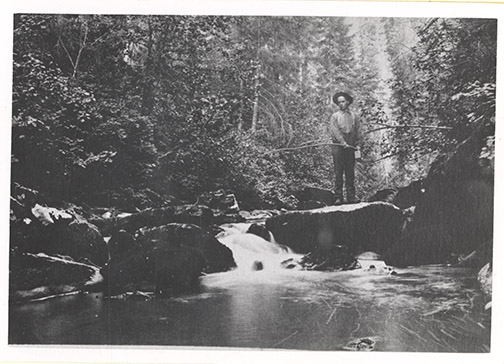
Carl Olson
Born 1895
Occupation: Thresherman; operator of gas station and car dealership; sawmiller; miner; Troy councilman for 24 years
Residence: Dry Ridge; Troy
Topics:
The colored topic bar is hidden for screen reader users. Use the topic buttons below it, the "Filter by Topic" menu or the search box to find specific content in the transcript.
Sam Schrager: Carl Olson discusses his thrashing operation in the Ridge Country in the 1920s. Skills, crops, small farms and pleasures. He also tells of work in small sawmills, difficulties selling cars and running a service station in the Depression, the hard life of early homesteaders, Victor Anderson's humor, the need for regulation of society, prohibition stories and about the Bank of Troy. Was he a friendly guy?
Carl Olson: You know, he would throw it away. But he wouldn't throw it away, he put it in his pack, shacked it up and back. Then he come over to one place. He had a gun, 45-70, you know, it was a pretty big gun. And he looked and he said, 22, he said, you got a small 45-70, haven't you? Yeah, he was quite a character, all right. Mills and Bormacreet, they all talked about him, you know.
Sam Schrager: You know, Carl, I wanted to ask you about the threshing, because you never really told me about the operation that you had on the Ridge, the harvest operation. And you never really told me how you got going at it and what it was like.
Carl Olson: On doing what… ... Well, I got a job from the Hawkinsons, you know, I worked for him for three or four years. He said, I want you to come out and fire my engine for me, my father. And the harvest, he said, and I gave you $2 a day. So that was it. I thought that was great, you know, I make $2 a day, I was only about 15 years old. And I went with him and by the time I was over, he said, you had steam every morning, didn't you? Yes, I said, well, he said, I'll give you two and a half, like the pitchers did. Then he hired me again and again, you know, I worked for him for about three or four years. Then he wanted to sell the rig to my brother, and we bought him out. And then we run that for about 10 years. We threshed all of Little Bear and up on Dry Creek and all over the country. We cleaned up the dairy, we threshed for 101 farmers one year, you know, that's something. Now you only thresh for one. The barns also big, you know.
Sam Schrager: How could you do 101 farmers in one season?
Carl Olson: It was out 54 days. And then we had the beans left, so we had to go back and thresh them. And that took us 11 days, so we had 65 days in. And it was the first of November when we got through. It was a rainy fall, see. And it was out of thresh range around 2, you know, and we got such a long run because we had the mud hooks on our engine. Mud hooks looked like this and about 6 inches long. And they were about that far apart, you know, as we would go. And that's how we got around and got all that threshing. And we threshed between the showers. In those days, you know, Little Bear, we had the thresh most of the time in shocks. You took it right from the field and threshed it. And then the smaller farmers stacked all their grains, see, so they were in stacks. And that's why we keep it going. If there had been any wheat out there, it would have all rotten, you know, because it rained off and on, off and on, off and on, see. And we kept it going that way. I didn't think we'd ever thresh the beans, but it happened to get nice day in the first November. It lasted about two weeks and we finished up on the 11th and going home and started snowing.
Sam Schrager: When do you think that, what year about would that have been? About what year would that have been? What year?
Carl Olson: About 1920, I think. I'm pretty sure I'm right on that. It could be 21 or 20, but it's either one of them days because I was in the Army in 1919, see, so I missed that harvest. And then I come back and we threshed one year and the next year, it could have been 21 and was wet. But the first year I come out from the Army, we had the big. We made a lot of money that year. Maybe that was the big year, I guess so. And it could have been 1921.
Sam Schrager: Weren't there other thrashing crews around at the same time?
Carl Olson: Yeah, but they couldn't move. They couldn't move in the machinery because they didn't have no mud hooks. And therefore, I told you about that big plank we had. I'll show you how it works. And I figured that out when I was working on the road, you know, with pulling the grater. And here we got stuck. Here's the engine now. See, we stuck a 3x12 under the wheel here. It was 16 foot long, see. And then we wrapped the chain around here and around here. And then we stiff-locked it, they call it. There was some differential gear in it, you know, it was like a car has. But we put that lock in the pull. Well, then the engine would climb up that thing. See, it'd climb up the plank. And then we were out. That's the way we got out, you know, on the fields. Because once in a while the wheels would be soft and you would sink right down. Over here on this side of the dairy, we got on a flat field and we didn't stick that plank under. And it went down four feet before it stopped. But then it hit solid ground there and then come right out. I thought, here we are now. We were stuck for good. Come right out.
Sam Schrager: Now, what did you put the plank underneath? What was that you put underneath the engine?
Carl Olson: Under the bullwheel. Under the wheel.
Sam Schrager: See the big bullwheel here?
Carl Olson: And this is folks. Then we put the plank under here. We dug a little bit and the plank stood like this. Then we tried the chain here and the chain come down and we tried it around the bullwheel. So it wrapped around the bullwheel. It was the same as a drum, you know. It had to come out. I see. So it pulled right up the chain, pulled it right up. That was over on the Grandin place here where it went down so deep. But the way I found it out, you know, I was, we hadn't had the rig done more than about a year. And we was grading the road. And we was following pretty close to the edge, you know. And we come to a place where they blowed out a stump and they'd fill that in with dirt, loose dirt, you know. It looked like the road. And it was wet then too, you know. When we got there the old bullwheel was dropped down and that hole in there was set with the grader, road grader behind it. So the boss said the road boss, he had the same name, I had two car holes. And now go home, we said, and get my team. And we'll get out of here some way, he said. There was no way. That wheel was just spinning, you know, in there. But it happened to be the telephone pole there. And I thought to myself, by God, I'll try this. I took the telephone pole and rammed it under the wheel, tied the chain on the stick lock, and out it went just like that. And there I was sitting waiting. He was going about an hour, you know. He couldn't figure out how I got out of that hole, you know. He just couldn't figure. So I showed him how I got out there. And that's how I happened to get wise to that team, you know. And that come out pretty handy in the harvest.
Sam Schrager: Well this year, when did it start raining that fall?
Carl Olson: Oh, it started about the last of August.
Sam Schrager: How much threshing did you get in before that?
Carl Olson: About 20 days, 15, 20 days is all. We got through in a little bear and we got up to Arnold's place. And I forgot who lives on it now. It's an old dam on it, it's about half way down the ridge. And I said to the crew, I thought it was going to rain. And the clouds were coming up and we were on the last shocking open field. We had 100 acres of oats or something there. So I said, we got to finish this now. It's going to get rain and this is the last shock we got. And you know, when the rain on the shock, you had to wait three, four days, and maybe more before it dried out. But it was stacked the rest of us. We finished up, but we had to run an hour overtime to get it through. And then the next, all the other threshing was stacked after that. So Arnold's workplace was stacked and Kelly's place and the place you were on, all of them. See, even when we went straight ahead, an old run took all the new runs, then over to Dry Creek, and then from Dry Creek up to Derry. That's how we got in such a long run. It was 54 days of rain and 11 days of beans, see. 101 farmers to thresh for.
Sam Schrager: Why did some farmers stack it instead of shocking it?
Carl Olson: Well, they had to pay to bring it together. They had to make bundle teams, you know, to keep the machine going, and they had to go out in the field and haul it to the machine. But when they stacked it, you put the machine in between there, and I had the pitcher with me, four of them, or five we had, and they pitched it in and then we moved to another setting. So long as it didn't rain, it was thresh because the heads were dry. And the outside ones were a little wet. If they were too wet, we had to sometimes wait a day for that even, to let them dry off a little bit. We got to one place where they stacked the grains of four, you know. They had to know how to stack grain. That was an art then, too. The bundles had to lean out this way, so when the rain hit them, it'll run off. It's better that he got his bundle this way, and the rain would run into the stack for him. They can't stack it, he said. He had to catch the stack, you see. And we couldn't knock that grain out, and he run around there like he was crazy, that farmer. He said, we can't thresh or nothing. I said, we can't do nothing with it. It was a little club, too, and that was the hardest week to knock out there ever was.
Sam Schrager: The what? Little club weeks?
Carl Olson: Yeah. His son lives on the ridge there. Nilsen, even far from where you live. Bill Nilsen. His dad, you know, he was running around there, and I said, alright, if you don't want to thresh your equipment, I'll throw the belt off. No, he said, you can't. And we finished him up, too, you know. And then when we come back, they follow the thresh beans, and we threshed all around him, you know. I just don't have to tease him, you know. We used to go in the thresh room for him. I wouldn't leave nobody, you know. Well, if I liked him or not. And he called up, and we was at Ryerson. He went in the thresh, my beans is, well, I don't know, I said, I don't do any better job on beans than on wheat. Oh, he said, you got to come and thresh and go. I figured I'd thresh them all the time, but I just left him to the last guy.
Sam Schrager: How did you decide what order you were going to thresh the farms in? How did you decide what order you were going to thresh the farms in? How did you decide who was going to get it first?
Carl Olson: Well, it come out pretty good, so we didn't have much problem there. The lower end, the little bear ripened up faster than the woods did, you see. And we had to start down there somewhere so the water was ready. See, there was so many kinds of grain. We had fall wheat, and the fall wheat come in two, three weeks ahead of the spring grain. So we threshed the fall wheat, and then sometimes we had to go back and thresh the oats for him afterwards. It wasn't ready. And that's the way we worked it, you know. And then we bought it by the farmers, and we didn't have the cook wagon or nothing. But I was used to threshing. I could hardly ever miss, you know. We'd be at your place for dinner and so on. I'd tell them in times when we could have them food ready. But it happened when we threshed beans once. It was hard to judge that. I told that next farmer that we'll be at your place for dinner. And by golly, you know, before I knew it, we was through with that guy. I took my car and run down there and told him that we'll be here for dinner. We wouldn't be there for dinner. That's the way it was. But the old lady got excited. She jumped in the bed and squealed and hollered. And the old man said, don't pay that head to the dad. He does those things quite often, he said. It was all Bovill camp. He lived way down at the end of the ridge.
Sam Schrager: What, she expected you for dinner and you weren't going to be there? You were ready to move
Carl Olson: Yeah, because she didn't have dinner ready. But I hardly ever missed on that. I was used to it. I knew how much feel everybody had, and I knew the braggers. You know, some of them brags, you got so much and all that, so you couldn't fool me there.
Sam Schrager: You mean they said they had more to thrash than they had? The yield was so good, huh? What was the food like in the farms? Did they cook real good for you?
Carl Olson: It was just like going to a picnic every day. One feller asked me once, he said, what would you do if you had the chance to do something? Well, I'd be a thresh man if I couldn't have sent us. Best job I ever had. It didn't last too long, I said, so we didn't get tired of it. And the good eats we got all the time, you know, and everything. And we slept in the straw stack. I said we were all together all the time. We had a good time and everything. On Saturday nights, we'd all go in the trap wagon. They called that a wagon with us, you know, to carry the forks and other stuff in the beds and everything. And we all drove home in that on Saturday nights. Then we'd come back on Sunday, Sunday evening. No, it was quite pretty good. I liked it because you got to know people and everything else, you know. And we wasn't out just to make money only, you know. That's one thing that we were well liked, you know, they wanted us if they could get us. Because we'd just think I would, I pulled one, for a whole mile to thresh nine sacks of wheat.
We lost money in that. I didn't charge you any extra, either. And the smallest bean threshing ever was three sacks. I didn't like that very good. We already quit, you know, it was true. And he come over, he only lived about a mile from us. He wanted his beans threshed. God, you know, we had to fill up the boiler with water and steam up and pool over there and everything. So I didn't like it. Oh, he kept on, I thought I'd better go anyway. He's a neighbor. And when we got up to his barn up there, there was a bunch of boards about that high from the ground laid over. And he run and told me where to go. Where in hell is the bean stack at? I couldn't think that. So I got off and I looked and I seen the beans on the... And he got three sacks. There was a place right next to the cemetery out there that happened. We lived down there where Emily is, you know, you can see the place from the cemetery.
Sam Schrager: How did you work out the charge? How much it would cost them to thrash?
Carl Olson: Well, we had so much bushel, so much sack. We got eight cents a sack for oats and ten cents for wheat. Ten cents a sack. See, they sacked all the grain and then the sack sowed for eighty-two and sold them up and piled them up, you know. But that was pretty reasonable. Most of them had two cents more than we did all the time. And then when we went out to the sea country, then they had the coke wagons with them. Then they had about twenty cents a sack, I guess. But up in the woods there was so many small jobs that you couldn't afford it. And then another thing, you know, that book you give me, you could see there, I wondered if those fellas was on the small farm, there wouldn't be anything to thresh. The horses would eat up everything. They even worried about that a lot of places a long time ago up here, you know. They had too many horses to come in there, they'd eat up all them grain. Well, a man that hundreds of sacks of wheat, that was a big job in those days. See, and then they had the oats too, you know. But that's the way it was. Small fields, fifteen, sixty acres had cleared up in the woods up here, you see. It was timber all over, you know, they had to get their fields wherever they could. And there was quite a job to clear off the land, you know. If it wasn't big timber, it was small black pine, they called it, get about this big, just as thick as they could grow. It's like sticks. So they didn't have very big fields, you know. Now, the little bear was pretty good because that was a ridge. And they claimed the Indians had fires on those ridges, grass fires, and they kept the small stuff down, but it was big yellow pines here and there, all right. But they could get fields pretty quick that way, between the trees even.
Sam Schrager: Was Dry Ridge like that too, where you grew up?
Carl Olson: Yeah, it was not enough timber there. My dad didn't have six acres of field on him, I think, for a long, long, long time. So he had not decided all we got was enough feed for the horses and the cows. What we sold didn't amount to anything for a long time. Maybe sell for $100 a year. Big sale that would be in those days, you see. The wheat was only worth about 60 cents a bushel. You get $1 .20 for a sack then. It's different now, you know. So in 1920, when you were threshing, each farm family, farmer would only have maybe 50, 60 acres. Yeah, lots of them didn't have any more. A lot of them. Some of them were only 10, 15 acres. Most of them were up on this end, the little bear, they called it. You see what that was, me. He lived under the forger there, you know. We didn't charge him anything. We just threshed it for him free. He was hard up all the time. We only had about 10 acres of field. So we never did charge him anything for his job at all. We donated that to him.
Sam Schrager: Hey, will you tell me who was on the crew? I mean, how big was your crew and what did the different men do?
Carl Olson: We had six bundle pitchers and two sack ores. Sometimes we had three, that would be nine. And then we had a man at the hall of water, that's ten. And then an engineer, that's eleven. And a separated man, that's twelve. About twelve men. Crews, that's all we had. But my brother, he took care of the separator and I took care of the ... We took the big jobs that they paid more for. And the separator tender, he got about the same as the engineer did. So we had those two jobs ourselves and that's why we could make it fairly good, you know. Nothing big.
Sam Schrager: Would that be how much you'd make when you were done dividing up the money? That would be you'd have four or five dollars a day for yourself?
Carl Olson: No, we never figured that. We figured what was left and then we cut it in two. So we took half and half. My brother, except in 19, well that was a big year we had, you know, I told you. We made money then. We made seven thousand dollars that year. So we got thirty or five hundred apiece. But that was more we made in three or four seasons before. But the war had been on and things were up, you know. We paid seven dollars a day for pitchers too then. See, seven dollars a day for sack sores.
Sam Schrager: What did you pay in 19, what did you pay before that?
Carl Olson: Oh, two and a half for pitchers and the sack sores got three and a half I believe. Two of them, maybe seven dollars a day there.
Sam Schrager: So it was a real shortage of labor after the war then?
Carl Olson: No, it was no shortage of labor. Well, there wasn't any big jobs you have, you know. Just when I was young I would work on a sawmill, get in thirty days maybe. And then we'd go out in the hay. When I went out in the hay that was the hard work for me. Then they got in maybe ten days. And then when the harvest come we'd get in thirty days about. And that was all the work there was. See, see how mills did. They were all over the country, but they were small and the only way we could get any logs in was in the winter. You couldn't log in the summer, you couldn't haul them on the wagons, couldn't get no load on, you know. So in the good winter they get more logs. In the poor winter they wouldn't have the big run. So it hardly lasted over thirty days on the sawmills. And you were through there. So a job, all around job was something we didn't know anything about hardly.
And the harvest was the best pay and was the easiest to get people there, you know. And it's as that book, you know, they come from way back in Kansas here. Because they crop earlier there so they got another thirty days in, you know, and they made pretty good that way. In those days.
Sam Schrager: Were your crew, were they local men or?
Carl Olson: Yeah, they were all local. You know. See, there was quite a few people here that cost 160 acres or so. Most of them were homesteaders, you see, and that's all you could take. You could take 320 if you paid so much an acre. But very few people had any money to do that. They call that the preemption. Like Phil Deal's place, he took preemption and homesteading both. So he was the big farmer up there. He had 320 acres, you see. But he didn't have too awful much feel anyway because of timber all over, you see. In order to get a hold of about 150 dollars then that's just as hard as we get a thousand now. It's easier to get a thousand now than it was 150 then. That's what it took on a preemption, I believe. So much an acre anyway. So my dad, he filed a preemption to start with, you know. Then you could live so long and then you had to pay up or lose it. So he shipped it over to homestead then instead, see. That's the way he got done it. He didn't have that much money. There was no preemption to take around there. Anyway then they took up a ... level of the land.
Sam Schrager: Was this on his original home place? Was it preemption to start with?
Carl Olson: Yeah… i got the paper here yet on that. I showed you the preemption and the deed. Yeah.
Sam Schrager: Well, did you have trouble with the machinery, the threshing machinery? Did it break down at all? Did you have to...
Carl Olson: No, we didn't have much trouble. We had the fire the first year. We burnt out the first year and that was tough for us, you know. Smut fire. Burnt everything inside the separator and the blower fell off. It was on the hoof's place and that's the last place a little bear weighed on. So we thought we'd have a fix but we were gone in two days though after that. We called up the case people in Spokane and they shipped it down on a night train where the train would come here at eleven o 'clock at night. And then we had to put in all that stuff, you see. So in two days we was gone again. And they thought the IWW set fire on us, you know. They told me about that. It wasn't them at all. They didn't do it. No, it was nothing but smut. We had the explosion day before, you know, and it was awful smutty green too but it was the black smut. So we didn't think about the gardeners have at all out on this place because you would see the big head here and there in the bundle. So there was that brown smutty and that was just right. Got the right mixture, you know. And what started it was electricity. You could go around the machines certain days and stick your finger up to a belt and you could see the sparks fly, you know. And that's what set it off there, I think. Electricity. And then something went through the cylinders and made a spark, you know, and set it off too. Rock or something or a piece of iron happened to go through the machine.
And it poof, was fire all over it at once… no,… i liked that job, threshing. I thought that was pretty good.
Sam Schrager: As an engineer, what did you do? What was taking care of the engine? What did you do to take care of it as an engineer? What was your job?
Carl Olson: My job was to run the engine and keep steam in the boiler, poking wood in it all the time. The farmer furnished the wood, you know, all that wood for you. And you steam it up with that, you know, and then get up in the morning about four, so you'd have steam by seven. See, at night it always had to start over in the morning again. So we put it in long days, all right. As an engineer, he put in the longest day, from four to about eight, you know.
Sam Schrager: What about the separator tender? What did he do?
Carl Olson: Well, he took care of the machine. It was always something, you know, to fix. Not all the time, but, you know, something to shake loose or belt, break, or release it and have all that really and check up your stuff, you know. So he worked overtime quite a bit too. So that's what counts, you know, if you have the machinery in good shape so you could run the study without having any breakdowns. And how to set your machine, I told you about that too, I guess. One of the Nielsen boys, I don't know what's building up, but one of them boys, he went over on Big Bear, you know, and worked. And they had a name Fairfield that run the machine there, and he smoked a pipe and something happened to the machine, oh, golly, they're not. He feed it for the rest of the back one, feed this pipe up, and then he went down and fixed it after work. And then it took him so long to set the machine, you know. So Nielsen said to them, now them Nielsen boys, I want Little Bear to take them five minutes to set the machine, and we said, oh, little bear, you're a real bragger. We made fun of him, you know, and he told me this. So we had to quit Little Bear because the small machines start coming in, you know, and combines. So we thought we'd try Big Bear for a while, so we got the job down there. And I knew all about it, so I told the crew we had a nice level spot down on the flat there in the farm, so you can set down there on the flat on that level. So I told them, be ready now, we're going to show those people on Big Bear how long it takes to set a machine. It was level, so we didn't have to dig for nothing, you know. You had to dig for the wheels to get the machine level, you know, and same with the engine, it was rough ground. It was level at the floor. So I told them, they wanted to pull the belt out, they said, get it going when you pull it out, run out with it.
You know what all it took us? Three minutes. You hear the button, we were sitting up above about 500 feet away from the machine looking at us when we were setting, you know. And I never stopped the engine, I just unhooked it, turned it around, lined it up, and they were there and throw the belt on, I backed up and threw it off the clutch and I never stopped it. And the fella sat there and I had to wave at him to come on down, come on down… (laughter)… oh, yeah. Funny. Yeah, my oldest brother Albert, you know, he was a real mechanic and he worked with us the first two years and helped us out, you know. Of course, he had been with the head of the job like that before, you know. So he was fast too. That it was just a little bit off, you know. See, it had to be level so the weight wouldn't flow to one side and this and that. And they put a jack under there and told them, go ahead and pitch in.
... And they used to talk about, my brother didn't say, I've never seen a fella like that. He can fix a machine with a plier when the others are looking for the tools. (laughter) And that was the truth or a past, you know. Then he seemed to know everything he did, one fella had to put the machine in, sit on the sack pile and first thing you see him jump off and start running down there to fix something. How did he know what he had? I didn't know there was anything wrong but the sound on the machine didn't sound right to him, you know, something was choking up or something. So he'd be right there so he wouldn't have to shut her down even. See the blower would choke up sometimes, the straw in there, you know, and all that. And if you're there in time you can poke in there a little bit and you don't get the whole machine choked up, you know. The blower would choke up, there would be straw all the way through, you know. And that's the way he was, you know, he taught us all that stuff. That's why we had good luck.
Sam Schrager: So you learned it from Albert?
Carl Olson: Yeah. You know, I've heard it said that they used to say about you and your crew there that if anybody could thrash it, you guys could do it. If it could be thrashed, you'd be the ones to do it. Well, that's the way it should be, everything, but if they run the country like we're on the thrashing machine, there wouldn't be no depression.
Sam Schrager: Carl, how did you know, how can you tell when you could thrash it, when it was just dry enough or ready?
Carl Olson: Well, we'd go out and test it, you know, we'd walk out in the field and then we'd stick your hand in the bundle, in the middle of the bundle, and pull out the head and see if it was tough or not, you see. If it wasn't tough, it was ready to thrash. And the rain, that'd be a little different, but that'd be the outside heads only that got wet, you see. Let me just test them, see. See, if it got a little damp, you couldn't knock the sheaf off the wheat, you know, and then they'd go out in the straw pile. You had to know that too. You didn't take much rain, you know, when chalking, when you'd thresh chalks. You used a good shower, it would lay you off half a day. It was a real rain lay you off a whole week even.
Sam Schrager: Did that happen to you very often?
Carl Olson: No, not very often, because, you see, we'd done most of that threshing in August and we'd let the rain come in August. After that, it was all stacked, you see, and they were all right then, see. So we didn't lose much time. Once in a while though, we had to lay off, I think it was only one harvest that we put in that we didn't have to lay off the rain. And there else you have to lay off two or three days maybe or so on, if it was kind of a rainy weather, especially when it was shocks. But if it was stacked, then you didn't have to wait too much. If it was a good rain, then you had to wait a couple of days maybe.
Sam Schrager: For what they were growing then, was it mostly wheat that you thrashed?
Carl Olson: Wheat and oats, frankly, all of it. Hardly any barley at all. We didn't raise any barley up there hardly at all. And you see, they didn't have the machinery to farm like they do now, you know. We got some off of Lake Gamlin, you know. If you could get a spring that was wet, you know, they only had horses to plow with and you couldn't get it in time and it would be late. Awful late. One place, one little bear, a feller named Harris, was farming it. And we come up there, you know, we're about through on the ridge too, and you know what he was doing? He was cutting the grain and we were threshing it. Yeah, it was late. He was an awful poor farmer anyway.
Sam Schrager: How long did the grain usually sit after it was cut between then and when it was thrashed? How long did it take for it to get aged and be ready? When it was wet, you mean?
Carl Olson: No, no, when they cut it.
Sam Schrager: How long would it take after they cut it to season?
Carl Olson: It would take about a week sometimes before it was good enough. See, they cut them when it was pretty tough. You couldn't wait until it was ripe because then the binder would knock the grain out for you. See, you couldn't cut grain. It had to be tough yet. It took about a week out in the chalks and sometimes they even had to turn the chalks to get the inside dry, set the bundle this way if it was to come with them to fall. But they had the wheat here they called the 40 fold and we threshed quite a bit of it. That was to damn right. If you wait until it got real ripe before you cut it, you wouldn't have more than half of it. You know, that kicker in the binder, he just kept taking that straw all the time and he would distract it right there.
Sam Schrager: What was the name of this wheat?
Carl Olson: 40 fold.
Sam Schrager: 40 fold?
Carl Olson: Yep. Just a damn long straw in the damn stuff. That tall. But it was good wheat and ripened early. That's why they put it in so much, you know. It ripened a whole lot earlier than the club wheat did.
Sam Schrager: Was most of the wheat fall wheat or was most of the winter wheat or spring planted wheat?
Carl Olson: Well, you could probably seed any wheat for fall if you want to. They didn't have no special wheat for that. The reason for planting in the fall is to get it ripe early, you know. If you put in all spring wheat it would never ripen up hardly in some years. It would be stand green, you know. Especially like the club wheat. They would put in late all that club wheat. And I think the 40 fold had to be seeded in the fall. It was really fall wheat. It was a bread wheat, you know. The reason they called it 40 fold was because it created 40 times as much as the seed. But they don't raise that anymore at all. We held so much straw. Now the wheat they got now, I'd like to thresh that. Jesus Christ. We'd thresh thousands of 1500 sacks every day. About this tall and hems that long on it. No straw, you know. I was out here one time and looked at this wheat.
Gee, you'd expect to get a crop from this? Yes, I'd get about 40 bushels. It looked like 10 to me according to the whole wheat, see. It was that thin we'd get about 10 bushels a day.
Sam Schrager: What was the yield in those days when you were threshing?
Carl Olson: Oh, we got a few threshes. A field that made 40 bushels, they'd talk about it all the time. 20 bushels was good wheat. Now it gets as high as 100. So you see the difference on the wheat too.
Sam Schrager: What was the most you ever did in a day, do you know? Did you ever have any big record days?
Carl Olson: Well, that's the one big picture we had there. We had 1142 sacks in 9 hour time. That's the biggest record we had. You never had any big job at a time. You had to mow so much. You lost so much time mowing from one field to the other one. There was no big job, but this fella had 100 acres of oats. I knew that the threshing was so unfinished, so I told him to set the machine in the center of the field. We were going to thresh it all in one pile, I said. Then I went down to get the photographer. I went down and got him. We finished it in 9 hours, all right. There was 1142 sacks and that was about 4,000 bushels in that setting. It was on Big Bear. The case got a hold of that picture we had. We had a case machine, you know, and they showed one of that picture.
Sam Schrager: What did they do with it?
Carl Olson: They took it back east and put it in the... They had to make a scene out of it. They had to call the threshing men. So the picture got in that. I got a few letters from back east. I read it, you know. One fella wrote... I told him how many teeth were out in one season. I got a letter from one guy. He said, how can that be without teeth like that? He couldn't understand. So he was no threshing man. No, that. Teeth was the main thing in the threshing machine. If the teeth got too dull, it would chop the straw up too. The bundle wouldn't go in fast enough. So you'd break it up and get a lot of chaff in the sacks. You couldn't blow it all off. You did. You'd blow wheat too. So they had a little curve on the end like that. Well, if that wore off, then it wouldn't take it, you see. And the bundles wouldn't go in to the cylinder and they could raise hell with your feeder, break the chain or something because they wouldn't go in fast enough, see.
Sam Schrager: Could you sharpen it? Sharpen them up?
Carl Olson: No. Someone had to turn them around, but then the hook was out of the way and it jerked the tooth too fast so it didn't knock it out. That's what I wrote and told this guy. But I said there's one way you can reuse them longer without taking them out. That's to bend them forwards. So we had a rig like that, the bar about that long, we'd put it over teeth and then bend the teeth forward and you'd get the right curve. But if it wore so much so it got a, then you had to throw them away, you see. And you couldn't turn them around because then the straw went in too fast.
Sam Schrager: How long did one of the chains last, the teeth?
Carl Olson: Oh, that depends on the grain a whole lot. It was easy threshing. Last year the whole season, putting it in the new set and threshed for 30 days or something like that. Last year old season. But we had that bar with us all the time so if they wore down too fast, we'd bend them forwards a little bit, you see. We didn't have to take them out to get the curve right, see.
Sam Schrager: Could you bend them quite a few times before you'd throw them?
Carl Olson: About one time would be enough then to get down to some arrow. You had to have it wired this way too because your teeth in the grates, there were teeth there and these went between like this, see. Yeah, they went in between each other, yeah. And then if they were off on the sides, then the heads would go through so you couldn't run the teeth on the grates. They wore on the sides all the time. They got tennis and ice in there. And you had to take, put in new teeth there and it was sick. Six rows if you had bad threshing. There was two rows in each grate, see. And good threshing like the 44 we used one grate only. And you get into the little club, you had to have them all in. Six rows to knock it out. And then it took a lot of power, really. Steam too, you know, because it pulled hard, you know. But 44, the wheat would fall out itself. So it was easy to thresh but then it had some damn long straw, you know.
Sam Schrager: What about the oats and beans? Were they very different from the wheat to thrash?
Carl Olson: No, oats was no different at all. Oats was easy to thresh. You had no shadows there, you see. They hung on to knock them off and all. But beans, you had to be an expert to thresh them. You'd crack them all to pieces. You had to have slow motion on your cylinders and it was double cylinder in machine, one back of the other one. So it went through two cylinders, see. But they threshed with one cylinder on but they cut the speed down but then they didn't knock them all out. Then you had to thresh dirt. They wore the machine out so damn fast, you know, because they got dirt on the roots, you know. And it was just dust around the machine and they just wore out everything. They didn't last no time with all the bean thresh here. And then we had two rubber rollers so all the beans had to go through the rollers to bust the dirt chunks, see. They were just as heavy as the beans so they'd go in the sack. So it went through them rollers and busted the dirt so you didn't get it in the sack. Or else you'd get about 25 % dirt in there, chunks like the end of your finger, you know. No more of that bean threshing. I didn't like that very much. It was too dirty. And then it was hard to pitch it, you know. There was no bundles there, you know. You had to tear them loose in the sack, you know, and dust. Everything else.
Sam Schrager: So thrashing beans was a lot dirtier than the others, eh?
Carl Olson: That's funny. It makes sense. Yeah. See, when they harvested them they had to cut the rig, you know, and they cut the roots. You couldn't cut them on the top, you know, then you couldn't get them together and fall to pieces. And then if they were ripe, you know, and you get rough, some parts ripen faster than the others, you know. Then they had to let them lay a long time in the field even to let them dry out, you see, before you could stack it. And they come in late, you know. It was hard to save. They lost bean crops every once in a while that way, you know. They didn't get them in time. But they got wise. They waited too long before they planted them, you know. If you plant them real early when the ground was warm they'd grow up pretty fast. But if you waited too long, you know, what they froze to, you see, you know, they were afraid of an early frost, see. So they planted them pretty late. But it was pretty good money and beans then. The way they farmed was a little bare and they made good because, you know, the summer followed. You don't do that anymore now, you know. They leave a field out, you know, and put nothing on it. That's what they call summer follow. And then when the bean business come in, they put beans on the summer follow and then they'd plant fall wheat on the same ground, see. So they made good, you see. You got two crops that way, you know.
But they don't raise any more beans at all around here.
Sam Schrager: What happened?
Carl Olson: Well, the prices didn't come up fast enough, I guess. The prices were good then, you know, they made pretty good on beans. But they start irrigating down south and all over the raised beans, see, and they could do it cheaper and better. So they quit altogether.
Sam Schrager: Well now, Carl, when you're talking about enjoying it, having a good time in the harvest crew, you say it's because you got a chance to spend time with people and get to know them better?
Carl Olson: Yeah… well, that's what you did. It was something new every day, you know, especially for us that had a small farmer. We could ask for three, four farmers in a day sometimes. Small jobs, you know, and all that. Guinness evil, they had a different set up there. They had the cook wagons and there was big farmers there, you know. So that was a whole lot more. You had to have cooks and rust about. And you had to have one bundle team, so we had two. We had a heck of a crew to pay, you know. We had about 25,000 men when we had 12.
Sam Schrager: Is that how you got to know a lot of the people around the country?
Carl Olson: Oh yeah, I knew from everybody east of town here, you know, cleaning on Big Bear and Deary and Dry Creek and Nora, Little Bear, all of them… yeah.
Sam Schrager: When you were going around and thrashing for different people, were most people in about the same shape? I mean, as far as how well off they were?
Carl Olson: My farmer had, say, up to 100 acres of field or 8 acres, you know, they were pretty well fixed, you know. But there wasn't too many of them. But the small farmers, they didn't make much. But they worked out a whole lot of them people too, you know. They worked in the woods, you know, when they started the wood business up here. They worked out too on them small farms.
Sam Schrager: Would you say that many of the families were just barely making it, or were most families getting by so that they were okay?
Carl Olson: Well, they just made a living. It was not to buy much those days, you know. Like our family, we didn't buy much stuff. We raised all our food. And there was a little game in the country. We shot a lot of grouse for tea to eat and fish in the back, and stuff like that. And salad butter, eggs, trade for groceries. So we used very little cash, very little. If the average farmer had around $100 income, he was sitting pretty good. Yeah. Most of the women made the clothes for the kids. They had sewing machines. And they'd buy the cloth, you know, buy the overalls, make it. And one kid growed up, and the other one would wear it, you see, and so on. So they wore out everything. It was nothing thrown away. To find a tin can when I was a kid was a hell of a job. Of course, we wanted them to play with it.
Sam Schrager: The story about the rooster canning the man?
Carl Olson: Yeah, that was pretty good. That's the only man I ever can. The rooster had to do it for me.
Sam Schrager: Will you tell me what happened there?
Carl Olson: Well, he was kind of a queer doctor, this guy. So it wasn't a bean fetching. We took one man with us extra in case we were short-handed farmers. They furnished the pitchers and everything. All we furnished was the sex, the engineer, and about four or five men when we went out tracking beans. So we thought we'd better hire a man with us, you know, to have in case they're short-handed, then he can get up and help them. So we hired this guy for that, and I said, you don't maybe have to work at all, because if they got a full crew, you don't have to do anything. But if they're short-handed, then you've got to get out and help them. So we got over there on the beach, you know, and the sleeping in the barn, you know. We'd been out, I guess they'd been out about a week maybe. And he started cussing and swearing up there about four o 'clock in the morning. He was rolling his bed rolled up, and we couldn't figure out what the hell was going on. So he went, you know, and I asked the fella to slap close by to him.
I said, what in the hell is the matter with Charlie? Quickly anyway, I said, that rooster corroded all morning. He got mad about that. So he left… you know.
Sam Schrager: And what's that story about the hooked nose, hooked noses? Would you tell me that one again?
Carl Olson: Well, that's the Steelsons around here. They all got such big noses, you know. And I seen them the first time they were around. They lived on that bed, and the old men and the kids were about 10, 12, 15 years old, I guess. And somebody in the crew said, that's the best cherry pickers I ever seen.
Sam Schrager: And no matter what you mean by that, don't you see that nose?
Carl Olson: They hooked that on the limb and they picked on both heads. You don't have to tell this, I would have it hit the name of Steemonsons. We're living here now, you know, three of them in town here. When the Steemonsons come and ask me about that one, they hit. And he laughed about it. Charlotte Spencer was the one that wanted the Spencer's marriage in the Steemonsons. He was kind of funny, don't go right that way. You know, you can, other people, you can never tell when he quits. If something hits him they don't like, he just quits the oven and walks off. Yeah.
Sam Schrager: Was there much difference among the men that worked for you? Did some of them work a lot better than others? Were some of them a lot more skilled?
Carl Olson: You always find that. And it's a little tricky, that too. I didn't have to hire too much men, but I found out a lot about people. You put them on the right job. He's good. And you put him on another job, he's just worthless. It's that much different from people, but people don't understand that. But that's why they have so much trouble. Some people seem to be worthless. You put them on the right spot, maybe he's real good, you see. And I found that out when I worked on the farm middle down there. I was kind of a half a boss there. I was middle right, you know. I straightened him up and one feller, he was sort of a funny guy. He kind of had less, you know. And Meade said to me, well I guess we'll lay off that feller that they bought the feller sawmill out and they're going to start new, you know, new people. So I guess we'll weed our crew out and we'll let that feller go over there, he said, and this and that. So they started up and they had the pail sawyer, is what they called them. They stand behind us all and take some lumber away, you know. And that's what this feller done. And, oh my God, they had two, three guys there, no one knew how to do it, you know. Good workers too. I said, you better go back and get Anderson. I said, he used to be here, he's an expert at that. And they went and hired him back. He knew just what to do, you know. See, it's a trick there, you know. If you take the slab away and let the slab fall the wrong way, you can't push it down on the rollers because you got limbs on it too, maybe in it around, you know. But you turn the flat side down and then the boards when you take them, you got to pull them this way and get the narrow side up so the edger men know how big a piece of board they can get out of that thing, you know. And that man was an expert there. But you put him in some other place, he didn't seem to know how to work at all.
And that's the difference on people. So if you line up the crew right, you know, you couldn't get along with anybody. And that's absolutely no nothing, but you don't find many of them.
Sam Schrager: Would you tell me about what the setup was in those little sawmills? Take the one that you were mill riding. How many men would work in the mill and what was their different jobs?
Carl Olson: Oh, well I was mill riding down there in Kendrick, it was a small mill, they had about 12 or 13 men on it. One was a ratchet setter, they called, he pulled up the log, you know, if you wanted one inch board or two inch board, you know, he pulled the lever and pushed the log up. And then the sawyer, he was the guy that had done the sawing, running the lever, and then they had a turn down man, he turned the log with a ... on the carriage, you know, turned the log over, and they got so far in, and then they turned three or four times, you know, and then they had the slip tender, but we never called them that. The pond duck, we called them here, that's what I done when I was a young kid.
Sam Schrager: What was that job?
Carl Olson: It was a long day, you know, you had to pull the logs out of the pond, see, up on the deck. Then you had the tail, then you had the trimmer man, he trimmed the lumber off on the ends, cut off the barky end and so forth. And the edger man, he's the guy that put the lumber through the edger and took the edgings off, you know, like you make an eight inch board or a ten inch board, you move the saws back and forth, you know, see. Then you had the man behind there, picked edgings, throw them away, you know, when they come through the edger. Then you had the lumber pilers to pile the lumber out in the yard and so forth. Then you had the engineer that run the Indians, and that's about all of them.
Sam Schrager: What did you use to pull the lumber out of the pond with?
Carl Olson: Well, they had a cable that went out, you lay the cable across the chute, the chute was like this, see, and the water was up here in the log, and then you pull them up on the chute with a pipe pole. Then you wrap the cable around them on the main cable, and then you had the drum out there and the friction, you went and pulled the lever and pulled the logs up, see, you pulled up three or four or five, depends on the size. Sometimes you only pull one log of big ones. I used to do that. And that was the pond, what they call it, the slip tender, and that's where I got when I went on the coast that time here, told you about when I… What time was that? 1917, I took $160 and said, I want to see the country now, I don't care if I get a job or not. Because I was going to be drafted next year, I knew the war was on, you know, so I went to Portland and I looked through the window and there was a sign there that said, single jackhammer, $4 a day, 8 hours. I looked at it and I said, I wonder when you take that job, that's what I've been doing with mining anyway, that's where the single jackhammer is when you hold it to bet yourself and then hammer it with the other hand. So I said, well, I guess, I don't think I want that job, I said to myself. Outside, working too much, and it's in the fall of the year, so I went a little farther up the street and there was a sign in the window, a slip tender, $4 a day too. So I thought I'd better go in and find out what that fella does anyway. I had said, what is the slip tender, he told me, and that's what I've been doing on the small mills here when I was a kid. So I took the job then.
And I went to, among Washington, they had a shingling mill there. And if I would come up, I told him that I wanted to be a slip tender, he looked at me, you a slip tender? He said, a small guy like you, I don't think you make it. He said, I had a man here that weighed 200 pounds, he quit. But he said, we'll let you try it anyway. For me, that was a different way of pulling out timber, it was easier because the man that saw the log off, they saw it off in 16 inches, the length of a shingling, you know. So you pull the log 16, well I don't want to hook it up. And one day I wanted to pull up four logs, man, four logs, they were the big deseeders, that was enough for two days. So I worked there about a month or so after both, oh God, it's getting to them right down here. I don't want to move here, it rains all the time, you know. No, he said, you can't quit, I got a job for you, go up and sit above the boiler, he said, and drop some extra fuel down, you won't get enough sawdust to heat the boiler, so you got to throw out slabs for them. I sat in the chair like this and the elevator went right by you and all I'd do is touch them and they'd fall down to the firemen, you know.
So I sat there, I think it was only two days, three or four of them said, no, I don't want to sit there, I go crazy, I said, sitting there all alone doing nothing? No, you can't quit, he said, you go out and help the carpenters, you were building the mill bigger, so I stayed there for about three, four months. He said, so you can see, and therefore I found out about they had two names on it, the people there, and I come there and he said, hello there, master, do more, see less. I said, my name ain't that, well, he said, we're going to use two names out here, you know. He said, when you leave now, your name will see more and do less, but now when you're working, you'll see them do more.
Sam Schrager: What did you think of that country, that country west of the, on the coast?
Carl Olson: Oh, I didn't like it, I was on the, what do you call that, the wettest place on the coast anyway, Grace Harbor, little town named Elma there. The Saginaw Timber Company was a big outfit, you know, and they put the, they put the shingling in the mill. One all the time, so it kept you fairly busy when you had to pull up them slivers all the time.
Sam Schrager: What did you think of that country as compared to this country?
Carl Olson: Oh, I wouldn't want to live there, it's too wet. Funny part of it, the sun shone only two days when I was there, and then they stayed in and played poker. The crew, that's no fooling, not the male crew, but the ones that worked in the woods. And that was just opposite than it was here. When it rained, we stayed in and played poker. We wouldn't work in the rain at all in these summers out here.
Sam Schrager: That's funny, why would they do that on a sunny day?
Carl Olson: I don't know, it was too nice to work this head or something. That's the funniest thing that kind of tickled me too because it was just opposite here. See, we got a free board and everything, you know, in the zombies, so we didn't care if we had to lay off a day. We never worked in the rain hard. A lot of us working outside, you know, getting wet all over. We didn't have no clothes or rain. We stayed in. Then when the sun started, we stayed in.
Sam Schrager: What did you think on your travels? Did you see much country over there?
Carl Olson: No, I didn't travel too much. I stayed there and then I went to Spokane. We went to automobile school for a little while. I learned how to run a car or fiction mostly.
Sam Schrager: Did you learn much at that school?
Carl Olson: Oh, I learned in those days. We could take care of our one car, you know. In those days, nobody knew anything about a car, you know, so you probably had to do it yourself. Just coming out, you know. After that, they teach you guys. He's telling us how a car works, you know, and all this and everything. Then he said, if everything is alright, then the car won't start. What's wrong with it… nobody got right… i said, you know what was wrong with it? A man on the crank, he said. She didn't have no self-starters then… yeah.
Sam Schrager: Were those people on the coast, did they seem a lot like the people out here?
Carl Olson: Oh yeah, they made much difference. They're about the same. You can't tell one from another. There's a lot of people that lived here and went through the coast too, you know, and stayed there. And there's not too many that come this way from the coast. I don't think. But a lot of these early people, they went through the coast, you know, because they started to boom there, you know. A lot of them saw their homestead rights and went on the coast in the early days. There was one homesteader there close to us. He went to the coast and then a fellow named Ray at homesteader right close to where you are, he went to the coast too. But I think he had proved up all right, so he sold his places to somebody. Because it was starting to boom there then, you know. It was ending the cities. Well, there's one more thing about the sawmills I was wondering.
Sam Schrager: What do those rollers do? The rollers and the sawmills. Yeah, what do the rollers do?
Carl Olson: Suppose the saw is over here now, see, and the logs are rolled on there and then it comes out here. Then you take the board, then you got rollers to push it down to the trimming and to the edgermen and the slabs got to go down and the slabs were fused from the rollers. That's the ones that Ian Cartman put in. Yeah, you told me about that. Yeah, and the people looked and looked to see them. I'll never forget that.
Sam Schrager: What was it that you had to do to make them live rollers?
Carl Olson: Well, you see there were one roller set in the bench, you know, with a pin in the end to swirl around. Well, the line shaft, you know, they had steam engines and then the big line shaft runs through the mill that they took the power to the edger, you see, and power to the trimmer. And that line shaft happened to run right under the bench. So we took all the belts and cut them this wide, two inches, and we put it on the shaft up to this roller, see, and then from this roller we had another one. And from that one this one. So we didn't have all the rolling. You see, there were rollers next to the, out there, there, that was about six, seven. We didn't have any of them. All you had to do was just push it a little bit and the live roller would take it, see. And that's the way we made it easier for the people.
And in those days they didn't saw on the timber that big, you know. They didn't see stuff like this all the time. So then when they squared the log on the carriage in those days, they made one by twelves, you know, they called it. That was the popular lumber then to build barns with, you know, twelve inches wide and they'd stick. Well, they squared that log up and saw all the one by twelves on the carriage. They didn't send that lumber through the edger at all, see, they turned the logs until they got it squared up, see. And two by twelves, and we saw them do the same thing and two by tens, they made that on the big saw. So the edger men didn't have to do that. All the edger men got was outside stuff for the log, you know, see, when you cut the bark off and then the next one be maybe four inches wide, and the next one eight and six. Finally they had the log squared up and then they saw it all on the big saw. And then you push maybe that many, stack a little bit up on them rollers. And that's where the log rollers come in, you see, he'd push them a little bit and they'd catch them and way down they'd go to the trimmer men. He'd trim them off on the ends, you see.
You know, I worked on seven different mills here and there's none of them left.
Sam Schrager: How long would those mills work after they got the lumber?
Carl Olson: Well, it runs up to, like I said, about 30 days.
Sam Schrager: That's all? How much would they put out in that time?
Carl Olson: Well, if they had a million feet, that was a big run, you know, but most of them had maybe 500,000 or less than that even. See, they do live. Because they couldn't mow the timber very hard and they had to have the mills for the timber work, you see, because you had no trucks and they haul it in on the slabs in the winter. Because you couldn't do much logging with a big wagon with wheels that high on and mud holes and it sank down and get stuck. Very, very few logs with the wagon and that was right close to the road already. That was tough going anyway, you know. You know, the wheel went out and the whole of the, it's a stick to team, you know, you couldn't get out even. But on the slab, you know, it was smooth, you know, it was like the ice is here. And they could take quite a load on the slabs in those days.
Sam Schrager: Did they just cut the trees down in the winter or did they let them season?
Carl Olson: No, they cut them in the winter and snaked them down and then they rolled them on the slabs and hauled them in.
Sam Schrager: Snaked them down with horse team? Huh? Snaked them down with horses?
Carl Olson: Yeah, ..., on the slab too because they went up a draw, you see, mostly. They put a mill where it's a draw and then they'd log everything downhill, you know, see. So they didn't have no hills to pull, normally. Unless it was somebody like a farmer, he had cut a couple of thousand feet, he might haul it over there, you know. He'd take the time but he used to get something for it. But the real timber, they set the mills where there was a lot of timber, you see. So most of the timber came from right around the mills and it was owned by the, owned by the, owned by the owner of the mill. Yeah, the ... did buy some from the ones that had land there, you see. You'd buy from them so much a thousand and then they'd log it. See, you could buy logs for about fifty cents a thousand then up to a dollar and a half. Of course, the timber was all over and they wanted to get rid of it and they wanted to get field on their land, you see. And all that, so they, but like our home place, we never logged a log from that. No mill was one there, we could have logged two ones, but it comes so late that all our timber was down in the back Creek Canyon, you know.
Sam Schrager: What did the mill have, was there species that you preferred in the mill that they wanted to have to log, to?
Carl Olson: Yellow pine, yellow pine and fir. Fir, they took time back too, but not so much. Yellow pine, they made one inch stuff from that and the fir was two inch stuff, two by fours and stuff like that. And then when the yellow pine got scattered, then they took more fir and some of them wouldn't log anything but pine, pine logs, that's all. Cost us all the lumber around here, you know, pretty close, most of it too then. I heard the Troy Lumber Company was quite a big operation. Oh yeah, I worked for them too. We had the first mill up here, the white pine mill, that was a band mill, they put that in, that was the biggest one they had, or else they had a lot of small ones, three or four small ones around the country. Then they had a factory down here, they made sash and doors and all kinds of building materials here then too. And then they moved down to Lewiston and Clarkston. So they haven't got any ... at the moorings, great ale lumber I guess. But they were putting big then, for those days I mean. See the Potlach Mill, they had come in in 1906 I think. Then it changed the lumber business quite a bit, you know, that big mill up there. And then the Elk River Mill come in 1912.
So then things started kind of booming around here, you know, there was a lot of work then, you go to Potlach, saw a mill and get a job, like I said there was no year round jobs, you know. So they had to start with, but then when those big mills come in they run year round, you see. So a lot of people went and got work there. So I imagine then the little mills started falling off about then too. Oh yeah, yeah, they were going pretty fast… yeah… and then when the Second World War broke on, that's how they happened to get a mill down in Kendrick and Juliaetta, you know, it was such a demand for lumber. That there was small mills, they bought stuff here and there and put them in.
Sam Schrager: You know, there's a story I want to ask you to tell me about. You told me it was about a cow dying because his friend, the sheep.
Carl Olson: Yeah, I have never figured out about it yet. There's no home book about it, it's absolutely the truth. Everything that happened, I don't know. I don't know why the cow died unless you happened to get sick, but I don't believe so. I think it was because you killed the sheep. No one wants two animals to be together all the time, no matter where they were. You had five or six more cows, you know. And this sheep and the cow would be out in the field in the fall and they'd be together all the time, gather all the time. Then when fall come, we used to throw the hay out on the snow, you know, so we didn't have to feed them inside. And we done that. And we had the hay scattered here and there, you know, for the cows. And then this cow and her sheep, they were eating one pile and two other sheep come running from the other one down to that pile. And the old cow done and wrapped her and tore her whole stomach open right there with a butcher right there. And then when you got two eaten, we put them in the barn, like we always did. And my brother Oscar and I, we done the feeding and tied them up and we didn't have no stem cells, you know. And next morning, gone that old cow was standing up in the manger and trying to push herself out against the wooden log barn, you know. You couldn't push the wall down. And she stood there and she informed, you know, and grunted. You couldn't do nothing with her. She stood up in the manger and wanted to go forward, forward. And in about two or three days she come down and she laid dead in the barn down there. And that all happened from the time that she killed her friend. I don't know if they had got instincts like that or not. You mean, you mean that now the sheep came down and the sheep came down to get some, to get some of the hay and... Yeah, they had her two come. See, this cow and the sheep were eating from the one, and when them two come, the old cow didn't want them around, her sheep. And she hit the wrong one with her horn, you know, and ripped her open. See, that's what done it. My mother, he didn't know what to think about it. She, he thought maybe there was something in that alright too. Because there was nothing wrong with the cow. She was a milter all the time and feather in the barn. They called her a red sign because she had, she was a white cow with two red stripes coming down on her sides here, you know. But then I didn't talk to any animal doctor about that, so I don't know what they'd say. But she, they'd been friends for a long time before that. Oh yeah, a couple of years together like that. It wasn't parked at all. And that's something that now had been an animal with the same kind of fur or skin, but the sheep had wool and she had hair. And how they could be so friendly is the funny part of it. It never was a part, no time, no matter where they went. When down in the pasture in the woods, they'd be together there.
No more of that stuff that men could ever figure out, really.
Sam Schrager: How did it come about that you had to go into World War I? When did, what happened there?
Carl Olson: After that, I was that age, I was 23 years old then, and I tried to get extensions so we could finish up the harvest, you know. I don't know, I didn't get no extension, didn't get the farmer's extension all right, but it was just as important to thresh the wheat as to raise it, I guess. So I didn't get any. I was out two days with the machine and I had to go. And then about 20 days after that, my brother was drafted. He was with me in the other one, in the threshing business. So then we had to turn it over to Albert. Albert and Bob, they had the threshes, they were three years old. Albert took over, no, Bob took over the machine from then on. And that was a good harvest too, you know. I had to get a poor treatment there.
Sam Schrager: Did you not want to go at all anyway?
Carl Olson: Oh no, I didn't want to go anyway, but you couldn't stop it, but they should have given us the same extension as the farmer's got to get the crops in. And them taking both of us too, that was the worst part of it. It was a big bean harvest that year too… we had the..… i thought many beans said to us that year was the biggest crop they ever had. And we just kept our new machine with one year and we won $1,700 out of something, not $700 to get it. On the bean machine too.
Sam Schrager: How much did it cost you when you bought it from Hawkinson?
Carl Olson: $2,500 for the machine there and then the bean machine, we bought that after that cost. $1,200 I believe, was a wooden machine, wasn't no good anyway. Felt pieces in two years. Yeah, $2,500. The regular that cost about $3,500 new then. Steam engine, window horse, case engine, and a 32 inch machine. And water tank with it and wagon.
Sam Schrager: When you say 32 inch, what do you mean?
Carl Olson: Wide. And there was 32 inches this way through the cylinder. That's the way that we figured the machine was 28 inch or 24 inches in. 32 and made them up to 36 I believe the biggest.
Sam Schrager: Well, that was pretty good business when you were doing it for you then. The thrashing was a pretty good business for you.
Carl Olson: That was an awful good business. Everybody wanted to be a thrasher man. They made a little money there in those days. It's about the only thing that wasn't money in, you know, except working for a dollar a day and that was nothing either.
Sam Schrager: You mean it was better money than farming was?
Carl Olson: Oh yes. Yeah, if you had a good father, you know, you'd make pretty good. If you had something that paid you a thousand dollars a year, you know, that was a big income then.
Sam Schrager: Why did you sell?
Carl Olson: My other reason was all because the steam thrashing was going out. The combines was coming in and the gasoline power. So the farmers did buy a gas rig together, two or three of them, and thrashed their own grain, you see. I bought a gas rig afterwards but I only used that two years and I got rid of it. It was too slow. I didn't get enough for it because the next neighbor over here, he'd have a gas rig himself. And you had to go way off to get another job and it was scattered out. There was nothing there. So I quit that and then I went into the automobile business down here but that was worse yet. Depression coming on. So I lived with two of them now. In 1930. So the tree depression, that was a bad one. Closed the pants up and everything else. I don't know what they'll do yet. Maybe they closed up the whole country, huh? What do you think about it?
Sam Schrager: Doesn't look too good to me. I think there's a good chance we're headed for a depression. Yeah, we got both at one time. We got inflation and depression. But the 1930s, then they had a depression only. No inflation. So you could do something. On the one hand, it would help you do something else, it would help the inflation again.
Carl Olson: Oh, the people are asleep. They don't know how to run nothing when it comes right down to it. Don't you know that every man that's walking is just as important as the other one? They can't get that in a noodle, you know. They're going to pay one man $100,000 a year and another $1,000. If it wouldn't be for you and me and that, there would be no houses. There'd be nothing. Or it'd be important. Here these politicians, they get $60,000, $70,000 a year and they raise the salaries anyway. No, they can't run an agent like that. That'll never work. You see that everybody gets a job and that's where it should start. It should start with the people. I think we should have a 30-hour wait now, myself. And it should be paid enough so you could live according to our country. And no overtime. That's another fake. Because then the people can't work and make a few dollars extra and no more because they don't want to pay that.
And it's the same thing if you have a contract somewhere and you've got to move a whole lot of machinery in there. And you've got a job to finish before winter. Well, you can't pay them time and a half to finish a job so they have to quit and go back next spring. That puts the cost up. You have to restart, you know. And waiters are the ones that get hooked worse. They can't work over eight hours, you know, at the restaurant. Those eight hours are there and they may not have a goddamn person there. They should let them work 12 if they want to. But no overtime. See?
Sam Schrager: You think everybody could be given the same amount of money? Everybody could make the same?
Carl Olson: Well, I don't say it should be exactly the same. That wouldn't work either. But I mean it should have a pay according to how we live in this country. What it takes for a family of four or something. Pay that kind of a wage, see? And then you should get away from this income tax business. Taking your money away from it before you can use it. That's the dirtiest law we have. When you go out and work here, you want to work so you can get some money so you can buy a car or a home or clothes or stuff. Then you take that money before you can use it. You should tax it at the factory. Manufacturing tax. That's where it should be. Then if you got a bad year and say, well, I'll wear these shoes twice as long now and I won't buy me no pants and that way you can get back up. That's adjusted itself. That tax system. The man who got a lot of money in, buys the same anyway. And I simply be to collect it. Just one man, one person you might say at the factory owns it. He does the business and he sends a check to the government and that's all there is to it. Here they got a income tax wakened. They dug for this, they dug for that, they dug for this. So it costs them 25 % to collect the taxes. Yes, it does. Under the manufacturing tax, it won't cost them anything. You know, you make so many yards of cloth and automobiles or whatever it is, but then the politicians come around and not the politicians but other people, they're queer, you know. They don't savvy up stuff work. You got to have labour, don't you, to make something. And you got to have taxes around the country. Those two things are with us forever.
But then they'll say, well if you make a manufacturing tax and the man that buys that material, you have to pay the tax. Well don't you pay for the labour? Isn't that worth the tax? He don't take a nut? So if you get something left in your store that you can't sell, you have paid for the labour. There you are. Same thing. It's here. You got to have the taxes to run the nation with. You got to have the labour to make the things. And if they don't sell that part, they're out the labour, aren't they? They're out the taxes too. Nothing wrong with it at all. But that's what they'll use, you know. They'll say, oh well now when I buy something I have to pay taxes on this and have it in the shelf. Why don't they say I got to pay labour and have it on the shelf too? Same thing. Because the taxes and the labour will not be there.
Sam Schrager: Carl, did you borrow money from the Bank of Troy when you went into business? Did you have to borrow? How did you get started?
Carl Olson: Well I did too. I had the, I owed the bank $1800 I think when they closed it. But then I had that money on the account too and I asked them afterwards, I wouldn't have lost anything then. I said, you bet you would have lost. You wouldn't get paid for that money you had there. You had to pay the bill anyway. So you see I did all sorts of things.
Sam Schrager: So you didn't have to use the bank? You didn't use the bank of Troy?
Carl Olson: Well I did for a while there. I had to, I wanted to sell the farm you know and then I'd get money in the bank of Troy. You don't have to sell the farm for that. You can come in there and borrow some money if you wanted. But I was just about ready to pay up there when I owed you know. I'd been buying a whole lot of cars and stuff. I think it was $1800 and I had that much on the checking account. So, but I would have lost the whole business the way that all was.
Sam Schrager: Were they good to you as far as giving you what you needed? The bank?
Carl Olson: Oh yeah. Oh yeah, if you get anything you know. The banker even, when I built the service station I had a son with me. We went to Moscow and didn't pay good there so I sold out. And we'd make no more. He ran behind the big hell up in Moscow. So the banker, he come over to me and said, you built the service station? He said, no I can't afford it now. I said, I'm broke. No, he said, you go ahead and build. You go out to the lumber yard and get your stuff and charge it. He said, and build it. So I did. And the reason he done that was because his kid was the one that wrecked our business you know. But you don't have to say that to anybody. No, but this was only, only Bohman.
Sam Schrager: So you did a, first you had the, first you started in Moscow and then you came to Troy with the business?
Carl Olson: Well I first started here. I sold all from being here you know and things were going pretty good. So the Bohman kid, they come around and said, I want to go in with you. And much of it cost $5,000 or something. He messed that up. So he done that you know. Then the big outfit in spoke every day or two. They had a garage in Moscow they felt they wanted to quit so we bought them out. See up there. Then we moved across the street and took the Chevrolet afterwards. But then things started getting so bumpy you couldn't sell nothing. And the trade-ins were bad those days you know. Because all the cars you traded you couldn't hardly sell them because they were out of date, 100%. It's like the Model T now. And that Chevrolet first to come out you know they fell to pieces you know on 100 miles. And you couldn't sell that stuff. And you couldn't hardly make a deal without taking the trade-in you know. And the profit wasn't too much on the Chevrolet either.
Sam Schrager: But when was this?
Carl Olson: 1927 and 28 when I was up there. And then in 29 I went down here and built this service station.
Sam Schrager: Do you think that did the bank change much from from Bohman to Brocke or were they much the same in their way of philosophy, a way of dealing with people?
Carl Olson: Well they were both good that way. Bohman, he has a lot of Swedes here. He was a Swede in Lauterman. Come from the same part. So he got a lot of help from Bohman.
Sam Schrager: The same part what of Sweden? Where?
Carl Olson: Oh, Väramland they call it. And right around there are students. And Brocke, he learned a lot from him you know. How the bank was run. Then they run this bank. It's like it belonged to everybody the way it should be run you know. If the man was good, well they gave him money and he didn't have to put up any mortgage or nothing you know. And that's what kicked Brocke out. They were running on the whole liberal way. And you got to do bank laws now you know. And that's the trouble there. And there's so many people banking now too so you have to run the banks different you know. And I think that's the problem with such a thing as writing a bad check those days. I never heard of anything like that. Being in the red and all such things. But I heard that Brocke was real good at being able to decide if a person could be trusted or not. He was a real good judge of people. He did see. He was born and raised around here too and mingled with the people so you knew them.
He had everything back of him. And that's the way a lot of them got started here you know. They didn't have to put up any collateral at all. It's like when I went down there and I stopped the moment I said I want to sell my place so I guess you don't need to do that. You can borrow the money here if you need any.
Sam Schrager: Well when you started selling cars Carl were they just pretty new in the country still?
Carl Olson: Well they weren't really new because they've been selling a lot of Fords and Chevrolets and you know. In 1920s when the business, the car business started to boom you know. Then everybody started owning them in the 1920s. And I was down here in 1926 and 1927 and 1928 and 1929 you see so it was going up pretty fast. But then we got that depression in there you see and set back things. From here all the people that was dealing in automobiles and I went broke. Every one of them. Two or three in Lewiston and Spokane and here and down in Pullman. Because like I said you had to take in four trades and then you had to guarantee the paper. The banks wouldn't look at anything when you sold a car. They wouldn't take it at all. And then if you had to repossess it then you had to pay it up yourself. Even a new car you know. If you bought a new car you had to pay so much down then it was interest to pay and then it was insurance to pay and all that. So if you got a third down and put it on the paper, he hadn't paid anything that good. He still owed just as much as the car did. And then we get stuck with that you see what put us here. We could buy a new car for that money. The last money and the old. And they didn't have no they had one finance company that would take it and guarantee it but they raised for a higher that you couldn't sell a car if you used that. So you had to use that other one. And when you signed it.
Sam Schrager: Why wouldn't the banks take it? Did you have many contracts fall through?
Carl Olson: Oh yeah we had just repossessed quite a bit. And that's what made it so tough you know. And then those old cars you know that you took in they were outmoded anyway. It was one car that the Chevrolet had they gave you $35 to smash it up. Take a sledge. Yeah because they didn't want to make parts for them anymore you see. And when you trade maybe you had to give $50 or $100 for that. But that was your profit right there see. So it was pretty tough flat they come down you know. And then they changed the models from 27 to 28. The 28 was twice the car this 27 month see.
Sam Schrager: Twice the car?
Carl Olson: Twice as good. Built. Everything in it. The 27 that fell to pieces all the time you know. So they come down and said we got four car loads of 27 cars you got to take you said. I said we won't take a god damn one. Well you said then you lose your franchise. I said what's the difference if we take the cars we're broke and you lose us anyway. So we finally agreed then we had the trucks sold and there was a truck on one of them so we took one of the car loads because we had that truck on it. But then we had three 27s anyway there and we had some on the floor. And you will have made $90 profit on those damn things you know. And the new Chevrolet didn't cost any more they were worth $200 more at least. Just even the looks on it. They were a little bigger and nicer and better built all over. So you see how pickled that was. No.
One went there and repossessed it. The client had a man come by and said we got to go down and repossess it. Model T on Texas Ridge. Better go with me. So we went and there stood way out on the rim rock. I said leave it there let's go home. It's going to cost us more to take it home than it's worth.
Sam Schrager: Were they done? They throwing it over the side? How they got it down there?
Carl Olson: I don't know. Somebody they couldn't pay for it. He didn't give it to them. I guess he drove it down there and left it there.
Sam Schrager: Did I talk to a dealer from North Dakota after I was in the service station and how he came out?
Carl Olson: Oh he said I went ... He said they come around the finance company and said you got to repossess the cars. Well he said if I do I'm broke. No use. I said I can't do it. Well the finance man said we let it go for six weeks and then we'll go out and see if we can do it. When we went out it wasn't a god damn tire on the cars. They stole all the tires, broke the windshield and everything. Ruined them. He lost everything. I think it's easy. It won't be much better now if it gets really bad. I think 90 % of the cars, 50 % of the cars, 0 % or maybe more than that. Who are they going to sell to? Most families got two cars already or three. There's no opening for a used car. If they had to take them back, why you wish what a pickle that would be. They never come out. No, they couldn't sell them anywhere because they already got cars.
Sam Schrager: When you were selling cars, were most of the cars the first one that the person had owned?
Carl Olson: A lot of them. I had to train people how to drive too. Quite a few of them. But he said never train your wife to drive because that won't work. He said let somebody else do that. Because he said he gets so nervous and funny. The best place is to go out on a field somewhere where there's open ground. They learn the quickest there. Because if you get on the road, they get nervous seeing out a car coming. If you get on the field, they can drive anywhere. They can stop and start. So I done that a little bit. I took them out on the whole thing somewhere.
Sam Schrager: Who is this he you're talking about? Who is this man?
Carl Olson: Well, that's one of the territory men. I come to check to see if everything is alright.
Sam Schrager: So you took people out and taught them how to drive? Was that hard?
Carl Olson: Oh no, it was pretty easy. Because it was pretty simple. When they jumped from the Model T to the gear shift, it was a little personal. But for the driving, it was alright. I guess I told you about that. A man come around and the fella told him that I traded cars up here two years ago and I got beat. He said I didn't want anybody to know about it. No, he totally ... got it. Well, what's the matter with him? Well, it makes a hell of a noise in there. He said when I was going to back up or get in the garage. So he said I'll go wait you home and see. So the car, two years old, brand new, he used to robot home that guy. There was nothing wrong with it. He was going to back out. He didn't push the clutch in. He pulled on the lever. And rather than the gears start pulling together, you know. And they asked him, this fella said, why don't you go back and tell him, oh I didn't know, I thought somebody had beat me. He said, and I don't want anybody to know that I get beat, he says. That was true, that story. It was the shabbily man himself that told it.
Sam Schrager: So he left it sitting in his garage for two years?
Carl Olson: Yeah, never moved it. He used to robot home. He traded off Model Ts. And he thought the outfit beat him. Showed him a rattle trap, see.
Sam Schrager: I've heard stories about how when they first came in with the cars that people would try to stop them by yelling whoa!
Carl Olson: Yeah, they done that too. Yeah, they done that alright. But to take the Model T was pretty easy to learn to drive. If you could steer that's about all you had to do. You had your pedals there, you know. Pedal for back up, pedal for brake, pedal for second gear and all that. It was a pretty good little car. Because they had all four roads in them too, you know. But also you had to carry a stick with you to see if you could get across or not. One fellow went back east with a Model T and said he drove that car about 40 miles an hour all the way there, he said. On the highway, see. Never hardly ever broke down, you know. The Model Ts were tough. You had to do a lot of upkeep on them like the ignition system, you know. They had them coils in there, you had to file them so they cut the electricity off right, you know. That's about all you had to do in them. And then put brake linings in. So nothing else broke on them. Hardly ever. And they were having pretty rough too, you know. And these kind of roads you had, you know. Back up and they could run at it to make it over the hill and all that. But they had the best steel in them Model Ts was ever made, you know. Pretty good all of them. Swedish steel in all the Chefs and Exiles. They came there for Peterson and Carlson started their ranch factory from. They bought Model T axles and braces and that's what they made them good tools from. Even the fender brace, you know, that come out the whole lot of fenders, a little rod like your finger but it tapered kind of.
And you know what they made of them? They just took them in there and cut them off and made plungers. Best plungers in the world.
Sam Schrager: What factory is this?
Carl Olson: That's Model T Ford. Oh you said Peterson and. Yeah Peterson and Carson. They used to come around and sell tools from those in business. You know sockets and all kinds of things. And they started from that buying up old Model Ts racks and stuff and took all that good stuff. They axled us out in the braces and made tools from them. And they guaranteed their tools, you know. That's why they got such a good name. In order to beat that Swedish steel, you know. And you put that in the axles and stuff. Something they had to carry in the load. They always put the best steel in there.
Sam Schrager: Well where was the money in the business for you? Did you get it from selling the cars?
Carl Olson: I never made any money. I never made any money there. I made more working. Trashing and working. No, and gas spaces. I didn't make no money there. I was right to the depression with the whole works. I just had the station finished in 1930. And it was depression after that. But I was single and I lived upstairs and had a bed up there. It didn't cost me anything to live. So I didn't lose it. But I got a good break when I got through building that station. And the shop back there too, you know. And the feller hauling oil to him from there, he bought it. And I got $8,500 for it. That's what I paid for the whole works. So I had the shop left. So I come out there, you see, or else I've been broke. And then at least a back problem, you know. So I run it then for about 8-10 years. I didn't make any money though. I was sitting in there watching the better day. Three cars come in there and bought gas.
You know how many trips I had to make out when I was there to settle that much gas? 20 trips. Well, they bought two gallons, three gallons. Four gallons was a big sale. That was two bits a gallon, one dollar. And they were going to buy $6, $7, $8, $10 for a gas of three cars. And there's ten times as many cars out now as there was then. Yeah, that's right. We only got three cents a gallon profit.
Sam Schrager: That's what you got then? Three cents a gallon?
Carl Olson: Hell yeah, you go out there and sell dollars worth. Four gallons, you make 12 cents. And you had to wipe the windshield for them and put the chains on for nothing.
Sam Schrager: Put the what on? You had to put chains on?
Carl Olson: Oh yeah, we never charged for that. Because the other service agent didn't. So you had to do what they did. Now they charge you a dollar and a half and put the chains on. You get a lot of... it was no profit.
Sam Schrager: What about in repairs? Did you make money fixing up cars?
Carl Olson: No, we never done anything. At least the shop out back there. There was people doing that. I got $30 a month rent from it, you see, and that's what kept me going. See, I slept upstairs and went across the street and got a hamburger and a glass of milk and I slept upstairs. Then I had $600 in the safe, I had a safe down there. I didn't deposit any money there for three or four months. I just put the cash in the safe and deposited the checks on it. So I had a little money in the depression. It helped me collect some bills that way too. You know, you come in there and want to pay with a check, you see. And I got squared up and the banker said, where in hell did I try to get all the money from anyway? I sold the bank in Troy, there's any good, all the women said. No, I didn't want to quit depositing all the other because that would hurt the bank. I knew that it was going under. A fellow from, a big boat from Spokane told me that and then I told his veteran dear, they bought my service station. I said, if you got any money in the dear bank, you better pull her out. No, no, he said, the big bank in Spokane is behind it, he said. Well, I said, that's why it's going under. He didn't take it out either. They lost quite a bit up there. No, he said, the reason they're going broke, he said, this fella told me, they got so much money loaned on timber. And you couldn't sell a board in the Depression, you know. The timber was over blessed. And if you had it on cattle, then you were finished right. You couldn't sell the cattle and you had to feed them and that cost money, you see. So that was poor loans, you see, and that's what this fella said. He was a government man, I think. And he said, they're going broke all them names, he said. But not the bank of Troy. The bank of Troy made it. Yep. They made it. There was only one around the country that made it. Two.
Yep.
Sam Schrager: Oh, I wanted to ask you about prohibition, too. Yeah. I was going to ask you about what you remember about that, those days. He told me there was once you just, you got arrested. Yep. But you didn't do anything. I took a guy home then.
Carl Olson: I was working for, on the service station down there, that Dinsmore. He had the first one here. I worked for him. And he was open until 11 o 'clock, you know, when I closed the doors and he had his money in my pocket and everything. Then the fella said, I want to take you home. You take me home, he said, I was too far to walk. And I was the fella, I owe him some money. Trash bill, he wouldn't be a thresh bill. I thought I'd be on the good side with him and took him home. Then I went to drive up to his house and said, no, it's a rough road. Stop here by the road. And we stopped there, here comes a policeman. And he had a pop bottle full of whiskey. And we sat that in the car and jumped out and said, I want to see who they are. And then I found out they were a police man and I was going to throw it out, you know, and they grabbed it before I got rid of it. So we got arrested for having liquor. But I didn't get anything for that. I threw it there, but they wouldn't take my word. I said, look here, I'm no bootlegger or anything. I said, I'll work a boot. I said, there's a station down here, there's a check sitting here and everything. The next morning, you heard it the next day and you come right up to Moscow and turn me loose. It's the whole story. But he got little fired man, little... 30 days or something, I heard about 20 days or something.
Sam Schrager: So they believed you?
Carl Olson: They believed you after... Well, I had the proof. I had nothing to do with it. I couldn't. But I went up to the trial and he had a fish guy, you know, one of them. And I learned a whole lot there. The people on the way, the stem lies only. They never tell the truth. I didn't tell one thing the truth. Here's what he said about me. He reached down here, he said, do you want a nightcap? And handed it to me and that's what he did. He used to want to help here. And everything they ask him for here, it was the same story. It was all lies… yeah.
Sam Schrager: Did you ever hear about Sam McKean's moonshining?
Carl Olson: Oh yeah, he was one of the experts here. He used to want to sit on the box and have the whole gathering under when they come out to search him. They never left the box up. There was whiskey sitting out on the lawn. The duty was common, I guess, so he took the whiskey under the box and sat down on it. He searched his house and he didn't find nothing… yeah… everybody made whiskey per mere dime. After he learned how to make it. It was foolish to pay $30 a gallon of moonshine when you could make it for 50 cents… yeah… i would have did it in snow, but that's true. I'll tell you how it happened mostly. See, we didn't have no shoes those days. We only had the leather shoes. And you used them in the winter to get wet. And then they got so hard you couldn't get them on your feet. You had to grease them up when they dried out. So we had to run to the barn and back and fed the cattle barefoot. We didn't run out in the snow or anything like that. That's the way that happened. So we made our own shoe grease. We got a hold of a big cast iron kettle and then cut a whole lot of chips. It was pitchy. Then we built the fire outside and got the tar out. You know what that is. Then we mixed that with lard, tallow, boil it, and that's what the grease was used with. And we didn't have any grease then, so we couldn't get our shoes on.
Sam Schrager: So then you had to run the barefoot?
Carl Olson: Yeah, we had to run out and feed the cattle. You could have put somebody else's shoes on, one or two, but we just done that for fun. See how we like it? About 150 feet, the barn, and back. So it gets pretty cold. We got kind of a kick out of it, you know, too. But we couldn't get out in the wind very much, but leather shoes only, you know. I don't know how your feet could stand it. Well, the one time we could stand it when the snow was real frozen hard, we could run on the top of it, then the leather shoes would do pretty well, you know. No, I mean in barefoot, how you could stand on the barefoot. Oh, well, we had to run fast, you know, and up to the corner. It was all right.
Sam Schrager: So everything you told me is true?
Carl Olson: Everything. Everything. I could maybe tell you more too, but I don't know. Yeah… well… you didn't make your second lady and show your wife, did you, that I showed you here?
Sam Schrager: What?
Carl Olson: Well, Mr. Anderson, the clown.
Sam Schrager: Oh, what was that again?
Carl Olson: Well, he played the jew's harp, this guy, and he went between the house, Holmes, and he lived there right close to it, and played for fun. He made a horn of bark, and you could hear him for a quarter mile.
Sam Schrager: Made a horn of bark?
Carl Olson: Yeah, and sang in it. And then he played this jew's harp, and then they always ask him, are you single? No, no, I've got my wife with me all the time. And then he'd take that out of his box and put them two eyes here, and little hair, and here she is. She's with me all the time. He said, no, did you see her? I showed you that here, didn't I?
Sam Schrager: Were the two eyes little buttons?
Carl Olson: What he used here, regular doll eyes. You know, how they were almost a tip back and forth. That's what he got a hold of, and they fit good here. But I made me a pair here for fun. Maybe I lost a tune here. He has a couple of beads. See, I put that there. Say hi, you see… there's the eyes… like this… and you wrap your handkerchief around there, and you've got a real person there. You see there live too, it moves.
Sam Schrager: What's, Carl, what's the story that goes along with the Heaven and Hell? What's the story that goes along with that? With what? The Heaven and Hell… what's the story?
Carl Olson: The Heaven and Hell. If I was to tell what that is now, I'd use it between Nixon and Agnew.
Sam Schrager: What was the story that he used to tell?
Carl Olson: Well, he used to press events all the time. And this other, I told him that they were dead then, but Nixon and, if you want to make a good story about what I do, I'll say, well, here's Nixon and Agnew going to Heaven. And then Nixon says, what did you do with my passport? Oh, don't you remember, Agnew, you told me to sell that for $50,000. And we split the money. And then Agnew said, oh, don't worry, you can have half a mine, we'll get in anyway. That's the story I'm going to use on it. He said, do you get a half a mine, we'll get in anyway, and then he gives him the bad half. Yeah, he gives the bad half to him. And Peter said, you go down there, you don't belong up here. And when the money gets across, he says, come on in, come on in.
Sam Schrager: And what's the song that, what was the song that Victor Anderson used to sing?
Carl Olson: He used to sing a sweet song. For you set the ring for the new love, Peter Hahn, O 'ing from the night that blooms on the horse, As Carl Luther Breen, me and my dum's a-lengin' my hair for yon. Do you understand it?
Sam Schrager: Come on, you know I don't.
Carl Olson: May I put the ring on your little white hand, and the crown in your hair, And you shall be my maiden so long as the hair on the world. That's the way the song goes in English. It's a nice song, you know. May I put the ring on your little white hand, and the crown in your hair, And you can be my maiden so long as the way you're here on this world. That's what he used to sing. With this ring and see. With the juice harp and the... Yeah, juice harp, he played that all the time. He was a really clown. He haven't got any clown as good on TV as he was. He's kind of funny looking too, you know, so he could put on. That's old Vic Anderson. His brother lives in Clarkson, he's 93 years old, he'll be.
Sam Schrager: Is that Art Anderson?
Carl Olson: Yeah… in victory he was the oldest in the family. Well, he had four or five girls, three or four girls too. He once had arrived by, so it wasn't too bad. He was home, the old man. But her brother, he lived there too, but he had to go to work like the rest of them.
Sam Schrager: How many years was it before he built the house?
Carl Olson: Oh, I don't know for sure. He built first a small cabin, I think, and then he added on to it. And there's all logs, you know, huge logs and dovetail together. Not the regular, you know what the dovetail looks like. I don't see how you could do all that and get it to fit like that. I told my brother to leave one of those buildings, but he tore them all down. So you couldn't see how the dovetail was. And then the house had to burn up on the top of it. And then after they got the houses built, then they went up with the big broad-ax and smoothened the walls down, see, so they got smoothened. Then they put lumber on the outside to make them look better. But the house I was born in was a long cabin. But when you see the picture of it, there's boards all over, but the logs are still in there. And then they had the scaffolding, you know, and that was quite the update. They called them broad-axes. They had a big broad-ax about that wide, you know. And then they'd have a scaffolding and then they'd go like this.
And smoothened the walls even all the way down, see. There was one man up here that called Johnson. He was an expert in that broad-axing. They hired him sometimes to come and do the broad-axing for them. So they were pretty good on woodworks, the Swedes. They come from a wood country, you know, when Sweden was sort of... See, my dad, he was only 22 years old when he homesteaded here, you know, and how can you learn all that stuff that way? I can't figure out. He was a carpenter and he laid bricks and all that, so that's helped him. It isn't very many houses around, I'm told. I don't know, a lot of them, but... On the dry creek ridge that really wasn't the lawman built. He was with pretty everyone. Come and got him all the time, you know, to do any carpenter work. And then when we made the brick out there, he'll have the bricks and the chimneys for them too. So he worked out quite a bit.
Sam Schrager: When did you have his fire at the house?
Carl Olson: Well, that's when the him lived there alone. No, it wasn't alone. They were both homes. I don't know, it caught from the chimney. It saddled somebody, you know, and made open a crack like that in it, see. And the fire in the stove, I called upstairs, you know, and there was no chance to get up there either. It was way up in the attic.
Sam Schrager: What about for your mother, the kind of work that she had to do with all the kids?
Carl Olson: Oh, a lot of work. She done all the seeding. By hand, when they farm, you know. My dad, he run the heroin and heroin down. See, the seed was on the ground and then did heroin work to cover up the seed. So she done all that work. I used to be watching him have this bag here full of weed and she'd go like this. From the side to one hand, the other hand. Well, she was quite a worker. She was a pretty husky woman too. And then she milled cows and took care of the cows. All the time. All those kids in the family. You had so many brothers and sisters. Yeah, it was eight boys and four girls. They had quite a family. But to start with, it would be the worst anyway, you know, because when they have the first kids, they're all small, you know. But after they all started growing up, then they got help. See, they'd help them, you know, but the first, until the kids got about eight, ten years old, you know, then they could start helping a little. But they had kids that were just born in one year or two old and I don't know about three or four and so on, you know. That makes a lot of work.
So that was quite a thing. But after they grew up, then they got help from the bigger ones. So you see, this country isn't very old. It isn't more than a hundred years old about. So you see how fast things have moved the last fifty years? This country is going to ruin itself if it doesn't change it. It's going to all the pieces. Well hell, damn it, they're taking all the big farmers, taking all the land now. Now they're trying to get them back on. I've seen in Canada, they're working that now. The government buys up land and he sells it to get the people back on the land. Why are you getting driving? Everybody's in a big city. There's crime there and fighting and stealing and everything else. When they made the law, the law was 160 acres is all you could take of land. Why don't they make a law now that you can have about 300 acres only and then split it up and get the people out and everything would help the whole nation. Because all these smaller farmers, they got two or three cows, they got some pigs, they got some chickens. And it wouldn't be a trust on all that stuff you're buying. They made butter and solids. See, now they have to come from a big outfit and they raise the price and just control the food practically. And now it would be worse than ever when they raised this five dollar wheat. That was a real land killer. Because if you and I sat here and wanted to buy 160 acres of land, in the five dollar week them big folks would bid a thousand dollars an acre. And we could never pay it off if we bought it because we didn't have enough. See, they do things so crazy here. I don't know what to think about this country anymore. There's no sense in it.
Sam Schrager: Do you have much of a feeling about when things started going haywire? Or who the president or when?
Carl Olson: Well, I don't know what started to go. It was too free I guess. They didn't regulate the right things. That's what I got it figured out. The big guy took over everything practically. He took over the milk, he took over the farms, took over all the factories, took over all the small stores. They're going out of business all over because there's big chain stores and they control the prices. So it's no good. And another thing, we make too much stuff that we don't need inside of the people. I talk to people down in the grocery store and they say, by God, they're getting sick. I can't even buy anything anymore because I don't know what to buy. There's so many things here I don't know what I want. Here you have a dozen kinds of cereals made from the same thing. Only one is rolled this way and the other one is rolled that way. That makes it hard on the dealers. They got to carry so much stock. It takes money for that, you see. Now when we went to the store when we were kids, about five, six articles is all we had to buy. We went home, bought them coffee and sugar. They had their own milk. Never had to buy any milk. Never bought any sugar. But they sold butter to those stores, the people that didn't have any farms. So they could buy the butter there, you see. And the eggs and stuff like that. The coffee did come in big barrels, you know. You'd scoop a couple of scoops in the packaging, wrap it up and soak it home. Put it in the old grinder and grind it yourself. You had better coffee too. That's why they sealed the cans now so tight. They lose the flavor when you break it up.
Sam Schrager: I still grind my own coffee. I grind my own coffee.
Carl Olson: Well that's what you should do. It's better flavoring. But there's one thing you can do that I didn't think about. If you got ground coffee, put it in the fridge of air. Then you open it once. See, it don't steam off then. When it's warm, it steams it off and it loses a lot of the flavor.
Sam Schrager: I wanted to ask you about the family too. You said that they weren't religious. Your father, he wasn't religious. But your mother, she was.
Carl Olson: Is that right? Was what? It was religious. Well, he wasn't very religious at all. He never went to church at all. But he was brought up in Sweden. I guess the religion had a big power over them. That's why they left the country for the bankers and the religion and militaries. You had to go and... In fact, you had to go to the army and spend four years there all the time.
Sam Schrager: But you said that your father and she, they used to disagree about the Bible?
Carl Olson: Oh yeah. Well, she didn't read much. My dad, he read all the time. He was posted and everything. He read all the time. And lots of them don't read. They just hear a few good things, but they read the whole thing out. You can find out yourself.
Sam Schrager: So what would they disagree about?
Carl Olson: Oh, something about, I don't know, marriage or something. And Paul said something and the mother was against it. And Paul said, you go and read it in your Bible yourself. She did. And then she told me I never taught anything like that was in the Bible. So you see, here a few preachers tell you something. They just take the highest spots and talk on that.
Sam Schrager: Well, the thing I was wondering about that, and I asked you this a little before, was that if you didn't get a religious... You know, they didn't teach you religion very much. Did they, they taught you though to be good to other people?
Carl Olson: Oh yeah. That was the main thing. Honestly, if there was any crooks around our neighborhood, we could never associate with them. People wouldn't allow us to be close to them. So when I went in the business, I got fooled. I didn't find out, I didn't know much that many crooks knew or heard of the most. They would pay us over four thousand dollars the time I was there on gas. So you see how much you lose then? Because it was such a small profit on gas and four thousand is just putting it like taking it out of your pocket. But if you're selling something that you double your money on and lose four thousand, you don't lose so much. But on gas, what's such a small margin, you know, awful loss.
Sam Schrager: Well, what did your parents teach you then, as far as dealing with other people, getting along with people?
Carl Olson: Well, they just told us to be honest and do the right thing and help people if they need help and stuff like that. Everyday life that you live is simple. If you do those things, you have no problems.
Sam Schrager: What about the, you mentioned to me about getting a black spot on your heart?
Carl Olson: Oh yeah, they told us that if we swear too much. Every time we swear, you get a black spot on the heart, Ma used to tell us. When that gets black all over, you die. Well, that maybe was pretty good teaching for a kid so he wouldn't get too rough, huh? I tell you what's wrong with the country too, you know, a lot of people, they were poor that come through, but it's old now that you don't die that look like. And all of us were reading about rich people, you know, how nice they have it. And they come here to get rich. You come here to get rich, that's on their mind and that's what they always seem to give a damn for. It's more than riches that counts, you know. But that's the ones that talk about that rich man, he got everything, he got everything and of course you can't blame him for that. But I never got rich, I wanted to get rich alright, but I had a different idea in my head. If I got rich, I was going to help the poor. Because I know what it was to be poor.
Sam Schrager: Did you really feel that way?
Carl Olson: Yeah, that's why I invested a lot of money but never hit anything. I was in the oil fields in Montana, mining, mining, several places, bought stocks and a lot of different mines, never hit a darn thing. The only thing I hit the toll was the brickyard here, I had a talking death for that, I didn't have much. I doubled my money there, that's all.
Sam Schrager: But how were you going to help the poor if you had money?
Carl Olson: Well, if I seen someone that needed a better house, fix it up for them, not keep donating to them all the time, that don't help anything. Do something for them that does some good. Some people have an injection and only got kids and they can get nothing and you never get a hold of nothing. Some people you can't help too but that ain't a very big percentage. Put them on their feet so they can make it. See if you get behind one time and it gets so hard up that you have to pay, that's all their life, you'll never get anywhere. You're working for somebody else all the time. Oh yeah, there's one more thing I was thinking of too. That was when you quit school.
Sam Schrager: Now what was the story in that? Why did you quit?
Carl Olson: Well, there was many reasons. I didn't like the teacher very good and they didn't teach anything that don't mean good. I was there good in rep… and I got some money so I could buy me some better clothes and stuff like that and that's what done it. But I didn't know I stood there and I looked at the schoolhouse and I looked at where we lived and finally I turned and went home. I came with everyone back again but they didn't teach you much, help you much in school in those days. You didn't have much schooling anyway. Three months a year I started with. Then I went to six, finally. Then I had a teacher and he got thirty dollars a month and then they raised it to sixty and I quit. The teacher had sixty dollars a month I believe.
Sam Schrager: Did you come to blows with this teacher when you left? Did this teacher hit you or did you hit him?
Carl Olson: No, no, I never was hit. I never had any trouble with the teacher. It was something I said or something that he didn't like. I forgot. I was out playing with the other kids I believe.
Sam Schrager: Did you get married?
Carl Olson: No, I was good in school. I never started any trouble. Never stood in the corner. Never had to sit in afterwards like to punish them. You had to stay in school after it was over. None of that. Never. I went back and seen one teacher and seen for a long time and she said, you know who I am? No, I don't know. I said, I used to go to school for you… oh, you're Albert… he said, no, I'm the younger one. How in the ... is going to ever forget you? You were my pet in school.
Sam Schrager: How old were you when you quit school?
Carl Olson: I was fourteen, nineteen-nine. Nineteen-nine is when I quit.
Sam Schrager: When you quit then, did you go to work right away?
Carl Olson: Well, not right away, but I got a job from my uncle then to be a clerk in a store in Helmer. It was a little town there. He had a little store there. So I was there in nineteen-nine and ten. Nineteen-nine and ten when Halley's Comet was on.
Sam Schrager: You saw Halley's Comet then?
Carl Olson: Yeah… and the fellow that was my partner, he was a barber. He had one leg, one leg. And he done a little bootlegging. He sold beer, you know… yeah… see, they come out with two beers. One with no alcohol and then the real beer. You could get that yet, you know, but it was against the law to sell it in Idaho. So when they come in and bought beer, he gave them the good beer. Then when they went home, he gave them the near beer. And they come back with a dozen bottles of what you do with them. I throw them in the goddamn gutter, one fella said. Give them the good beer. That's what I want… well, what… and then they were searching down in Deary and I come home late. I went down with a couple of boys and we missed the trains and went to walk back. So I come home about midnight up to Helmer and I told them, we have a new man who's in Deary searching all the beer bars and everything. I said, you better get your beer hidden. So he had the barrel upstairs, you know, he had the roller down the stairway and the roller down the kicking house. But nobody ever come though.
Martin Lowe was the name of us. I had to fix on his wooden league every once in a while as soon as it didn't work.
Sam Schrager: What went wrong with it?
Carl Olson: He lost it. He had the wooden league and the joints here, you know, would get wiggled too much. You had to tighten it up and screws come loose.
Sam Schrager: So you went down and warned him? You went down and warned him?
Carl Olson: Yeah. We slept upstairs in the same building that I was in. So I woke him up and pulled him back on those beer fellas. I was like, the shirt's used too.
Sam Schrager: Now was that your same uncle when they were building the railroad through, you pulled out some of the stakes?
Carl Olson: Yeah, that's the one I stayed with on the meadow up there.
Sam Schrager: What did you do that time?
Carl Olson: Well, there was a nice meadow there, you know, what we looked for was bigger fields and everything in those days. It was timber all over and I didn't want it to ruin the meadow. So I pulled the stakes out and hit them. But they built the railroad anyway. They didn't pull out very many of them. I was only about nine years older, I guess. I was down to the Severes when they were there, you know, and talked to them and everything, you know. Yeah.
Sam Schrager: Weren't there a lot of foreign workers, Italians, and people like that?
Carl Olson: Yeah, a lot of Italians here at that time. They built the Kramer Mill and that. 25 % of them, I believe, were Italians. They couldn't talk English at all. But most of them, they went back, you know, they come here to make a little money and then go back to get to it. But I guess they were pretty fair to work. But they had to have a boss over about every four or five of them. They showed them how and stuff like that. Yeah, there was a lot of them in that river… yeah.
Sam Schrager: Well, did you tell me, Carl, that Johansson, the man that started up Nora, the mill there, you told me that he made some money by, he was sort of a tricky guy?
Carl Olson: Yeah, he was a tricky guy. He pulled up the saw mill and took all the insurance money and the spotter didn't get any. Then he had a kid to carry it for money. Come over here so they wouldn't search him. But he was kind of smart too, you know, but he started a break yard up here.
Sam Schrager: Was there something about him using Confederate money? Did you tell me something about that?
Carl Olson: Yeah, Axel Bohman, he told him, you better pay up that guy now that you're Sweden back in, of course, they were neighbors back there, from Sweden. Yes, he said, I'll send him the money. He sent Confederate money too.
I should really get going, Carl.
Interview Index
Nils Nilson, the foolish miner from Park.
Olson threshing operation. Threshing for 101 farmers on the ridges one wet fall, because they had mudhooks on the engine while the other operations didn't. The secret of pulling the engine out of deep holes with a plank and chain. Small farmers stacked grain instead of shocking. A bad job of stacking got the grain wet; Carl teases the farmer. Pleasures of threshing life. Going out of their way to thresh tiny amount of grain for farmers. Reasonable charge for threshing. Small size of most cleared farms on Little Bear and surrounding ridges.
Jobs on threshing crew of twelve. Most local jobs short term. Smut fire in the threshing machinery. Work of engineer and separator tender. Setting up the machine quickly to show people on Big Bear how fast it could be done.
Albert Olson could level the threshing machine while it was running; his gift for fixing machines. Deciding when the crop was ready to cut and thresh; effect of rain. Lateness of planting and harvesting. Old and new wheat varieties. A record day, 1142 sacks in nine hours; the picture was published in the Case Company's magazine, American Thrasherman. Wearing down teeth on the chain. Number of grates used depended on difficulty of threshing the particular grain.
Threshing beans was difficult, dirty work. Problems with raising beans, and advantage of introducing another crop on summer fallow land. End of bean growing locally.
Knowing the people in the country by threshing. Getting by on small farms. A rooster "cans" a man. A hook-nosed family said to be great cherry pickers.
Finding the right job for each worker. The various jobs in small sawmills.
Getting work in a sawmill near the coast. All workers had only two names: "Do more, see less," or "See more, do less."
When the sun shined on the west coast, the men stopped working, went inside and played poker; it's the opposite in this country. Many early people moved from here to the coast.
Live rollers in the sawmills. More about small sawmill jobs. Location of small mills in draws surrounded by timber; logging to them in winter. Troy Lumber Company. Change of employment opportunities with coming of Potlatch.
A family cow lays down and dies after mistakenly killing a sheep who was a fast friend.
Carl and brother both drafted for WWI during harvesting, not given extension as the farmers were. Cost of threshing machinery. Threshing was better money than farming. He sold out because gas combines were replacing steam engines.
Depression and inflation at the same time. Importance of every person; country should guarantee a good living income. Over time is a shuck. Advantage of manufacturing tax over income tax. Labor and taxes are what must run the country.
Borrowing from the Bank of Troy to build the service station. Troubles with car dealerships in Moscow and Troy. No resale value on trade-in. Liberal policies of the Bank of Troy.
Bank of Troy policies. Most car dealers went broke in the Depression. Car dealers had to carry the papers on cars, and lost much money on repossessions and trade-ins. In '28 Chevrolet put out a car twice as good as '27, but they tried to make Carl buy the '27's first. Going broke on repossessions. Training people to drive in open fields. A man left his new car in his garage for two years, thinking he'd been cheated because he didn't know about clutches. Virtues of Model T's. Eastern roads better then local. Peterson and Carlson Tools used scrap steel from cars.
Getting by with the service station in the Depression, no real profit. No money in selling gas. Keeping his money in the store safe. Advance warning that banks would go broke from investments in timber and cattle.
Carl was arrested because a man in his car had moonshine; he got off, and listened to the man lie about him at the trial. Sam McKean sat on whiskey during a search. Everybody made whiskey because it was cheap.
Shoe grease and bare feet on the homestead in winter.
Victor Anderson used to tell people he wasn't lonely because he had his woman (made with his fist and doll's eyes)in his pocket. Anderson's heaven and hell story (by folding one piece of paper in a certain way and cutting down the middle, it turns into a cross and parts of letters which spell "hell" see transcript). His love song, accompanied by jew's-harp and bark horn.
Real story of pioneering the West is homesteading, not Buffalo Bill Cody. Toughness of homesteading with no towns, packing everything in on your back from Moscow. Family's first shelter a lean-to. Broadaxing cabins. Father's and Mother's work.
America in trouble with concentration of homesteads into huge farms, high food prices. Problem grew from lack of regulation. Too many products.
Mother disagreed with father over marriage in the Bible, and was surprised to find he was right. They taught children to treat people right, though they weren't religious. Whenever you swear, you get a black spot on your heart. Too many people came to America just to get rich. If Carl got rich he was going to help people.
He didn't learn much in school, and left at fourteen. Working at his uncle's store in Helmer, where a man sold near-beer instead of beer. Warning him about revenues; fixing his wooden leg. Pulling out stakes for the railroad survey through his uncle's meadow at age of nine.
Per Johanneson burnt up his sawmill in Sweden and smuggled the insurance money to America. He paid his partner back in Sweden with confederate money.