
Carl Olson Interview #5, 6/17/1975
Description: n/a
Date: 1975-06-17 Location: Dry Ridge; Troy
Subjects: businesses; politics; sawmills
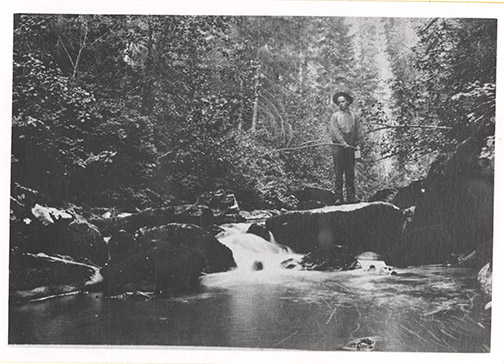
Carl Olson
Born 1895
Occupation: Thresherman; operator of gas station and car dealership; sawmiller; miner; Troy councilman for 24 years
Residence: Dry Ridge; Troy
Transcript
Sam Schrager: Not anyway.
Carl Olson: Well, you know, I wrote her adequate involvement. Oscar and the veteran Mr. Hilliard Newman, went hunting together and they went down to the Bear Creek Falls as far as five or six miles from home. He and they had single gauge shotgun, 12 gauge. My brother, I don't know what they had. And he shot one bird, you know, and then he put another shell in single shot.
You know, there was a big boulder and he walked on that bow learning and they hit the hammer in the boulder and he fell down in the creek. And my brother Adam was right back on the couch. You missed him and just cut about four or five inches long and about two and a half wide here. If the bear been found a way, would it killed him?
Because then they charge for the thread. But the devil was so close here that they loved, you know, the hell held the charge together. They didn't get down just red. He and that's what made such a long shriek.
Yeah.
Sam Schrager: So, what happened? What happened then?
Carl Olson: My roof had fell after Oakland Creek was running right below there. And involvement. And here we come home and all about stayed with him. But we thought he was dead because he fainted just as they left. But they didn't mention then when they got home. And then the first thing you know, you come with him and and the doctor come from the town the same time.
I don't know how they could connect. You know, she had Barrett Creek Falls, you know, our little various little buried around here. And right down there it's the falls and here, here. But we lived here for the fall. You carried him up, unloaded the bear, and then somebody must've went to try and hold a doctor to come up.
And how. How we could find where we lived. I don't know either, because there was no road. All right, But of course, you're going to have neighbors. And neighbors were pretty close. You came about the same thing.
Sam Schrager: Did you think one person went clear in the town? You were telling the kids that you thought maybe maybe they relayed the word.
Carl Olson: And had to relay them, but they had to go to the you couldn't holler where you had to go to replace every home, you know, with no telephone. Then what's a phone? Better name than telephone. And he's the one who got the doctor. He hitched it up cause I believed about four mile from town. I him. So he drove down there right away.
Sam Schrager: And so probably a couple of this. Whoever relayed the message went to Dan Charles. Yeah. Yeah.
Carl Olson: That's the way it had to get by those state and relayed to your neighbor. And the houses wasn't too far from the roads in those days, you know, And they built the road and you ought to be pretty close to the house. We could, you know, So they didn't have to walk Duvall to really anything.
Sam Schrager: So so your your brother was carried and they carried him. They they carry your brother all the way home.
Carl Olson: You know, the whole the way he carried it from about a half a mile. The road we lived here with a in the road common in road went around this way, in this way to get home. So they took the shortcut, carried him only about a quarter mile and then drove in four or five feet, you know, from the rock to the water.
And first you see.
Sam Schrager: Well, what did the doctor do when he got there?
Carl Olson: Well, the only one I can think of feeding me brought on was he certainly was Meat Slim was hanging. You know, he trimmed her off, taking clean. And then I believe he put sulfur on it and then they put a rag or and I believe we come back all the.
Once after that and more took care of it altogether. He kept putting on New. So you see.
How we got along. Of course it I don't know I was like some way when I was a kid. Everybody want me to come to their place in the state. We want to up me even and hated it. He had me there all the time. I'm the one that blowed the horn. I told you about that. And you scared the colors.
All we did.
Sam Schrager: Broke that story. Now I don't remember that. And yeah, I think you mentioned it to me once, but I don't.
Carl Olson: Well, I'm all hated it here is Dad lived in Louis and, you know, and he rode horseback down there. It took two days to make the trip, you know, horseback. So I was all alone up there in the house would do that. And I got saloons. I'm sitting there not seeing the lambs there. Well, well, shame. No, no on him.
And the cows come from all directions with their tails in their belly. And then you wish they couldn't get into the house because of the fence around. And then after that, I figured out why it was it was a disaster called, you know, the wild animals got bad years like we have, and we thought we were murdering in a recoil.
You know, the mad at the club that's I made a new.
Sam Schrager: Then there was brown, There was blood around.
Carl Olson: No, you know, but the better that we.
Got butchered home one time and New.
Butler, he made that same old sound, you know.
Sam Schrager: What did you do?
Carl Olson: What I.
Sam Schrager: Do with all the council trying to.
Carl Olson: Get out with that where they couldn't get in because of the fence around. They would have tried to get through the house and such board. Yeah. Then. So I missed it.
Because we used to go and get our cows on the canyon road and we were younger all out, you know, and we had to walk down steep hills and hunt them up and chase them.
Home. If I had had danced with them, I could have sent up on the side it and blow that never had come.
You know.
If you were a danger, what? Yeah. Yeah. Well, pretty good. All animals got a.
Call like that.
I believe I was out on fast.
And, you know, kings, they call here and I warned them.
You know, she.
Think in the wings that you couldn't fly. You jump on the ground and make an off on your record and you got to see the roosters.
Come in five or six and come through round. There were all that noise, the heat, there was a signal you.
Something like that. He says, you know, so I had to play. If I could make a call like that I can.
Go out and get a lot of birds. But no, I didn't think it was worth around there at all. Hardly even by four or five at least.
Roosters come from one place.
To see what was wrong.
And that's the way it is. But we're all animals.
But I.
I never did try the all and I used to find hunting and and deer quite a bit. If I had more ram I could have made. We called it the African deer to as to but I never used never man come to my mind.