
About the Digital Collection
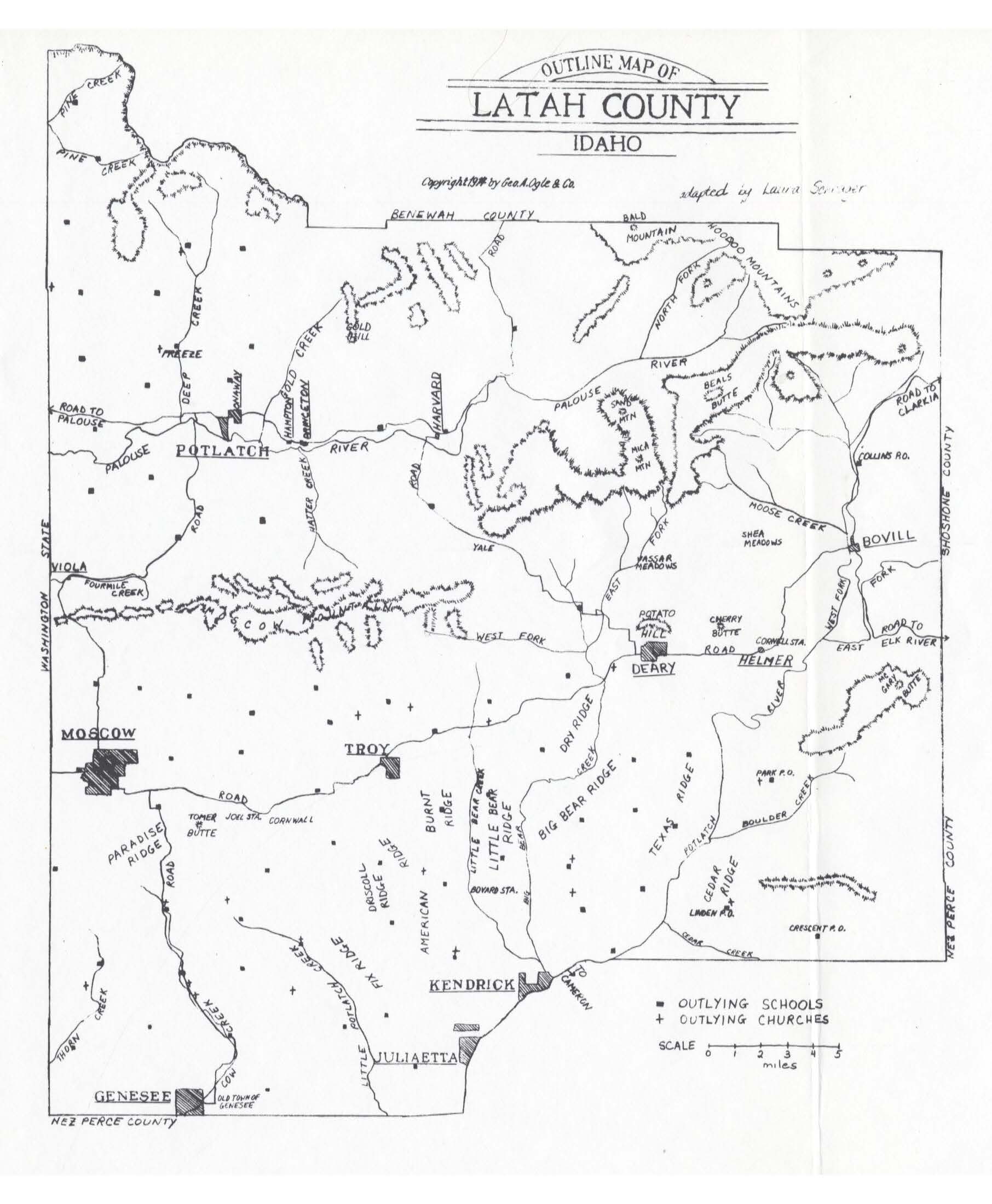
The Latah County Oral History Collection consists of audio interview recordings and transcriptions for over 300 interviews conducted during the mid-1970s. This collection is a digital representation of the Latah County Oral History Collection (MG 415), which is held by the University of Idaho Library’s Special Collections & Archives.
The site provides enhanced access to oral history collections through:
- Person Pages: Each narrator has a dedicated page that aggregates all their interviews, displays biographical information, and visualizes the locations mentioned across their interviews on an interactive map
- Interactive Transcripts: Full-text transcripts are synchronized with audio playback, allowing users to click any passage to jump to that moment in the recording
- Qualitative Coding: Interviews are tagged with subject codes from the Getty Art and Architecture Thesaurus, enabling thematic exploration across the collection
- Geographic Visualization: Locations mentioned in interviews are mapped with latitude/longitude coordinates, creating searchable geographic access points
Oral History as Data
This site is built using Oral History as Data (OHD), a framework developed by the University of Idaho Library’s Center for Digital Inquiry and Learning (CDIL). OHD is built on top of CDIL’s CollectionBuilder platform, an open-source tool for creating digital collection and exhibit websites.
Digitization Process
In the course of preparing this collection, hundreds of cassette tapes were converted to digital audio files, and the typescript transcripts for over 300 interviews were scanned and made full-text searchable. Staff and student assistants created detailed metadata files that included full-text transcripts, original timestamps, and synopses originally provided by the transcriber.
Credits
Editor: Devin Becker
Digital Production Managers: Kevin Dobbins and Erin Passehl-Stoddart
Student Assistants and Interns: Nate Sirdofsky, Elisabeth (Izzy) Martin, Elizabeth Biancosino, and Katrina Burch
Migration
In December 2023, the original LCOH site was migrated from the legacy OHMS platform to the Oral History as Data framework. This migration preserved all original content while adding new features including person-centered navigation, enhanced transcript visualization, and improved accessibility.