
Episode 44 : Diplomacy Item Info
This episode, titled “Diplomacy” illustrates the ways in which rangers worked to define wilderness policy by educating users of wilderness in order to give them an experience in an unrestrained area and yet maintain the pristine nature of this special place.
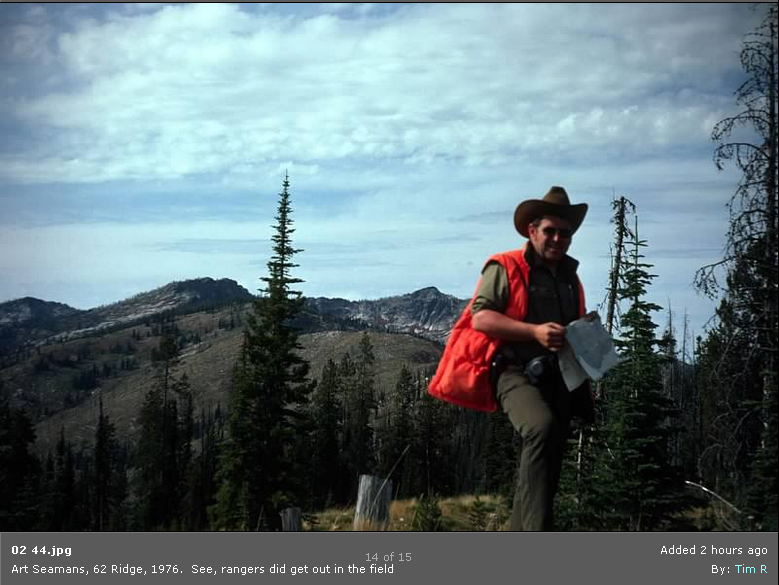
Art Seamans worked as the Ranger at Moose Creek from 1975-1980. He describes living with his family in a fourteen foot tent for two years so that another family with young children could use the ranger’s house. His daughter, Cindy Schacher has also worked as an archaeologist and historian in the Selway-Bitterroot area.
Audio Clip
Interviewer: Debbie Lee
Interviewee: Art Seamans
Location: Lewiston, Idaho
Date: April 28, 2013
AS: I guess I was what you could call a constructionist. That type of person in that I looked at the Wilderness Act and what it said, and I tried to gear my management to what the Wilderness Act said. The Wilderness Act said that the airfields' existence prior to use were okay, so, I wasn't anti aircraft. We tried to work with the pilots that came in and the people that came in and camped and again make them feel welcome. Some the pilots that we talked to before I got there they didn't feel that all welcome. They avoided coming up to the ranger station because everybody was kind of hostile to them, and we wanted to get rid of that hostility. To embrace these folks once they decided to come. But we tried to not be heavy-handed on regulation. I remember one hunting camp we had. I was coming down the Selway River by myself. I had a horse and mule. I came to a hunting camp that had just been left. The hunters had gone out, and they apparently had just gone out that morning because they had a big fire and the fire was still hot. It was full of garbage and they had tied their horses to trees and the trees were all torn up, and I found toilet paper everywhere around their camp, and I bundled up all their trash, and I called the Wilderness Ranger at the trailhead, and told them that these people would be coming out shortly, and they did, and they gave them a citation and I wanted to cite whoever the party leader was. I wanted to cite him for abandoning the fire, and leaving the trash out there. He was mad. He was angry. We didn't do anything wrong! But I brought out... I had my saddle horse packed full of trash, and I had my mule packed with a full load of trash, and so I had two animals loaded with trash out of that one camp. When I got to town, I called them, and I called the party leader. I said I got a deal for you. I said if you guys will give us an hour of your time, we'll meet with you wherever you want to meet, and I said I'll tear up that citation, but I need an hour of your time. So, they agreed to meet with us, they met out here at Jock's Spur at a restaurant in the back room of a restaurant, and we had a little dog and pony show that we put on for them. We had some slides, and showed them some of the problems we've had with hunting camps and some horses, and they sat there, and they expected us to sit there and chew on them and tell them how terrible they were, and we just said... tried to educate them about our objectives in managing the Selway Bitterroot and what a special place it was, and how we wanted to keep it that way, and I said okay, thank you very much for your time, and I gave him back the citation and I said, but wait I got something for you out in my pickup. So I gave him all the stuff that I'd packed out from there. The next year those guys came in, they came in to Moose Creek, they came up to the station, they said okay we're camped down here and we love for you guys to come down and have supper with us sometime, and see what we've got set up for a camp and after that they were good friends and they did as good a job as anybody out there in handling their stock and a clean camp. So, rather than running them away, and these are people who had been coming in there for years and doing damage for years, we were able to get our message across and they became part of the solution rather than part of the problem.
DL: Wow, what a great story. I love that.
AS: Those are the kind of things that we were trying to do, and that's when I was involved in, and every one of the Wilderness rangers did things like that. The rangers that were there before me and after me continued to try to make Moose Creek a leader in wilderness management in the country.
DL: So can you think of some more areas in which Moose Creek was a leader besides fire?
AS: Well in our dealings with the public we......in the wilderness system I think a lot of folks looked at the public as the biggest danger to the wilderness system because we are trying to keep it as pristine as we can and so all those natural forces to prevail provided particular kind of recreation experience. But we went into a program where we were trying to befriend....we weren't trying to bring use into the wilderness but once people made a decision that they were going to visit the wilderness we wanted them to have all the tools they needed to do it with as minimal an impact as possible so we had an education program going then, we had wilderness rangers that were in the field. We had the district broken into 3 different units with a wilderness ranger in each and his job or her job was to contact the people that were visiting that area while they were in the field so we had some accountability. But our primary emphasis was at the portals, befriending people at the portals...
DL: And what would those portals be in your mind?
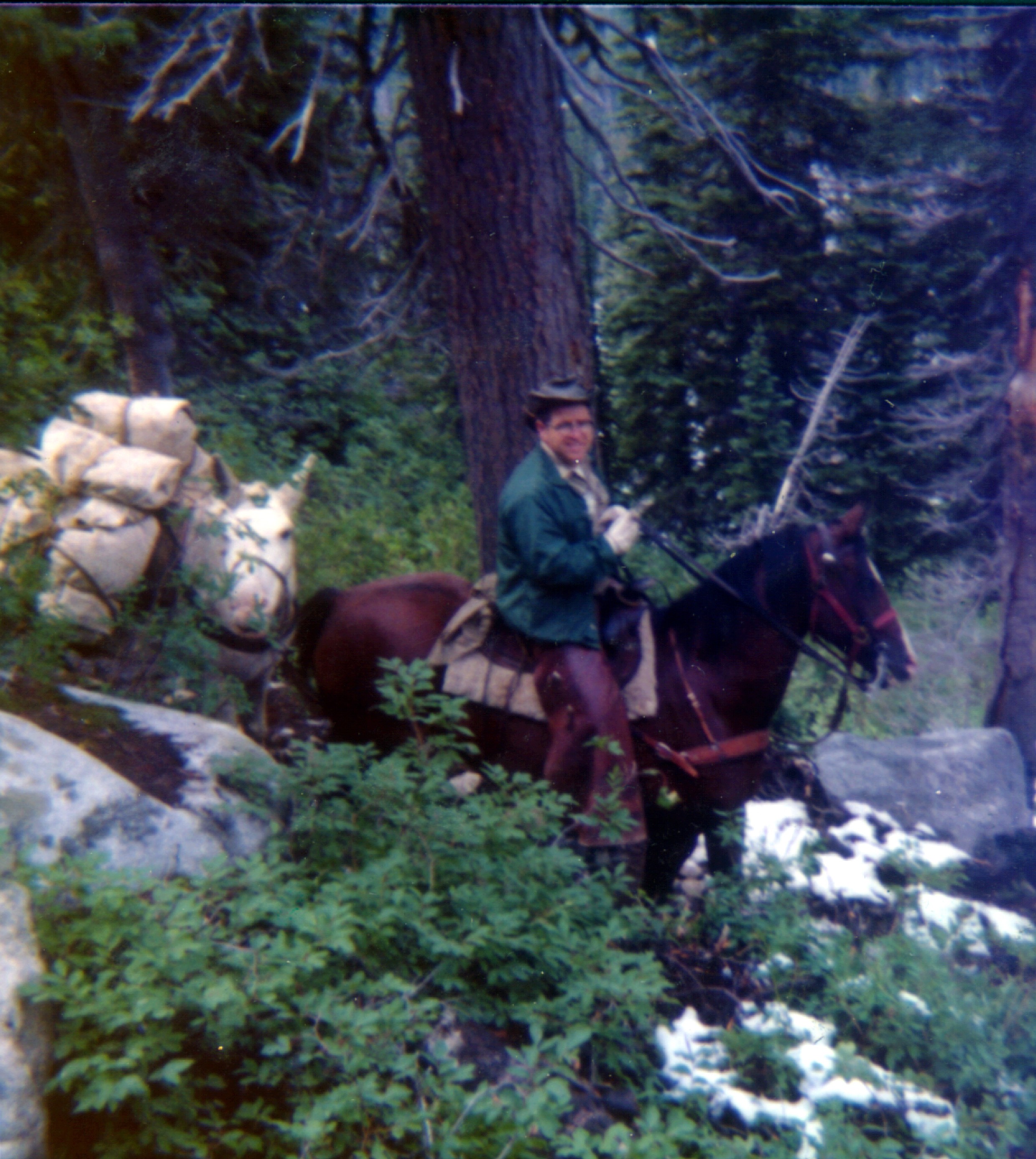
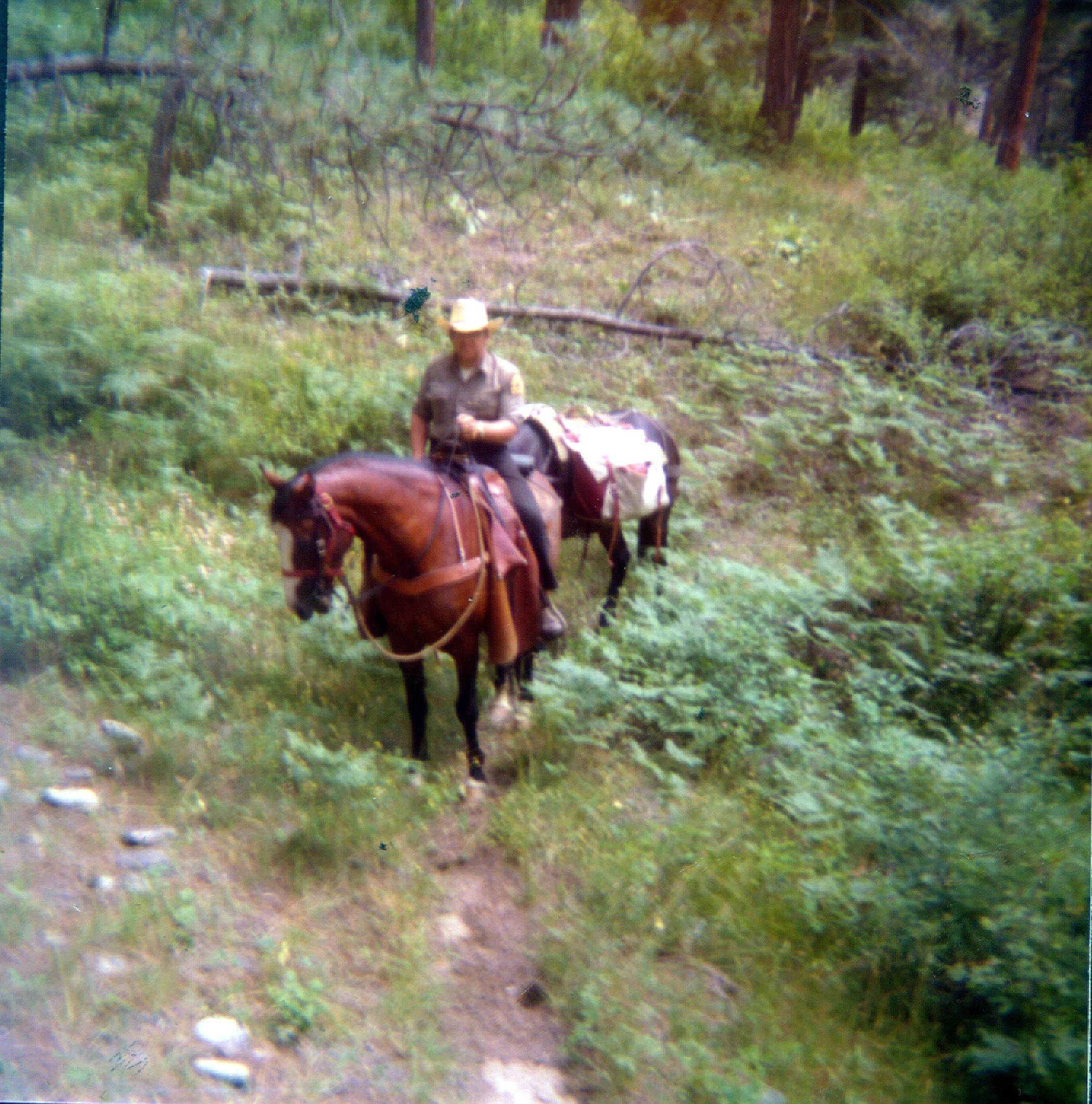
AS: Well the portals were Elk Summit up at Lost Horse, Moose Creek and Selway Falls. Those were the primary portals where we had staff and of course we had people on the West Fork District up at Paradise and again we were trying to provide people with information, we were trying to be friendly......we were at the same time trying to teach some different methods of using the wilderness that were low impact. We came up with a booklet that we handed out that had all kinds of interesting information trivia about experiencing Moose Creek, stories of Moose Creek, but within all those was the educational message on no-trace camping. One of the things we did, in the fall of the year for example, we had a lot of hunters. Hunters were the primary users in the fall, backpackers in the summer and to some extent floaters on the river. Although there are use levels because we were managing that river for a very low density of use. A maximum of opportunity and a minimum of regulation is what we were after. So primitive and unconfined and nothing is more confining than regulations. So we tried to keep the regulations to a minimum but the use levels were low enough that people could travel at their own pace. They didn't have to stay at a particular camp ground. If they wanted to do the trip in 3 days they could, if they wanted to do it in 10 days they could. Cause it was again, primitive and unconfined. But we wanted them again to know how to make that trip with a minimum impact. A lot of our impact was coming from livestock in the fall during hunting season so our wilderness rangers were out there with their backpacks, backpacking around the district and talking to these hunters that were there with horses and mules and the hunters would nod and say "uh-huh. ok." and then continue to do exactly what they were doing because the wilderness rangers didn't have any credibility with them. So we thought, we really had a neat group of people, the wilderness rangers, the whole crew, the trail crews, and then we had Emil and Penny Keck and Barry Hicks and Larry Cown as fire control people and Jim Bradley was my resource assistant in recreation and Jim was a very forward thinking person, a very creative person. We would get our heads together and say "Ok, we have a problem. How can we solve it? and we don't want to confine ourselves to policy and the way we've done it in the past we want it to look forward. How can we solve these problems in a creative but effective way?" The main thing was to be effective. So I decided we were going to put all of our wilderness rangers on horseback in the fall. So we gave them each a horse and a mule and they were dead against it. They didn't want anything to do with it because that horse and mule was more impact and they didn't want to make any more impact. I told 'em to shut up. We had a school where we taught them basics of horsemanship and packing and then we turned them loose out in the field. Well when they'd go into a hunting camp then, they'd come in with their horse and their mule. They immediately took to those animals and you couldn't pry the animals away from them by the end of the first season. They loved their horse and mule. They were challenged with the whole thing about packing. About how to deal with ropes, how to tie them to a hitch, how to do this or that dealing with packing so if they went into a camp and maybe one of the people there had a horse that was really outfitted well or a pack saddle that was really outfitted, maybe a fancy finish on a rope they'd say "How do you do that?" Well then ya know the hunter would just sit down and show them how he did it and pretty soon they were actually talking and they were communicating. We began to have a lot more impact as far as being able to minimize the impact of the hunters in the fall. We were also in the critical part of getting our outfitters into light-weight gear. We had some camps that were really elaborate camps where the equipment stayed year after year and they were really big, basically permanent camps. Al Defler actually started a process of getting them converted to light-weight gear. We did a lot of work with the Missoula Equipment Development Center on developing light-weight gear that these folks could use that would serve their need but was easy to pack in and easy to pack out so in the fall they'd take everything with them.
Gallery
- Title:
- Episode 44 : Diplomacy
- Date Created (ISO Standard):
- 2013-11-28
- Description:
- This episode, titled "Diplomacy" illustrates the ways in which rangers worked to define wilderness policy by educating users of wilderness in order to give them an experience in an unrestrained area and yet maintain the pristine nature of this special place. Art Seamans worked as the Ranger at Moose Creek from 1975-1980. He describes living with his family in a fourteen foot tent for two years so that another family with young children could use the ranger's house. His daughter, Cindy Schacher has also worked as an archaeologist and historian in the Selway-Bitterroot area.
- Duration:
- 15:40
- Subjects:
- 1964 wilderness act rangers river policy
- Section:
- Wilderness Voices
- Location:
- Selway-Bitterroot Wilderness (Idaho and Mont.)
- Publisher:
- Wilderness Voices, The Selway-Bitteroot Wilderness History Project, https://selwaybitterrootproject.wordpress.com/
- Source:
- Wilderness Voices, The Selway-Bitteroot Wilderness History Project, https://selwaybitterrootproject.wordpress.com/
- Original URL:
- https://selwaybitterrootproject.wordpress.com/2013/11/28/diplomacy/
- Source Identifier:
- Selway-Podcast-ep44
- Original Format:
- Podcast
- Type:
- Sound
- Format:
- audio/mp3
- Language:
- eng
U of I Digital Collections contain unique digitized and born digital archival materials in a variety of formats. The Library is committed to ensuring our resources are accessible to all users. Please contact us if you need support accessing or using this archived content.
Contact us about this record Library Help- Citation:
- "Episode 44 : Diplomacy", The Selway-Bitterroot Wilderness History Project, University of Idaho Library Digital Collections, https://www.lib.uidaho.edu/digital/sbw/items/sbw319.html
- Rights:
- Copyright: The Selway-Bitteroot Wilderness History Project. In Copyright - Educational Use Permitted. For more information, please contact University of Idaho Library Special Collections and Archives Department at libspec@uidaho.edu.
- Standardized Rights:
- http://rightsstatements.org/vocab/InC-EDU/1.0/