
Fannie Cuthbert Byers Interview #3, 1976
Description: Happenings in Viola community. Family experiences. (Interview donated by Marilyn Chaney.) no date .6 hr Marilyn Chaney
Date: 1976-01-01 Location: Fourmile Creek; Viola; Oregon
Subjects: families; women; logging; churches; fires; schools; childhood; food; sports; businesses; nurses
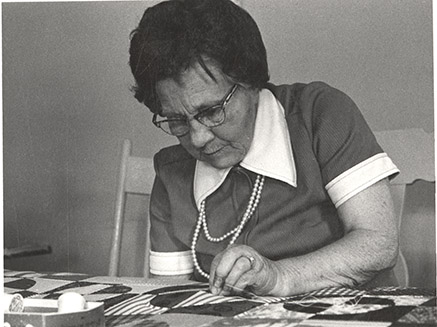
Fannie Cuthbert Byers
Born 1893
Occupation: Farm wife; pea processor; harvest cook
Residence: Fourmile Creek; Viola
Testing 1234.
Cookie.
Metal. Coffee. Were you born in Biloela? Right on this way. Do your folks home stand or no preemption? Got it from somebody who's mom from Spain. You could find.
On this place here, right? Yeah. I have no other name, people. Yeah. It was.
Damn. Sanders, old Bill Sanders. They are born.
Here. what year did you folks come here? We know.
Right before that.
About 88, we'll say. And what you're.
Saying you were born 93.
log house right down here in town. Was it the house on the right? I think it was.
How many children your family? Eight. went to school.
Right in Lyle and my school.
Level. what kind of school did they have on file when you went down there? Good luck.
All under one roof at all. Eight grade. do they have one Peter Green screen? Well, I think my first teacher was Peter Walker, but.
Then right after that, they had to read the older grades in order. And,
One of my sisters.
Was one of the first of his eighth grade. Graduated from the eighth grade, you know. All right, they just got it sort of system. Right. So.
they had all the grade, and that was Mr. Tom, Charlie Thomas.
And his wife, Todd, and, And it went just to the eighth grade. Bam, bam bam. How did you go to school?
Well, mostly on foot as long as the other kids went. But after they got big enough after high school, I was a little younger then. I had a hard drive because it was so much timber between here and my whole life, ready to go along. Well, this was the road in here. The iron ore. Yeah, road was here.
but this timber almost.
To the road. And what did you folks do? What do you do for a living? Well made work and law. And then Harvard. I think you kind of separated from Mr. Whitmore for 20.
Four years, I think. And think of it. Well, he's the old fella in town. Has to be 102 years old. His friend. Right machine. Oh, and he.
Ran machinery and my old appliances. And hauled bundles with them with the horses and wagon and broom. Our farm system.
Well what farm. was done. He cleared all this.
Land that's cleared. I don't suppose there was any cleared except just a little orchard when you come.
But there was some, you know, if anybody wanted to work, there was always selling the old every place and where they doing a lot of lumbering.
Yeah. In this area here. And, there's been a sawmill on every hollow up, you know, up in the road here. And,
Oh, well.
In 93, that was all the old people. I think there passed away now. But that was the wet year when they couldn't harvest their grain. It rained and they didn't get any harvesting done. That was the year I was born. But my dad said that was the best year for him here, because everybody had all kinds, and he could raise his cattle and get cheap seed because they couldn't, because they wanted to go trade it for work or trade for anything.
He had a post, drill, whatever he had. So he always.
Said that was a good year for him. In fact, I think,
Lumber was cheap and.
We had a big house here, that Bert farm where all of us grew up, you know, and the log house and then the big house and then this little house, which was named Fannie Davis Cuthbert. And he had three senior managers, Mary Commissions, and they come.
Across the ocean three times.
Come out and then back to come back. Where did they come from? From Scotland.
Or we got them. Did they come directly out? I don't know, they came a my father's folk.
Had come before and there was a sent from my mother and she come they were all raised in Scotland.
And come to Iowa and then they got so ahead, so many thunderstorms.
And, tornadoes and what have you, hailstorms that they come to Kansas. And then from Kansas, they came here. And my mother always.
Said she thought it was heaven when she got here. They didn't have so many different kinds of bugs and a few things, but I don't know. I've heard her say lots of times, if they'd had money enough to get away, they wouldn't say they didn't know where they go, but they, they, they went somewhere. So they had to stay because they didn't have any money.
Of course, that was the way everybody.
Was then they, you know, you didn't have so much money. nobody did that.
Like it is.
Now. So, do you remember when the church was up to file? And,
You don't have to remember.
What year in fire was being burned down? The original church. Yeah, I graduated from the eighth grade, and I was visiting my sister over at Sweetwater. Went and.
Getting ready to come back.
To go to school when I was going to school in Moscow. So that would have been when I graduated grade. So you can.
Figure real nicely about 14 years from 76. And what that means, let me get a part of that. And.
In fact, it burnt down. That was the FIR and the church. And I still have some. And then. Who have burnt twice that year. Then they picked up the church. Oh, they.
Oh, we were back in business.
Well, that for the in 62 years after that. And you know who burger. 0I0I mean that was a stinker boy side after 60 there were Germans s pto secretly I believe.
And they lived over across the road from Warren Hill over here. well, that's on the first cut off. you hear them? So why they burned?
Well, seemed as though he didn't want to go to school, but, and he had a stepsister and adopted sister. She work, and she was like, she saw the human hand, and I don't know, between the two of them, they got it in their handyman things. And, really, I don't think anybody ever quite knew just one. And then they didn't do anything with him.
But his father promised to take him out of the state. So he never lived here in after all the fires. Oh, he burned other thing he burnt some haystacks or somebody. And I've just forgotten who would seem to be a firebug, I guess. And so they moved away, and they moved up by farming and and the in later years, you know, he got married and my sister, who lives in Spokane now, met up with him one time up the lake.
Him and his wife was fishing. And of course she wasn't here when the fires were. He was grown up and moved away, but she remembered the name that that was the same and a very nice man he grew into. But I don't know, he just got an idea of burning and that's what he did. So he said, tell me about when your father was clearing land where they grew berries.
Yes. Put everything in strawberries. And that was the big crap of the year. I can remember. We always, Well, there wasn't too much cash those days. We could always trade the berries at the store or procure, anything in my hand I can remember. We can always, We'll everybody pick married. All the kids, those. They pick berries and always figured what we do.
And of course, when we hit the cabbage patch, why, we got a little extra. You know, from, besides what we pay, you know, when you needed clothes and things like that with the time of year, you got it. And very seasonal. Did you did you market you berries other than just trade them at the store or.
Oh, I think there was lots of cows. Yeah. They didn't can. And those days that seemed like, well I guess everybody is more, you know, selling just to local people are to know. Yeah. The stores in town close to Moscow. And then later when the vessels had very little, these smaller patches were gone and they didn't do that, but, that was had the big berry patches.
So whatever place even the folk came and lost in them.
Because the Lewiston Derek would be coming to see them. Pretty good market. And, this year, most of the shopping in Vail now or not. And then here it is. Yeah, I think so. Although I can remember when, when I was about in the third grade, this one, she was going to high school here and we all lived in town.
My, you know, from here to town was a long ways. Anyway, she didn't just happen to come get there in time. I can remember on Monday morning I.
To have that long. And I can remember.
Getting up early and my dad would take us all Monday morning in time to school in town, and then Friday night. Why, he'd come. Not every town then, but a lot of times we'd come home over the weekend. But that's how it's been those days, you know, to to drive. Well, it's churchyard road and mud maybe in the morning and the horses and sometimes you.
Couldn't hardly get along.
The road was kind of arranged into, old home, you know, had two seated. We have one, hip hop the to not. I don't think I had any problem later we had a buddy right across from not. And then, when I got older. By then, the boys had buggy. It worked out. Some of the things it could.
But Tim, then when.
I first started school, you know, while at one time had a three story hotel that, you know, that where, where and for us and, our mother used to have a room, a couple of rooms there, and we stayed down there during the week when we went to school, and I wrote a book. I couldn't get up here.
The snow got so deep and the roads were so bad that we winters, we winter down there. Wasn't that funny. Now that they could move there, then I can, What did you what did you do down there for your meals? Oh, we we had, I'm not going to be back there. We had housekeeping apartment, or we had a kitchen and a living room, and I saw the bedroom.
There was, Oh, there wasn't too many. There was a store underneath. And the corner had the store and the hotel. You could eat there, but we didn't do that. We had housekeeping rooms up there on the next corner. Oh. Oh, I forgot what it was. All three story building and the stable referred to the house. It was a play by the state, their family.
And I said, we only read from the home, and, there was none where I suppose I could be a traveling salesman in the hall. But there was a doctor who lived in by, his leg, and her head was kept in a stable. The economy's about.
Oh, year old, not Farnum mine.
And later he moved to coop. There was another doctor there in Violet for a while when I kind of forgot his leg cut.
oh. That wasn't the same doctor. I had my medical, but I forgot my name. How do you like when you were growing them?
Say that they believe were one of those things that the horse was going around and around, and he got on her. He and and my both my my mother says that I better not put them on here, that the doctor was a little bit know you don't need a ride. Oh, no.
I thought he was.
A little bit food. And his mother, his mother and my mother always thought that he put on her were the best leg. It looked the worst to him, I suppose. They were both amazed. And that it's only, you know, the doctor. Probably the.
Well, I think it needed to be drank a little bit.
And of course they would think bad things. I think they,
Remember who ran.
Well, I would imagine that the man that, ran the store. No, I don't know. I just don't remember that it's possible that coma run or his hired man or something. Run that along with the store and say, oh, I just forgotten. Do you remember when they, the young, male, their vital food to them to grind for him?
I mean, I remember, I mean, he mentioned, but again.
do you remember female being in violent, a female really grumpy.
I don't, but there was a sawmill right up that way above the grave. How I can remember that.
Where I think.
Somebody had told that there was. And no doubt there was. I. You know, may have been trying to come here. I was I never was at the school, but they had school up on the level up, you know, up where happened later. That's where I, the academy was in the school. They had a boarding school up there, you know.
Well, never had heard that. Well, I reckon you got it quite a while ago today. And, it was a boarding school. The kids come from different, but but it goes back to. Yeah, that's why they were settling here when they came here from all around. They were supposed to have, some sort of,
Shop or not have house before they would make cereal, you know, like oatmeal.
And all that cornmeal. And so they sold little places. You know, when I was growing up riding horseback or a house on the real, you know, you remember some of them or the. It would. And they sell little acreage to people. And they were supposed to furnish some jobs, you know, and it never materially for some reason I don't the world so they just, as time went on and no work, they did move someplace else.
But at one time it was quite a big school up there and quite a settlement around here, cause.
They worked at.
The mall, the main, anticipating, work in the factory or whatever it was. Yes. They and they moved here, but it never didn't realize why, I don't know. So about what time where that was.
Would have been.
About, Oh, a little left about 55 years. And, you know, as I was growing up, probably. And, but I don't know why they never did get there, but then finally bought a lot of land and lots of school land. Well, it moved down on the road there and they kind of moved. It got so few, so few scholars that they didn't have a boarding school anymore.
So who were you neighbors back here when you when you all. When you first you. Oh, yeah. When Well, there was.
So many about at one time there was about half a dozen kids would walk.
To school with me from the, whoever down the old US right. A family with the name of grass. And they had a big farm in Utah. Oh, go ahead, count me. But, Oh. Let's see, I can't remember. As time went on, there would be them houses built into it. Now where? On, on beneath layer. I think that house was built across the road three or.
Four times in my life of built down where they got it, man, and moved up across road.
And then moved back to back, I don't know, maybe about 510. and finally and they bought it for the real Christopher. And he had these he used to sell a lot of money to, of, I think they came to work where a lot of these things did work. While.
In one of them didn't in Wyoming. I remember. When you down there. Well, when I was growing up, he had, I guess they called it the pool hall. It was it was just a little by the, livery stable.
There, working with my.
Bosses about where they played time. And I suppose they again, was my rock paper, too.
So all of these.
Poor families were. And then there would be times when everybody would get, I don't know. Now everybody's so busy. There's so many different things. Well, then there was a mr. Manson would run the sawmill.
Probably, forgive in the spring and in the fall. Well, everybody would work there.
Then when the mill shut down and a law to do so. I think a lot of people played cards for and, I remember anything or. But down there.
There were a little.
Bit where there was some, there must have been a claim mill or something. Name mine. I can't remember. Must do. And the baseball park was just about where,
Virgil and I lived there no more than a flat. That was a big time. Or whenever they had the ball game, you know, the 11.
Oh, yeah.
Oh, yeah. That's what you would hear. Oh, well, that would have been about that would be it. Probably in the 2015 that 30 all in. Yeah. Yes. still game. It was a great club or a pretty good you know. And a few of the others were pretty good. But even before that happened, the Boulder boys were young and old, and Archibald, that would be good kid.
second generation, almost from the old man. Those come here. What? I like. And his wife. I didn't even think about it. He had had a nervous breakdown, and that's where he was. And then all of a sudden, he got a home. He had these two older boys asking for. And then after he got home, I remember when he brought her home, and then he had a hired woman and he had all these kids, you know, maybe.
Oh, what? The one who just maybe in to a three boys and, he was the last. And then there was.
1 or 2.
In between. I heard she had one in the asylum that somebody about that because of something in for them. And I got a claim for who? Middle of the road where I guess most everybody goes to find and done. Okay. And I can't think of anything that only, What, what kind of a life. If you know him, you can, you can tell me everyday was like, yeah, you know, I think he did all, like, every.
No, but I think they enjoyed life pretty much. They just did around and know the women would congregate at somebody's house and then like, movies and then I do remember, I can remember of walking home meet along with little, you know, little kids was on the Harrison girl. Mrs. Harrison took her when her mother died. You didn't know that.
Well.
She did, she thought somebody had to take. Her mother died. She was born. And, somebody had to take her for a few days. And, you know, during that, Bill Nichols's mother was still in good hands to establish. Their mother and father lived up on the hill above, Byron Jeffries right up there, that old women had been up there a lot of times that women would go on, and we used to walk there and stay for dinner.
my mother and, I mean, I play with lead all day, and, they had them in the middle some fighting part of the day, you know, like we do nowadays.
But they didn't visit.
Any in the winter. Mr.. I was married, and even before people, we used to have the parties and the houses and dances and play cards and have a good time. Didn't have to, ready to feel like, you know, I either probably having car that ride and I make your own in.
Although they do.
Say that, talk about the good old days, but really, I don't think there was a good time to their name, but that if my or, lots of people saved and maybe some, you know, every time has existed and all that and I guess maybe we had this big baby now all over. But I like about my.
Well.
Like, you know, these on me, like it wasn't there. Everybody was kind of in the same. Oh, you know what they did? You might not have had much to do.
You know.
You didn't have to keep up with the Joneses. instead you rest. Oh, no. Cumulate, I think. No, I think, that was different. That is true. And, Oh, I don't know of late, I think. And if you say just to make money that, you know, well, maybe the person that wasn't satisfied with that would make you take your money.
You know, you have to remember what if your family didn't work out what wages were about around in, when you when you really don't. But then I know it's called the grade.
You can be separated. And I know.
When I went first time, I went with a good pair. Let's see, I got about $5 and it was off. What what were you doing? How things work at what? I mean for the tell the everybody there has an accuracy. The. Oh, I mean, I could have traveled along in one field to another and they always had to cook, or cook or
Oh. Well, sometimes they could have put a manager in for 40, like. Oh yeah. To whoever owned the definition they had to cook off. That went right. When you're out making room, couldn't do that now. And groceries are so high that we used to feed them good. You know, and the other thing about it, and even the horses, you know, that, one thing when I was, oh, have them tiny horses, little more money.
How many horses would be that outfit? Well, it seems like then, after growing up so high, they thought, couldn't afford to keep them warm and not heating up off more than the grain. but about that time, it was a lot tougher for them. All the things that did it required horses. So everything had been there was not enough for that cooking.
Everybody had gone and then some of the crew and the crew and most people, there may be horses. So I would kill you and or had you only that man and the got along with your army, even the people who had been coming who know that. Right. how you. Oh, they would come out on the other side of Moscow and the herd on the, different places that you would go over here.
Well below the ram, the place we called it, the old place they rented that, you know.
You get up on.
The mountain and you look down the potter's lane and the mud brick place, and then the rock, right. All on that, road there. That's on the map. where? And the, marshes were all musicians. They played for the before they moved here so that, what happened? and, at that pearl. Well, I just think of that because it was at that time we had the, cradle and, you know, you had heard about that really bad thing went on that the, know, not what I, what made me think about the people who lived in the middle house of their the lightning struck the telephone.
And then I forget one man that field, the other, talking women on the phone.
I just almost forgot the tale.
In fact, I think there were two, because I could remember they had been hit on both. And when laid down near the, camp in here for, you know, pulled out the way the lightning, I don't know, I forgot, and I can't tell. It looks like it was, but that was shortly after the night the moved over there.
And,
Well, did you have your home?
Or and work in the works a little. We my kids was raised born here. Her neighbor, Jerry Taylor. My my folks here, we live there most of our married life.
And I, his sister, went to Coos Bay. We went to the Hudson River cruise. They after she finished high school. And she went down there and, to take care of her sister when their first baby was born and adopted folks to to come to the hospital so that her she had to be a nurse here and, you know, held him through the World War one disabled nurse who.
so he was down there and married down there. So he wasn't up here. There until about 40, then finally moved up to Walla Walla.
And then when I was he come home here to help take care of him, her husband passed away. Then. So then she was saved. So I have lived with her, on. We've been together last 12 years, but there's probably 20 or 30 or 30 years in between there that we were together. Yeah. You during World War One.
Education and training. Because you she took part of it and then got married and then unsuccessfully for a while and she went back and finished up the crew. And for her look in that letter and then live happily ever. But he was a, you know, again. so who graduated from. who went back there, had a little sister who lived in Portland, but it had changed.
So she couldn't, you know, halfway through, she couldn't do the. So we growed up, I mean, build up, go around the community.
So our dad.
Lived in Germany on the war and up to about 85. but he know for one month of the year, 90 900, and our mother lives to be in Germany, too, in 92. And, she was. I guess I wasn't big enough then, but she put her in another one and used to walk up to grandma. Came and took.
Quite a long way to go.
Across the ground.
Okay. And you never thought a walk a mile? I walked around, apply, go down to Sunday school in the morning with somebody on many a long walk back from your brother and the. And you remember in Danville, you. Well, I don't know what the endeavor meant, but that was the one people my contact with the youth group. Yeah.
I. So and another thing down there in front of, you know, her down the track. And my lady, but from what you. Hey, hey, I was going to call those who it where there's a family lived there that had quite a few kids. And in the spring, we used to have, have a room and a half a pound in front of the house.
That's how big the creek used to be. Oh, and in the spring, it would get so big we had a to go to do our house.
And now you wouldn't believe it.
But these little guy who, we. And who's going to get so good and for my, you know, my sister Brown and for my. Baby, for the McCoys, you know, you know, the two Hill Creek. Yeah. So. But so, when McCoy come here and she brown some place, go home and found the body way down a little bit.
From who? Who, Oh, maybe not even maybe five. Two. Little girl playing a worm kind of across the screen on a board or something. Like that. You know, where the farmhouse could have used to be? Or do you know, I don't really where the Parker where, Who? Oh. Right. Who where that. How?
Interview Index
Born in Viola, parents moved to Idaho from Scotland in 1888, had 9 children including Fannie, bought a homestead from the Sanders family; she attended school in Viola and Moscow.
Her parents were David and Mary Cuthbert; her father logged and harvested, cleared land.
The 1893 wet harvest that devastated so many families was actually good for her family; he raised cattle that could graze all over, feed was cheap.
Her parents moved from Scotland to the United States three times, lived in Iowa, Idaho.
Fire set by teenage boys burnt down the church and schoolhouse; boys set other things on fire purposely.
Her family grew many strawberry patches, both for food and used to trade for goods in the summer months, saved up to trade things when prosperous.
Buggies with tops were a big deal; Viola had a three-story hotel - her mother used to keep a few rooms there in the winter months during the school week, so much snow they could not travel back home during the week. Housekeeping rooms allwoed them to prepare food and not eat out a lot.
There were two doctors in Viola, Dr. Barnum, and another doctor known for helping a man who cut off his legs accidentally in a feed grinder.
Sawmill was nearby Viola, employed most of the town. Boarding school up on the hill, later moved near main road.
Pool hall was really a shack, livery stable, some gambling. Sawmill kept people employed in spring and fall, people played cards in between.
Women would congregate at someone’s home, parties, playing cards. Stories about Harrison family. Talk about the old days.
People didn't keep up with the Jones's as much as they do now; people didn't accumulate so much stuff.
Fannie received $5.00 per day as a cook (not good money), she traveled around with threshing crews and took care of horses. When feed got too expensive, tractors were being introduced.
Met her husband because his family farmed on other side of Moscow. Train went to town then. Story of man being struck by lightning. Her husband worked in the woods and as a farmer.
Her sister was trained as a nurse locally who moved to Coos Bay, Oregon. Her sister met her husband there before she traveled to France during World War I. Didn’t return to this area until 1940, moved to Walla Walla after husband died. Father lived to age 99, mother to age 92.
Stories of neighborhoods kids, used to have a raft to get over the creek in spring. Two small girls died near the creek when she was a child.