
Description: Ignorance vs. independence for young women. Children's lives and troubles. Difficult marriages. Pioneer sickness. Nez Perce myths. Bedtime stories and lullabyes. 7-3-75 1.7 hr 25p
Date: 1975-07-03 Location: Moscow
Subjects: women; mansions; professors; clubs; local histories
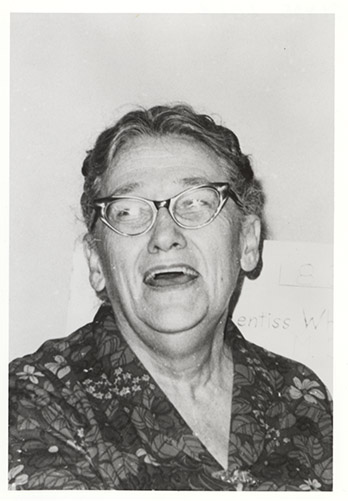
Lola Gamble Clyde
Born 1900
Occupation: teacher; farm wife; local historian; frequently addresses groups and aids researchers
Residence: Paradise Ridge; Moscow
Topics:
The colored topic bar is hidden for screen reader users. Use the topic buttons below it, the "Filter by Topic" menu or the search box to find specific content in the transcript.
Lola Gamble Clyde: And about, the farmer that had such a wonderful crop of wheat in the field, just bushels and bushels as the loviest wheat. So he went out and he had to bind it, of course, and then he had to shock it and he had to haul it into the Thresher machine and the Thresher machine, Thresher machine, Thresher machine, three or four weeks, and there was just all bushels and bushels of wheat. And so they put it on the great elevator. And after it was stored in winter came, and it got cold, and the mice moved in from the field. And one mouse came and carried away a grain of wheat. And another mouse came and carried away another grain of wheat. And another mouse came and carried away another grain of wheat. And it went on and on and on. Soon you might get the elevator emptied if you didn't get the children to sleep. But then you see in the meantime the farmer had raised another crop of grain and they went out and started all over again. And the kids were to sleep by that time. You just got them all out of bed and gave them a spank and went out and shut the door.
Sam Schrager: How many times would that work?
Lola Gamble Clyde: Well, it generally worked. Of course, the other story they liked was the story about why cats and mice are better enemies. And it went like this. A cat and a mouse lived together in the same house. And they had a lovely little cow up in the deep woods. And they would milk the cow and take the cream off the milk and then they'd churn it into lovely golden butter. They had so much butter they said, let us put some of this butter away for the winter. So they got out a nice stone croc and they packed down the butter in the croc and they took the croc way out into the deep forest at the foot of the tallest tree so they could find it again. Here they dug a big hole and they sunk the croc of butter down into the ground. They covered it all over with dirt and then they covered it with leaves. They said, we'll just let it stay here till winter when there isn't any grass and the cow was dry and we don't have a bit of butter. So they skipped home as hard as they could go. So the days and the weeks and the months went by and after a while, why that, that mouse got the thinking drop. Oh, how good some of that nice, very sweet butter would taste. So finally one morning he went to the cat named the Mr. Cat. My sister's daughter is going to be married today and I must go to the wedding. Oh, very well said the cat. So away the mouse scampered through the deep green woods till it came at last to the tallest tree. And here he took off the leaves and he took off the dirt and he took off the lid and he ate and ate of that butter till all the top was off. Then he put back the lid, he put back the dirt, he put back the leaves and he skipped home as hard as he could go. And the cat saw him coming.
Sam Schrager: And the cat said, oh, what?
Lola Gamble Clyde: Home so soon from the wedding, Mr.
Sam Schrager: Mouse?
Lola Gamble Clyde: And I said, oh yes.
Sam Schrager: Did you have a good time at the wedding?
Lola Gamble Clyde: Oh, excellent.
Sam Schrager: Was the bride beautiful?
Lola Gamble Clyde: Very beautiful.
Sam Schrager: What was the name of your sister's oldest daughter?
Lola Gamble Clyde: The mouse thought a minute and he said, top off. Oh, said the cat, what a very strange name your sister's oldest daughter had. So the days of the weeks and the months went by and British and the mouse just couldn't stand it any longer. He just had to go back and taste the more of that good fresh butter. So once again, he said to the cat, Mr. Cat, my sister's second daughter is going to be married today and I must go to the wedding. Very well said the cat. So away the mouse ran through the deep green woods till it came at last to the tallest tree. And then they ripped off the leaves. He dropped off the dirt and he took off the lid and he ate and ate and ate of that good sweet butter till it was half done. Then he put back the lid, he put back the dirt, he put back the leaves and he ran home as fast as he could to their house. The cat saw him coming. What, Mr.
Sam Schrager: Mouse, are you home so soon from the wedding?
Lola Gamble Clyde: Oh, yes, said the mouse.
Sam Schrager: Did you have a good time at the wedding?
Lola Gamble Clyde: Oh, delightful.
Sam Schrager: Was the bride beautiful?
Lola Gamble Clyde: Oh, very beautiful.
Sam Schrager: What was the name of your sister's second daughter?
Lola Gamble Clyde: Said the cat. Again, the mouse thought a minute and said, well, her name was half done. My, said the cat.
Sam Schrager: What strange name is your sister's daughter's do?
Lola Gamble Clyde: Had top off half done. So the days and the weeks and the months went by and once again, the cat and the mouse thought, I must have some more of that butter. I just can't stand a minute longer. Once again, he said, Mr. Cat, my sister's third and last daughter is being married today and I must go to the wedding very well to the cat. So way the mouse ran through the deep green woods till it came at last to the tallest tree and here he reached off the leaves. He took off the dirt. He took off the lid and he ate and ate until the butter was all gone. Let him put back the lid and he put back the dirty, put back the leaves and he skipped home as fast as he could do the cat. Cat's often gotten back Mr. Mouse home so soon from your sister's daughter's wedding. Oh, yes, said the mouse.
Sam Schrager: Was that, did you have a good time at the wedding?
Lola Gamble Clyde: Oh, very fine time.
Sam Schrager: Was the bride beautiful?
Lola Gamble Clyde: Very beautiful, said the mouse.
Sam Schrager: By the way, what was the name of your sister's third and last daughter?
Lola Gamble Clyde: The mouse thought for a minute and then he said, well, her name was all gone. Oh, oh, said the cat. What very strange names your sister's daughters do have top off half done and all gone. Well, the days and the weeks and the months went by and winter came on and the snow blew and it grew cold and the little cow could get no more grass and she dried up and there was no more milk, no more cream, no more butter. Then the cat got to thinking that delicious fresh butter that was hidden deep in the hole in the forest. So he said, now, Mr. Mouse, this is what we've been saving all summer for was against this day of cold. We will go out to the deep woods and get some of that nice, fresh, sweet butter. So they went out through the snow and the cold. They came at last to the tallest tree and they raked off the snow and the ice. They raked off the leaves. They dug down through the dirt. They took off the lid and behold, the butter was all gone. And then the cat said, Oh, Mr. Mouse, now I know why your sister's daughters had such very strange names. Top off half done and all gone. You wicked cat, you wicked mouse, you, you eaten up all the butter we saved for the winter. Now I shall eat you. And he did. And ever since then, cats and mice have been very bitter enemies.
Those were good old time stories to tell the kids.
Sam Schrager: Where did you hear that story from? Did you tell were you told that story when you were young?
Lola Gamble Clyde: Well, no, I think it was in the old time reading books at school. But that's a good story anyway. It teaches you to be frugal and saved against the cold winter day. You know, and not to be lying to other people about what you're doing because you got caught and then he got eaten. You see, so that was very wicked, very wicked mouse.
That's a good story. I do too.
I think that's a good story.
I love ghost stories for kids.
Sam Schrager: You know any ghost stories if you told kids?
Lola Gamble Clyde: Oh, I am. I'm not so familiar with the ghost stories that I think back in the old days, we all were brought up on Little Red Riding Hood, you know, and and the Wicked Wolf and that sort of thing. And they weren't the modern versions. They weren't the modern versions either, you know, but they were the old time stories. And Jack and the Beanstalk and stories of fairies and dragons. Grimm's Brothers Fairy Tales was a favorite in all the early days. And I think that was certain folklore handed down through them. Through the ages and many different versions of the Hansel and Gretel story. And they started as folklore that came down through us and all the stories of Robin Hood and his Merry Men and Sherwood's Green Forests. They started as folklore that were passed down in varying forms. Even the stories of the Knights of the Round Table and the legends of King Arthur. They were passed down by word of mouth for many, many centuries before they were finally written down into written form. But they all symbolized the stories of adventure and the things we would like to happen. And they painted good ideals for people. And in all the early cultures, there was that desire on the part of the folks to train the children in good ways. Right here in our own neighborhood, the Nez Perce's have many interesting stories and they use them like we do Aesop's Fables to point good lessons to their children. And they have a very interesting story of their own creation. And I tell this a lot to the school children because it shows how all of us have to have satisfied our curiosity of how we came to be here. And the story of their creation is that long before there were any people in the world, all the world was ruled over by animals. And the king of all these animals was old Coyote. And he had been chosen because he was the shy of so sly and so cunning he could outwit all the other animals. So he was chosen ruler. And of course, Coyote Great bears that name. And the story is that one day he was down along the Salado Canal, which was there. Heritage fishing ground from time immemorial. And he looked back up into the beautiful Kami 'i country. And it has always been considered the heart of the Nez Perce country. And we saw the mountains shivering and the trees crashing to earth. And the lightning was flashing so you could see it clear down with Solano. And a great thunder was roaring and filled the valley with the noise. So old Coyote said something terrible is happening in my animal world. So up Columbia, up the snake, up the river, man, they came at last to the beautiful Kami 'i Valley. And there in the valley, a huge dragon and the tail was so long it reached clear up to Cuskey. And the tail was threshing around and knocking down the trees and the mountains, causing earthquakes. And the roaring of his voice in anger was the thunder that filled the valley. And the lightning that was flashing so far away for miles was the anger flashing from his eyes. He had a long tongue and on the end was a suction cup. He'd dart his long tongue out and into his great maw he would suck all the animals of the world, the deer and the elk and the bison. Now, as we know, old Coyote was very, very smart. So he sharpened his long flint spear and he let the old dragon take him down into his maw. Once inside he hiked away at the dragon's ark till he killed the dragon. Then he sharpened the knife and split the dragon open and out walked all the animals of the kingdom again, free. Then old Coyote took his sharp knife and he cut off the long flat head of the dragon. He threw it out over the shining mountains and this became the flathead Indians. Then he took the sharp knife and he cut off the little short black feet of the dragon threw them over the shining mountains and maybe came the black feet Indians. Then he took the bitter gall of the dragon and from these he made the bitter watering Cayuse Indians. But lastly, he took the heart and the brains of the dragon and from these he made the Nespers Indians. And that's why they were the bravest and the kindest and the most hospitable and the most intelligent of all the Indian tribes. But and Lewis and Clark build that out in their diaries. He said the Nespers were the most intelligent and the kindest and the cleanest of all the Indians they met on their trip and on. Old coyotes hands were a few drops of blood. So we washed them in water and he sprinkled them up and down the Clearwater Valley and up spraying the little cows plant to feed the people that he'd made. But for the gizzard and the liver of the dragon, they couldn't make anything. So he left them lying there in the valley and there are two huge rocks there about as big as every size room that are called. Some people call it the heart of the dragon. But if they made the Nespers out of the heart, it must be the gizzard. Gizzard and the liver of the dragon are still lying there for all the world to see. Now the Nespers used fables to teach their children just as we use a sub fables to teach hours about slow and steady wins the race and the crow and the pitcher and various ones. Whenever they saw unusual rock formation, they would make up a story about it to explain how the rock formation got there. And the entrance to Hackway Creek is a huge rock and it's about the size of an average room and on the back a great clumps of rocks that look like warts. And this is called the Old Toad Lady of Hackway Creek. And the story is that long ago there were many fish up Hackway Creek, but the old lady wouldn't let anybody throw up there to fish, but just herself. And there were many deer that grazed along the walls of the canyon, but nobody could get a deer but just herself. So old coyote said, you're a very selfish old lady. I'll turn you in to the Toadwoman of Hackway Creek and you can stay right here at the entrance and guard it for all eternity. And that was a lesson not to be so selfish. Come on in.
Sam Schrager: How are you, darling?
Lola Gamble Clyde: You've got your recorder going. Well, I can tear it off. Yeah.
Sam Schrager: So were you first found out those stories? Vanessa's first stories?
Lola Gamble Clyde: Well, my brother Gus here and his other brother farmed lots of Indian land. And these were quite word of mouth stories among all of them. And I knew them long before they were ever written down. In fact, we encouraged Wilford Half Moon and those kids to get them written down that they should do it themselves. So they came up here in the upward bound program, which my daughter Isabel heads. That's when the first things they did was got out the little book of Indian legends. And it has received very good. It's been well received and they it's paid its own way in the end some. And that was a good thing to do because it gave them pride in their own heritage. And as we had told had told our children and had been told by our parents, the Ace of Fable stories, that was the way the children there were instructed. And it's a good it's a good way.
Sam Schrager: Did you know, did you hear from from them any stories about what happened to kids that weren't good kids?
Lola Gamble Clyde: Oh, yes. Kids that didn't mind they were there were all kinds of bad things happened to them. They disappeared. Old wolf women would come and get them and so on. I am I was going to show you my picture of the sleeping warrior. Nearly all nearly all communities have on the hillside and on the horizon sleeping warriors of some kind. But this one was a little unique in that it came and it went and this right where the where the state highway goes through across from Hatway Creek against the mountain lies this sleeping warrior figure. And you can see his his neck and his chin and his mouth and his nose and his high forehead and then spilling down over the rocks toward the river. Fall big eagle headdress of a chief. And the story was that the great spirit had promised the Nez Perce people a leader who would rise up in their hour of greatest danger to protect them. So the story was when they were ordered onto the reservation. Young chief Joseph came among them. And of course it was he who took the women and the children and the aged and the wounded out over the low trail to his ultimate defeat and surrender at the Battle of the Bear Paw within less than 50 miles of the Canadian border where he had hoped to rendezvous with Custer was not with Custer but with the sitting bull who had just defeated Custer at the Battle of the Little Bighorn. He'd already gotten away in the candidate. Well he was within less than 50 miles 35 miles maybe the Canadian border when winter rather than the white men overtook him and he made his famous surrender speech. And of course he and his followers were sent down onto the Oklahoma reservation where over half of them died with malaria. And then he was sent to the Massphalem reservation where he died in nineteen three. So all these years that Joseph was gone and while Joseph was there to lead them. What the figure was gone from the mountain and it wasn't until he died that back to the hillside came the sleeping warrior and there he lay. And when I was on the board that established the Nez Perce Park down there we talked then to some of the Indian leaders did they want the bones of chief Joseph brought back and buried there in the park. I said oh no just leave him where the white men put him. He's right here among us and if we ever need him again he'll come down off the mountain and lead us. So our sleeping warrior differs from most of the sleeping warriors because the sleeping warrior comes and goes. But so far he's there.
Sam Schrager: Did people really report that he disappeared?
Lola Gamble Clyde: Oh yes he wasn't there. And it could be that the weeds had grown up you know or the topography had changed a little from growth of things.
Sam Schrager: What period of time he wasn't there during the time that he was leading?
Lola Gamble Clyde: And that's right he wasn't there. And it wasn't until he died that he came back. He died in nineteen three and of course the Nez Perce War was 1877. Seventy seven. Then he bought thirty six years that the warrior was gone and then back he came and and that's one of their traditions and right underneath the sleeping warrior are two snakes locked in battle. There are black marks across the canyon and one of them is a rattlesnake and the other is the bull snake. And the story is that they were locked in deadly combat and old coyote came along and he said oh my this is utter futility. The bull snake has such a big mouth he can swallow the rattlesnake all the way down and the rattlesnake has deadly poison in his veins. He could sting the bull snake and kill him once he was swallowed. So they both be dead. So I'll just turn you both into rock and you can be a lesson to the people to try and get along with each other because nothing is obtained by quarreling and fighting. You'll both be defeated. So there there stands the bull snake and the rattlesnake as lessons for the children.
Sam Schrager: Well do you remember any of the lullabies that the pioneers used to tell their kids?
Lola Gamble Clyde: Well let's see. Oh I think most of us heard Rock -a -Bite Baby on the tree top when the wind blows the cradle will rock when the bar breaks the cradle will fall down will come. Baby cradle and all. And of course that was taken from the Indian lullaby and that was that was a good one. And and I can remember them singing. Brahms, lullaby, lullaby and goodnight you know. And that's a famous one.
And and I've often heard by baby bunting, Daddy's gone to hunting, gone to get a rabbit skin to wrap the baby bunting in and that has a nice rollicking tune.
And I've heard the C1 about a five sweet and low song many times and in our own local community the Scandinavian people had brought their own lullabies with them with their own Scandinavian words and they used them in this country far from their far from their own countries. Those words and music stayed with them and many of those people sang their native songs in their native language in their churches and the sermons would be preached in the Scandinavian language for many many years. It's only just in the very most recent years when that they quit doing that and they're done in English because the old people coming from the old country enjoyed hearing their their own language and made them feel closer to home. I guess that what I what I'm really wondering about in the artist is what children what kids were like in those days and what what the children and the pioneers when they were kids what they were interested in. I think of what the kids are interested in today and I imagine that's really quite different. Well I think so too. Well I think the kids of those days had to make their own fun you know. They they would cut little wheels off a tree off a tree trunk you know like when the tree was about a foot in diameter 18 inches in diameter and those round blocks would make good fields and then they take a little box apple box or any little wooden boxes. More things came in wooden boxes those days they could make themselves little wagons and the girls even as girls down through all the ages played house. We as my sister and myself we always had a little playhouse going on and often we had little rag dolls made and sometimes we've got little china dolls for Christmas and we'd have a whole we had a whole family of them and we added to them and had more more children and big families of them. We used to take a bottle put a cork in it and fill the bottles with water and make running water in our house. That was one of the things we dreamed of having was plenty of water because we had so little water there on the place and dressing dolls and cooking with the mud pies all that went on and making little barns and little fields to plow and taking little potatoes and making them into little horses and cattle and tiny ones into sheep and pigs running little sticks in for legs and horns and then hooking them up taking little spools maybe and putting nails in them to make harrows. We could grott and harrow the land with those spools full of nails and any kind of hidden cans could be made to work for little plows and that sort of thing and most of the play had to be pretty much according to our imaginations because we couldn't go into town and just buy anything we wanted for our farms. So we had to make our own, our own little animals and our own dolls and our own houses and our own little fields and we played what the adults were doing but we made it in miniature. I think that's the best way I can explain it. And in the winter there was a usual making of wooden sleds to go coasting with and taking boards and steaming them so the pints would turn up and make a sort of a rude sort of skis and putting a rubber leather strap across to hold it on our feet and slide down the hill on our skis.
Those were the games largely and the sort of play that we engaged in. It was a replica of what the grownups did when they were done in miniature with the things we could find to use.
Sam Schrager: Do you think there was much difference between what the girls, little girls did and what little boys were interested in?
Lola Gamble Clyde: Oh I think now, I think they kind of, the boys generally patterned after what their fathers were doing like heading in the fields and plowing and seeding and threshing. Threshing was great stuff that was high adventure and the girls patterned after what their mothers were doing, what their mothers and the big sisters were doing. And that was the thing they did and it was all acted out with dolls and the boys with their potato horses and their potatoes and their other things that they made themselves and done themselves.
Sam Schrager: What do you think the kids thought about their parents and the adults and what the adults were doing? You say you were copying them in a court, I guess that makes a lot of sense, but I'm thinking of were the kids very afraid of their parents in those days?
Lola Gamble Clyde: I think so, I think much more so than now. Nowadays the kids are urged and encouraged to communicate and express themselves you know. And in those days, my father being from the old country he believed that children should be seen and not heard. And one of his favorite expressions was, sit down and draw your tail under you, which wasn't very complimentary. Yes, I think the children were much more afraid of their parents than the kids are now. Nowadays most of them call their parents by their first name you know.
Sam Schrager: Do you think there was more discipline coming from the father than the mother in those days?
Lola Gamble Clyde: Yes, I think the fathers ran the thing and told the women what to do and the children what to do. And I think that's right, especially the old country men. They had been brought up where the man was God Almighty in the family you know. He was the ruler of the roost and they ran it with an iron hand and the women were sort of serfs and slaves for them. And I think that was quite true.
Sam Schrager: I'm thinking now of the kids from the kids point of view, would he be more likely or she be more likely to go to mama to try to get something than go to papa?
Lola Gamble Clyde: I think that was generally the way that went.
But as far as the day to day contact, I imagine the kids would see the mother much more. Yes, that's right. They saw the mother much more.
Because it was such a hard job just making a living you know, just getting enough food to fill those stomachs. I think they had such large families, most of the people. And they'd all come up the hard way where it was just hard to get enough food to eat. And doctors were few and far between and health wasn't considered. It didn't have the prime importance of the dozen now because everybody died much younger. And many of the families said, well, we had 14 children, we raised 7 of them. And that was a good average, we raised 7. And there wasn't a health care that developed later on.
Sam Schrager: What would usually be what would take the children?
Lola Gamble Clyde: Well, in the very early days before we had any kind of toxins, antitoxins, all diphtheria. Kids died with diphtheria here. There were lots and lots of little graves out in the Moscow cemetery. From the year of 1877, the Black diphtheria swept through. And while we had a couple of real good doctors, we had Dr. Blake.
And lots of tiny headstones out in the Moscow cemetery that date back to the great diphtheria epidemics of 1878 and 1877. And there wasn't anything they could do. They didn't have the means of it. And then for many years, diabetes in the young kids was just fatal. It was a death sentence when you knew they had diabetes. It wasn't until 1922 that insulin was discovered. So you see, that's just the beginning. And so many things couldn't be vaccinated for.
Sam Schrager: What about consumption?
Lola Gamble Clyde: Yes, it was much tuberculosis. And they called it consumption. And it was tuberculosis to the lungs, and it spread like wildfire. Lots of them died with that. Yes, young children, young.
Sam Schrager: Do they have ways of treating it, at least things they tried to do?
Lola Gamble Clyde: Well, yes, the things they tried to do. They put them in bed.
I don't think that Alan and Doolittle would uphold it.
They don't. They would put them to bed. Drink lots of milk was the favorite thing. Try to build them up. Sunshine. Cod liver oil, that was a favorite remedy for tuberculosis. Drink lots of cod liver oil. And they gave it for colds and various things. Drink cod liver oil. So they were on the right track of part of it anyway. Did they separate the kids that had... No, no. They never tried to separate them. Then you were so little about sanitation, about washing your hands before meals, and that sort of thing. And many families lost a lot of the children through tuberculosis. Yeah, that was real bad.
Sam Schrager: What were you going to say?
Lola Gamble Clyde: Well, I was just going to say, even measles and things that we don't consider so deadly. Many complications would arise. They had no way of treating them. High fever meant nothing to them. They had nothing to reduce the fever with. And it wrings rags out of cold water and put on the children. And the other favorite thing was to sweat them, put them in bed, and pour hot tea. Have them drink lots of hot tea and put hot irons around them and load the blankets on them until they try and sweat it out of them. And many of the things were so very primitive and they had so little to do with. And then, of course, the overall medical knowledge wasn't available. They didn't know you could vaccinate for whooping cough.
Sam Schrager: Did they use the sweat? Was that just for measles or for various?
Lola Gamble Clyde: Well, many things. Any kind of a bad cold, it swelled out of you and wrapped them in blankets. And many of them had a bad cough of any kind. Take a piece of red flannel, preferably, dip it in coal oil and wrap it around your neck. Rub your chest with goose grease, goose grease and turpentine. And hang the little asafetida sac around your neck.
Sam Schrager: Sac of what?
Lola Gamble Clyde: Asafetida. It was a horrible stinking thing. Not only would it keep the germs away, it would keep everybody else away. Nobody would come near them without stinking around them. So maybe it had a point there, you know. Was that made out of a... It was kind of a wax thing. It was called asafetida. And I'm not sure what it was made out of. I'd have to go look it up for you. But that was a favorite remedy and the stink of it was enough to... It must have been highly potent to smell like a bit.
Sam Schrager: Well, do kids tend to get sicker more easily then besides the fact that they had the virus?
Lola Gamble Clyde: Yes. Oh yes. I'm sure they did. They didn't have the vitamins. They weren't so conscious of health. Sanitation was so poor. Water was scarce. They didn't wash their hands before meals. They didn't brush their teeth three times a day. They knew so little about the right food. You'd get an orange once a year at Christmas time. You'd get an orange. Most of all the early day farms in this country, of course, had apples. And they believed in eating apples. But there was no orange juice like we have nowadays. Most of the early homesteaders had milk cows, of course. And they knew the value of seeing that the children got lots of milk. And once again, when they did go to town after some sort of a remedy, it would generally be cod liver oil and then turpentine to mix with goose grease and rub it on their chests for congested lungs and that sort of thing. Calamel. If there's anything wrong with the digestive system, give them a dose of calamel or a dose of Epsom salts. It was the cure -all for everything.
And they certainly, when it comes to medicine -wise, they certainly weren't very good old days as far as we know them.
Sam Schrager: Can you remember sickness in your family and any of the kids?
Lola Gamble Clyde: Oh, yes. I remember lots of sickness among us. And it was generally sore throats and coughing and croup. And croup was - of course, they didn't know to use a steam kettle in those days. And an onion polis. They'd chop up a lot of onions and fry them until they were mushy, and put it in a flannel rag and put that on the chest to relieve the croup symptoms, the choking symptoms. And hot foot bears were great stuff. That was to get up a sweat. And then when you got the sweat running off of you, go into bed and pile the blankets on and that would break up the fevers.
Sam Schrager: Did it work?
Lola Gamble Clyde: Oh, I don't think so. I hold no - I hold no brief for any of those old folk medicines. I just - I never had. And the first time I heard of polio, my little cousin got it. And they had lost one boy with spinal meningitis. And then this next little boy got infinitesimal paralysis and the left of him crippled. But they knew nothing to do for it. You just hoped that you wouldn't get it and that was all. So we've come a long way, and I'm - I don't enjoy those good old days half as much as some people do. I just like to think about some good toxin -antitoxins, some good immunization for the children. And when I started teaching in school about 1920, the first thing I was wanting to do was get every child in the school vaccinated for everything there was a vaccine for. And I was instrumental in getting the health unit started in the town of Moscow because I just see so much suffering and so much unnecessary sickness by lack of it. And every place I went to teach, the first thing I tried to do was get health nurses to get out and put it on a good immunization program for the - especially for the rural children.
Sam Schrager: Were you here when the flu hit?
Lola Gamble Clyde: Oh yes. Yes, I was in high school and they closed the high school down and our superintendent, J .H. Rich, died with it. And many, many people just died. There was just nothing - there was just no remedy for it. And we had soldiers, some unit stationed here at the university taking ROTC training and drilling and that sort of thing. And they set up beds in the big gymnasium, just rows and rows of bunk beds. And every bed was filled. There'd be six, seven hundred kids sick at a time lying there in the gymnasium on cots. And it was bad.
Sam Schrager: Do you remember the course that that flu took, the sequence of events?
Lola Gamble Clyde: Well, it only led to pneumonia. Pneumonia was, I think, was what killed them off. They started with a fever and with a head cold. And then it went to the lungs. And I'm sure it was pneumonia that finished them. The lungs would fill up with fluid and they were gone. And a lot of it went - they went fast. It wasn't a long, drawn -out process.
Sam Schrager: Did that hit the children very hard too, that flu?
Lola Gamble Clyde: Yes, it hit the children too. It just hit - and of course the old and the young were the least - had the least resistance. They were the ones that went first. And our school must have been closed for three months here in Moscow because the flu was just everywhere. There was nobody to go and nobody to teach. They were all down with the flu.
Sam Schrager: Did most people that got it recover?
Lola Gamble Clyde: Oh yes. I'm sure the majority recovered. But you can look back and think of many who didn't. And it wasn't all the old and the young. Mrs. Bob West, who was a beautiful woman about 28, got it and died. J .H. Rich was a powerful man and he was still in the prime of life, maybe 45. And he was super new to Moscow schools and he died with it. Many, many of them died with it. And it wasn't all the old and the young either.
Sam Schrager: Many of the robust and - What was the treatment at the time? Just lying down?
Lola Gamble Clyde: Oh, just go to bed and that was about all they did.
Sam Schrager: Well, getting back to medicine and health on the kids and the homesteads or the country fathers, what about the role that midwives played or that the neighbors played?
Lola Gamble Clyde: Oh yes, that was very prevalent. Most of them, they thought it was just ridiculous bothering about doctors, just having a baby was the most normal thing in the world. And your next door neighbor came in and delivered the baby and severed the cord and wrapped him up and brought down hot soup and chicken dinners for them and doctored them up. After they were in bed two weeks, they could get up and take care of their baby. And that was about the way that went. I don't remember the early women getting out of bed on the third day and getting up, you know, although I guess it was done to some extent, but most of them was the only rest they got was when they had a baby. So they'd take their yearly vacation and they'd go to bed for two weeks and have another baby. And that was about the way it went.
Sam Schrager: They were supposed to stay in bed for two weeks after he was born?
Lola Gamble Clyde: No. In the last couple of days, maybe they could get them and stagger around a little bit. But that certainly made them weaker instead of getting up. But there were some women who prided themselves that the baby, as soon as the baby was born, they just got right out of bed and lit up the washing, washed up the bloody clothes. And of course those stories generally got better with the telling too, you know, as the years went by, it got better and better.
Sam Schrager: Well, did the midwives, just a neighbor, or was it a woman who had special training in the delivery?
Lola Gamble Clyde: Well, I don't think they had much training. There was always a granny woman, you know, like the granny woman that ushered Abraham Lincoln into the world. They were noted for their skill at it. And these granny women, they had no extra training. They just had a little more experience doing it, I think. And we had a very wonderful woman that ushered in a lot of our family into the world. Her name was Mrs. George Tucker. They called her Grandma Tucker. And Grandma Tucker, the baby wasn't really officially born if she hadn't ushered it into the world. They came from all over to get Grandma Tucker to come over and officiate at the birth.
And I guess that was as good as any.
Sam Schrager: Can you remember any other rules that somebody like Grandma Tucker went by besides you had to stay in bed for two weeks?
Lola Gamble Clyde: Well, lots of beef tea. They would give them lots of beef tea and lots of hot tea so they could nurse their baby, make them lots of milk. And there was great hocus pocus about what to do to have healthy babies. And the granny women would tell them about, don't look at the full moon or the new moon, you know, and don't let the moon shine on the baby's face after the baby was born. And there was much talk about cats would come in the room and suck the baby's breath, keep all the cats away. Otherwise the cats would come and jump right up on the crib and suck the baby's breath and kill it. And that's interesting. Yes, and that sort of thing. And I think those were old wives' tales when I think of those. It seems to me like just the old wives' tales. And there was much talk about you mustn't eat tomatoes or you give the baby colic. And don't eat anything with acid in it. It'll give the baby colic. And there were all kinds of colic remedies. You have a teaspoon full of peppermint in a cup of hot water and spoon a little of that down the baby. And oh, there were many, many crook remedies and colic remedies.
Sam Schrager: What about surrounding the birth itself? Were the midwives very, did they stress cleansing this very much?
Lola Gamble Clyde: Well, there was much putting on washtubs full of boiling water and having a house full of steam. And yes, there were certain rituals of washing your hands, you know. Otherwise you'd get septicemia and blood poisoning. And there was much boiling of water and boiling of rags and that sort of thing, preceded and following the birth.
Sam Schrager: Was it customary for the husband to be in attendance?
Lola Gamble Clyde: Oh yes, I think the husband was there assisting the granny woman. I think it took all of them. Yes, I think that's right.
Sam Schrager: What about for just the ordinary sicknesses that the family would have? Would they call it a doctor? Very likely to do that?
Lola Gamble Clyde: No.
Sam Schrager: Would a neighbor come and help there?
Lola Gamble Clyde: Yes, they'd call each other and ask what to do.
Sam Schrager: They have a bad cough and what shall we do?
Lola Gamble Clyde: And there was much putting turpentine on a lump of sugar and swallowing the lump of sugar and much coal oil and lard mixed together. And turpentine and lard, rub it all over your chest and over your neck. And those were the standard remedies. And the prevention was this hanging of this bag of asperiduh, you know, little flannels. And it had to be a little red flannel bag that you made. You put in this cake of wax called asperiduh. Then you hung that around your neck on a string and you generally put that on the fall and wore it to spring. And that was to ward off diseases and colds and croup and all kinds of bad things. And as I say, the main thing was probably it kept away people who had colds and you didn't catch it from them. The stink was so outrageous.
Sam Schrager: Do you think the kids were afraid of getting sick in those days? Do you remember feeling that way?
Lola Gamble Clyde: Well, yes, I remember there was a smallpox scare at one time and my father put some carbolyc acid in a pan of water. And he got a little whisk broom and he went around sprinkling everybody in all the house with that carbolyc acid water. I wonder if he didn't burn some of our skin with the darn stuff. But he thought that that carbolyc acid in that water, that sure helped. That would disinfect the air and disinfect us kids. And then he wouldn't get this smallpox that was going around. And there was fear, all right. And it would be everybody stay home now. And we never went very many places anyway. Now stay home because there's a big epidemic of this disease and you stay right here and don't you dare leave the ranch. Don't you dare go anyplace. Stay right here or you'll catch it.
Sam Schrager: Were those epidemics like that or was it a real epidemic? Would a lot of, you know, have the families come down with it?
Lola Gamble Clyde: Oh, I don't know that it was that bad. I really don't know. But it was a good way to keep the kids at home anyway. Keeping home by scaring them if they went to town or if they went anyplace, they'd come down with these terrible diseases that were going around.
Sam Schrager: Do you think the parents wanted to keep the kids at home in those days?
Lola Gamble Clyde: Yes, I think so. I know my parents did. They thought all the evil bad things in the world went on up and down. And to keep your kids away from it was the thing to do. Keep them away from the evil and the drinking and the carousing and the immorality of the big city of 3 ,000 people that Moscow was at that time.
Sam Schrager: Would they mind if you went to another farm? Would that be okay?
Lola Gamble Clyde: Well, I didn't do much going, I can tell you. We had some neighbors lived in the house just above us. We went there once in a while, but not very often. We stayed right at home. And I think that was the way most of the farms, the kids stayed right at home and there was lots of work for them. I never had to milk cows, but most of the kids had so many cows to milk and so many pigs and chickens to feed and all kinds of chores. They'd have to hurry home from school and try to get the chores done by supper time. And that would be from 4 to 6, so they got home by half past 4. Then they had to work like the big ones to get the chores done by time to eat supper.
Sam Schrager: Besides milking, what did they have to do?
Lola Gamble Clyde: Some of them had separators later on when I was growing up. Lots of them had cream separators and they separated the cream from the milk. Then they'd feed the skim milk to the calves and the pigs and things. But all of them had chickens and livestock of all kinds that had to be cared for. And that was the job of the children. And in those days they didn't have any oil burning things. It was bringing enough wood to run the fires all night and get the fires going in the morning again. That was generally the job of the boys, was to keep the wood box clear full of wood. And that was quite a challenge.
Sam Schrager: Would the girls do this milking too?
Lola Gamble Clyde: Yes, often.
Sam Schrager: How did you get away with not having every dad?
Lola Gamble Clyde: Well, I had four brothers. I had four brothers much older than I was. And that was their job was to go milk the cows. So I didn't have to do that. I helped Mama set the tables and do the dishes after supper. And that was about my limit.
Sam Schrager: Did the girls learn to cook quickly?
Lola Gamble Clyde: Oh yes, yes. Yes, lots of the little girls could make bread and they had to, you know. And then they learned to sew. And it was great teaching them fancy stitches, you know, how to embroider and how to knit and how to crochet and how to tat. All those things were the womanly accomplishments.
Sam Schrager: How young would girls do this work?
Lola Gamble Clyde: Oh, start real early. The three and four year old might have little, be sewing for dolls, you know, and making things for their dolls. And then they progressed. I was a reader. I had I played with dolls too. Maybe I was 10 or so. Maybe you'd be much older, but I love to read. And the minute I started in so I could read for myself, it was like a new world had opened up to me. I just read everything, read everything I get my hands on. And I'd even if I had to go iron clothes, I'd prop up the book and iron a few strokes and read at the same time, you know. And I just loved to read. And that was what was. And I guess that's why I escaped lots of housework. It was easier just to go. My mom would just go do it herself than was to pry me loose from the books.
Sam Schrager: What kind of attitude do you think the parents had towards their kids in those days?
Lola Gamble Clyde: It sounds as though not only did they pamper to kids at all. It sounds like almost as if they couldn't value them as much as they do nowadays.
Well, I think, of course, my father had been brought up in the old country in strict accordance with the old biblical instruction of spare. The rod didn't spoil the child. And you were not to pamper them in any way in that there was lots of evil spirits inside of them. And the thing was to train these children in the way they should go in their youth and then in their maturity, they would not depart from this way that they should go. And I think there was that feeling all right. So I think that there was much of that. They wanted to do their duty as they saw it. And they thought children weren't old enough or competent to choose which was the right path. And the parents had to guide them and show them and teach them and you know, that sort of thing. That seems very different from the way they believe about kids now. Certainly, I think that kids with bubbles of sin is not, I don't think, is the way they believe. No, no, no, no. Nowadays, we are so permissive. Maybe we've gone the other way. We're so permissive that we let them tell us what to do.
Sam Schrager: Well, did that include beating the kids or hitting them, punishing them?
Lola Gamble Clyde: Oh, yes, I think so. And that was the duty of the father was to see that they were brought up in in righteousness and fear of the Lord and respect for their parents. And it even went as far as if my father had to go cut a switch, he would cut a switch and use it on the kids. And that was just for their own salvation and for their own good, you know. What would be the sort of a thing that the sort of act that a kid would do that would, you know, a kind of a well in our family, it was generally the boy is fighting with each other. They'd be fighting over this and that and really fighting, you know, giving each other bloody noses and so on. And then my father would have to step in this settle the dispute and he'd get a switch and lay on, you know.
Sam Schrager: Would they be fighting over the what things that they had or?
Lola Gamble Clyde: Well, what they had to do to they'd go after the cows and get into a big argument, bringing the cows home and blame each other for what went wrong. And then you did and you didn't. And yes, you did. No, you didn't. And pretty soon be blows. Then pretty soon, all of them coming home crying and my dad cutting a switch and straightening the boys out, telling them that this is the way. Gotta stop this fighting.
Sam Schrager: Was he easier on girls?
Lola Gamble Clyde: Yes, I really was. I can't really remember him ever switching us. But he was always threatening that he was going to. When I remember him, him getting the switches to switch the boys with.
Sam Schrager: What about the mother's attitude towards the kids? Do you think that in those days the mother was far, far more closer to the kids?
Lola Gamble Clyde: Yes, I do. Yes, I think so. I'm sure that my mother never corrected us except in the most gentle way, you know, when she would like us to do this and that. She was a very gentle woman and an educated woman herself. And she wanted good things for the children. You know, she wanted to get good educations. And she would like to have been able to have done more for us. But my father had very ill health and wasn't able. He knew nothing about farming. And he just didn't have the money to do with. So that's bad, too, you know.
Sam Schrager: Would the kids feel very free to come to the mother?
Lola Gamble Clyde: Yeah, I think we did. We all talked to mama. Yes, we wanted this. We needed that. I wish we could have that. But we were realistic kids, too. We knew that she didn't have it and that Papa didn't have it. And that there was just nothing to do but to try and get out and get jobs ourselves. That's why I was determined to become a teacher, because that to me that opened up a way of getting money. You know, I would be independent then. I could do things for mama. And I was driven by a great desire to be able to help her a little bit. So she could have some new shoes and some dresses and things. And when I graduated from high school, I wanted to start in and teach just as fast as I could. And I knew that by going to normal school for one year, I could get a teacher certificate. And that's just what I did. And almost the first thing I did, I bought my mother a new coat, a new winter coat. And that gave me great pleasure. And I had a way back in my mind at one time thought I'd like to be a lawyer. But I never was able to save enough money to do that.
I wonder whether many of the pioneer kids had really difficult childhoods, or childhoods that had so much adversity and problems with the families getting by and getting established. I think so.
I think many, many of them did. I can look back at old school pictures, you know, of all the kids we went to school with. And there were so few of them ever got to go on to college. Of course, a lot of them didn't have the ability, but they didn't get the encouragement at home either.
Sam Schrager: It was, how fast can you get out and help us in the fields, you know?
Lola Gamble Clyde: And in those days when you drove teams and the farms were small, the income was very meager. And there were very few the kids I went to the country school with, very few of them went on to college and were educated or got to go out into the more productive fields of life.
Well, I think maybe some people would feel that kids aren't so aware of what's going on, but I personally think that they are. Oh, I do too.
We knew everything that was going on. We knew how hard it was for Papa to pay the taxes. And I was just as worried about it when I was eight, nine years old as I was when I got to be 19 and 20 years old. And I was just as worried about where the money was coming from.
Sam Schrager: And I think children do realize and they share in the parents' worries, you know?
Lola Gamble Clyde: And that's why I think even yet that parents don't realize the worries that kids do have and how the worries of the old folks are reflected in their lives. And it's a lot more tragic for them because they can do nothing about it. And the parents should be very careful not to let the kids know how worried they are about a mortgage coming due or about how can we pay the taxes and how are we going to pay the grocery bill. I don't think they should really worry the kids too much about that, trying to make it as little because nowadays everybody should have all they want to eat with the setups that we have. But they don't know how very real those worries are to the children when you think that they don't know what's going on when you'd be surprised how well they know what's going on. You betcha.
I think so too. Probably in the early days kids showed the signs of what they thought of it and what they were concerned about and worried about.
Yes, I'm sure that. I'm sure that.
Sam Schrager: And I think some of the delinquent acts of the kids are a result of the frustrations and the worries that they experience, you know?
Lola Gamble Clyde: I really think so.
Sam Schrager: When you were teaching just as a young woman and having the kids and having to deal with them day after day with the kids, did you see a lot of that?
Lola Gamble Clyde: Oh yes, I had a little first grade boy that came to me one morning and he said, you know, men's is awful mean to women's.
Sam Schrager: So what makes you think that?
Lola Gamble Clyde: He said, my dad makes my mother cry every morning and he was real concerned about his mother crying every morning. And I said, oh, well, often a man and his wife quarrel over things and she might cry and yet they have an understanding between them, you know. And you mustn't worry about that. Oh, yes, he was. Oh, he was about crying himself and his mother was being treated so badly.
Sam Schrager: What happened? Did he just go on like that?
Lola Gamble Clyde: Well, I really don't think he was that serious. I think the woman kind of was using tears as a weapon, you know, to get her own way. But the little boy was real worried about, real concerned. Another little boy came and told me that his father and mother were going to separate and he didn't know what had become of him then, you know. And another little boy came to tell me that his uncle was in jail. And I tried to laugh that one off because I knew the uncle was kind of fond of drinking, you know, and I said, oh, I won't be long. He'll be out. No, he says, I don't want him out. I want him to stay right there in jail till he learns better. So that was he knew better than I did. And the children's worries are very real to them, much more than when we are adults, because when we're adults, we just, you know, we just can take it more in our stride. We think the Lord's in his heaven holds right with the world. But when we're little, we really have lots of things to worry about. Every age has its own worries. I'm like Fanny Hurst. I'm glad I don't have to be 16. I'd rather be 60 than 16 because then nobody can ever hurt me like the boys used to hurt me when I was 16 when I didn't get a dance. And that's what the way I feel about it. I don't ever want to be hurt again like I was when I was little. Nobody can ever hurt me again that way.
Sam Schrager: The kids in their work, do you feel that in their studies in school and the work that they did, do you think they showed that their problems came out in that too?
Lola Gamble Clyde: Yes, I think so.
Yes, I think that they did. I often had kids that had to wrestle, and they didn't want to have to stay after school. And it wasn't because of the shame of it. It wasn't the retribution. It was, by golly, my mother and my dad would be mad at me that I didn't get home in time to get help with the chores. See, they were worse scared of that. It wasn't that they were worried about me as a teacher. They were worried about getting home and what would go on at home when they got there because they were late to help with the work. The work was of the greater importance than the discipline or the training of the child. Just get him right home there and get him out there taking care of those cows.
You know.
Yes, we've come a long way, I think. I think we've come a long way in both women's liberation and the liberation of the children and the liberation of the homes. I think we've come a long way.
Sam Schrager: Were there many opportunities for the kids when you were teaching for the show?
Lola Gamble Clyde: I was thinking of, in their work, their own spirit and their hopes and their dreams about the future.
Well, I suppose there was because we often talked about what they liked to do when they grew up. That sort of thing. We didn't have the counseling that we have now. We didn't have time. But, you know, it was all we could do to get those three hours taught. And their noses wiped and their hands cleaned and their overshoes off and on, especially in the rural schools. But I know in the rural schools where I taught, many of my big girls went on to become teachers themselves. And the reason they gave for that was that I always told them what fun it was to teach. That this was our immortality. That we dipped our fingers in immortality and it went on and on out into the lives of people we could influence people. And many, many of my big girls, I'd say, now you take the first grade and you take them out in the hall while I do something else. You go and hear this class spell while I do this. Because when you had 38, 40 kids in all eight grades, you just had to. And many, many of those older girls in the schools, in those rural schools that I taught, went on to become teachers and good teachers. And one of those girls came back after retiring from the schools of Sacramento. And she said the funny thing was, the things I learned at normal school and later at the university weren't the things I put in practice. They were the things I saw you do back as a first and second grade teacher. I remember you doing what you called corn racking. You'd take and write a new word on the top of the desk with a piece of chalk. You'd get them a little matchbox full of corn, little grains of corn. And they were to cover the new word with corn. And you called it corn racking. And she said, I didn't know at the time that that was the kinetic sense that you were developing in them, that they got the form of the word by covering over that word with corn. She said, it looked like there's something getting busy and getting out of your hair. But she said that we learned since that was good. That was good psychology. They got the feel of the formation of the word in their muscles. And it helped impress it on their minds that that was the word. And she told many other things that I had taught them because it was a handy way. The kids liked to do it. And that was a good way because they enjoyed it. It made fun of it. I had a problem out of it. I had little bits of pieces of steel that I clipped into the mouths of a whole bunch of fish, maybe a hundred fish. And on the fish I'd write the new words that they'd learned, so many new fish today. And then they took a little bit of a magnet and they'd catch those fish. And every time they caught one, they named what the word was. Well, it was just really busy work to keep them out of your hair for a few minutes while you taught somebody else. But it worked because they loved it. They would sit there and then they'd say the word when they caught it.
Sam Schrager: What would they use to catch it?
Lola Gamble Clyde: A magnet, a little tiny magnet. And that would pick up the steel, see, in the mouth of the fish. And then in order to keep the fish, they had to be able to name it. If they didn't know it, it had to be thrown back. But if they knew what that word said, then that was their fish. And then they soon learned because they wanted to keep everyone, every fish they caught, they wanted to keep it. And those were just little gimmicks. But it seemed to work. And it's better than them sitting there doing nothing or getting into devilment. Let's put it that way. And some of it must have stuck. Because these young girls who went on to become teachers said, Mercy, they used the little things I had taught them. That was used over and over and over again.
That's very interesting.
Sam Schrager: Did you feel that your kids, when you were teaching them, did you feel that they were smart?
Lola Gamble Clyde: They had a lot of basic intelligence.
Oh, yes. Yes, I had great respect for all my children. They were good children. And I was like a mother to them. I knew there were some children had black eyes and some had blue. And some were a little quicker in the reading than others. But I always knew that they were all going to go out and make a big contribution in the world. And I see them now all over when I go and meet them. And the things they remember best are always what good times they had. And now I took their hand and went out and played black man with them and would take them and run through so they wouldn't get caught. And the little kids remember that so well. And it's always the fun and the nice things that they remember. They were my fault.
Yes.
And it was good because they absorbed what you had taught them. They went back and expressed it themselves in their own way. And that impressed them on their own little minds, you know. Yes, I think that's a good way. And often the new words. We'd put the new words on the board, you know, and they'd say the words over. And any word among it that could be illustrated, we'd send them back to the seat. Now, draw a picture of those words that you can tell what it means. You can draw a house, a girl, a dog, a cat, various things, you know. And there were such words as up and down. And that sort of thing. They could draw pictures to illustrate what up meant and what down meant. There's some words that's pretty hard to draw or anything to show what it means, but they could skip those. But do the ones that they, the new words that meant something, draw a picture that would show us what that word was talking about.
And you say you had to do the hands of the stories, too.
Sam Schrager: How do you think it would end up now? What do you think?
Lola Gamble Clyde: You know, and that made it interesting for them and involved them in the planning. It was one way of holding attention.
Sam Schrager: Did they have crowns?
Lola Gamble Clyde: Oh, yes. I can't remember. Even back in the early 1900s, when I was a little girl in school, even then, we had what we called coloring pencils. And they were like the, they weren't crayons. They had the wooden foundation. What inside was the colored pencil. And that's what we used more than we used Crayolas. And then Crayolas about, well, 1910, 12, they came in. But at first, when I first started school, we had what they called the coloring pencils.
Well, you were saying that a little while ago that when you were, you wouldn't want to have to suffer what you did when you were 16 and didn't get asked to dance. And I was wondering about that.
What it was like for the teenage girls, girls that were growing up. The high school days, those days were just very, very difficult, very difficult days. I grew up in the war years. I entered Moscow High School with a class of 110. I graduated with a class of 40. All the rest had gone to war. And out of that class, there were only about 12 boys. All the rest were girls. Everybody else had gone away to the First World War.
Sam Schrager: Well, when you say difficult, what do you mean?
Lola Gamble Clyde: Well, I mean difficult all the way around. There wasn't the same opportunity for girls to do things that are today. There was some, well, they could sing. They could do that. But there was no girls athletics, as I remember it. Nowadays, the girls go out and play baseball. They play basketball. They have running and jumping. All kinds of athletic things they can do. In those days, it was only the boys. They were allowed to have a girls glee club. And they could have a girls debate team, but the girls couldn't be on the boys debate team. No. And I'm saying, only kind of, they weren't allowed to dance in the high school. And there were no dances allowed. And that meant that the girls then and the boys were going out to Joel, to all the kind of trashy public dances where they'd be drinking and that sort of thing. Instead of having nice little high school dances with teachers there chaperoning and keeping things going.
And there wasn't the individual help and counseling that they had now. Of course, teachers were just, even as today, the teachers were all underpaid and overworked. And the main thing was, watch that clock and get out of here and beat the kids out the door if you can. And in the meantime, the smart ones would learn in spite of them and the dumb ones wouldn't learn anyway. And what the heck. And that was just about the way it went. And it was tough. It was really a tough go round. But in the Moscow High School, I had one most outstanding teacher. And that was an old gentleman named Reverend Morse. Highly trained. He was educated in the East. He was a graduate of Dartmouth, mind you. And he was a Reverend on top of that. A fine history teacher. He taught you one day, the next day you reviewed it, and the third day he had what he called the re -review. You wrote what you remembered from the day before yesterday. And you came in and carried that notebook with you. Then he went through today's lesson had been assigned and he said, Now we will review what we had yesterday. And he picked out the highlights of yesterday's lesson. Now get out your books and we'll read your re -review. Mr. Sohlinson, he called all the boys Mr. and the girls Miss. And I felt grown up.
Sam Schrager: Now Miss, will you read your re -review?
Lola Gamble Clyde: And I can remember just like yesterday, the sixth of April. I was a sophomore and went into old Reverend Morse's history class. And he knew that all the history wasn't inside that little history book, he said. And old Reverend Morse handed me the morning spokesman review.
Sam Schrager: And he said, because I was a good reader, he said, Lola, will you read President Wilson's message to Congress?
Lola Gamble Clyde: And I read, and after all these years, I remember just like yesterday, the closing words were, And the time has come when America is privileged to spend her blood for those principles which gave her birth. God helping her, she can do no other. And after all those years, I still, and that's 60 years ago, I can still remember that.
Sam Schrager: He passed me the morning spokesman said, will you read President Wilson's message to Congress?
Lola Gamble Clyde: And the boys who listened there that morning, two of them were to die in the First World War, Hold Cushing on the Italian front, and Jewett Barnes in the Argonne Forest. And they sat there and listened that morning as I read President Wilson's Declaration of War.
Sam Schrager: And that's something?
Lola Gamble Clyde: Yes, I remember reading that. Over those years. But he knew that it was more important to bring up that day's lesson than it was to get out the book and read about the Revolutionary War.
That's all.
Sam Schrager: What about socially?
Lola Gamble Clyde: Well, as far as the teenage girls and getting to know the boys and dating and all that, You say that there weren't dances, there wasn't too much of an opportunity. Oh, no, there was no nice opportunities. There were still boys following girls down the streets into some dark alley. And the cars were just beginning. People were just beginning to get cars when I was there. And any boy with a car that stopped asking a girl to go for a ride, he just had one thought in mind. And in those days, these things weren't so free and open. It was such an ungodly sin. And you were all warned by your parents and by the teachers. And, ye gods, don't you look at a boy. Don't you. Don't you get in a car with a boy. You'll be raped immediately.
Sam Schrager: It was almost that blood?
Lola Gamble Clyde: Oh, yes. It was that. That was the way, you know. And then there were only two kinds of girls, the good girls and the bad girls. And the good girls just minded what their mothers said. And the only place they ever saw a boy was up at Sunday school. And at the Sunday school party on Saturday night, maybe. And once a month, maybe. And they just went to such extremes, you know.
Sam Schrager: What did they think? Did the girls know the facts of life?
Lola Gamble Clyde: Oh, no, no. Some of them thought the baby still came from heaven, you know. And they were very immature. And they were just fallen girls and good girls. But somehow, even back in those days, there were quite a few little girls dropped out of school and had a surprise baby. And there were quite a few little shotgun weddings, as I remember it. So when they started telling me about all this lying around in the bushes and this dope, I could just laugh at most of them and say, well, now, honey, I kind of remember when you had a shotgun wedding yourself. Because I remember when, you know. So I'm not so uptight about it. I went on to become, oh, a club mother for future homemakers and so on. Here, all about in the 1950s, when my little girls were in college and in high school. And my little girls were popular. They had no need to lie in the bushes with anybody. They were popular without it. But I remember bringing in that little OAC film about of human growth. And it was a little story that you should probably start back in the sixth grade, telling about human reproduction and how a baby grew, you know. And I showed it to these little future homemakers who were high school girls.
And you guys, you should have heard the town almost go up in smoke that, what was I doing?
I was just putting sex right in the school.
Why is it my God?
This sex has been going on a good many years. You know, we don't have any monopoly on it. Since the days of Adam and Eve, we've been having sex.
So why not tell these kids the facts, see?
Tell them the truth. And this club mother, one little girl from one of the nice families, they call themselves nice families, told me, the home economics teacher discovered that she was pregnant, fitting a dress on her. So she wanted me to go and talk to the little girl, because why she might lose her job if she mentions such a thing to one of the girls. So I talked to her, and the little girl cried, and yes. Well, I said, now honey, you're going to have to have a little help. Oh, no, she was just going to kill herself and be done with it.
Oh, isn't that terrible? Wouldn't we have been a bunch of old stick -in -the -muds that we just sat there?
Well, I said, that's no answer. We're not going to go killing ourselves. That's too fatal. That's too end. We'll work out things, and we did. And I remember my little girls, who were pretty unpopular, had just lots of things. We planned a little shower for this pregnant girl, and we didn't dare have it at school, so we just had it out of our house. And all the little girls came out and made things, and we thought up names for the new baby, and we just had a fine time. And everything went off just fine. The little girl didn't have to kill herself, and she sent the baby to one of the homes for a while, and after she got grown and got a job, she went back and got the baby, and it's a fine, respectable little man nowadays. So we've come a long way. Nowadays, the girls are smart enough to say, why, they did it on purpose. And I like that. I don't like this. I'm going to throw myself under the next train. I'm pregnant, and Mama's going to just have 45ths.
Well, did this make, if the girls in high school and when you were young, who really didn't know the facts of why a girl, did this make things a lot more difficult for them as far as a...
Oh, yes. It was just pathetic. It was just pathetic, because any girl that had a lot of boyfriends hanging around, even if they were just laughing and joking and having fun, oh, she must be a fallen woman. Just look at that girl. There's three boys talking to her.
What have they? What do they have in mind?
And I don't know. It seems to me that all these old gossips want to relive their own youth in the lives of the other youth that they see, you see. And as I told, after I got out to be teaching, and witches would come complaining to me, you know, about it, I said to one mother, this is after I was counselor to these girls in the high school, I said, well, you know, there's just this about it. We may get too old to do these things ourselves, but we're never too old to talk about it, you know. And it's sometimes a secondhand thrill. They're so interested.
I have to ask you, did you see my letter to the forum the other day?
No, no. Well, you shouldn't have read it to me something. Well, I don't read the Iodocian. I just read the Trevino. This was in the Iodohonian. Ted called me and asked me if I would write one. I said, no, I never write to the editor. I think it just lowers your effectiveness. No, he said, write one for me. And because he's such a good guy, I wrote one. And you should have heard even members of my church calling me. Oh, Lola, I was so disappointed in what you said.
Why didn't you take that opportunity to just really lambaste these kids that are lying in the bushes and smoke and pot and drinking?
What an opportunity, right on the front page and with the blessings of Ted's death.
I said, do you think any of the kids would have read it? Why? What did you write?
I'll go get it for you. I'll go get it for you because it's kind of funny. Lots of people call it.
You were saying, did this, the bad words, the misguiding that the girls got, did it make them afraid of boys?
Didn't seem to, by golly. As I said before, there were quite a few shotgun weddings around there. It didn't seem to have any damper on it. There were shotgun weddings. There were premature babies in those days. And I don't think all of this preaching did very much good. If it had solved anything, it would have been different.
Did a good girl know who the bad girls were?
No, that was the fun of it. They didn't know. They didn't know who bad girls were. They just, as I say, the popular girls were always under suspicion, you see. And that's the way other girls justified their great virtue and their lack of dates was, well, of course, gee, you know, geez. And they really didn't know anything about it. But it was just such a hang -ups.
So the good girls really didn't even know what they were talking about?
No, they didn't even know what they were talking about. And so many of the good girls, if they didn't get pregnant in high school, lots of them got pregnant in college. And I just don't know what all this great talk about was back in those days. You just wonder, you know. And of course, I'd like to read Carol Rivey Brink, because she goes back even beyond me, you see, to Moscow, back in the gay 90s. And that's before I was born. But she gives us a picture there about the houses on the other side of the tracks, you know.
So I am... No, I am, as I told my darling little future homemakers who were darling, sweet little girls, this thing called sex has been going on a long time. And I feel to you that all children should be wanted children. And nowadays, with all these means of contraception being put into the hands of the kids, there's really no excuse for any other way. All children should be wanted children. We will absolve most of the dilemma for the kids.
Sam Schrager: When a boy and a girl did go together in those days, what was the courting like?
Lola Gamble Clyde: Well, it was going out maybe to... They'd call them the Ruckneck Dances, and those were the dances out in the country, like out around Joel. Out at a place called, well, yes, Robinson Park. It had a different name. They called it Roland's Park. And that was open -air dancing in a sort of, you know, and in the summer that was very suspect to be seen out around Roland's Park, which is now Robinson Lake, at one of those public dances. And the people, the girls whose parents had money, of course the kids could come to the houses and dance a little, but they weren't allowed to dance in the high school. You could go down to what they called Egan's Hall, and that was a public dance again. You could go down there and dance. That was kind of suspect, too. That was a very good place to be seen. And the courting, I think, mostly was going to the picture show. That was great stuff. And going down to Childers and getting a banana split afterward. That was the height of the luxury. And before the cars came in, which the cars didn't get really very plumpable until about 1916 -17, before that it was, we ran to horse and buggy at the livery stable and go for a little ride. But the farm boys, when they got about 21, the father equipped each one with a horse and buggy so we could go out courting. And that was the purpose of the new horse and buggy, was to launch the sun in the matrimonial field. He could go take the girls' riding. So that was kind of the way it was done. And then gradually, as the autos replaced the horse and buggies, then the car riding was it.
Sam Schrager: Do you think that the farmers didn't care for their girls to go out with city boys? Would they want their daughters to meet young farmers? Was there much of a problem?
Lola Gamble Clyde: Well, I think, yes, I think the farm people. And some of these old or early -day farm people just made a practice of looking the situation over and seeing whose land lay next to his and just thought how nice it would be if Zonzo's son married his daughter and then they could farm all that land together, you see. There'd be no question about the division of that property, but just stay right in the family. And I think some of that went on all right. Some of that went on. But often in the very early days of the Moscow community, the little farm girls, when they got out of the eighth grade, they sort of got apprenticed out. They went into the big houses, the M .E. Lewis House, which is now the hilltop apartment. They went to the McConnell Mansion, and they became the little serving girls that helped keep up those big establishments. Another place they went was to the Frank Davids, old Frank Davids' home, and kept house and put on, helped put on the dinners, elaborate 11 -course dinners of fancy food, dishes stacked to the ceiling, and girls to, they couldn't have kept up those big houses if it hadn't been for all the little young farm girls of maybe European background, like little Scandinavian girls, little Dutch girls, who were brought up in the household arts. And the big houses of Moscow, with all those bedrooms that we see still standing today, they couldn't have been maintained if it hadn't been for these little rural girls that came in and went to work for the people in the town of Moscow to help keep up the houses.
You know, that's...
There's nothing Carol can write that equals the family itself.
Sam Schrager: Boy, boy, oh boy, and then yesterday, I turned it off a minute, is it on?
Lola Gamble Clyde: It's on.
Turn it off a minute.
Sam Schrager: When folks in those days, when the young people were going out and courting and thinking of getting married, do you think that they understood very much what love was about in those days?
Lola Gamble Clyde: Oh, no. No, I don't think they had, I don't think they knew half as well as the kids nowadays. I don't really think so. It was all so idealistic, and it was going to be just peaches and cream. They weren't brought up with a sense of responsibility and about the founding of a home and the raising of children. It's much better now, but they say, we're not going to have any children until we can take care of them. And if I live with you a while, I may never marry you because I don't want any children. I think that's a much more honest approach to myself. I think that's much more honest than the way they did in the old days where everything was going to be peaches and cream and the big front was kept up in front of the community and some of the leading businessmen were down visiting the houses that little repute on the side and the whole town knew it. They'd see them going down. And yet the women went around holding their heads up and pretending that everything was just roses between my dear husband and me. And it was just a lie that they were leaving. I think the kids nowadays really have something because they're going to be honest and straightforward about things. And I kind of like this new ritual about not as long as we both shall live, but as long as we both shall love. And when that's over and they want to go out free as the air, we'll go do it. I think the kids really are a lot more honest than they were in the old days. And of course in the old days, the girls were brought up to be so subservient. They weren't capable of going out and holding a job and making their own way in the world. They had to please some man and run and wait on him. Just as a matter of economics, I'm glad I didn't grow up that way. I always knew that I could make a living and that I was smarter than a lot of the boys and that I'd get along. And I never had to worry, you know. And so that gives you a good feeling, too.
Now, somebody.
The girls, young women, that their main, what they had to do was try to allure a man, putting someone to take care of them. Yeah, that seems so ridiculous, you know, that they ever were. But yet that was the attitude. We got to get out and get us a man, and then we can just sit on a cushion and sew a fine seam and feast upon strawberry, sugar and cream. We just have a maid when we got a man. And then they could just let themselves go to pot, so to speak, personally and intellectually they would learn to tinkle them up on a piano just to attract a man. Then the piano went out the door as the kids came in. And I, oh, I don't know that that was the general rule. There must have been, there must have been a lot of girls didn't do it that way, but that was part of the way. And they just, if they didn't get married, you know, they were just a failure. They had failed their mission in life.
Sam Schrager: Was that a real fear among the girls?
Lola Gamble Clyde: Oh, I think so, yes. To make sure you got married and get stuck in... That's right. Then make sure you got married. And don't be an old maid, whatever happened. Those were dirty words. The only thing you could be would be an old maid teacher or an old maid missionary lady. Of course, if you became a missionary, then really you were the bride of Christ you had her maid to. You had just chosen the way of the Lord for eternity and you were taken care of. But all the others were just, it was a very degrading term to be an old maid. Do you think there was a lot of pressure, a lot of social pressure to... Oh, yes. The mothers, most of the mothers of the growing up girls, they were the girl daughter's press agent. You'd go to a little women's missionary society, and the first thing you know they'd be telling about what a wonderful cook Daisy was. And Daisy could just sew anything. And Daisy could bake the finest bread and the most beautiful pies. And all the mothers would ever think, gee, I want my son to marry that Daisy. They were the press agents. They built up these daughters. And when the threshing crews moved from one farm to another, the teenage girls and the young women of the household were brought out and Mary made the finest cake to impress these young, fresher men. And they would have the finest pies. Each home would try to rival the other one and the best kind of cooking to show off the skills of the daughters. So, thrashing was really... Oh, it was a social, it was a social event as well as... You bet. It was a social event. And many of the Sunday schools in the rural communities, the schoolhouse with the honor, would have Sunday school Sunday morning. And really it wasn't so much for the study of the good book as it was a chance for boys to meet girls. And the mothers would have saved that the daughters got right down there to Sunday school. And that was one very... Well, I think it was one very legitimate, maybe purpose of it. The same as the play parties in the country schools would have served another legitimate need for the place for boys to meet girls and for boys to get used to going around and picking out partners and get accustomed to their role as choosers, pickers of choosers.
Sam Schrager: Was that the boys' role?
Lola Gamble Clyde: Was he supposed to be very active and... Oh, yes. Yeah, they were supposed to, yes. And the girls were supposed to be very meek and mild and never raise their eyes, you know, and be very demure and just sit there waiting. And that's kind of the way it went in those days. So I kind of like the new approach. I think it's just much more open and honest and much more satisfactory. What happened after the marriage to young people who were trained on this idealism that wasn't real and then had to wake up and find out that there was two people that were going to have to make their lives together. Well, that was the trouble. Most of them took it for better or for worse. And as the men used to say, she was a whole lot worse than I ever thought. But they felt an honor bound till death do us part. And they would live up to their marriage vows come hell or high water. And lots of them went on suffering it out to the end. And some of them, and this isn't true of just everybody, you see. There are exceptions both ways. But oftentimes that's what led a lot of the men to drinking and it led a lot of the men to houses of prostitution in other places. And it led to divorce. But divorce was such a naughty word to, you know, if it's for better or for worse, for richer, for poorer, till death do us part. And they meant it literally. And they stuck it out to the bitter end, lots of them.
Sam Schrager: Was the community really, was there a social condemnation of divorce?
Lola Gamble Clyde: Not as much as Carol Rybberink made it in her book, Buffalo Coat. I don't think it was ever quite that bad, you know, where you just felt it just couldn't be done. But I think you had to have pretty good reason.
But it certainly, it made them feel that they were unsuccessful at least. That the marriage had gone on the rocks and that somebody had failed along the line. Of course, each one always blamed the other one, that they were the failure. They'd just done everything right, but the partner had been a failure. So that sense of failure isn't good either, you know. I think that it's a much more frank, open facing of facts nowadays. And I think something really good will come. And of course, I've always believed that if you had any ability, you were in honor bound to go out and use that ability. That that's why you were given that talent. And that the Lord would ask you for a reckoning.
What did you do with your talent?
And as I was just saying, as a young girl, I thought I'd like to be a lawyer. There had never been a woman graduate from the University of Idaho. And I had been a good debate student in Lewiston Normal in the Musco High School. And I thought I'd like to be the first woman to graduate from the law school. And had I had the money, I could have done it easily, you know. But I just didn't have the money I'd have to go each year to teach to get enough money, maybe to go to just a summer school. So, you know, that makes it a long, hard process.
Well, what made the difference that, that was there a whole group of young women like yourself who were saying to this other possibility, no, I'm not going to get married.
Sam Schrager: Was it a whole group of women? Were there many people that were doing what you were doing, or resisting the old way of going about this?
Lola Gamble Clyde: Well, I couldn't say that there was a lot. A lot of them were discriminating, and it seemed like the older you got and got in college, and especially when you got out and held a job, and you knew you could, and have your own paycheck and write your own checks, you realized you just didn't have to marry just anybody. And I think that that was good. That was part of the women's liberation movement, that you felt that you had certain rights of your own, that you had a right to live a little of your own life, and do a few things that you wanted to do besides just stay home and take care of the kids.
Interview Index
Bedtime stories; farmer with good harvest and mice; why cats and mice are bitter enemies. Nez Perce stories: creation; old lady of Lapwai Creek; sleeping warrior and young Chief Joseph; rattler and bullsnake. Lullaby.
How children made their own fun, patterned after what their parents did. Disciplining by parents; their attitudes toward children.
Fatal childhood diseases and other sicknesses. Remedies. Polio. Children got sick much more easily, because of lack of diet and sanitation. She doesn't believe in folk remedies.
As teacher she advocated immunization programs. Severity of World War I flu.
Midwives delivered babies at home. Mothers stayed in bed for two weeks, getting their annual vacation. Superstitions about babies. Sicknesses were treated with remedies, not doctors: Asefetida. Father sprinkled children with carbolic acid water against smallpox.
Scaring the kids to keep them at home, away from the evil in town. Many chores for the kids. Serving skills for the girls. Her love of reading got her out of work.
Severity of parent's discipline, viewing children as sinful When the boys fought the father would beat them. Mother was gentle with the children. Mrs. Clyde's desire to teach to make money and give mother some of the things she should have.
Lack of opportunity for pioneer children to go to college. Children were very aware of their families' problems.
As a teacher she saw children suffering from their parents' problems. Young people are much more vulnerable to being hurt than older people. Parents' emphasis on children doing chores rather than their schooling. Women's liberation in homes.
Immortality of teaching was inspiring girls to go on and teach. Making learning enjoyable: psychology of corn writing and "catching fish". Respect for the children she taught; being a mother to them. Drawing new words.
Difficulty of high school in those days. Girls had no athletic activities and couldn't debate on same teams as boys. School didn't provide for social life. Good and bad girls. Pregnancy before marriage (shotgun weddings).
Dating and courting. Farmers sometimes wanted daughters to marry neighbors. Farm girls worked in wealthy Moscow homes.
Young people didn't understand love as well as they do now; they believed it would all be "peaches and cream." Dishonesty of keeping up appearances. Subservience of girls; she thought she was smarter than the boys.
Great importance of catching a man; some women went to pot afterwards. Mothers were girls' press agents. Opportunities for sexes to get acquainted. Girls were supposed to be demure. Suffering in marriage, including in Carol Ryrie Brink's books.
People are honor-bound to use their talent. Her desire to become a lawyer. Women's freedom of choice.