
Clarence Johnson Interview #1, 2/8/1974
Description: 1893 depression; J.P. Vollmer. Early Troy. 2-8-74 .3 hr RM
Date: 1974-02-08 Location: Troy; Vollmer
Subjects: Swedish Americans; death; homesteads; immigrants; liveries; mining; railroads
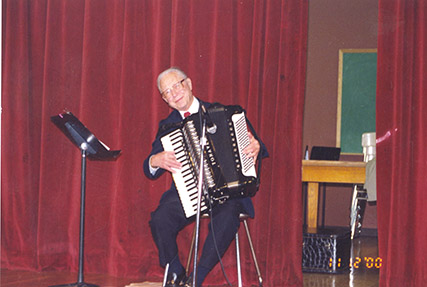
Clarence Johnson: And you can write it in another fashion. Would they work? Work for the hand out?
Rob Moore: Sometimes you go in and do it. Some people ask him to work. Yeah. yeah. and they have to do some work. So we gave you some that it would work like, but mostly they used to give free hand. Oh, no.
What what kind.
Clarence Johnson: Of a the town was drawing in really early days. It was a pretty quiet little place.
Rob Moore: And, well, it, it well, in a way, for the times, it wasn't too quiet because after that, the demand for goods that was shipped out, and then there's quite a little business and then as time goes on, that's later that I remember that we went when the park moved in and they were quite crafty. Employ because they had, and go and eat it and go in and have a group movie first they have, they had two labor barns, Victorian, and they had, teenage going night and day holding people and supplies and.
Clarence Johnson: Well, they hauling logs down through year two.
Rob Moore: No, no, no, they, they. Yeah. And they know that, that when I moved department. Oh did you come to a lot of trafficking and that stimulated a business in town everywhere for years. You guys didn't quite know. And very sorry. The decomposition. yeah. I never I never did work for him, but did a lot of people around here worked a week and get their.
You can do any farming? Well, I did work on a new growth net up there.
Clarence Johnson: Was Troy pretty law abiding?
Rob Moore: Yes. from the early days, I'd say it was pretty law abiding.
There was one incident down there that when the town marshal, went to arrest the party, on the south side of town, and that he was eating 92 or 94, and, he tried to force his way in, and that and this individual shot him from.
Clarence Johnson: Yeah, but that was Marshal Hayes was Marshal Hayes.
Rob Moore: And, he, of course, he's just the cronies and, well, he had two boys, two men that time, they, you get a few together and he's going to shoot this,
Unknown: and.
Rob Moore: fly. What do you decide on sight? The officials from Moscow come down and and took him out the back way, out of the hotel and, and, and so they never got a chance him. But, he, he was paid slightly more. We didn't share very many years.
Unknown: and so he got out. All right. I don't know what the.
Clarence Johnson: I've heard that Marshal Hayes was a pretty hard guy to get along with.
Rob Moore: Oh, that. And when he was kind.
Unknown: Of hard, you know, and,
Rob Moore: Whether he had the right to go outside of town, I don't, I don't know, some say it was because I guess that, you know, of course, the track probably wasn't incorporated in the town. You. But, people had to dislike for.
Unknown: Him to, in that way.
Clarence Johnson: For quite a while, there was quite a bit of mining up in this area. Two. Wasn't that for prosperity?
Rob Moore: there was, prospect, the North, the town, and, some east the town.
Unknown: and but, you see.
Rob Moore: Six, seven miles east, the town, they had the mine there and I was at the copper received.
Clarence Johnson: And that had that mine there.
Rob Moore: Ocean Voice always and okay. Always didn't had one, but,
Three and a half or four miles after it, right down this canyon. Oh, and it did. And,
Unknown: But, you know, you're on and off lot. And they had tunnels running in the American.
Rob Moore: You never really know, and letting them develop, you know, she'd come in.
Clarence Johnson: I never had much success. No.
Rob Moore: probably they they they could get.
Unknown: On with their job and or. I don't know.
Clarence Johnson: You told me last time we're talking about, Was it your wife, granddad had, was going to leave this country one day.
Rob Moore: An old, old post that my, my, granddad.
Unknown: He, and, the,
Rob Moore: 93 four in there. He'd been here, since 83, in the depression.
Unknown: Come on. And, and, yeah.
Rob Moore: Good in the truck and went then hunting another and so he decided to leave. he said he's going to leave and there and and did you story Marsh to, which is the smell which, well, that means going for a long time, but another up the road at midday. And they they run that and they raided.
Unknown: Durham and Kaufman and Durham and.
Rob Moore: Kaufman run that. And and they had and give him credit.
Unknown: To bottom around here and, and,
Rob Moore: And the hard times come on. And one craft beer was wet, you know, and so, we've been we have been told that he's got to quit this year. I got nothing I no clothes to wear. And, and nothing to feed the family and and no machinery to speak of and and but they told him. No, you're not going to leave when I can't stay, I can't keep on.
So I finally, they said we're trying to get everything you need. And, so he he said he tried again, you know, and, and they furnished in with them what the family needed and anything else he needed in there told him not put in.
Unknown: yeah. All the land you can, and, more to,
Rob Moore: So he got some neighbors to help. So we put in quite a bit of land. And then when, that coming year and when he had done and when he had harvested that year and sold his crop, he, he had, and he got $5,000 and it was all everything good. so, he came out fine.
Anyhow.
Unknown: we just,
Rob Moore: He managed to pay his debts and buy 160 acres for $6,000.
Clarence Johnson: And, they gave him all the our.
Rob Moore: Food and your shoes and everything else. Yeah. And, well, and, he actually watched in quite a predicament because that, the war God is actually on his feet, Yeah.
Clarence Johnson: And they gave him a seed grain to. Oh, yeah, if he needed anything.
Rob Moore: And then he got his neighbors, you know, did. And typically, what.
Clarence Johnson: Did he pay his neighbors these days to.
Rob Moore: Walk and indicated that before? I don't think they knew that. What if what what have you done that they're going to come.
Clarence Johnson: Right. Do you think Darwin Kaufman. helped bail out quite a few people?
Rob Moore: And those that were willing to. Yeah. stick it out. Yeah. And Durham and Kaufman that after some time sold out and went down to San Francisco to run over 50.
But, did, and people, seem to like that Durham and Kaufman. Yeah. They were just interested in business. B wasn't interested in land. They didn't want it.
Clarence Johnson: Itself. It sounds like they're also interested in helping the community out.
Rob Moore: Oh, yes. Yeah, yeah.
Unknown: and, they figured when,
Rob Moore: You get some of the city anyhow, then, we, we collect some of it, you know, and, but, they were different back. We. Yeah.
Clarence Johnson: And the first one and then like Gomer.
Rob Moore: Yeah yeah.
We're now and that kind of
Unknown: and. that that's about.
Rob Moore: Enough for me now. And then you get to be in okay. It's you right. You should.
Interview Index
Born in Vollmer, Idaho. Name change to Troy. Vollmer disliked for his lending practices. "Biggest little town on earth."
Father homesteaded in 1884; came to America at age 19 from Sweden. Talked Swedish in the home.
1893 Depression: hard to get money for postage. Coxey's Army got some Troy boys to join. "The last 250 in the state of Idaho." Hoboes.
Early Troy a thriving little town. Railroad traffic, livery barns. Shooting of Marshall Hayes by Paine Sly, Prospecting and mining. The Copper Chief.
Paul Smith in 1894 decides to leave, but is convinced to stay by Dernam and Kaufman. They talk quite a few people into staying, and help them do it.