
Walter Johnson Interview #1, 1/16/1974
Description: Killing of Dr. Watkins. David's Store. 1-16-74 .5 hr RM
Date: 1974-01-16 Location: Moscow
Subjects: crafts; death; doctors; horses; murders; stores
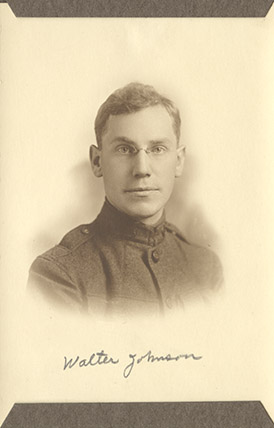
Walter Johnson worked for many years for David's department store. Here he recounts stories of the murder of Doctor Watkins in 1904. Homestead locators. Gypsies. Wild Davey in the early development of David's.
I want, I wanted you to tell me again about, Where you were and what you were doing when you heard about Doctor Watkins work and that whole.
Walter Johnson: Well, I it was on that Sunday morning, and I was standing on by the back gate about, oh, I don't know, maybe 10:00 or something like that. I was just a little kid. I was going Sabbath school and my brother came home. He'd been downtown and he said, there's been a murder around. And this fella going around this part of town.
Judy. And so, I stood there when I heard a shot down here in this part of town hurrying, south, down on South eighth Street and,
Rob Moore: Pretty close to you.
Walter Johnson: Well, not down on top, but there wasn't very many houses here, and so I could see. And this was, he was a deputy sheriff. His name was Ku, and he'd been shot there, and I saw his horse running up Jefferson Street. And this fellow lived in my father's house down. Down who? See? Oh, I think, but he lived on, he lived on, on, on sixth and, near the alley there between, between main, Washington and Jefferson.
In between those two place. And his horse went down there. He had a barn down there. So he kept his horse in. And then, then, another brother came home from downtown and the man and to go out and get this fella. And they said.
Rob Moore: They knew him.
Walter Johnson: Well, yeah, I guess they did. But they, and they, they, my brother said stay inside because he's up in our part of town. Well, he did try his horse down on that in the alley. Close to, to, right down the alley on eighth Street. And the people that live there was present. And he ties his horse and had a wounded and sometimes been shot.
So he calculator's and walked home down. He owned, there's white acreage down there. And so, no time. And he used to be here named White. All his acreage down in here is White Acres. And then he lived, one corner of that's near the cemetery. And he woke up, went home there, and.
Rob Moore: He was what you'd call a gun.
Walter Johnson: It was. No, I don't think so. He did not. He was, he had been for a lot of people. They they had a lot of Watkins he'd got. I guess he thought he'd he'd complain to the county about him being so mean to his mother. that's why I was after him then. They used to have a meat place out there, and his name was held, and, I he was in mad at him about something, and he lived the farm on our street near seventh, and he'd been up there looking for him, and they were wanting.
Rob Moore: To have help was.
Walter Johnson: No, no, he wasn't home. What? What who? All that he killed anyway? Well, he killed the his wife killed. And, then he, he, well, he shot some people. He didn't get well who had killed him. And then I think there's farming land in that. I didn't know whether he was the guy or a city policeman, but he didn't see him.
But he. I think he shot Creighton. They have a story of. Of course. There he dead long ago. I think he was shot in the arm or someplace like that. And I don't know any others that get killed, but they have a book about all that stuff. You know, what they call, Buffalo coat? it's a story by, by Carol Rorie.
Right. And that was her grandfather talking like a grandfather. and her husband just died the other day, and I know down in, La Hoya, California. And he was, I guess, I don't know just what he did, but he'd worked at the university, and he worked, I think, in Minnesota for 40 years. And then I believe he said he was, I think they said he was 83.
I believe it was. And, this, this Carol Riley, that's, Caroline's father, he used to bring people out of not to, take up homesteads and stolen timber out in the woods, And, I don't know, he died long ago, I think.
Rob Moore: Commission or.
Walter Johnson: Something. Yeah, he got a commission for it. They'd have to pay him. No, but he'd. He make all the settlement, you know, take him to the courthouse and give them an abstract deed or something like that. But then they had to live on it, you know, for at least three months a year. And they had to build some of their old sheds.
Of course, some of the people just lived there all the time and stayed on their all their on their farm or on the court. They did that need to on farms. They lived on them. And then and they, I don't know. Well, I would land around here around right in the country. A lot of, a lot of that land was taken that by homesteaders.
And then, then, this, I don't know this Carol. Right. Or she got acquainted with that fella at university or, I guess. And then they lived in Minnesota, I think, for 40 years. And then they went, of course, he's very old. They lived near Lahore. Yeah, they don't spell it that way, you know, it's, it's, I guess it's a French or Spanish.
Rob Moore: That's Spanish. Mexican.
Walter Johnson: Yeah. So many of those towns are. I know, once I was with my brother and I. The next time we heard it, and now he says all the scientists said, I said in San Jose, he said, no San Jose. They felt Jose. They felt they prairies. You know. oh. Say, was that Jose? And a lot of those towns around there, oh, so many of our, Mexican or Spanish towns down in California.
And here we have more here, a lot of Indian towns that I think are a fino. It's an Indian name. And then there's another town right there that we have forgotten what it was. Honey, name that a lot of those are Indian names. Some of them. And then they're now part of late. That's part of the part. That's French name Coeur d'Alene.
Are they really supposed to? We're supposed to put up the most people, so. Oh, really?
Rob Moore: Do you do you know how Wasco got its name? Because.
Walter Johnson: Well, I don't know that there was a lot of Russians that came over here in the early days. And they a lot of people, they've never had any proof of it. But, you know, around the west of Spokane, there's oh, there's a lot of place, the Russian names. And farther north here, there's a lot of Russians. And so I said farmers, you know, and I think that's how it that somebody said that some Russian have named it this because I think it first the post up.
So that was out East Town, I believe they did call it, Paradise Valley though that wasn't a Russian name, but they that's what they call it. So I mean, the Paradise Valley and then they got the, the post off to Moscow. I don't know just what year that was, how long ago it was.
Rob Moore: But back to Carol breaks father. What? Why would somebody hire or pay somebody to locate a homestead? For what? Could this go out and do it themselves?
Walter Johnson: Well, no, you have to have, you had to have them. They had to put market down and stuff, you know, always lands put in sections and everything else. And then you describe it, you know, a lot of those markers have been able to find now, of course, a lot of the, government now, six feet down here is section line.
And you get down here to main on turn off a little bit. So some this main street come here. When you get down here it turns a little different direction. You know the run cloud run a globe is round and they're, these are section lines describing the land. You know, it's that way all over the United States.
And I guess almost all right now, just like in, France, they have these, they have, they made everything meters, you know, metric system. They're even talking about having. Here you go up to Canada, you can buy a quarter million, a lot bigger than court here because the courts are bigger, right? They're measured and by gallons and all that stuff.
And and you right away some in France, in England used to weigh so many pounds and money was in and pounds to, you know, a lot of that stuff. That was the metric system. And yeah, I think in Australia they were chained to the metric system. But this bit here, miles isn't so many meters, you know, you can't they're, they're trying to get it in here.
They have for many years I don't know whether they ever will or not. But they did go into money business here and then and in Canada they used same as we do my, dollars and cents and all that stuff. But in English, it's, so many pound in Sweden. I forgot what it is now. It's,
What the, the kronor. Yeah. Thank you. Brother, I don't know how the how that figured and, in Australia, I think they went over the metric system. No, they say I've heard they were under England for many, many years, but they went and I think they were and I don't know, they do it in mileage or not.
What they, they call it, centigrade and all that stuff and even a thermometer, these thermometers we have, they're not, some of the real ones, they're, zero. I says it's freezing point, but here, 32, you know, 30 when you get below 32, it's freezing. But, on the other hold of the regular regular one, it's, it's, when you get to the zero, it is zero.
I mean, it's start. Freeze and all of that stuff and weights and all that stuff with, we haven't got all this. We have gallons and all this, and then they have it two different things. Yeah.
Rob Moore: well, Double back again. So it's the timber the homestead located was basically. Was he a surveyor? He.
Walter Johnson: Well, yeah, he was he'd sent out the when they did, survey, I guess you'd call him a surveyor, but, but they couldn't go out and they did it because maybe seven or anything like that be then that would be recorded in the office. Not a lot. I don't know, a lot of that stuff was recorded. That's first because we were in that first county and so a lot of that, but most of that stuff was taken up here, you know, the records.
And they had a whole lot of, I think what I saw in some, some, all of these abstracts a long time ago, it mentions a lot about the railroads getting in here in a certain part, because it said it burned down that block of the railroad. That part did like some of the Indians now are saying all that.
And around the lake, even around Harlan Block, the Indians, you know, they're trying to claim that. And and then a lot of these have eaten up around, like, you know, not Lake Louise, but like, you know, Ponderay, I guess, and some of those and they say that the people bought this, but they don't know the land ran up to the water, goes back a ways, and they've had a lot of trouble about that in the paper.
Did lately, you know, about the land not being there right now in the late. And, the. Yeah. Ponderay. And then that other lake up here, Priest Lake. They've had a lot of trouble about that. you know that, because I know some people that own land up there, are there. And the paper park, they did, lethal land for a certain number of years in the build of it.
And, the property, I mean, the house you would sell it, but that that piece of land. Really? was hampered. The paper in Park. You couldn't really claim it. And I think it's up that way. It. Priest Lake two. It's part of the lake, right. But,
Rob Moore: Part of the property,
Walter Johnson: Got there certain amount of land. If you didn't know about the lake that the public did, because they had a lot of, these diamond Marsh people used over a lot of that land around priestly. they get that would, I guess, from making these, you know, these matches that, not paper mache, but these other kinds.
Rob Moore: you also tell a story about the gypsies you didn't.
Walter Johnson: Like, Oh, yeah. They used to come here a long.
Rob Moore: Long, long time. Well, they real gypsies.
Walter Johnson: Oh, yeah. Oh, really? You know, there's a lot of forgotten. And then I think that's during the war in France someplace. The gypsies are. And they have for Spain. I don't know, rich.
Rob Moore: Well, they were here. They travel.
Walter Johnson: Yeah. They travel in there and get them a caravan and then they'd stop there.
Rob Moore: The caravan look like we're kind of.
Walter Johnson: Well, I don't remember too much. but they, they go around town selling this baskets and these, all this other kind of a little stand for plant stand and all that.
Rob Moore: Then they they.
Walter Johnson: Yeah, they make it down here and paint them up and then, I don't know, I guess they had to I don't know how they drive them because they, That's pretty weird stuff. You know, the, the, Willows. But then they can build that, you know, in a different way to like, they wood the read that I never saw that make any read I don't they, I don't think they did around here.
But they made these, other baskets out of wood. They twist around, you know.
Rob Moore: Do they, they ever do things like horse trading?
Walter Johnson: Unfortunately, no, I never like that. Of course, in the early days they did, the Indians used there was used to be an awful lot of wild Indians all over and not wild in the wild horses up. And it you years ago, they, they caught a whole tribe of down South Africa, South side one place, and they sold this kind of meat, for meat, you know, and, so.
And they would and they used to buy these horses off the cheap then in the bank for them, they tell them, make $0.50 apiece. I think my brother bought one and they were pretty some of them were pretty good horses. I don't know what it was. I don't know what what breed they were, where they they were. Apple loses or not, I don't know.
You've seen an apples to oranges. You see that horse up there on. hum. Buffalo Bill that was printed. I don't know what can be worse. That is, it's a beautiful horse I like. I never forget when that picture was, were painted in, and, and, they had one just like that on that, by Cody, Wyoming.
You have horse did like that. It's all, it's all, big metal thing hanging outside. and, it's beautiful, beautiful. I am a nice looking fella. That's his home, I guess. Cody, Wyoming. But, Cody and some of those fella, they, they, they travel around helping some of the pioneers out to the West. You know, there's so many Indian tribes, they some of them, they got friendly with some, and they protect them, you know, I mean, protect the white people.
It was a whole lot of different stories a few years ago about different tribes, you know, about different fellas, like Buffalo Bill. I don't remember all them now, but they used to. They had, hit show pictures, you know, the stories about them.
Rob Moore: Well, there's a guy in town here.
Walter Johnson: Well, they're one from the wild. They were. They? Yeah. And he had. He lived down here on Linden Street all the time, but he had a lot of dogs with him. And, I read in the book, that somebody had found it, and I think it was up at around, where, Kovacs kind of place. Somehow somebody left that book and they showed it to me.
And, and I thought that book was pretty valuable. And, it, told about that. He'd been through the South. Help he been with some of these fellow Buffalo Bill and he, then he looked like he was quite, you know, got on the coast.
Rob Moore: Did you know I saw him?
Walter Johnson: But I don't know.
Rob Moore: What did he look like?
Walter Johnson: Well, he wasn't he that long haired? Long was Houston. And, he oh, he always had two dogs with him. A whole bunch of dogs. And, he lived down the end.
Rob Moore: Like a pretty fierce looking.
Walter Johnson: You know? I don't think so. And then he. Then he, moved out along the coast someplace. I forgot just which town was that of the sort of most of. I read this book that and it's he, he bought a hotel there, but he wasn't used to the hotel at all, so. And, they their name is.
And they were so mean to the Indians were he took them with the Indians down there, and, I, I don't know that that we I forgot this book place. It was fun too far. I mean, cleared out in there. Oh, on the coast. but, I don't know, it just, But he, Then he, finally came.
I don't know why he ever came to Moscow, but he lived here for several years. But he had been on with some of the scouting group, you know, helping the early settlers come out of the west, down, maybe down in the south, all over to. And, I don't know, I don't know how he was and I don't know when he died or anything.
I don't remember there were any stories about him, but some, told me that, and there's a lot of them that worked at university. He wrote this book for it and helped him. Right. He told his story. He wrote it. But where that book is now or not, I don't know. I knew one of the fellow that maybe I can find out, but I don't know if he's even got it before.
I showed it to a few people that had I knew around here, but it was him.
Rob Moore: about one wasn't the the gypsies were coming around here.
Walter Johnson: Oh, it must have been in the, because I think that I wound up here. I mean, that, of course, out born here. You know, I don't to took him, but I guess I know that my older sister. But some place flower stand. So she liked that stuff.
Rob Moore: But would you been about ten years old or something?
Walter Johnson: Oh, I don't think. Was that.
Rob Moore: Old? Who? Sometime before 1900. Oh.
Walter Johnson: Wow. Oh, yes, it was all right in early part of been,
Rob Moore: Well, did they have a horse drawn carriage?
Walter Johnson: Oh, yeah, they had horses, but they used to have a lot of stories all about them in the, in the, in Europe, you know.
Rob Moore: Gypsies from.
Walter Johnson: I don't know what they were. I guess they did have some trouble some places, but.
Rob Moore: But there wasn't any trouble around here.
Walter Johnson: No, I never did pretty well. Yeah, as far as I know, I never heard anything.
Rob Moore: Did they make anything? Besides, I don't know.
Walter Johnson: They were a lot of a lot of money. I don't think so.
Rob Moore: Main thing besides is.
Walter Johnson: Willow, I don't think. I don't think they did hear.
Rob Moore: They make jewelry.
Walter Johnson: Oh, no, I don't know. I don't think so.
Rob Moore: There was one thing they do in Europe, with that kind of stuff.
Walter Johnson: Of course, I hear a lot of. I haven't, but there's a lot of people. There's still people who are paying for rocks. You know, some people find some pretty valuable.
Rob Moore: well, the first people came out here hunting for rocks in a way.
Walter Johnson: But like, with the red ones, for real. Keep gold. They hold them. And looking for gold more.
Rob Moore: Or that's a kind of rocks, you know.
Walter Johnson: Yeah, it is, but, I know I there's a lot of people that a lot of these clubs, you know, where they go out in the woods, they're out in the mountains. There's one place I hear they call Ruby Creek a lovely. They used to find rubies out there. I don't know. And a lot of fellas used to get these, kind of grindstone.
They grind them down, you know, and they polished them. They look real nice.
Rob Moore: what was David's life when he first went to work there?
Walter Johnson: Well, I don't know. I I've never knew them too well.
Rob Moore: Know what?
Walter Johnson: The store or the store that, when I was a little kid that used to be journeyman. Kauffman used to have a journeyman Kauffman there when they were Jewish people. And, they, I've got a picture of that someplace here with a big sign on the building. It says German Kauffman. And, and, they, this one of these.
Kauffman lived here because my father and my brother built a house for him, his named Mankoff. But his brother went down in San Francisco, started this store with some of their fellow blame during him. I think he was, I think he had a school girl at school that did that. And I can't be sure about that. but the, that Kauffman started the store down at Cisco.
Absolutely. All that when they had the World's Fair down there. And we were in that store, another fellow and I, I believe Terry Sampson, who ran that store and, And I don't know, I don't remember the fell out of those we ever talked to, but we were in the store and all, and that was, oh. See, why was that?
Rob Moore: That was very cool.
Walter Johnson: Yeah. The first one that we're going to mention. Oh, that.
Rob Moore: Was.
Walter Johnson: I don't remember. This analysis can help us figure out.
Rob Moore: What was the Derwin Kauffman store here like.
Walter Johnson: Well, I don't know about. It's a little. Yeah. How about when it was down? I think they had clothing and everything else like that. And I imagine that it wasn't the.
Rob Moore: Biggest stores, you.
Walter Johnson: Know. Well, they built they would belong to it. So I didn't go down back to the alley when Dale first, and I suppose that they were the ones that built, I guess the first place.
Rob Moore: But when you when you first remember it, when you.
Walter Johnson: Heard and then, then there was the fella it used to be, then the Neely and the. He died. And I don't remember him either, because he I think I'm not sure that he was buried here at night. He's from New York and, and, and there's how the name Burns. He used to be a fireman. I think he was some related to the, to Mrs. Neely.
I believe. And, I don't know, she went east and, caught that burn. Burns is buried out here in the cemetery. Family.
Rob Moore: Well, what was the storyline from when one of the David's in the early days?
Walter Johnson: Well, I know at first they had an awful lot of groceries and stuff. And, then the the farmers union started out of remember what year that was down here on eighth and and main, the unemployment store there now they the first farm reunion. A lot of the farmers got together and and they out there I guess said that several of which farmers right here were managers down there.
Rob Moore: So,
Walter Johnson: Then they had grocery then. Well, yeah, they kept on for a while, but then they finally, I tell you, there's not a lot of trouble. The farmers used to come in the store, you see, they'd been later on they started going down there. So David closed out the department. Not a lot of work, extra work with that. And you had to cool there too early.
And they have their deliver all his groceries around town and hit some nuisance. So, they, They quit that. And then the, the shoe department is where the grocery store used to be when are the the, the back and then they belong to it. And that department went back for a bit farther. You have to go down a few of them blind to get from the street down.
But it used to be, I guess they used to be a step there, but it's a pardon where I when the David first came there, but I don't remember that I was, I didn't work there that. Yeah.
Rob Moore: Well what what was the store like. Was a pretty friendly place to go.
Walter Johnson: Oh yeah. It was nice how it all is. Mr. Dave the old man. He. I like to talk with farmers. Like, I think they come in here, you know, in the days. No, they they didn't have automobiles and we had stoves and some of the farmers did sell to bring some of their lunch around with them. And they'd sit around the stove and eat lunch, you know, and they spent time visiting a lot, but, where no place that people were hanging around or whatever to do tonight.
And he talked and he never did. So I think they had two of his two of me in the store there.
Rob Moore: Wood stove.
Walter Johnson: Yeah. Wood stoves mostly in those days. And then I get towards the let's say they probably started burning coal and they finally put it in the, hot water system, you know, like if they still have that there and they burn coal that they finally changed, oh. Not too many years go gas. When that came out at, Seattle, I came in here about 1960 and,
Rob Moore: And you see, they had that they have that, vacuum tube system.
Walter Johnson: Yeah. Well, at first they had these other jet wires that went up, and then someplace they advanced. If they'd say then up there closed the have to be wrapped, you know, they do it all in one place.
Rob Moore: Well so, so there's, there would be a wire around each point where.
Walter Johnson: Yeah, it all go up.
Rob Moore: For the Clark station.
Walter Johnson: Oh yeah. Yeah. They had several of those wires. and then they finally put in these tube systems that hopper tubes systems. And they had a if they had, machine down in the basement, for, creating a, the air that go through there.
And I used that go, I think. Yeah. Pretty often. Dirty sometimes.
Rob Moore: Well, how long have you work there?
Walter Johnson: Do I know I started in 1912, and I worked there while I was working the bank five years, and then I worked there till I quit. Was 72. And then in meantime, the day that it sold out, too. So then I had it, I quit. I. They, they used that we used to have this pension there and they took that out.
This new fellow took it out. So you don't pay attention to them more. But I've already started drawing pictures from, you know, how I got started on them when I was 65. Start drawing. But. And you start out so security you. I think you started out pensions before that but I know social security that fair about 1937.
And then they but they came around you know and checked on every place of business, see that you were taking up this money, you know, go to the social someone, some of them didn't like her. She took so much out of the salary to put in Social Security. They had most of them were happy after they found out.
And it worked. It worked for their good. When they got older and they got ready to retire. Well.
Rob Moore: do you know how Mr. David came to buy the store or 13?
Walter Johnson: I don't know, I think he was just somebody else at first. I think a fellow named. But I don't know for sure. But they had a different part of town, and then they, Then they, I think they were up in, somewhere between second and third Street, I believe. I don't know, I don't think that's the first place.
So either. And then they then he got in with his easily. I guess that's how they have to start.
Rob Moore: Was he was a pretty, a pretty shrewd businessman.
Walter Johnson: I don't I didn't know him. You mean David.
Rob Moore: David.
Walter Johnson: Well, I think he they knew quite a bit about it. And I don't know, he they came here from Wisconsin. So some of those boys were burned. just the youngest one. He least 11. You name down, you take it. He he did up to, the matter. And not too long ago.
Rob Moore: well, I didn't meet him, but Mrs. Clyde, her from the museum.
Walter Johnson: Yeah, I, I agree with you, too. He was younger than I. He was born here in law school, and all the rest of them was born in Wisconsin. I don't know what part of Wisconsin.
Rob Moore: Well, when.
It was.
Interview Index
Account of the murder of Dr. Watkins by William Steffens. Hiding out and pursuing Steffen. Buffalo Coat, a novel, written around this event.
Indian, French, and Spanish names for towns. Russian farmers responsible for naming of Moscow? Homestead locators responsible for determining boundary murders. Metric system verses our system.
Gypsies used to camp near Moscow and made baskets and plant stands out of willows and sell them around town. Wild horses could be bought for 500 apiece. Wild Davey.
Dernam and Kaulfman store. David's carried Groceries until the Farmer's Union came in. David's was a friendly store, farmers would gather around the stoves at lunchtime. Copper vacuum tubes carried cash from the clerks to the accounting office.