
John Sanderson Interview #1, 6/15/1975
Description: Stories about Bill Deary, Pat Malone, Mrs. T.P. Jones. Local killings. Life in lumbercamps and early Bovill. Houses of ill-repute. Force in the classroom. 7-25-75 2.1 hr
Date: 1975-06-15 Location: Bovill
Subjects: brothels; logging camps; lore; murders; schools; women
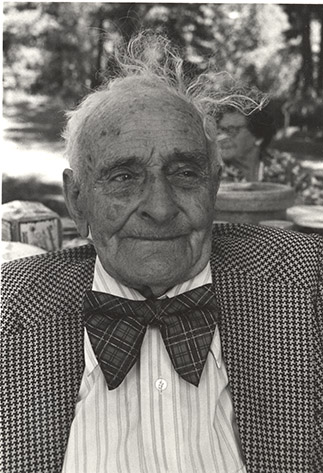
John Sanderson
Born 1884
Occupation: Maintenance man for Potlatch Lumber Company; photographer
Residence: Bovill
Transcript
Sam Schrager: This conversation with John Sanderson took place at his home near Bovill on July 25th, 1975. The interviewer is Sam Schrager.
John Sanderson: After that, I went to Greenville and I had a picture gallery over there.
Sam Schrager: That's right. You used to be a photographer. Yeah.
John Sanderson: And I got what can I now say? Or pictures.
Sam Schrager: Were you born in Toulouse?
John Sanderson: No, I was born in. I okay. I away in 1884, January the third. That's the beginning of the year. And then at four years old, that mother came west.
Sam Schrager: Why did they decide to come out here?
John Sanderson: Well, that was always my wish to get someplace else. And they want me to come west. And then running across anything for the powder cocaine and the soda and they had a friend out here, Henry Hoskins. And he had a little film that it was. But so and he they operated that mail for several years. It went down to Kendrick Hall.
John Sanderson: And I am from down there. Potlatch to Kendrick.
Sam Schrager: Was the mill at Palouse to start with?
John Sanderson: No, it was it wasn't Potlatch. Yes. yes. Well, about three or four miles from Potlatch. they that quick. They caught him on the south side of the river, Rock Creek.
Sam Schrager: yes.
John Sanderson: And they had a mail back in there.
Sam Schrager: Do you remember do you remember Cloquet at all?
John Sanderson: a little bit. Not much.
Sam Schrager: Do you remember the trip out here?
John Sanderson: Yes.
Sam Schrager: What was that like for a little kid?
John Sanderson: it was interesting. On the train, it was about three or four days on the train. Folks didn't have a sleeper. They slept in the heat. They would transfer the seats to kind of a bed and lay down. And that was three or four days coming to Spokane. And they crossed Montana to make it seem like a long time.
John Sanderson: At that age, I guess it was only three or four days.
Sam Schrager: What was what was the Potlatch area like then when you first got there?
John Sanderson: Well, Potlatch didn't start to see about 12, I think, say over there, and discovered this body of white fun and he couldn't read or write. You're just a lumberjack. He went to work outdoors and where or I know where out there. And it finished up and took and or want to get more metals stuck there again. Yeah he really had taken the timber off.
John Sanderson: They, they iron range and they lost more money by losing the iron range. Then they'd taken over timber. So they liked him and they told him he says where. I know where. There is a market of fine timber and they bunch some that you can buy reasonably. Let me tell you something I'm not telling you work in July.
John Sanderson: I'm sure that I'm put in on it. Well, Weyerhaeuser says if you can put me into a good bunch like pine timber, Ari, that you get your part. Well, is all right. Meanwhile, here, my parents got in this fight. Pine timber was a big bunch. Good men and me and me and Weyerhaeuser warehouses.
Sam Schrager: I was impressed. I was pretty good,
John Sanderson: Yes. They went to Boise Warehouse about it for something, and he made him put in the mailed of Potlatch. And they. They made him a money out of this. That's ready in a few years. It the timber won a good deal more stump agent and he got and saw lumber like that. It was a pretty big mill project and he put in Potlatch at that time.
Sam Schrager: Do you remember what your father thought about warehoused or coming into this country? He'd already worked for Warehouse or back in the Midwest. What did he think of him?
John Sanderson: Well, he he thought warehouses were doing all right. He came up here and he was put in charge of the shops here that they'd and. KP Your mother is not open ended. But at that time, people only got 300,000 a month and everybody thought that was terrible money.
Sam Schrager: A lot or a little.
John Sanderson: A lot. And it worked for that day. Then Laird was assistant superintendent at Potlatch. He got about $25 a day. Well, my boy were making more than that homosexual. Now.
Sam Schrager: Larry got 25 a day.
John Sanderson: Yeah, and boy, everybody thought that was terrible money. Well, it was at that time, Right.
Sam Schrager: Did you know dairy at all? Did you see?
John Sanderson: Yes.
Sam Schrager: What was he like? You said he was he couldn't read or write. And you said he was pretty tough. Is that.
John Sanderson: Right? Yeah, he was. He was a woman teacher.
Sam Schrager: That's what I've heard.
John Sanderson: Yeah, he he liked women, not only and she was a pretty girl at his house and he rented a house and froze. When it first come down at the lower end of the road and they they went around from the first floor up through the second at the front. And one morning he got up about 5:00 and he'd open up the front door, make it sound like he left.
John Sanderson: And he went back and out. And Bedworth Valley Road painter hired girl. One morning there he was standing in the in the window upstairs and she heard the door open and shut. But they don't come off the porch and across the yard going down to the mail. And she got suspicious right away. She stepped downstairs and she she went right into the bedroom, the herald bell out her bed.
John Sanderson: Without it, she says, Young lady, you get up and get your clothes in your suitcase and you get out here. She says, You're fired. Well.
Sam Schrager: I don't I don't imagine that. Stop, Bill, though.
John Sanderson: no. He got a room up town, you know, knocking house and take a bath at the back and come up into the and now I run down to the house and the car and the women would go up the front the way you go into the room, ma'am.
Sam Schrager: Did he leave? Did he leave home after after his wife?
John Sanderson: No, no.
Sam Schrager: He just he just had another place to take his we.
John Sanderson: Had another place to take the women. Well, now we played along with him for a year, and she decided she want some money, I think, to. So she says, bury me in the family way and you got to have my. All right, All right. I'll pick it up. I But he neglected to do anything. She kept putting herself and getting her little girl with.
John Sanderson: I. I know she got her mother, grandma, and she got overlooked. Potlatch home and burial happened to the phone booth and she said, Miss, very. You got my daughter in trouble. You've got to do something about it. All right, All right. Now, I'll be right down. Honey. Did he come down? Well, I said I want $3,000. it's well made that the right.
John Sanderson: Take care of that child. they'll give her $3,000. And she took off her pads and went to the doctors and she had a good time. But she saved that money. She didn't spend it recklessly. She still continued to work, but patentable. Well, about that time, I don't know much about her. Most of that was it.
Sam Schrager: Was it just Bill she fooled around with or was she real?
John Sanderson: That was other.
Sam Schrager: Yeah. She was a.
John Sanderson: Hooker. Yes. A private lover, a pretty girl.
Sam Schrager: Was she pretty young when she was working at the dairy?
John Sanderson: Yeah, she was 18. And I guess the young maybe she'd go to the dentist. She was a wonderful dancer. She put little valves on her shoes. She'd get her feet around, bring them out. She was classy.
Sam Schrager: She don't know what they came for after you came to board.
John Sanderson: No, I had no that she never got married when they came there.
Sam Schrager: I heard there is an awful lot of of houses of ill repute in in blues in the really early days along with.
John Sanderson: Yeah. And how does it prostitution was on my side of the hill in the trees and you could see that big red light at night.
Sam Schrager: They had a red light.
John Sanderson: Yeah. I had a red light and you know, a Sheriff Kovak came up to John Hopkins. Yeah. Tom had the town just got a reputation of being the house of prostitution. Anne Thompson I don't know. But as such, Willie did. And it was illegal, you know. How about.
John Sanderson: You?
John Sanderson: That whole Tom didn't know anything about to hear him tell it. I know all about it.
Sam Schrager: The sheriff didn't do anything.
John Sanderson: And didn't do anything.
Sam Schrager: Well, the bill, dearie, I. I've heard about Bill, dearie, that he was about the toughest one in the bunch, and he was really a strong man who wouldn't mind? Wouldn't mind standing up and taking the guy down by punching him off.
John Sanderson: He wouldn't know he had gone. He was he sure he was that he never changed, you know, just like one more time. No, Jack's. Yes, he was that way. He'd right. They had to. And of course nobody would break him. He was a big shot. They didn't want to get him back, but he.
Sam Schrager: Did he go around looking for fights.
John Sanderson: Now? No, No, He wasn't caught in the dog. Trouble was women. He had quite a few of them lined up.
Sam Schrager: He and his wife his wife managed to live with it, though. I mean.
John Sanderson: She had his position at that time. Why? She was quite. Hey, Mr. Miller there, his wife, she go on the train to go to Canada. They and of course, conductors and everybody, you know, kept her and that was necessary and this and that. They gave her a great deal of attention. And she liked that. She didn't want to lose her.
John Sanderson: Her reputation was all male.
Sam Schrager: But it was but it was common knowledge anyway. It was.
John Sanderson: So we have everybody know it.
Sam Schrager: So she wasn't really fooling.
John Sanderson: Anybody.
Sam Schrager: Was it was the brass in those early days like dairy and the people that lived on Nob Hill there and in Potlatch, were they really did they keep pretty separate from the rest of the the from the ordinary lumberjacks and.
John Sanderson: Yet so inclined to there was a clerk up here. It can't be he started and then he went to dairy. That's when Mohawks from the Balkans came over and went to work they bunch of them into the camps and then their names were such that it is related to not the clerk. He he forged quite a lot of checks to some one of these fellers by their name.
John Sanderson: He got away with it. They never got him while he was up here forging those checks. Kid As a clerk, storekeeper, it was very that told me afterward in the trouble with him, he he got married and they started out on honeymoon. They ran out of money and he forged a check on her and no lumberjack. Well, one might get came into the bank and dairy.
John Sanderson: The cashier recognized that. No, this fellow was a personal friend. If they know that that wasn't his check and they sent the sheriff after this crook had picked him up on the train. Were they right? I don't know what he got out of it, but he got a trip home with it, with those volunteers on him forging their names because they they were anybody that recognized.
Sam Schrager: Did you hear that story about the that fight, that knife fight in Elk River where that Bohun got killed?
John Sanderson: Yeah.
Sam Schrager: Well, the how the you heard that happened.
John Sanderson: And my brother over here was in the there pocket when that happened. He shall have a big red and I thought my name up wash he done the stabbing and that big red three four times from the back and finally Big Red Gaylord had only been stabbed four or five times before he fell and fired here or there.
John Sanderson: He said it. They sure came over from Moscow. They had the wash under the bed in the bunkhouse and the sheriff and look under the bed. He just went into the bunkhouse and locked bunks. All the bunks didn't see anybody. So he left and then in three or four days they took be wash out. So I went by the name of Mike Bowden and it will be Mike is living in, I guess, in Spokane.
Sam Schrager: What about him?
John Sanderson: He was with him when he done that stabbing. He held that over p wash all his life. They wash night fly. Mobley got all his possessions and about two years he was came back and he went into the loading business and shipboard. He worked there for years and Bobby worked with the general manager, Corey. And when he was hired by Mowbray, took over all his possessions.
Sam Schrager: Was there any motive for the killing that that Byers knew about with this big red bullet?
John Sanderson: He was drunk. Should not be smiles. He was quarreling with five or six of them bullocks and Sam behind him, and he stabbed him. Well, in about two years after this virus, just don't tell me. So I let him bald headed for the night. He said that's the amendment that that stabbing. I stand back and watch him, but he couldn't approach anything.
John Sanderson: He didn't turn him in. Mowbray stayed here and was a good citizen and wrote for seven years. Mike Foreman. I was big red, red headed lumberjack, big for movies. There have been four or five times that people share.
Sam Schrager: Who went When you first came to Bovill, when you first came here? That was right after they started this.
John Sanderson: The town they hadn't started yet. All that work in the summer. They were building a railroad behind there. And our town of Helena, our lucky there had a little camp and I worked at the camp. My short timber family, right? Yes. Dad and Felton had a little short now portable. I saw tie timbers for bridges. I sold him out games.
John Sanderson: Well, whatever he for, they were going to use him and. Well, how many of us had just been made and it hasn't started yet, but it was only at the point of starting and well, one started.
Sam Schrager: So you were sewing these bridges that they were making were for the railroad? Yeah.
John Sanderson: They were. I, i, they had a 25 horse compound threshing machine engine that Rumsfeld mill. I was running the engine. I hadn't heard about 18 and.
Sam Schrager: Was there a lot of activity going on around there at the time?
John Sanderson: Yes. Yes. It was getting ready to the railroad were failing. There were a lot of them Foreigners were doing the work and they were voting in the mill. Well, and I came up to vote well, when there was this old hotel down here that Mrs. Bingham had a building hidden here and that some very dark night, November and there were a bunch of young millionaire girls and boys were coming out here to every summer and they had about 27 horses and they rode out, clocking over town for her.
John Sanderson: They would get trail stage, they wouldn't roads like.
Sam Schrager: Where did they come from? From Moscow?
John Sanderson: No, from these. They were millionaire families. Some. Yeah, they were wealthy class of people and they liked to get into the mountains in the summer. Spent the summer in the mountains riding horseback. I have quite a sport now, girls. All like it. And I was like, You know what the girls did? And they set up these auction, took over the country.
Sam Schrager: Did you did you get to talk to those rich kids much?
John Sanderson: No, I didn't. I became liberal in the fall and they had left gone back home.
Sam Schrager: What were the battlefields like? And Mr. and Mrs. Hugh and Charlotte Bovill.
John Sanderson: They were they were English. And they came from England out there. And they don't know that York. And she was equipped to handle it in good shape. She was she understood handling it well. They people more than he had the town too vague enough over there. One of the town tried to sell and vote. That would have it.
John Sanderson: Why don't you tell them? Well, now, if you don't let me have the chance, I Here, I won't put a mail here. I'll go round. Goodbye. And so he did. He joined up there and he was Townsite and they put the mail in there.
Sam Schrager: He was thinking of putting that mill. He was planning to put it in Bovill.
John Sanderson: Yes. And it would do it in double that. Right. Well, that would have let him had the townsite.
Sam Schrager: Why didn't Bovill want him too?
John Sanderson: Well, he figured maybe more money and I'd keep it and sell it himself. You know, when it became quite a little work in those days, it was about three grocery stores. It was two or three hotels. Yeah. There was probably 600 lumberjacks around here, and their power to play was good money. They made good money.
Sam Schrager: I heard that that Bovill had mixed feelings about turning this area into a lumbering place because it was so pretty or it was touched.
John Sanderson: Yeah, I suppose they did. They didn't like the idea, but they couldn't prevent that where I was. I went to Boise and he dealt with me. They got this timber out of ourselves.
Sam Schrager: I.
John Sanderson: Think of it, and it wasn't long until they were paying 14 to 15000 on the stump. But when that was big money in those days.
Sam Schrager: It was the Bovill hotel, the center of town, when in its first, the first few years of Bovill, was it the was it the big meeting place.
John Sanderson: Where I don't know if it matter much, but it it was my hotel started my pay with two or three after that it was one down on the corner where the fire station is now. And like that whole block burnt out. What was how of that, that of dray. Yes. 1200 dollars cash and dray and giving me a train down and he went to bed up there.
John Sanderson: He had this money in his pocket. Well, everybody Clayton that that fire was started by he bought up that he said that whoever had that fire went in and killed him, took the money and then how it marked the whole block out, you know, clear from that block and was all wooden buildings. Then they went to work and they rebuilt them in back who they know that they the hotel there, where to take them out.
John Sanderson: Now he put that in them. they made good. He had like 2 minutes.
Sam Schrager: In that fire that was on the 4th of July and.
John Sanderson: Yeah, just about about.
Sam Schrager: 1914.
John Sanderson: Yeah. 1940.
Sam Schrager: One. What happened. Do you remember that that night yourself? Were you around?
John Sanderson: Yes, I lived here in this house. I was married and then we worked downtown and watch that fire and burned me that whole block of the bank was in this end and the rooming house was on the far end when the fire started in the lodging house and right through took the bank and home and Home Depot and had a big hotel there.
John Sanderson: Then they all rebuilt about it and break could.
Sam Schrager: How did you find it then? Were people trying to fight the fire was to know anything.
John Sanderson: All they could do is that much. It burned. They didn't have much water. Of course, they they did have the tank up on the hill. What it is now had a little water, but it was useless. The fire luck.
Sam Schrager: And this man was found out was missing and found dead.
John Sanderson: Burned up in that in the lodging house.
Sam Schrager: Was he the only one there?
John Sanderson: And he's the only one that lost his life. But he went to bed about midnight and the fire started right after that. And they everybody figured in those days, you had this 12 or 1400 dollars on him. They went in and killed him and took the money and set the building afire. And it burned, burned the whole block up.
John Sanderson: Then they really didn't break, had it now sent?
Sam Schrager: Do you remember in 1910, those terrible fires that they had in the country around here? Yeah. What do you remember about that being like?
John Sanderson: Well, I. I helped that fire. I'm terrible. I'm not the worst. And I felt this fire came down a door over here and jumped across the meadow to a quarter mile and lit on the side. And it was by this house in a big row of fire. All right. Got away from it. There was 300 men from Potlatch and just got here on the train.
John Sanderson: They took all the women and kids out of both our and flat car and took them down to Potlatch. They kept them down there two or three days and took care of them and they brought them home. But this fire mark, this whole country a couple of miles back there from here, just where what happened on the hill in the mountains back there and just the 300 men and, you know, down to where they could get in front of it and stop it.
Sam Schrager: Was this the this was the Beals Butte fire, the one they call the Beals Butte Fire. It's it sort of started up towards the.
John Sanderson: Start of their to sort of the internment camp down the road and had been burning for a week at one hot afternoon a little earlier than this on new high and it was hot all that fire one afternoon it commenced traveling and the farther it come the bastard got jumped. Middleton took on to the side and it went through here in a big role of fire at my place and missed this place.
John Sanderson: My whole couple hundred feet.
Sam Schrager: What did you do when it came?
John Sanderson: Well, my wife had gone with her people down at that latch on my train, but I stayed back and I waited to take water up onto the building. And then this boxer, our our fire, we fought it out. I saved ours.
Sam Schrager: Did sparks hit the roof?
John Sanderson: Yes, there were some sparks. And they get through that. Stayed over there to his house. So I was here. We would pack water up on top if a fire a little backfired. Start and throw water onto it to save the house.
Sam Schrager: How hot was it?
John Sanderson: I knew it wasn't too hot over on the side here because it cost to win the command and hit it on the side.
Sam Schrager: Did you hear about the story about the how the train came into Bovill, how the bridge was burning and the train came in anyway?
John Sanderson: Yeah.
Sam Schrager: What's the story about that?
John Sanderson: Well, the bridge underneath was fire a little bit, but it wasn't hurting me. And we Shaniya and come down from Cooper Meadows. That's you know where that is back in here. I came down now Camp eight up here was in under a hill and the fire went over the top and didn't get to jump and the coal truck.
John Sanderson: So that bridge crossing that crept up here and got a fire a little bit and was burning when the train went over. But it didn't hurt any yet. And they put it out and saved the bridge that.
Sam Schrager: What caused the fire to stop instead of taking the whole town with it?
John Sanderson: Well, it the fire didn't yet come through on a line about 200 feet out here. And it went on and then it didn't spread sideways cause there was a lot of men on a black man on that car. About 300 men. They out and stopped all charges of the fire, getting to the town or doing any more damage.
John Sanderson: And they could help. When that fire went by out here, you got to work in front of it because you had to roll by and a big roll fire kept rolling and the boy was going to have to run on about a mile. But after that, they couldn't throw it down to where they could get in front of it and stop it.
Sam Schrager: When you say a roll of fire, was it like just one sheet?
John Sanderson: Yeah, just a big roll fire went through, the heat was running everything blowing that terrible fire I over saw that sure traveled from over yonder up here. He got it. Got anything in front of it?
Sam Schrager: I had heard from that. Someone said that that people were praying to stop the fire.
John Sanderson: yes. I'm praying. And they contributed their prayers. Had a lot to do with it. I'm saving the town. I had just been married. I was married in May, you know, in April. And the fire was in July. The leg on that piece of furniture, that is well, where they took it out. They took all my furniture out downtown, took it out in a meadow and dumped in the meadow so that the fire wouldn't get it.
John Sanderson: But now she's putting up.
Sam Schrager: And the leg broke. When they were moving it.
John Sanderson: Like that, when they took it out of the open, the wagon, why they let it down onto one leg and it broke.
Sam Schrager: Where did you meet your wife?
John Sanderson: She lived down here in town. And I met her and she's a pretty woman and pretty girl. Hi.
John Sanderson: Yeah. Anyway, his wife.
Sam Schrager: And he is pretty.
John Sanderson: Well, I was practically 30 years old. She was only 18. I told him not time I was going to get married. I'd better get married.
Sam Schrager: In those days. Do you remember what courting was like?
John Sanderson: yes, she would. Yes. This ain't about me. And I was out of bed. Matter.
Sam Schrager: What would you. What would you do for a date in those days? I mean, to go to be together?
John Sanderson: what? A lot of parties. They were lots of parties in town. People. It get together night in parties.
John Sanderson: No.
Sam Schrager: At that time did they was there still drinking going on or was that.
John Sanderson: yes. I would love to drink. They were hanging. You see. They didn't allow no liquor to be shown here and bought them from start Potlatch control it and they didn't want liquor houses and they they had the authority that they could not allow it. Well, it was not a long journey. I had lived here and made a living by bootlegging.
Sam Schrager: What about I know other places at the dances. They used to have moonshine and it sometimes they get pretty rowdy. Yeah.
John Sanderson: One hour do.
Sam Schrager: But what about the girls? Wouldn't that be pretty rough around to have that going on around them?
John Sanderson: They didn't seem to mind it. Of course. I was two, three different classes. The girls went to the dances. Really. They were more of that type and they didn't mind. I think a little bit. My brother Frank, he was he danced, drank and he was one of the musicians that played for the dance. Miners over here get wild at that time, too, But he was young, about 18.
Sam Schrager: Well, what what did what did you do in your wild kid in those days in there? Motorcycles to go screaming around on the way they do now. So much.
John Sanderson: When I had a motorcycle and I got in 12 and they I'd take the girls riding cars and they called it the sparky machine. And it was a twin cylinder and it just got good motorcycle. You'd be about what they pay about 600 for now, you know. And I got me 175 in those days I went up Spokane to buy an Indian motorcycle, but I went down to the Indian and they took me in.
John Sanderson: He had about a half a dozen secondhand, but he didn't have no no one. I told him, I said I didn't come up here to buy a new era secondhand motorcycle. I want to know one. Well, he just we've got no one down here. And they were about well, I just that's what I want. I went up to town and there was another motorcycle outfit.
John Sanderson: They were just taking a No. One out of this great. I they didn't have it holiday. But let me tell you, no motorcycles. Well, I said that's what they come up here to my motorcycle. He got busy right now. He said, You stick around here till I get this. Shut up. I'm I'm gonna take your ride. He took me out.
John Sanderson: Boy, that was a hell. Sure went up. He put me on in front of him. Then they went up that hill like I wasn't there. And I thought I was just what I wanted. I bought it. I paid in cash. My neighbor's in the habit of putting them out on payments, and he had to get the money out of it so could turn right around and get more.
John Sanderson: Yeah, in that manner I run across me. There's no motorcycle here. I thought I was going to buy one to me. Well, I said I want to go first. And you showed me a lot of second hand stuff and I didn't want it. I went up there and found this man taking the No. One out of a great.
John Sanderson: And I bought it. And he didn't like it very well. He didn't say no more.
Sam Schrager: Well, when the when the young young guys were, were drinking and driving around in Bovill in those days. What about what about the law you're in trouble with Pat from Pat Malone.
John Sanderson: You know, they got along with all that pretty well. that was peculiar of a sheriff came up from Moscow and got him. They understood that they killed one of the four, had him moonshine in his car. He got back and they went up to Collins up here. And the car was standing there and I say, Sheriff checks old Pat over to see to search the car and moonshine.
John Sanderson: Little peppermint over shot of Lon Chaney. Pat. He reported it to the sheriff and he invited me. He didn't want to get bigger over here, wasn't showering, would buy it, drink and all that. No, he didn't want to get him. Maybe I would. A freshman, big man. Hey, Hey. Take a position. He can right the handle out of it right now.
John Sanderson: He was a powerful man.
Sam Schrager: I've heard he was really a quiet man to do the same. Quiet.
John Sanderson: He didn't have. And the servants make up. They were a good rock. And we have a camp. A couple of hundred men.
Sam Schrager: What about Pat? I've heard that Pat used to really liked his moonshine himself.
John Sanderson: And, yeah, he was quite a man who? A drink? Yes. He arrested. He'll pull it out. Very. They brought him up on the train and got down here to the depot. They jumped up right. A is a train that wasn't looking. He took to the field, Pat. He shot up in the air trying to scare him to stop.
John Sanderson: Hey, kid. Stabbed his own self. And what Pat? I didn't want to hurt him. I didn't want to shoot him, but he just had to. I had to. He's already giving. They didn't. The kid jumped up and kept going. I didn't get him. Hey, two whorehouses down here at about 1215 girls have ever come. We went down there one night and he had six.
John Sanderson: You know, he made this girl stand around, go out and get a bottle of beer and bring it to him and open it up, give everybody a drink. And he would have a lot of fun. One of them got away and went up and got a whole pack that went down. He opened the door, stepped in front of a gun right under the smoke.
John Sanderson: He said, Get your hands up and do a quick look over there. Yeah, he arrested him and I guess he got a jolt out of it.
Sam Schrager: Like you mean he got. He got it.
John Sanderson: He got sent to war. I tell him Boise. That's about the only case of I ever know that he really had any lighter than life. He had know something He he really dumb it.
Sam Schrager: He was in the what In the bite of the line.
John Sanderson: That's an old expression of fury in bed there in the bottom line.
Sam Schrager: I mean, he had to do something. Yeah. He didn't have any choice. Well, I've heard he just looked the other way an awful lot.
John Sanderson: Yes, he did. Young fellow here. Why? He didn't want to get him into trouble. My aunt over here was pretty rowdy in those days, and he was drinking moonshine. He was just an awful stout man. Very young for I. But I didn't drink nor crowd because I really didn't hear. I like to church. And that's where I met.
John Sanderson: My wife was a church.
Sam Schrager: Those those whore houses here in Bovill, they mostly catered to the lumberjacks. You can.
John Sanderson: Hear. I came up to take pictures and I had a room at the hotel and they kept on me, signing up for me to come down and take some pictures. And I told her, I says, I want to go down there, take pictures, take it, and trade her.
John Sanderson: Finally, they sent word up that they had money. They pay for their work as well as anybody else. And they didn't they didn't expect me to trade it out. So we needed some money pretty bad. I said to my partner, Let's go down, take good pictures. We can make $50 in a couple of days. So we went down and we took pictures.
John Sanderson: I took negatives down home and had them in the cellar. Was my husband negatives and my two sisters and mother. And the girl found those negatives. I knew that those girls were prostitutes. They showed a mother. They put me on the carpet. I joke. I told mother that I should say we needed the money and we went down and took those pictures to get some quick money.
John Sanderson: Well, she tried to have leave me. I told her we didn't take anything out and trade.
Sam Schrager: Was the lumberjacks buying these pictures Now, were you just selling to the girls?
John Sanderson: And girls wanted pictures of themselves. Lots of them had guns. They paid $250 for, and they made easy money and they spent it. And I took the pictures of them. The next morning they called me and they hotel and want to know how the pictures were. I said, I'm going to come down with proof to show you. Well, she says this is no place for precaution.
Sam Schrager: Were you a preacher's son?
John Sanderson: No. Yeah, but because of the fact that I had, I wouldn't have anything to do with them.
Sam Schrager: Were you already married by then?
John Sanderson: Now.
Sam Schrager: This is when you were still a young eligible bachelor.
John Sanderson: Yes. There were two young girls and I met four years before I got married.
Sam Schrager: Well, Pat put up with those places, right? He didn't object to them being married, did he collect money from for staying in our house?
John Sanderson: 42 yet? I think they paid a fine in most places like that. Did Troy had a house or two and she and the sheriff in Moscow? Yeah. My great money.
Sam Schrager: What were you doing in those days for a living? Were you taking photographs? Is that how you were making a living?
John Sanderson: Was I was walking up to the house and the table on Saturday night after work. I take pictures. I made more pictures than I did working.
Sam Schrager: Where did you get into the picture taking business?
John Sanderson: Well, when I was three, I wanted to learn the picture business. I know man bought daughter Joshua and what they picked.
Sam Schrager: Were you then?
John Sanderson: I would probably name them.
Sam Schrager: And you went in to ask him if you could work with him.
John Sanderson: And he. He took me in and I watch him. Julie Rockwell, who bought the gallery of a couple, then there and if I wasn't doing very well, sure it was Harmony thought that Joshua wouldn't make it make get the price back. That's what I felt for Joshua. Got a man come in and he sent him out to Joshua lesson work, giving him a $5 or $2 and a half.
John Sanderson: And I have by to make a payment down and buy a certificate that when they presented at the gallery why they'd get this picture taken by Richard Chandler dollar dress for work there no time.
Sam Schrager: He had a he had a salesman go out.
John Sanderson: And face a salesman that went into the field. So this work, well, I won't be forgotten. $1,000,000 and I have paid up. Why? They will try to get the benefit of it and pay them. I went off business there for six weeks and he paid. They get real mostly from of it. He bought my bank account and told me that the bank didn't act as though they were pleased that me making the payment, he says, I don't make no difference to me, he says.
John Sanderson: I might help to pay to go back and maybe have that money without you.
Sam Schrager: You mean the bank would get the business back again?
John Sanderson: I would give his place back for money that he sold it to, but he didn't.
Sam Schrager: Well, he took you in and you worked. Did you work for him for free, or did you get paid or.
John Sanderson: Well, I didn't get paid again. I just helped him and all his work. I learned the business well. I went to Gainesville. I'm here. I wonder how that happened. Don't come in here and set up a little a gallery downtown. He took pictures before Christmas and he done the land office business. He got me to come down and help him and how he couldn't work.
John Sanderson: Angel Well, I should have your occasional for years. I don't have no trouble with it.
Sam Schrager: Work with what?
John Sanderson: Angel Azteca. That's the name of a postcard. Yeah. He couldn't work. And we took a lot of postcards and set up. Not ready to make the postcard. He says you make up the developer I gave him. I read all the chemicals and make sure to hire. He come in and he said, What are you doing? I have a maximum of three welfare violations.
John Sanderson: I never took all that paint I like to set for you that trouble. I think you've got to get these chemicals. According to Hoyle, and we run out over 600 postcards and he'd come in and I would put them on the big sheet that we had fetched out to dry, and he'd turn them over and look at them.
John Sanderson: Yeah. I can't see why that they don't wrap it with me. Well, I said just because you didn't make your chemical right. I have like these cards are made to give service where they developer is mixed according to directions we put out a lot of postcards had no trouble and he wanted me to go with him. We went over to Greenville and a gallery.
John Sanderson: I don't know. We didn't do very good. Didn't make it.
Sam Schrager: So he came back.
John Sanderson: So I could to them as he is. He, he was a gambler in half and boy, he was good. And Mike, we left here, He went into a game and they took $300 from him and I went down to Lewiston and they sent my game and they took $300 more.
Sam Schrager: Was he you know, if he was honest?
John Sanderson: no. He he had a way of giving them. I don't know how it was. He was tinhorn. He was good. And then I went up to Granger and they shut my gate in there and he took another $300. Well, he went down to Whitesburg. He stayed there for a couple of months, and he came back and I said, Lenox, I said, Don't get around this much here.
John Sanderson: They're pretty mad that you took them for $300 and they're laying for you and they take you away that you can't take me while I got him drunk and that night they took $600 away from me and broken.
Sam Schrager: Gambling with.
John Sanderson: Him. Yeah. And boy, he would get sick the next day he was broke. He took all his money, got him drunk. My wife said I told you to stay away from. They pray together and they. They took you and they figured out that man, dammit. Well, he said if I hadn't got drunk, I. They wouldn't have got me.
John Sanderson: And he got drunk and they took him.
Sam Schrager: Was it hard for you to learn the trade over in Palouse? Was there much to photography.
John Sanderson: Or little method? I Right. Just learn and I paid attention to everything I learned best. And I got good.
Sam Schrager: Did you stay with him for very long now?
John Sanderson: A couple of months. And then I came up here in my work and I got myself a little camera and I took postcards from the lumberjacks.
Sam Schrager: Why did you take pictures of mostly.
John Sanderson: Mostly lumberjacks.
Sam Schrager: Or those guys Or those guys like the old time lumberjacks that were in the camps around here.
John Sanderson: Lately? They they were pretty much pretty white. Pretty good fellows I know now, that dark sun, he goes out. His father wanted him to get a job and a little money for the summer. And that you send him up to Bo well, and put him to work for the summer and the shop. And his mother says now, son, when you get up to move out among that, lumberjacks are going to be rough men.
John Sanderson: And when you're going to save them, they were more like a bunch of hogs than my people. And he told me, he said, I thought I was coming into an awful lot of man, but he'd been over to college and they learned a lot of smart stuff. Them students at the table. And he said my joke over, I wanted the gravy.
John Sanderson: And he said, You know, he's a passive mayor. You just looked at me, so you have to talk English to me if you want me to back anything. Yeah, I don't understand that kind of talk, honey. Went back to Mother. You got the wrong opinion. I haven't lumberjacks. He says they're. They're nice at the table. They say, please pass the gravy.
John Sanderson: Impressive potatoes, and please pass for bread. He says they're. They're much better than my college students. So George Foreman. All right. Mother could not believe it, but he told her they were. He says they're they're real gentlemen at the table and they ask for please passage, please pass that ma'am Governor nickname for it. I call it what it is.
John Sanderson: He says you've got their own opinion about lumberjacks. I'm not going to make you think they're heavy steel gang Serbians. Not Mr. Green, that come over the whole country have measures beyond reality, beyond going down to the table at noon. And they give them French. They know that Mr. McFarland, her husband, the foreman of the state gang, she wouldn't anymore.
John Sanderson: You couldn't get her a table with them, get them for at all, she said. They're just like a bunch of pigs. And she says, I don't want them unless you don't flinch about them. Relish me. They they fend off for good. Those days, they had everything on the table. You could take them. No, fellas, come over. I'm sorry.
John Sanderson: That never had anything much heat at home. I it was a wonderful thing with them.
Sam Schrager: I've heard different things about the fighting that went on and on. The lumberjacks. I've heard it said that they didn't used to fight in the camps. Hardly but they would in town.
John Sanderson: And get drunk. Didn't allow no fighting. You can't. Foreman A treaty that they deep Reagan Hirsch and my head down here, he could see people and he went clerking for McFarland Your gang and in those days early people my boss Potlatch he kept a I buy a whole beef with $0.08 a pound and this hung in the meat out on me on a flat car.
John Sanderson: So pay would get to it. I couldn't stand and father I'd go in and cut the border out out of state and take it himself. And this clerk went to work for him maintenance. He noticed that. So he said to Davy Jones one day that for the general superintendent, he they make one country porterhouse out of the beef and takes it for him and his wife.
John Sanderson: Yes, it's them. Objection. If I take them out of that for me and my wife, I don't know. You help you sell your own company? About $0.08 a pound, but you think nothing of that, right? So he went to take in the Boy Scout and he had the advantage of McFarland because and they come in and they put out every right by the right by they all.
John Sanderson: But of course, he was a clerk. He'd go out to make it the night before. McFarland God, my father got pretty mad about it. Herman has got into a fight. He went down under the ground. Mr. McFarland kind of refereed it and they sparred around. Neither one called hit the other. And finally she got disgusted with my. She says, Your father's cut that fighting out.
John Sanderson: She's like, you don't want to hear much else. She says, it won't happen. War fighting, just cut it out. They did.
Sam Schrager: Well, I've heard if the two Jacks lumberjacks were in a fight and one of them got knocked down, the other guy would start with his cork boots.
John Sanderson: Well, sometimes it was one round here that got into a fight down there. For instance, not for an hour down there. Went on time with his boots, giving him the head, but it was cork boot gelding. But he had that this farmer a couple of times and of course when they come to court, boy, he showed this room during this time I had stabbed him and of course the court dismissed the gate and said that he was justified in protecting himself, even if they did kill him.
John Sanderson: And the other fellow was a stabbing me.
Sam Schrager: These foreigners that worked on the section and the steel gang, were they they get less money than the other lumberjacks did, were they.
John Sanderson: Well, I don't know like they did. I think they don't know the same thing, but you see they worked it, you know, gang and they, they fought. McFarland He took about $5 a month. Which one of them, when they were 41, it garnered quite a bit more than their salary, maybe more than double their salary. And the same way in the woods it was for the advantage of their farmers and they'd get 3 to 5 a month on.
Sam Schrager: Well, how did he have the right to do that?
John Sanderson: They didn't have no right. I just don't I happened to take money out of it. charge it to them. I want a gun and then write them a check for it is always somebody that's taken advantage of them again.
Sam Schrager: Well, these. These foreigners, they were easier prey because they didn't know the ways of this country so good,
John Sanderson: I didn't know they were willing to work for anything. I could get.
Sam Schrager: It. They mixed much with the other. With the other people. With the other lumberjacks. Or did they have to keep to themselves?
John Sanderson: They had to help. Well, they made some friends and a lot of them went back on me. Now, war broke out with Turkey. Whenever one of them was killed, it went back. There was one young fella that worked in the shop. He said, You know, I'm not going back. He said, I want more back here. My brother was killed right beside me and they had a whole lot of the boys went down when the Turks hired and killed them.
John Sanderson: And he says, I'm not going back. Said I can make a living. He my father, what you call welfare back there. And he says, I won't get it if I don't go back. But what good is it to you if you go back and get killed? and he was right. Every one of them boys I went back, they then none of them ever come back again.
John Sanderson: They all died.
Sam Schrager: This Balkan war was between the Turks and the.
John Sanderson: Turks and.
Sam Schrager: The.
John Sanderson: McGarry in Serbia. I know a lot of Balkan countries.
Sam Schrager: Well, do you think that they didn't mix out of choice or you think they. They couldn't have even if they'd wanted to, because they were.
John Sanderson: They were foreigner and they couldn't talk English much and they didn't try to mingle with the packs. Some of them did come up pretty smart after good English, and they called him Old John. He would not get around. They didn't do too much work over there. He was up there sure that he wasn't working very much. And he walked up, hired.
John Sanderson: He sent me my work, you know, like it. You told. well, very well. After being left by Dave Brown, he was working for day about they were him. Go right ahead and work goes all.
Sam Schrager: Was buyers certain that he saw Sam p wash that he was the guy was he sure.
John Sanderson: Yeah he sure.
Sam Schrager: Because I know that my googly I met him in Spokane and he is told he has said that that's one thing and in trees grew tall and he thinks isn't true. He says Mike's booboo. He says that Sam wasn't even there. That's what he said.
John Sanderson: He was the woman who would protect him before he got hold of this calling. Nobody would ever be. Voice was pretty well healed when they died and moving out of everything.
John Sanderson: And I didn't know money wasn't money. That someone who so many other people.
John Sanderson: You know, he was supposed to be taken care of by Mobley and but we run out of money here. That's right. He turned him over to the county and they had him and they all Maskell Now?
Sam Schrager: Yeah, that's what I heard. Do.
John Sanderson: Yeah. Yeah, I He was, Meyer said in a couple of years, and he was downtown. He saw what were there. He was. He didn't have a hair on his head. It all happened just because there was a man. I sure do. That's Devin.
Sam Schrager: Pivot. You mean he saw headlines.
Sam Schrager: That's when he knew that it was Pre-Wash Wash. He didn't know the man. When he didn't know that.
John Sanderson: So he didn't know about more control. That he knew that. And that's what they did. That Big Red killed him.
Sam Schrager: Was Big Red about to.
John Sanderson: Know he had what? He was drunk and he was showing his voice well and then well, how crowded and black.
Sam Schrager: Do you think these guys ran into much what you call discrimination like that? These both because they were foreigners.
John Sanderson: They had not too.
Sam Schrager: Much.
John Sanderson: Not too much of it simply because they didn't try to mingle. Some of them were pretty smart. They had got jobs. They taught good English well, all of them, but never went back to the Balkan war. And they never returned.
Sam Schrager: I've heard that most of these old lumberjacks were bachelors.
John Sanderson: Yeah, I didn't go on that name to speak of that were married and then bachelors all their life and they come from Wisconsin, Minnesota back there. And Maude passed and they came out here and went to work and I went up there straight.
Sam Schrager: Would you say they were more solitary men or more sociable?
John Sanderson: Well, a little lumberjack was quite sociable, but they were pretty rough. I was working with was one big lumberjack. He was pretty rough, really stunk. And then I had these boy working with them and he was religious and church member and he went to this big lumberjack concert. I don't want you swear cursing. You're my language, you know, in front of my boy.
John Sanderson: Well, lumberjack, it made him mad. He said, you just forget. You're right. I'm not taking orders from you. I took away a little, and it made him all the worse around where the boy was, my language, and not to where he did. Got it. Made him mad because this fella didn't want him swearing in front of that boy.
John Sanderson: And he didn't bring here church college in here and go to trying to preach to me. Yeah, I don't I don't fall for any. Then he a wicked old rascal.
Sam Schrager: Did he have a nickname, this guy.
John Sanderson: No. Happened I No, I don't even remember his name now. Frank Hatfield come from Virginia coal mines here in Hatfield where one of the feuds there, he pulled out from West and he told me to say I got out of there because you'll be careful you weren't expecting it. He said, I get pulled out while I was had my life.
John Sanderson: He says he never got a chance to get me.
Sam Schrager: Was he working out here warm?
John Sanderson: Yeah. He might want down here to shop for a long time after he got old. I'm like, What kind of a job for that kind of men? And retiring and couldn't do much work, but they could make a watch and do that kind of work.
Sam Schrager: Did you ever hear of any feuds or know of any feuds around here?
John Sanderson: No.
Sam Schrager: That seems like something that mostly went on back in the East.
John Sanderson: Yeah, that wasn't me.
Sam Schrager: Maybe because I wonder why. Maybe because the families had been living there for so long. They got to hate each other for a long period of time.
John Sanderson: Well, it was kind of they you the country, you know. Well, Mike Lynch told me he had run out regime back there. One night there was a German he come from the old country and they rounded him up, took him out and hung him. He said when we had him on the run, making him run and he dropped by Marshal five from and he was pretty mad.
John Sanderson: Now he's just he you're you're done. You made me write my motion like, well, they told him me that they were going to make him work more than that boy was sure with it. And they took him out into the woods put a rope around it to make him throw it up over the limb. And now they said, if you've got anything to say, say it before.
John Sanderson: But yeah. Then he says, actually you punish me business. You for I left Germany, I killed my life. And he told me to go to work. In past years, confessed to them and they set him up mommy and left him hanging. I don't know. I left him hanging. There weren't a lot of pain of them was up to that kind of work among and vigilantes.
Sam Schrager: We had World War One.
John Sanderson: You think now that before that everybody along about six.
Sam Schrager: What what were they going after this guy for? Did they have any reason to suspect.
John Sanderson: He was bed in the community, had ever gone to mention.
Sam Schrager: Well they used to have vigilantes in the in their farm in in the country out here. I know that didn't you did you ever hear about them over in Colfax and police.
John Sanderson: No, it was one one mentioned. Go away. And I remember they went into the jail. They went and got the sheriff, took him down and made him unlock the jail and let him in, made a pistol out.
Sam Schrager: Yeah.
John Sanderson: They help me.
Sam Schrager: Ed Hill had.
John Sanderson: Him.
Sam Schrager: I think I know the story. I heard it. Yeah.
John Sanderson: I never heard one word. Mostly.
Sam Schrager: The lodge was an odd fellows.
John Sanderson: Now, you know, I. it's kind of a religious lodge. they run the Masons? Yeah, the Masons.
Sam Schrager: Most of those guys that were in the lynch mob.
John Sanderson: Yeah, they were Masons because. Yes, that's how I had to kill the Masons. So different. They have a mason stuck together and they went and got him. I mean.
Sam Schrager: Well, I'd heard there was two guys hung at the same time there and that, that hanging Colfax, another guy hung with Ed Hill. I don't remember.
John Sanderson: I didn't know of that.
Sam Schrager: That's what I thought. Anyway.
John Sanderson: It might have been.
Sam Schrager: Did you hear about when Agnes Lehner got got killed. Agnes Leader here.
John Sanderson: Yes, Yes, yes. He he was over in the mine and the tunnel and back in there, 3400 feet. And he had Ringer Girl back in there. He she had turned him down when Mary and when he says if you don't want to marry me, I'll kill them herself. May have gotten out. She said, Don't do that. He said, Shoot me, me dead.
John Sanderson: He shot her Mary All ma'am, Dead. They started to go in after him and he shot down me tunnel and ricocheted. Ran through the tunnel. They got back out. I stood on the side of the tunnel until he come out and they grabbed me and moment he was sent to Boise.
Sam Schrager: And then he didn't die. He didn't get. He didn't get killed.
John Sanderson: Didn't get killed. He killed his girl putting her up somewhere.
Sam Schrager: He told me that they thought he raped her before he killed her.
John Sanderson: Larry Meyer, Nobody knows what he done. Okay. And the story that he told us and I told you it might have been different. In fact.
Sam Schrager: Did you ever see that exact dick? Dick Farrell?
John Sanderson: yes. Yes, I know. Well, how old was Dick? He was a lumberjack preacher boy. He really lay it down home. And of course, he Presbyterian Church paid him as a preacher for the lumberjacks. Yeah, but he.
Sam Schrager: They.
John Sanderson: He did much missionary work in the parts.
John Sanderson: That's right. Now, I don't know if I.
John Sanderson: I, I've been in camp when he preached.
Sam Schrager: What were his sermons like.
John Sanderson: they were good. you. Come on. You. He didn't put he taught me. Tell him I couldn't drink for hours. Carry on.
Sam Schrager: Howdy.
Unknown Speaker: Was Richard and Gordon you down?
John Sanderson: Down. no. When I say it, usually it takes months.
Unknown Speaker: For I thought it was around home.
John Sanderson: Watching who it was.
Unknown Speaker: Well, that started around down here and.
John Sanderson: After I thought. Yeah, that's right. Until I from right a couple of times back in the.
Unknown Speaker: World told me that countrymen come here one day and somebody said that the doctor going, he only had six months to live. That's where I down today to see what was wrong with him.
John Sanderson: he's getting better at that.
Unknown Speaker: What was it?
John Sanderson: sure. I mostly deliver. That's what they the doctor told him that it was never. But he says you haven't got anything to worry about. Yeah. Yeah. You're going to get it all right.
Unknown Speaker: Know, I stopped down down there and somebody said that Richard had shook my father. Yeah, that's why I was around.
John Sanderson: Yeah, I saw.
John Sanderson: I saw stories like that. Get going.
Sam Schrager: I just get one more question about Dick Farrell. Now, stop. That is. Was he. Was he in? Did he give him a lot of hell fire and brimstone, or was he, was he, pretty understanding of of there, Larry, those guys.
John Sanderson: You've heard, they preach in here, Ken.
Sam Schrager: Farrell.
John Sanderson: Dick Pearl. So you wouldn't know.
Unknown Speaker: I worked here. Yeah.
John Sanderson: I wouldn't preach.
John Sanderson: Yeah. I've been informed of scattering when he come in and hold meetings. Right. He didn't go. He told them what they.
John Sanderson: Told my boy from.
John Sanderson: Where they were going. If they didn't.
Unknown Speaker: Start seeing him or the other day, we were up there.
John Sanderson: Yeah. So we went up there since that.
Unknown Speaker: I got to go back Monday. Yeah, well, I got to head back to the ranch. Yeah. See how Richard was worried about it, you know?
John Sanderson: Well, that's. That's what the doctor told him. Hey, you haven't got anything to worry about. You just take this medicine, man. Yeah.
Sam Schrager: So he was a good man for the lumberjacks.
John Sanderson: Well, he knew how to preach to them, and he didn't talk. He told them right where they stood, what they could expect.
John Sanderson: Right.
John Sanderson: Makes them listen to him. Yeah.
Sam Schrager: They seem to like him a lot too. Ah, I.
John Sanderson: Heard. Yeah. They. They don't like Dick cause he was honest in these things.
Sam Schrager: What would you tell them? How would you talk to a bunch of guys that were, that were not living the usual, you know, settle down life with wives and families? Wouldn't it be harder to to preach to a bunch of people like that?
John Sanderson: And it was Dick was just the man that could and I said he didn't pussyfoot and he would write out me what he was.
John Sanderson: Doing right now.
John Sanderson: Who he hate, which to them.
John Sanderson: That's right. You're about to hear what to me and what people don't know. Also, they ain't got it all right. I do my duty every night. I boy, I go to bed, I get in the kitchen. Now I want you to get me the right attitude of getting the right way.
Sam Schrager: All right.
John Sanderson: Our man on the other question, you know, another one I didn't want to know. I got the lesson. You know, that's what could you know of. And we don't know that we want to teach a high school. You've got to get that out of your mind. You can't have that. He's not that man to pick them up at all.
John Sanderson: We didn't keep them out. So the folks that you know well know that these girls are welcome. And I think you are welcome in what he's uncomfortable in that four foot. No, no, no. Ken no. But now we're going to go down there and we got man, we like, it's got a Red Hood hurt a it I didn't say that.
John Sanderson: I didn't know if I got it all backwards. Yeah, that's all right. You don't done all that. I'm going to go out and tell them what they've done a little what not to do now as I am. And then they find out how they went for the box or their lockers, kind of. So keep it out of dodge.
John Sanderson: What we're doing with all that, that trying to kick out, I want you to know it. I was out of town in a nice way, but what I have to do, I'm the one and I ain't one on this. And I know I'm just Lieutenant, you know, on this one on me. I got. You know what you said?
John Sanderson: You got one that people are trying to do What I say. I got to do that. You got to pick it up with. Push it. I'm going to go on the ocean, not Puget Sound. It's just the one you've got that you can drive all the prisoners. You know that let me in trouble.
Sam Schrager: You know, I think if a guy like Dick Farrell come in to camp preaching to the lumberjack, and if he says to him, well, you either going to mend your ways or you're not going to make it, you know, then then that that might be pretty tough for. A lot of guys to swallow because the way they live in those days.
John Sanderson: You know.
John Sanderson: Particularly people.
John Sanderson: Hate come out. They open and told them what they could expect, led them the way they did. Well, tell them. And it isn't hard to become a Christian. And I live right over here and get it. Well, cut out your drinking, I swear. And cursing them. Well, maybe like the people.
John Sanderson: The people are listening in the water. I didn't mean that. I didn't mean to keep them going up. Yeah, Yeah, yeah. They'll go out and turn them off. You know, I didn't mean that. I'm going to tell them I play with the two. Didn't how many more to church anymore, I didn't. Got to kick them out. You got that wrong.
Sam Schrager: They did. They misunderstood.
John Sanderson: Well, that's why I should go so. Right. I know. And level one. BLEEP, bleep it out. I didn't want to get down the road not to talk to all of them. We'll talk with down the line when our man Come on, we'll get them. And that's what I got to do. But they never they won't. Got mad about the madness well left of it.
Sam Schrager: Did you ever hear the story about Dick Farrell? There was one or two guys that was giving him a hard time, and they were they were getting in the way of him trying to preach a sermon.
John Sanderson: Yes. Yeah, they liked them.
John Sanderson: Yes, he did.
John Sanderson: He was prizefighter before he knew about preaching. Yeah, I know that he went back to college. They thought he'd make a good preacher for the rejects, and that's what they got him into. Yeah, but that was. Was looking like him about a minute.
John Sanderson: You know.
John Sanderson: I've been in fire fighter stuff.
John Sanderson: Yeah, I don't know that I heard about that. Yeah, you guys got the work. I guess he's about himself.
Sam Schrager: That's. That's. That's the story. I mean, I heard that it.
John Sanderson: Well, yeah, right down there. First there was a merchant young bonus money he never going to school ever teacher that they get married like the kids reckon they got to follow them fight for her and they got him to handle the school. The boys picked on him one day and he let out a bunch of it, knock them down the fence.
John Sanderson: They get to him.
John Sanderson: And that's a lot of trouble.
John Sanderson: Now.
Sam Schrager: That level that took care of the problem.
John Sanderson: Yeah that that's dumb whole graduated over there too much cause they gave him a school out the on potlatch up on Cranbrook. and they brought a bunch up there that had run remember teacher out and Tom heard about it after got pre school but he said he was she threw one day at noon. That's when I got up on the back of his feet was sitting on it winking at the others don't know that was trouble brewing.
John Sanderson: So he cleaned out a bunch of the feet. He made an opening in there and he his back to this lad all the time and he was cleaning it out. He said this again, smart. He'd known what he was doing, but he said after he got it all cleaned out in good shape, he heard me grab that from me, held him right into the floor, and then he put them out differently.
John Sanderson: Now that's how, boy. And then they went back pictures now of this anymore. You were talking like, come on, you said, we can finish it all up. Got it now. But it didn't then have come. And this lad going home, Tony. Dad, that from Ballymoney, he says Tommy says never that. And don't you think it's a little bit rough with the kids very often in the kitchen?
John Sanderson: Those kids intended to, let me guess, beat them.
John Sanderson: Yeah.
John Sanderson: I am. Yes, I think I know that. But yours was the ringleader. And he says, I grabbed him, I kick him out and. Okay, get come back to school that you apparently found out where he now he says you take him home, drop him, tell him. And if you're not telling him school like never learn to fight. You're sending him there to learn to get an education.
John Sanderson: And Tom said that boy was very good. He never called in in more trouble. One day was over the foreman and he says, There's a big fella in that in uniform. Volume came up. You come up to John because I'm over here. I'm wondering. He goes, You know, the man that made a man out of me, Hey, Joe stink.
John Sanderson: So, yes, sometimes I remember him, but he says, you've got to be a big man. Yeah.
John Sanderson: Yeah. He just told me to say. You think you could. I don't mean that you did now. Well, I'm sure I could try. Yeah, I believe you. Try. No, you said he was a fine man, was going to college. You know, and made a man out of.
Sam Schrager: But what will happen in the schools? Most of them had women teachers. How did they handle this? Yeah, Rowdy, rowdy.
John Sanderson: Well, they. They don't try to handle it anymore.
Sam Schrager: Well, I mean, in the old days when.
John Sanderson: They male this way, they always got the professor. Now, I would go in to school and tell me. NICKLES That's, you know, Mrs. Evans father. He was 18 and had a little short stomach sociable. I heard him say in the basement one day at recess, it would lick him. He said, No, I'll see you. That washer, you manager like he went over and he grabbed reach down to grab Tommy shaking and Tommy Charlie up into the washer, nose and bloody nose And then they first rolled around over his shoulders and Tom couldn't get him down there.
John Sanderson: He couldn't get the best of Tom when the girls got out and went down and got for Professor McCloskey, he came up the command. And these are some of what's going on here because I'm trying to get my book home. Foster won't let me.
John Sanderson: But if I stopped, Tom took his books and went home. I asked him down here one time. I said, Don't you remember? That's like you said, You better do, because I told education I ever got to write. If I run across Foster to they are making I said he says I don't care how old is I'm not that far out of four.
John Sanderson: He says he ruined my education.
Sam Schrager: He couldn't go back to school after that. No don't try.
John Sanderson: To.
Sam Schrager: Foster have it. Informer was there. What did he do? Something real bad.
John Sanderson: That's way you are. If you weren't paying attention when they read the story, you're looking down on Ben Stanton. Go down. That is shaky. Well, that's what he'd done with dumb Jake.
Sam Schrager: But you say, like these these women teachers would. They wouldn't try to do it themselves. They'd go and get the they'd go and get the a man to take care of the rowdy kids.
John Sanderson: And send them a better. I know there was one teacher that had my brother Frank, I he was a good hometown. They didn't have room in the big schoolhouse and she had her school downtown and I was going there and she couldn't make it all. She had it all and she was looking over the back. She come in and he she stopped.
John Sanderson: He says, Mike, he said, if I do right, I, I can give you a licking myself. But he says, I won't crack on back three feet when he come home. Why? His shirt was all set during where she got his back on that. All right. Your mother says Frank. She says she took sure it was cut. She said, you go up and show your back to him.
John Sanderson: And.
John Sanderson: Tell him what he said, that he didn't think you were not. And I said, McCloskey looked to his back and yes, he said, if I get got too much, you like that? And he went down. He told that woman, never do that again. He says in his folks in Nebraska, you don't like jail back, Joe Corrupt. You should be ashamed that I could get I got and she never didn't like anybody after that.
John Sanderson: I.
Sam Schrager: Want to ask you, what's the story in the IWW? What did they what, what, what did they do around here?
John Sanderson: They didn't do anything, but we had a reputation conference. They had got a woman watchman out at the camps. All right? They had a house down here, but ten or 15 us would meet there. And I never speak to what they wanted to do in the camps, but.
Sam Schrager: We say we didn't do anything. No. You mean they didn't do any any of the the sabotage. That's now that some people say you.
John Sanderson: Are doing it.
Sam Schrager: Well, I've heard I've heard all lumberjacks say that they were the ones that got the better conditions in the camps.
John Sanderson: Yeah, it is the.
Sam Schrager: You think the IWW did that.
John Sanderson: Yeah, they, they improved the camps.
Sam Schrager: How did they have to manage that?
John Sanderson: Well, tell you at that time that they were bad and they didn't have anything to come back. They don't were in the camp. No bedbugs are run on the outside. No buildings. They run on the outside and on the Pentagon. They'd come back in when they got the spray that would kill them. They got rid of them. Before that, they couldn't My wife would take me mattresses out in the yard and take coal oil and saturate them to get rid of bedbugs.
John Sanderson: And I had an awful time putting bedbugs. But when they got that spray, well, I guess I am a little bit over the bed, turn my pillow over. There wasn't any more bedbugs, venom. It killed the eggs and everything. Yeah.
Sam Schrager: Well, the those I the IWW is strike.
John Sanderson: Well I didn't, I wouldn't say they company was against them and they didn't get a right. I guess it did. Don't know my blues.
John Sanderson: Did that one time when they strike.
John Sanderson: Struck on the public get on first took over they dropped him and he said he was going up to camp and they were that one of them said it packs three in my daughter.
John Sanderson: Yes.
Sam Schrager: Sorry.
John Sanderson: A little too much of it, but it didn't happen. Of course.
Sam Schrager: Yeah, I know what you're talking about.
John Sanderson: And Mr. Jones living it was going up to camp was a big lumberjack. Come out, took the horses by the beds, and John said he heard somebody say, Take your hand off, get away. And he drove around me. His wife had a gun and left her horses and backed away. And he says that I made up my mind that I wasn't going to have her alone.
John Sanderson: I might have trouble. Of course, she joked.
Sam Schrager: She sounds like a pretty tough lady.
John Sanderson: Yeah, she meant business.
John Sanderson: And.
John Sanderson: He had her let loose for that more. Sure he'd got it.
Sam Schrager: Is like she was a little covered him, maybe.
John Sanderson: Yeah.
John Sanderson: It took us like.
John Sanderson: But she had nerve. You make her Stella. He had lumberjacks. They were pretty rough and they talked. Sometimes he was playing cards. He'd be Jones and Mrs. Jones had passed away. He got a bad home and she saw that he was going to get the worst of it. And he said, John, this morning, you know what he said, Mr. John?
John Sanderson: Then where he he never would go back again. Yes, I said don't cry and laughed and told him to stay away on that account. She says, I, I know that they don't remember Jack. They get mad and say things that they don't want them to know and see. They wouldn't hold it against him. He wouldn't never go into ground.
John Sanderson: Which is not to say that.
Sam Schrager: He was really that he felt that embarrassed.
John Sanderson: About it. He was embarrassed, but.
Sam Schrager: I guess you just wouldn't talk like that around, lady.
John Sanderson: No. Had it come out before, he felt it.
Sam Schrager: I heard Pat used to swear up and down all the time. I heard he was real tough, prepared to keep those swear words out of his mouth.
John Sanderson: Yeah. Somebody was young, Dave. That wasn't. He practically raised young Dave. They had him as a baby and all, but he liked to take care of young Dave Young. Dave was up here.
Sam Schrager: I saw him. They told me that the pet used to let him smoke as pipe. When he was five or six. He'd him a few puffs.
John Sanderson: Yeah.
Sam Schrager: What about that? Did you hear about that fire at that burden place, Gus Burden?
John Sanderson: Yeah. I guess he keep them like that's. And my fire broke out. I keep he was there with they go and he directly know so that they didn't put the fire out and was pretty mad about it but.
Sam Schrager: What was the reason he didn't like Vernon because Vernon was a sympathizer with the IWW.
John Sanderson: Or something like that.
Sam Schrager: That's what I heard.
John Sanderson: Mrs. Jones took a little black fertilizer, flour, and the dogs got into a dump and she laid it on to the IWW and digging it up. They told her that it was real, done it. Of course, she put black in there.
Sam Schrager: Yeah, it sounds like they used to say the IWW did a whole lot of things.
John Sanderson: They yeah, they, they, they do everything that they could to get on them and they didn't do nothing.
Sam Schrager: Why did the company, why did they hate them so much.
John Sanderson: Well they were going to pull a strike and they didn't want no strike for long.
John Sanderson: We were ready to clear what was wrong. Looking back on them, I am no, they don't go on strike, so they I have to tell you, I was hush. I tried to tell their home moved on from, but I don't know. But when I got to walk into the No, I am not looking for them anymore. So she right himself back.
John Sanderson: Well, they went into the mind of her uncle and they go What strike.
John Sanderson: Well yeah. And that they nearly I don't know. I mean that might have been one of.
Sam Schrager: Well when I was up in court Elaine that was, was that before they as before it happened out here.
John Sanderson: Yeah. Yeah.
Sam Schrager: That was even earlier.
John Sanderson: And I know we went look for Nellie and all that but I say you guys were on the strike. I don't know. It was nearly 1 million. What's on it on the Milwaukee check. And then we were not doing back. Try as I remember that I got particular that a lot of men Well come up book was nearly frozen in there we and I get home town.
Sam Schrager: You know was that a long time back.
John Sanderson: On time back after that when it was.
John Sanderson: Yeah. I filled up there. Well the Marion down along one of the main ramps south galore and you couldn't want it when they were working and John wasn't allowed for any overtime on it because every time in my his vacation I had my her probably down there every night until well it up kind of had me come in and said, you know, I don't going to like this time I have this going in Ernie come home and my back from that I had to look up is what did you see He says it just going to go to I got time and half time was going in.
John Sanderson: He said, How was John said, Now look came right in the face. Well, it's yeah, what are your name. I said.
Sam Schrager: I forget.
John Sanderson: That he was up here. Just pick me because I come up and talk to me. And he looked at him and said, Who is John saying, yeah, he saw the act. He was mad and he turned that. He didn't say no more. I didn't want anybody. But on his business he run things the way he wanted to if they like it when they could say so and then change him.
Sam Schrager: I've heard he was really a good boy.
John Sanderson: You know.
Sam Schrager: Well, and he knew how to run things when.
John Sanderson: He was running. Every and whenever he had the mechanics working nights, get the motel just ready to stop a morning billing. Some thought he went up there and he says, Action. Can't you cut out some of this overtime at night. Extra says Yeah. He said Mr. Building from you won't be here. Well yes, that you got to here boy.
John Sanderson: Where do you visit them. Get are tied up in the daytime and the mechanic working on them. How are they going around and get out when they're tied up being worked on. He says they work on them at night so they can work the next day and milling. So the point where he says, Officer, do the best again.
John Sanderson: But I also says that's what I'm doing is just the best way I know how. I never got to get locked. We've got to get get ready. It might go out in the morning. Well, that's all right. He says go ahead. Then. He would go to the man. You was good for him. He No, he still you know what he was doing.
Sam Schrager: When he was walking, boss. He used to go around all the different camps and yeah, check and see how they were doing. And he said he hiked an awful lot.
John Sanderson: Yeah. Yeah. He used to hike quite a lot. He was Elk River guy time and I brought him down here when, when Barker was here, Elk River had closed down and not much up there for action looking down here. And I fifth killed again. And.
Sam Schrager: Well, Johnny, I.