
Emma Christenson Shirrod Interview #1, 1/21/1975
Description: Family pioneering and childhood experiences. Family illnesses and deaths. Early Genesee. Her courtship. 1-21-75 2 hr
Date: 1975-01-21 Location: Jansville; Genesee; Walla Walla; Washington; Lewiston
Subjects: Great Depression; Native Americans; Prohibition; accidents; automobiles; childhood; colleges and universities; dating; death; families; farming; fires; holidays; homesteads; illness; politics; stores; winter; women; wool
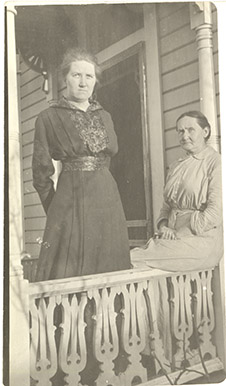
Emma Christenson Shirrod: And in Christian debt.
Sam Schrager: And what what that was it was your your father raised the sheep.
Emma Christenson Shirrod: My no, my husband. My husband had sheep and he had a car. He had had them shared. That is before he and I were married. But the world was there. And so my mother and I, we took the wool and we watched it through many wars we had. We didn't have detergents or days. So we it was the good, strong soap.
Emma Christenson Shirrod: And we watched it through many orders of soap, water, and then we rent it through many waters to get all the sheep grease out of it, you know, the oil. And then we after we got it all taken care of, we picked it apart. My mother said several days and picked and picked apart and I would help her whenever I had time and when I got it all picked apart, good it because we didn't have any carting or whatever you call them, kind of combs, I guess, but we didn't have any, so we just sent the wool down to straighten Oregon and they had it, they called it and put it into wool bat sport
Emma Christenson Shirrod: and these wool bats were put in a line. They were lining kind of like the house lining or something that they covered these bats with. And I have three of those comforters. Yeah, but that's what we were working on when the house caught on fire. But we had just finished them and I had just brought them out. They got them out through the window.
Emma Christenson Shirrod: They were tied with wool back with wool yard. We went up there and they invited us to come up and they had church in the schoolhouse right next to where they lived. It was just a very short distance from their house to the church. If I remember correctly, it was in a log cabin church and so, this minister would come there and every Sunday.
Emma Christenson Shirrod: So they invited the folks to come up and stay overnight and come up on the Saturday and be there for Sunday. And then they have the baby christened. So we went up to their place and that was after they had been down here. So here they must have been about three years old before they got christened. And so Mrs. Hall said, Hell in our arms.
Emma Christenson Shirrod: And when the Minister was christening and he said he called him a and took a little water on his hand and kind of sprinkled his head, you know, put his hand on it. And I was watching this and, and then he said, I called him Herald George Christensen, and Mrs. Halsted was holding him and he he was asleep.
Emma Christenson Shirrod: He fell asleep. Well, the minister was preaching, of course. And so after he woke up, he said, well I thought they were going to christen me. And mother said, well you was asleep. And he said, Well, why didn't you wake me up? He I wanted to see how the Gryphon So that was the story about the my little brother being christened.
Sam Schrager: You remember that very well. I do remember the trip over there, what it was like to get in the.
Emma Christenson Shirrod: Church.
Sam Schrager: The trip to get it over.
Emma Christenson Shirrod: There. We, we, we went up with the team wagon and we left home about noon, and it got to be dark before we got up there. You know, the horses could travel slowly and you don't try to move very much. You're the time that other times, you know, but they walk at times. And when we got up to danger, they'll be the place was called Janesville.
Emma Christenson Shirrod: It was dark. And so my father left us sitting in the wagon out at the road. Well, he went down there and choir where it's lived. And so they explained to him how to go to get there. And then they come back. He said, Yes, we're on the right road and it won't be very far now to wear outfit Slim.
Emma Christenson Shirrod: So we went up there and of course we were dark when they got there and everybody just burned lamps. Those days, you know, just had lights, coal, oil, lights. And so we stayed all night that night. There was my father and mother and my two brothers and myself. You see, I was the oldest of the family and there were six years difference and not outrageous.
Emma Christenson Shirrod: So we stayed all night. And then that next morning went to the church, of course, and had Christian. And then I think Mrs. Hall said, I had a son before she married Mr. Hall. It just seemed like it was they cold in Pete. But I don't know he whether he was Pete Hartford or whether he was Mr. Howard that but I think you wouldn't miss it that at some.
Emma Christenson Shirrod: Anyway they all called in Pete and him and I, we went to a little creek that next day and we finished and I got a little bit of a bass member in the creek up there someplace. Well, you see, that was a long time ago. Yeah. It must have been about. My older brother was born at night in 1896, and so there's been about 18 and 99.
Sam Schrager: They and, and and Ed also, as you said, used to what was it he used to like to call himself?
Emma Christenson Shirrod: when we stayed there at our place, they'd say to Eddie, Well, who are you? He'd say, I'm Christiansen Cowboy. I don't know how old he was, but if I was I ten years older than he was. And if Harry was three that year, well, then I was three, six years older than Henry. I was I was 12 years older than Harry.
Emma Christenson Shirrod: I was six years older than Fern. And at 1203, I must have been about 15. Well, then, if I was 15, it would have to be about five because I was ten. There must have been because he's an he's 80 now. I was 90.
Sam Schrager: That's right. Seven years old.
Emma Christenson Shirrod: And had been ten years older.
Sam Schrager: Well, I'd like to ask you mostly about about your memories of growing up and and pioneering the early days around here in Genesee. But I thought I'd ask you a little background first about how your folks came to to come out here. Do you know anything about about your family's coming over from Norway? Did they ever talk about that?
Emma Christenson Shirrod: Well, about I don't remember. November much about their coming over, only I heard my mother say that her father said that if my grandfather that it would be it was six weeks for them when they came over from Norway, took them six weeks. And then I also remember of them saying that when my grandfather, the Christianson, my father's father, came over, that his brother took cholera and he died at sea and were buried in the ocean on the way over.
Emma Christenson Shirrod: And that was my grandfather's brother, my grandfather, Christensen's brother.
Sam Schrager: Then your parents met it in back East before the families came out, is that right?
Emma Christenson Shirrod: yes. My father and my mother knew each other and even went to school at the same school when they were children. And my father left Wisconsin and went to live when it county, Wisconsin, Wisconsin. In 1876. He was 70. He was born in 1859 and my mother was two years older than my father should. Born 1857 and her and her father came West in 1878.
Emma Christenson Shirrod: Her mother died when she was four years old and the mother was four. And she had a little brother too. And the mother died in childbirth. When when the little brother was two. And so they then ran. My grandfather's sister took care of the family for a while and because she always called her old and I don't know what her name was, only she would say Ormandy.
Emma Christenson Shirrod: And all that day after the father, grandfather and mother came with old Auntie fell and broke her hip. And those days they didn't know a thing about pinning hips or anything. And she never got out of bed. She died of the broken hip. But my my father, when he came with in 1876, he came with his older brother and family and the also another family that was the that was the other Miller another Miller family.
Emma Christenson Shirrod: And that was she was the grandmother of Mrs. O. Bell, Bill Isaacson. And Mrs. Isaacson lives in Lewiston and this Mrs. Miller and her husband, she worked Corina Miller, and they had, I think, five children when they came with, but they must've come by Wagon train, the Millers and the Christensen family. And of course, Father said that he could have taken up land, was about oak and stands at that time.
Emma Christenson Shirrod: But he said that soil looked so poor that they didn't think that it was any good. It was gravel and lots of little rocks and stones. You know, the kind of gravel like. And he they came on down then to step two. That's a little town. It was before they'd get into Colfax and they stayed there a while because the children took the smallpox and the two of the Christensen children.
Emma Christenson Shirrod: Andrew and Matilda, died of the smallpox and were buried at Steptoe and the Miller family. They got well, they were three, two or three then that also had the smallpox, but they got well, and then they came on down to what was called Nez Perce. There was no Genesee at that time, and they stayed here at the TI, the Miller family.
Emma Christenson Shirrod: I think his name was whose name was only Miller and her name was Trina. And then in a few years he passed on and I believe is buried Genesee. And then my grandfather Thompson and his daughter Johanna Thompson, that's my mother. In later years they came by train from Montgomery to San Francisco and then by boat from San Francisco up to Portland.
Emma Christenson Shirrod: They came up on the boat called the J W, and they then went on to a place called well, Lula and from LA that by boat to Lula. And then on the narrow gauge railroad from wall to Walla Walla, because one of my mother's half brothers, his name was Johanna, his name was Benjamin. No, the grandfather was Benjamin Thompson, and this boy was Herman Thompson.
Emma Christenson Shirrod: And he was there at the while Lula had been there working. And so they stayed in Walla Walla a couple of months. But the Miller family that they were traveling with, that was the T in the LA family. They, came on up to what is now about a mile east of the town of Genesee. But the town of Genesee did not spring up until after the railroad came there.
Emma Christenson Shirrod: The railroad came in 1889, so I was told and my father and mother, after they left Walla Walla, after my mother and grandfather left Walla Walla, they came on up to the Genesee Country because my uncle's family, they stopped and they lived on a place which is now owned by Myrtle Roberts. They lived there for several years and then they, after they lived there, they went on to Moscow.
Emma Christenson Shirrod: But my grandfather and my mother, they came on up here and they because the Christensen family were living here. Then she took up a homestead and grandfather took up a homestead.
Sam Schrager: She took up her own homestead.
Emma Christenson Shirrod: She took up a homestead and he took up the homestead. And then in the short time they got word that my father and my father and mother were engaged before they left Wisconsin. And when they came up here and then my father was working in the Blue Mountains down there because he was too young to take up land.
Emma Christenson Shirrod: He was only 17 when he came. And then when they came, he was 19, but then he was still too young to take up land and he was working near the Blue Mountains and they got word that he had typhoid fever. So my mother gave her to her. Then horses to a man by the name of maternal for her equity in the 160, so that she would have those horses and she drove down to Walla Walla to see my father when she heard he was sick with typhoid fever.
Emma Christenson Shirrod: Well, then.
Sam Schrager: She nursed him down there, I suppose.
Emma Christenson Shirrod: I don't know how long she stayed there, but I know it took her a couple of days to drive down there, and then it took her a couple of days to drive back up again. And then after he got better yet, well, then he came back up here and he took up what they had a squatters right on land.
Emma Christenson Shirrod: And then he let this then born have the his right to that land because he wasn't old enough to violently he had to be 21 to file on it. So then there's Ben Vaughn. He proved up on the land, and then one father got old enough and and got back up here. He decided he wanted to sell the land.
Emma Christenson Shirrod: So he sold this hundred and 60 back to my father when he got to see a mortgage company so he could buy the money to buy the land from that, then boom.
Sam Schrager: So now you're in here.
Emma Christenson Shirrod: Get then. My father and mother were married in 1881. It lasted and they they were married at a different hotel by the Justice of the Peace in July the 14th, 1881.
Sam Schrager: Now, I was going to ask you if they had any memories of the Indians scares around 1877 and 78. That was just when they were getting down here.
Emma Christenson Shirrod: In the 1878 and in the 1880s. And that part Mother said, you know, we didn't have that much. You said to be afraid. We stayed right on the farm. But she said many of them went to the thought that Ford was on that little knoll kind of northeast of what is Genesee now and and not so very far from the Beeman place.
Emma Christenson Shirrod: My mother said that when she first came here, she looked up to the demon place because that's where they got their post that where the post office was, that's where they got their mail. And she said she walked in, carried a basket of eggs and got some coffee and some sugar at the demon store, and that the beams, well, they lived there many years and about and a few years ago one of the Beeman boys came back up here.
Emma Christenson Shirrod: Then he had a cattle work down to the Okanagan Country in Washington, and he came up here and he heard that I had known something about where their place was. And so my husband and I, we took him up to the Norby place, rode off for our RV lives because that was the old Beeman place. And he said, Yes, that's the old barn that we had when I was a child.
Emma Christenson Shirrod: But he says the house is different because the house would been taken away and a larger house had been built up.
Sam Schrager: For your mother to walk over to the beam in place. What was that like?
Emma Christenson Shirrod: My when she walked there, there was no roads. All this land was all this virgin land with bugs, grass and no fences. And she just walked across the hill, she said, and we had up to the basement place because there was no Genesee there at that time. There was even an old the old Tennessee wasn't even there when she went up to get her mail because after the old Genesee was built up, when Mr. Mr. Roden stayed and Mr. Levi they built stores and they built it up or over Genesee was because they thought that old Tennessee that that's what they built it.
Emma Christenson Shirrod: There was no railroad here. So they built that when my folks first came to the country here. And so when they did railroad came in, they stopped a mile short of reaching the railroads in this way. And so Mr. Owens, Dane and Mr. Levi, they both moved their doors from what was Genesee to new Genesee and the new railroad, as I understood it, came in in 1889.
Sam Schrager: Did you ever hear why the railroad stopped there instead of going to old Genesee?
Emma Christenson Shirrod: They never knew why or knew that it was just a mile further a railroad that they wouldn't need to build. I guess.
Sam Schrager: Now, did did you did you hear or see what it was like to clear the land to plow up the bunch grass?
Emma Christenson Shirrod: Well, when my father got bought this land then from Mr. been born, he got him an ox team and they came. He called Tom and Jerry, and he the first year he broke that land up, then with the dark stain and my grandfather and my mother, they lived on the place where my grandfather had taken up. And then when my grandfather passed away, he passed away on the 16th of October, 1884, before I was born, November the 20th, 1884, and then in 1886, the land mother was the only heir.
Emma Christenson Shirrod: So the Grover Cleveland is the one that signed the.
Sam Schrager: The Homestead deed is.
Emma Christenson Shirrod: That it was a well, it wasn't really. It's I guess you'd call it a deed. And I really know where it is right now, but I gave it to Mr. Roberts just a few days ago because I had sold him the land. My mother passed away in 1840 and in 18, 1940, and in 1936 she had dated me, her homestead.
Emma Christenson Shirrod: And so I had this patent, which the Grover Cleveland had signed. And I thought then it should go to Mr. Roberts as he had bought the 160.
Sam Schrager: Well, let's talk about bringing you into the world. And you're when you when you came along, I.
Emma Christenson Shirrod: Understand I was born in 1884 and there was no doctors at dentistry at that time. So they my father had to go to the neighbor and get him to go horseback to Lewiston. And he got the doctor and his name was Kelly, Doctor Kelly. And he came up and I was born in the kitchen because they only had two rooms.
Emma Christenson Shirrod: They had the, the upright building, a partly log, whole house and then my grandfather had built a lane too, and they made that lane too into a kitchen. And so when I was born, I they had put up a bed in the kitchen for my mother because my father's youngest brother had came up from Liskeard and he had the typhoid fever and he was in the upright part with the typhoid fever at that time.
Emma Christenson Shirrod: And so the doctor came up and of course had to come with him. And then he went into the other room to see how my uncle was. And that trip cost my father $40. That's the story of my coming into this country now.
Sam Schrager: Was that $40 divided between you and your uncle? Was it was that 40 divided between you and your uncle 20 apiece?
Emma Christenson Shirrod: I suppose that was I don't know. It cost them $40 to see.
Sam Schrager: Now this typhoid fever. How did they treat that then.
Emma Christenson Shirrod: I don't know much about what they did those days, but in later years I had it and I know that I had very severe lay. In 19 five, I had been going to school at Pullman. I had taken a two year business course and I came home sick and it was typhoid fever that I had. And the doctors wouldn't allow me to have any water, only what they had put some kind of medicine in do.
Emma Christenson Shirrod: And mother said, I just cried for water and I'd cry for water. I wanted a would water and they wouldn't give me only what they kept in the basement. And they go with this medicine man. And they didn't allow me to have anything to eat. Well, they said I didn't have anything to eat for 24 days. And then when I got the feeling better and that they were coming to break, I got real weak and they they thought that I wasn't going to make it.
Emma Christenson Shirrod: But after I got that really expelled and they commenced to raise me up like this swelled up and something terrible, my mother said she put stockings on me and she couldn't hardly get them off again. I just couldn't move the legs well, so, so they had to put me back to bed for a few days till they got the swelling down.
Emma Christenson Shirrod: So it those days they didn't allow you to have nothing, you know, and I don't know, no water. I think nowadays that it's doctored a different way. But you see that night ages ago.
Sam Schrager: It seems like there was so much sickness in those days that people had troubles and medical troubles.
Emma Christenson Shirrod: No, I didn't think it was so much. You see, my grandfather died of a heart attack. He was Mother said he worked real hard. That day. He had been spreading the word. You spread enough wood, she said. The last several days, maybe a week or longer. And she said he was sitting on an old trunk they had and they were sure the men were all at the table eating.
Emma Christenson Shirrod: There was those days the harvest was too late. And he's he said she noticed that he stopped talking and she knew his conversation wasn't true because he was talking about when the railroad would come into town. And she went in and she said, Father, are you sick? He says, a little bit to the dead. So of course there was a bed in that same room and she led him to the bed and he lay down and they thought he went to sleep.
Emma Christenson Shirrod: And a little later on the man went out to take care of the horses before they went to bed. And when my father came in and my cousin, Ed Christenson, the oldest one of the Chris Christensen family, was there, and he called out to my father and he said, Andrew, he says, I can't hear Mr. Thompson, you're breathing.
Emma Christenson Shirrod: And they come in and he had passed on. They thought he did not sleep, but he died, had died.
Sam Schrager: Just very quickly.
Emma Christenson Shirrod: Very quickly.
Sam Schrager: Well, it seems.
Emma Christenson Shirrod: Like I didn't know that he had any heart trouble or.
Sam Schrager: Anything. It must, if your family had to go as far as Lewiston to get the doctor, then there was no doctor around Genesee at all in the beginning, no.
Emma Christenson Shirrod: They had to go to Lewiston for the doctor. They I remember telling about how they went to Colfax to get their flour. One year and one year they said they drove down to Pomeroy to get flour, to get flour because it didn't have any flour mills closure and they used to get their flour then for a year supply at a time.
Emma Christenson Shirrod: Those days.
Sam Schrager: Did they ever talk about what the trip was like to get down the grade here to Lewiston in the in the early days.
Emma Christenson Shirrod: Well then nobody talked about it. But I remember when I was a little girl that would take us all day to go to Lewiston and back, you know, just if we just went down for something. And I was always a child that wanted a drink all the time, Mother said. And when I got down to the river, I said, All would love to drink here.
Sam Schrager: What do you remember, Ailsa? Do you remember about those trips? Were they were they hot and dusty to get to get down? Was what was the what was the trail like?
Emma Christenson Shirrod: the it was what they considered a pretty good road in those days, of course. But it was a long winding. It was 11 miles long. The great part was and I remember after my father's death, my father died in 1909. he contracted, died for the second time. Never get over it. And I, he had it before, and I guess he had contracted the second time and then it windy and he got the feeling a little better and we thought he was going to get all right.
Emma Christenson Shirrod: And it took a relapse. And where did the complication And after my father's death, then my brother took sick that fall and he was going to school at Pullman and he was taking a course in pharmacy. And it makes some chemicals and it had an explosion. And I had a little fire, burned some books and quite a bit in the there where he was taking this course.
Emma Christenson Shirrod: And that was on a Friday. And the next Sunday he took came down with hemorrhages. Well, my mother and I, we thought it must be cot lung trouble, of course. And we never thought about it, that it could be a from the fumes or anything that way. And so we got ready as quick as possible and took him to California, to a lung specialist at that time.
Emma Christenson Shirrod: And that was in 1999. And this doctor Bridges lung specialist, he couldn't find any good tubercular germs, He said he said they just couldn't find any at all. But we thought maybe if we get in there a couple of years, that he would feel better, that he would get over this lung trouble and then in 1911, he wanted to come home.
Emma Christenson Shirrod: So we brought him home and had him at home for a while and he got worse. And we took him to Red Barn Hospital in Moscow. And he he lived to tell the 28 December. And so he was just 21 years and 22 days when he passed away.
Sam Schrager: Did you stay?
Emma Christenson Shirrod: So I know now that I got older. I know it was fumes from that explosion they had that must've burn inwardly because he would get deathly sick and then vomit blood and they had as high as 30 him ready to do. We've done.
Sam Schrager: Did you stay with him in California?
Emma Christenson Shirrod: And.
Sam Schrager: No, he stayed there himself.
Emma Christenson Shirrod: Stayed there when we first had a lady there that took boarders and he stayed there in the boarding house and then in that in 1910, a lady that he admitted she came down and they her her stepmother insisted that they get married and she swore that my brother was 21 when he wasn't. But anyway, they were married. And then and then he came home.
Emma Christenson Shirrod: This lady came home with them, married. And they came up in 1911. And I think they came along in the fall, be in long in August. And then it took Horsham in mid-October after we Tilbury's birthday was the 6th of October.
Sam Schrager: I'd like to ask you some about some of your early your childhood memories, some of the things that you remember from when you were young. I know one story you told me that I'd really like you to tell me again. This is when the first time your brother saw a gang plow.
Emma Christenson Shirrod: That story that it was my oldest brother. I was. I was. Well, it was in the fall, and it must have Then he would born in October and it must have been long towards that next spring when we were out in the field together. Wildflowers, my father had bought a little express wagon and I had an express wagon and I called him up on top of the hill.
Emma Christenson Shirrod: It was old virgin, just birch grass and wildflowers, and it was inside of the house where we lived. And we were up on that hill picking flowers. And I said he wanted to get out and pick flowers too. And he looked down the road and he said to two cars. To do cars, you said. And he was born in 1890, in October, and this had to be in the spring of 91 because he started to run because it was rated that to do cars.
Emma Christenson Shirrod: It was that a man by the name of white. He was plowing down in the field for Mr. Langdon and he thought that gang plow and all them horses were the cars. And so he started running at a sale. And it happened over and over and over. And I tried to catch him, but I couldn't catch him. And father seeing it from the home, and he come running and picked him up and carried him home.
Emma Christenson Shirrod: And he just got so sore all over. Poor little fellow. It was just awful for.
Sam Schrager: This was the first time he'd seen anything bigger than a walking plow.
Emma Christenson Shirrod: Yes. well, you see, it was only a maybe a baby was born in October. This had been the spring when they started work. I rode along and May, maybe April or May because it seemed like the years were a little different when I was small. Would never get our harvest in the long, late in the fall. So I remember one year of the wet gear night in 1893.
Emma Christenson Shirrod: The my mother was sitting at the table in the morning when she was eating breakfast and the sun came out real bright and she looked out through the window and up toward the trough. That was and she said, Well, my goodness, that barley stack is looks like it's smoking. It looks like it's on fire. And it was it had it it rained so long and the sun came out so bright on it.
Emma Christenson Shirrod: It it it just really burned up and it just smoked and it was just a heap, you know, just the smoldering. And so that that took that barley field, which we didn't have anything of that.
Sam Schrager: The whole field burned.
Emma Christenson Shirrod: That whole stack. It was all put into the use the header those days and put it we had 200 beds and hold it and put it all in stacked.
Sam Schrager: it seemed like hardly anybody did well that year. 93.
Emma Christenson Shirrod: No, no, no. But it did because they lost all their crops you see rain so they couldn't harvest them. And that, that was long late in the fall because everything would later a year or later now than they are now. Now, I remember it had been so many years ago that they started harvesting in July, and that's something we had never known would never start till it left of August or September.
Sam Schrager: Did you plant the fields later, too?
Emma Christenson Shirrod: Yes, All the all the seeding was done in the springs. They didn't never have for crops. They didn't put grain in the ground in the fall. They always put it in the spring. They would maybe plow their ground and heroin and seed at all. In the spring.
Sam Schrager: In the spring, come any later in the early days than it does now.
Emma Christenson Shirrod: It does seem like it did, but I don't remember. Well, that was but I don't know. We didn't know anything about Summer Farmer that was started in later years. I remember Summer Farmers, of course, but I, I know in the beginning when I was first a little child, they didn't know anything about summer.
Sam Schrager: What are some of the other things that that you remember from when you were young and growing up?
Emma Christenson Shirrod: Well, I remember when I was or wasn't more than well, I was about three years and I believe my mother said three years and nine months when my grandmother died. And I remember seeing her lay in their bed just as well. I just see her there as plain as now as I did when she was there. And my mother didn't think I could remember that she says, You just you just hear say, I said, No, Momma.
Emma Christenson Shirrod: I said, I remember. I remembered things that happened. I said, I remember the kitchen. I had to step down into the woodshed or Uncle live there in Moscow, in the east part of Moscow. And I said, I was sitting on that step and my father came up. He'd been downtown and he brought some little candy cigars. We called him the it was a stick, a candy with a little red eyes and bless.
Emma Christenson Shirrod: In the end, it looked like it was on fire. And he gave me one and they gave my cousin a frank one. And they gave Matilda one way to tell each of us children he gave us all one of those little cigarets or cigars or whatever you'd want to call them. And I remember that distinctly. And I also remember I can see that's how the bed sat in the room where my grandmother was and her chest of drawers next to the wall, a right close to the head, to her bed.
Emma Christenson Shirrod: She didn't intend to go to stay at uncle's. She just went up to visit them to where they folks took her up on about the 4th of July. And I remember that my father lifted me up on his shoulder so I could look over a border fence and see that was heading races. And there was a bunch of boys racing.
Emma Christenson Shirrod: And I said, I didn't look, I didn't have that goes on. And I know now that they just had their running trunks on, of course. And I, I thought it looked awful, but I, he lifted me on his shoulder. So you see I was I was three the November before and this was in July. So I wouldn't be forward that coming November.
Sam Schrager: When you were a youngster you knew Levi and Rosenstein, right?
Emma Christenson Shirrod: yes, I know Levi. Levi very plain. And his name was Louis Louie Levi. We called him in later years. They called him Leathers leather. But then then those they said Levi. And he was a great friend of that Langdon's and male Langdon. lived just close to us on the farm. And so this lawyer lady A brought me a doll and it was a dark complexioned doll.
Emma Christenson Shirrod: And our leg didn't he'd be one and his was a light complexioned one. And he said to me, Did you tell Louis that this is your now? And of course I did anything that outlined in the doll made to say because I thought l was perfect. And when I told the way that that would my do doll, I remember getting an awful scolding from my mother after Levi was gone.
Emma Christenson Shirrod: I remember that distinctly.
Sam Schrager: Do you remember.
Emma Christenson Shirrod: Anything? And stay? And he had a store. And when my father took me into town with him one day and he gave me like a candy, that would forget that. And when Mr. Rosenstein left in that same year and years after that, he came to me one day, my mother and I, we had an apartment downtown in Long Beach, and he came in long and I would go with him to see if I could find the placement for him.
Emma Christenson Shirrod: And so I went with him. But that was years later, I think around about 1920.
Sam Schrager: Which Rosenstein was this This wasn't Marks or.
Emma Christenson Shirrod: Marks was this.
Sam Schrager: Yes. This was the this.
Emma Christenson Shirrod: Of this is grandpa owned. I went to see his wife, Mrs. Rosenstein, shortly before she died when she lived in Los Angeles.
Sam Schrager: Both both those men were real pioneer merchants here, right near here for many years.
Emma Christenson Shirrod: Loyally. He didn't stay at Genesee very long, maybe maybe three or four years. And then he went to Seattle and he and Mr. Roden, Mr. Langdon corresponded all the years, and just a year before Mr. Langdon passed away, he got word from Mr. Levi from the family that Mr. Levi had passed away, that little Levi had passed away, and Mr. Langdon died.
Emma Christenson Shirrod: I think about 1946, 1945, 1945.
Sam Schrager: Do you do you remember anything of what the Rosenstein store was like?
Emma Christenson Shirrod: yes, it is. The old timers don't worry at all. They had they and the heating still went to keep that warm and they had issues with all sales. Those days were button shoes that had buttons up the side and Buttonhole would you know, I had a little shoe buttons here like they used to wear on their shoes and they had lanterns and lamps and and landers you know that they used to have to carry to do the chores in the evening.
Emma Christenson Shirrod: The farmers and I guess people in always had to keep lanterns out though. And then we had the regular lamp with the burger and the chimneys. We always had washer, lamp, chimneys every morning because you know, they get smoky and you'd have to wash them every morning. We'd always wash the chimney and sometimes would wait for our breakfast pitchers.
Emma Christenson Shirrod: The last year it was washed and they had all those things like that that you don't see nowadays in the store.
Sam Schrager: So your family could get what they needed in Genesee. Mostly they didn't have to to go to Sears Roebuck or any place else to get what they needed no after.
Emma Christenson Shirrod: After they commenced running stores, then they had everything they had, well Genesee, they had hardware store, they had two hardware stores. The later years they had two, they had the furniture store for years. They had a, they even had a paint shop, I remember, and they had two drugstores and we had two blacksmith shops and a, there were two hotels and and dry goods stores.
Emma Christenson Shirrod: It was a couple of dry goods stores. And then there then there was the dry goods store and grocery combined. And they had different times. There was the farmers. They had a store at one time, the elders had the store at one time. There was the bar store for many, many years that the days Larrabee grocery store. There's the, Bell store, I believe it.
Emma Christenson Shirrod: Jimmy Bell that had his door for a while. Grocery store. Then there was the, BOLO or in the store for a while. I think they bought out their own state store.
Sam Schrager: And.
Emma Christenson Shirrod: Then then later years, it got down to we had the store caught on fire, burned up, and there was never a dry goods store put in again. But and we had grocery stores. The last grocery store we had that there was rice. And then then he built a new store. Then he sold out and there's been several different ones there.
Emma Christenson Shirrod: I can't tell you the name of the one that's right there. Now it's a new man.
Sam Schrager: What were the wildflowers that grew around here when the that we loved the wildflowers.
Emma Christenson Shirrod: We had a wild bluebells, wild Johnny jump, some crocuses and maybe flowers and yellow bells. Lots more than I can think of.
Sam Schrager: Those are nice. Those are nice sounding flowers. And do you remember what. What your kitchen looked like in the home when you were just young? What? There was my.
Emma Christenson Shirrod: Kitchen. My kitchen. We had a table in the kitchen and I still have the table. It's in my basement. It got leaf that my grandfather made and it was a two leaves and middle table, middle part of the table and a leaf on each side that dropped down. And that was our table for our family for many, many years.
Emma Christenson Shirrod: I think that, when we left the farm in 1915, that of course we took it to the town with us and with the state of Tennessee a short time. And then I, we, I married and came back on the farm. And then when my mother came to live with me, her stuff was brought up. So I had the table.
Emma Christenson Shirrod: I had the chairs with my father had, they were, they, rawhide bottoms were in them, rawhide strings that and in the bottom. And then after they'd kind of warm up, my father really liked them with, with the rope. And I have two of those chairs here, and, well, we had a flower beam that was made, so it handle about, I think about four sacks of flower would hold about £200.
Emma Christenson Shirrod: There were £50 sacks.
Sam Schrager: In the kitchen.
Emma Christenson Shirrod: In the kitchen and then there was at the top of it was a lean to lid. And above that lid was two shelves and they cut off the meal and the jar of coffee set up on that chair. I have the coffee mill in my basement now and my father used to grind the coffee grinder out in the evening for breakfast and my mother would part of it would buy the green beans and and she would parch it in the oven.
Emma Christenson Shirrod: And then my father would write and it be for the harvest time. And we'd and my mother would always pound the beefsteak and get it ready for breakfast in the morning. And mother always made her own bread. She did till she passed away, until I was mad enough to do it. And then I took over. And after she come to live with me, she lived with me for 14 years before she passed.
Emma Christenson Shirrod: And then of course, I made the bread. But, she knew that as long as we lived on the farm and even after we moved down, we made all our own bread and pies and cakes and everything. We never bought anything. My mother went downtown one day and she brought home a loaf of bread. She said, I just wanted to say I had bought a loaf of bread.
Emma Christenson Shirrod: We did our own rendering. We had a big iron boiler. I had the iron boiler that we used to use. When we would do render our own lard and we had our own had our own steel frying pans and our on our bread pans were so dark looking. I thought that was kind of a tin, but maybe they were a kind of a sweetheart.
Emma Christenson Shirrod: And I don't remember. And not, of course, ma'am. All my bread Pangea aluminum. I still have the old pancake griddle that my mother and father started housekeeping with. It's a wood reached over two legs. But of course, we never took the lid off. We set it on top of the lids. It was an iron. I have the old iron kettle, and my mother did all the boiling of the beef bones and and boiling strained beans and and all kind of cooking and all that required for meat cooking.
Emma Christenson Shirrod: We had the big old iron kettle. I have that, I had the potato dish that my father and mother started housekeeping with and in China they would call it potato tureen. So two days they had the dish with a little red on it. I have the gravy boat that my grandfather started housekeeping with in about 1850 with the big one, something like that, and the little tray that goes on.
Emma Christenson Shirrod: That's also not the kind of large donation that you get nowadays to.
Sam Schrager: Were you expected to to help much around the house and around the kitchen when you were when you were a youngster or not?
Emma Christenson Shirrod: as I grew up, I, I started in as well when I was able to because my mother was sickly and sometimes she has bad headaches. Of course, when she was sick, well, then I would try to do a lot of time thinking that the sick headache and we had two men working for us and and we had and she had run out of bread and I wasn't old enough to bake bread.
Emma Christenson Shirrod: And so this man, he said, I'll make some bread. And so he made biscuits for breakfast. His name was Dale Delmar Ferris. He's been dead for many years. My father wasn't home that time. He had wound up on the Potlatch. You end up on horseback, you head up to see if you could buy a horse to do it.
Emma Christenson Shirrod: We needed some more horses.
Sam Schrager: Did he ever tell you or about the Indians experiences he had with the Indians?
Emma Christenson Shirrod: No. He never, ever said anything about them. But I remember when we could see the Indians as they come in their long trails of horse or horseback, you know, and then they'd have two long sticks dragging out behind and have their all different kind of stuff, maybe bedding and stuff. But they had tied up the infection. They would drag behind the horse and they'd be riding, riding the horse.
Emma Christenson Shirrod: I've seen many of them go by. We could see them as they come down over the hill. They rode a regular Indian trail down the hill, that ridden side of our house. And we could see them would be that trail of the Indians as far as the eye could see down the road. There was you could see about a mile difference from the east to the west, we could see, and they'd be just going out of sight in the West when they were still coming in sight in the East.
Emma Christenson Shirrod: I, I remember seeing them long trail. They were going from different one tribe to the other, going someplace.
Sam Schrager: Did you tell me that that was he was a little bit scared when the Indians came to his home?
Emma Christenson Shirrod: Yeah, that was there before I was born. My grandfather had a big dog. A big dog. And they. They was going to ride into the house with their horses. The two Indian boys and my grandfather just told the dog to watch them. And I'd scared them away. They, they left them. So they felt this your dog meant business.
Emma Christenson Shirrod: He was a big dog, a good friend of the family. But he would be vicious if they'd set him on somebody else or something. And Mother said one time she got all very scared, but it didn't amount to anything. One time an Indian come walking right in our front, front door, front kitchen door. And that was before my oldest brother was born.
Emma Christenson Shirrod: I couldn't depend on my, maybe three years old, something like that. And I remember hearing my mother say to my father in origin, she's told him to look around and there's Indian had come right in. That's all. They were building a fire. He was making kindling and but what? Father turned around, looked at him. Why he turned around walked away.
Sam Schrager: So he just turned around and saw him. And he left?
Emma Christenson Shirrod: Yes, he left. Then.
Sam Schrager: Did you ever hear about the allotments? That the allotting of the land on the reservation divide?
Emma Christenson Shirrod: Yes, I remember. But I wasn't old enough to know much about it. There was a lady I her name was a.
Sam Schrager: Was this Fletcher? This was.
Emma Christenson Shirrod: I thought it was something like Fletcher, but I guess it was Fletcher that came and she renamed some of the Indians and that lot and some of this land to them. But I don't know enough about it to tell anybody anything about it. Only that, that that was what I remember them saying, that she had renamed them and, and, and gave them some land that I don't own any of the Indian land.
Emma Christenson Shirrod: I wrote later. I never did own any real Indian land. The I did a way out East of here, but it had been so many years since an Indian set that I didn't know anything about being Indian land. It was some stealth land and it still says Wife was a and she was maybe a quarter breed and she had some land.
Emma Christenson Shirrod: But and I got some of that and mother got it through a mortgage and but I sold it several years ago.
Sam Schrager: Was there a some Indian land around your place? Fairly near your place.
Emma Christenson Shirrod: Well, right over that that is a school of section land and right over that was some Indian land that that was and they'll say good place but and Mrs. they'll say girls Mrs. Dale Sager was I guess quite a breed because her mother maybe she would have I she was a Fogarty I think her her mother was a full blooded squaw and her father was a white man and she married a man by the book the George Viles played.
Emma Christenson Shirrod: George Bales was Indian. His his mother was poor blood and his father was a white man, was veiled and discharged Bales. He had a lady and my my husband had bought this 80 and another 80 that we that my husband owned later was owned by his brother. Perry shared. And that was the Frank Wild land that was the Indian 80.
Emma Christenson Shirrod: But Grandma Bales, she lived right next to where we did, and she owned on it and my husband had it rented from her for several years, but we never owned it. We just rented it. And that then and she lived and went down to let play. And while she was there, she died and then that fell. Then her two of her, her daughter had died and Mrs. Craig was her daughter and she had died.
Emma Christenson Shirrod: And so the granddaughter, Mrs. Hamer, had that lady and Mr. Hamer sold it to Mr. Vestal, and it's now owned by the little boys, Mr. Bastard's sons.
Sam Schrager: I wanted to ask you about one of the things that caught my eye in what you wrote up was that you ran for county treasurer and tax collector in 1919 12, and within.
Emma Christenson Shirrod: 12.
Sam Schrager: Years I was curious about how how you came about, what why you decided to run.
Emma Christenson Shirrod: I, I didn't decide to run. There's a some young men down in Lewiston decided for me who were they wanted me to run and they wanted me there to run for school superintendent and they wanted us to run on the progressive ticket because they were fed up on the way things are being run. And they thought if they changed the plan to a progressive ticket that they would run have a different bunch of people in down there.
Emma Christenson Shirrod: And so I ran and but they saw this man that had been censured for years. He was running against me. And of course he got it. But I only they lost out by around 100 votes. And I was so surprised that they guy got so, so nearly and got elected that I couldn't not believe it.
Sam Schrager: What if a person was running for office in those days? Like like when you ran for that office, did you did you what did you do? Did you talk to people or.
Emma Christenson Shirrod: Yes, I did. I went through and I took my our team and buggy. I it was a team and not a not a bug in all. Heck it was we had and we went to some different school just at schoolhouses, you know, in the county and had little speeches and told them what our ideas was and what we believed in and so on and so forth.
Emma Christenson Shirrod: Just like they do nowadays. We went to we went up to Melrose, I guess it was called, and where else did we go and forgot where they were Now.
Sam Schrager: So you yourself, you believe we would. It'd be good to have a change of a change of people in office at this time.
Emma Christenson Shirrod: They told into it and, but I was always a strong, strong Republican. I still am regardless. I am a real, real Republican. I believe in the Republican ideas.
Sam Schrager: Yeah. Where did you find out the election returns? How did that work? girl, how's.
Emma Christenson Shirrod: It over there? And and and before it, we had a right to vote. The women didn't have any voting right at that time. So, one of the Collins girls, Blanche Collins, she stayed with me, and we went over till the till the election returns came in. I wanted to know if I run in one in my own precinct.
Emma Christenson Shirrod: I didn't know that whether or not I did, I had I had my majority vote there.
Sam Schrager: You didn't go door to door to talk to people, though, did you? No. It's too much of a of a job. No.
Emma Christenson Shirrod: I wrote a few letters to some, you know, but not not very many.
Sam Schrager: Do you remember about women getting the right to vote about that coming to.
Emma Christenson Shirrod: that country that came in were years after that then about well, didn't they come in about 1918?
Sam Schrager: I'm not sure of the exact date, but what I was wondering about was whether whether there was any talk about it before it came. Was there any effort in the locally to. I've seen in Troy like they had a they had a couple of parades in support of the of giving the.
Emma Christenson Shirrod: Right to different places but now little place like here we didn't know anything about it much so I don't think we paid much attention with the women get a vote or not they didn't care and think don't worry about it You know, I don't remember, you know, I didn't think about it enough that it ever breast of a mind an adult.
Sam Schrager: Well you might.
Emma Christenson Shirrod: It might have been around about 1918 something like that that the that the vote came in I don't think it was before that. I know it wasn't at the time I run into out in 1912.
Sam Schrager: I think prohibition came in around the same right in that period of time in the Kennedy I think prohibition came in around the same period of time.
Emma Christenson Shirrod: We were more we were more interested in prohibition than we were in the women's vote.
Sam Schrager: Do you remember anything about that coming? Was there much of a of an effort to get that?
Emma Christenson Shirrod: Was there was a there was quite, quite a bit. And the prohibition people would run out one out here. Neighbors got it cause one of our neighbors, he was such a strong liquor man, you know, And he said that, he came over and said, Well, he heard the election and went with, well, that's what the first report was.
Emma Christenson Shirrod: And so then I told him that I could tell fortunes, and I got up to more cards and it worked with the cards a little bit. And I said, I said, you misunderstood. Said you got it. That they were the it was it was the majority said when it was in the minority and and it turned out that it was the minority, the the prohibition had won.
Sam Schrager: You were just getting him though.
Emma Christenson Shirrod: It was getting.
Sam Schrager: Deep. Was there was there a did did you did you know how to read cards at all? No. You were just kidding.
Emma Christenson Shirrod: I about that.
Sam Schrager: Well, how did you and your husband meet?
Emma Christenson Shirrod: my goodness. I don't know. I know he used to go by our place for years before he was married. He and his brother had a place up here, and so they used to drive cattle back and forth go by. I know we were sure that at all, but I knew a sister. I knew Business page. So then my A he married in 19 four, Well, about 1945 was when I went was going to school down at Pullman.
Emma Christenson Shirrod: Well in 19 four I believe they married. And then, in 1919 four. Well, in 19 my nine, my father passed and he died on the night of July. And on the next day, on the 10th, the July, a neighbor, Mr. Bridge Smith, he was the one that had gone to Lewiston and got the doctor the night I was born.
Emma Christenson Shirrod: He came over and he said he said, Fred, sure. That little boy this morning that was against the July. Well we paid don't pension pay. It didn't pay much attention about that. And then of course I knew of Red Shirt, that's all. I didn't know his wife. I never met her. So then and 1959, we moved to town and I told Mother, I said just the same as I get on my feet, said, I'm going to get I'm going to get married and I'm going to move back.
Emma Christenson Shirrod: In Nez Perce County. I said, I'm going to be on the farm. And I cried when I had to leave the farm. I went in because I had to give up all the horses and everything. I was crazy about my heritage and and cows too. I don't bother the outside working on handle the horses and cows and things.
Emma Christenson Shirrod: So and my mother said, Well, what are you crying about? I isn't crying because to left the farm. I said, I'm going back to it. So what about seven year? you see, it went on and and Mrs. Fred shared and took sick. she was sick for six years. She had tuberculosis, I believe, and Fred had her down to Arizona and on down to California, and it kept her all different places.
Emma Christenson Shirrod: Little Stanley was only three when his mother took sick, so he had a lady in Genesee to take care of him. And she. He had I her name was Hershberger. And then he too had him in the lift and with the one of his half brothers. That's why I took care of them for a bit and different places.
Emma Christenson Shirrod: And then one day I was down in the store and there was a lady in there and I said one of the and I said, Well, who is this lady here? And she went out and she said, Well, that was Mrs. Red haired. I said, I never had seen her. So then it went on and in 1918 she passed away.
Emma Christenson Shirrod: Well, in 1921, Mr. and Mrs. Schork, they had a jewelry store in town, and I had been working at the post office. I worked there and during the time my brother was in service and you see we only got $4 an acre for Randolph. Our land. And after you pay your taxes out of it and everything, you don't have much left.
Emma Christenson Shirrod: So I went to work at the post office and when Harry came home in 1919, he said, I am. I said, I don't want you to work there at the post office, so I want you to come home. I said, All right, I will. So I told the postmaster letter to Denver that I was going to quit. I was going to go home today because Harry wanted me to.
Emma Christenson Shirrod: He said, All right. So it and Harry passed away in 1919. He came home in February of 1919, but he never was. Well, after he came home, he was sick all the time. And in 1919, the 50 September, he passed away. So I said to mother, I said, Now let's go down to California. I said, Get away from all of this for a while.
Emma Christenson Shirrod: So we went in the fall in 1919, we went to California and Mr. and Mrs. Bates came down and Mrs. Bush was a sister of this red shirt. And of course, I had seen him was in the post office. He'd come in once in a while for a meal or something, and I know him that way. So one day I got a card from this red chair and while I was down there and, girl in California.
Emma Christenson Shirrod: So I but I don't know that branch or this card or not, I don't remember, but I know I got a card and a maybe it's a Christmas card. I don't know. I don't remember. Anyway, so we came home in the spring and Harry had joined donations and he told me, says, I want your mother to join the Eastern Star.
Emma Christenson Shirrod: So when we came home in March, we put in our application for the Eastern Star because Harriet does, too. And so that was in 1920 when they come. We went down in 1919 and when we came home in 1920. So then in 1925, I said, Let's go on back to California this fall again. So we went back in 1920 and in the come home in the spring of 21.
Emma Christenson Shirrod: And Mr. Shaw said, Well, I we want to take a little trip that you come down, take care of the store for while we're gone. well, I was there taking care of the store and she took what came to town. They had different programs, musical programs, different things. And so Fred heard come in to the store one day in the jewelry store, and he says, I'd like to go to your talk with me tomorrow.
Emma Christenson Shirrod: Well, I said, I'd like to go. All right. I said, I don't know about this store. I promise I'll take care of it. Well, he said, everybody's going to close up the store during the dogwood hour. Well, I said, I'll close this till then. So I locked up the door and I went with Richard up to shoot up with that day.
Emma Christenson Shirrod: That was it. 21.
Sam Schrager: And do you remember what was what was in the Chautauqua, by the way? What they.
Emma Christenson Shirrod: Had? Well, quite a bit of Hawaiian music. That's about all I remember about it was Hawaiian music, you know.
Sam Schrager: And so then you started going together?
Emma Christenson Shirrod: Well, no, I didn't think we did not didn't pay much attention. And then I came back. It took me back to the store, of course, and I went back to work. And so then that was kind of an early part of the year. And then 4th of July, he asked me to go to Troy, over to the they had had a go program and I over at Troy, Idaho.
Emma Christenson Shirrod: I said, okay. So I went over with him to this 4th of July celebration over Troy. And I know that, you know, that we went over and we came back quite early because he had to get home yet George to do and we came back from that. I think then a little later on, while they had a it was a camp meeting of some kind down the other side, a Pullman someplace.
Emma Christenson Shirrod: Anyone made a gold camp meeting with him. He said, there's brother wife coming up, want me to go alone? And so I said, All right. And he said, Well, take your mother, too. So I said, All right, I'll let Mother to go. So we all went, Albert, this camp meeting one day.
Sam Schrager: Do you remember anything about that camp meeting with that was.
Emma Christenson Shirrod: Well, I don't know much about it. Of course, there it was a there was a dinner and. And I know I went and bought the tickets for this dinner because I had my mother along. So I bought my ticket for myself and her and, and Mrs. Fish got the tickets and she says, your brother Fred is paid for you.
Emma Christenson Shirrod: And she said, you don't pay. And she give me back my money. She says, That is there. She says, You don't pay twice for the same thing. And she handed back my money. That's about the only thing I remember about that. And we came home and there was a plaid shared and his wife and the little boy and my mother and I and Fred.
Emma Christenson Shirrod: And when we went to that camp meeting, that's about all I remember about. And then we came home and I just went as a friend, that's all. And I guess the next Sunday he came up and the and I had I had him to come for dinner, I guess that next Sunday. And so he said, anybody who's coming in and I said, well come on in and have dinner with us then, because I knew he was renting out there.
Emma Christenson Shirrod: So then that next time he came, I guess we came and became engaged and that was the end of it. And then we were married in the January. Well, we were going to be married in the fall, in December before Christmas, and we wanted to go with it and we'd all go to California. And she said, no, she wouldn't go to California with us if you said she wouldn't be a third party.
Emma Christenson Shirrod: And I said, Well, all right then we won't go. So we didn't go. And so then we got into it. She said, Let's go to Moscow today and we had a girlfriend staying there with us. Her name was Mary Rice and she was still married. Marriage Russia had married Rice at that day. So we I said, No, mother, I can't go today.
Emma Christenson Shirrod: She says, Why can't you go? I says, There's just something that tells me that I shouldn't go. she said, And you're something that tells you all the time. It's just because you don't want to go. I didn't know that. Didn't did I said? I went out on the back porch and I said the sky is looks different to me.
Emma Christenson Shirrod: I said, Everything looks different. I said that a funny haze over my eyes. And I said, It's telling that I shouldn't go. well, she says, it's just you just don't want to go. It was all Well, I said, I'll go, but you'll see that it's going to cause trouble. And we will. And when we get partway to Moscow, I, we had, we just grab a road and I couldn't handle that steering wheel.
Emma Christenson Shirrod: It got in that gravel and I couldn't get it back out of it. And it tipped the car tipped over and mother broke. It broke, mother's arm and I got out. It was a three passenger. Mitchell We had the one she had bought for Harry and I as soon as I got, I got, I put myself out some way, got over the back of my seat.
Emma Christenson Shirrod: Could you see the three passenger? Mitchell, You set up a little head and the two passenger sit back a little bit and I got out of that car and I run down to snow with the people that lived just this side of where I had that. And it was when the road went around that hill right there, there in front of the snow place.
Emma Christenson Shirrod: And I tried to stop a car. I got a load of men and I couldn't stop. And I went on and I just opened the door and a Holiday Inn, and I said, for goodness sake, come and help me. I said, I've had an accident. And I said, My mother is under the car and I may be killed.
Emma Christenson Shirrod: I don't know. And so they come rushing. There were at the dinner table, they jumped right up the dinner table and I don't want to finish their dinner. And they came right up there and there was no time till they had all the neighbors there. And they lifted my car up and got them off. And my mother and my friend and mother had this broken arm rest and merry, merry, still very glad that she'd got battery acid on her coat and she thought of blood, but it wasn't, there wasn't any blood.
Emma Christenson Shirrod: And so one of the men drove the car into town. Moscow, and I went right to the phone and called up Fred and told him that I'd had this accident. So that and he came right in and I went up to friends. And then, says Nadler, I see where Roy Nadler just died. And I went up to his father and mother's because I was a great friend of Nadler's, and we went and took Mother to the hospital and had to the doctor.
Emma Christenson Shirrod: And Dr. Griffin looked at her arm and he said her arm, her left was it was a crack. And they put a cast on it. And she said she never had a pain of it, never did have a pain. And of course, that put our wedding off so I wouldn't get married. Let your mother get so she could handle her head.
Emma Christenson Shirrod: And so then we were married on the level that Jude 11th of January 1922.
Sam Schrager: And what happened? That adventure and your honeymoon, What was that story?
Emma Christenson Shirrod: and then and we just went we didn't have any real we just went up to Spokane and went to a courthouse. And we're married by a judge, ma'am, who is named ma'am and believe he was a big man just by and looking big man. And he says, What do you have in here that are here for witnesses?
Emma Christenson Shirrod: No, I said, we don't have any witnesses here. I don't know anybody here, the people here in Spokane, but I don't know why they are two or three different ones that we knew. But I have red dresses. So he said, Well, there's a young man out there's a man out here in the hall that like to witness things.
Emma Christenson Shirrod: So you get to little see. Well, Richard okay, said Brigham, ma'am. So Fred paid him. I don't know what he paid and I didn't find out and I didn't want to know. So he this man came and witnessed us and we knew we were both of age. I was 30 and he would soon be 40. So then we went on up to a cousin of mine.
Emma Christenson Shirrod: this lady, this cousin here, it was her father and he was distant cousin of mine. His his mother and my father records. So you see, it wasn't very much relationship. So we went up and we got the went to court lane that night. We stayed all night and court lane and took the boat the next morning for our landing.
Emma Christenson Shirrod: And when I got to get her landing the buzzer or whatever you call him on the boat, he said there, I'll, I'll let you down first. You set the bread and if the I told you up, he says, I'll send her down. Fred said he felt kind of funny about that. He never had been on the court lane like he did nothing about it.
Emma Christenson Shirrod: And he said to me, he said, Well, who are you going? I said, You see that light in that window over there in that place? I said, There's some people that live there and I'm going over there. And then I said, Phone to my cousins to come after me. And so I went to I didn't really realize the danger of they might have been air holder or something if they could have stepped into or something.
Emma Christenson Shirrod: A good of the dangers, of course. But and Fred said he thought that I thought, all right, I guess you did. All right. So we went over that. We had to walk across. They that was the last trip up the court Lane Lake, They had it at all frozen over. And so then that was on the 12th January, see, because we'd stayed all night and got late in the night.
Emma Christenson Shirrod: And when we got there to this place, why we waited, we phoned River. They are up to my heart. My cousin was and that it didn't look good that Thornton might have been out, but it wasn't. And so he had to go out and hitch up a team's sleigh and come down after. And he came down and got us and took us up to the place and when we got there, why his he said it was Lake and down in Clarkston.
Emma Christenson Shirrod: Well, Fred says, if you want to go like that. All right. He says, I'll do your choice for you. So we stayed there a week while he went down to his daughter's is in my and she's the one that was here with me when you were here the other time. And I said, well, if Laura wants to go a long.
Emma Christenson Shirrod: That's all right I said, I'll do the cooking. So Fred, night we stayed there and while they were gone, how it did snow and they had quite a ways to go across through the timber to go over to the shed where he had his dog and where he had to go to feed. And Fred said, I don't know.
Emma Christenson Shirrod: I said, I thought if the snow fell in my tracks and I couldn't find a way back, I'd go down the girl and I'd strike the highway. Yes, I said, If you get out of the drone strike, the highway would be all right. You can come back up the highway up here. So he had them, the George there and I did the cooking and they had a beef.
Emma Christenson Shirrod: They had it hanging up in the tree, way up high. And we to saw beefsteak and we had a real lead up there while we was.
Sam Schrager: So you had a honeymoon in a way.
Emma Christenson Shirrod: Is it a wonderful honeymoon? And we stayed there a week until they come back. And then when they come back, then they took us down to a gorilla thing again and we got the train there and went to Spokane in the Spokane. And we went that came back down to Genesee. Then that took all day to get from Spokane down to Genesee because we'd get to Portland.
Emma Christenson Shirrod: We had to wait there a while before that train would leave, and then it was just a freight train, you know, that brought us into Genesee. So and then when we got home, why then we, they couldn't use the car because it was snowed in and we could use the car, the are blocked. So we called up Mr. Fish that is Fred's brother in law and told him to come on, get us with the sled.
Emma Christenson Shirrod: So that's how we got home.
Sam Schrager: There was plenty of wood cut for you up there. You had plenty of wood cut for you up there when it happened. That's a nice story like that. But you shouldn't do something. You really. You've. I.
Emma Christenson Shirrod: Have. I have those feeling, you see, I'll kill it beforehand that it happens. Well that. No, they know that I know it. I, I can tell you that one real good one. Is it on. This is it on all the time.
Sam Schrager: I've dealt with most of the time. Most of the time.
Emma Christenson Shirrod: Most of the time I've changed. Well, in 19, in 1946. No. Yes. In 1946, Mr. and Mrs. Otto Sweeney were on one of my places, and they said they wanted to take me to Spokane for a birthday party. It was going to. That was going to be my birthday. That was going to take me to Spokane. So like on the day of the 19th, they came to take me up.
Emma Christenson Shirrod: So we'd be up there for the 2022 November and a minute came in after they and I said, Well, then I should not go. Well, why? She said, I said, you see that that dump, that pigeon has come and said right down in that window and look in here at me. Yeah. She says the lot of it. I said there's never been a pigeon here before.
Emma Christenson Shirrod: And we had a tree growing right there is a new pine and it covered up a little corner of the window and the pigeon sat right there in the window and looked right in that name. I said, You know, that pigeon is really sick. And that message means that I should not go. Why? Unless he says, And you don't think you should.
Emma Christenson Shirrod: I said, I know I shouldn't. But he says, we're all ready to go, as you said, and we expected you to go. Well, I said, I'll go, but I said, You'll see that that message is for me not to go. So we went. We went up there and when we got up there that evening, my eyes commenced to matter and my they got so, so I couldn't see anything.
Emma Christenson Shirrod: I was up all night. We had, we got a double room at the, at the.
Sam Schrager: The Davenport.
Emma Christenson Shirrod: And Port Hotel and I was up all night watching my eyes. I couldn't see, I just couldn't see. And that next day I said, Mommy, I just can't see my just not mattering. So I just can't see. And she says, Yeah, well, she said, Take hold of my arm. And I had a lot to her arm. And we went to a jewelry store she went to go to and and, Fred got sick.
Emma Christenson Shirrod: He couldn't, he couldn't get out of the hotel. He stayed in the hotel all the time. He couldn't move it couldn't, go anyplace. And her husband got sick and he had blood poison started in his hand, His hand swelled up and they got blood poisoning in that hand. And I said, Well, Maria says, I think we better go home.
Emma Christenson Shirrod: And we started home and we got a flat tire and she had to get out. And her husband to help her. My husband was able to help her and I was sick. I couldn't do anything. And he he got out and they got the tire changed. And when we got to call Tex, his hand was to bed. He says, Well, I've got to go to a doctor.
Emma Christenson Shirrod: So we went to her sister's. She had a sister living in Colfax, and I took him to the a doctor and he had to do something to that hand that finger and it was all swollen up blood and started in it and they, and I was sick all the way home. And so I said, I think we better get a hotel room and stay.
Emma Christenson Shirrod: No, She says, if you can ride, I can drive. And she started out. And when I got to Pullman, I said, One minute I'm so sick. And I she had to stop. I had to get out and vomit. I was just so sick and and Fred was so lame he couldn't move. And I said, I think we better stop at the hotel here in Pullman.
Emma Christenson Shirrod: No. And what she says that you can ride. I can drive. It was so foggy, we could hardly see a thing. the fog was thick. And with the fog all the way home. And when I got here that day, I had development again. I was so sick. And then she had to take her husband back to Pullman.
Emma Christenson Shirrod: The next day to get a chance to do it again. With that blood playing now, wouldn't you believe there was something to it? She I have those. I have the ones in 46. This was in 46. This happened. But later on in 46, on, no, it was before that. It was in 45. In 45. I said to my husband, I said in the morning, I said, I believe, I said that something is going to happen to us today.
Emma Christenson Shirrod: I said, you got to be careful. He said, Well, who do you think it's going to happen? I said, I don't know, but something's going to happen. And I said, I've got the present. But he said, What is it like? I said, I don't know. But I said, You be awful careful. He went up holding the hay and he'd had me drive to do it and I'd take it and we'd put it around, had a big round barn, and I would drive the derrick and he would pull the rope through, drop the hay down into the top of this big round barn.
Emma Christenson Shirrod: And so finally the last load he got me and he says, Well, our boy says, nothing has happened and this is the last load. And he says, I'll tell you, he said, you trip it this time. He says, Now drive the derrick. I said, All right. But I said, I'll just get it done. Drive it. No. He says, I'll drive the derrick.
Emma Christenson Shirrod: And he says, You all you have to do is trip it. I weighed up and I tried to trip it and it wouldn't come. And I dropped again and it wouldn't come and add up the third time. And it broke, come loose and the third me and I fell onto the bunk hard like planks in the upstairs and broke my wrist.
Emma Christenson Shirrod: And I said, Fred, I said, I, my wrist is broken. no, he Said, What shall we do? I said, You put the team in the barn and come and I'll try and get my dirty glasses off and get another dress on and you take me down to the clinic. he said you want to go to Lewiston.
Emma Christenson Shirrod: To the clinic. Yes. I said, I want to go to Doctor Double old Clark and I said, They say he's a bone specialist. So I went to the went to the clinic and when I got there and down there why he says I'll have to, I have to put you under, he says you can't stand this. And so Fred said they he had the nurse come and a doctor, another doctor come and they yeah, he broke my wrist right over his knee.
Emma Christenson Shirrod: This way to get it up into place. He had it dropped down through here and he got it up into here that bone said. And so you see I had my presentment. See you.
Sam Schrager: You.
Emma Christenson Shirrod: And I do. When you.
Sam Schrager: Were young.
Emma Christenson Shirrod: Do I prove I prove these presentment that tell it before it happened.
Sam Schrager: You have these when you were a youngster to have they've been with you for most of your life.
Emma Christenson Shirrod: I don't I don't know that I did.
Sam Schrager: Do you think that they're religious? I mean, do you think that that's God's help?
Emma Christenson Shirrod: It's I think, protecting me. He's trying to protect me. And if I don't listen, that there's the consequences.
Sam Schrager: They this morning, that morning when you woke up, it was just a feeling that you had that something was going on.
Emma Christenson Shirrod: It's it's a very you know, what I call a presentment. It's something that that comes through me. I don't I can't tell you.
Sam Schrager: Have you ever had that that feeling before the death of loved ones in the in the family that something was going to happen?
Emma Christenson Shirrod: I guess I did. And my father, because I used to take pills, I'd cry and I. I was afraid my father was going to die at that. The only thing I used to have, I'd, I'd, I'd cry. It's like father would go to die. And I didn't know how was going to get along without my father. And of course, he died.
Emma Christenson Shirrod: Young man, he was only 50.
Sam Schrager: I was going to ask you about the fire that you had and how how that happened. It was in 1920s. In the twenties when your your mother was visiting the house put in the I was going to ask you about the fire that you had in the in the twenties when your your mother was visiting and the and the house caught on fire.
Sam Schrager: Could you tell me about that, how that happened.
Emma Christenson Shirrod: When the house.
Sam Schrager: Got over? Yes.
Emma Christenson Shirrod: that was the that was in 1925 that the house burned. We were I didn't have any resentment that I had, only that when when we were mother, we were quilting on a quilt and I was helping her. And I said, well, I'll have to go. I said, and get start the fire. I'll get a generous string bench and put on for supper and I got the job, bring the string beans and put them on.
Emma Christenson Shirrod: And I had built a fire. I went out in the woodshed and gathered up a lot of chips, and I suppose they were maybe, pitchy or something. And it threw out sparks and it weighed and it caught fire into the what The men, the insurance, men said was we had some poplar trees, a silver poplars.
Emma Christenson Shirrod: And he said that they caused fire. Sometimes it was burnt. Gets you into because they're real pitchy. These leaves are. And it had caught fire and wood burning. And I, I had heard a roar and I said, guess their men are coming already. I thought that the cars coming from they'd been over at the place they're working and I thought that or something over there that they would come home early or something.
Emma Christenson Shirrod: And I so I then I went out the other door and I thought, well, I might be it's a storm coming up the canyon or something. I hear this roaring and what I went out the other door and went out on the front porch to look down the canyon that I see that the roof was all on fire.
Emma Christenson Shirrod: And so, well, I suppose we both got kind of hysterical maybe because the mother said she remembered taking her a new life she had and that's moving it out on the back of a chair. And I remembered throwing out some quilts out the when I took and put a suitcase under the window and stood knocking the window out, I, propped it open with a suitcase or something.
Emma Christenson Shirrod: And, you know, all those crazy things that you do. And. But, but I saved the quilt. She had just finished it, and the. We were just taking it out of the frame when we heard this roaring kitty. And so I throw the comforters, I throw these comforters out the window. I say three that we had just made.
Emma Christenson Shirrod: I thought about that one window after I propped it open, and she went to the telephone and tried to call for help. And I tried to find her. I tried to find a ladder to see if I could go up, put some water on that fire. And I couldn't find a ladder. I couldn't find anything. And so and she couldn't get anybody.
Emma Christenson Shirrod: And she called Sandra and told Central to send help out that road. Crawford burning up and then the end of time sending somebody to help us. Why? There was only four red shirt predators in the field We knew well, anyway, we couldn't get any of the neighbors. And so then we had to get out of there because we could see that it was the burn.
Emma Christenson Shirrod: And, you know, some fire kind of falling down. And then one of the neighbors only on the other side of us, he come horseback and he took a horse out of the field and rode over and and it got he got the time to let my hands out. I had that road and setting and he opened them up and got them out so they would burn up and but there's nothing to do about the house and this is all gone excepting the this bedding that I about window so that everything burned up.
Emma Christenson Shirrod: I didn't even have a dish rag didn't have anything. So then of course I got stuff for my mother and she helped me to get the initial gauge came over in a few days to see if we wouldn't buy his farm over here. So he I told him that Fred was in the field and I'd talk it over with him and would see because we came over and got there Cook wagon and we had cleaned it up.
Emma Christenson Shirrod: And when he came to have us see if we would buy the farm, well, I really think his first wife came over to help me and we were cleaning it up with scrubbing without getting it all cleaned up because it had been sitting just idle for about a year. I'm just pretty dirty. So then we when Fred came in that and I told him, David, come over, want us to buy the place there.
Emma Christenson Shirrod: So we talked it over and I said, Mr. Gage said that his wife couldn't live here any longer, just the old houses. She had to have a new house or else you'd have to move into town and, well, this is can you live there? And them houses was as I can until we get on our feet. So we couldn't do it.
Emma Christenson Shirrod: And I said, if we take the money that we get for the insurance here and put it towards the place over there, be better than to try to build a house here. And then I said, We haven't any road here. We have had so much trouble getting our man shot and we'd have to cut down that hill that the cost us quite a bit and we'd have to gravel the road all this way.
Emma Christenson Shirrod: And I said it would go over there. That's already graveled and we'll save that much. And I said, I believe that will be the death in the long run. If we buy the place over there. Because he said there's a there's a federal mortgage on the place and it wouldn't take much to handle it. So maybe we can get along too.
Emma Christenson Shirrod: We could get on our feet. So We can handle it. All right. So then we decided. And so then the next day we came over and told him that we would try it. We would we would take the place. But I told Mr. Gage I didn't like to take it home. I thought you ought to take these home.
Emma Christenson Shirrod: What? He says, I can't do it. He says, I'll lose it. So we paid. We bought 171 acres. We paid $100 an acre cost of $17,100. And so we stayed here nine years and then nine years. We had paid for the place and also had enough money to build a house. We built this house and that ninth year, 1934, we had moved here in 25.
Sam Schrager: So you did all right. Despite the fact that that the depression was on in most of the country. You did all right?
Emma Christenson Shirrod: Yes, we did. All right. We worked hard, saved our money. We never we never did anything to take anybody. We never had any place or anything. We just were saved. But we had the land paid for. And then in 36, we bought a 160 acres more and my mother bought 160 and she bought 167 acres. She paid 15,000 for what she bought.
Emma Christenson Shirrod: We paid 12,000 for what we bought and that was 27,000. And there was a $4,000 mortgage on the place at motherboard. And so I assumed that $4,000 mortgage and paid that later on.
Sam Schrager: Did you ever have a very hard time finding a market for your crops during the bad years in 19 or in the early thirties?
Emma Christenson Shirrod: No, we always could sell our grain.
Sam Schrager: So you really didn't feel the depression too much?
Emma Christenson Shirrod: Not you. We always raised a big garden. We had plenty of vegetables and we had a there was an orchard here to begin with, but it got that. It was too warm, apples were all warm and everything. So we just got I had to take the old orchard down and get rid of that.
Sam Schrager: You know, there's only a couple of other things I want to ask you. And the one is, would you tell me a little bit about the the courses that you took over there at Pullman and what that was like? You went to school over there for ten.
Emma Christenson Shirrod: Years, took a business course. I just did a to your course. I, I came home with a typhoid fever, and when the neighbor lady come to ask me about it, Mother said I couldn't even tell her what I'd had in school or anything else. My father was. So I was so burned up that I couldn't tell her nothing because I just had a bookkeeping course.
Emma Christenson Shirrod: I didn't take shorthand, I just did bookkeeping and, and typewriting.
Sam Schrager: Were there many women in the course that they.
Emma Christenson Shirrod: Were just two, two of us women. And then there was, it was all quite a good many to start with that they kept dropping out and so there was at the end of the year, there was six boys and two girls that then there was eight others in the class.
Sam Schrager: Did you learn very much when you were taking the course there?
Emma Christenson Shirrod: yes. we that course. Well, then you take arithmetic with it and and my history and language, geography and not a lot, not of those courses, you know, along with it. It's a it is a very good cause I. Enjoyed my work. I intended to go on school more but it happened then that after I had typhoid fever, then that settled in my spine and I had to go to.
Emma Christenson Shirrod: I was in St Louis for a year doctoring for spinal trouble, so it was I never could get to go to school. And then after when I got back from going to, I only tried to doctor me at home. The doctor had Doctor Evelyn and Doctor Conant and they put cast on me and I worked at parts for ten months and two weeks and I didn't a no good.
Emma Christenson Shirrod: I went to an osteopath in Boston, but that did me no good. So then they sent me to St Louis and I was in the sanatorium. Orthopedic Sanatorium, and took a course for one year. And that was a then when I, they, I got through there, my father sent word for me to go on up to Green Bay and see his one of his cousins before I came home and I just got up there and I got the telegram that my father was worse.
Emma Christenson Shirrod: And for me to come home. So I left right away from Green Bay. And one of my father's cousins went with me. As far as Apple Junction. And then I took the train there through Minneapolis and to Spokane. And I then I when I got to Spokane, I came on as far as Pullman, but I couldn't get from Pullman to, Genesee.
Emma Christenson Shirrod: So no, it was I came on down as far as the loose and I couldn't get from pillows to Pullman that day. So I went up, stayed at my aunt, uncle, one of my uncles that was living in it blues. I stayed there until the next day and then he came down with me and we came home and we got here on Thanksgiving Day.
Emma Christenson Shirrod: And, and my father should get better at that. He got so he was, up around and then finally he took a relapse and he was sick for three months. Well, nine months altogether. But three months after he took this relapse and then he passed away on the night of July 19 nine. And then I felt that I couldn't leave my mother.
Emma Christenson Shirrod: She needed me. And then my brother took sick. And of course, he passed on. And then my youngest brother, he was kicked by a cold and he had pleurisy started in and he had to we had to get the doctor for him for a while because we had wet floors. They, they had to be packed and it took several ounces of water out of each side and then it see that was all happened in 99 and then in 19.
Emma Christenson Shirrod: Then of course, Harriet Florence passed on and 1917 Harry had to go to service was just one thing after another. I'd couldn't go to school anymore. I made to stay home and help mother.
Sam Schrager: This tape is almost run out and I want to ask you to make sure I get it on the tape. This one last question, and that is how how did you come to decide to establish the scholarship for, for students?
Emma Christenson Shirrod: Well, I, we didn't have very much. We only had 5000 more than what we needed, But we found out that every year that we'd get a little more, it would be more income tax to pay to the government. And so my husband and I, we decided that instead of paying that up to the government, why not give it to the children of our community?
Emma Christenson Shirrod: So we that's why we set up a a scholarship. But the first year in 1919, 61, when we set up the scholarship, we just had 5000 to put into it. And each year we kept adding to it until we had 50,000. And then a lady friend of ours, she's dead now. She when she found out what we were doing, she gave us a 10,000 more to put into it and made it 60,000.
Emma Christenson Shirrod: And when we gave it to them, we gave it as bank.
Interview Index
Preparing sheep wool for use.
Christening of Emma Shirrod's brother near Deary. A trip to Jansville to visit the Halseth family.
Grandfather's brother died of cholera at sea. Family background in Wisconsin. Father came West in 1876; he could have taken land in Spokane. Two Christenson children died of smallpox at Steptoe. Boat trip to Walla Walla; mother's family. Mother and grandfather take homesteads near Genesee. Mother sold her homestead right to get horses to see fiancée, sick with typhoid fever in Walla Walla.
Mother said they were too dumb to be afraid during Indian scare (1877-8). Mother walked over hills to get mail. Moving from old to new Genesee.
Her birth in 1885 - the doctor came from Lewiston with a team, and also checked uncle with typhoid. Her experience with severe typhoid fever (1905).
Grandfather's fatal heart attack after a day's work.
Flour from Colfax or Pomeroy - a year's supply. Trip to Lewiston and back took a day - she wanted to drink from the river. Father's death.
Brother's prolonged sickness and death.
Brother's first sight of gang plow.
Their barley stack burned late in the fall of 1893. Early farming techniques.
Early childhood memories: grandmother's death, candy, Fourth of July races.
A "Jew doll" from Louis Levi. Genesee stores and goods. Local wildflowers.
Kitchen furnishings and utensils. Mother bought one loaf of bread. Helping out; mother was sometimes sick.
Seeing Indians with their travois in long processions on the trail" run-ins with Indians. Allotment of reservation by Alice Fletcher.
Ownership pattern of Indian land near her home.
In 1912 she ran for county assessor on the Progressive ticket. Sentiment for prohibition.
The saga of meeting her husband: moving to Genesee and working Tuberculosis of Mr. Shirrod's first wife. Emma Shirrod's sojourns in California. Courtship: going to Chautauqua, Fourth of July and camp meeting with Mr. Shirrod.
A car accident after a premonition.
Their honeymoon in isolated snow country on a North Idaho lake.
A presentiment of a disastrous trip to Spokane. Another presentiment before a broken wrist. Crying spells before father died.
Fire burnt down their house in 1925. Their purchase of another place. Success through hard work and savings. The Depression didn't affect them much.
Taking a business course at the college in Pullman. Her spinal trouble at that time led to a cure in St. Louis. She hurried home when her father became sick. Family illnesses.
The Shirrod scholarship fund for college-bound students from Genesee.
Her allegiance to Nez Perce County.