
Episode 35 : The 1979 Crash Item Info
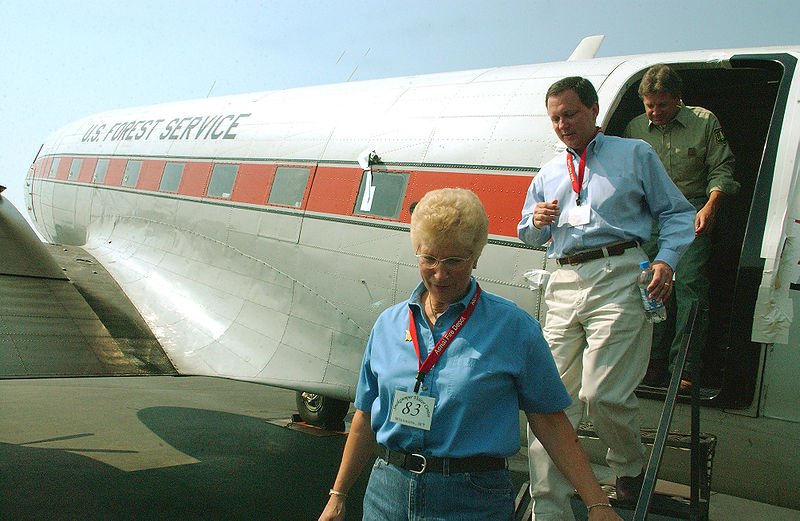
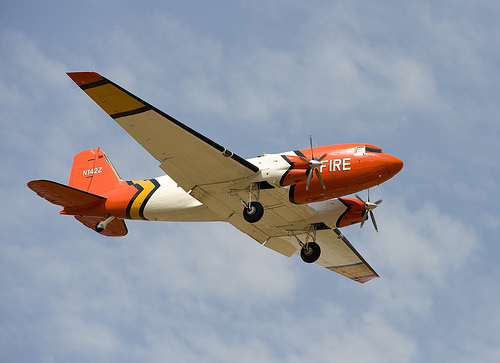
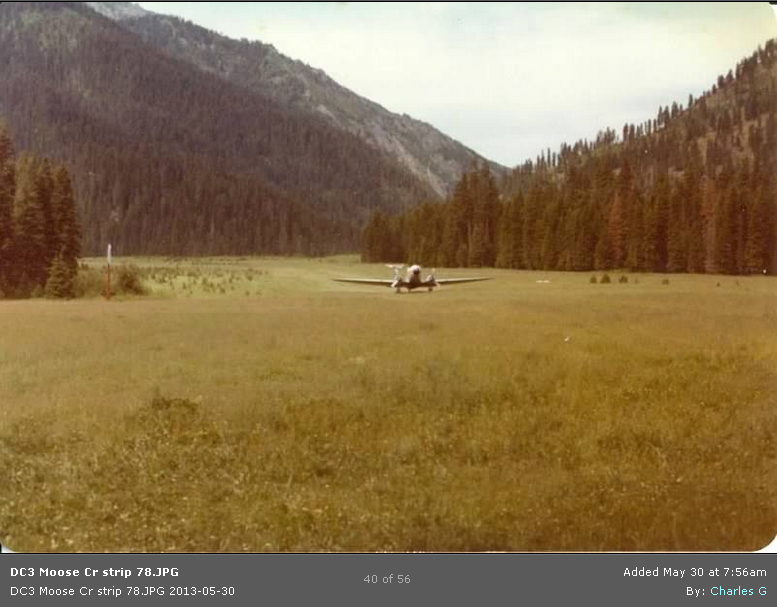
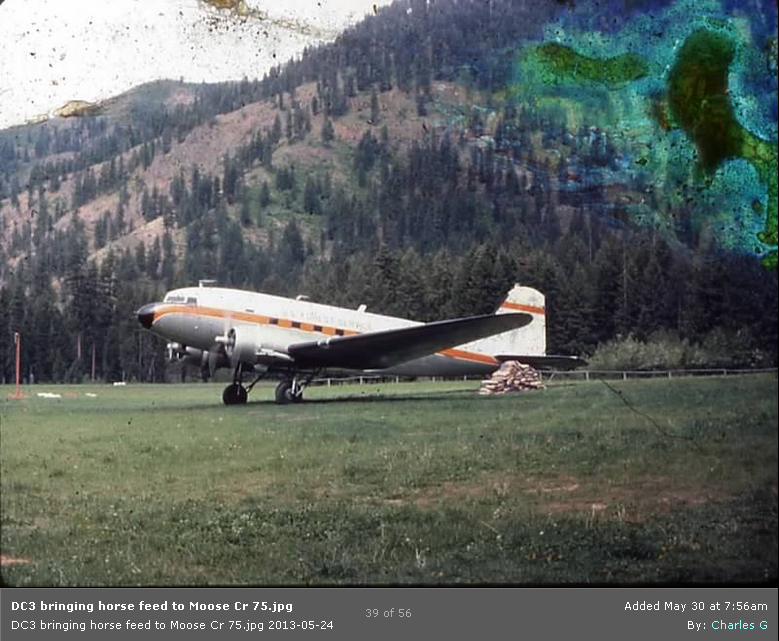
This episode is titled “The 1979 Crash.” In June of 1979, a DC-3 aircraft with ten passengers and two pilots was headed for Moose Creek when one of the engines overheated, and the other failed. An experienced backcountry pilot, “Whitey” Hachmeister attempted to land the plane on one of the sandbars on the Selway river, but the wing caught a tree, spinning the plane out of control. The crash killed eight of the passengers and both pilots, and caused the US Forest Service to completely re-think their policy of using aircraft to transport seasonal workers and supplies to backcountry locations such as Moose Creek, and revert to primitive methods such as pack strings or backpacking.
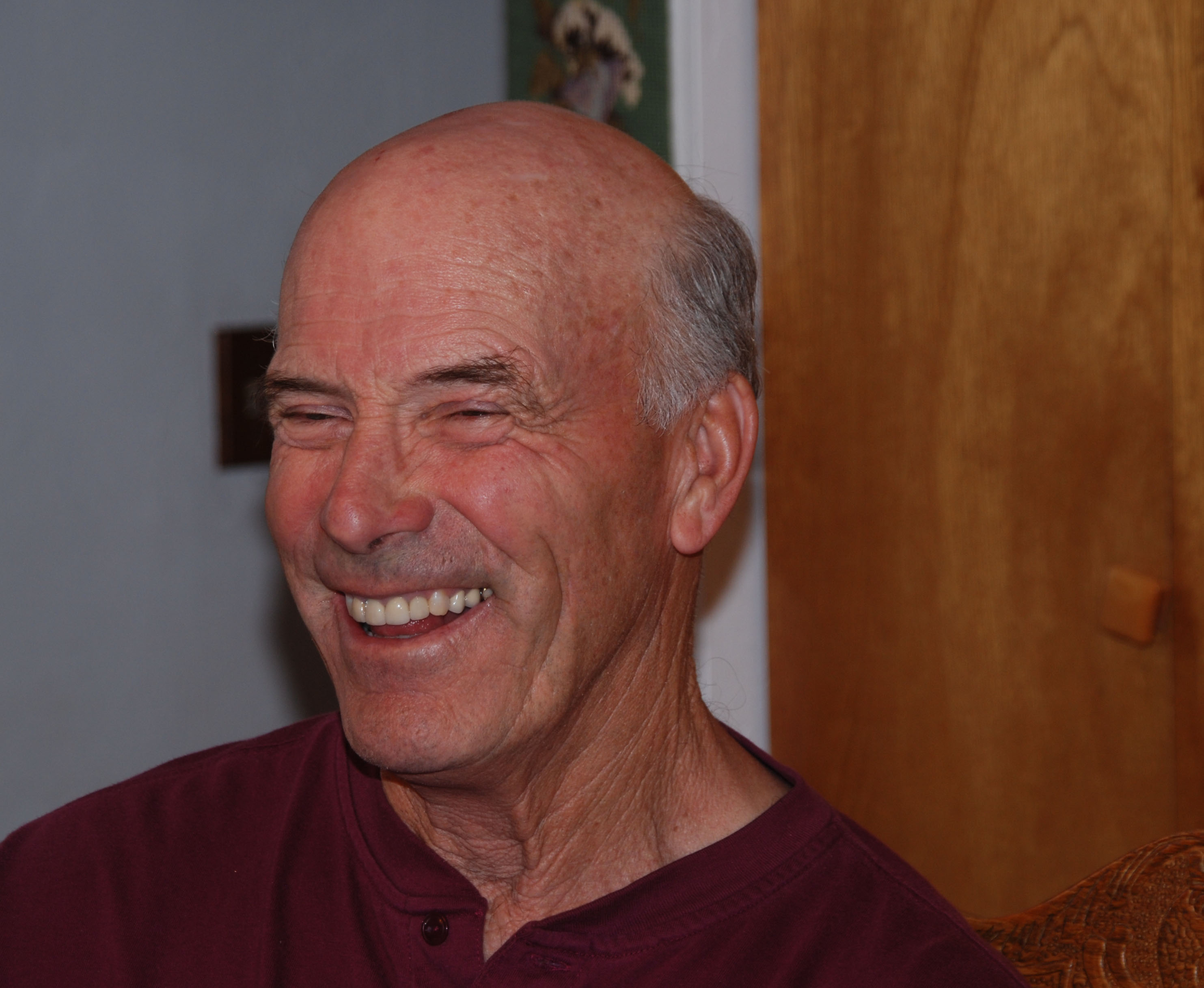
Nels Jensen, himself a backcountry pilot and friend of Whitey, remembers the crash vividly as he was one of the first on the scene and assisted extensively in the search and rescue afterward. A native Montanan, Nels worked for the Forest Service first as a smokejumper, and then as a bush pilot throughout the 1970’s and 1980’s. Today, he still flies into the back country, and is an active member of the Recreational Air Field Foundation. Here, he shares his memory of the 1979 crash and following investigative efforts.
Audio Clip
Interviewer: Debbie Lee
Interviewee: Nels Jensen
Location: Charlo, Montana.
Date: October 5, 2011
DL: Okay. So have you had any close, have you, do you have any stories that particularly stand out for you of injured people you hauled out?
NJ: Let's go down the river.
DL: Oh, okay, let's go down the river.
NJ: We're working our way down the river. Okay. And back in 1969 [correction: 1979] I was flying a, I was doing a recon, fire recon in a Beech Baron when I heard a distress call from a DC-3. And it was Whitey Hachmeister and he was in deep trouble with a DC-3. And I flew directly, I wasn't that far away because it was over on the edge of the Clearwater. And they had taken off from Grangeville and they had, and I don't know how many people were on board. There's a list of the people that were killed right there. But anyway about halfway up above Selway Falls he experienced a rough engine and came up to needle power and blew a cylinder on the one engine. The other engine had a crankshaft seize I believe and it slung the prop clear off the thing and it shook the engine clear off the airplane. He had no power. He did a dead stick landing into the Selway River and he, it was the only stretch, it's below Moose Creek, but just on final he hit his left wing on a tree about eight inches wide and that turned the fuselage on that airplane so instead of hitting square it hit to the side and, of course, the river was high at that time and his decision to go in there, in retrospect he probably would have been better off to go up in the timber somewhere but, you know, he went to the river. I got there with the Beech Baron just after he hit, okay, and there was debris and bodies everywhere.
DL: This was in 19?
NJ: '79.
DL: '79. Oh, okay, so you were like one of the first on the scene?
NJ: I was the first one on the scene. Anyway, I remember circling, talking to Lowell Hanson who had three guys on that rock in the center of the river trying to save them and trying to figure out what, you know, what we were going to do next, okay. Anyway, Chuck told me to, Chuck Kern was a regional coordinator at the time, I told him I was coming back to Missoula. I wanted to land at Moose Creek but I knew if I landed at Moose Creek with that Baron I could never get it out of there. So I ran back to Missoula and grabbed the Cessna 206 and flew back over the scene again. Lowell was still on that rock. He'd lost Andy, one of the guys had died. And by that time, you know, the Nez Perce was trying to coordinate the rescue and I went back to Moose Creek and landed and turned around on the upper end of the strip and this young kid was walking up the strip. He was one of the survivors. He'd walked clear up the south side of that river. You couldn't believe where he'd walked. Anyway, by that time Hillcrest Aviation had, but anyway they had their helicopters. We had a couple of helicopters by then and they were working on the rescue and I went from there down, they wanted me to go get the sheriff, okay, and so I flew in to Grangeville and the sheriff weighed about 350 pounds and I put him on and flew him back up to the scene. By that time the Forest Service had several people at the scene and they had a semblance of an organization at Moose Creek and I brought that big sheriff in and it was kind of a funny story but it isn't, I mean under the circumstance it wasn't funny at all, but he went in to the main Moose Creek eating area in the back and they were organizing things and he stepped in and told them he was there and the sheriff is the one that's in charge of all search and rescue and he told them he was there and he would take over now. And the Forest Service people that were there got very irate with him and he said well you can either let me take you over or Nels will start hauling you to jail and that was the end of the subject right there, okay. He took the whole search and rescue over. I went from there to, back to Grangeville that day. By that time I had flown for the Boise Fire Center for several years. By that time the Boise Fire Center 212 and 500 helicopter were in Grangeville. We threw all of our stuff in the 212 and headed up the river that day. It was getting toward evening. Had a pilot named Lee Young that I knew real well that was with, I was flying with him. And we landed on a sandbar just down below the accident and set the camp up. And then we spent 14 days.
DL: And it was flying out or packing bodies out or?
NJ: Bodies and debris.
DL: Yah.
NJ: It took us 14 days. We took everything out of that river. We shut the river down.
DL: For rafters?
NJ: For rafters and we kept it down. It took us 14 days to find Whitey. We finally found Whitey.
DL: That must have been exhausting.
NJ: Anyway, Mike Izuko, the smoke jumper that I told you helped maintain all the air fields, he was a very integral part of that. And Emil and Penny, they came down. We couldn't get the DC-3 out of the river. It was, the water was so high and the weight on that.
DL: Uh-huh.
NJ: So Emil, we set a jib pole up and Emil, we pulled, we broke a lot of cable, but we finally pulled that thing up enough that we could get to it and then we brought a 107 crane, no, it wasn't a crane. It was a 107 in and he finally, we chopped it up enough that he was finally able to lift it. The last thing we had to get was the engine and that was really important because we were trying to determine what happened to the airplane and so what they did is I put a wet suit on and they had a search and rescue team that worked with us all the time we were up there and they floated me under water past the engine so I could determine whether it was feathered or not and then we finally got our hands on it and we lifted it out. We hauled all this stuff down the Selway, there's a big sandbar just above Fenn and that's where we hauled this stuff and we got semis in there and we got it up. We got everything out of there as fast as we could so.
DL: So, did that accident change Forest Service practices back in the back country at all?
NJ: Well, you know, the DC-3 wasn't used until we got turbines on. We turbinized two DC-3s and we've been running those in there ever since, you know, but it did for a long period of time. It was a very, very much of a blow and a shock to the Forest Service and aviation so.
Gallery
- Title:
- Episode 35 : The 1979 Crash
- Date Created (ISO Standard):
- 2013-04-19
- Description:
- This episode is titled "The 1979 Crash." In June of 1979, a DC-3 aircraft with ten passengers and two pilots was headed for Moose Creek when one of the engines overheated, and the other failed. An experienced backcountry pilot, "Whitey" Hachmeister attempted to land the plane on one of the sandbars on the Selway river, but the wing caught a tree, spinning the plane out of control. The crash killed eight of the passengers and both pilots, and caused the US Forest Service to completely re-think their policy of using aircraft to transport seasonal workers and supplies to backcountry locations such as Moose Creek, and revert to primitive methods such as pack strings or backpacking. Nels Jensen, himself a backcountry pilot and friend of Whitey, remembers the crash vividly as he was one of the first on the scene and assisted extensively in the search and rescue afterward. A native Montanan, Nels worked for the Forest Service first as a smokejumper, and then as a bush pilot throughout the 1970's and 1980's. Today, he still flies into the back country, and is an active member of the Recreational Air Field Foundation. Here, he shares his memory of the 1979 crash and following investigative efforts.
- Duration:
- 12:28
- Subjects:
- accidents and disasters backcountry flying moose creek pilots
- Section:
- Wilderness Voices
- Location:
- Selway-Bitterroot Wilderness (Idaho and Mont.)
- Publisher:
- Wilderness Voices, The Selway-Bitteroot Wilderness History Project, https://selwaybitterrootproject.wordpress.com/
- Source:
- Wilderness Voices, The Selway-Bitteroot Wilderness History Project, https://selwaybitterrootproject.wordpress.com/
- Original URL:
- https://selwaybitterrootproject.wordpress.com/2013/04/19/the-1979-crash/
- Source Identifier:
- Selway-Podcast-ep35
- Original Format:
- Podcast
- Type:
- Sound
- Format:
- audio/mp3
- Language:
- eng
U of I Digital Collections contain unique digitized and born digital archival materials in a variety of formats. The Library is committed to ensuring our resources are accessible to all users. Please contact us if you need support accessing or using this archived content.
Contact us about this record Library Help- Citation:
- "Episode 35 : The 1979 Crash", The Selway-Bitterroot Wilderness History Project, University of Idaho Library Digital Collections, https://www.lib.uidaho.edu/digital/sbw/items/sbw328.html
- Rights:
- Copyright: The Selway-Bitteroot Wilderness History Project. In Copyright - Educational Use Permitted. For more information, please contact University of Idaho Library Special Collections and Archives Department at libspec@uidaho.edu.
- Standardized Rights:
- http://rightsstatements.org/vocab/InC-EDU/1.0/