
Edna Johnson Butterfield Interview #2, 10/19/1976
Description: Courtship. Mother's schedule. Dresses. Coming of industry. 10-19-73 1 hr LS
Date: 1976-10-19 Location: Palouse; Woodfell
Subjects: Great Depression; children; clothing; dances; families; horses; logging; midwives; railroads; threshing
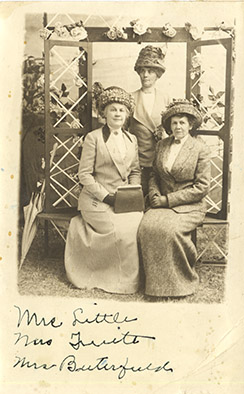
Laura Schrager: On this tape, Ernie Johnson Butterfield reminisces about a wide variety of subjects. She recalls her mother's routine prohibition, good dresses and lodging. There would. She describes dances, the courtship with her husband, and her life after marriage. So, one of the. I told you on the phone that one of the reasons we got hung up and didn't, I didn't make it up here was we were talking to Glen elder, and he mentioned a few things that he really wanted me to ask you about.
Things. The you didn't really know the stories about, but he thought you might remember them pretty well.
And, one of them is, he remembered there was a shooting over a poker game at Jack Connors place team. Do you ever remember that story? No, I don't. Okay. And then another one was, the there was a feud between the duffs and the Wagners.
Edna Johnson Butterfield: Oh, yes. What was the oldest, neighborhood scrap about to, you know. They were both all bachelors, and they just couldn't get along. I know my father used to pack stuff up to them.
Laura Schrager: They lived up, hoodoo.
Unknown Speaker: Hmhm.
Edna Johnson Butterfield: And this. This Charlie Wagner, he was in an old country. German. German. And of course, he would have his only. And show us the other fella. And I think they make trouble on this over a little land. And I told you how they used to take up land, you know, on homestead. Well, there was the chapel and my father grew up in who did the both of,
Laura Schrager: One of them. They thought that the other person was taking some of their land. They had a gunfight over that.
Edna Johnson Butterfield: I don't know what they did. I don't remember that part. But I do know that my father said he he had to be awful careful not get this stuff fixed up right.
Laura Schrager: What happened? Did they just stay there and keep fighting it out?
Edna Johnson Butterfield: Or am I just know? But both eventually died. They stayed there, but they were elderly men. And I knew them. And they and they died there.
Laura Schrager: You probably really enjoyed fighting.
Unknown Speaker: but.
Laura Schrager: And they, the other thing he mentioned was, the Admis liner shooting.
Edna Johnson Butterfield: No, I,
Agnes was liner, you see?
Laura Schrager: Yes.
Edna Johnson Butterfield: No, I don't remember. No. If my brother next to me next older than me was alive, he could tell you all them thing. I expect he was three years older than I was, but he had a, a great memory.
And he could tell her anything.
Okay, but he's been gone now for seven years.
Laura Schrager: You were there any, People that you remember from, the past that were real characters, which was that were real characters that, you know, did stand out in your memories? no special.
Edna Johnson Butterfield: I can do this. I think this landmark can tell you so much about outstanding things which anyone, just mentioned. And,
They love it, fellas. With the, old bachelors. Oh, my. There's one fella. His name was, Dick Richard Gray. And he was a hoodoo. And he, yeah, a little family up there. And they had six children. And finally they he didn't get them out to go to school. And I know the county commissioners took it up, made me him, you know, him out of there, but I could go to school.
And the main thing that was he you run for legislature and got elected, and he got you. Children weren't even in school.
That was over. And if the remote in the neighbors thought that was something terrible, well, but you know, about same county, just like. So that was it.
I'm sure Glen Guillory could remember that little kid.
Would you like a cup of coffee?
Laura Schrager: Oh, no, thanks. I just had lunch.
I've been drinking too much coffee today.
I've been drinking too much coffee today.
Edna Johnson Butterfield: Oh.
Laura Schrager: last time when I was here, your, one of your daughters mentioned to me about the routine your mother had. The what? The routine that your mother had for doing things on different days.
Edna Johnson Butterfield: Yes.
Laura Schrager: Can you tell that to me again?
Edna Johnson Butterfield: Well, on Saturday, the house had to be all scrubbed. Cleaned. And Sunday and Monday it all washed. It no matter what to do. And we had to work on Monday and then Tuesday with ironed. And then Wednesday she generally went, oh, she bathed in and went through the things that she had to do. And she, she go through she had her day to do what needed doing.
Said. And Friday was to sweep and clean the house again. And then Saturday she baked up something they didn't do, like no canned goods store. Get it? And they did go to, you see, it was 30 miles to go to a store. And then on Sunday, and my mother and my grandmother were two people that never worked. And they did absolutely what they had to.
On Sunday. And my grandmother had knit. Oh, she had made an awful lot of lace and things like that. But Saturday night her needles laid down and they weren't picked up again on Monday morning. She never, never donated stitch, and if anything needed mending unless it was absolutely necessary there. Stayed there on Monday morning. People don't do that these days, but that's the way that they did.
Laura Schrager: Did you go to Sunday school? You know?
Edna Johnson Butterfield: Well, at one time we had a Sunday school up there in our old school, and that was the most that I ever went to school because I was so far in a row. But in our school with our shop there, it was a couple of years that they also had Sunday school, and that was all that I can remember.
Laura Schrager: Did your, is there anywhere that you celebrated Sunday, especially in the family?
Edna Johnson Butterfield: Yes. We ours. I have a. I have, and my mother always tried to get the family together at Thanksgiving time, which I have held up so far, and I hope to be able to do it again this year. We have our family gathering on Thanksgiving Day, and, used to be that to wasn't too many others, but the last two years I've had 45 and that's just home family that we were outside and now I'm planning it again.
If a good lord says I can and I'm relatives, come. I have some nephews at Pierce and they come my way, some from Spokane. We have, we just have a a family get together and they all bring us something. You know, and they come at noon and generally straddle it after eating in the evening.
Laura Schrager: That must be pretty nice.
Edna Johnson Butterfield: It is. And it being that's the family we consider that or a family once a year. And of course this.
It seems pretty nervy year that somebody's taken out of it. Oh and you know, I know that number.
Laura Schrager: And a few additions maybe.
Edna Johnson Butterfield: Yeah a few days. And last year this year, this year we've had one new I have had one new great grandson here this year, a year old the 4th of December.
You know, I was just trying to think of the immediate family so far been taken this year.
Laura Schrager: Did you, for any of the holidays, like Easter? Christmas? Would you go to church in town?
Edna Johnson Butterfield: No, no, we never did that. and I don't think you find a lot of them here that do. Did you might find some, I think now I'm sure Mrs. Van Hart down here. Oh, of course, church on Sunday.
Laura Schrager: Do you think religion was more of, private impact? Do you think religion was more private then, or.
Edna Johnson Butterfield: Well, people were more neighborly. People are not neighborly. Not like they were in those days. People go back and forth and take the noon hour, like go to lunch now. They'd have their own dinner. but no, nobody does that anymore.
And would just get ready and go for dinner. And they give you half or whatever they pay for that they'd planned for themselves. And, you know, I think it was really nice. But the day it passed.
Laura Schrager: Did you you and your brothers and sisters visit other? Just go over to other families often.
Edna Johnson Butterfield: Well they do, yes. Oh, we used to quite often, of course, there's quite a difference in age. My oldest brother is 17 years or was 17 years older than my youngest brother. So you see, the older ones have grown out before the best friends. Because of course, I've got nothing to say about that. But 11 years between my, my, my first and last.
Laura Schrager: or is there anything that stands out in your mind as important differences in the way children were raised when you were a kid and the way they're raised now?
Edna Johnson Butterfield: Yeah. Well, I ought to tell you, the children had to mind a lot better than they do today. Their parents made it very. It seems the parents raised the children, and today the children are raised. And the parents. That is the one thing that I could and think about.
Laura Schrager: You'd never think of, disobeying something that your parents told you to do or.
Edna Johnson Butterfield: No, I don't, I don't think I do. My parent, they were both quite strict, those children. But they, you know, they weren't outstanding, stricter. When they told us anything. We had to do it as children. And I think most of the children in those days.
And.
Laura Schrager: Is there any reason that, you believe the, that there are more divorces now than there used to be more divorces?
Edna Johnson Butterfield: Oh, I believe more divorces now than they used to be. The trouble is, I think there's just too many of these young marriages. And, of course, so many, many. And in.
Baby comes alone over time, and they don't always turn out. Yes, I know there's been, some of them, I won't say several, but there's been some in our own community.
Laura Schrager: Do you think it's mainly that people get married sooner.
Edna Johnson Butterfield: Than I think? They get married too young. And then as they get a little older, they change their mind.
And see somebody else that.
Laura Schrager: How did you meet your husband?
Edna Johnson Butterfield: Well, he's people or Minnesota. And they came out here. Well, the truth would he got sick. And so, he had been working up, and his father and mother had been. Oh, living around different places. And then, they found out that this place here was for sale. And, his father bought it, and they were here two years when I married him, and I got married, he came up to my father's to buy a cow, his father, and came up to my father's to buy a cow.
Well, and two years after that, we were married. that would be. That's where we got acquainted.
Laura Schrager: Did you used to do anything together before you got married? How did it caught you? I mean, would it come over.
Edna Johnson Butterfield: There at team, men had at, of our, our system. But meat and take it. I know before I was married, my husband and I went clear to clues to the 4th of July celebration, and, I in the wintertime, a soldier danced in French movement camp mudville. Up there, down Frenchman to the dance.
Laura Schrager: He'd come up and pick you up. Yeah.
Edna Johnson Butterfield: He come from here. Okay. Yeah. And then after that, sometimes we get home 5:00 in the morning.
Yeah. I think it sounds kind of unbelievable that some of these others.
Laura Schrager: Oh, it sounds great.
Edna Johnson Butterfield: Yeah.
Laura Schrager: Would you just dance with him when you went over the dance?
Edna Johnson Butterfield: Oh, no. They crowd out mixed after they get.
But I like their motor dancing at that time a whole lot better than they do now. I don't think much of their way of dancing nowadays. Do you?
Laura Schrager: Oh, well, I I'm, that's the way I was brought up.
Edna Johnson Butterfield: So with every kind of dance, the way they dance now.
Laura Schrager: Yeah.
Edna Johnson Butterfield: Well they didn't dance that way too much then. Yeah. And when we were young and I'd go to these dances, sometimes they'd get a girl to take, Oh, sure. Okay. Couples would take some things long to at midnight for lunch. not very often, but sometimes. And then to pay the musicians for. Why? Yeah, they'd take a collection.
The men could put it on a dime or a quarter or whatever. They wanted to, to pay the musicians for their work. And now that wouldn't sound like much, would it? And,
I can remember that.
Oh, my. My brother. It would have been good to take this, girls, before we sold enough to boyfriends, to things going on. they people danced it, and then I don't think you'd go anywhere. They'd take the wraps off and throw them on in on the bed. And when you got ready to go home, I think you might have.
No other. And the school. Did you know that one stayed every year when school was out for the. I'd have a picnic, and the parents and children would go to the picnic the last day of school, and they don't have that anymore. And that was quite a thrill for the children looking forward to. They referred to a school picnic.
Laura Schrager: When you were young, were you told not to leave the the house where the dance was being held?
Edna Johnson Butterfield: Yeah.
Laura Schrager: Why was that? Why were we.
Edna Johnson Butterfield: Well, they weren't supposed to go alone. The 2 or 3 could go together and leave the hall if they want to, but, oh. A girl wasn't supposed to go out on the dance. well, they weren't. I don't say they weren't allowed to, but they weren't supposed.
Just like it is now. You don't know. You might run across out there. If you hadn't have to go out or something. And they didn't all have toilets to go to. We, they like to do now at those days there was no outside or the toilets were all outside toilets. Do you remember that?
Laura Schrager: Well, yeah. I've lived in houses, you know, the have had outhouses.
Edna Johnson Butterfield: And there for nursing at the fast.
Laura Schrager: so if you wanted to go to, to the outhouse, you had. Yeah. To get someone to go with.
Edna Johnson Butterfield: You supposed to get a girl to college. Yeah.
Well. Of course. What was that for you to say? Forget it.
Because you don't know who you might run into.
Laura Schrager: Did you go slow riding much in the winter?
Edna Johnson Butterfield: Oh, yes. That's all we had to travel. And, I've still got my, Husband's bobsled that he used to have. We went in, and then we had our horses and.
And, as I tell my, there's one thing that I want to keep in. One of the neighbors was here one day. We had a fire out here not too far. And barn and he said I worked harder to save that barn. do you save that old hag? Because he says it's really a relic. And that was one that his, that my father in law bought when he first come here.
And I still got that. And that's a price to my son, too, that he thinks just as much. Yeah, of course I he was. And, he was,
oh. The son, won't have one found. No, the other one died. And.
Yeah. We used to go on the bobsled, but wherever we went, we and the women had electric blankets. And women could sit on the bottom of the sleigh and keep the children covered up and keep warm.
You know, the first, first automobile that my husband owned was in 1970.
Have you made many calls today?
Laura Schrager: No, just the aunts.
Edna Johnson Butterfield: Yes. I know they could both give you old time stories.
Unknown Speaker: Yeah.
Edna Johnson Butterfield: You see, she used to. My dad used to teach my, Brothers. I don't, and she might have taught my sisters, but she taught my brother. I if she didn't teach me.
Laura Schrager: Yeah, she taught up in Woodville. I.
Edna Johnson Butterfield: Yeah, that's what she taught. Yeah. Oh, I should I should tell my sisters to. But I was out of school before she taught there fact yet. I guess I wasn't even living up there when she taught.
Laura Schrager: How did you and your husband get started when you. After you got married?
Edna Johnson Butterfield: Oh, they they only he was the only boy they had. And his father wasn't able to farm and do things like that, and, they, they come, brought me up me right here as a bride and right here. I've never since we've in a different house. But aside from that, I've been right here in this one place ever since I was married in 1910.
We built a bamboo house. This house. We built that house 2320 b 23 years. And so I've been here ever since.
Laura Schrager: So his his mother and father lived with you where?
Edna Johnson Butterfield: We lived with them? Yeah. Yes. And. We were all living together at the time. Our first three children were born. But they're my son. I have here now. He, quite a lot younger than the other children. He was born after his grandpa Butterfield died.
Laura Schrager: Did people. Where were your children born with? with a midwife rather than a doctor around. Was a midwife around rather than a doctor when your children were born?
Edna Johnson Butterfield: Oh, my mother knew. well, my two brothers were born in Michigan. Of course, she had doctors then, but we. And, she never had a midwife for this for another four. And, now this Cochran's this mine attorney. Maybe she'll. There you, there was ten of them born over there. Yeah, well, we all they they joined us here, and they never had a doctor in the house at birth.
If any of them children that were just midwives. And, of course, my husband always had a doctor when I was born, the last one on the doctor didn't get there for a baby, did, but he was on the the destitution and wave and the baby go. So he took care of me afterwards.
Yeah. There's a when you live that far away, you just couldn't make it. Sometimes.
Laura Schrager: I imagine some of the midwives were pretty good.
Edna Johnson Butterfield: Oh, yes, they were. They were right. They were. I don't think there were any, as far as I know. I don't think there's any mothers that was lost through the midwives at that time.
And as far as I know, there weren't any of the babies lost either up in this country.
Laura Schrager: Your your husband. Then he took over his father's farm and farmed it.
Edna Johnson Butterfield: Yeah, well, his father, let's see, his father was born.
We took over the farm in here in. 1900 and we were married in 1910. He went to work for to kind of took over his father's farm. Right. Think. And his father died in 1919.
Laura Schrager: How much land did your husband farm when he farmed here?
Edna Johnson Butterfield: Well, we all had, at the time he was here. We don't like farming. 200. 217 acres. But,
Laura Schrager: Was he farming that much in 1910?
Edna Johnson Butterfield: Yeah. No, we were 1910. When you was farming. they were farming 100, 120 acres. And then, yeah. After he died, my husband bought another hundred acres. And, so therefore let them. We farmed beef until, well, my son here went, bought some land after that. Right. And he he's them he farmed. I don't know, I won't say so much.
Good Lord, I don't know. I think he farmed around 2000 acres. Him and him and his boy.
Laura Schrager: It's a lot.
Edna Johnson Butterfield: It changed a lot. Of course, during some of the season I have to hire him. But. And now his youngest boy has got three boys.
No, I have one grandson now that works for the bankers cooperative. Okay. he's been in here. She made a tractor known.
And how long?
Unknown Speaker: Oh.
Laura Schrager: How long a day would your husband put in working?
Edna Johnson Butterfield: We all know I'd like to do now. He used to, when I worked with the horses. He thought ten hours was a big day for horses. And now it's, about 15 hours a day with the machinery. And the man I really think tell the truth to shorten their own lives. But I just work in that much harder.
Laura Schrager: When would he be done? By work? By when would he quit? In the fields.
Edna Johnson Butterfield: Over. Got dark.
Yes. One of the engine crap crap season and all that. He never quit. And he his family's just the same. Say, well, the neighbors around here do the same. They work from as long as they can see.
Laura Schrager: Did you ever help in the fields in any way?
Edna Johnson Butterfield: Yes, I have, I'm a lot more. Not sure if you know, and skiing and all that. They did it all with horses. I never did with machinery, but I did with horses. And, I used so grass seed and.
I run away with it. Horses on a rake one hand.
Laura Schrager: What have.
Edna Johnson Butterfield: Well, the brush got her foot over time, and she ran away and I guess doing away. I saved my life. I threw myself backwards. Oh, thank you. Big. And she she come and they come on and run into the barn. But my oldest boy was here and and he headed him off. Did a lot of gone to the barn or I, I don't know what old.
But it didn't. Oh it hurt me some of course, but nothing serious like, you know, for the operation or for how you live now, do you, do you have any home out here?
Laura Schrager: Well, we just rent a place we'd like to find an old place to farm.
Edna Johnson Butterfield: cost something nowadays to get started.
Laura Schrager: Yeah, well, you don't particularly want a farm, but we would like to have a little house of our own.
Edna Johnson Butterfield: Yeah, there's so many. There's these trailer houses now. you pasture lots of them.
Laura Schrager: I'd rather rent a little house than live in a trailer. Yeah, some of them are really nice, actually.
Edna Johnson Butterfield: but there's one thing with the trailer. Hush. We don't just sell it. let us know all about. You don't have to dispose of the property or anything.
Laura Schrager: Yeah, I don't want to think of that one. I'm fine.
Edna Johnson Butterfield: Yeah, well, I.
Laura Schrager: Know you can sell it.
Unknown Speaker: Right away.
Edna Johnson Butterfield: But you just live in the trailer house?
Laura Schrager: No, we live in a house, but we just rent it.
Are there any reasons that you think of that? Why families were so much closer when you were a child? Because it seems like they were.
Edna Johnson Butterfield: Well, because it. Yes, I do think so. Because they had to travel, but they couldn't get in a car and just go anywhere. It could be it was too far. They couldn't drive that way all the time and they neighbor more that way. And now they don't know. They just each one gets in each car and goes from fill.
That's the way it is nowadays.
Laura Schrager: What did your family do for, and, you know, entertainment or just, you know, when you'd be all alone on a long winter evening?
Edna Johnson Butterfield: Well, right now, I, I my eyes don't let me read, so I just spend the evening here alone. I let them come in and, but I have my daily paper. I get that every day. And that's pretty nice.
Laura Schrager: What did you your you do when you were a kid and when you lived, it would fill it.
Edna Johnson Butterfield: Well, sometime we get. Yeah. Did we?
Oh, I don't know. Yeah. People. And of course they don't do it so much now when they used to play cards and play games and things that way, and they don't do that much anymore.
Oh, I don't hear you though. That for all work is easier than it used to be. It's more nerve wracking.
Than it used to.
You know, they were under more strain where they ran more, property. You know, there's more more to it.
And, my son, he rents a lot of that, he didn't buy a lot of ground. And. Well, if you don't today, don't get a day in by the NFL, I guess. Well, too, you.
And, my folks and their main park when we were children, they can live there. So we used to milk us and sell our cream and butter and eggs. And that way we don't do anymore.
Laura Schrager: Did you do that when you lived? Once you were married? Did you?
Edna Johnson Butterfield: Oh, I always, helped milk the time I was old enough before I was married, but, I helped my mother to milk. They used to milking 8 or 9. Go. And my father, as I told you, you know, he get one to do one for. He was right. He could only milk. He could use it.
Right. some, but not for everything. And so we helped my mother milk them, and then,
That was. That's where they was making their money. Well know, getting it off and set up and hoodoo and around by their milk and butter nation. They'd back from my father pack it to them and they'd they. And they had to do something to feed the family. Children.
children. And right now, I think there's a lot more harder in one way of raising children now than it was then. The parents had something for the children to do to keep them at home. Well, now, by this I thing, they've got no chores or nothing. Since there's no so they don't have to give giving wood or do any chores night.
It used to be all them things. We just put it on for the children to do and they don't look at it. Now. I don't have to. But the way it reached and, let me go back to it yet, but I still got my wood stove. it, I've still got it. I can have it put up in an hour's time to heat up the house that I want it, and I'm going to keep it as long as I live.
Laura Schrager: Is that your old cook stove, or was it a.
Edna Johnson Butterfield: Heater that I have? No, I haven't and a cook stove anymore, but I have heated.
Unknown Speaker: And.
Edna Johnson Butterfield: But, I think I could find a if it come to that. I, one of my daughters just got to it. I could keep on her. You could come to.
No. I've been fortunate enough to have my children not too far from me. In all these years of being alone.
Laura Schrager: Well, I want to ask you what you thought of, prohibition when prohibition came, but what I what did you think of prohibition?
Edna Johnson Butterfield: Well, I was glad when I was gentle with it. I think prohibition was the main thing. Man could go on.
In Utah, everybody got hold of and and liquor and, I don't know, I think some of the parents had what they needed for their children. They use their money for drinks.
Laura Schrager: Were there any cases like that? You know, where people were?
Edna Johnson Butterfield: Well, I was I use one case I knew of. It was, and I was old enough. I remember that it was a little family. And she raised Cherokees and, she asked my father one time if he would take her Turkish to Pluto and settle for. And she said, bring me the money. But he she didn't he didn't understand that she wanted the money brought to her.
She didn't bring me the money. So when she saw it, her husband saw him inclusion. And he said something to my father, I handed him the money. And when my father come home by, she said, Mr. Johnson, what do you do with my turkey money? He she said, well, I gave it to Frank. He asked me for it.
I he's a that editor husband and you know, most anybody would. And she said, oh my God that's what I had for my children's clothes. This letter. Now I know that for one thing. And, I suppose without a doubt I was, 9 or 10 years old that. But that one time, that, prohibition done away with some of that.
That I so far it happened that which I hope won't happen. And that, my family never took to drink at.
That turned out to think of the fresh things. And if they have to pay for change for clothing and, oh, for children, it it must be terrible to have a family of children dependent on, you know, you know, with shoes on eatables. You know that yourself from your old self.
Yeah. Even with two of you it amounts to quiet little.
Laura Schrager: Yeah.
Edna Johnson Butterfield: Now which do you like the best. The East to the west to live.
Laura Schrager: I like the West better.
Edna Johnson Butterfield: Well I just wondered.
Laura Schrager: I've been home for two years now and I sort of, we're going to go back by bus this winter and I'm looking forward to it.
Edna Johnson Butterfield: But will you go by train or plane.
Laura Schrager: No, we'll take the bus.
Edna Johnson Butterfield: You take.
Laura Schrager: Yeah, because we'll have to do it the cheapest way we can. Fine.
Edna Johnson Butterfield: Well, I know I've travels high.
Unknown Speaker: And.
Edna Johnson Butterfield: but I've. I never went by plane. I went to Colorado. Oh, I guess just three years ago and back, and, But that's all I've ever rode on the plane. That's what you it on the plane a long.
Laura Schrager: Yeah.
Do you remember,
Well, what kind of changes did the rail bringing the railroad in from Potlatch through Harvard? What kind of changes did that have on the area?
Edna Johnson Butterfield: And it made trains, you say? But they had the same trains as we have now. And they. When did you see the train when my folks come here. Didn't come here to Blues and then the train and routes that that line was built and the pollution, they come and that's how they kept building.
Laura Schrager: What effect did the train being the track being laid from Palouse through Harvard. What effect that have on the area here.
Edna Johnson Butterfield: Well it brought more people in here that preceded it. That brought a lot more people. And no waste here.
And from all over the country and, and besides that, it felt if people more, more of something to do more employment. And.
And then it was several years that they logged and all the logs and loaded them onto the cars to ship them out to wherever they were on the ship. And, I know one thing we should look forward to. Every spring when I was a girl, no logs going down the river, they dropped definite logs that were loaded.
Then there was a load and loved up above. would fill their which drove, what they call roll. They dumped them in the river, and then they and guide them down and down stream to where they wanted to at first check on floats. And then when they got the name, built a potlatch, they told them, took them to Potlatch, and then load them up from there.
And that's the way they did them. Early days.
Laura Schrager: And this was Big Meadow Creek, much wider than it is now.
Edna Johnson Butterfield: Oh no, I mean, I, I just wasn't near as wide as it is now. No I'm at a crooked. Has widened in this last few years.
Oh that Colonel Lankester I think he was born there. Are there different numbers taken up in that country?
Laura Schrager: I don't know.
Unknown Speaker: Where.
Edna Johnson Butterfield: But you said you had contact with him.
Laura Schrager: Where did your children go to school from here.
Edna Johnson Butterfield: Well they went to the it's
Well I did it. They had to walk just about a mile from here over to the schoolhouse for my children. And, we had a teacher there and they, they tear children had to walk that. But but when I in when I was a child going to school, they my father gave them the land to build, the schoolhouse on our property.
So I only had to walk about a half mile to school, but. Well, there was nobody else living above there. There was no reason people kept living up there. Often. And really, the people up there that had that land at that time could have seen ahead in known for coming. They'd made a lot of money by staying right there, but they couldn't, you know, you can't see that far ahead.
So, then my children went to school here or over here and a all schoolhouse and,
And then after a few years later, they went and consolidated the school, this school district in with the one at Harvard. And they,
All up into a fine I can show they then the potlatch. And I guess that's school bus now, but it will take a little room, pick some up in the morning and bring some home at night. Shame to death. Now.
The children had to. A lot of them had to walk a lot farther to get to school. 11 days than I do now.
But for, three to the longest, the last school year, I you. And I think it was five months. We just to you we couldn't well, they didn't have money to do it. And the teachers at that time was getting. That, that we're never getting more than about 25 to $35 a month, and then they'd have to pay for their board out of that.
Now, you see how much them teachers were making them days. And I bet some of them teachers that now, were just can't couldn't hardly believe it that that's what they paid.
But and they were always glad to get the job because they're smart. They worked with the jobs they had.
Laura Schrager: What do you think?
in order to make a go of it in those days, do you think the, you know, if a family was just willing to work hard that they could make it?
Edna Johnson Butterfield: Well, yes. I had to work hard in order to make it. And they had to do with very little. Now, I know this to be a fact that, when I was a child, my mother had a green satin dress, and she wore that for a good dress. 50 for 15 years. No one would think these days.
Yeah, yeah. And now myself, I like a good dress. I would wash it off and. but when you get close seven days, you have to take care of.
Laura Schrager: Did you just have one good dress, too?
Edna Johnson Butterfield: One year at school, when I was in head up on my, my folks school, I had an outing, flannel dress. I wore that every day during the school term. my mother would wash it on Saturday and get it dried so I could have it again. Monday morning. Dear, to wear to school. I wore that the whole school year.
That's the only one I had. There were.
Laura Schrager: Is that how it was for most? Most kids.
Edna Johnson Butterfield: Well, was with some. Some had a little better step, you know, they had little bit of made little more show they could and some didn't have any better either.
Laura Schrager: That's something.
Edna Johnson Butterfield: Oh yes. Edward.
It used to me when I look back it really don't have to look passable.
Laura Schrager: Had things changed a lot by the time you had children. And we're raising them here.
Edna Johnson Butterfield: But then when.
Laura Schrager: Then when you were a child.
Edna Johnson Butterfield: Oh, yes. They had changed at suitable. They had changed a lot because.
By the time that my children were old enough to. Go to school, I, There was more, but, better transportation to get them to school. And. Oh, I don't know. I know was better. I don't know, I know by the time that my grandchildren got to go on was so much, a whole lot better. And now my 13 great grandchildren, five.
That I have 13 great grandchildren.
Yes. It was not for I different.
Laura Schrager: When did the first, When did they start thrashing around here, getting thrashing machines and.
Edna Johnson Butterfield: Well.
I don't know. I don't think I started thrashing in here much before 1910. Not a great deal. There's a few that had a lot of machines. And now, we bought our. First threshing machine. My husband and I know my son and my son in law. Well, I remember four foot, combine that at our first combine and, there wasn't hardly any of them in the country, but they, they got them by custom.
They but and they couldn't do more than 4 or 5 acres a day.
Laura Schrager: When was that that they got that combine.
Edna Johnson Butterfield: They got that combine in,
Yeah. 90 that combine they got in 19. 42 so they bought that combine. My old son had to go go to that service. And I know they bought it that year that he went to the service.
He put that's his picture there at the end of the military. And he put in 40 to 42 months that service.
And then all of that were picked and several years later.
Laura Schrager: What do people think of the First World War when that started to remember?
Edna Johnson Butterfield: Well, I know the Second World War, what they thought. But I expected my husband to be taken. And we had three little children. And the First World War. Let me see.
Laura Schrager: You would have been married for about eight years then.
Edna Johnson Butterfield: At the Second.
Laura Schrager: World, the First World War.
Edna Johnson Butterfield: The first one.
Laura Schrager: Yeah.
Edna Johnson Butterfield: Well, I know that I didn't have any. Oh, yes, I did. And the brothers that I was afraid would be taken at that time. But it. Well, I guess we all just consider that we hate to say it. They didn't know about us. Come. But the Second World War, I, I had, I didn't have any, but. And my, my father in law was in the Civil War.
And, then the First World War.
Well, my father in law would have been on the first floor of war. And he in the Civil War. That was the first one, you know. And then, you know, the First World War. Was that wasn't the Civil War. The Civil War before that?
But I didn't have any in the. Well, he was the only one that I had. Was in any of them or that one. The way.
That you don't know the in World War Two. Of course, he had to go near for it. And they said he and I don't we never could understand it. He was a slender boy and lucky to have it, but haven't let it take it. That was the big heavy one that was taken. We never could understand how they come to take the different from the boys, but well have Porsche.
I guess what they. Yeah. I smaller and smaller one. He had. High blood pressure and that put him out. And my brothers didn't happen to go. They came in between the two wars.
And the Grand Bend. Now they've so far they have many of them had to go.
But I know some of them. There's three of them. Anyway, that took things, that didn't pass.
Unknown Speaker: But.
Laura Schrager: What did you do during the depression here. Well.
Edna Johnson Butterfield: Just what we just got along. What we could do. during the depression, we had the, use for home products. We had the care of our meat. and, and I know one time my husband and I were going to town, and, I met my husband just talking to a he stopped. They used to stuff a lot of the road and neighbors, and he put his hand on his pocket, and he said, there's what I got to do.
Me, I he said, I got $20 in there and should showed tight.
And, But aside from that. But.
We had our only and eggs and stuff like that. And then we raised what little garden we could. At that time, it seemed as if the frost. That's the garden. Too bad we hadn't really. Garden didn't last as long.
Laura Schrager: Were you still able to market your crops? Here. Did you have trouble selling them?
Edna Johnson Butterfield: And death? Yes. If you want to take what they give you, trade one cow for three, three, six wheat. You had to do it though. If you want them to eat, you had to feed your family. And. No, no, I think they used to do and shout I don't, it just sounds unreasonable. They used to haul hay from up there to at one fail to pillows with it team and with horses on a wagon and sell it for three and $4 to ten.
Now I think of that, but they had to do it. The head of 70 for their families.
And then Bundy left quite a while.
Laura Schrager: Was it that bad during the depression of 30? During the in the 30s?
Edna Johnson Butterfield: No, no. That was the earlier. No. That depression is 33. I. That didn't seem to affect us here so much. We get far, we could get away. We had our own grain and work and stuff and all, and it I don't think it it didn't occur to us like there that 98 at 19 1993 and depression rate because we they get more ways of doing things that the first one.
I don't think that 1933, when. affected as well. I don't think that they as much as they for each other. One did.
But I, in 1933, my youngest girl, she was a junior in high school, and and, I made butter and sold her, Milton Becker up there at Harvard. I don't know if you got in contact with him or not. He could give you a lot of information. Okay. And there I get it. He did it paid me.
He gave. And I gave him a dollar a week to get money for her transportation. High school that ran. And then one by the time that that lasted till I she graduated in 34. Well, then by the time the boy got my Kenneth got old enough and they had school, that school on him, he rode free. But that's the way that they used to when the parents got so they could have cars and they'd have,
Oh, a bus, that was a child. And take that. But they could ride. No. In the car that she rode in, I think it was six seven. They put it in the four years in that.
But they got to go. It got to their high school just to stay.
Laura Schrager: Did you make much better when.
Edna Johnson Butterfield: During one year, my mother made a ton. She made 2000 and found their one year old. And of course, she. She always done the main part of the shift. She, she lost her health, too. And, children were kind of small. She. Well, I think she played out of that as well. And, She could do, with milk because she could evade the butter, though, and.
But that one year, she sold a thousand, turned. So 2,000 pounds of butter.
Interview Index
Duff and Wagner, two bachelors in Hoodoos who fought over land. Price forced out of the Hoodoos by county commissioners so children could attend school.
Mother's schedule. Worked minimally on Sunday. Children used to have to mind better.
Her husband's father came up to buy a cow from Edna's father. Her husband would pick her up and take her to dances, Palouse, etc. Brothers would take her to dances when younger. Girl couldn't leave dance hall alone.
Edna moved in with her husband's parents after marriage. No mothers or children lost through the midwifes.
Husband only would work horses ten hours. Edna had a runaway on a hay rack.
Families closer because no cars. Work more nerve racking now.
Her father gives a man his wife's turkey money and he spends it on liquor.
Railroad being built brought people and jobs. Logs floated downstream from Woodfell.
Her mother had one good dress, a green sateen dress, for 15 years. One year Edna wore one outing flannel dress the whole school year.
Few threshing machines before 1910. Got 4' combine in '42,
Going to Palouse with $20. in husband's pocket during the '33 Depression. Hauled hay from Woodfell for $3 - $4 per ton . Mother one year sold one ton of butter.