
Dora Otter Fleener Interview #1, 8/21/1973
Description: Home life as a girl. Mother's influence on household. Exclusion of women from animal husbandry at university. Fleener family's plains crossing (1852). 8-21-73 1 hr
Date: 1973-08-21 Location: Moscow
Subjects: authors; childhood; children; colleges and universities; death; families; homesteads; illness; literary; livestock; medicine; pioneers; rural communities; schools
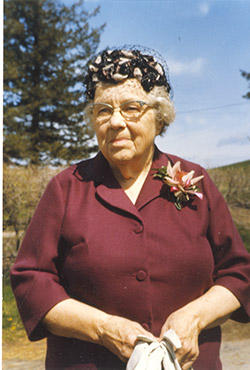
Dora Otter Fleener
Born 1894
Occupation: Farm wife; housekeeper; author of Coming West from South Dakota
Residence: Rural Moscow
Sam Schrager: Has written a book of her childhood recollections called Coming West from South Dakota and is working on a companion volume that will go from the eighth grade to her marriage. Her writing is rich in personal and family anecdotes which show what pioneer life was like. So it is this conversation which looks further at some of the whys and wherefores the coming West from South Dakota.
At the end, Mrs. Clinton recalls some of what her father in law, Dave Fleenor, told her about his crossing the plains at the age of four. In 1852. When it came to me that I was reading the book was How could you remember so much detail from your childhood So well.
Dora Otter Fleener: It seems to come to me, you know, if I didn't bring all of it in there and keep coming to me, even the more I should have been in there. But I get this memory right now about my grandmother. Well, I remember the time we had hit my teacher and all the teachers and the school give hand in life, and we got to, you know, it had nothing to do with you.
Sam Schrager: Well, it's life in your hair.
Dora Otter Fleener: When you get around. You know, my mother coming home with you with a fine tooth comb and lettered all the time. And of course, we had quite long hair there had, I know, doing it out. And of course, they had knitting, you know, it had to be interpreted down or had or kerosene or something. I know it terrible.
Sam Schrager: And do you feel that that the details, they just keep coming to you and.
Dora Otter Fleener: Yes, I think that, you know, in the evening or morning early on, I don't know. I think everybody should have the same the same opportunity to remember it. But they don't seem to they don't think they do anyway. But I think if they didn't have any of in their mind, they probably good. I don't care. I don't think about it.
I don't have anything particularly to worry about. I can think of these things that I wouldn't ordinarily problem with them.
Unknown: I don't know.
Sam Schrager: If I tried to write about my childhood. Even now, I think I couldn't come up with the kind of richness of detail that you have and experience. I wondered if it had something to do with the times. It might have been too. You know.
Dora Otter Fleener: I think I have remembered more about my early childhood than I have later on my you know, they are during the year, my college time, anything like that. Cause I remember a lot of things that happened then. Probably not the main details.
Sam Schrager: What is it that made you feel that that it was important to put your past recollections down in writing?
Dora Otter Fleener: I want my grandchildren to.
Unknown: Know how it was when I was very Indian or or the old days.
Dora Otter Fleener: As my parents were even for doing it. You know, we didn't have telephone, electricity or refrigeration or anything like that. You know, it's hard for me to believe that now myself. I know that, you know, I never experienced it, would not know, you know, the kerosene lamps and carry around with us, you know, upstairs, the bed. So I don't we didn't burn the house down.
If all that went on sometimes terrible. They broke them to me differently and we didn't have a light to see it. So much hard work about getting lamps to write and chimneys had to be washed and lamps and we would think that, you know, nowadays I'm just that little bit, you know.
Sam Schrager: I think I think that it is hard. It's hard if you haven't lived through it.
Dora Otter Fleener: You know, we had read through it. Looking back, I don't know how we ever get along, but then we didn't know anything different, you know, And so we got along so well. The farmers way of living was terrible, You know, the hard work they did till about that. And the next look there at the farmers dinner that deal our land and right now our and you get out and you look out in the wintertime and go to town the winter in this land or in any way we're getting there in the car.
Come in one next question.
Sam Schrager: I don't really have questions so much, but did do you think the children grew up more quickly in those days?
Dora Otter Fleener: I don't mean they did. I don't think they knew as much. I know I didn't know much when I was 20. They knew now I know ten or 12 year that the whole thing, because they knew a lot about lots of things. And we grew up in the country, you know, and as that, you know, outdoors people, children.
No, no, no. I think it's a shame that they were the country schools myself, because I enjoyed myself so much going on in the world mile or so to school. I always somebody interesting cause we didn't know anything about anything different around town. We always had.
Unknown: Fun at school, you know, and really enjoyable would drive you in going to school and all.
Sam Schrager: That's funny because you get the impression that that nowadays schools are a lot more progressive, There's a lot more that kids can do than they used to be able to, and it used to be more strict, but maybe that's not quite the way well was.
Dora Otter Fleener: It is to say, of course, that you couldn't take banned and a lot of things they take now in school. But I think that the general outlook on life was better then and and it is now. I think children do help in that.
Unknown: Greater understanding of what the principal things are in.
Dora Otter Fleener: Life. It's worthwhile. I mean, worthwhile. I think it seems to me that you see a lot of country boys and girls that have made themselves name, you know, from being a country kid like, say.
Unknown: The big men and, you know, country boys and girls. So I've read.
Dora Otter Fleener: I'm not really much for education myself or a college education. I think it frustrates people. You know, they don't know which way to go after they think it makes them up.
Sam Schrager: When you say principles, the basic principles, what what do you have in mind?
Dora Otter Fleener: Well, the nature is one thing, and I don't know. I just can't explain it. Then you're so much you get out of going back and forth through the open air that you don't get when you write books or something. I don't know why it is right. Then we do get a lot more from it. It was something I can't say what it is, but something really enjoyable anyway.
Bird Everything you see, you know, along the way is really interesting. Maybe.
Sam Schrager: Maybe it has something to do with taking things for granted.
Dora Otter Fleener: I know. Well, probably because I was brought up real straight, but I think that most people were.
Unknown: And at that age, you know, they were more well, I.
Dora Otter Fleener: Wouldn't say religious, exactly, but more devoted to their parents and more honest and trustworthy and all.
Unknown: That. I think in general, you know.
Sam Schrager: I get the impression that at the same time that you were more sheltered perhaps than we are.
Dora Otter Fleener: And I think so, too. I know we were we didn't get to know a lot of things we should have known by reading and getting out. We had a very limited amount of reading and we didn't get out and mix of people very much in my books didn't say so and so, man, because he said so and so and things like that, you know, I didn't it never about the mind that why and wherefore of things.
Sam Schrager: Do you think that that most people were like your parents.
Dora Otter Fleener: Well some extent I think so. All the school kids that we went to school and then all they were honestly was one of the main thing. Well, they wouldn't hire a teacher that wasn't perfect. They good model anyway, you know, they couldn't smoke or drink.
Unknown: Or anything like that, do anything that way.
Dora Otter Fleener: And of course, the kids are you the teacher? They're the models all by. I think that's one thing. This kind of grew up in the country. Now kids can have respect for the teachers like we used to. I think we had more respect for our parents, all of us, that they do now to.
Unknown: When we were in the neighborhood. They didn't anyway.
Sam Schrager: We their rules that that you were supposed to keep, that you were really tempted to break.
Dora Otter Fleener: yes. I wanted to dance off a man who wouldn't let me. And they did have dances around neighborhoods.
Unknown: That they weren't allowed their Catholics, you know, and they didn't.
Dora Otter Fleener: Can't bang or dancing like that. And I vowed when I was 18 I would dance anyway, but I was I was too old. I didn't have much. It would throw went in and I felt as though I was too old to learn that I didn't want to make a spectacle of myself. They didn't have cars? No, they weren't hard to get out.
Makes it people.
Unknown: Anyway, after I moved over in Whitman County, we were kind of for many of the young people that, you know.
Sam Schrager: It does seem, though, that you got more experience with work.
Dora Otter Fleener: And. Yes, yes, I started working out when I was quite young.
Unknown: And occupying the neighborhood over a we could do every time. You know, here and there. And after that, look.
Dora Otter Fleener: I mean, this next book.
Unknown: Here and it goes, I guys were I got a.
Dora Otter Fleener: Lot of experience that went along and worked well. And I think I, I would not d'opposition I hope my dad and I help neighbors, I think personally. So I like to so and I come in and that way men pay very much. I couldn't get ahead very much. You know, that way it's not enough to buy me clothes that's all.
$5 a week, seven days sometimes. So and it very much you know goes what you bought think income from there. But then the piano got to pay for it that way. I never got quite paid for it. Then $900 now I in college and and learned to teach but I didn't want to teach. I didn't want to teach any time when that meant to be a teacher, I don't think you know, I thought that I would teach to get some money so that I could take me a little education.
I knew good and well I couldn't be the expert music anyway. I'd just be amusing myself. So what was it? Used to do it now. But see, kind of quickly, Jim, why don't I got married and I mean, they kind of dated me quite, quite up left, you know, I knew pretty well because I would have been maybe in high school, but it wasn't the same in college.
They would German and he never could never get his teacher.
Unknown: I said, I know what you you're in four languages and.
Dora Otter Fleener: Anything else and kind of not caring for the music. I couldn't take it in any money. Pay for or did work for my war and do it and anything I couldn't enjoy myself. I might just get me dying down, you know, when my two evenings or anything in the rollerskating time I do.
Unknown: But I never learned about roller skating either.
Sam Schrager: Do they have agriculture at the college that.
Dora Otter Fleener: No girls couldn't? I want to take animal husbandry more or anything that they would not go to or something that I don't know. I don't think that they call it anyway.
Sam Schrager: But was the first time that that you worked out when.
Unknown: You were poor and having. Well, I went down for that when.
Dora Otter Fleener: I met ten, ten years old for a week, I think. And I was so homesick I couldn't stand. And and I get a moment and then I say.
Sam Schrager: That's right. Yeah, that's right. I read that earlier that I read that the last part just recently forgot. Well, I, I.
Dora Otter Fleener: Did most of my working on after I was 15 years old. The neighbors here and there.
Sam Schrager: All that true of most families to the girls and most families work out.
Dora Otter Fleener: No, I don't think they did. But my sisters could stay at home, you know, and when they should go, that was being home. And so I know that made sure to earn some money, I.
Unknown: Guess, to see me.
Dora Otter Fleener: Working. So and I like this also.
Unknown: That we went.
Dora Otter Fleener: We have been kind of enduring money. I get myself in the jackpot though usually I married I used to raise sheep and chickens, pigs and everything like that. You know, getting myself. I got something else in the house around and these were so I never got my druthers. I go, I'm doing those in that in the house, like the house, you know, And that made it back in how they needed to keep the house up.
Unknown: So then that way I couldn't win.
Dora Otter Fleener: But then after I have no regrets about it.
Sam Schrager: Sounds like you just were really good and liked animals.
Dora Otter Fleener: Why did I love it in the open? Anything else sneak out and you know the cows? I totally get that. Don't get my hat and vacation of a man that I wouldn't have time to think and, you know, only look at the things I get in the mail, you know, and things that you wouldn't.
Unknown: Think about, you know.
Dora Otter Fleener: Like milk cows. We get along pretty well that way.
Sam Schrager: Do you think boys were allowed to do a lot more than girls were?
Unknown: I don't know. I pretty well.
Dora Otter Fleener: It made out pretty well, I think. I don't know. They causing me skating when they go and then they miss no more than we did. I think like that. I don't think they were no place to go you know they I to go for a horseback or something like that. I think my still my wintertime.
Unknown: Summertime were working during the day and big boy that was I say and and.
Dora Otter Fleener: So they do tire and I used to go out in I don't know about the kids in town you know I didn't we didn't see much of the dogs.
Sam Schrager: Were they given more responsibilities.
Unknown: I, I don't think so. It's a girl and.
Dora Otter Fleener: Their responsibilities in the house, you know, when we had to wash iron.
Unknown: And everything like that, it was a lot of time and I thought it.
Dora Otter Fleener: And all my stars, you know, and the ruffles Well that I'm and cleats.
Unknown: And I'm an iron and.
Dora Otter Fleener: I'm still, you know heat on a hot stove.
Unknown: Summertime when we were and they never had to do it iron.
Dora Otter Fleener: In the summertime.
Unknown: When the storm hit the iron. Do you think that the.
Sam Schrager: Boys liked school as well as the girls did?
Dora Otter Fleener: Well, they seem to. And, you know, when you see munition at school anywhere in the country, school, they often take it back. The other spelling match in there to school, I say magic. And then you said that was great. You know, some Friday afternoon, really.
Unknown: So it got on.
Dora Otter Fleener: Where the teacher threw away the think, too, and put the boy I mean, put him in minute and then we'll see to see where the punishment perm where the girl I shouldn't put that in the first book to now wouldn't care would they. Now they just sing it be mean on purpose.
Sam Schrager: It wouldn't work anymore. What would you do? Say something like that in the book when you talk about the game that that that breaking out of jail or whatever, the girls liked it better than the boys did. Yeah.
Dora Otter Fleener: My mother used to have three the long haired girls to the from under grade their you know, comic that was have mentioned that in the book too much. I say that real long hair especially the younger sister and she had hair down to our knees.
Unknown: Finally I remember that television you know, going on here. But then she didn't.
Dora Otter Fleener: Hit me here or as it turned into my room that long. But these they had to be on common for school, you know, for school. And we had a work to do for our school, for boys. I don't think they went out and have milk and eggs and boiled in that ice up.
Unknown: And you can do that. Most of it was pretty good. Then we would carry in and.
Dora Otter Fleener: Watering and get worried about maybe from the start and.
Unknown: Things like that. Only had one brother that was.
Dora Otter Fleener: And then he sighs. Anyway, when I was growing up younger than me, by the way, his birthday was Sunday.
Unknown: And me and and them two brothers and.
Dora Otter Fleener: Youngest in the family.
Unknown: So they were just two. Maybe we might save time and then go in there. So about how long did.
Sam Schrager: It take after you get up in the morning before you can go to school? I don't know what.
Dora Otter Fleener: Took an idea.
Unknown: We didn't get too.
Dora Otter Fleener: Late for school. I know. If the Volkswagen is out in the washing, anything like that is necessary. Why? We stay out of school, You know, Medicare. And if we stayed out of school.
Unknown: Authorities didn't care, you know, either. Didn't hear anything, did not know they were in.
Dora Otter Fleener: And they can you know, if you're out of school.
Unknown: For any help, anybody help your out at home anyway, how many months of the year did you go to school?
Dora Otter Fleener: I don't think in nine months and eight is a moment.
Unknown: Our next in that.
Sam Schrager: When you were when you got done with the school day and you got home, did you have mostly just free time?
Dora Otter Fleener: I don't remember. Not that she made me time. We got home in about seven or eight, didn't get out before we had walk home when, you know, in the.
Unknown: Wintertime I thought of and my brother had to get in wooden.
Dora Otter Fleener: World, help get supper afterwards and that after seven years of free time, I know we used to sit around at dominoes.
Unknown: Or popcorn or something like that, you know, then went to bed quite early.
Dora Otter Fleener: In the morning. So idea know it was but I think my they had gone out for a night in the winter time and then the during the cows and and the horses.
Unknown: And butter to.
Dora Otter Fleener: Make bird during you know and all of the job that you don't think any more about anybody ever doing their life. You know always something coming up to be done. I would say goodbye.
Unknown: In town to an hour's going up.
Dora Otter Fleener: You know, I had a one horse down and the mother in the store and get the groceries and really find the way by nearly always getting home with a headache because of the turn. And I started at 6:00 in the morning. I remember that. So because of better when Mountain Way, you know, about noon, I got back move eight miles to town.
I really like to drive the horse and buggy because it wasn't painted, didn't have it up and scraggly and I was, you know, it with it anyway.
Sam Schrager: When you just turn around and come right back after you got the groceries.
Dora Otter Fleener: Well you, you learned sometime.
Unknown: In the story about to go out there, I think in the accident. And one time I wandered and died.
Dora Otter Fleener: I went to a ice cream parlor and had to my ice cream. That real treat. I know now, it came at the end because we weren't supposed to spend the extra money for anything but I must have been because it got permission to do it. It was good. And at 16 years old, that's what we were. And you are anything without permission.
Unknown: Do you think that.
Sam Schrager: That this that this was about how most of the families were? Do you think that your family was stricter than most?
Dora Otter Fleener: Well, I think it was at most. But then I think they were all pretty low, strict. I think that, you know, who the made their parents and respected them and went. I think some of them were allowed to dance, you know, and do so they didn't go any place they didn't go to town for that really, you know, to go home.
And and there were nobody around. I mean, the public dances and dance and my school and everybody was at home, you know, and that was supposed to be kind of a bad place to go because that much riffraff, I guess, drinking was going out of saloons in the town that I don't know what.
Unknown: But I do what the I mean.
Dora Otter Fleener: Wouldn't keep them out and then just didn't want to make sure that kind of ground, I guess everybody pretty well satisfied to stay home.
Unknown: You know, and I can't remember.
Dora Otter Fleener: I mean, they satisfied about not.
Unknown: That me wanting to go order or anything different. I wasn't thinking that.
Sam Schrager: It was any that it was any less good than the way they do it now. But it just seems so different.
Dora Otter Fleener: And it was a different.
Unknown: I don't know that I suppose.
Dora Otter Fleener: These people are used to doing this era when they had to go back to that life. I mean, they didn't know anything different, so it didn't matter, does it? But makes a difference, I think. And I didn't know any different because like the farmers now and they paid to go back to the same old and do any kind of work they didn't know.
They they couldn't stand it for one thing. And they're not used to it. And they didn't know it and everything.
Unknown: So what can they do when the days when.
Dora Otter Fleener: They had binders, you know, and those on their grain, That was a great step forward and then demand to shake it up. You know, it wasn't hard back when they were getting up on loan sharks. And she was in grain or heavy duty put up, you know, took a long governor and then they would do anything thrashing, you know, the heavy sacks to big up.
Unknown: And out of my way. Now they do it all over the combine, you know, and put in the.
Dora Otter Fleener: Boat tank and later save all that trouble. But my I there's so many people going back to every day that went over to they don't use your bag when they they don't think people went back to it. We like to do now used to bend down you know pick up things.
Unknown: Can you imagine doing this along with or.
Dora Otter Fleener: Anything in the organized of the downs And the thing that I remember the kid is, you know, my grandkids would, but he used to be like him. Time to work it, that kind of stuff. And, you know.
Unknown: I see I'm.
Dora Otter Fleener: Discipline I gave you, man. That's what I don't do. And I got all that going and use a fancy word and everyone wants to do and a younger big family youngster and, and before that I had to work with my board and everything on going to school or getting a much chance to do these things. I want to do where I can get this out of my hands.
And last But because I was getting kind of good with that now and then, I don't worry. My last one was I knew this one is.
Unknown: Get any more and do anything. So our diabetes it I mean.
Sam Schrager: Maybe you could explain a little to me about.
Unknown: How how well off different.
Sam Schrager: Families were. Did they they measured fairly measured families measured how well-off they were, like families do these days. I don't mean in the same terms because it wasn't as much money. But did they think a lot about how well they were doing?
Dora Otter Fleener: Well, I don't know about that. I guess maybe they did. I think that I know when my name is close to us with them. I don't know when he died, but then I thought that he is and least pretty good.
Unknown: Bit of a new house he in.
Dora Otter Fleener: Nice moments ago it was this beautiful like that and and but the mountains as well go there Their father was in the state legislature and I presume they had more money than we did. But then we were kind of jealous of them because their kids them or if you even mean it. I know it's for that. We always did friends and we never actually live on the same footing the youngsters did anyway, you know, And I think that they and the parents in general into the country was the farmers were small.
They couldn't say, well, we have so and so undertaken in and around the farm and you know, this we have that. You know, they didn't do that, I'm sure I know.
Unknown: And they were.
Dora Otter Fleener: As I say, my folks were very careful about not running anybody down anywhere in any way. So we didn't have any idea that what everybody would this is this good. Our parents were in every way possible.
Unknown: My dad always thought, well and.
Dora Otter Fleener: These sort of man, we always are a more, I guess, a Denver thing. They were, I guess. But I found out later they haven't been, you know, because what I see in the world, I have seen in the world, I know other kind of people that my dad owned and 80 acres have been enough for him to farm in a milk of milk.
So many cows in order to be anywhere near living through any one big machine in horses. I think most places around there were close to the mountains and evergreen trees. They didn't have very much farming to do in the lake area.
Unknown: Maybe you know where that is so far.
Dora Otter Fleener: And they got out that way. That was less has come down. We weren't in there that I know of or I didn't know that. And then you try to be go through everything at that time because everybody did find they could. I think that in doing that like they do nowadays when they moved or Whitman County, what he had to go and get them to get out hundred 60 acres and he had a 700 mortgage on the place and it worked like everything we say everything.
He was ready to lose it if he didn't make the payment every year, you know, every year with interest, he made it all right. And I mean, it made lots of money besides because he ran into a place next to him. But he works are the really it was too much for him. And man for his own thing down in 70.
Unknown: 70. So having overworked.
Dora Otter Fleener: You know, in the old days, they wouldn't foreclose on their land as people would sell land to banks and sell land to a farmer that big price and bring it up. And then the farmer couldn't make his payments and take away from foreclosure. That was a regular thing there for a while. If it had continued and then it until Roosevelt's time leased up their clothing.
Sam Schrager: And made sure that he will may have.
Dora Otter Fleener: Some and to recent events that can happen because now these people don't want land. These people don't want the man they used to anyway. I mean, it wasn't that way, and maybe they do now. But then I know that we have a mortgage with a mortgage company without their boys out and getting farm and starting a farm. And they say they don't want the land at all.
They want us to make the payments all the time. They want to make it so we can make the payments easy because they don't have use for the land anyway. I mean, that's one of the things they want. Anybody with land.
Sam Schrager: Do you think that that there is a stronger feeling or a very strong feeling of getting ahead, or was the feeling more just getting by?
Dora Otter Fleener: Well, I think they just wanted to make enough money to have some left over me here. And they would be when we got without nothing, you know, cause sickness and things like that took money those days.
Unknown: Nowadays, they don't. And the.
Dora Otter Fleener: Safeguards there, then you then you take the safeguards they have. Now, you know, in some respects Medicare and I guess younger people now with the financiers like this is operation things.
Sam Schrager: But do you think that the feeling of cooperation was it was very strong?
Dora Otter Fleener: yes, it is definitely strong. And, you know, my goodness, here we were closer together where they couldn't get away, wherever they depend on each other for help. And and entertainment and all.
Unknown: That. You know, here.
Dora Otter Fleener: We don't know. Our neighbors are sometimes, you know, because we've got to make different ways and their feelings or something you want to show or something. As we got some news I think maybe they are they know our neighbors anymore.
Sam Schrager: What was it? Mainly a few families that your family was close to and spent most of their time with.
Unknown: One particular Manson family. We were children were the same age and our same Amish.
Dora Otter Fleener: Community members going home very much time. But when he was home, he was pretty good about taking this thing. And Dennis, a Dennis, a gentleman down.
Unknown: For 40 and.
Dora Otter Fleener: But you see that people had small places. They lived pretty close together, much closer. They do now in the country. And 60 acres apiece or something like that by your name. It's pretty close where they were close in walking distance way state of things to all their areas. And readings or readings didn't last very long. And that petered out pretty quick.
People weren't good readers and they weren't all interested in the same reading.
Unknown: You know that the.
Dora Otter Fleener: Marcellus Mariner was up there, was trying to read it's pretty dry book, you know.
Unknown: So I remember and I don't think my own people generation and we never got through.
Dora Otter Fleener: Because the children made noise, you know.
Unknown: And interrupted more later.
Dora Otter Fleener: They'd I'd be quite educational for it.
Sam Schrager: Did they read it out.
Dora Otter Fleener: Loud or did they. Yeah. I could go and reading in on some something the people weren't reading readers or to keep our attention. It was in the wintertime and was hard for people to get together. I guess.
Unknown: What about the literary What went on in that?
Sam Schrager: The literary what went on in the literature?
Dora Otter Fleener: So people spoke pieces and dialogs, and when one school, when coming.
Unknown: To another one getting their program program, it was, you know, and.
Dora Otter Fleener: Things to entertain you, you know and then maybe that your school going there school I my next school district you know districts weren't too far apart district school as well the three three mile and the park primary.
Unknown: The pine go in the and then valley where.
Dora Otter Fleener: I'm going with children from behind where we come down our school with our school units on that school there up front in the mountains. And I think that was hard for them to always finance some of the schools where the people weren't. I don't know how they didn't finance it really in those days. I know in their board districts, in schools, you know, or shorter.
Sam Schrager: Term, the adults would attend these would.
Dora Otter Fleener: yeah. yeah. Quite often departed them to their they did their the people necessary you turn out we want to do a program now one year two kids but the only people doing.
Unknown: It outside and either using.
Dora Otter Fleener: Chemical.
Unknown: Readings or something you know is.
Dora Otter Fleener: It told you about the dogs. And then when I went to open on it for us, it had been copper and had seen the dogs in there and they grew out on that side is on the other side. Yeah. I spoke about that in the in the it's kind of things I didn't you know some I knew you like that.
Unknown: Who are they.
Sam Schrager: The kind of people that your family didn't want you to associate with.
Dora Otter Fleener: I can't remember anybody around it. They didn't.
Sam Schrager: Associate. I don't I don't mean names or anything, but I. I just had a feeling.
Unknown: That there were certain.
Sam Schrager: Elements that weren't thought of as undesirable.
Dora Otter Fleener: Well, I can't think of anybody, anything, particularly anyone to associate with the drunken tigers and drinking people and fast girls or things like that. We weren't much danger.
Unknown: Anyway because we never got out. And the life down there wasn't anybody. And then in.
Dora Otter Fleener: The interim, out in the country.
Unknown: So I can't think of anyone in the out of.
Dora Otter Fleener: Bounds to us.
Unknown: We knew anything about it anyway.
Sam Schrager: The difference that.
Unknown: You that you mentioned between your father and and your mother and father.
Sam Schrager: Was is an old you and your mother had a slight aristocratic.
Dora Otter Fleener: Interest. Yeah. Yes, it was true. All of your.
Unknown: Life she was on to marry.
Dora Otter Fleener: Well She, she wanted to get me married off or somewhere, you know. And I don't know what as we go, she said I didn't have any prospect of anything. I guess she said we didn't do any date and everything. I was 22 years old in that grade, but she tried to stuff my sister, my elder for marrying the man.
She didn't. She insisted I and not seeing him for a year she met, she'd forget him and she wanted to marry in college. What would about it was likely going to be in the middle. It's only an education and Leo wouldn't get an education at all. He wouldn't need anything. Never were expecting money. He's very ingenious and making again.
He made the first time machine and right from scratch. And so I I'm inclined to be more my language than I think these things in college and that doesn't make a person I mean you college graduate.
Sam Schrager: Or was it education that was that was the key to your mother?
Dora Otter Fleener: Not well, but it seemed like it was. She died in school herself when she was four. She was 18. And I think she had that in her in bread in or some or she was a different family than their brothers as in things We didn't know that in that very long room with her mother was married twice but they kept a dog for another.
And it might have been that she got that trait inherited from the other side of the family. You know, like I said, of course, my dad was so. Well, his sister died. We got an elocution student and.
Unknown: We traveled around quite a bit giving readings and all that was.
Dora Otter Fleener: Most of it was family were just ordinary people, you know. I guess it could have been something other than a chance for an education.
Sam Schrager: But when you say she set your wedding date when you were 22, does that mean before you were ready? Well.
Dora Otter Fleener: I don't know. Maybe never gotten married at all if it hadn't been and she didn't. But then we didn't have it doing what she wanted us to do, see, and the setting the base for us. Because she the best it we felt that it was best for us. Knew that it was wasn't the kids. And so we just automatically didn't because it wasn't where I for me to swing into it and good and I was shocked me Sassoon When we got accepted over winning over six and nine, something happened to them and they were didn't get married.
She married somebody else later, but I my sister and I were never very close either. She was he stayed around the house a lot. I get over that. But then he like I said, my mother knew that and was quarrel with their his own dominating person. You know, against me the all the time if we were around the house kind of the around and you know, men sex with.
Unknown: My dad helping me in the barn. I read my.
Dora Otter Fleener: Mother's diary here.
Unknown: My daughter got into that up and they.
Dora Otter Fleener: Were pretty dim. She made it before we for here. Any family, any children at all. She was really good at being down her feelings, but the way she knew expanded out a bit more on detail and here and there and almost all about her feeling a little bit.
Sam Schrager: This is when she was in South Dakota.
Dora Otter Fleener: yes.
Sam Schrager: Were her feelings when she was there optimistic? Mostly.
Dora Otter Fleener: Well, she got real. Really. Just one in here. Praise the Lord for all. And and things happened to her and all and wonderful man. And she had I don't know if I'm into her and all that. I think it was terrible because she kind of in the last year and in her life, she went to California and moved him up here.
I think he was he wanted to not find a place to live, could live in the house a long way alone. I know he might if they need own house. The last few years of your life and.
Unknown: In the end we only at home, you know.
Dora Otter Fleener: To stay in music. And then he moved around from one family to another, is full of those kids, you know. And it wasn't the kind of where he wanted to live at all. Anyone settle down, be quiet. But she when we got to California, didn't write down there, but it wasn't home to him at all. We came back here, but she liked to go everybody down there.
And I remember when she went to I don't know where this coming down on paper madness.
Sam Schrager: Yeah, it is. Was it harder on one or the other than to leave South Dakota and come out here in the first place? No, I don't think it.
Dora Otter Fleener: Because she didn't back in the storms everything back there. I think my dad, well it might have been harder on him because he was doing well and we done things we got a farm and he was working and she'd work there to make some money. I guess I didn't do that either out of that or something. I don't know.
But I understand that he was more reluctant to come by, I guess, and he didn't. Maybe this wasn't quite so.
Unknown: I was worried.
Dora Otter Fleener: Close and nearing. I guess it's a coming when he got here, you see, I think they were from the hills, you know, I think in long time to be around that he could. You only get them. I was closing in fine and then land kept going up and going up all the time. Can you help get him on?
He got a place picked out here by. And if you want to go and see and when I get over there to see it and it was sold and she sent in her books and that if they had a man that they don't know, then they might have been dominated by this time. I guess she didn't then.
Unknown: You to where it is.
Dora Otter Fleener: I guess you knew the experiences when he came up here. You know, his mother, they crossed that. He crossed the Plains 52 and his family. And then I've seen cause he was only four years old and he couldn't remember some something about the trip. But he died on the way. And a brother. Mountain fever.
Unknown: A cholera epidemic going on in that year and those years.
Dora Otter Fleener: I'm 52 and mother died in Platte River. And where any brother died in Idaho somewhere. Yeah, I've heard him say that if he if he he goes and I know he went in and find the very place where his brother was buried, it made such an impression, I think, because I couldn't go there and it was so plain to him and he know to blame, you know, he thought he didn't go back there and see it.
But they wrote that up.
Unknown: But I can remember them telling about it. Then he.
Dora Otter Fleener: Came up here and and then Whitman County, and it wasn't territory at that time.
Unknown: But kind of and grammar.
Dora Otter Fleener: And experience here and there every day. I think 77 there in a very sparse settlement that I'm here.
Sam Schrager: What did he say that with it it was like then.
Unknown: When he first came we open country the one in the neighbors books. I don't because I mean.
Dora Otter Fleener: Taken up some of the best land was taken up in Moscow when he was just getting started. Then in the west to Mr. Llewellyn, he's ailing to get things started. So he offered him a lunch in town with him for Security Bank is now if he would be able to shake on it. You know I think I would building you have a lot you own interest in down priorities or you know turn it down many of them a lot of he'd take these horses later to eight horses where he would, you know, because it's going too far without them.
So he didn't take that. But first, whenever he was here, 1877, it was an open winter and he didn't have much of a needed much of a house like this and a kind of a tent year. Terrible in the town board. So I guess he brought them up with him. From what, or Pomeroy been hurt and sheep down there for a while for dead.
Unknown: And then he and he have a one horse and.
Dora Otter Fleener: The horse stayed around close but you get have an a friend and there's a course of events for him. They used to run around again in quite a bit and some people came across and were your own one course erroneous.
Unknown: Now and then the woman didn't.
Dora Otter Fleener: Want to stay because she knew that they never have any closer and closer neighbors and that she weren't going to stay.
Unknown: So in their own back, being left. And finally.
Dora Otter Fleener: The family getting there and the real close.
Unknown: Family was real well together.
Dora Otter Fleener: And then he married his four year old and they said that the barn that they put up on this Cullens place, it was right next to a place of the had had him going up the putting the pins in the top, you know, the things that they learned all put together with pigs that male whooping they had in putting the roof on or the rafters up there because he was only unmarried man.
They're afraid you get married soon after that, though. You know, when I was born, he was important, 40 years old. He married so that you have kind of a lawn chick. And his mother died. And he was two and a half year old.
Unknown: And kind of growing up. And he then and then I don't think they were.
Dora Otter Fleener: The ones been demanding. You know, he used to leave me alone. I mean, he was going to move again and he could I went to different times with me pretty much. But I really entering the I.
Sam Schrager: Just figured that the kid had to take care of himself.
Dora Otter Fleener: I guess I just thought I was, you know, one time they were riding horseback riding across the field. The horse got stuck in the snow, in the snow, sleet, and he stopped neighbors and got a shovel and went big the horse out and told the boy to come on home by himself and wait for him. Maybe a mile or so came right.
And and that and then the door was locked. They couldn't get in the exit and out there and wait for you. Then when Dad probably actually got the horse out, I went back, he sat and talked to the neighbors, you know, to no. Who again, was cold and probably went from walking that deep snow all the way down and tired and never forgot it.
At the time he was telling about it, then left him to milk the girl and off and he never before kicked in regarding milk and crew or something like that. So he never did. Like they claim that.
Unknown: Was the reason. It seems it must have.
Sam Schrager: Taken Mr. Great courage for Mr. Fleener.
Unknown: To keep on after his mother and brother died. I know it.
Dora Otter Fleener: Was. I guess he was pretty well broken when he and the boy died, he said. And his father made the remark that if he brought enough medicine, he'd get impure. They were never needed and died. But he gave. He really sorry. That was enough medicine for my own self. And then he might have shared with other people that were sick before, you know, no enough for them afterwards.
But The way they ended up, it was an accident. They set up some place and trading posts. And so that I know that went on in the Foreign Boys Airport, Laramie, you know, and then he didn't know, but someplace down there where they were exchange But we weren't going to exchange the guard animals were some good one you know better one but they exchange for a young Milko this year up and when I left and came to rest the way the cow milk for their family is and look at the girl, I'm under 12.
And then there's one of them two years old. The youngest one was two. And now the home. And his father.
Unknown: Was four and there was and Jane. And that's when.
Dora Otter Fleener: I guess, left. They were met at the house by his brother, then come out here before my husband's father's brother and come out here to Oregon before they're headed for Oregon City. And I guess that train had gone and left him. Probably sent word that they were coming and so we met him at the mills. That was the don't go over there anyway.
But they owned and I know you said that they never said I was a big fan of that. And all their life, anything that's got any feelings I smell, you know, living in months down the road. They started in May and what time they got to Oregon for winter. But let me go to bed. Not courage of it.
Yeah, but they said this cow is given to the youngest daughter, Nancy went name and the youngest daughter. She got married and given her record with all that time. And they soon Virginia her and she every day they meet such a pianist will be known by my way through the rest of the way from was out of Idaho The Dalles Oregon.
Sam Schrager: Do you know what kind of medicine they used for cholera? No. I don't.
Dora Otter Fleener: But he didn't and didn't see any Indians either and didn't like it. Rifle still with the rifle in the family, but never shown the Indians. I guess it shot a few of the things for me because he was young, he couldn't remember one detail about this river crossing. All those things.
Interview Index
Remembering details of the past. Getting rid of head lice. She writes so grandchildren will know what those days were like. Kerosene lamps. People got along because they didn't know anything different.
Children knew a lot less then, but outlook on life was better - knew nature. Also honest and obedient.
Dora wanted to dance, but parents wouldn't permit it. She worked out while still young. College a disappointment - girls couldn't take animal husbandry. Raising livestock for love and money.
In responsibility and freedoms boys and girls were equal. School didn't get in the way of work.
Dora took the butter to town, and was ashamed of the unpainted wagon. The kids had to get permission to do anything, but didn't mind. There may be more back trouble now because people don't work with their backs.
Unable to use her hands, the memories flow in. How well off the family was compared to the neighbors. Parents wouldn't speak badly of anyone. Father worked very hard to get by, hated debt. People just wanted to get by.
Cooperation much stronger. Farm neighbors within walking distances. Reading circle didn't last (read Silas Mariner). Schools entertained at literaries.
Mother tried to get daughters to marry highly educated men. Set Dora's wedding for her. Older sister dominated the house; Dora helped her father.
Mother wrote down her feelings in a diary in South Dakota and later a book. She was more daring about coming to Idaho, and pushed father on. Father didn't believe ridges could be farmed at first.
Dora's father-in-law, Dave Fleener, crossed plains at the age of 4. His mother and brother died of cholera on the way. In 1877, Lieuallen tried to persuade him to buy a Moscow town lot. The area of Dave's home stead is too isolated for his neighbor. Dave put up barn rafters, because he was the only unmarried man around. Dave's father was inconsiderate of him.
More about the 1852 plains crossing. The family used up all their medicine to treat other's sickness. They traded oxen for a milk cow in South Idaho. They met a brother at The Dalles.